The Wheel Offset Calculator helps you compare your current wheel setup with a new wheel size to determine how changes in width and offset will affect inner clearance and outer position. This tool is essential for avoiding suspension rubbing, fender contact, and improper wheel stance.
Whether you’re upgrading to wider wheels, changing offsets, or dialing in the perfect stance, this Wheel Offset Calculator gives you accurate, easy-to-understand results in seconds.
Ultimate Wheel Offset & Fitment Calculator
Compare your current setup with a new one to avoid rubbing and suspension issues.
Current Wheel Specs
New Wheel Specs
How to Use This Calculator (Step-by-Step)
You don’t need to be a mechanic to check if new wheels will fit. Just follow these four easy steps.
Step 1: Find Your Current Wheel Specs
Look on the inside of the rim for numbers like 17×7.5 ET45. The first number is wheel diameter, the second is width (in inches), and ET45 means +45 mm offset. If you can’t find the stamp, check the owner’s manual.
Step 2: Enter Your Current Setup
Type your current wheel width and offset into the calculator’s Current Wheel Specs section. This gives the tool a baseline to compare your new wheels against.
Step 3: Enter Your New Wheel Specs
Type the width and offset of the wheels you want in the New Wheel Specs section. This lets the calculator show how your new wheels will sit.
Step 4: Click “Analyze Fitment” and Check the Results
The calculator will show two key numbers:
- Inner Clearance: How close the wheel will come to the suspension and other parts inside the car. “Less” means it could rub the inner components.
- Outer Position: How far the wheel will stick out toward the fender or street. Too much could cause rubbing or handling issues.
What to Look For
- Change under 5–10mm: Usually safe, wheels should fit fine.
- Change over 20mm: Might be too much; check with a professional to avoid rubbing or suspension problems.
How the Wheel Offset Calculator Works
Our Wheel Offset Calculator compares two wheel setups:
- Current Wheel Specs – Your factory or existing wheel width and offset
- New Wheel Specs – The wheels you’re planning to install
Using precise measurements and proven fitment formulas, the calculator determines:
- How much closer or farther the wheel moves toward the suspension (inner clearance)
- How much the wheel sticks out or tucks in toward the fender (outer position)
All calculations are shown in millimeters for accuracy.
What the Results Mean
Inner Clearance
This shows how the new wheel will sit relative to your suspension components.
- More inner clearance = safer fit near struts and control arms
- Less inner clearance = higher risk of suspension rubbing
Outer Position
This shows how the wheel will sit relative to the fender.
- More outside (poke) = aggressive stance but possible fender rubbing
- More inside (tucked) = cleaner look with better clearance
Safety Verdict
The Wheel Offset Calculator also provides a fitment warning or safety notice based on common clearance limits, helping you decide if spacers, fender rolling, or suspension adjustments may be needed.
Why Use a Wheel Offset Calculator?
Using a Wheel Offset Calculator before buying wheels can help you:
- Prevent tire and suspension rubbing
- Avoid costly wheel fitment mistakes
- Choose the correct offset for wider wheels
- Maintain proper handling and steering geometry
- Achieve the stance or flush fitment you want
This is especially important for lowered cars, performance vehicles, SUVs, and trucks.
Who Should Use This Wheel Offset Calculator?
This tool is perfect for:
- Car enthusiasts upgrading wheels
- DIY modifiers and tuners
- SUV and truck owners fitting wider wheels
- Anyone changing offset or wheel width
If you’re unsure whether your new wheels will fit, this Wheel Offset Calculator removes the guesswork.
Positive, Negative, and Zero Offset Explained
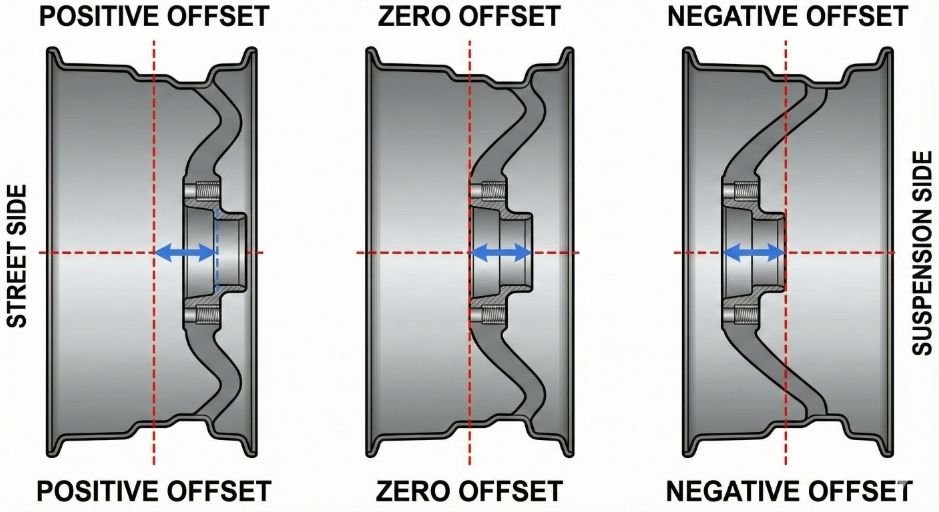
Wheel offset comes in three basic types. Each type changes where the wheel sits in relation to your car’s body and suspension.
Positive Offset (+)
Positive offset means the mounting surface of the wheel is closer to the outside face of the wheel. When installed, this causes the wheel to sit further inside the wheel well.
Most modern cars use positive offset because it keeps the wheels tucked in neatly under the fenders. This setup helps protect suspension parts and allows for smoother steering. If the offset is too high, however, the wheel can sit too far inward and may rub against suspension components.
Zero Offset (0)
Zero offset means the mounting surface is exactly in the middle of the wheel. The wheel is balanced evenly, with equal space on both the inside and outside.
This type of offset is common on older vehicles and some aftermarket wheels. It creates a straightforward fit where the wheel neither tucks in nor sticks out too much. Zero offset can work well, but it must still match your vehicle’s design to avoid rubbing.
Negative Offset (-)
Negative offset means the mounting surface is closer to the inside of the wheel. This pushes the wheel outward, making it stick out more from the car.
Negative offset is often seen on deep-dish wheels, off-road trucks, and aggressive-looking builds. While it creates a wider stance, too much negative offset can cause the tire to rub the fender and put extra stress on wheel bearings.
How Offset Affects How Your Wheels Sit
Offset directly controls how far in or out your wheels sit. Too much inward position can cause contact with suspension parts, while too much outward position can lead to fender rubbing and handling problems. Choosing the correct offset helps your wheels fit properly, look right, and perform safely.
Important Fitment Notes
- Always consider tire width, not just wheel size
- Lowered vehicles may require extra clearance
- Factory tolerances vary by vehicle
- Final fitment should always be physically checked
The Wheel Offset Calculator provides a reliable estimate, but real-world verification is still recommended.
FAQs
What is wheel offset?
Offset is the distance (in mm) between the wheel’s mounting surface and the wheel centerline. Positive offset moves the wheel inward (toward suspension); negative offset moves it outward (toward the fender).
Why does width matter?
A wider wheel increases the centerline, changing both inner and outer positions — combined with offset these changes where the tire sits relative to suspension and fender.
Is it safe to add spacers to correct offset?
Small spacers can change offset, but they also change stress on wheel studs and hub geometry. Always use quality components and confirm there’s no rubbing at full steering lock and suspension compression. Follow local vehicle regulations.
Will this calculator guarantee fitment?
No — this calculator is a quick geometry check. It helps predict inner/outer movement, but physical test-fit and vehicle-specific checks (steering lock, shock clearance, brake calipers, hub bore, bolt pattern) are required before installation.