How Often Should You Get a Wheel Alignment? A Complete Guide
Last updated on July 3rd, 2026
If you’ve ever noticed your car pulling to one side or your steering wheel sitting crooked while driving straight, your vehicle may need a wheel alignment.
Many drivers don’t think about wheel alignment until there’s a problem. Unfortunately, waiting too long can lead to uneven tire wear, poor handling, and expensive repairs.
So, how often should you get a wheel alignment?
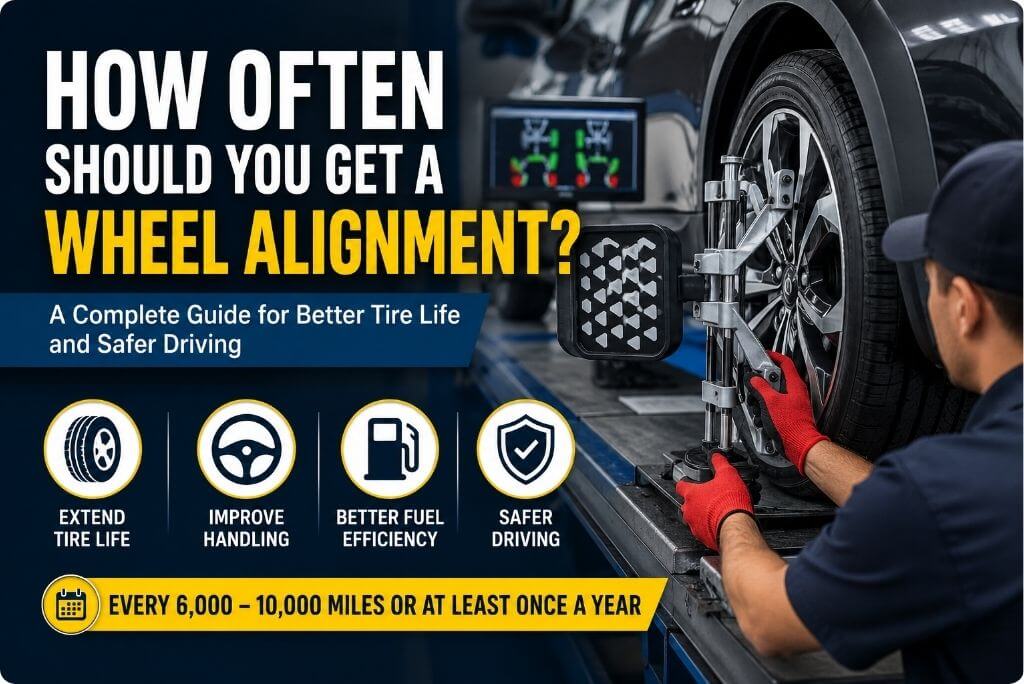
For most vehicles, it’s a good idea to have the alignment checked every 6,000 to 10,000 miles or at least once a year. However, your driving habits, road conditions, and vehicle repairs can affect how often you need one.
In this guide, you’ll learn what wheel alignment is, how often you should have it checked, signs that something is wrong, and how regular alignments can save you money and improve safety.
What Is a Wheel Alignment?
A wheel alignment is a service that adjusts the angles of your wheels so they match the settings recommended by your vehicle’s manufacturer.
Despite the name, the wheels themselves are not moved to a new position on the car. Instead, a technician makes small adjustments to parts of the suspension system so the wheels point in the correct direction and sit at the proper angles.
When the alignment is correct, your car drives straighter, your tires wear more evenly, and steering feels more predictable.
The Three Main Alignment Angles
Camber
Camber refers to whether the top of the tire leans inward or outward when viewed from the front of the vehicle.
- Positive camber: The top of the tire tilts outward.
- Negative camber: The top of the tire tilts inward.
Too much positive or negative camber can cause one side of the tire to wear faster than the other. It can also affect how the vehicle handles in turns.
Toe
Toe describes the direction the tires point when viewed from above.
- Toe-in: The fronts of the tires point slightly toward each other.
- Toe-out: The fronts of the tires point slightly away from each other.
Incorrect toe settings can wear out tires surprisingly fast because the tires are dragged slightly across the road instead of rolling smoothly.
Caster
Caster is the angle of the steering system when viewed from the side of the vehicle.
Most drivers never see or think about caster, but it plays an important role. Proper caster helps the steering wheel return to center after a turn and keeps the vehicle stable when driving straight.
Why Proper Alignment Matters
A proper wheel alignment does more than make the steering wheel sit straight.
It helps tires wear evenly, which means they usually last longer and need replacing less often. The vehicle also responds better to steering inputs and feels more stable on the road.
Good alignment can even improve fuel efficiency because the tires roll with less resistance. Just as importantly, it reduces extra strain on suspension and steering parts, which may help prevent unnecessary repairs later on.
Wheel alignment is a relatively small maintenance service, but it can make a noticeable difference in how your vehicle drives and how long your tires last.
How Often Should You Get a Wheel Alignment?
For most vehicles, it’s a good idea to have the wheel alignment checked every 6,000 to 10,000 miles or at least once a year. Many drivers also have it checked during tire rotations since the vehicle is already being serviced.
There isn’t one perfect schedule that fits every car. Some vehicles can go longer between alignments, while others need more frequent checks.
Several things affect how often you may need an alignment:
- The condition of the roads you drive on
- How and where you drive
- The type of vehicle you own
- How the suspension is designed
- Weather and environmental conditions
For example, a car that spends most of its time on smooth highways usually stays in alignment longer than one that regularly hits potholes or drives on rough roads. Likewise, vehicles that carry heavy loads or rack up miles quickly may benefit from more frequent inspections.
A practical guide looks like this:
| Driving Situation | Suggested Alignment Check |
| Mostly highway driving | Every 10,000 miles |
| Mixed city driving | Every 6,000–8,000 miles |
| Frequent potholes or rough roads | Every 6 months |
| Commercial or high-mileage driving | Every tire rotation |
Think of these numbers as guidelines rather than strict rules. A wheel alignment doesn’t always need adjustment at these intervals, but having it checked regularly can help catch problems early and prevent unnecessary tire wear.
Factors That Affect How Often You Need a Wheel Alignment
Not every vehicle needs wheel alignments at the same intervals. How and where you drive can make a big difference.
Poor Road Conditions
Rough roads are one of the biggest reasons vehicles go out of alignment.
Potholes, broken pavement, large speed bumps, and gravel roads can all create sudden impacts. Over time, these impacts can slightly change the way the wheels sit and point.
If you regularly drive on rough roads, it’s a good idea to have your alignment checked more often.
Hitting Curbs
Even a single hard hit against a curb can affect wheel alignment.
The impact can put extra force on the wheels and suspension parts. You may not notice a problem immediately, but the alignment can still be off afterward.
Driving Habits
The way you drive also matters.
Aggressive cornering, hard braking, and constant stop-and-go city driving place more stress on the suspension and steering system. These extra forces can increase the chances of needing an alignment sooner.
Suspension Wear
As vehicles age, suspension parts naturally wear out.
Worn ball joints, damaged control arms, and weak shocks or struts can allow the wheels to move slightly out of their proper position. In some cases, an alignment won’t hold properly until these worn parts are replaced.
Vehicle Modifications
Changes to the vehicle can affect alignment needs.
Lift kits, lowering kits, and oversized wheels or tires alter the vehicle’s original setup. After these modifications, alignments often need to be checked more frequently to maintain proper handling and tire wear.
Heavy Loads and Towing
Regularly carrying heavy cargo or towing a trailer puts additional strain on the suspension.
Over time, this extra weight can contribute to alignment changes. If your vehicle is often loaded down, periodic alignment checks are a smart part of routine maintenance.
Signs Your Car Needs a Wheel Alignment
Your car will often give you clues when the alignment is off. Paying attention to these warning signs can help you catch the problem before it causes unnecessary tire wear.
Vehicle Pulls to One Side
If your car drifts left or right when you’re driving on a straight, level road, the alignment may be off.
To check safely, drive on a quiet, straight road and lightly loosen your grip on the steering wheel for a moment. If the vehicle consistently pulls to one side, it’s worth having the alignment inspected.
Keep in mind that road slope or low tire pressure can sometimes cause similar symptoms, so this sign alone doesn’t always mean the alignment is the problem.
Uneven or Rapid Tire Wear
Take a look at your tires occasionally.
If one edge of the tire wears down faster than the other, or if the tread feels smooth in one direction and sharp in the other, poor alignment could be the cause.
Common patterns include:
- More wear on the inside edge
- More wear on the outside edge
- A feathered or saw-tooth feel across the tread
Tires often show alignment problems before you notice any changes while driving.
Crooked Steering Wheel
The steering wheel should sit close to the center when you’re driving straight.
If the wheel looks slightly turned even though the car is moving straight ahead, the alignment may have shifted. This is one of the most noticeable signs for many drivers.
Steering Feels Loose or Unstable
A vehicle with alignment issues may not feel as steady as usual.
You might notice the car wandering slightly on the highway or needing constant small steering corrections to stay in your lane. Driving can start to feel tiring because you’re always making adjustments.
Squealing Tires
Sometimes tires make a squealing or scrubbing sound, especially during low-speed turns.
This can happen when the tires are not pointing in the proper direction and are slightly dragging across the road surface. While tire noise can have other causes, persistent squealing is another reason to have the alignment checked.
Situations When You Should Get an Alignment Immediately
Sometimes, it’s best not to wait for your next scheduled alignment check. Certain events can change your wheel alignment suddenly, even if the car seems to drive normally at first.
After Hitting a Large Pothole
A hard impact from a pothole can knock the wheels out of their proper position.
Even if you don’t notice an immediate problem, having the alignment checked can help prevent uneven tire wear from developing later.
After Striking a Curb
Accidentally hitting a curb puts a lot of force on the wheels and suspension.
If the impact was strong enough to make you feel a jolt, it’s a good idea to have the alignment inspected. Small alignment changes can happen without any obvious symptoms.
After an Accident
Even a minor collision can affect wheel alignment.
A bump to the front or side of the vehicle may shift suspension or steering parts slightly. Checking the alignment afterward can help make sure the vehicle handles properly.
After Replacing Suspension or Steering Components
Many suspension and steering repairs change the position of the wheels.
Replacing parts such as control arms, tie rods, or struts is often followed by an alignment to make sure everything is set correctly.
After Installing New Tires
New tires are a major investment, so it’s important to protect them.
If the alignment is off, the new tires can begin wearing unevenly much sooner than expected. An alignment check helps ensure they start with the best possible conditions.
After Lifting or Lowering the Vehicle
Changing your vehicle’s ride height alters its original suspension geometry.
Whether you install a lift kit or lower the vehicle, an alignment should be performed afterward. Skipping this step can lead to handling issues and faster tire wear.
In these situations, an alignment check is usually quick and relatively inexpensive compared to the cost of replacing tires or dealing with avoidable repairs later on.
What Happens If You Ignore Wheel Alignment?
A small alignment problem may not seem urgent, especially if the car still drives. The trouble is that alignment issues usually get worse over time and can lead to bigger expenses.
Premature Tire Wear
Poor alignment causes the tires to meet the road at the wrong angle.
Instead of wearing evenly, certain parts of the tread wear down faster than others. In some cases, tires that should last for years need replacing much sooner than expected.
Higher Fuel Consumption
When the wheels are not properly aligned, the tires don’t roll as efficiently.
They create extra resistance against the road, which means the engine has to work a little harder. The difference in fuel economy is usually small, but it can add up over thousands of miles.
Poor Vehicle Handling
An alignment problem can make the vehicle feel less stable and predictable.
The steering may not respond as precisely as it should, and keeping the car moving straight can require more effort. During sudden maneuvers, such as avoiding an obstacle, the vehicle may not feel as controlled as normal.
Increased Suspension Wear
Misalignment doesn’t only affect the tires.
The extra stress can put additional strain on steering and suspension parts. Over time, this may contribute to faster wear of components that are expensive to repair or replace.
Higher Long-Term Costs
Ignoring wheel alignment often turns a relatively inexpensive service into a much bigger expense.
You may end up replacing tires earlier than necessary and paying for additional repairs caused by excessive wear. A simple alignment check is usually far cheaper than replacing a set of tires or repairing suspension components later.
How Wheel Alignment Saves You Money
Wheel alignment is one of those services that can feel optional until you look at the long-term cost.
The first way it saves money is by helping tires last longer. Since tires are expensive, even a modest improvement in tire life can make a real difference. If alignment helps you get more miles out of each set, that is money well spent.
It can also improve fuel economy slightly by reducing unnecessary rolling resistance. You may not notice a huge jump at the pump, but regular maintenance often pays off in small, steady ways.
Alignment can also help reduce repair costs. When the suspension and steering system are working the way they should, there is less unnecessary wear on connected parts.
There is also a resale benefit. A car that has been properly maintained often feels better to drive and can give buyers more confidence if you sell it later.
A good way to think about it is this: alignment is a small preventive cost that helps protect several bigger expenses.
How Wheel Alignment Is Performed
A wheel alignment starts with an inspection. The technician usually looks at the tires, steering parts, and suspension components to make sure nothing is obviously worn or damaged. If there is a broken part, alignment alone will not fix the problem.
Next, the vehicle is placed on alignment equipment that measures the wheel angles very precisely. Modern shops use computerized systems that compare the current wheel positions to the manufacturer’s specifications.
If the angles are off, the technician makes adjustments where possible. This may involve changing toe, camber, or caster settings depending on the vehicle design. Some cars allow more adjustment than others.
Once the changes are made, the technician checks the results again to confirm that the alignment falls within the correct range. A proper alignment should help the car drive straight and keep the tires wearing evenly.
How Long Does a Wheel Alignment Take?
In many cases, a wheel alignment takes about 30 minutes to an hour. The exact time depends on the vehicle and the condition of the suspension.
If everything is in good shape, the service may be fairly quick. But if bolts are rusted, parts are worn, or additional repairs are needed, it can take longer. Sometimes the technician may discover a problem that has to be fixed before alignment can be completed properly.
That is one reason a regular check is useful. Catching issues early usually makes the process easier and cheaper.
How Much Does a Wheel Alignment Cost?
The price of a wheel alignment depends on the vehicle, the type of alignment, and the repair shop. Some cars only need a front-end alignment, while others need a full four-wheel alignment.
Location also matters. Prices can vary from one area to another, and some shops charge more because of their equipment or labor costs.
In general, it is helpful to think of alignment as a preventive service rather than an emergency repair. The cost is usually much lower than replacing tires early or fixing related suspension damage later.
Some shops also offer lifetime alignment packages. These can be a good value if you drive a lot or live in an area with rough roads, but they are not always the best choice for every driver. The value depends on how often you are likely to need the service.
Can You Check Wheel Alignment Yourself?
You can notice some warning signs at home, but you cannot measure alignment accurately without professional equipment.
What you can check is whether the car pulls to one side, whether the steering wheel sits crooked, or whether the tires are wearing unevenly. Those signs can tell you that something may be wrong.
But a real alignment check needs precise measurements. Even a small change in angle can affect tire wear and handling, and that is hard to judge by eye. That is why a shop visit is the best way to know for sure.
Wheel Alignment vs. Tire Balancing: What’s the Difference?
Wheel alignment and tire balancing are often confused, but they solve different problems.
Alignment is about the direction and angle of the wheels. It affects how the car tracks, steers, and wears tires.
Balancing is about distributing weight evenly around the tire and wheel assembly. A wheel that is out of balance can cause shaking or vibration, especially at higher speeds.
A car can need one service, the other, or both. If the steering wheel is crooked or the car pulls, alignment is often the issue. If the steering wheel shakes, balancing may be the problem.
Related Topic: Wheel Offset Chart
Frequently Asked Questions
How often should I get a wheel alignment if I drive mostly on highways?
If your roads are smooth and your driving is mostly steady highway travel, you may be able to check alignment every 10,000 miles or once a year. Still, it is wise to inspect it sooner if the car starts pulling or the tires wear unevenly.
Should I get an alignment every time I replace my tires?
It is a very good idea. New tires last longer when the alignment is already correct, so checking it at tire replacement time helps protect your investment.
Can bad alignment ruin new tires?
Yes. Even brand-new tires can wear out early if the wheels are not aligned properly. That is one of the most expensive reasons to ignore the problem.
Is wheel alignment covered under warranty?
Usually, normal alignment service is not covered the same way a factory defect might be. Some tire or maintenance packages may include alignment coverage, but that depends on the provider.
Can wheel alignment improve fuel economy?
It can help a little. Proper alignment reduces drag and helps the tires roll more smoothly, which may support better fuel efficiency.
How do I know if my alignment is slightly off?
Small changes are often shown by a steering wheel that is not centered, slight pulling to one side, or uneven tire wear. A technician can confirm it with proper measurements.
Can I drive with bad wheel alignment?
You can, but it is not a good idea to ignore it for long. The longer you drive with misalignment, the greater the chance of tire damage, handling problems, and extra repair costs.
Final Thoughts
Wheel alignment is one of the simplest ways to protect your tires, improve safety, and keep your vehicle feeling right on the road. For most cars, checking it every 6,000 to 10,000 miles or at least once a year is a solid rule. But if you hit potholes often, drive on rough roads, replace suspension parts, or notice warning signs, you should not wait.
The best approach is to treat alignment as part of regular maintenance, not just something you fix after a problem appears. A quick check today can help you avoid uneven tire wear, poor handling, and higher repair bills later.
If you want your car to drive smoothly and your tires to last as long as possible, wheel alignment is worth paying attention to.
