How Much Do New Tires Cost? (Complete Price Guide)
If your car needs new tires, one of the first questions you’ll probably ask is: how much do new tires cost?
The answer depends on several factors, including the type of tire, the size, the brand, and the type of vehicle you drive. For most drivers, the total cost for a full set of four tires usually falls somewhere between $400 and $1,200, though it can be higher for larger vehicles or premium brands.
It’s also important to remember that the price of the tire itself isn’t the only cost involved. Installation, balancing, alignment, and disposal fees can add to the final bill.
This guide will walk you through the average cost of new tires, what affects tire prices, the extra fees you should expect, and how to choose the right tires for your budget. By the end, you’ll have a clear idea of what you might pay and how to avoid spending more than necessary.
– Do NOT repeat content from other sections. – Do not use sub heading (H3, H4) everywhere, only use where helpful.
Average Cost of New Tires
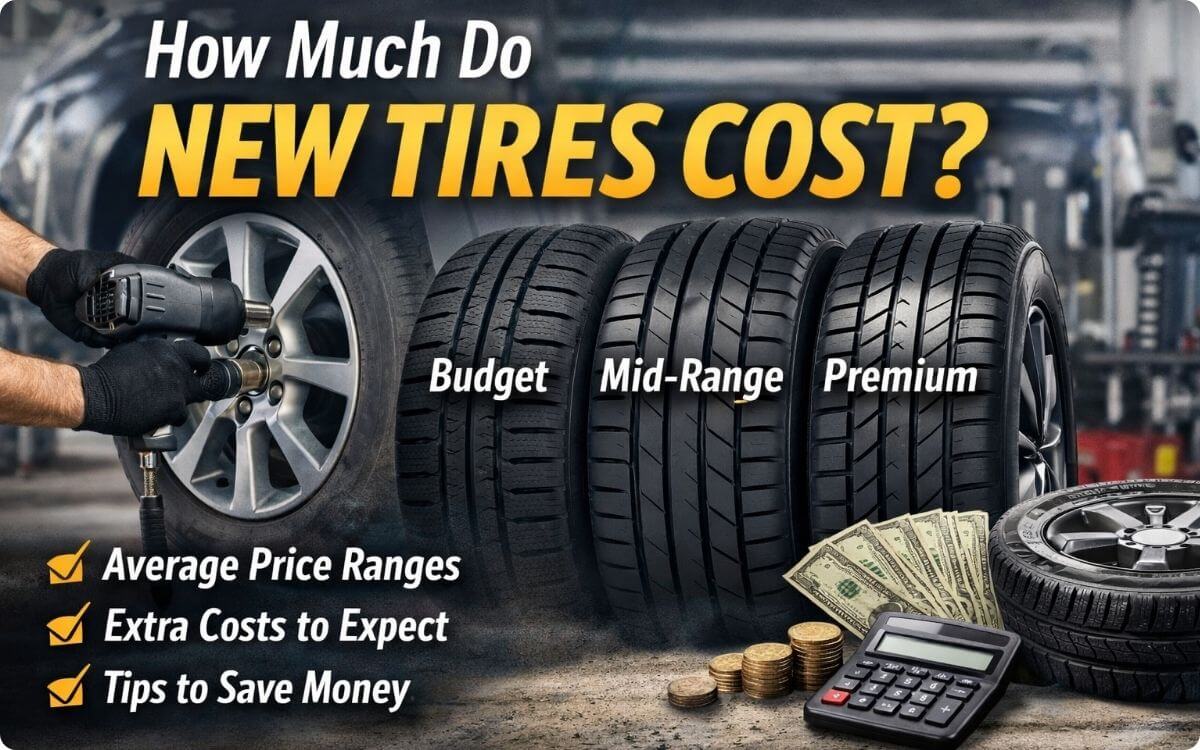
New tires come in different price levels depending on quality and performance. Most tires fall into three general categories: budget, mid-range, and premium.
Budget Tires
Budget tires usually cost between $80 and $150 per tire. These are often the most affordable option for drivers who simply need a safe tire for everyday commuting.
They are commonly used on small cars and older vehicles. Budget tires are widely available and can be a practical choice if you drive mostly in the city and don’t need high performance.
However, they may not last as long as more expensive tires. They may also offer less traction in heavy rain or difficult road conditions.
For drivers on a tight budget, they can still be a reasonable solution as long as the tires meet safety standards.
Mid-Range Tires
Mid-range tires generally cost between $150 and $250 per tire. This is the category where most drivers end up buying.
These tires provide a good balance between price, durability, and performance. They often last longer than budget tires and offer better grip in both dry and wet conditions.
If you use your car daily for commuting, road trips, or highway driving, mid-range tires often provide the best value for the money.
Premium Tires
Premium tires can cost $250 to $500 or more per tire, depending on the size and performance level.
They are usually made by well-known brands such as:
- Michelin
- Bridgestone
- Goodyear
- Continental
These tires are designed with advanced materials and technology to improve traction, handling, comfort, and longevity. Many premium tires also come with longer tread-life warranties.
For drivers who want the best performance or who drive frequently in challenging weather conditions, premium tires can be a worthwhile investment.
How Much Does a Full Set of 4 Tires Cost?
Replacing all four tires at once is the most common choice. It helps your car stay balanced and gives you more predictable handling on the road.
The total cost depends on your vehicle and the type of tires you choose. Smaller cars cost less, while SUVs and trucks cost more because they need bigger and stronger tires.
Here’s a simple breakdown to give you a clear idea:
| Vehicle Type | Budget Set | Mid-Range | Premium |
| Compact car | $350 – $600 | $600 – $900 | $900 – $1,300 |
| Sedan | $400 – $700 | $700 – $1,000 | $1,000 – $1,400 |
| SUV | $600 – $900 | $900 – $1,300 | $1,300 – $1,800 |
| Pickup truck | $800 – $1,100 | $1,100 – $1,600 | $1,600 – $2,200 |
These prices are for the tires only. When you actually buy them, most shops will add installation costs like mounting, balancing, and sometimes alignment.
So in real life, your final bill will usually be a bit higher than what you see here.
If the total feels expensive, you’re not alone. Many drivers are surprised by the cost at first. But replacing all four tires together can help them wear evenly and last longer, which can save money over time.
Before you buy, it’s a good idea to compare a few options. Sometimes a slightly more expensive tire lasts longer, which makes it the better deal in the long run.
Extra Costs When Buying New Tires
When you buy new tires, the sticker price is only part of the bill. Below are the common extra charges you’ll likely see and what each one actually pays for.
- Mounting and installation — This is the labor to put the tire on the wheel and seat it properly. Shops use machines and trained techs for this; expect a small per-tire charge. Tip: very low prices can mean rushed work, so pick a reputable installer.
- Tire balancing — Balancing adds small weights so the wheel/tire spins smoothly. It prevents vibration and uneven wear, so it’s worth doing when installing new tires. If you feel a shake at highway speeds, ask the shop to check the balance again.
- Wheel alignment — Alignment adjusts the angles of the wheels so tires wear evenly and the car tracks straight. It’s not always required with every tire purchase, but it helps tires last longer and improves handling. If your steering pulls or tires show uneven wear, insist on an alignment.
- Tire disposal fees — Shops often charge a small fee to dispose of your old tires legally and responsibly. It’s a routine environmental and safety cost. Ask whether the fee is included or listed separately on your invoice.
- Road hazard protection — This optional plan covers certain punctures or damage (not wear-and-tear). It can save you money if you hit a nail or a pothole, but check the fine print for limits, deductibles, and eligible repairs.
Before you finalize a purchase, ask the shop for an itemized quote so you can see which of these fees apply and decide what protection (if any) makes sense for your driving.
What Factors Affect the Cost of New Tires?
Tire prices can vary a lot, even when they look similar at first. That’s because several things affect how much you’ll pay. Understanding these factors can help you choose the right tire without overspending.
Tire Size
One of the biggest price factors is size.
Smaller tires are cheaper because they use less material. Larger tires cost more because they need more rubber and are built to handle heavier vehicles.
For example, a 16-inch tire is usually much cheaper than a 20-inch tire. If you drive an SUV or truck, you’ll almost always pay more than someone with a small car.
Tire Type
Not all tires are made for the same purpose, and the type you choose affects the price.
Some common types include:
- All-season tires (good for everyday driving)
- Summer tires (better grip in warm weather)
- Winter tires (designed for snow and ice)
- All-terrain tires (built for rough or off-road use)
Specialized tires, like winter or all-terrain, often cost more because they are made for specific conditions.
Tire Brand
The brand you choose also makes a difference.
Well-known brands like Pirelli, Yokohama, and Hankook usually charge more. This is because they invest more in testing, better materials, and product development.
You’re often paying for better quality and consistency, but that doesn’t always mean cheaper brands are bad. Some budget brands still perform well for everyday use.
Performance Ratings
Some tires are built for higher performance. These tires are designed to handle better, grip the road more strongly, and stay stable at higher speeds.
Because of this, they usually cost more than standard tires.
If you drive normally in the city, you may not notice a big difference. But for highway driving or performance cars, these features can be worth the extra cost.
Warranty
Many tires come with a warranty that promises a certain lifespan, usually based on mileage.
Tires with longer warranties often cost more upfront. That’s because they are expected to last longer under normal driving conditions.
However, warranties don’t always guarantee real-world results. Your driving habits and road conditions still play a big role in how long the tire lasts.
How to Save Money on New Tires
Buying new tires can feel expensive, but there are a few simple ways to lower the cost if you plan ahead.
- Buy during seasonal sales — Tire shops often run discounts during spring and fall. These are common times when people change tires, so stores offer deals to attract customers. If you’re not in a rush, waiting for a sale can save you a good amount.
- Check for rebates — Many tire brands offer cashback deals when you buy a full set. These rebates can range from small savings to $100 or more. The only downside is that you may need to submit a form and wait a few weeks to get the money.
- Compare local installers — Prices can vary between shops, even in the same area. It’s worth calling a few places or checking online to compare total costs, not just tire prices. Some shops charge more for installation, which can add up.
- Buy tire + installation packages — Some sellers offer packages that include the tires, mounting, balancing, and other services in one price. These deals can be cheaper than paying for everything separately. Just make sure you understand what’s included so there are no surprises.
A little research before you buy can make a big difference. Even small savings on each tire can add up when you’re buying all four.
Cheap vs Premium Tires: Are They Worth It?
At first, cheap tires look like the better deal. You pay less upfront, which is helpful if you’re on a tight budget.
But the real value of a tire isn’t just the price — it’s how long it lasts and how well it performs on the road.
Cheap tires can work fine for light, everyday driving. The downside is they usually wear out faster and may not grip as well, especially in rain.
Premium tires cost more at the start, but they often last longer and provide better control and comfort. Over time, they can sometimes be the better value.
Here’s a simple side-by-side comparison:
| Feature | Cheap Tires | Premium Tires |
| Price | Lower upfront cost | Higher upfront cost |
| Lifespan | Shorter | Longer |
| Road grip | Basic | Better, especially in wet conditions |
| Comfort | Average | Smoother and quieter |
| Warranty | Limited | Usually longer |
There’s no single “best” choice for everyone. If you drive short distances and want to spend less right now, cheap tires can be enough.
If you drive often, use highways, or want better safety and durability, premium tires are usually worth the extra cost.
Final Thoughts
The cost of new tires can vary widely depending on the vehicle, tire type, and brand you choose. Most drivers will spend somewhere between $400 and $1,200 for a full set, though larger vehicles and premium tires may cost more.
When planning for tire replacement, remember to include installation, balancing, and alignment in your budget. These services help ensure your new tires perform safely and last as long as possible.
In the end, the best tire isn’t always the cheapest one. The right choice is the tire that provides a good balance of safety, durability, and value for your driving needs.
Frequently Asked Questions
How much does a single new tire cost?
Expect $80–$500 depending on the brand, size, and performance category.
How much does it cost to replace all four tires?
Most drivers pay $500–$1,200 for a complete set including installation and basic services; larger vehicles or premium tires push the total higher.
Are expensive tires worth it?
Often yes — for heavy highway use, long commutes, towing, or performance driving, premium tires can save money per mile and improve safety.
Can I replace just one tire?
Replacing a single tire is usually not recommended unless the remaining tires are nearly new and the new tire matches size and tread type. Mixing very different tread depths is a safety risk.
