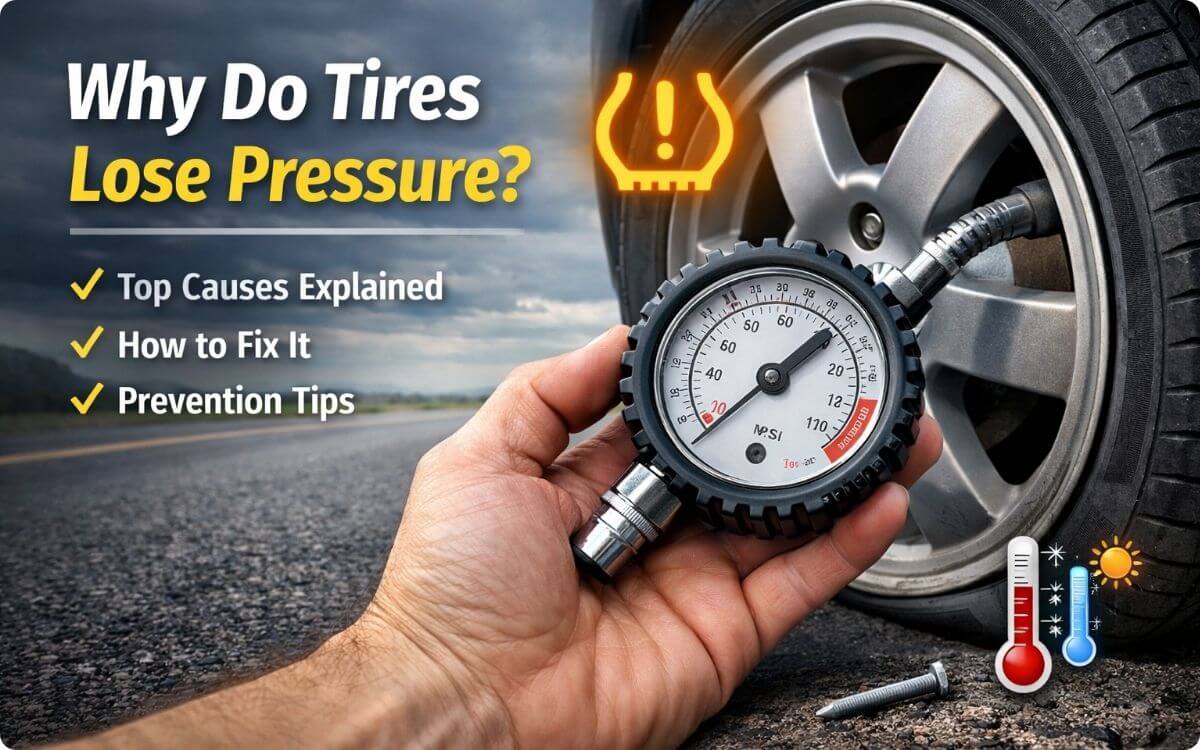
Why Do Tires Lose Pressure? A Simple Guide for Drivers
If you have ever walked out to your car and seen a low tire warning, you are not alone. Tire pressure loss is common, and it can happen for normal reasons or because something needs repair. The good news is that once you understand the cause, it is usually easy to deal with. This guide explains why do tires lose pressure, how to tell what is happening, when it is a safety issue, and what you can do next.
What Is Normal Tire Pressure Loss?
A small amount of pressure loss over time is normal. Tire makers note that tires can lose about 1 psi per month under normal conditions, and pressure can also drop about 1 psi for every 10°F change in temperature. That means a tire can look “fine” one week and low the next morning simply because the weather turned colder. Air also slowly escapes through rubber over time, even when there is no obvious puncture.
That is why a low tire reading does not always mean you have a leak. Sometimes the tire is just responding to the environment. Still, normal loss should be small and predictable. If one tire keeps dropping faster than the others, that is a sign to look closer.
Why Do Tires Lose Pressure? (Main Causes Explained)
If your tire is losing pressure more than expected, there’s usually a specific reason behind it. Let’s go through the most common causes in simple terms.
Temperature Changes
Cold weather is one of the most common reasons tire pressure drops. When the air inside the tire gets colder, it contracts, and the pressure reading falls. This is why the warning light often comes on after a chilly night, even if the tire itself is not damaged. Michelin and Bridgestone both note that tire pressure can fall about 1 psi for every 10°F drop in temperature.
The important point is that temperature changes usually cause a temporary pressure shift, not a true leak. If you top off the tires and the pressure stays steady after the weather settles, that was probably the cause.
Small Punctures
A nail, screw, or sharp piece of debris can create a slow leak that is easy to miss at first. Michelin notes that tire pressure loss can be accelerated by an accidental puncture, and NHTSA warns that drivers should inspect tires monthly for proper inflation and damage. A puncture may not make the tire go flat right away, but it can slowly drain air over days or weeks.
A slow puncture often shows up as one tire that needs air more often than the others. If you see that pattern, do not just keep adding air forever. Find the leak and repair it properly.
Valve Stem Leaks
The valve stem is the small part you use to add air. If it wears out, gets damaged, or does not seal well, air can escape from there. Michelin lists defective valves and missing valve caps as possible reasons for pressure loss. A valve cap may seem minor, but it helps protect the seal from dirt and moisture.
This is a common cause of slow, annoying pressure loss. The tire may look normal, but the valve area is letting air out little by little.
Bead Leaks and Wheel Problems
The tire has to seal tightly against the wheel rim. If that seal is damaged, air can escape around the edge of the tire. Michelin also mentions wheel malfunction as a source of air loss. In practical terms, this can happen when the wheel is bent, dirty, or not sealing correctly with the tire.
This kind of problem is often harder to spot at home because the leak may be small and hidden. If a tire keeps losing pressure even after being refilled, and you cannot find a nail or valve issue, a wheel-seal problem is worth checking.
Tire Wear and Aging
Old tires do not hold air as well as newer ones. Over time, rubber hardens, cracks, and loses flexibility. Michelin notes that aging can lead to visible cracking, and NHTSA advises drivers to pay attention not just to pressure, but also to the tire’s overall condition and performance.
Aging is especially important if the tire is already worn down or has been used for many years. Even if the tread still looks acceptable, aging rubber can become less reliable and more likely to develop leaks or damage.
Improper Installation or Repair
Sometimes the issue starts with a bad mount, a poor repair, or an installation problem. Michelin warns that improper mounting can create serious risks, and tire service should be handled carefully. If a tire was recently patched, mounted, or replaced and it begins losing air soon after, the repair itself may be part of the problem.
Wait—I need to keep the source list accurate. For this point, use Michelin’s warning about improper mounting from the product page and their mounting guidance for tire professionals.
How to Identify the Exact Cause
A good way to start is by looking at the pattern of pressure loss. If the tire is low only after cold mornings, temperature is probably the main reason. If one tire drops faster than the others, a puncture, valve issue, or wheel seal problem is more likely. If the problem keeps returning after refilling, there is probably a real leak.
Here are a few simple checks that help narrow it down:
- Look for nails, screws, cuts, or sidewall cracks.
- Check the valve stem and make sure the cap is present.
- Spray soapy water around the valve, tread, and rim edge to look for bubbles.
- Compare all four tires. One tire losing air faster than the others is a clue.
If you do not see anything obvious, a tire shop can usually find the leak quickly. NHTSA recommends consulting a tire service professional if you notice pressure problems, noise, or vibration.
Is It Dangerous to Drive with Low Tire Pressure?
Yes, it can be. Underinflation is not just a comfort issue. NHTSA says underinflation is a major cause of tire failure, and it increases the chance of skidding, loss of control, hydroplaning, longer stopping distances, and blowouts. Their TPMS rule also notes that drivers should receive a warning when tire pressure falls to 25% or more below the manufacturer’s recommended cold pressure.
Low pressure also hurts fuel economy. NHTSA has noted that underinflation increases rolling resistance, which reduces efficiency. So a tire that is a little low can cost you money even before it becomes a serious safety problem.
Read More: RV Tire Pressure Chart
How to Fix Tire Pressure Loss
The first step is to inflate the tire to the correct pressure listed on the vehicle’s tire information placard, usually found on the driver’s door jamb. Do not use the number molded into the tire sidewall; that is not the recommended pressure for your vehicle. Michelin and Bridgestone both stress checking pressure against the vehicle’s recommended specification, not guesswork.
After that, fix the actual cause:
- If it is a puncture, patch or plug it properly.
- If the valve stem is damaged, replace it.
- If the rim or bead area is leaking, have the wheel inspected and cleaned or repaired.
- If the tire is cracked, badly worn, or aging out, replace it.
A quick refill may buy time, but it is not a real fix if air keeps leaking out. The goal is to stop the loss, not just keep chasing it.
How to Prevent Tire Pressure Loss
The simplest habit is also the most effective: check your tire pressure every month. Both Michelin and NHTSA recommend monthly checks, and before long trips. Bridgestone also advises checking pressure in colder months because temperatures can drop pressure quickly.
A few more habits help too:
- Inspect the tires visually when you fuel up.
- Keep valve caps on the stems.
- Avoid potholes and curb hits that can damage wheels.
- Rotate and inspect tires on schedule.
- Replace old tires before aging becomes a problem.
These simple steps can prevent small leaks from turning into bigger repairs later.
How Often Should You Check Tire Pressure?
Once a month is the standard recommendation, and it is especially smart to check before a long drive or when the weather changes sharply. That may sound like a lot, but it only takes a few minutes and can save you from poor handling, uneven wear, and wasted fuel.
If your TPMS light comes on, do not ignore it. That light means one or more tires is significantly under- or over-inflated, and it deserves attention right away.
Read More: Harley Davidson Tire Pressure Chart (Complete Guide)
FAQs
Why do tires lose pressure overnight?
Usually because the air inside the tire got colder overnight. Cold weather lowers pressure, so a tire can seem fine in the afternoon and low in the morning. If the pressure comes back after you refill it and the weather warms up, the drop was probably temperature-related.
Do all tires lose air over time?
Yes, a small amount of air loss is normal. Tire makers note that even healthy tires can lose around 1 psi per month. The key is watching for unusual loss in one tire or repeated pressure drops that do not match the weather.
How much pressure loss is normal?
About 1 psi per month is commonly cited by tire manufacturers, and temperature changes can also shift the reading by about 1 psi for every 10°F. Anything much more than that, especially in one tire, should be checked.
Can cold weather cause low tire pressure?
Yes. This is one of the most common reasons drivers see a warning light in the morning or during winter. A cold snap can lower the pressure enough to trigger the TPMS, even if the tire has no leak.
Should I worry about a slow leak?
Yes, because slow leaks often get worse over time. A tire that needs frequent topping off usually has an underlying problem, such as a puncture, valve leak, or wheel seal issue. It is best to find the cause instead of just adding more air.
Conclusion
So, why do tires lose pressure? In many cases, the answer is simple: normal air loss and temperature changes. But if one tire keeps dropping faster than the others, the real cause is often a puncture, valve problem, wheel issue, or aging tire. The safest habit is to check pressure monthly, inspect the tires regularly, and fix small problems before they become expensive or dangerous.
