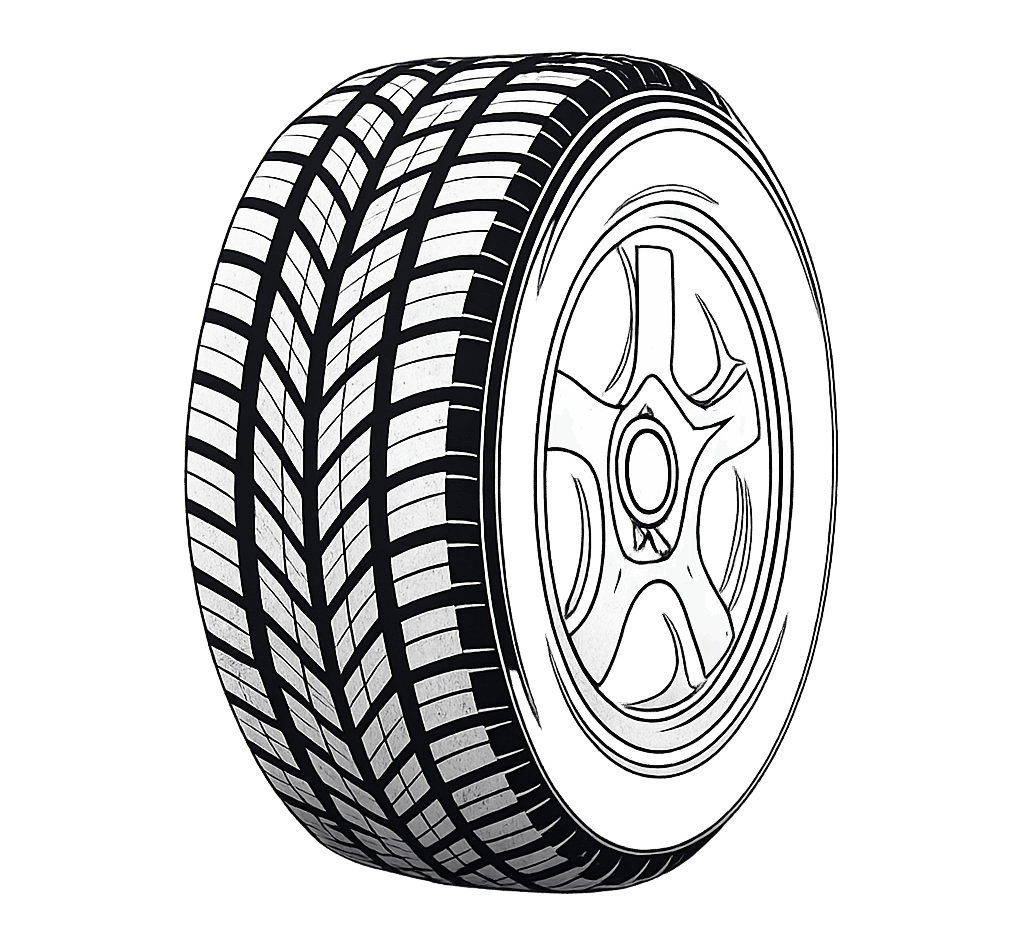

Can I Plug a Run Flat Tire?
A run-flat tire can sometimes be repaired, but not always. The main question is not just whether the tire has a hole. It is whether the tire is still strong enough to be safe after the puncture.
If you are dealing with a nail, screw, or small leak, the first instinct is usually to look for the fastest and cheapest fix. That makes sense. But run-flat tires need a little more care than regular tires because they can hide damage inside.
This guide explains when a run-flat tire may be repaired, when it should be replaced, and why a simple plug is not always the best answer.
Quick Answer: Can I Plug a Run Flat Tire?
Sometimes, yes — but a plug alone is usually not the best permanent repair. A run-flat tire should always be checked from the inside before anyone decides it is safe to fix.
Many run-flat tires can be repaired only if the damage is small and in the tread area. If the tire was driven too far while flat, or if there is any internal damage, replacement is the safer choice.
A Run-Flat Tire May Be Repairable If:
- The puncture is in the tread area
- The damage is small
- The tire was not driven extensively while underinflated
- No internal sidewall damage is found
A Run-Flat Tire Should Be Replaced If:
- The sidewall is damaged
- Internal structural damage is present
- The puncture exceeds repair limits
- The tire was driven too far while flat
What Makes a Run-Flat Tire Different From a Regular Tire?
A run-flat tire is designed to keep working for a limited distance even after it loses air pressure. Unlike a regular tire, it doesn’t immediately collapse when punctured.
The key difference is in the sidewalls. Run-flat tires have reinforced sidewalls that are much stronger than those found on standard tires. These stronger sidewalls help support the vehicle’s weight when the tire loses air.
This can be very helpful in an emergency. Instead of stopping on the side of the road right away, you can usually drive a short distance to a repair shop or a safer location.
However, this design is also why repair decisions are more complicated.
When a regular tire goes flat, drivers usually stop driving soon after noticing the problem. With a run-flat tire, it’s possible to keep driving even after air pressure is lost. While that’s convenient, it can put extra stress on the tire’s internal structure.
The biggest concern is that some damage cannot be seen from the outside. A run-flat tire may look perfectly fine, but the inside could have been weakened while supporting the vehicle without proper air pressure.
That’s why a punctured run-flat tire often needs a professional internal inspection before anyone can determine whether it can be safely repaired or if it should be replaced.
Is a Tire Plug Alone Safe for a Run-Flat Tire?
A tire plug can seal the hole from the outside, which is why it feels like a quick fix. It may stop the air leak and get the tire holding pressure again.
The problem is that a plug only treats what you can see on the outside. It does not tell you whether the tire was damaged inside, especially if it was driven while flat.
That is why many tire professionals do not treat a plug by itself as the best repair for a run-flat tire. They usually prefer a patch-plug combination, because it repairs the hole and also lets them inspect the inside of the tire.
A simple plug can be fast and cheap, but it has limits. It may miss hidden damage, and it may not meet the repair standards some tire makers expect.
So while a plug might seem like an easy answer, it should not be trusted as the final decision for a run-flat tire. The safer step is to have the tire checked from the inside before calling it repaired.
When Can a Run-Flat Tire Be Repaired?
Not every punctured run-flat tire needs to be replaced. In some cases, a repair is possible, but several conditions must be met first.
The Puncture Must Be in the Tread Area
The safest place for a repair is the center tread area—the part of the tire that makes contact with the road.
If the puncture is in the shoulder (the area between the tread and sidewall) or in the sidewall itself, the tire is generally not repairable. These areas flex too much during driving, making a lasting repair unreliable.
Image suggestion: A simple tire diagram showing:
- Green zone = Repairable tread area
- Red zones = Shoulder and sidewall (not repairable)
The Puncture Must Be Small Enough
Small holes caused by nails or screws can often be repaired if they fall within the manufacturer’s repair limits.
Larger holes, cuts, or damage caused by road hazards usually require tire replacement because a repair may not restore the tire’s strength.
The Tire Must Pass an Internal Inspection
A proper inspection requires removing the tire from the wheel.
Once the tire is off, the technician checks the inside for signs of damage that cannot be seen from the outside. This includes examining the inner liner, looking for heat-related damage, and checking whether the sidewalls have been weakened.
If internal damage is found, repairing the tire is no longer considered safe.
The Tire Must Not Have Been Driven Too Far While Flat
This is one of the most important factors.
Run-flat tires are designed to keep moving after losing air pressure, but they can only do so for a limited distance. The farther a tire is driven while underinflated, the greater the chance that its internal structure has been damaged.
Even if the puncture looks minor, excessive driving after pressure loss can turn a repairable tire into one that needs replacement.
In short, a run-flat tire may be repairable if the puncture is small, located in the tread area, the tire passes an internal inspection, and it has not been driven extensively while flat.
When Should a Run-Flat Tire Be Replaced Instead of Repaired?
A run-flat tire should be replaced when the damage goes beyond a simple tread puncture. Once the tire’s structure is affected, a repair is no longer a safe fix.
Sidewall Damage
If the puncture is in the sidewall, the tire should be replaced. The sidewall bends and carries a lot of stress while driving, so a repair there is unlikely to hold safely.
Even a small sidewall hole can weaken the tire enough to cause failure later.
Internal Structural Damage
If the tire was driven while flat, heat can build up inside and damage the layers that give the tire its strength. That damage may not show on the outside.
If the internal support has been weakened, the tire may still look usable but no longer be safe on the road.
Large Punctures
Big holes, cuts, or tears usually cannot be repaired properly. A plug or patch can only work when the damage is small enough and in the right place.
If the opening is too large, the tire cannot be trusted after repair.
Multiple Repairs or Previous Damage
A tire that has already been repaired once may still be okay in some cases, but repeated damage raises the risk. If the tire has more than one puncture or signs of older damage, replacement is usually the safer choice.
Unknown Driving Distance While Flat
If you do not know how far the tire was driven after losing air, many shops will recommend replacement.
That is because a run-flat tire can hide serious damage from the outside. Without knowing how long it was run empty, there is no easy way to judge how much stress it took.
What Do Tire Manufacturers Say About Repairing Run-Flat Tires?
Most tire makers agree on one thing: run-flat tires can sometimes be repaired, but only under strict conditions. The final decision always depends on safety checks and the type of damage.
If a manufacturer does not approve a repair, the tire should be replaced, even if it looks fixable from the outside.
Here is a simple overview of common guidance from major brands:
| Manufacturer | Repair Allowed? | Inspection Required? | Special Conditions |
| Michelin | Sometimes | Yes | Must meet strict repair limits and pass full internal inspection |
| Bridgestone | Sometimes | Yes | Only small tread punctures; no sidewall or heat damage |
| Continental | Sometimes | Yes | Repair allowed only if tire was not driven long while flat |
| Pirelli | Varies by model | Yes | Follow model-specific repair rules; many require replacement after run-flat use |
| Goodyear | Sometimes | Yes | Must follow official repair guidelines and safety checks |
In all cases, manufacturers require a full internal inspection before any repair is approved. This is because run-flat tires can hide internal damage that is not visible from the outside.
A key point many drivers miss is that repair rules are not the same for every tire model, even within the same brand. That is why shops often check the exact tire specification before making a decision.
The safest rule is simple: always follow the manufacturer’s recommendation. If the brand says replace the tire, that should take priority over a quick or cheap repair.
How Tire Shops Decide If a Run-Flat Tire Can Be Repaired
When you take a run-flat tire to a shop, the decision is not made quickly. A proper inspection is needed to make sure the tire is safe to use again.
Step 1: Locate the Puncture
First, the technician finds exactly where the air leak is coming from. This helps them see if the damage is in a repairable area or not.
If the hole is in the tread, there is a better chance of repair. If it is near the sidewall, replacement is more likely.
Step 2: Remove the Tire
Next, the tire is taken off the wheel. This step is important because many problems cannot be seen from the outside.
Even if the puncture looks small, hidden damage may be inside the tire.
Step 3: Inspect the Interior
The inside of the tire is carefully checked. This is where most of the important safety decisions are made.
The technician looks for signs of heat damage, internal cracks, or weakening in the rubber layers.
Step 4: Check for Sidewall Damage
The sidewalls are examined closely because they carry extra stress in run-flat tires. Even small damage here is usually a sign that the tire should be replaced.
Step 5: Decide Repair or Replacement
After all checks are done, the technician makes a final decision.
If the tire passes all tests and the damage is minor, a repair may be done. If there is any sign of weakness or uncertainty, replacement is the safer choice.
This process may feel strict, but it is designed to make sure the tire is safe before it goes back on the road.
Plug vs Patch vs Patch-Plug Combination
Not all tire repairs are the same. The method used can affect how safe and long-lasting the repair is, especially for run-flat tires.
Here is a simple comparison:
| Repair Method | Safety | Durability | Manufacturer Acceptance | Typical Cost |
| Plug (outside only) | Low to medium | Short-term | Often not recommended | Low |
| Patch (inside only) | Medium | Better than plug | Sometimes accepted | Medium |
| Patch-plug (inside + outside) | High | Most reliable | Most commonly accepted method | Medium to high |
A simple plug is quick and cheap, but it only seals the hole from the outside. It does not let a technician see what is happening inside the tire. That is why it is often treated as a temporary fix.
A patch is applied from inside the tire. It seals the damage more securely, but it still depends on proper inspection first.
The patch-plug combination is the most complete repair. It seals the puncture from both inside and outside and also allows a full internal check before repair. For this reason, most professional tire shops prefer it, especially for run-flat tires.
DIY plug kits are popular because they are easy to use on the road. However, they cannot check for hidden internal damage. That is the main reason professionals usually avoid relying on them for long-term safety.
In simple terms, a plug might get you moving again, but a professional repair method is what makes the tire safe to use again.
How Much Does It Cost to Repair a Run-Flat Tire?
The cost depends on the damage and whether the tire can actually be repaired after inspection.
Professional Repair Cost
A standard professional repair usually costs around a low to moderate amount. In most cases, you can expect roughly $20 to $60 for a proper patch-plug repair.
Run-flat tires may cost a bit more to repair because they need extra inspection time before any work is done.
Tire Inspection Cost
Some shops include inspection for free if you proceed with a repair or replacement.
Others may charge a small fee if they need to remove the tire and check the inside before making a decision. This is common with run-flat tires because hidden damage is a concern.
Replacement Cost
If the tire cannot be repaired, replacement is the only option.
A single run-flat tire typically costs much more than a regular tire, often ranging from $150 to $500 or more depending on the brand and vehicle type.
Repair vs Replacement Cost Comparison
At first, a repair seems like the cheaper choice. But it only makes sense if the tire is truly safe to fix.
- Repair is low cost, but only works for minor, safe damage.
- Replacement is expensive, but it gives full safety when the tire is damaged beyond repair.
In many cases, the decision is not about saving money alone. It is about whether the tire is still structurally safe to use on the road.
Frequently Asked Questions
Can I plug a run-flat tire myself?
You can use a plug kit as a temporary roadside move in some situations, but it is not a proper final repair because it does not check for hidden damage inside the tire.
Is a plug a permanent repair?
Not usually. Tire safety groups and major tire makers prefer an inside repair method, often a patch-plug combination, rather than a plug alone.
How far can you drive on a punctured run-flat tire?
That depends on the tire and vehicle, but many manufacturers describe a limited distance of about 50 miles, or 80 km, at up to 50 mph, or 80 km/h. Always check the vehicle owner’s manual.
Will a tire shop repair a run-flat tire?
Some will, if the tire meets repair rules and passes inspection. Others will recommend replacement if there is any sign of sidewall damage, internal wear, or uncertain driving distance while flat.
Can a run-flat tire be repaired more than once?
Sometimes, but not if the repairs overlap or if the same area is damaged again. Goodyear and USTMA both set limits on repeated repairs in the same spot.
Final Verdict: Should You Plug a Run-Flat Tire?
A run-flat tire is not automatically a throwaway tire, but it is also not something you should patch blindly. If the puncture is small, in the tread, and the tire passes a full internal inspection, a proper repair may be possible. If there is sidewall damage, internal weakness, or any doubt about how long it was driven while flat, replacement is the safer call.
If you want the safest next step, have the tire inspected by a qualified technician before deciding. That one check can save you from wasting money on the wrong fix — and from putting a damaged tire back on the road.
