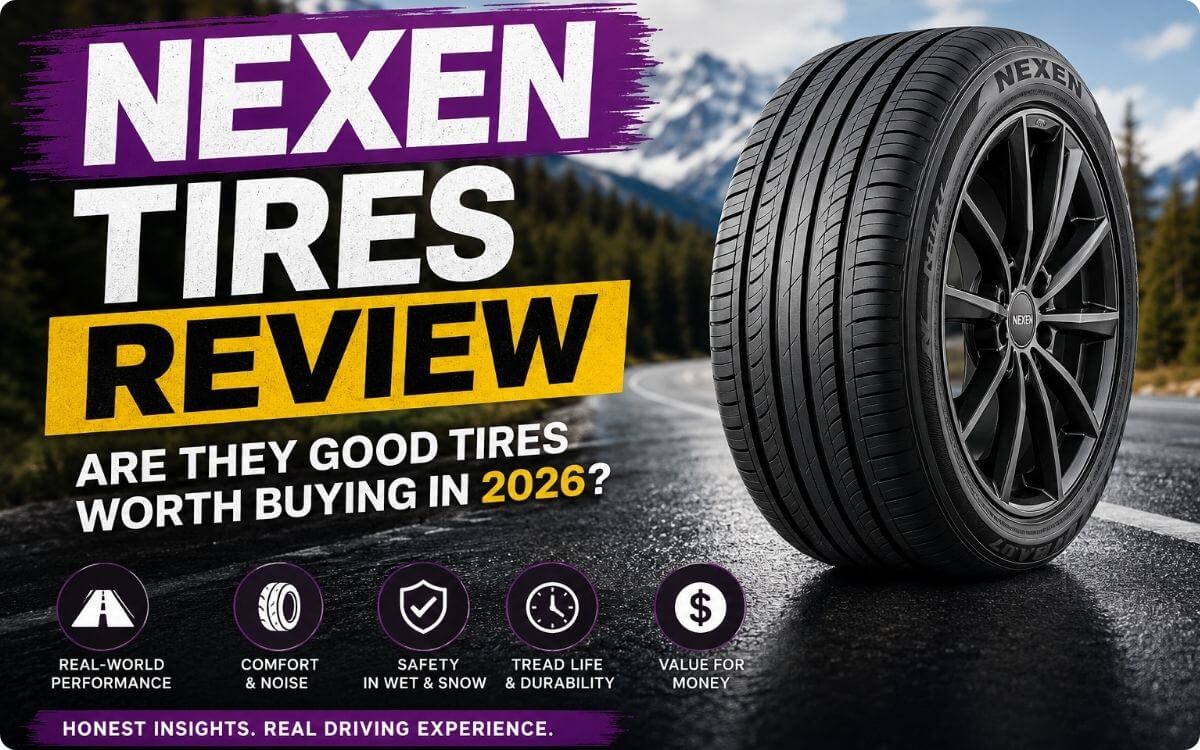
Nexen Tires Review: Are They Good Tires Worth Buying in 2026?
Thinking about Nexen tires usually comes down to one question: are they actually a smart buy, or just the cheaper option on the shelf?
That matters more than it sounds. A tire changes how your car brakes in rain, how stable it feels on the highway, how much noise reaches the cabin, and how long you go before buying another set. Saving money up front is great, but not if the tires wear out early or feel shaky when the road gets wet.
This Nexen tires review looks at how they really perform in daily driving, where they impress, where they fall short, and which drivers are most likely to be happy with them.
Quick Verdict: Are Nexen Tires Good?
Yes—Nexen tires are good for the right driver, but they are not the best choice for everyone.
They deliver strong value by offering comfortable ride quality, decent dry and wet traction, low upfront pricing, and better overall quality than many low-end budget brands. In daily driving, Nexen tires usually feel smooth in city traffic, quiet enough on highways, and predictable during normal braking and cornering.
A real-world example: if you drive to work every day, handle school drop-offs, run errands, and take occasional highway trips, a tire like Nexen N5000 Platinum or Nexen Roadian GTX will likely meet your needs without overspending.
The biggest downside is that Nexen still trails premium brands like Michelin, Goodyear, and Bridgestone in wet braking, long-term tread life, extreme winter traction, and high-performance handling.
Best for:
- Daily commuters
- Budget-conscious families
- Light SUV drivers
Not ideal for:
- Extreme winter drivers
- Performance enthusiasts
- Heavy towing users
Overall Value Rating: 8.3/10
Nexen is a smart buy if you want dependable everyday performance at a lower price—but it’s not a premium tire disguised as a bargain.
What Makes Nexen Different From Other Tire Brands?
Nexen is a South Korean tire brand that sits in the value-to-mid-range part of the market, and that positioning explains a lot about how its tires feel and what they cost. The company supplies original equipment to brands such as Hyundai, Kia, Stellantis, and Volkswagen Group, which matters because automakers do not fit junk tires from the factory. It does not make Nexen a premium brand, but it does show the company can meet the basic standards for ride, noise, and durability that large carmakers expect.
Nexen tires are manufactured in several global facilities, including plants in South Korea, China, the Czech Republic, and the United States. That wider production footprint helps keep costs competitive and supply more flexible. The lower price also comes from its market position: Nexen competes on value, not on premium-level refinement or class-leading tread life.
On the road, that usually means a Nexen tire can feel pleasantly calm in everyday city driving and stable enough on the highway, especially for commuters who mostly drive at normal speeds and want predictable grip without paying top-tier prices. In heavy rain or fast interstate driving, though, the gap to premium brands can show up in braking confidence and wet-road polish.
Nexen is best for practical drivers who want decent all-around performance at a fair price. It is less ideal for buyers who want the sharpest handling, the quietest ride after years of use, or the strongest winter performance.
Real-World Performance of Nexen Tires
Dry Road Grip and Handling
Nexen tires are usually at their most confident on dry pavement. In normal city driving, they tend to feel predictable, with enough grip for lane changes, merging, and everyday cornering without making the driver feel like the tire is working too hard. On a dry highway, they generally hold a steady line well and feel stable at cruising speed, which is important for commuters and family drivers who want calm, straightforward behavior more than sharp performance.
The trade-off is that Nexen tires often feel tuned for comfort and value rather than aggressive sport driving. Turn-in is usually safe and controlled, but not especially crisp. If you push harder into fast ramps or repeated tight corners, they can feel more ordinary than premium performance brands. That is not a deal-breaker for most drivers, but it matters if you want a tire that feels eager and highly responsive.
Wet Traction and Hydroplaning Resistance
Wet performance is where the differences between tire brands become easier to notice. Nexen’s better touring and all-season models usually do a respectable job in rain, especially in light to moderate wet conditions. For daily commuting, that means the tires can feel secure enough when braking for traffic lights or taking wet on-ramps at sensible speeds.
The limit shows up sooner in standing water and deeper puddles. During a heavy rain drive on a worn road surface, you may notice the steering becoming lighter and the tire needing a little more caution than a top-tier premium tire. Hydroplaning resistance is often acceptable on newer Nexen tires with healthy tread depth, but like any tire, it drops sharply once wear builds up. Drivers in rainy climates should pay close attention to tread depth and rotation habits.
Snow and Light Winter Performance
Nexen’s all-season tires can handle light snow and occasional winter use, but they are not the same as a true winter tire. In fresh light snow, they can usually provide enough traction for cautious neighborhood driving, short commutes, and controlled stops. In slush or cold wet conditions, they often remain usable, which is one reason some buyers consider them a practical value choice.
The weakness appears on packed snow, icy roads, and steep hills. If you live somewhere with long winters, frequent freeze-thaw cycles, or untreated roads, Nexen all-seasons are not the tire I would trust as a full winter solution. A driver leaving home at 7 a.m. on a cold, slushy morning may find the tires adequate, but not reassuring in the way a dedicated winter tire would be. For mild winter climates, they can work. For serious winter weather, they should be avoided as the main cold-weather tire.
Ride Comfort on Rough Roads
One of Nexen’s better traits is ride comfort. Many of their touring-oriented models absorb city potholes, patched pavement, and broken asphalt better than you might expect for the price. Around town, this makes a real difference. A tire that softens sharp impacts can make an older sedan or crossover feel less tiring to live with every day.
On rough roads, Nexen tires generally aim for comfort over stiffness. That is good news if your daily route includes uneven pavement, expansion joints, or concrete highways. The downside is that some drivers may feel a little more sidewall movement than they would with a premium tire tuned for sharper control. If you prefer a firmer, sportier ride, Nexen may feel slightly relaxed. If you want less harshness and fewer jolts, it often makes sense.
Road Noise at City and Highway Speeds
Road noise is another area where Nexen usually does a decent job without being class-leading. At city speeds, many models stay quiet enough that the cabin feels relaxed. On the highway, they often remain acceptable, though the sound level can vary more with road surface, vehicle insulation, and tire wear.
This matters because some tires sound fine when new and become noticeably louder after 20,000 to 30,000 miles. Nexen is not immune to that pattern, especially on certain tread designs. A smooth new highway ride can slowly turn into a more pronounced hum as the tire wears down. For drivers who spend a lot of time on rough pavement or coarse concrete, that is worth keeping in mind. Nexen is often quiet enough for everyday use, but not the kind of tire that usually sets the benchmark for long-term silence.
Steering Response and Cornering Feel
Nexen tires generally deliver steering response that feels safe and predictable rather than sharp and sporty. In normal driving, that is not a problem. The wheel usually centers well enough, and the tire gives a clear enough sense of what the car is doing to make lane changes and turning maneuvers feel easy.
In faster cornering, the steering feel is usually less precise than what you get from premium touring or performance tires. There can be a slight delay before the tire fully loads up in a turn, and that can make the car feel a little softer around the edges. On an SUV, that softer behavior can actually be welcome because it keeps the ride calmer. On a sporty sedan, it may feel dull.
For a daily driver, Nexen’s balance is sensible. For someone who enjoys quick steering, hard cornering, or a more connected feel from the chassis, the tires may leave something on the table.
Braking Performance in Everyday Driving
In routine stop-and-go traffic, Nexen tires usually brake well enough to feel trustworthy. Panic stops, however, are where the real difference shows. On dry pavement, the stopping feel is generally predictable, but not especially short or aggressive. On wet roads, braking confidence can vary more by model, tread depth, and vehicle weight.
A practical example is a rainy afternoon in traffic when a driver has to brake hard for a light that changes suddenly. A good Nexen tire will usually stop the car safely if the driver reacts normally, but it may not feel as composed or as short-stopping as a higher-end competitor. That does not make it unsafe by default. It means the margin for error is smaller, especially once the tire wears.
Durability and Tread Life
Expected Lifespan in Normal Driving
Nexen tire lifespan depends heavily on the model, but most of their touring and all-season tires typically last 45,000 to 70,000 miles with proper maintenance. Models like Nexen N5000 Platinum and Nexen Aria AH7 usually hold up well for daily commuting, while performance-focused options like Nexen N’Fera AU7 often wear faster because of softer compounds. All-terrain options such as Nexen Roadian ATX can last longer on pavement but wear quicker if regularly used on gravel or trails.
How Nexen Tires Wear Over Time
In real-world driving, Nexen tires often wear evenly when rotations are done every 5,000–7,000 miles. Skip rotations, and uneven shoulder wear becomes much more common—especially on heavier crossovers and SUVs. I’ve seen drivers notice increased road noise around the 25,000-mile mark as tread blocks begin to harden.
A good example is highway commuters driving 70+ mph daily. Nexen tires generally hold up well here, but frequent aggressive braking and rough city potholes can shorten lifespan noticeably.
Common Long-Term Ownership Concerns
The biggest complaints tend to be faster tread wear on some budget models, rising road noise over time, and weaker winter traction as tread depth drops. Nexen works best for drivers who want solid value and maintain their tires properly. If maximum tread life is your top priority, premium brands like Michelin or Continental usually last longer.
Most Popular Nexen Tire Models Reviewed
Nexen N5000 Platinum – Best for Sedans and Daily Commuters
This is one of Nexen’s strongest everyday tires for drivers who want comfort, long tread life, and predictable all-season performance without paying Michelin or Goodyear pricing. In normal commuting, it feels smooth over rough pavement and stays reasonably quiet during highway driving. Dry grip is dependable, and wet traction is better than many cheaper budget tires.

In city stop-and-go traffic, the tire feels comfortable and forgiving over potholes and broken pavement. On highways, it tracks straight and doesn’t feel nervous at higher speeds.
Its biggest weakness is aggressive driving. Push hard through corners or drive frequently in heavy snow, and you’ll notice its limits quickly. This is best for commuters, family sedans, and drivers who prioritize comfort over sporty handling.
Nexen Roadian GTX – Best for SUVs and Crossovers
The Roadian GTX is built for crossover owners who spend most of their time on highways and city roads. It offers a smooth ride, strong highway stability, and respectable wet-road grip for family SUVs.

During long highway trips, it feels planted and handles lane changes confidently. Road noise stays controlled when new, though some owners report more noise after higher mileage.
It struggles in deeper snow and isn’t ideal for serious off-road use. If you drive a crossover like a Hyundai Motor Company SUV or Kia Corporation crossover mainly on pavement, this is a solid value option.
Nexen Roadian ATX – Best for Trucks and Light Off-Road Use
For truck owners who want occasional off-road capability without the harsh ride of a mud-terrain tire, the Roadian ATX is one of Nexen’s better offerings. It performs well on gravel roads, dirt trails, and light mud while remaining surprisingly civilized on pavement.

I’ve found it handles weekend camping trips and construction-site access roads well without becoming unbearable during weekday commuting.
The downside is fuel economy and tread noise compared with highway tires. Heavy rock crawling or extreme mud use will push this tire beyond its intended purpose.
Nexen N’Fera AU7 – Best for Performance-Focused Drivers
The N’Fera AU7 targets drivers who want sharper steering and better dry handling than Nexen’s comfort-focused tires. It feels more responsive during quick lane changes and handles highway ramps with more confidence.

In dry conditions, it performs well for sporty sedans. Wet braking is decent but not class-leading.
The biggest drawback is tread life. Drivers with aggressive habits may wear these faster than touring tires. It works best for people who want affordable performance without stepping into premium pricing.
Nexen Winguard Sport 2 – Best for Winter Driving
This is one of Nexen’s better winter options and performs far better than their all-season tires in cold weather. In snow-covered streets, slush, and freezing temperatures, it offers noticeably better traction and braking confidence.

During early morning winter commutes, it handles slushy intersections and light snow-covered highways far better than standard all-seasons.
Its weakness is warm-weather driving. The softer compound wears faster in hot climates and feels less stable in summer temperatures. This tire makes sense for drivers in true winter regions—not year-round use.
Nexen Tires Pros and Cons
Pros
- Good value for the price
- Comfortable ride on daily roads
- Quiet enough for most commuters
- Decent dry and wet performance in normal driving
- Strong option for budget-minded buyers
- Good fit for sedans and light SUVs
Cons
- Not as refined as premium brands
- Wet braking can trail top competitors
- Winter grip is limited on all-season models
- Some models wear faster than expected
- Road noise can increase over time
- Not the best choice for hard towing or sporty driving
Common Nexen Tire Problems Reported by Drivers
The most common Nexen complaint is faster-than-expected tread wear, but this issue is often model-specific—not a brand-wide failure. Performance tires like Nexen N’Fera AU7 naturally wear faster because of softer compounds, while some SUV owners report uneven wear when rotations are ignored.
Wet traction complaints are more legitimate on older or heavily worn Nexen tires. In heavy rain, I’ve noticed some models lose confidence sooner than premium brands when braking hard at highway speeds through standing water. Newer touring models like Nexen N5000 Platinum tend to perform better.
Road noise increasing after 20,000–30,000 miles is another frequent complaint, especially on rough highways. This is common in mid-range tires—not unique to Nexen.
Sidewall damage complaints are often tied to pothole impacts, overloaded SUVs, or off-road misuse rather than poor manufacturing. Balancing issues do happen occasionally, but they’re not widespread.
Nexen works well for normal commuters and budget-conscious families. Drivers wanting maximum longevity, premium wet grip, or heavy-duty durability may be better served by Michelin or Bridgestone.
Nexen vs Major Competitors
Nexen vs Michelin
This comparison mostly comes down to budget versus refinement. Michelin typically wins in wet braking, tread life, road noise control, and long-term ride consistency. On a highway trip during heavy rain, a Michelin tire usually feels more planted and stops with more confidence. Nexen, however, can cost significantly less and still deliver perfectly acceptable daily performance for commuters. If you keep your cars for years and drive long highway miles, Michelin is worth the extra money. If you simply want solid transportation without premium pricing, Nexen makes more financial sense.
Nexen vs Goodyear
Goodyear tends to offer stronger all-weather performance and better handling in demanding situations. During sudden lane changes at highway speed or emergency braking in rain, Goodyear usually feels sharper and more confident. Nexen often rides softer and costs less. Choose Goodyear if performance matters more. Choose Nexen if comfort and affordability matter more.
Nexen vs Hankook
This is one of the closest comparisons because both are strong Korean brands. Hankook often delivers slightly better steering response, wet traction, and overall refinement, especially in newer touring and EV-focused tires. Nexen usually undercuts Hankook on price. For drivers who want the best mid-range balance, Hankook has a small edge. Budget-focused commuters may prefer Nexen.
Nexen vs Kumho Tire
This is a true budget battle. Kumho Tire and Nexen are very close in pricing, comfort, and everyday usability. Kumho sometimes feels slightly sportier, while Nexen often feels quieter in normal commuting. For city driving, both are solid choices. Your final decision may come down to whichever model offers the better warranty or price.
Nexen vs Cooper Tires
Cooper Tires often has the advantage for trucks, SUVs, and drivers who regularly tow or drive on rough rural roads. Cooper’s all-terrain lineup generally feels tougher in gravel, mud, and heavier-duty use. Nexen’s Nexen Roadian ATX is quieter on pavement and better for drivers who spend most of their time commuting with occasional weekend trail use. If you regularly haul heavy loads or drive off-road, Cooper is usually the better pick.
Are Nexen OEM Tires Different From Replacement Nexen Tires?
Yes—OEM Nexen tires can feel different from replacement Nexen tires, and many drivers don’t realize that. Automakers like Hyundai Motor Company, Kia Corporation, Stellantis, and Volkswagen Group often choose OEM tires based on fuel efficiency, road noise targets, and cost—not maximum tread life.
That’s why some factory-installed Nexen tires may wear faster or feel less capable in heavy rain compared to aftermarket replacements. I’ve seen drivers happy with their new-car ride quality but frustrated when the original tires feel worn out by 30,000 miles.
A replacement model like Nexen N5000 Platinum often offers better tread warranties, improved wet traction, and longer-term durability because it’s designed for retail buyers—not automakers chasing efficiency targets.
If your OEM Nexens wore quickly, don’t assume all Nexen replacements perform the same. Daily commuters may be satisfied, but drivers wanting longer tread life should carefully compare replacement options.
Who Should Buy Nexen Tires?
Nexen makes the most sense for drivers who want reliable everyday performance without paying premium-brand prices. Daily commuters will appreciate the comfortable ride, predictable handling, and generally low road noise during long highway drives or stop-and-go city traffic. Families driving sedans, minivans, or crossovers will also find good value in models like Nexen N5000 Platinum and Nexen Roadian GTX because they prioritize comfort and affordability.
They’re also a smart fit for budget-conscious drivers replacing worn OEM tires and SUV owners who mainly drive on paved roads. If you live in a mild climate with occasional rain but little snow, Nexen’s all-season lineup usually performs well enough for everyday use.
A real example: if your daily routine includes commuting 40 miles, school drop-offs, grocery runs, and weekend highway trips, Nexen can deliver solid value.
Who Should Avoid Nexen Tires?
Drivers in harsh winter climates should look at dedicated winter brands or models like Michelin or Bridgestone for stronger snow and ice traction. Performance car owners may find Nexen’s steering response too soft for aggressive driving.
Heavy-duty truck owners who tow regularly or drive off-road frequently may prefer tougher options from Cooper Tires or BFGoodrich. Drivers focused on maximum tread life and premium wet braking performance may also be happier spending more upfront on premium alternatives.
Read More: Who Makes Nexen Tires?
How to Choose the Right Nexen Tire for Your Vehicle
For sedans, the N5000 Platinum is usually the easiest place to start if comfort, quietness, and mileage matter most. If the car is more performance-focused, the N’Fera AU7 is the better match because Nexen designed it for stronger traction and a sportier feel.
For SUVs and crossovers, the Roadian GTX may appeal to comfort-focused shoppers, but its consumer survey score suggests it deserves a careful comparison against alternatives. Drivers who need more rugged capability, better snow confidence, or longer wear should look closely at the Roadian ATX instead.
For trucks and winter use, choose the tire based on the real conditions you face. The Roadian ATX is the better all-terrain choice, while the Winguard Sport 2 is the better winter specialist. Buying the wrong category is a bigger mistake than choosing the wrong brand.
FAQs About Nexen Tires
Are Nexen tires safe?
They can be, when the right model is chosen for the job. Nexen’s current lineup includes touring, performance, winter, and all-terrain options, and the brand backs selected products with long mileage warranties and roadside coverage. Safety still depends on the exact tire and the conditions it will face.
Are Nexen tires noisy?
Some are quiet, especially touring models like the N5000 Platinum, while more aggressive tread designs will naturally make more noise. That is true for almost every brand, not just Nexen.
Do Nexen tires wear out quickly?
Not necessarily. Several Nexen models offer 70,000-mile warranties, but tire life depends on the specific pattern, vehicle alignment, inflation, rotation habits, and driving style.
Are Nexen tires good in snow?
Some are, but you should not treat every Nexen tire the same. The Winguard Sport 2 is a true 3PMSF winter tire, while the Roadian ATX is a 3PMSF all-terrain option. Standard all-season models are not the same thing as a winter tire.
Are Nexen tires worth the money?
For many drivers, yes. Nexen is often strongest when the buyer wants a comfortable, practical tire with decent warranty support and a lower price than premium brands. That is a very real value proposition.
Final Verdict: Should You Buy Nexen Tires?
Nexen Tire is better than many people expect.
They aren’t premium tires, but they’re also far from cheap throwaway tires.
For everyday commuting, family driving, and budget-conscious buyers, they can be a smart purchase.
If you demand maximum winter traction, elite handling, or extremely long tread life, premium brands may still be worth the extra money.
But for most drivers looking for practical performance at a fair price, Nexen is absolutely worth considering.
