SureDrive Tires Review: Are They Worth the Money?
If you’re shopping for new tires and trying to keep costs under control, you’ve probably come across SureDrive tires. They’re often priced lower than big-name brands, easy to find, and marketed as a solid option for everyday driving. But the big question remains: are SureDrive tires actually good, or are they just cheap?
This SureDrive tires review is written for regular drivers who want clear answers, not marketing talk. We’ll look at real-world performance, comfort, durability, and value so you can decide if these tires make sense for your car and driving habits.
Who This Review Is For
This review is for drivers who:
- Use their car mainly for commuting, errands, and family trips
- Want safe, comfortable tires without paying premium prices
- Don’t need high-performance or specialty tires
- Prefer simple, honest advice over technical jargon
If you’re a performance driver, live in extreme winter conditions, or put very high mileage on your vehicle each year, SureDrive tires may not be the best fit. We’ll cover that honestly later in the review.
What Are SureDrive Tires?
SureDrive is a tire brand designed with everyday drivers in mind — people who want dependable performance without paying premium prices. The company focuses on creating tires that deliver basic safety, comfort, and durability at a lower cost than many big-name brands.
You’ll find SureDrive tires sold through major Firestone network stores in the U.S., like Firestone Complete Auto Care, Tires Plus, Hibdon Tires Plus, and Wheel Works.
SureDrive offers a range of tire types depending on your vehicle and driving style. These include:
- All-Season Tires – General use on cars and crossovers.
- Touring A/S Tires – Designed for comfort and longer tread life.
- Sport Tires – For more spirited handling and higher speeds.
- Highway Tires – For trucks and SUVs focused on highway cruising.
- All-Terrain Tires – Balanced on- and off-road capability.
- Trailer Tires – Built to handle trailer loads safely and steadily.
Each model is backed by a limited mileage warranty, which ranges from about 40,000 to 55,000 miles depending on the tire.
Key Specifications & Features (Quick Reference)
Specs vary by model and size, but here are the sorts of things you’ll commonly see for SureDrive tires:
- Price range: typically in the value tier (price varies by tire size and retailer).
- Warranty: models commonly come with limited mileage warranties that range from around 40,000 to 55,000 miles depending on the pattern. Specific terms and conditions apply—check the warranty for your exact model.
- Sizes & types: available for sedans, crossovers, SUVs, and some light-truck fitments; available as all-season/touring and “highway” models.
- UTQG and ratings: specific treadwear, traction, and temperature ratings differ by pattern; some retailer specs list treadwear in the 600 range and traction/temperature ratings in the “A/B” area for certain models.
I’ll dive deeper into what those specs mean in practical terms below.
Real-World Performance Review
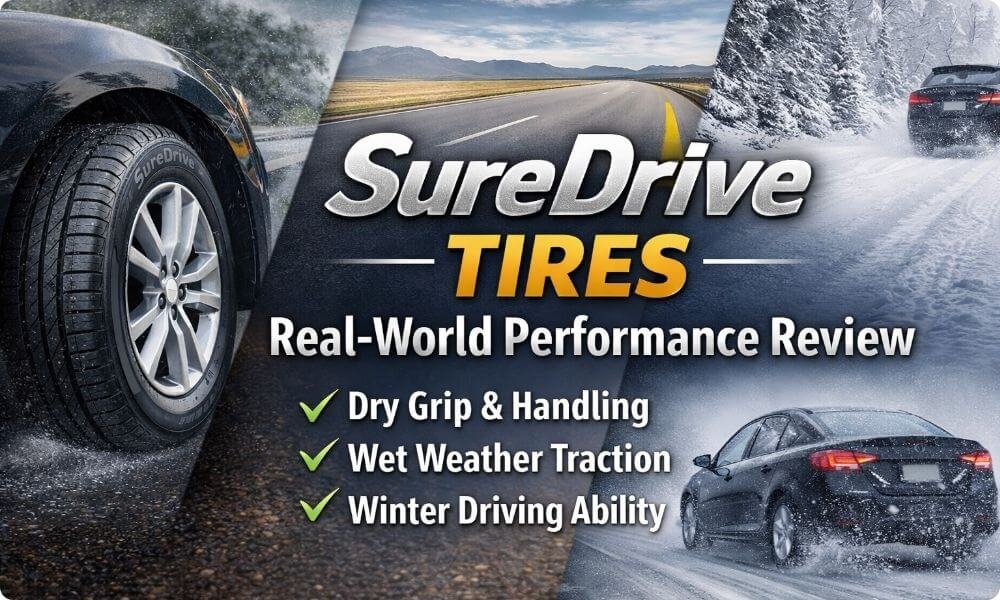
Here’s a clear, plain-language look at how these tires feel when you actually drive them — no specs, just real behavior and practical tips.
Dry Road Performance
On dry roads, tires mainly need to follow your steering, stop when you expect, and feel stable at speed. SureDrive tires typically give predictable steering and safe braking for everyday driving. They won’t feel “sporty,” but they do what most drivers need: consistent response and reasonable stopping power.
If you push hard — fast cornering or emergency maneuvers — a higher-performance tire will react quicker and hold more grip. For daily city and highway driving, a predictable, non-aggressive feel is usually safer and more comfortable.
Wet Weather Traction
Wet roads are where differences show up. Good wet performance comes from tread design, rubber compound, and tread depth. SureDrive-type budget tires tend to handle light to moderate rain well if you drive smoothly and keep proper tire pressure.
Two important points to remember:
- Worn tires and high speeds increase the chance of hydroplaning. Slowing down and replacing tires before they get too worn improves safety.
- In heavy rain, braking distances can be longer than with premium tires. That means leave more space ahead and brake earlier than you normally would.
Ride Comfort & Noise
Comfort and noise are often a pleasant surprise with budget touring tires. SureDrive tires usually absorb bumps well and keep road noise at a reasonable level for daily driving.
Noise comes from tread patterns and from irregular wear. Keeping tires balanced, aligned, and rotated reduces vibration and loud spots. If you hear a steady hum or a new thumping sound, have the tires and wheels checked — it could be wear or a wheel issue.
Light Winter & Cold Weather Performance
All-season tires can work in cool weather and light snow, but they are not winter tires. In cold temperatures, rubber gets stiffer and traction drops. All-season tires are made to be a compromise for many conditions, not specialized for ice and deep snow.
If you only see occasional, light snow, these tires are usually fine. But if your winters bring regular snow, ice, or very low temperatures, switching to dedicated winter tires is safer — they shorten stopping distances and grip far better in those conditions.
Durability & Tread Life
How long these tires last depends on driving habits, maintenance, and the specific model. Many SureDrive patterns carry mileage warranties (40k–55k miles for some models), which signals the manufacturer’s expectation of reasonable tread life if tires are properly maintained.
Real-world owners often report good value for the price, though premium tires will typically last longer and resist wear better under heavy mileage. Regular rotation, correct inflation, and alignment checks will help you get the best life out of any tire.
A handy way to think about value is cost-per-mile: divide the price you pay by realistic expected miles. A cheaper tire that needs replacement sooner can cost more over several years than a more expensive tire with much longer life.
Safety Considerations
Safety is about more than brand—it’s about fit, condition, and how you drive. Key safety points with SureDrive:
- Follow the tire’s load index and speed rating for your vehicle.
- Replace tires when tread depth nears the legal limit (and sooner if performance drops noticeably).
- If you drive in heavy rain, mountainous roads, or snowy climates, consider higher-rated or specialized tires; SureDrive is generally aimed at standard conditions, not extreme or performance-focused use. For warranty and safety specifics, consult the manufacturer documentation.
If you need tires that deliver shorter wet braking distances, stronger handling at speed, or superior winter traction, you’ll likely need to step up to mid-range or premium models designed for those exact needs.
Pros and Cons
Here’s a straightforward look at what people tend to praise — and complain about — with SureDrive tires:
Pros
- Affordable price point compared to premium brands.
- Good overall grip and braking for everyday use.
- Comfortable and relatively quiet ride.
- Wide range of tire types for different vehicles.
- Decent warranty coverage.
Cons
- Mixed wet-weather performance reports.
- Tread life is sometimes shorter than some premium options.
- Not ideal for very aggressive driving or severe weather.
SureDrive Tires vs Competitors
This section helps you understand what you’re really getting when you choose SureDrive, and what you may be giving up compared to other tires. Think of it as choosing between “good enough,” “better,” and “best.”
Compared to Other Budget Brands
When compared to other low-cost tire brands, SureDrive usually sits right in the middle. Pricing is competitive, and you’re not paying extra just for a name.
Performance-wise, SureDrive feels similar to most budget tires. It handles normal driving well but doesn’t stand out in any single area.
Key differences you may notice:
- Price is often the same or slightly lower than other budget options
- Ride comfort is decent, sometimes better than cheaper no-name tires
- Wet-road grip is average, not a strong point
The main trade-off comes with durability. Some budget competitors may last a little longer, while others wear out faster but feel rougher on the road. SureDrive leans toward comfort over long tread life.
Compared to Mid-Range and Premium Tires
Spending more on mid-range or premium tires brings noticeable improvements, especially over time.
With higher-priced tires, you usually gain:
- Better grip in rain and sudden stops
- Quieter highway driving
- More stable handling at higher speeds
- Longer tread life
Where SureDrive clearly falls behind is in consistency. Premium tires tend to feel the same month after month, while budget tires like SureDrive can lose grip and comfort as they wear down.
When it comes to value versus longevity, SureDrive wins on upfront cost but loses over the long term. You’ll pay less today, but you may replace them sooner than higher-end tires.
Comparison Table (Simple Example)
| Tire Type | Price | Comfort | Grip | Tread Life |
| SureDrive | Low | Good | Fair | Average |
| Other Budget Brands | Low | Fair–Good | Fair | Average |
| Mid-Range Tires | Medium | Very Good | Good | Long |
| Premium Tires | High | Excellent | Very Good | Very Long |
Who Should (and Shouldn’t) Buy SureDrive Tires
SureDrive tires are designed for everyday driving, not special situations. Whether they’re a good fit depends mostly on how you drive and what you expect from your tires.
SureDrive Tires Are a Good Choice If You:
- Drive low to moderate miles each year, such as commuting, errands, and school runs
- Mostly drive in urban or suburban areas with normal traffic and speed limits
- Want a comfortable ride at an affordable price
- Plan to keep your vehicle short-term or need reliable tires for a lease return
For these drivers, SureDrive tires offer dependable performance without paying for features you may never use.
You Should Avoid SureDrive Tires If You:
- Drive long highway distances regularly and need tires that last longer
- Enjoy sporty or aggressive driving, with fast turns or quick stops
- Live in areas with heavy snow, ice, or long, harsh winters
- Use your vehicle for towing, hauling, or carrying heavy loads
In these situations, stronger or more specialized tires are usually a safer and better long-term investment.
Real Owner Feedback & Common Complaints
Across verified buyer comments and retailer reviews, common themes emerge: owners praise the comfort and quiet ride, and several note that wet performance is adequate for everyday conditions. Complaints tend to focus on durability under heavy use and a desire for more precise handling from a premium tire. As with any brand, look for trends (multiple buyers reporting the same issue) rather than one-off comments.
When reading reviews, pay attention to reviewers who share vehicle type, driving conditions, and miles driven—that context matters a lot.
Installation, Maintenance & Longevity Tips
To get the most out of any tires, including SureDrive:
- Keep tire pressure at the vehicle manufacturer’s recommended levels and check monthly.
- Rotate tires every 5,000–7,500 miles (or per your vehicle manual) to promote even wear.
- Get periodic wheel alignment checks—misalignment accelerates uneven wear.
- Inspect tires for cuts, bulges, and uneven wear; address problems early.
- Save receipts and warranty paperwork in case you need coverage—warranties often have conditions like proof of purchase and maintenance records.
These simple maintenance steps extend tread life and preserve performance.
Read More: RBP Tire Review 2026
Final Verdict: Are SureDrive Tires Worth It?
If you’re a typical daily driver looking for an affordable, comfortable, and widely available tire, SureDrive is a sensible choice. They provide good ride comfort and reasonable wet-weather performance for everyday use, backed by mileage warranty options on many models.
However, if you need long-lasting high-mileage rubber, sporty handling, or winter-specific traction, consider stepping up to a mid-range or premium tire that’s purpose-built for those demands.
One-sentence recommendation: SureDrive tires are a smart, budget-conscious option for everyday drivers who want comfort and decent wet performance without paying premium prices.
FAQs About SureDrive Tires Review
Are SureDrive tires safe?
For everyday driving in typical conditions, yes—when installed correctly and maintained. For extreme conditions (heavy snow, aggressive driving), choose tires made for those uses.
How long do SureDrive tires last?
Mileage warranties vary by model (commonly 40,000–55,000 miles for some patterns), but real-world life depends on driving style and maintenance.
Are SureDrive tires good in rain?
They’re designed with tread features that help in wet conditions and perform adequately for routine rainy driving, though premium tires may stop shorter in severe conditions.
Who makes SureDrive tires?
SureDrive tires are distributed and supported through major tire manufacturers/retail channels; warranty and product info are handled through Bridgestone/Firestone channels. For exact manufacturer details and warranty text, check official documentation.
Are they good for highway driving?
Yes, for moderate highway use and commuting. If you do long-haul, high-mileage interstate driving frequently, compare tread-life and warranty closely to see if a longer-lasting tread would be more cost-effective.
