215 vs 225 Tires: What’s the Difference and Which Is Better? (2026 Guide)
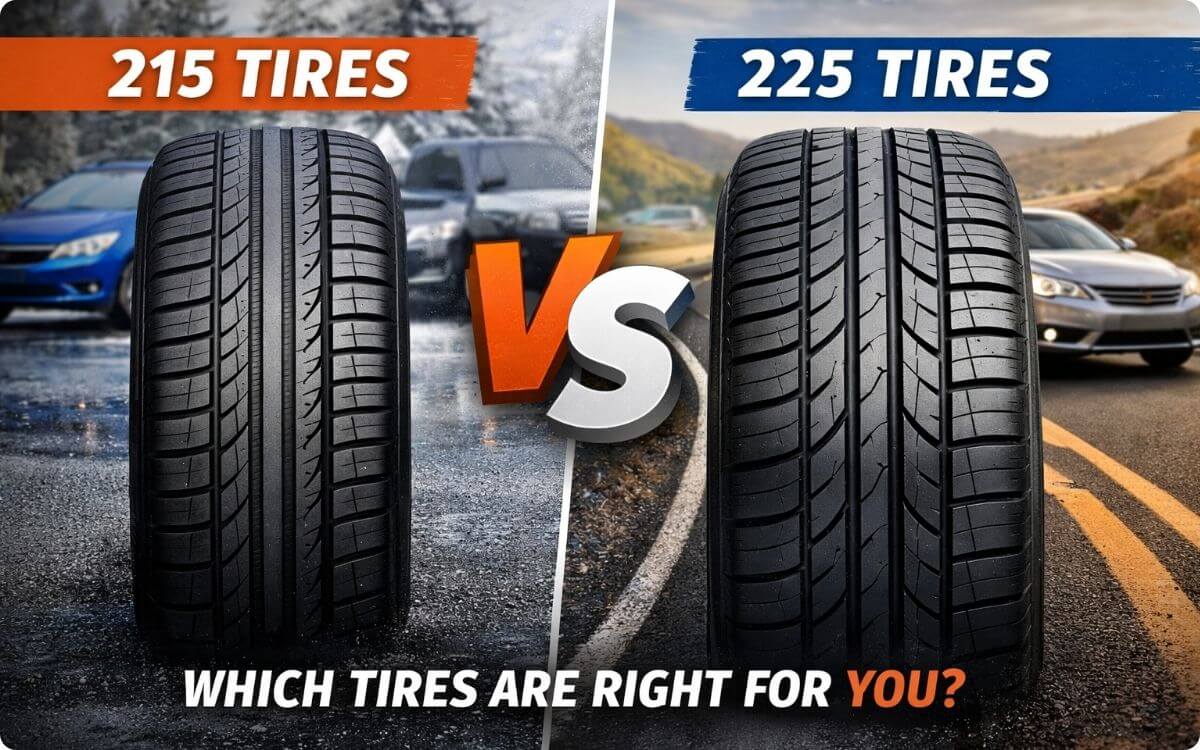
When comparing 215 vs 225 tires, the main difference is width. A 225 tire is 10 millimeters wider than a 215 tire. That small change may seem minor, but it can affect how your car handles, how much fuel it uses, and how comfortable the ride feels.
Both sizes are common on modern cars, SUVs, and crossovers. Choosing the right one depends on your driving style, your vehicle, and what matters most to you—whether that’s fuel efficiency, comfort, or better grip on the road.
This guide explains the real-world differences between 215 and 225 tires so you can confidently choose the right size.
215 vs 225 Tires (Quick Comparison)
| Feature | 215 Tires | 225 Tires |
| Width | 215 mm | 225 mm |
| Handling | Good | Better |
| Fuel Economy | Better | Slightly lower |
| Ride Comfort | Smoother | Slightly firmer |
| Grip | Good | Higher |
| Price | Usually cheaper | Slightly more expensive |
In simple terms, 215 tires are slightly narrower, while 225 tires are wider and provide more road contact. Narrower tires often prioritize efficiency and comfort, while wider tires focus more on traction and handling performance.
What Do Tire Size Numbers Mean?
If you’ve ever looked at the side of a tire, you’ve probably seen a code like 215/55R17. At first glance, it can look confusing. But once you know what each number means, it becomes easy to read.
This code simply describes the size and shape of the tire. Each part tells you something important about how the tire fits your car and how it performs on the road.
Let’s break down the example 215/55R17 so you can understand what each number means.
Tire Width
The first number in the tire size is 215. This number shows how wide the tire is.
It means the tire is 215 millimeters wide from one sidewall to the other. In simple terms, this is the width of the tire that touches the road.
A wider tire usually provides more grip and stability, especially when turning or driving at higher speeds. However, wider tires can sometimes use a little more fuel because they create more resistance on the road.
Narrower tires, on the other hand, are often more fuel-efficient and quieter, but they may not offer quite the same level of cornering grip.
Aspect Ratio
The next number is 55, and this is called the aspect ratio.
This number tells you how tall the tire’s sidewall is compared to its width. In this case, the sidewall height is 55% of the tire’s width.
So with a 215/55 tire, the sidewall height is a little over half of the tire’s width.
Tires with a higher aspect ratio usually have taller sidewalls, which can make the ride feel softer and more comfortable over bumps.
Tires with a lower aspect ratio have shorter sidewalls, which can improve handling and make the car feel more stable when turning. The trade-off is that the ride can feel a bit firmer.
Wheel Diameter
The last number in the example is 17. This tells you the size of the wheel the tire fits.
A tire marked 215/55R17 is designed to fit a 17-inch wheel. This measurement refers to the diameter of the wheel from one side to the other.
This number must match your vehicle’s wheel size. For example, a tire designed for a 17-inch wheel will not fit a 16-inch or 18-inch rim.
When replacing tires, it’s important to keep the correct wheel diameter so the tire fits properly and performs safely.
Key Differences Between 215 and 225 Tires
At first glance, the difference between 215 and 225 tires may seem small. The numbers are close, and both sizes are commonly used on many cars.
But that 10-millimeter change in width can affect how the car grips the road, how it feels while driving, and even how much fuel it uses. Below are the main differences drivers usually notice.
Tire Width and Contact Patch
The most obvious difference is the width.
A 225 tire is 10 millimeters wider than a 215 tire. That’s about 0.4 inches, which may not sound like much, but it slightly increases the area of rubber touching the road.
This area is often called the contact patch, which simply means the part of the tire that actually touches the pavement.
With a wider tire like a 225, the contact patch becomes a little larger. More rubber touching the road can help the tire grip better during acceleration, braking, and turning.
A 215 tire has a slightly smaller contact area. That usually means a bit less grip, but it also reduces friction with the road.
Handling and Cornering Stability
Because wider tires have more road contact, they often provide better handling and stability.
For example, when driving through long highway curves, a 225 tire may feel more planted on the road. The extra width helps the car stay stable as the vehicle leans into the turn.
During emergency braking, the larger contact area can also help the tires hold the road more firmly, which may improve stopping control.
On wet roads, the difference can vary. Wider tires can provide strong grip, but good tread design is just as important for moving water away from the tire.
For everyday driving, both sizes handle well. The difference is usually more noticeable for drivers who enjoy faster cornering or spirited driving.
Fuel Efficiency
Tire width can also affect how much fuel a vehicle uses.
When a tire rolls on the road, it creates something called rolling resistance. This is the force the engine must overcome to keep the tires moving.
Wider tires usually create slightly more resistance because more rubber touches the road. As a result, the engine may use a bit more fuel.
Narrower tires like 215 models often roll a little more easily. Because of this, they may improve fuel economy slightly.
In real driving, the difference is usually small. Many drivers see about 1–3% better fuel efficiency with narrower tires.
Ride Comfort
Ride comfort is another small difference between the two sizes.
Many drivers find that 215 tires feel slightly softer on the road. Because they are narrower, they can absorb small bumps and uneven pavement a bit more gently.
This can reduce some of the small vibrations that travel into the cabin while driving.
With 225 tires, the ride can feel a little firmer. The wider tire creates more contact with the road, which improves stability but may transmit a bit more road feel.
The difference is usually minor, but drivers who prefer a smooth and relaxed ride often lean toward the narrower option.
Road Noise
Tire noise is influenced by several things, including tread pattern, rubber compound, and road surface.
That said, tire width can also play a role.
Wider tires sometimes produce slightly more road noise because more rubber is touching the pavement as the tire rolls.
However, this is not always noticeable. In many cases, tread design matters more than width when it comes to noise levels.
A well-designed quiet tire can still be comfortable even if it is wider.
Tire Price Differences
In many cases, 225 tires cost a little more than 215 tires.
One reason is that wider tires require more rubber and material, which increases manufacturing cost.
They are also often designed for higher performance, which can add to the price.
Market demand plays a role as well. Certain sizes are more popular for performance vehicles, and that can affect pricing.
The price difference is usually not huge, but when replacing four tires, it can add up slightly.
Real-World Driving Performance
When choosing between 215 and 225 tires, it helps to think about how the car will behave in everyday driving. The differences are not huge, but they can become noticeable depending on the road and weather conditions.
Dry Road Performance
On dry pavement, 225 tires usually perform better.
Because they are wider, more rubber touches the road. This extra contact helps the tire grip the pavement more firmly. As a result, the car may feel more stable when accelerating, turning, or braking.
You might notice this most when driving through highway curves or sharp turns. The wider tire can hold the road more confidently, which makes the car feel more planted.
The difference is not dramatic for normal driving, but drivers who enjoy a slightly sportier feel often prefer the wider tire.
Wet Road Performance
Rain changes how tires behave, and both sizes have their strengths.
215 tires can sometimes move water away from the tire more easily. Because they are slightly narrower, they may cut through standing water better. This can help reduce the risk of hydroplaning on very wet roads.
However, 225 tires can still offer strong grip on wet pavement because their wider surface helps the tire stay planted on the road.
In real driving, the tire’s tread design often matters more than the width. A good rain-ready tread pattern can make a big difference in wet conditions.
Snow and Winter Driving
In snowy conditions, narrower tires usually have an advantage.
A narrow tire places more pressure on a smaller area of snow. This pressure helps the tire cut down through the snow and reach the road surface below.
Wider tires spread the vehicle’s weight over a larger area. This can cause the tire to float more on top of the snow, which sometimes reduces traction.
Because of this, many winter driving experts prefer narrower tires when driving on snow-covered roads.
Can You Replace 215 Tires With 225 Tires?
In many cases, 225 tires can replace 215 tires, but only if the vehicle and wheels can support the slightly wider size. The difference in width is small, yet it still matters for proper fit and safe driving.
Before making the change, it’s important to check a few basic things. These include the wheel width, the available space around the tire, and the size recommended by the vehicle manufacturer.
Most of the time the swap works without problems, but it’s always better to confirm first rather than guess.
Rim Width Compatibility
Every tire size works best with a certain wheel width. If the wheel is too narrow or too wide, the tire may not sit correctly on the rim.
For these two sizes, the typical ranges look like this:
| Tire Size | Recommended Rim Width |
| 215 | 7–8 inches |
| 225 | 7.5–9 inches |
If your wheels are close to 7 inches wide, they are usually better suited for 215 tires. If the wheels are wider, such as 8 inches or more, they can often support 225 tires safely.
This is why checking your wheel size is an important first step before switching tire widths.
Wheel Well Clearance
Another thing to check is the space around the tire inside the wheel well.
A wider tire sits closer to nearby parts of the car. If there isn’t enough space, the tire could rub against the inner fender, suspension parts, or other components.
This can sometimes happen when turning the steering wheel fully to one side, which is known as steering lock. It may also happen when the suspension compresses over bumps.
The extra width of a 225 tire is small, but in tight spaces even a small difference can matter. That’s why it’s smart to make sure there is enough clearance before switching.
Speedometer Impact
Changing tire size can also affect how your speedometer and odometer work.
If the overall tire diameter changes, the vehicle may calculate speed slightly differently. In simple terms, the car might show a speed that is a little higher or lower than the actual speed.
In most cases, switching from 215 to 225 tires with the same sidewall ratio causes only a very small difference. Many drivers won’t even notice it.
Still, it’s worth checking the tire specifications so the change stays within a safe and acceptable range.
Pros and Cons of 215 Tires
Before choosing a tire size, it helps to look at the practical advantages and disadvantages. For many everyday drivers, 215 tires offer a good balance of comfort, efficiency, and affordability.
Advantages
- Better fuel economy – The narrower width creates less resistance on the road, which can help the vehicle use slightly less fuel.
- Lower cost – In many cases, 215 tires are a little cheaper to buy than wider tires.
- Quieter ride – Narrower tires often produce less road noise, especially on rough pavement.
- Better snow performance – The narrower shape can cut through snow more easily, which may improve traction in winter conditions.
Disadvantages
- Less cornering grip – Because the tire is narrower, it has slightly less contact with the road when turning.
- Less sporty handling – Drivers who enjoy sharper handling or faster cornering may find the tire feels less performance-focused.
Pros and Cons of 225 Tires
Drivers who prefer a stronger road grip often lean toward 225 tires. The wider surface can improve stability, especially during turns and higher-speed driving.
Advantages
- Improved traction – The wider tire touches more of the road, which can increase grip during acceleration and braking.
- Better cornering stability – The extra width helps the car feel more planted when driving through curves.
- Sportier driving feel – Many drivers notice that the car feels more responsive and confident with wider tires.
Disadvantages
- Slightly worse fuel economy – The wider surface creates a bit more resistance on the road, which can use a little more fuel.
- Higher price – Wider tires usually cost slightly more because they use more material.
- More road noise – With more rubber touching the pavement, some drivers notice a little extra noise from the road.
Popular Models of 215 Tires
Zeetex ZT3000
The ZT3000 is an all-season passenger tire known for being affordable and offering balanced everyday performance. It aims to give a quiet, comfortable ride with decent wet and dry grip for daily driving.

Key features:
- Asymmetric tread design for balanced wet and dry traction.
- Wide circumferential grooves that help resist hydroplaning.
- Low rolling resistance to help fuel economy.
- Tuned tread pitch to reduce road noise.
- Long treadwear warranty on many sizes (varies by seller).
- Affordable price compared with premium brands.
- Good for city and highway driving, not a high-performance sport tire.
Notes: The ZT3000 is a budget-friendly choice. It performs well for its price, but it won’t match premium tires in high-speed handling or long-term durability.
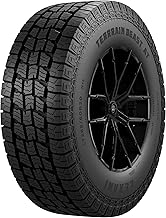
Lexani Terrain Beast AT
The Terrain Beast AT is an all-terrain tire aimed at light trucks and SUVs. It balances off-road capability with on-road comfort, so it’s a popular pick for drivers who need versatility without a big price tag.
Key features:
- Deep tread blocks and wide voids for traction in dirt and gravel.
- Stone ejectors to reduce lodged stones in the tread.
- Durable construction for light off-road use.
- Comfortable on paved roads for an AT tire.
- Decent wet traction for mixed driving.
- Tends to be louder than full highway tires when used mainly on pavement.
- Good value for occasional off-road owners, not a mud-specialist.
Notes: The Terrain Beast is practical for people who split time between trails and the street. Expect slightly more road noise than a highway tire, but better off-road grip.
Popular Models of 225 Tires
Sumitomo Encounter HT2
The Encounter HT2 is a highway-terrain tire designed for SUVs and light trucks. It focuses on quiet ride, comfort, and reliable traction across wet and dry roads, making it a common choice for daily drivers with bigger vehicles.

Key features:
- Smooth shoulder design to reduce road noise and vibration.
- Wave-shaped sipes and tread blocks for good wet and dry braking.
- Stable at higher speeds thanks to reinforced overlays.
- Comfortable highway ride and predictable handling.
- Good treadwear for a highway-terrain tire.
- Performs reasonably well in light snow, but not a winter tire replacement.
- Offers a balance of comfort and traction rather than outright off-road ability.
Notes: The Encounter HT2 is a solid all-around choice for larger vehicles that spend most time on paved roads. It’s not meant for heavy off-roading but shines on highways and wet conditions.
Hercules Strong Guard ST
The Strong Guard ST is built mainly as a trailer and specialty tire, focusing on strength and durability. It’s designed to handle heavy loads and towing rather than high-speed passenger comfort.

Key features:
- Heavy-duty internal construction with steel belts for load strength.
- Reinforced sidewalls for extra protection and stability under load.
- Circumferential grooves and center rib design for straight tracking and water evacuation.
- Heat-control tech to reduce overheating during towing.
- Even pressure distribution for longer, more even tread wear under load.
- Excellent choice for trailers and commercial uses, not a passenger car performance tire.
- Limited application for everyday passenger vehicles—best for towing and hauling.
Notes: If you tow frequently or need a rugged tire for trailer use, the Strong Guard ST is purpose-built. It’s not intended as a highway comfort tire for passenger cars.
Vehicles That Commonly Use 215 Tires
Many compact and midsize cars come with 215 tires from the factory. This size offers a good balance between comfort, fuel efficiency, and everyday performance, which is exactly what most drivers of these cars need.
Some common examples include the Honda Civic, Toyota Corolla, Mazda3, and Hyundai Elantra. These vehicles are designed mainly for daily commuting, city driving, and long highway trips.
Manufacturers often choose narrower tires for smaller cars because they help improve fuel efficiency. Less rubber touching the road means the engine does not have to work as hard to keep the car moving.
Narrower tires can also help keep the ride comfortable. They tend to absorb small bumps in the road a bit better, which makes everyday driving feel smoother.
Another reason is cost. Smaller tires are usually cheaper to produce and replace, which helps keep ownership costs lower for drivers.
Of course, there is a small trade-off. Narrower tires do not provide the same level of cornering grip as wider tires. But for cars like the Civic or Corolla, the goal is usually efficiency, comfort, and reliability, not high-performance driving.
For most drivers of compact cars, 215 tires provide the right balance for everyday use.
Vehicles That Commonly Use 225 Tires
Many midsize cars and crossovers come with 225 tires as standard equipment. These vehicles are usually a bit larger and heavier than compact cars, so they benefit from the extra width.
Common examples include the Honda Accord, Toyota Camry, Subaru Outback, and Nissan Altima. These models often focus on comfort, highway stability, and balanced performance.
Wider tires work well for larger vehicles because they provide more contact with the road. This extra grip can improve stability when driving at higher speeds or when taking long highway curves.
Another reason is vehicle weight. Larger cars and crossovers are heavier than compact cars. A wider tire helps spread that weight across a larger area, which can improve traction and control.
Drivers may also notice that wider tires help the vehicle feel more stable during quick maneuvers, such as changing lanes or braking suddenly.
There are small trade-offs. Wider tires can cost a little more and may slightly reduce fuel efficiency. But for many midsize vehicles, the added stability and grip make the wider size a practical choice for everyday driving.
When Should You Choose 215 Tires?
For many drivers, 215 tires are a practical and cost-effective choice. They work especially well for everyday driving where comfort, efficiency, and low running costs matter most.
You may want to choose 215 tires if these priorities fit your driving needs:
- Better fuel efficiency – Narrower tires usually create less resistance on the road, which can help your car use a little less fuel over time.
- Lower tire cost – In many cases, 215 tires are slightly cheaper to buy and replace.
- Quieter ride – Because they are narrower, they often produce less road noise, especially on rough pavement.
- Better winter traction – Narrower tires can cut through snow more easily, which may improve grip on snowy roads.
For daily commuting, long highway trips, and city driving, this size often provides a comfortable and efficient driving experience.
That said, there is a small trade-off. Drivers who prefer sharper handling or a more performance-focused feel may find that wider tires offer a bit more grip during fast turns.
When Should You Choose 225 Tires?
225 tires are a good option for drivers who want a little more grip and stability on the road. The wider surface allows more of the tire to touch the pavement, which can help the car feel more secure while driving.
You may want to choose 225 tires if these benefits match your driving style:
- Stronger grip – The wider tire creates more contact with the road, which can improve traction during acceleration and braking.
- Improved handling – Many drivers notice better stability when turning, especially on highway curves or when changing lanes.
- Sportier driving performance – The car may feel more responsive and planted, which some drivers prefer.
This size often works well for midsize cars or for drivers who spend a lot of time on highways.
However, there are small trade-offs. Wider tires can cost a little more and may reduce fuel efficiency slightly. For many drivers, the difference is minor, but it’s still worth keeping in mind when choosing a tire size.
Expert Advice From Tire Manufacturers
Major tire companies spend years testing how different tire sizes affect vehicle performance. According to guidance from brands like Michelin, Bridgestone, and Goodyear, tire width can influence how a car grips the road and how efficiently it uses fuel.
Wider tires usually provide better traction, especially during cornering or strong braking. The larger contact area helps the tire hold the road more firmly, which can improve stability.
However, manufacturers also point out a small trade-off. Wider tires tend to create more rolling resistance, which means the engine may need slightly more energy to keep the car moving. Over time, this can reduce fuel efficiency a little.
Because of these factors, tire companies generally recommend using the tire size suggested by the vehicle manufacturer whenever possible. Car makers choose tire sizes carefully to balance grip, comfort, fuel efficiency, and safety.
If you are thinking about switching from 215 to 225 tires, it’s usually best to confirm that the new size fits your wheels and matches your vehicle’s recommended specifications. This helps ensure the car performs the way it was designed to.
Read More: 265 vs 275 Tires: Which is Right for You?
Frequently Asked Questions
What is the difference between 215 and 225 tires?
The main difference is width: a 225 tire is 10 millimeters wider than a 215. That extra width usually gives a bit more grip and stability, while the narrower tire can be a touch kinder on fuel and ride comfort.
Are 225 tires wider than 215?
Yes. A 225 tire is 10 millimeters wider than a 215 tire.
Will 225 tires improve handling?
Often they will. The wider tread puts more rubber on the road, which helps the car hold turns and respond more quickly to steering input. Keep in mind the improvement is modest for normal driving and depends on the tire’s design and the vehicle setup.
Do wider tires reduce fuel efficiency?
Wider tires can increase rolling resistance, which means the engine works a bit harder to move the car. That can lead to a small drop in fuel economy—usually only a percent or two—so it’s a trade-off between grip and efficiency.
Final Verdict: 215 vs 225 Tires
There’s no single “right” answer. For most daily drivers who value comfort, quiet, and fuel savings, 215 tires are a safe, sensible choice. For drivers who want sharper handling, more cornering grip, or a sportier feel, 225 tires are worth considering — provided your wheels and clearance support the change.
Before you switch:
- Confirm rim width compatibility.
- Check wheel well clearance.
- Match or exceed load index and speed rating.
- If possible, test-drive the tire model in your preferred size or consult a trusted tire shop.
If you’d like, I can create a small swap calculator (for example, showing diameter and speedometer impact when moving from 215/55R17 to 225/55R17), recommend specific tire models in each size for different budgets, or draft an image plan to help you visualize contact patch and fitment. Which would you like next?
