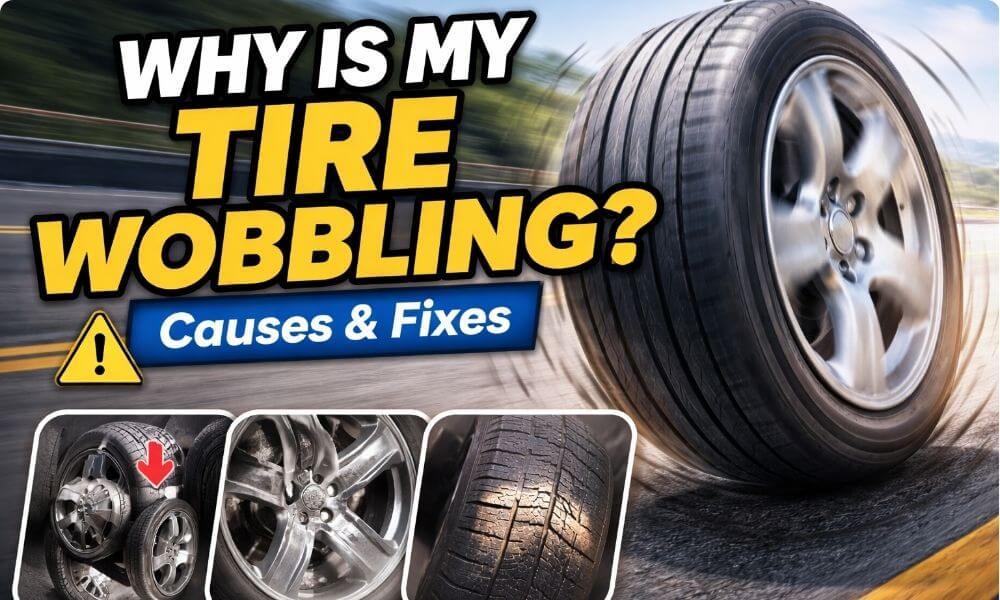
Why Is My Tire Wobbling? (Complete Diagnosis & Fix Guide)
A tire that wobbles is never something to ignore. Sometimes the problem is simple, like a wheel balance issue. Other times, it can point to something more serious, such as a bent rim, loose lug nuts, or suspension trouble. The good news is that most wobble problems can be identified with a careful check, and many can be fixed before they turn into expensive repairs.
If you have been asking, “Why is my tire wobbling?”, this guide will walk you through the most common causes, what the wobble feels like, how to check it, and what to do next. The goal is simple: help you understand the problem clearly and make a smart, safe decision.
Quick Answer: Why Is My Tire Wobbling?
If your tire is wobbling, something isn’t spinning the way it should. The wheel needs to rotate smoothly, and even a small issue can throw it off.
Here are the most common reasons:
- Unbalanced tires – The weight around the tire isn’t even, so it shakes at higher speeds.
- Bent wheel or rim – Hitting a pothole or curb can slightly bend the wheel.
- Uneven tire wear – Parts of the tire wear down more than others, making the ride bumpy.
- Loose lug nuts – The bolts holding the wheel may not be tight enough, which is dangerous.
- Alignment or suspension issues – The wheels may not be pointing straight, or parts under the car may be worn out.
In most cases, if the wobble only shows up at high speed, it’s a simple balancing issue.
If you feel it all the time, even at low speed, it could mean something is damaged or loose and needs attention sooner.
Symptoms: How to Recognize Tire Wobble
A wobbling tire usually feels like a shake or vibration that should not be there. Many drivers notice it first in the steering wheel at highway speeds, while others feel it in the seat or floor. That vibration can also come with uneven wear, a rough ride, or a slight pull to one side.
- Steering wheel shaking — The wheel may tremble in your hands, especially when you drive faster. This is one of the most common signs of an unbalanced wheel or tire.
- Vibration in the seat or floor — If the shake feels stronger under your body than in the steering wheel, the problem may be coming from a rear wheel.
- Car pulling to one side — The car may not drive straight, which can point to alignment trouble or uneven tire wear.
- Uneven or bumpy ride — The car may feel rough, shaky, or “off,” even on a smooth road.
- Strange noises — A bad wheel or tire can sometimes make a thumping, humming, or droning sound while you drive.
A small shake at speed can sometimes start as a simple balance problem, but a wobble that gets worse or happens all the time should be checked soon.
Speed-Based Diagnosis
The speed at which the wobble starts can give you a useful clue about what is wrong. It is not a perfect test, but it can help you narrow things down before you get the car checked.
- Low speeds (20–40 km/h): If the wobble starts early, the problem may be a bent rim or a damaged tire. This kind of issue often shows up right away, not just on the highway.
- Medium speeds (40–80 km/h): A shake in this range can point to uneven tire wear or an alignment problem. The car may feel mostly fine at first, then start to feel unstable as speed builds.
- High speeds (80+ km/h): This is often caused by unbalanced tires. The car may feel smooth around town but start shaking once you go faster.
- During braking: If the wobble shows up when you press the brake pedal, the brake rotors may be warped. That is a different problem from the tire itself, but it can feel very similar.
This kind of check is not a final answer, but it can save time. It helps you notice patterns instead of guessing blindly, which makes it easier to explain the problem to a mechanic.
Main Causes of Tire Wobbling
A wobbling tire usually comes down to one of a few common problems. Some are simple and cheap to fix. Others are more serious and should be checked right away. The best way to think about it is this: the tire or wheel is not moving as smoothly as it should, and something is making the ride uneven.
1. Unbalanced Tires
This is one of the most common reasons a tire starts to wobble. A tire and wheel need to have weight spread out evenly all around them. If one side is heavier than the other, the wheel will not spin smoothly.
That may not seem like a big deal at first, but once the car reaches higher speeds, the imbalance becomes much easier to feel. The steering wheel may shake, or the car may feel like it is buzzing underneath you. Around town, the problem might seem small. On the highway, it can become much more noticeable.
Tires can become unbalanced over time for a few reasons. Sometimes the small balancing weights fall off. Sometimes a new tire is installed without being balanced properly. Even normal wear can slowly change how the tire feels on the road.
The good news is that this is usually a simple fix. A mechanic can balance the wheel so it spins more evenly. It is not a large repair, but it does make a big difference in how the car drives.
2. Bent or Damaged Rim
A bent rim is another common cause of wobbling. The rim is the metal part that holds the tire in place. If it gets bent, the wheel cannot spin in a straight, smooth circle anymore.
This often happens after hitting a pothole, curb, or other hard object in the road. Even if the damage is not easy to see, the bend can still affect how the tire moves. A damaged rim can cause the car to shake at different speeds, not just at high speed.
One clue is that the wobble may feel constant. It may not come and go with speed the way a balancing issue does. You may also be able to spot a bent rim if you look closely at the wheel.
If the rim is only slightly bent, it may be repairable. If the damage is severe, replacement is usually the better choice. It depends on how bad the bend is and whether the wheel is still safe to use.
3. Uneven or Worn Tires
Tires do not last forever, and they do not always wear down evenly. If one part of the tire wears faster than another, the surface becomes uneven. That can create a wobble or a rough feeling when driving.
This often happens when tires are not rotated regularly. It can also happen when the wheels are not aligned properly. In some cases, a tire may simply be old and worn out. Once the tread becomes patchy or uneven, the ride starts to feel rougher.
You might notice areas of the tire that look more worn than the rest. The car may feel bumpy, and the wobble can get worse as the tire wears further. Sometimes this is easy to miss until the problem becomes obvious while driving.
If the wear is mild, rotating the tires may help. But if the tread is badly worn or damaged, the tire will need to be replaced. A worn tire is not just uncomfortable. It can also reduce grip, especially in wet weather.
4. Loose or Improperly Tightened Lug Nuts
This is one of the most serious causes of tire wobble. Lug nuts are the fasteners that hold the wheel to the car. If they are loose, the wheel may move when it should be held firmly in place.
A loose wheel can wobble, make clicking noises, or feel like it is shifting as the car moves. This is not something to ignore or “watch for later.” It can quickly become dangerous.
If you hear a clicking sound along with wobbling, that is a warning sign. In a worst-case situation, the wheel could come loose while driving. That is why this problem needs immediate attention.
If you suspect loose lug nuts, stop driving as soon as it is safe to do so. Do not keep going and hope it gets better. Have the wheel checked right away.
5. Wheel Alignment Issues
Wheel alignment is about how the wheels are angled on the road. When alignment is off, the tires do not roll straight the way they should. That can create uneven tire wear and, in some cases, a wobbling feeling.
A misaligned car may also pull to one side. You might notice the steering wheel does not sit straight even when the car is driving forward. Over time, the tires can wear out unevenly, which makes the problem worse.
Alignment problems usually do not happen suddenly. They often build up slowly after hitting potholes, driving on rough roads, or simply from normal use over time. Because of that, people sometimes do not notice the issue until the ride starts to feel different.
An alignment service can correct the angle of the wheels and help the car drive straight again. It is one of the most useful fixes when the wobble is linked to pulling or uneven wear.
6. Suspension or Steering Problems
Sometimes the wobble does not come from the tire itself at all. It can come from the parts that support and control the wheel. These include ball joints, tie rods, and bushings. These parts help keep the wheel steady and the car controlled.
When they wear out, the wheel can move more than it should. That can lead to a shaky feeling, clunking sounds, or a sense that the car is not sitting firmly on the road. The car may feel loose or unstable, especially over bumps or at higher speeds.
These problems are harder to spot without a proper inspection. They may look like a tire issue at first, but the real cause is often underneath the car. Because suspension and steering parts affect safety, they should be checked by a professional if the wobble does not seem to come from the tire or wheel alone.
The fix depends on which part is worn. Sometimes it is a small part. Other times more than one piece needs attention. Either way, this is not the kind of problem to guess at.
Is It Safe to Drive with a Wobbling Tire?
The honest answer is: it depends on how bad it is. Some small issues can wait a little, but others can become dangerous very quickly.
Safe (short distance only)
If you only feel a slight vibration at higher speeds, it’s often a simple balance issue. You can usually drive a short distance, but don’t ignore it for long. It can get worse over time.
Risky (fix soon)
If the wobble happens often or the car starts pulling to one side, it’s a sign something isn’t right. The car may still be drivable, but it’s not stable. It’s best to get it checked as soon as you can.
Dangerous (stop driving immediately)
In some cases, you should not keep driving at all. This includes:
- Loose lug nuts
- Strong or sudden shaking
- Visible damage to the tire or rim
These problems can lead to loss of control or even a wheel coming off.
According to the National Highway Traffic Safety Administration, tire-related issues can reduce your ability to control the car and increase the risk of accidents. That’s why it’s always safer to take wobbling seriously, even if it feels minor at first.
How to Diagnose the Problem Yourself
You can learn a lot just by looking and feeling before you take the car in. A few quick checks may point you toward the cause, even if they do not give the full answer.
At-Home Inspection Checklist
Start with the tires while the car is parked. Check the tire pressure first, since low or uneven pressure can sometimes make the ride feel strange.
Then look at the tread. If one tire looks more worn than the others, or if the wear is patchy, that may be part of the problem.
Also look closely for cracks, bulges, or any damage on the tire and wheel. These signs should not be ignored, even if the wobble seems small.
Finally, make sure the lug nuts are tight. If one wheel feels loose or the nuts look out of place, do not drive the car until it has been checked.
Simple Driving Tests
Take a short drive and pay attention to when the wobble starts. That timing can give you a useful clue about what is wrong.
Also notice where you feel the shake most. If it is in the steering wheel, the front of the car may be involved. If you feel it more in the seat or floor, the problem may be farther back.
These checks will not replace a mechanic, but they can help you describe the problem more clearly and avoid guessing.
How to Fix a Wobbling Tire
Some wobble problems are easy to handle at home, while others need a mechanic. The right fix depends on what is causing the shake.
DIY Fixes
- Inflate tires properly – Check the tire pressure and fill the tires to the level listed on your car’s door sticker or owner’s manual. Low pressure can make the ride feel off.
- Tighten lug nuts – Make sure the wheel nuts are snug. If you are not sure how tight they should be, get help right away. A loose wheel is a safety problem.
- Rotate tires – Moving the tires to different positions can help if the wear is uneven. This may improve the ride, but it will not fix badly damaged tires.
Professional Fixes
- Wheel balancing – A shop can balance the tire so it spins smoothly again. This is often the fix when the wobble happens at higher speeds.
- Alignment – If the wheels are not pointed the right way, an alignment service can correct it and help prevent more uneven wear.
- Suspension repair – Worn parts under the car may need to be replaced if the shaking comes from steering or suspension trouble.
- Rim replacement – If the rim is bent or damaged, repairing it may not always be enough. In some cases, replacing it is the safer choice.
A small wobble may have a simple fix, but a bad one should not be ignored. The sooner you deal with it, the less likely it is to turn into a more costly repair.
Repair Costs: What to Expect
The cost of fixing a wobbling tire depends on what is actually wrong. A simple wheel balance is usually one of the least expensive repairs. An alignment costs more, but it can prevent further tire wear and improve handling. Tire replacement is naturally more expensive, especially if you need more than one tire. Suspension repairs can vary widely depending on the part that is worn or damaged.
While prices differ by location and vehicle type, it is usually cheaper to fix the problem early than to wait. A small balance issue today can become a tire replacement or suspension repair later if it is ignored.
It is also worth remembering that a proper diagnosis can save money. Replacing a tire before checking the wheel or suspension might solve nothing if the real cause is elsewhere.
How to Prevent Tire Wobbling
A little maintenance goes a long way. Rotating your tires on schedule helps them wear more evenly. Keeping the correct tire pressure also reduces stress on the tires and improves road feel.
Try to avoid potholes, curbs, and rough road impacts whenever possible. Even one hard hit can bend a rim or damage a tire. It also helps to have your wheels balanced when new tires are installed.
Regular alignment checks are another smart habit, especially if the car starts pulling or the tires wear unevenly. Catching small issues early is the best way to avoid wobble later.
Think of tire care as routine protection. It is easier to prevent wobble than to repair it after the damage is done.
When to See a Mechanic
You should see a mechanic if the wobble keeps coming back, gets worse, or comes with other warning signs like noise, pulling, or steering looseness. You should also get professional help if you notice visible tire damage, a bent wheel, or anything that makes you think the car may not be safe.
If you are unsure about the cause, that alone is a good reason to have it checked. A quick inspection can often save time, money, and stress.
When in doubt, do not keep driving on a shaky wheel and hope it goes away.
FAQ: Common Questions About Tire Wobbling
Why does my tire wobble at high speed only?
High-speed wobble often points to wheel imbalance. The faster the wheel spins, the more noticeable the vibration becomes.
Can a bad tire cause wobbling?
Yes. A damaged, unevenly worn, or defective tire can definitely cause wobble. In some cases, the tire itself is the problem.
Is it expensive to fix a wobbling tire?
Not always. Some problems, like balancing, are relatively simple. Others, like suspension repairs or tire replacement, can cost more.
Can I drive with a wobbling wheel?
Only if the wobble is very mild and you are heading to a repair shop soon. If the wobble is strong, sudden, or linked to loose parts, do not keep driving.
Does wheel alignment fix wobbling?
Sometimes, but not always. Alignment can help if the wobble is linked to tire wear or steering pull. If the cause is a bent rim or unbalanced wheel, alignment alone will not solve it.
Conclusion: What You Should Do Next
A wobbling tire is a warning sign that deserves attention. In many cases, the cause is something fixable, like imbalance or uneven wear. In other cases, it may point to a damaged wheel, loose hardware, or a suspension problem that needs immediate care.
The best next step is to inspect the tire, note when the wobble happens, and decide whether the issue looks minor or serious. If the car feels unstable, do not delay. A quick repair now is much better than risking a larger problem later.
If your tire is wobbling, treat it as a signal to act early. That is the safest and smartest move.
