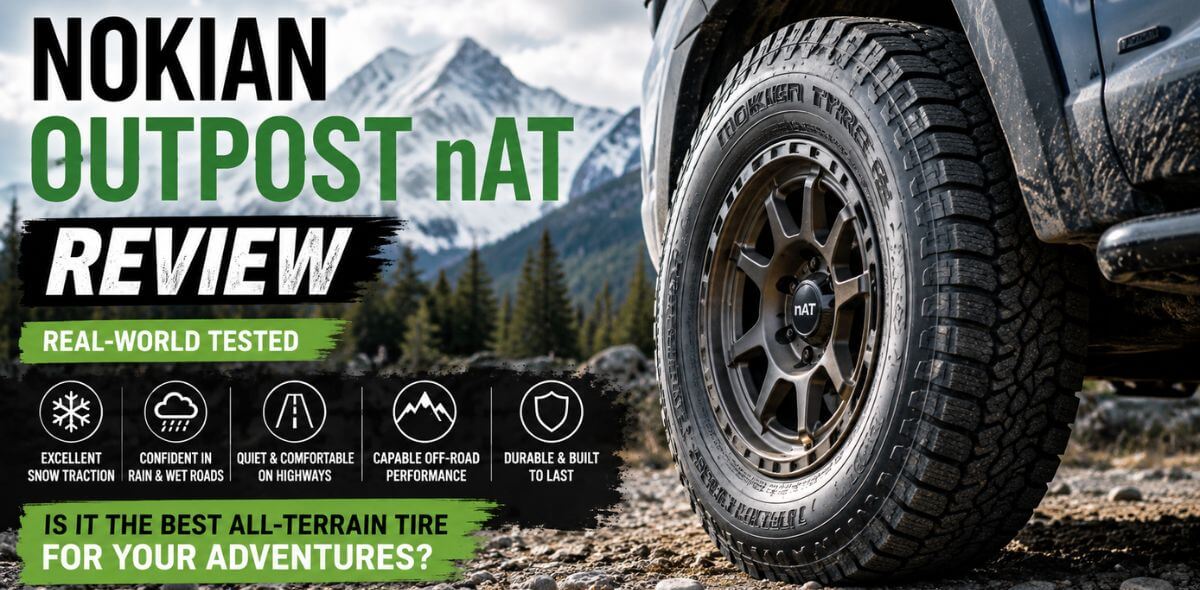
Nokian Outpost nAT Review 2026
Looking for a tire that can handle snow, rain, highway driving, and light off-road use without feeling rough or overly loud? In this Nokian Outpost nAT review, we take a close look at how this all-terrain tire performs in real-world driving and whether it is worth the price.
Nokian is well known for winter tires, so expectations are high. This review breaks down the Outpost nAT’s strengths, weaknesses, and best use cases so you can decide whether it is the right fit for your truck or SUV.
Quick Verdict
The Nokian Outpost nAT is one of the best all-terrain tires for drivers who want strong winter traction without sacrificing daily comfort.
It balances snow performance, highway refinement, and light off-road capability better than many aggressive A/T competitors. While it is more expensive than some alternatives, the combination of durability, wet-weather confidence, and year-round usability makes it a strong option for trucks and SUVs that see mixed driving conditions.

Best For
- Drivers in snowy or cold climates
- Daily-driven trucks and SUVs
- Light-to-moderate off-road use
- Gravel roads and outdoor travel
- Overlanding and camping trips
- Drivers wanting a quieter all-terrain tire
Not Ideal For
- Extreme rock crawling
- Deep mud-focused off-roading
- Budget-focused buyers
- Drivers wanting ultra-soft highway ride comfort
- People expecting highway-tire fuel economy
Overall Ratings
| Category | Rating |
| Snow Traction | ★★★★★ (9.5/10) |
| Wet Traction | ★★★★☆ (9/10) |
| Highway Comfort | ★★★★☆ (8.5/10) |
| Road Noise | ★★★★☆ (8/10) |
| Off-Road Durability | ★★★★☆ (8.5/10) |
| Value for Money | ★★★★☆ (8/10) |
The Outpost nAT earns its highest marks in winter performance and all-weather confidence. Nokian’s experience with snow-focused tires clearly shows here, especially on packed snow and slushy roads.
Pros & Cons
Pros
- Excellent winter traction with Three-Peak Mountain Snowflake certification
- Strong sidewall durability thanks to Aramid Tough Shield technology
- Quiet for an all-terrain tire compared to many aggressive A/T options
- Stable and confidence-inspiring in rain and slush
- Comfortable enough for daily commuting
- Good balance between highway refinement and off-road capability
- Strong puncture resistance for gravel and rough roads
Cons
- Higher price than some competitors like Falken or Toyo
- Mud performance may lag more aggressive all-terrain tires
- Slight MPG reduction possible due to tread weight
- Some drivers report noticeable humming at certain speeds
- Not ideal for hardcore rock crawling or deep mud trails
Owner feedback is mostly positive regarding snow grip, ride quality, and durability, though opinions on road noise vary depending on the vehicle and tire size.
What Is the Nokian Outpost nAT?
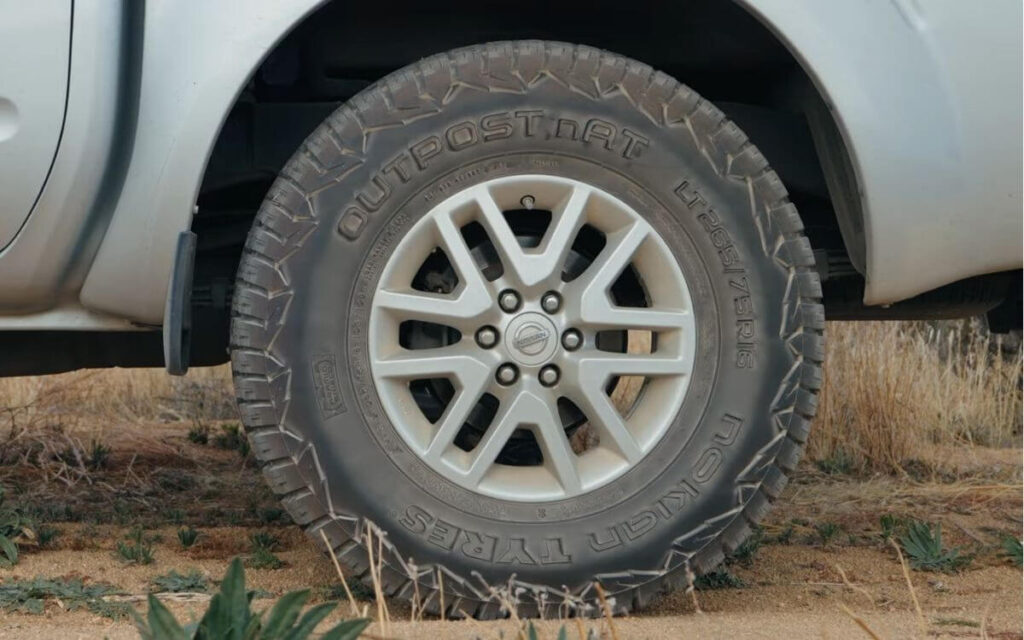
The Outpost nAT sits in the all-terrain category, but Nokian describes it as an all-season, all-weather tire rather than a pure off-road tire. That matters because it tells you what the tire is trying to do. Instead of chasing the most aggressive tread pattern possible, Nokian appears to have built it for year-round usability, including winter driving, while still keeping enough bite for rough roads, gravel, mud, snow, and sand.
Nokian also makes a point of highlighting its Aramid Tough Shield technology. The company says puncture-resistant Aramid fibers are embedded beneath the tread and throughout the sidewalls to improve resistance to potholes, road hazards, rough terrain, and off-road obstacles. That is a meaningful feature for anyone who regularly drives on damaged pavement, sharp gravel, or remote roads where a sidewall failure would be a major headache.
In simple terms, this tire is for drivers who want toughness without giving up everyday comfort. That is the big idea behind the Outpost nAT.
Key Specifications & Features
The Outpost nAT is designed as a true all-weather all-terrain tire, combining winter capability, highway comfort, and off-road durability in one package. One of its biggest advantages is that it does not focus only on aggressive off-road styling. Instead, it aims to balance real-world daily usability with year-round traction.
Below is a quick breakdown of the tire’s main specifications and features.
| Feature | Nokian Outpost nAT |
| Tire Type | All-Terrain / All-Weather |
| Snow Rating | 3PMSF (Three-Peak Mountain Snowflake) |
| Tread Warranty | 60,000 miles |
| Sidewall Protection | Aramid Tough Shield Technology |
| Available Sizes | 15″–22″ wheel sizes |
| Load Ratings | SL, XL, C, and E load ranges |
| Tread Depth | 14/32″–18/32″ depending on size |
| Intended Vehicles | SUVs, Crossovers, Light Trucks |
| Severe Snow Certified | Yes |
| Puncture Protection | Reinforced Aramid sidewalls |
| Road Hazard Warranty | Pothole Protection Program |
| EV/Hybrid Compatible | Yes |
The Outpost nAT stands out because of its strong focus on durability and winter performance. Nokian uses Aramid fibers — the same material used in protective equipment and aerospace applications — inside the tire’s sidewalls to improve puncture resistance and toughness.
Another important feature is the Three-Peak Mountain Snowflake certification. This means the tire meets severe snow service requirements, making it a better winter performer than many standard all-terrain tires.
The tire is also available in multiple load ranges, including:
- SL (Standard Load)
- XL (Extra Load)
- C Load Range
- E Load Range (10-ply rated)
That flexibility allows the Outpost nAT to fit everything from lighter crossovers to heavy-duty trucks and overlanding builds.
Nokian also includes a 60,000-mile treadwear warranty, which is competitive for an all-terrain tire in this category.
First Impressions & Installation Experience
From a visual standpoint, the Outpost nAT has the right look for a modern all-terrain tire. Nokian says the newer nAT version uses a more aggressive tread and summit sidewalls than the previous Outpost AT, which should appeal to buyers who want a tougher appearance without moving all the way into mud-terrain territory. The square profile and sidewall design also give it a more planted, truck-ready stance.
When a tire is designed around durability, the first thing many buyers worry about is whether that toughness comes with a harsh ride or installation hassles. Nokian’s own review section includes customer comments mentioning easy balancing, good highway behavior, and quiet operation, which suggests the tire is not forcing buyers to trade all comfort for strength. That said, the real feel will still depend on the vehicle, wheel size, alignment, and air pressure.
On-Road Performance Review
Highway Driving & Daily Comfort
The Outpost nAT is clearly not trying to be a soft, car-like tire. It is built for trucks, SUVs, crossovers, and light trucks, so a little firmness would be expected. Even so, Nokian’s overall positioning suggests it is meant to remain comfortable enough for daily driving, not just weekend adventures. That is one of the biggest reasons this tire stands out: it aims to be useful every day, not only when you leave the pavement.
For buyers, the key question is whether the ride feels controlled rather than vague or sloppy. The Outpost nAT’s focus on stability and protective construction suggests it should feel confident on the highway, especially for drivers who regularly carry loads, tow, or travel on worn pavement. In practical terms, that means this is a tire for someone who wants a truck tire that still behaves like a road tire most of the time.
Road Noise Test
Noise matters because many all-terrain tires sound aggressive long before they actually need to. Nokian’s customer review section includes repeated mentions of quiet highway behavior, and one of the strongest signs that the company values daily comfort is that it keeps the Outpost nAT in the all-weather, all-season lane rather than pushing it into a louder off-road category. That makes it a sensible pick for drivers who dislike the droning sound some A/T tires develop.
A tire like this will never be as quiet as a highway tire, but the goal is to keep cabin noise reasonable enough for commuting and long trips. For many buyers, that trade-off is exactly what makes an all-terrain tire worth choosing.
Wet Weather Performance
Wet traction is one of the biggest reasons people upgrade from basic all-season tires to an all-terrain option they trust. Nokian explicitly says the Outpost nAT is meant to deliver safe, durable driving in all weather conditions, and its all-weather branding indicates it is meant to handle rain as part of normal use, not as an afterthought.
That matters because rain often exposes weak tires more than dry pavement does. A good wet-weather tire should feel stable under braking, predictable in corners, and calm when the road turns slick. The Outpost nAT is clearly designed around that type of confidence.
Fuel Economy Impact
Any heavier all-terrain tire can affect fuel economy a bit, and that is worth keeping in mind with the Outpost nAT as well. Nokian emphasizes durability, service life, and tougher construction, which usually means the tire is built more for strength and versatility than for ultra-low rolling resistance. Drivers looking for the best possible MPG should expect some trade-off compared with a lighter highway tire.
That said, not every tire choice has to be about maximizing efficiency. If the tire helps you avoid a puncture, stays usable longer, and gives you more confidence in bad weather, many buyers will see that as better value than saving a small amount of fuel.
Snow & Winter Performance Review
Snow Traction Testing
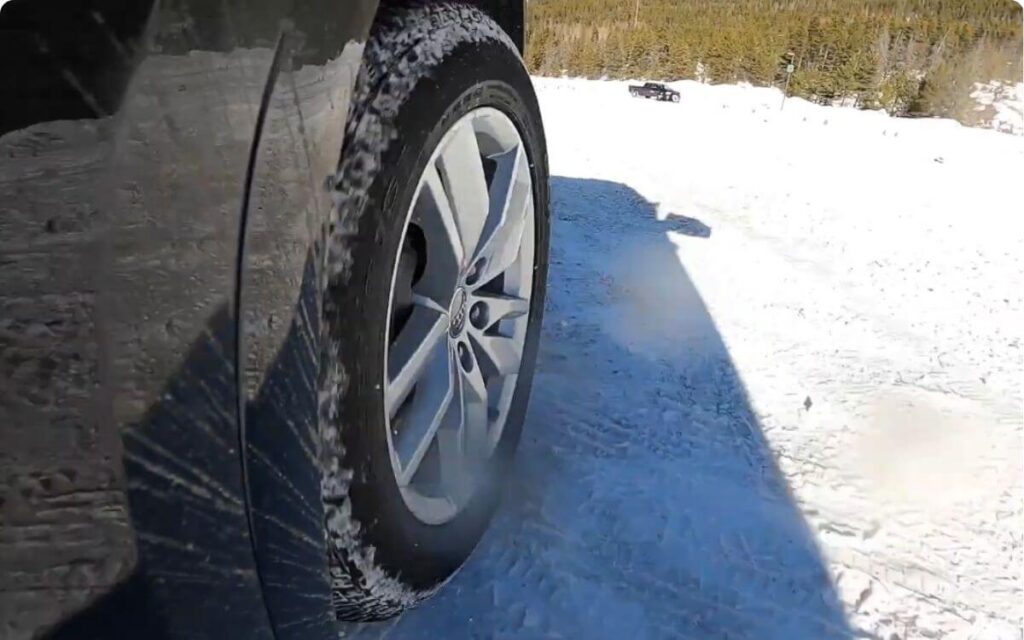
This is where the Outpost nAT gets especially interesting. Nokian says the tire carries the three-peak mountain snowflake symbol and explains that this means the tire has been designed for severe snow conditions and has passed the winter traction tests required for the marking. Nokian also says the tire is built to perform in snow, slush, rain, and heat alike.
For drivers in snowy regions, that is a major advantage. A lot of all-terrain tires are fine in light winter use but struggle to inspire confidence once conditions get colder and messier. Nokian’s winter background is a meaningful part of the Outpost nAT story, and it is one of the clearest reasons to consider it over a more purely off-road-oriented tire.
Ice Performance & Cold Weather Grip
No all-terrain tire should be treated like a dedicated winter tire on polished ice, and the Outpost nAT is no exception. Still, the 3PMSF symbol tells buyers that the tire has met a defined snow traction standard, which is far more reassuring than a tire that only carries the vague M+S marking. Nokian’s own educational page notes that 3PMSF tires are designed for severe snow conditions and that M+S tires do not meet the same standards as 3PMSF winter tires.
So the right way to think about the Outpost nAT is this: it is a strong all-terrain choice for winter use, not a replacement for a true studded or dedicated winter tire in the harshest conditions. That distinction matters, especially for drivers in areas with frequent ice, steep hills, or long freeze-thaw cycles.
Winter Driving Confidence
For many buyers, the real question is whether this tire can stay on the vehicle all year. Nokian’s answer is clearly yes, and the official product page is written around that idea. The company says the Outpost nAT is an all-season, all-weather tire meant to be driven in all four seasons, and its winter certification supports that promise.
That makes the tire especially attractive for drivers who want fewer seasonal tire swaps. If you live somewhere with meaningful snow but not constant extreme ice, the Outpost nAT could be a practical one-set solution.
Off-Road Performance Review
Gravel & Dirt Roads
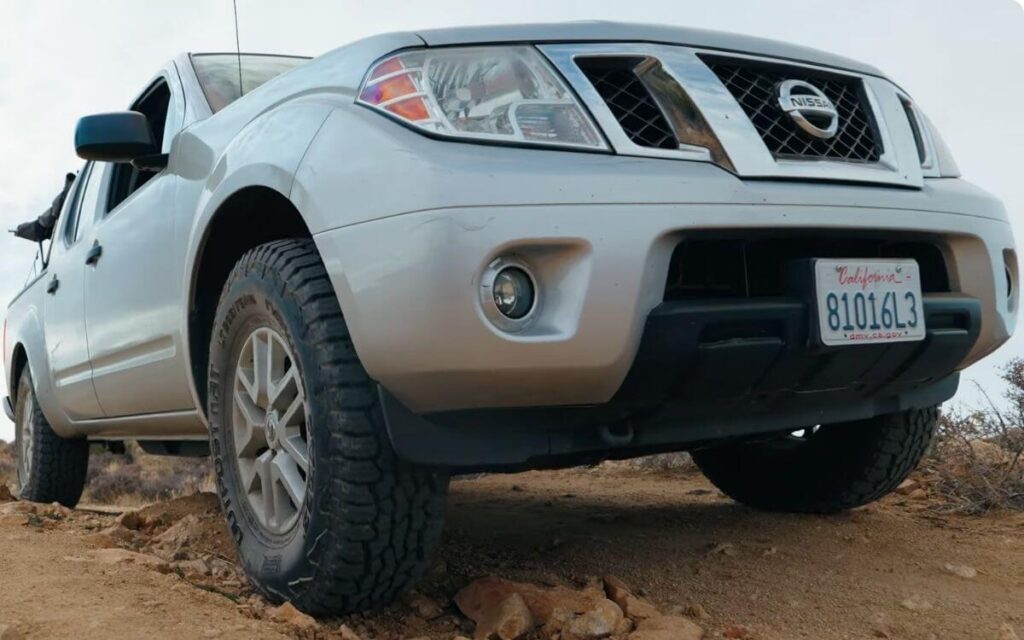
The Outpost nAT looks very comfortable on gravel and dirt. Nokian highlights Gravel Guards to help the tire navigate rocky, rutted roads, and the overall design suggests a focus on durability more than extreme trail aggression. That is exactly the kind of setup that helps on ranch roads, forest roads, job sites, and weekend adventures where sharp stones and uneven surfaces are common.
For most buyers, this is the off-road use case that matters most. You do not need a mud tire if your real life is mostly gravel, dirt, and broken pavement. You need a tire that will hold up, stay stable, and not complain every time the road gets rough. The Outpost nAT seems built with that buyer in mind.
Mud Performance
Nokian says the tire uses Dual X Canyons and soft-surface grip features to help in mud, snow, and sand. That tells us the Outpost nAT is not helpless in mud. It should do well in moderate off-pavement conditions, muddy access roads, and shallow trail muck.
At the same time, this is still an all-terrain tire, not a dedicated mud-terrain tire. Buyers expecting deep, sticky mud performance should be realistic. The tread design is meant to balance many needs, so its mud ability will likely be strong enough for mixed use rather than extreme mud work. That is not a weakness so much as a design choice.
Sand & Loose Terrain
The combination of shoulder notches, Summit Sidewalls, and X-shaped grooves is useful on soft terrain because it gives the tire extra ways to find grip when the surface is loose. Nokian says those features are there specifically to help the tire when it sinks into soft surfaces. For light sand use, campsite access, and backcountry travel, that is a meaningful advantage.
Again, the point is balance. The tire is built to remain predictable rather than dramatic. That is a smart goal for a tire intended for real-world overlanding and mixed travel.
Rock & Trail Durability
This is where Aramid Tough Shield really matters. Nokian says the Aramid fibers are embedded through the sidewalls and beneath the tread to resist potholes, road hazards, rough terrain, and off-road obstacles. If you drive near sharp rocks or on rough, remote routes, that kind of construction is the feature that can make the difference between finishing the trip and calling for help.
Nokian also offers the Outpost nAT through its Pothole Protection program, saying it will replace a tire at no cost if it is damaged beyond repair by a road hazard, subject to terms and conditions. That is a strong confidence signal from the manufacturer and a useful proof point for buyers who prioritize toughness.
Tread Life & Long-Term Durability
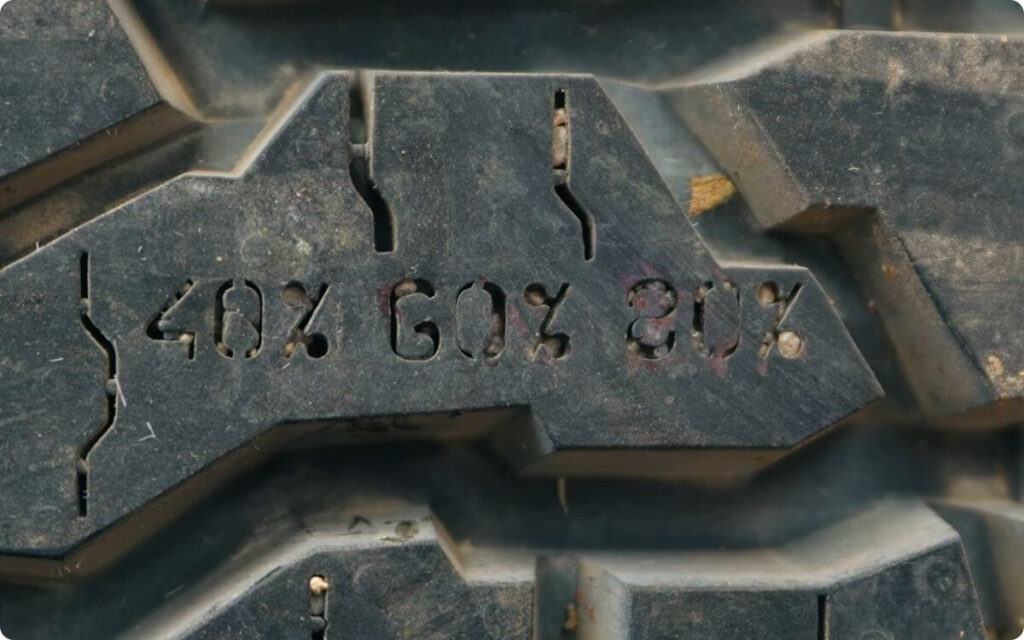
The company’s official warranty is 60,000 miles or 100,000 kilometers, which is a solid figure for a tire in this category. Nokian also says the tire’s tread pattern is designed for enhanced service life and that its canyon-deep tread helps extend use over time. For shoppers comparing long-term value, that warranty is one of the strongest parts of the Outpost nAT’s appeal.
Durability is not just about tread life, though. It is also about whether the tire stays usable after real-world abuse. Between the Aramid sidewall protection, the pothole program, and the reinforced tread features, Nokian is making a very clear statement: this tire is meant to survive the sort of driving that damages ordinary tires.
Real Owner Feedback & Community Opinions
Nokian’s own product page shows that customer feedback is generally very positive, with reviews mentioning good highway manners, quietness, wet traction, winter confidence, and strong towing performance. Some reviewers also say they have used the tire across heat, heavy rain, snow, slush, ice, dirt, gravel, and highway driving with good results. That does not replace structured testing, but it is useful because it shows how the tire behaves in the kinds of situations buyers actually care about.
That said, owner reviews should always be read carefully. They are most helpful when you look for patterns rather than isolated praise. In this case, the recurring themes on Nokian’s site are comfort, confidence, and durability, which line up well with the tire’s official design goals.
Nokian Outpost nAT vs Competitors
Nokian Outpost nAT vs BFGoodrich KO2
The KO2 is the more aggressive tire. BFGoodrich markets it as its toughest all-terrain tire, and it is severe-snow rated with a 50,000-mile warranty. The Nokian Outpost nAT is less extreme, but it has a longer 60,000-mile warranty and adds Aramid sidewall protection, which gives it a more balanced feel for daily driving.
In snow, both tires are strong choices because both carry the Three-Peak Mountain Snowflake symbol. The difference is in how they feel on the road. The Nokian is usually the better pick if you want a calmer ride, less noise, and better comfort for commuting. The KO2 makes more sense if you want a tougher-looking tire and spend more time on rough trails than on pavement.
Nokian Outpost nAT vs Falken Wildpeak AT3W
The Wildpeak A/T3W is another winter-ready all-terrain tire. Falken says it has a 55,000-mile warranty and a severe snow rating. The Nokian still has the edge in treadwear warranty, with 60,000 miles, and it also uses Aramid sidewall protection.
For wet traction and daily comfort, these two are both strong, practical tires. The Nokian feels like the slightly more refined choice if you care most about a quiet ride and steady highway manners. The Falken is a very good all-around option too, but it often makes more sense for buyers looking for a proven all-terrain tire at a lower price point, depending on local pricing.
Nokian Outpost nAT vs Toyo Open Country A/T III
The Toyo Open Country A/T III is a strong match if you want a tire that does almost everything well. Toyo gives it up to a 65,000-mile warranty, and the company says it delivers confident wet braking, cut-and-chip resistance, and a quiet, comfortable ride. Its own performance ratings also show strong winter handling and ride comfort.
The Nokian still has the clearer winter and sidewall story. Its 3PMSF rating and Aramid Tough Shield make it feel like the more winter-focused and more rugged choice for rough roads. The Toyo is a very good highway and winter all-terrain tire, but the Nokian is the better pick if you want extra peace of mind in snow and on rough gravel or rocky routes.
Who Should Buy the Nokian Outpost nAT?
This tire makes the most sense for drivers who want one set of tires for a truck or SUV and need that set to handle a little bit of everything. It is especially attractive for people in snowy regions, drivers who spend time on gravel or poor pavement, and owners who want stronger durability than a standard all-season tire can offer.
It also fits well for light overlanding and weekend adventure use. If you want a tire that can commute all week, survive winter, and still leave pavement without feeling out of place, the Outpost nAT lines up nicely with that mission.
Who Should Avoid It?
This is not the best tire for someone chasing the lowest purchase price. Nokian’s own customer feedback includes comments that it costs more than some alternatives, and the product itself is clearly positioned as a premium option with premium materials and warranties.
It is also not the first choice for serious mud bogging or extreme rock crawling. The tread is versatile and durable, but its main strength is balance, not maximum aggression. Drivers who spend most of their time in harsh off-road conditions may want something more specialized.
Final Verdict: Is the Nokian Outpost nAT Worth It?
The Nokian Outpost nAT looks like a well-thought-out tire for drivers who need year-round confidence in a truck or SUV. Its biggest strengths are easy to understand: winter certification, strong construction, a long treadwear warranty, and a design that still aims to be comfortable on the road. Nokian’s own product page makes clear that the tire is built to extend terrain, toughness, and travel, and that is a good summary of what it is trying to do.
If your driving life includes snow, rain, gravel, potholes, and long highway miles, this tire deserves serious consideration. It is not the cheapest or the most aggressive option, but it may be one of the more balanced choices for people who want one tire to do a lot of jobs well.
Frequently Asked Questions
Is the Nokian Outpost nAT good in snow?
Yes. Nokian says it carries the three-peak mountain snowflake symbol and is designed for severe snow conditions requiring extra traction for safe driving. The company also says it is meant to perform in snow, slush, rain, and heat.
Is the Outpost nAT quiet on the highway?
It is designed to stay usable and refined for everyday driving, and customer comments on Nokian’s site repeatedly mention quiet highway behavior. It should be viewed as an A/T tire that aims for comfort, not as a noisy off-road tire.
How long does the Nokian Outpost nAT last?
Nokian backs it with a 60,000-mile / 100,000-km treadwear limited warranty. Real lifespan will depend on vehicle weight, rotation habits, driving style, and road conditions.
Can the Outpost nAT handle mud?
It can handle moderate mud and soft terrain better than a basic highway tire, and Nokian says its tread features help with mud, snow, and sand. But it is still an all-terrain tire, so serious mud use is not its main mission.
Is the Nokian Outpost nAT worth the price?
For the right buyer, yes. The premium is easier to justify if you value winter confidence, puncture resistance, and long-term durability more than the lowest purchase price.
If you’d like, I can turn this into a publish-ready WordPress article with a meta title, meta description, FAQ schema, and a more conversational intro.
