What Is Wheel Offset? A Complete Guide
If you’ve ever shopped for wheels, you’ve probably seen numbers like +35, +45, or -12 listed in the specifications. Those numbers refer to wheel offset, one of the most important measurements when choosing wheels for your vehicle.
Wheel offset affects how your wheels sit inside the wheel wells, how much clearance you have around suspension and brake components, and even how your vehicle looks from the side. Choosing the wrong offset can lead to rubbing issues, poor fitment, unnecessary wear on parts, and wasted money on wheels that simply don’t fit properly.
The good news is that wheel offset isn’t difficult to understand once you know the basics. In this guide, you’ll learn what wheel offset is, how it’s measured, how it affects your vehicle, and how to choose the right offset for your next set of wheels.
What Is Wheel Offset?
Wheel offset is the distance between the wheel’s centerline and the surface that bolts to your vehicle’s hub. In simpler terms, it tells you where the wheel sits in relation to the suspension and fenders.
Offset is measured in millimeters (mm). Even a small change in offset can noticeably change how a wheel fits on a vehicle.
Think of offset as the wheel’s position inside the wheel well. A higher offset moves the wheel farther inward toward the suspension, while a lower offset moves it farther outward toward the fender.
Understanding offset is important because it affects much more than appearance. It helps determine whether a wheel will fit properly without rubbing against suspension parts, brake components, or the fender.
A wheel with the wrong offset can create clearance problems, especially when turning or driving over bumps. In some cases, it can also affect steering feel and make the vehicle look awkward, with the wheels sitting too far in or sticking out too far.
That’s why wheel offset is one of the first specifications to check when buying aftermarket wheels. A wheel may have the correct diameter and width, but if the offset is wrong, it still may not fit properly.
How Wheel Offset Is Measured
To understand wheel offset, you first need to know two parts of a wheel: the centerline and the mounting surface.
The centerline is the exact middle of the wheel’s width. If you could cut the wheel in half from side to side, the centerline would be the point where the two halves meet. It serves as the reference point for measuring offset.
The mounting surface, sometimes called the mounting pad, is the flat area on the back of the wheel that bolts directly to the vehicle’s hub. This is the point where the wheel attaches to the car.
Wheel offset is simply the distance between the wheel’s centerline and its mounting surface. This distance is measured in millimeters.
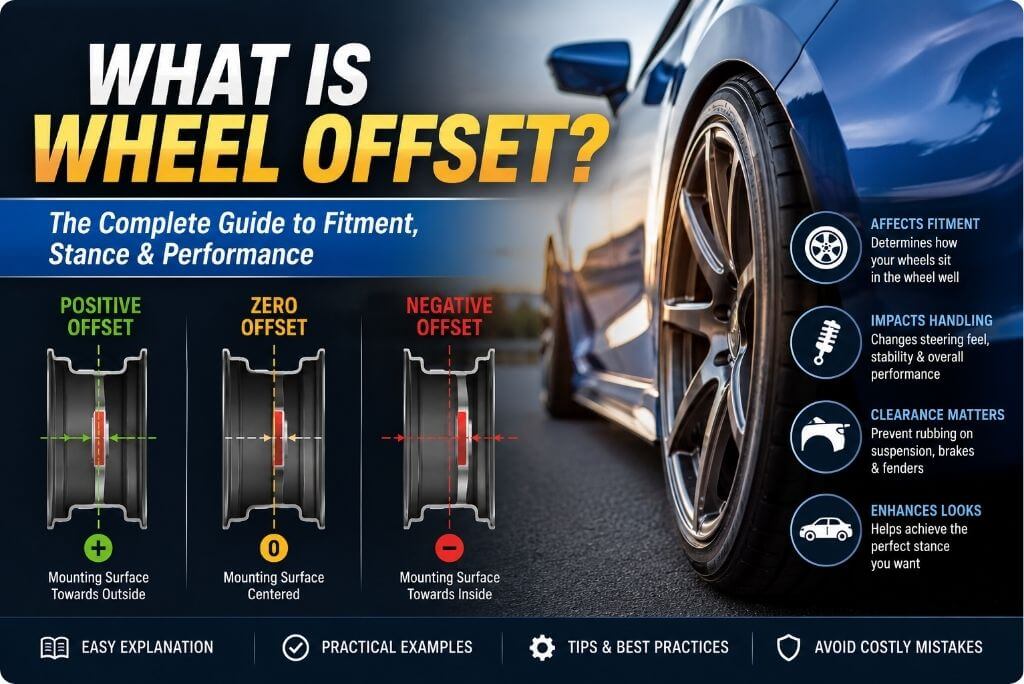
Offset can be expressed in three ways:
- Positive offset: The mounting surface sits closer to the outside face of the wheel.
- Zero offset: The mounting surface lines up exactly with the centerline.
- Negative offset: The mounting surface sits closer to the inside of the wheel.
The number itself may seem small, but even a difference of 10 to 20 millimeters can noticeably change where the wheel sits on the vehicle.
Positive vs. Zero vs. Negative Wheel Offset
The easiest way to understand wheel offset is to look at where the wheel sits in relation to the vehicle. The offset number changes how far the wheel moves inward or outward.
Positive Offset
A wheel has a positive offset when the mounting surface sits closer to the outside face of the wheel. This places more of the wheel and tire inside the wheel well.
Positive offset is the most common setup on modern passenger cars, crossovers, and many SUVs because it helps manufacturers achieve the desired fitment and suspension clearance.
Zero Offset
Zero offset means the mounting surface sits exactly in the middle of the wheel. In other words, it lines up with the wheel’s centerline.
This creates a balanced position, with the wheel extending equally inward and outward. Zero offset is less common on modern vehicles but is sometimes used on certain custom, classic, or off-road applications.
Negative Offset
A wheel has a negative offset when the mounting surface sits closer to the inside of the wheel. This pushes the wheel farther outward from the vehicle.
Negative offset is often used to create a wider, more aggressive stance. It is common on some off-road trucks and custom builds, though extreme negative offsets can create clearance and fitment challenges.
Real-World Comparison
Imagine three wheels that are the same size but have different offsets.
- A positive-offset wheel sits deeper inside the wheel well.
- A zero-offset wheel sits more centered.
- A negative-offset wheel sticks farther outward.
Visually, the difference can be dramatic. A higher positive offset usually creates a cleaner, factory-style look, while a lower or negative offset creates a wider stance that many enthusiasts prefer.
Neither option is automatically better. The right offset depends on the vehicle, the wheel size, and the look and performance you want to achieve.
Why Wheel Offset Matters
Wheel offset does more than change how your wheels look. It plays a major role in how a wheel fits, how the vehicle drives, and how much clearance you have around important components.
Fitment and Clearance
The wrong offset can place a wheel too close to the suspension, brakes, or inner wheel well. It can also push the wheel too far outward, increasing the chance of rubbing against the fender when turning or driving over bumps.
A correct offset helps ensure there is enough space on both sides of the wheel. This is one of the biggest reasons offset matters when choosing aftermarket wheels.
Stance and Appearance
Offset affects where the wheel sits inside the wheel arch.
A wheel that sits farther inside the fender is often called a tucked fitment. A wheel that lines up closely with the edge of the fender is known as a flush fitment. If the wheel extends beyond the fender, it is commonly called poke.
The right look depends on personal preference, but fitment should always come before appearance.
Steering and Handling
Changing offset can alter how a vehicle feels on the road. Small changes are often barely noticeable, but larger changes can affect steering response and stability.
In some cases, the steering may feel heavier, lighter, or less predictable than it did with the factory setup.
Tire Wear and Stress on Parts
Moderate offset changes are usually not a problem when the setup is planned correctly. However, extreme changes can place additional load on wheel bearings, suspension parts, and tires.
Over time, this may contribute to uneven tire wear or increased wear on certain components. The larger the offset change, the more important it becomes to check fitment carefully.
Wheel Offset vs. Backspacing
Wheel offset and backspacing are often used when discussing wheel fitment. They both describe wheel position, but they measure it in different ways.
Backspacing is the distance from the wheel’s mounting surface to the inner edge of the wheel. It is usually measured in inches rather than millimeters.
You can think of backspacing as a way to see how much of the wheel extends inward toward the suspension.
Many people confuse backspacing and offset because both help determine where a wheel sits on a vehicle. The difference is that offset measures from the wheel’s centerline, while backspacing measures from the wheel’s inner edge.
Here’s a simple comparison:
| Wheel Offset | Backspacing |
| Measured from the wheel centerline | Measured from the inner edge of the wheel |
| Usually measured in millimeters | Usually measured in inches |
| Commonly used by vehicle manufacturers | Commonly used in wheel fitment calculations |
| Easier to compare with factory wheel specifications | Useful when checking inner clearance |
In most cases, offset is the specification you’ll see when shopping for wheels. Vehicle manufacturers and wheel brands use offset because it provides a consistent way to describe wheel position across different wheel widths.
Backspacing is still useful, especially when checking suspension clearance, but offset is generally the number most drivers need to pay attention to first.
How Wheel Width Affects Offset
When comparing wheels, offset is only part of the picture. Wheel width matters just as much.
Two wheels can have the exact same offset but still sit differently on a vehicle if their widths are different. This is a common reason why a wheel that looks good on paper doesn’t always fit as expected.
As a wheel gets wider, it adds material to both sides of the wheel. That means a wider wheel can move closer to the suspension on the inside and closer to the fender on the outside, even when the offset stays the same.
For example, imagine these two wheels:
- 18×8 +35
- 18×9 +35
Both wheels have the same offset of +35 mm. However, the 18×9 wheel is one inch wider.
Because the extra width is split between both sides of the wheel, the 18×9 wheel extends farther inward and farther outward than the 18×8 wheel. This can reduce clearance and increase the chance of rubbing if there isn’t enough space available.
That’s why wheel width and offset should always be considered together. Looking at offset alone doesn’t tell the full fitment story.
How Offset Affects Wheel Fitment on Real Vehicles
Choosing the right offset is important because a wheel needs enough space on both the inside and outside of the wheel well.
If a wheel sits too far inward, it can get too close to suspension parts such as struts, control arms, or even brake components. In severe cases, the wheel or tire may make contact with these parts while driving.
Moving a wheel too far outward creates a different problem. The tire may rub against the fender, inner liner, or body panels, especially when turning, carrying passengers, or driving over bumps.
Brake clearance is another factor that is easy to overlook. Some vehicles have large brake calipers that require wheels with enough room behind the spokes. Even if the wheel has the correct bolt pattern and diameter, it may not fit properly if there isn’t enough brake clearance.
It’s also important to remember that offset is only one part of the fitment equation. Tire size and wheel width can change how much space a setup needs.
For example, a wider tire may rub where a narrower tire would fit without any issues. That’s why wheel width, tire size, and offset should always be considered together when checking fitment.
The best setup is one that provides enough clearance on all sides while still achieving the look and performance you want.
Common Wheel Offset Mistakes
One of the biggest mistakes people make is choosing wheels based only on appearance. A wheel may look great in photos, but if the offset isn’t right for your vehicle, it can create fitment problems that are difficult and expensive to fix later.
Another common mistake is focusing on offset while ignoring wheel width. These two measurements work together. A wheel with the “right” offset can still cause clearance issues if it is significantly wider than the factory wheel.
It’s also important to check brake and suspension clearance. Sometimes a wheel appears to fit because it bolts onto the hub, but that doesn’t mean it has enough room around the brakes, struts, or other nearby components. A setup that fits while parked may cause problems once the vehicle is moving.
Many buyers assume aftermarket wheels are interchangeable as long as they share the same diameter. In reality, wheel fitment depends on several specifications working together. A wheel designed for one vehicle may not fit another properly, even if it looks similar.
Finally, don’t assume what works on someone else’s vehicle will work on yours. Every vehicle has its own fitment requirements based on suspension design, brake size, wheel well space, and factory specifications.
Taking a few extra minutes to verify fitment before buying wheels can help you avoid rubbing, clearance issues, and unnecessary return costs.
How to Find the Right Offset for Your Vehicle
The easiest place to start is with your vehicle’s factory wheel specifications. The original wheel size and offset provide a proven fitment that works with the suspension, brakes, and bodywork.
Before choosing a new offset, think about what you want to achieve. The best option depends on your goal:
- A factory-like look and driving feel
- A flush fitment that lines up with the fender
- A wider, more aggressive stance
- Extra clearance for off-road tires
- More room for larger brake components
Once you know your goal, check how much space is available around the current wheels. Look at the gap between the tire and the suspension on the inside, as well as the distance to the fender on the outside. This helps you understand how much room you have to work with.
If you’re unsure, wheel fitment calculators can show how a new wheel will compare to your current setup. Manufacturer fitment guides and experienced wheel shops can also help identify potential issues before you buy.
For most daily-driven vehicles, staying close to the factory offset is usually the safest approach. Small changes can improve appearance without creating clearance problems. Larger changes may work, but they require more careful planning and measurement.
A good rule of thumb is to choose the smallest offset change needed to achieve your goal. This helps maintain proper fitment while reducing the risk of unexpected issues.
What Happens If the Wheel Offset Is Too High?
A wheel with a high positive offset sits farther inward toward the vehicle. This means more of the wheel is tucked inside the wheel well rather than sitting closer to the fender.
In some cases, a slightly higher offset is not a problem. However, if the offset is too high, the wheel and tire can move too close to nearby components.
Common issues may include:
- Contact with struts or suspension parts
- Reduced space around brake components
- A wheel that looks tucked too far inside the fender
- A narrower stance than many drivers prefer
The visual effect is often noticeable. The wheels may appear recessed, making the vehicle look less planted and less aggressive than intended.
That said, a higher offset is not always a bad thing. Many factory wheel setups use relatively high offsets because they provide good clearance, predictable handling, and efficient packaging within the wheel well.
For most daily drivers, staying close to the manufacturer’s recommended offset is usually a safer choice than making large changes in either direction.
What Happens If Wheel Offset Is Too Low?
A low offset, or negative offset, moves the wheel farther outward from the vehicle. This creates a wider stance and can make the wheels appear more flush with the fenders or even extend beyond them.
While this look is popular with some enthusiasts, moving the wheel too far outward can create fitment issues.
Common problems may include:
- Tire rubbing against the fender during turns or over bumps
- More dirt, water, and road debris being thrown onto the sides of the vehicle
- Additional stress on wheel bearings and suspension components in some setups
- Changes in steering feel and handling when the offset change is extreme
The farther a wheel sits outside its intended position, the more important it becomes to check clearance carefully. What looks good when the vehicle is parked may not work as well when the suspension is compressed during normal driving.
That doesn’t mean a low offset is always a bad choice. Many off-road trucks and custom builds use lower offsets to create a wider stance, improve tire clearance, or achieve a specific look.
The key is finding a balance between appearance, performance, and proper fitment. A moderate offset change can often provide the desired look without introducing unnecessary problems.
Wheel Offset for Different Types of Vehicles
The ideal wheel offset is not the same for every vehicle. What works well on a compact car may not be the best choice for a truck, SUV, or performance vehicle.
Passenger Cars
Most modern passenger cars use positive offset wheels. This setup helps keep the wheels positioned neatly within the wheel wells while maintaining balanced handling and good everyday drivability.
Manufacturers typically choose an offset that provides enough clearance for suspension and brake components without making the vehicle wider than necessary.
Trucks and SUVs
Trucks and SUVs often use a wider range of offsets. The best choice depends on factors such as suspension height, wheel width, and tire size.
A stock truck may use a different offset than a lifted truck running larger off-road tires. Even small changes can have a noticeable effect on fitment and clearance.
Off-Road Builds
Many off-road enthusiasts choose lower offsets to move the wheels outward. This can help create additional space for larger tires and give the vehicle a wider, more rugged stance.
However, there is a trade-off. The farther the wheels move outward, the more important it becomes to consider clearance, tire coverage, and long-term stress on certain components.
Performance Vehicles
Performance cars often require more precise wheel fitment than other vehicles. The correct offset helps ensure enough room for large brake systems while maintaining the handling characteristics the vehicle was designed to have.
Even a small offset change can affect how a performance car feels on the road, which is why fitment is usually planned very carefully on these vehicles.
No matter what type of vehicle you drive, the best offset is one that provides proper clearance, supports your driving needs, and works well with the rest of the wheel and tire setup.
How to Read Wheel Offset Specs
When shopping for wheels, you’ll often see numbers such as 18×8 +35 or 20×9 ET45. At first glance, they can look confusing, but they are actually quite simple once you know what each part means.
Take 18×8 +35 as an example:
- 18 = wheel diameter in inches
- 8 = wheel width in inches
- +35 = wheel offset in millimeters
So this wheel is 18 inches in diameter, 8 inches wide, and has a positive offset of 35 mm.
You may also see an offset written as ET45. The letters ET come from the German word Einpresstiefe, which translates to “insertion depth.” In the wheel industry, ET is simply another way of showing offset.
For example, 20×9 ET45 means:
- 20-inch wheel diameter
- 9-inch wheel width
- 45 mm positive offset
The most important thing to remember is that the number following the plus sign or ET is the offset value. A larger number generally places the wheel farther inward, while a smaller number moves it farther outward.
Once you know how to read these markings, comparing wheel specifications becomes much easier and helps you avoid buying wheels that may not fit your vehicle correctly.
How to Calculate Offset Changes
Calculating an offset change is simpler than it sounds. In most cases, the difference between the old offset and the new offset tells you how far the wheel will move.
For example, if your factory wheel has a +45 mm offset and your new wheel has a +35 mm offset, the wheel will move 10 mm outward.
If you go from +45 mm to +25 mm, the wheel moves 20 mm outward.
On the other hand, changing from +35 mm to +45 mm moves the wheel 10 mm inward.
Here are a few quick examples:
| Original Offset | New Offset | Wheel Movement |
| +45 mm | +35 mm | 10 mm outward |
| +45 mm | +25 mm | 20 mm outward |
| +35 mm | +45 mm | 10 mm inward |
| +20 mm | +35 mm | 15 mm inward |
These numbers may seem small, but even a 10 mm change can noticeably affect how a wheel sits inside the wheel well.
That’s why offset calculations matter. A wheel that looks nearly identical on paper can fit very differently once installed. Taking a minute to compare offsets before buying wheels can help you avoid clearance problems and achieve the fitment you’re aiming for.
How Wheel Offset Affects Daily Driving
Wheel offset doesn’t just affect fitment—it can also influence how your vehicle feels and performs during everyday driving.
A wheel with an offset close to the factory specification will usually provide the driving characteristics the vehicle was designed to have. Small changes are often barely noticeable, but larger changes can affect steering feel and road manners.
For example, an extreme offset may make the steering feel heavier or more sensitive, especially at lower speeds or when maneuvering in tight spaces. The effect varies from vehicle to vehicle, but it is something worth considering before making major changes.
Offset can also affect long-term wear. When wheels sit much farther inward or outward than intended, extra stress may be placed on tires, wheel bearings, and suspension components. Moderate changes are usually fine, but extreme setups can accelerate wear over time.
There are practical considerations as well. Wheels that sit farther outward may be more exposed to curbs, potholes, and road debris. They can also make parking in tight spaces a little less forgiving.
For most drivers, the goal is simple: choose an offset that delivers the look you want without sacrificing comfort, reliability, or everyday usability.
Safety Considerations Before Changing Offset
Before changing wheel offset, it’s worth checking your local laws and vehicle inspection requirements. In some areas, wheels that extend beyond the fenders or significantly alter the vehicle’s width may not be legal for road use.
Clearance should always be verified before installing a new wheel setup. A wheel may appear to fit on the hub, but that doesn’t guarantee enough space around the brakes, suspension, or wheel well. Test fitting is one of the best ways to catch potential problems before they become expensive mistakes.
It’s also important to avoid making large offset changes without considering the rest of the setup. Wheel offset works together with wheel width, tire size, and suspension height.
For example, a wheel that fits perfectly with one tire size may rub when paired with a wider tire. Likewise, a suspension lift or lowering kit can change the amount of available clearance.
The safest approach is to view the wheel and tire package as a complete system rather than focusing on offset alone. A well-planned setup is more likely to provide good fitment, reliable performance, and trouble-free daily driving.
Frequently Asked Questions
Is lower offset better?
Not always. Lower offset changes the stance and can help in some custom or off-road setups, but it can also cause rubbing or handling issues if it goes too far.
Can I run a different offset than stock?
Yes, many people do. The key is making sure the new setup still clears the suspension, brakes, and fenders.
Does wheel offset affect tire size?
Offset and tire size are different, but they affect each other. A new tire size can change how much room you need.
What offset pushes wheels outward?
Lower positive offset and negative offset both push the wheel farther outward.
Is wheel offset the same for all vehicles?
No. Every vehicle has its own fitment needs, and the correct offset depends on wheel width, brake size, suspension design, and intended use.
Conclusion
Wheel offset may seem like a small number, but it has a big impact on fitment, appearance, and performance. Once you understand the basics, it becomes much easier to choose wheels with confidence.
The main idea is simple: the right offset helps the wheel sit in the right place. That keeps the setup safer, more practical, and better suited to your vehicle.
Before buying wheels, always compare the new setup with your factory specs and think through the full package. A little planning goes a long way.
