
265 vs 275 Tires: Which is Right for You?
Last updated on March 2nd, 2026
When it comes to choosing the right tires for your vehicle, you’ve probably encountered different sizes, like 265 vs 275 tires. But what do those numbers mean? Is one size better than the other? And how do these sizes impact your driving experience, fuel efficiency, and overall comfort?
In this blog post, we’re going to break down the differences between 265 and 275 tires and help you make a more informed decision. Whether you’re a seasoned driver or a newbie, we’ll guide you through the nuances of these two tire sizes and show you which one might be best suited for your car, truck, or SUV.
Quick recommendation box (fast answer)
Pick 265 if you want slightly better fuel economy, easier stock fitment, and a marginal edge in snow/slush (narrower cuts through slush better). Pick 275 if you want a wider contact patch for cornering and braking, a more aggressive look, or better stability while towing and hauling.
If you’re unsure: measure your current wheel width and fender clearance, compare the example math below for your aspect ratio, and if the diameter change is under about 2% you’re usually safe mechanically — you’ll mostly notice handling and fuel differences, not catastrophic fitment problems.
What Do 265 and 275 Mean? Tire Size Primer
If you look at the side of your tire, you’ll see a group of numbers and letters like 265/70R17. At first glance, it looks confusing. It’s actually simple once you know what each number means.
The first number — 265 or 275 — is the tire’s width. It’s measured in millimeters from one sidewall to the other. So a 275 tire is 10 millimeters wider than a 265. That’s less than half an inch, but it can still change how the tire feels and fits.
The second number — 70 in this example — is called the aspect ratio. This tells you how tall the sidewall is compared to the width. A 70 means the sidewall height is 70% of the tire’s width. So when the width changes, the height changes a little too.
The letter R simply means the tire is built with radial construction, which is standard today.
The last number — 17 — is the rim diameter. That means the tire fits on a 17-inch wheel.
Here are a few simple terms you’ll see often:
- Section width: The total width of the tire (that first number, 265 or 275).
- Aspect ratio: The sidewall height as a percentage of the width.
- Rim diameter: The size of the wheel the tire mounts on.
- Overall diameter: The full height of the tire from top to bottom.
- Contact patch: The part of the tire that touches the road.
Understanding these basics helps you see why a small change in width can affect fit, ride feel, and performance.
265 vs 275 Tires: A Direct Comparison Table
Below is a practical, no-fluff comparison that pairs quantified values and real-world notes, not vague “better” labels.
| Feature | 265 | 275 |
| Typical section width | 265 mm | 275 mm (10 mm wider) |
| Typical rim width range | ~7.0–9.0 in | ~7.5–9.5 in |
| Example diameter (265/70R17) | 802.8 mm (31.61 in) | 816.8 mm (32.16 in) |
| Diameter diff (example) | — | +14.0 mm (+0.55 in) ≈ +1.74% |
| Dry grip | Good (depends on tread) | Often better lateral grip (wider contact patch) |
| Wet / hydroplaning | Narrower footprint can cut water better in some cases | Wider patch can increase hydroplaning risk if tread design is poor |
| Snow performance | Narrower can cut through slush; helpful in deep snow | Wider may float more — better in shallow hardpacked snow |
| Fuel economy | Typically marginally better | Potentially slightly lower (small increase in rolling resistance) |
| Handling feel | Lively, slightly quicker steering | More planted, better stability under load |
| Load/towing | Depends on load index | Often preferred for heavy towing due to stability (check load index) |
| Cost & availability | Often marginally cheaper | Sometimes a little more expensive, depending on brand and size |
| Typical use cases | Daily commuting, highway mpg, snow/slush | Towing, off-road, aggressive stance, heavy loads |
Read the table as context: tread design, compound, and load index matter more to actual performance than width alone. Width interacts with tread pattern and vehicle weight.
Traction, Handling & Stability
Many people assume a wider tire automatically means better traction. That’s not always true.
Traction depends on two main things: the part of the tire touching the road (called the contact patch) and the tread design. The rubber compound also plays a big role. A well-designed 265 can grip better than a poor-quality 275.
A 275 tire is wider, so it usually has a slightly larger contact area. On dry pavement, that can improve cornering and braking. The vehicle may feel more planted, especially during fast turns or when carrying weight.
However, wider tires can sometimes increase the risk of hydroplaning in heavy rain. A narrower 265 may cut through standing water a little more effectively. That’s why width alone doesn’t decide wet performance — tread grooves and water channels matter even more.
Tire type also changes the picture.
An all-terrain tire in 275 may feel more stable off-road and on dry pavement. But if you choose a highway tire in 265, it may feel smoother and quieter on daily drives. Mud-terrain tires are usually louder and heavier, regardless of width. Winter tires rely more on rubber softness and tread pattern than width alone.
In short, width influences grip and stability, but tread design often matters more.
Ride Comfort & Noise
Wider tires are usually a bit heavier. They also have a larger area touching the road. That can create more road noise, especially if the tread blocks are large and aggressive.
If you choose a 275 with chunky all-terrain tread, you may hear more hum at highway speeds compared to a smoother 265 highway tire. But the difference depends more on tread pattern than the 10 mm width change.
Sidewall height also affects comfort. A taller sidewall absorbs bumps better. If the overall diameter increases slightly, the ride may feel a little softer. But if you go to a lower-profile tire, the ride can feel firmer.
To reduce noise and improve comfort:
- Choose a tire designed for highway use if quiet driving matters.
- Keep tires properly inflated.
- Rotate them regularly to prevent uneven wear.
Small differences in width won’t completely change ride quality, but tire type definitely can.
Fuel Efficiency Impact
Wider tires usually create slightly more rolling resistance. That means the engine works a little harder to keep the vehicle moving.
In real-world driving, the difference between 265 and 275 is often small. In mixed driving, expect less than a 1–2% change in fuel economy. Some drivers may not notice it at all.
Let’s look at a simple example.
If your truck gets 20 miles per gallon and you drive 12,000 miles per year:
12,000 ÷ 20 = 600 gallons per year.
If fuel costs $3.50 per gallon, that’s $2,100 per year.
If fuel economy drops by 1.5%, your new average would be about 19.7 mpg. That would increase yearly fuel use to around 609 gallons, or about $2,131 per year.
That’s roughly $30 more per year.
So while wider tires may cost slightly more in fuel, the difference is usually modest.
Load Capacity & Towing Considerations
Many people think wider tires automatically carry more weight. That’s not necessarily true.
What really matters is the tire’s load index and construction. This information is printed on the sidewall. It tells you how much weight the tire is designed to carry safely.
A 265 tire with a higher load index can support more weight than a 275 with a lower rating. Width alone does not decide strength.
If you tow frequently or carry heavy loads, focus on:
- Matching or exceeding the vehicle’s recommended load rating.
- Choosing a tire built for trucks or heavy use.
- Checking air pressure regularly, especially before towing.
A 275 can feel more stable under load because of its wider footprint. But the load rating is the key safety factor.
When towing, never choose a tire based on looks alone.
Off-Road Performance & Soft Terrain
Off-road performance depends on the terrain.
In soft sand or mud, a wider tire like a 275 can help the vehicle “float” on top of the surface. This reduces how much the tire sinks. That’s why many off-road builds use wider tires for dunes or loose terrain.
In deep snow or slush, a narrower tire like a 265 can sometimes work better. It can cut through the soft layer and reach firmer ground below.
For rocky trails, width is less important than sidewall strength and tread design. Some off-road drivers prefer slightly narrower tires for better control and steering precision in tight spaces.
There is no one perfect size for every off-road condition. If you mostly drive in sand, wider can help. If you face snow or mixed conditions, narrower may be more practical.
Tread design matters more than width in many cases.
Cost & Availability
Wider tires often cost slightly more than narrower ones. The price difference isn’t huge, but it’s common.
Some sizes are more popular from the factory, which makes them easier to find and sometimes cheaper. Less common sizes can be harder to source and may cost more.
If you want the best value:
- Compare the same tire model in both sizes.
- Stick with common rim diameters like 17, 18, or 20 inches.
- Avoid rare size combinations unless you really need them.
In most cases, the price difference between 265 and 275 isn’t dramatic. But checking availability before you decide can save you time and money.
Pros and Cons: 275 vs 265 Tires
Pros & Cons of 265 Tires
Pros:
- Better Fuel Efficiency: Lower rolling resistance for better mileage.
- Smoother Ride: Taller sidewall offers more cushioning.
- Better Agility: Improved handling for smaller vehicles.
- Cost-Effective: More affordable and widely available.
- Less Road Noise: Quieter ride compared to wider tires.
Cons:
- Lower Traction: Less grip on wet or slippery surfaces.
- Not Ideal for Heavy Loads: Lower load-carrying capacity.
- Limited Off-Road Performance: Not ideal for rugged terrains.
Pros & Cons of 275 Tires
Pros:
- Improved Traction: Wider contact patch for better grip.
- Better Stability: Enhanced stability at high speeds.
- Better Off-Road Performance: Great for rough terrains.
- Enhanced Handling: Improved cornering and steering precision.
- Increased Load Capacity: Better for carrying heavy loads and towing.
Cons:
- Lower Fuel Efficiency: Increased rolling resistance leads to more fuel consumption.
- Stiffer Ride: Less comfortable, especially on rough roads.
- Higher Cost: More expensive and can be harder to find.
Popular 265 Tire Models
1. Cooper Discoverer ST Maxx
The Cooper Discoverer ST Maxx is an all-terrain tire designed for SUVs, trucks, and off-road enthusiasts. It blends durability, traction, and comfort for both on-road and off-road driving. It’s known for providing a solid performance across a wide variety of terrains while maintaining a comfortable ride on highways.

Key Features:
- Durable tread design for off-road capability and on-road comfort.
- Stone ejector technology to reduce stone retention and protect the tread.
- Aggressive sidewall design that enhances off-road traction.
- Enhanced wet traction due to deep grooves and sipes.
- All-terrain performance suitable for rugged paths and smooth roads.
Pros:
- Excellent off-road traction and durability.
- Comfortable on-road performance despite its rugged build.
- Long-lasting tread life due to durable construction.
Cons:
- Road noise may be higher than traditional on-road tires.
- Not the best tire for extreme snow or icy conditions.
Best for:
The Cooper Discoverer ST Maxx is perfect for off-road adventurers, truck drivers, or anyone who frequently travels on rugged terrains and needs a tire that offers a balance of comfort and performance.
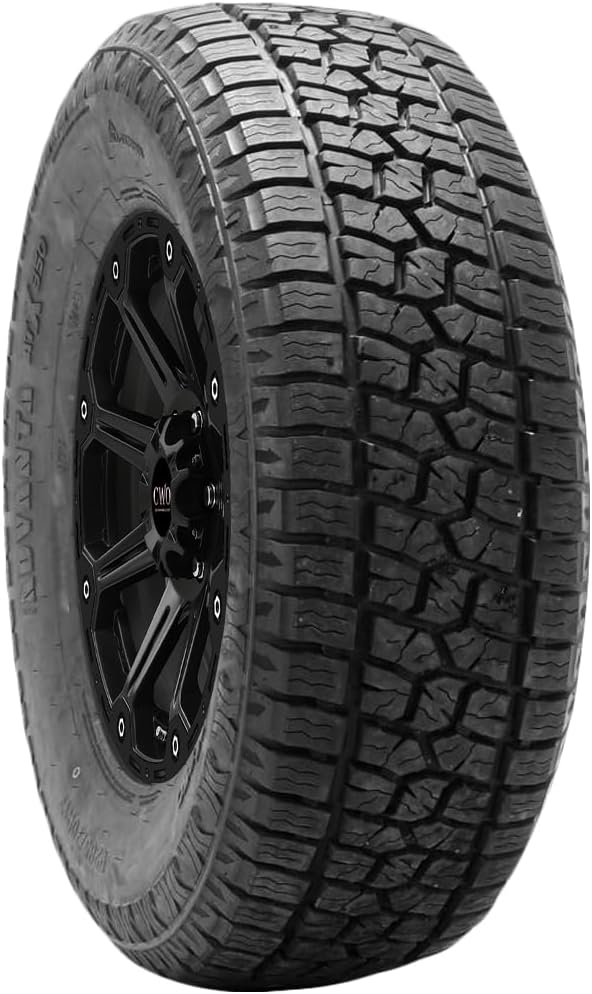
2. Advanta ATX-850
The Advanta ATX-850 is an all-terrain tire built for light trucks and SUVs. With a robust design and enhanced off-road capability, it delivers a smooth ride on highways while also excelling in off-road conditions like mud, sand, and gravel.
Key Features:
- Open tread pattern for better grip on wet, muddy, and rocky surfaces.
- Aggressive sidewalls for increased strength and durability.
- Long-lasting performance due to advanced tread compounds.
- Quiet ride with reduced road noise despite its aggressive design.
- Enhanced handling and braking on all surfaces.
Pros:
- Strong performance in off-road conditions.
- Quiet on the highway despite the aggressive tread.
- Affordable option for those seeking a balance between off-road and on-road use.
Cons:
- Not ideal for extreme snow or ice conditions.
- Tread life may wear quicker if used on mostly paved roads.
Best for:
The Advanta ATX-850 is best for light trucks or SUVs that need a tire offering versatility for both off-road excursions and daily highway driving. It’s an excellent budget-friendly option for drivers who prioritize off-road performance without breaking the bank.
Popular 275 Tire Models
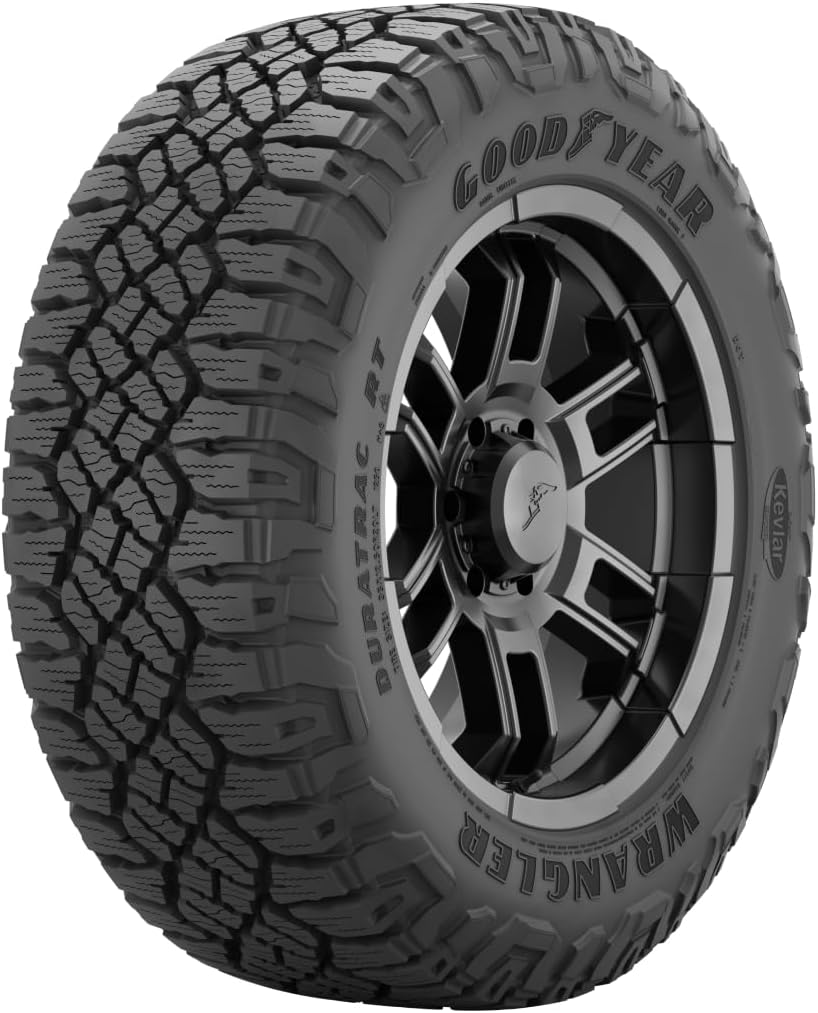
1. Goodyear Wrangler Duratrac RT
The Goodyear Wrangler Duratrac RT is designed for off-road performance while still offering the smooth, comfortable ride of a highway tire. It’s ideal for drivers who need a tire that can handle tough terrains but also work well in everyday driving conditions. It’s known for its traction in mud, snow, and wet conditions, making it a reliable all-season tire.
Key Features:
- Duratrac tread pattern that provides exceptional traction in mud, snow, and gravel.
- Three-Peak Mountain Snowflake symbol for certified winter performance.
- Optimized traction in both on- and off-road conditions.
- Durable sidewall design for added protection and stability.
- Improved handling and stability on wet and dry surfaces.
Pros:
- Excellent performance in snow, mud, and off-road conditions.
- Long-lasting tread life, especially in tough terrains.
- Quiet ride for an off-road tire.
Cons:
- May be too aggressive for mostly city driving.
- Slightly higher road noise compared to highway tires.
Best for:
The Goodyear Wrangler Duratrac RT is ideal for trucks, SUVs, and off-road vehicles that need a tire capable of handling rugged conditions without sacrificing performance on paved roads. It’s great for winter driving, off-road adventures, and outdoor enthusiasts.
2. Crossmax AT-1
The Crossmax AT-1 is an all-terrain tire known for its exceptional off-road performance combined with impressive on-road comfort. It’s designed to handle rough trails, dirt roads, and mud without compromising on highway stability or comfort.

Key Features:
- All-terrain tread pattern optimized for wet, dry, and off-road surfaces.
- Wide shoulder lugs for increased grip and traction on soft terrains.
- Stone ejector system for reducing debris and preventing tire damage.
- Long-lasting durability with tough sidewalls.
- Excellent traction in wet and snow conditions.
Pros:
- Strong off-road performance with a smooth, quiet ride on highways.
- Great all-around tire for varying weather conditions.
- Durable and long-lasting tread life.
Cons:
- Slightly higher rolling resistance, affecting fuel economy.
- Limited snow traction compared to tires specifically designed for winter conditions.
Best for:
The Crossmax AT-1 is best for drivers who need an all-terrain tire that can handle both the daily commute and occasional off-road challenges. It’s ideal for light trucks, SUVs, or crossover vehicles that require versatility without compromising on-road comfort.
Each of these tire models offers distinct advantages, depending on your driving needs. Whether you’re looking for off-road capabilities, durability, or a balance between highway comfort and rugged performance, you can find a 265 or 275 tire that suits your vehicle and driving style.
Which Tire Size is Right for You?
Choosing between 265 and 275 tires can be tricky, but it all comes down to your vehicle type, driving conditions, and budget. Let’s break it down so you can make the right choice based on your needs.
Choosing Between 265 and 275 Tires Based on Vehicle Type
The tire size you choose often depends on the type of vehicle you drive. Let’s take a look at some common vehicles and how tire size plays a role.
- Sedans and Compact Cars: If you’re driving a smaller vehicle, 265 tires are typically the better choice. They offer a smoother ride, better fuel efficiency, and improved handling for city driving. The narrower profile of 265 tires helps smaller cars feel more agile, making them perfect for daily commutes.
- SUVs and Crossovers: For SUVs and crossovers, 275 tires are often the better fit. These tires provide more traction and better stability, which is useful for handling heavier loads and occasional off-roading. If your SUV is a 4×4 or has a more rugged build, the wider 275 tires will help improve your vehicle’s performance on rough terrain.
- Trucks and Heavy Duty Vehicles: For pickup trucks or heavier vehicles that tow trailers or carry large loads, 275 tires are a better option. They offer better load capacity and increased stability when hauling heavy cargo, making them ideal for work trucks or off-road adventures.
Driving Conditions and Needs
Your driving conditions should also play a big part in your decision.
- City Driving and Highway Commutes: If most of your driving is done on smooth city streets or highways, 265 tires will work well. They offer better fuel efficiency and provide a comfortable ride on paved roads. The smaller footprint helps with better steering responsiveness in tight turns or when parking.
- Off-Road or Rough Terrain: For those who love to explore off the beaten path or often drive on rough, uneven roads, 275 tires will serve you better. The wider contact patch offers more grip, making it easier to tackle mud, sand, and gravel without losing control.
- Weather Conditions: If you’re driving in areas prone to snow, rain, or ice, 275 tires often provide better traction in these conditions due to their wider surface area. However, 265 tires can still do well if you select a tire designed for these conditions, especially with proper tread patterns.
Budget Considerations
Lastly, budget is an important factor to think about.
- 265 Tires: 265 tires are often more affordable than 275 tires. Since they’re more common, you’ll find a wider variety of brands and models, which can make finding a budget-friendly option easier. If cost-effectiveness is a priority and you don’t need the added performance features of 275 tires, this size will do the job.
- 275 Tires: While 275 tires generally cost more, they offer increased performance and durability. They tend to be pricier because of their wider build and are often used for heavier vehicles. If you’re looking for extra traction and stability, especially for off-roading or towing, the added cost could be worth it.
Tip:
If you’re on a tight budget, start by comparing prices across different brands for both tire sizes. Sometimes, you can find sales or discounts, which might make the 275 tires more affordable than you think.
By considering your vehicle type, the conditions you drive in, and your budget, you’ll be better equipped to choose between 265 vs 275 tires. Each size has its strengths and weaknesses, so pick the one that best suits your needs and driving habits!
Conclusion
Choosing between 265 and 275 tires ultimately depends on your vehicle type, driving conditions, and performance needs. Both tire sizes offer unique benefits, so it’s important to weigh the pros and cons before making your decision.
If you prioritize fuel efficiency and ride comfort, the 265 tire is likely the best choice. However, if traction, handling, and off-road capability are your top priorities, a 275 tire is probably the better option.
Take your time, do your research, and consult with a tire professional to ensure you’re choosing the right tire for your vehicle. Happy driving!
Frequently Asked Questions
Can you replace 265 tires with 275 tires?
Yes, you can replace 265 tires with 275 tires, but it’s important to consider a few factors. The wider 275 tires may not fit on your vehicle if your wheels are not wide enough or if there isn’t enough clearance in your wheel wells. Always check the manufacturer’s recommendations and ensure your vehicle can handle the wider tire without affecting safety, steering, or performance.
Are 275 tires better for snow and wet conditions than 265?
In many cases, 275 tires may provide better traction in snow and wet conditions. The wider contact patch helps disperse water more effectively and provides a firmer grip on slippery surfaces. However, keep in mind that the performance of a tire in adverse weather also depends on its tread design. If you’re specifically looking for winter tires, you may want to choose one that’s designed for snow rather than focusing solely on tire width.
How does the cost of 265 vs 275 tires compare over time?
265 tires are generally less expensive than 275 tires due to their narrower width and higher availability. Over time, you might also save on fuel costs with 265 tires because they have lower rolling resistance. On the other hand, 275 tires offer better stability and traction, which might be more important for vehicles that are regularly used for towing, off-roading, or carrying heavy loads. If your vehicle requires 275 tires for performance or safety, the extra upfront cost could be worthwhile.
Can 275 tires be used on smaller wheels designed for 265 tires?
Switching from 265 to 275 tires may not always be possible, especially if the wheels aren’t wide enough. 275 tires require a slightly wider rim to properly fit. Using a tire that’s too wide for your rim can lead to poor performance, handling issues, and even damage to the tire. Before making the switch, consult your vehicle’s manufacturer or a tire professional to ensure the 275 tires are compatible with your wheel size.
What is the size difference between 265 and 275 tires?
The primary difference between 265 and 275 tires is their width. 275 tires are 10 millimeters wider than 265 tires. This extra width provides a larger contact patch with the road, offering better traction, stability, and handling. In addition, 275 tires may have a slightly larger sidewall height and circumference, which can affect ride comfort and fuel efficiency.
How much taller is a 275 tire than a 265 tire?
The height difference between 275 tires and 265 tires is generally small but noticeable. A 275 tire may be around 1 to 2% taller than a 265 tire, depending on the aspect ratio. The taller sidewall of the 275 tire offers more cushioning, which can improve comfort but might slightly reduce fuel efficiency due to increased rolling resistance.
Can I use 275 tires instead of 265?
If your vehicle is equipped with 265 tires and you’re thinking about switching to 275 tires, it’s important to check if your vehicle can handle the wider tires. 275 tires offer better stability and traction, especially for larger vehicles, but they can affect fuel economy and ride comfort. Always ensure that 275 tires are compatible with your vehicle’s rim size, wheel wells, and overall design.
What’s the difference between 265 and 275 Michelin tires?
The difference between 265 and 275 Michelin tires is similar to that of other tire brands. 275 Michelin tires are wider, providing better traction, handling, and stability—especially in wet or snowy conditions. The 265 Michelin tires will typically offer a smoother ride and better fuel efficiency. Both sizes offer high-performance features, but your choice will depend on your vehicle type and driving needs.
Can I use 265 tires instead of 275 on my truck?
If you’re considering using 265 tires instead of 275 tires on your truck, it’s important to consider how it will affect your truck’s performance, especially if you’re using it for towing or off-roading. While 265 tires are suitable for daily driving and offer better fuel economy, 275 tires are typically better for trucks due to their increased load capacity and improved stability. Always check if 265 tires will affect your truck’s towing capacity or traction on rugged terrains.
Can I go from 275 to 265 tires?
Yes, it’s possible to switch from 275 tires to 265 tires, but you must ensure that the 265 tires fit properly on your vehicle. While 265 tires can improve fuel economy and provide a smoother ride, you may lose some of the traction and stability that the 275 tires provide. It’s important to check your vehicle’s manufacturer guidelines to see if the smaller tire size will affect performance, especially if you use your vehicle for heavy-duty tasks like towing or off-roading.
