Bridgestone Blizzak DM-V2 vs Michelin X-Ice Snow
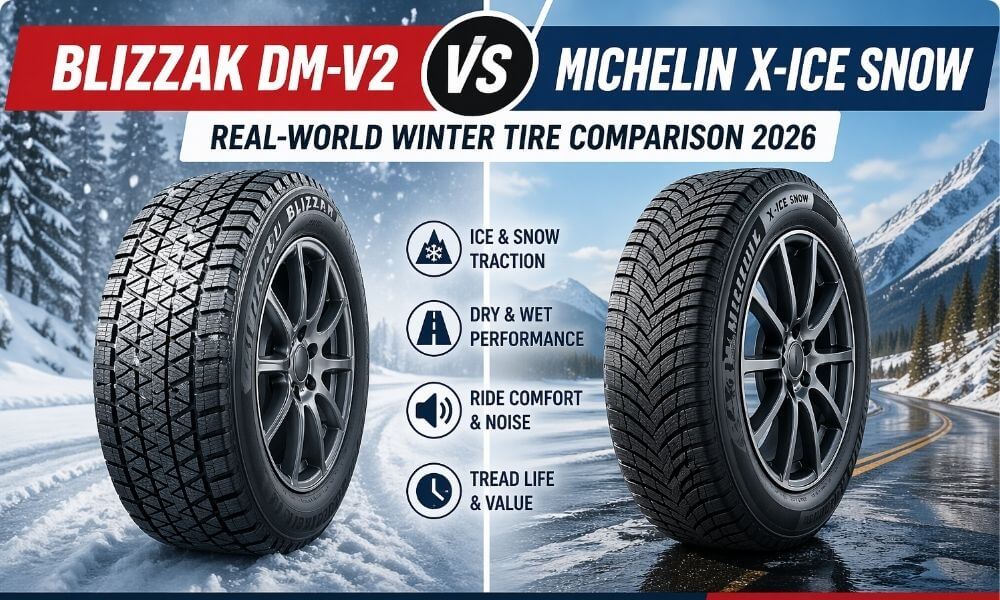
If you are shopping for winter tires and keep narrowing the choice down to the Bridgestone Blizzak DM-V2 vs Michelin X-Ice Snow, you are probably looking for the same thing most drivers want: safe stopping, confident traction, and a tire that fits the way you actually drive in winter. Bridgestone positions the Blizzak DM-V2 for SUVs, CUVs, and light trucks, and says its multicell compound removes surface water for better braking on ice. Michelin positions the X-Ice Snow as a winter tire built for long-lasting winter mobility, with full-depth 3D sipes and a 40,000-mile limited warranty.
The short version is this: the Blizzak DM-V2 leans a little more toward maximum winter grip, especially in harsher conditions, while the Michelin X-Ice Snow leans more toward balanced everyday winter driving, comfort, and long-term value. Tire Rack owner ratings for the light-truck/SUV category show the DM-V2 slightly ahead in deep snow and ice, while the X-Ice Snow SUV edges it out a bit in ride quality and noise.
What Are Winter Tires?
Winter tires are made for cold weather driving—especially when temperatures drop below 7°C (45°F). At that point, regular tires start to stiffen, which reduces grip. Winter tires stay soft, so they can hold onto the road better, even on ice or packed snow.
The biggest difference from all-season tires is how they handle cold conditions. All-season tires are designed to work “okay” in many situations, but they’re not built for extreme winter. When roads get icy or covered in snow, they lose traction faster.
What makes winter tires special comes down to two things:
- Soft rubber compounds that stay flexible in freezing temperatures
- Sipes and deeper tread patterns that bite into snow and help grip icy surfaces
You’ll also notice a small symbol on real winter tires called the 3PMSF (Three-Peak Mountain Snowflake). This means the tire has been tested and approved for severe snow conditions—not just light winter driving.
One thing to keep in mind: winter tires wear out faster in warm weather. They’re built for cold, not year-round use.
Quick Comparison Table: Bridgestone Blizzak DM-V2 vs Michelin X-Ice Snow
This quick snapshot combines the manufacturers’ current feature pages with Tire Rack owner ratings in the light-truck/SUV studless winter category.
| Category | Blizzak DM-V2 | Michelin X-Ice Snow |
| Winter focus | Strong snow and ice grip | Balanced winter performance |
| Ice traction | Excellent | Excellent |
| Deep snow | Slight edge | Very good |
| Wet roads | Strong | Very strong |
| Comfort / noise | Good | Slightly better |
| Tread life / value | Good, but more performance-first | Better value thanks to warranty |
| Best for | Harsh winter SUV and truck use | Drivers who want balance and longer-term confidence |
Bridgestone Blizzak DM-V2 Overview
The Bridgestone Blizzak DM-V2 is built mainly for SUVs and light trucks that deal with serious winter conditions. It’s a popular choice for drivers who face deep snow and icy roads regularly.
What makes this tire stand out is its special rubber layer called a multicell compound. In simple terms, it helps pull water away from the surface of ice, which improves grip. That’s a big deal because ice is often slippery due to a thin layer of water on top.

On the road, this tire feels very confident in deep snow. It digs in well and gives strong traction when starting or climbing. Ice grip is also solid, especially when the tire is new.
One thing to keep in mind: this top layer wears down over time. After about half the tread is gone, the tire loses some of its ice performance. It’s still usable, but not as strong as when it was new.
Michelin X-Ice Snow Overview
The Michelin X-Ice Snow takes a slightly different approach. It’s designed to give steady, reliable performance throughout its life, not just when it’s brand new.
Michelin uses a special rubber called Flex-Ice 2.0. This helps the tire stay flexible in cold weather while also lasting longer. The result is a tire that performs consistently, even after several seasons.

In everyday driving, this tire feels smooth and stable. It handles well on both icy roads and cleared pavement, which makes it a good choice for daily commuters. It’s also quieter than many winter tires.
Another advantage is durability. Michelin often backs this tire with a longer tread life warranty—around 40,000 miles in many cases—which is rare for winter tires.
The trade-off? It may not feel as aggressive in deep, loose snow as the Blizzak. But for most drivers, the balance of comfort, control, and long life makes it a strong option.
Tread Design Comparison
Tread design is just the pattern you see on the tire. It might look simple, but it plays a big role in how a tire behaves on snow and ice.
The Bridgestone Blizzak DM-V2 has a more open and aggressive tread pattern. The grooves are wider and deeper. This helps the tire collect snow inside the tread, and that might sound strange, but it actually helps grip better on snowy roads.
This works because of something called “snow-on-snow” contact. Snow sticks better to snow than rubber does to ice or loose powder. So when the tire holds packed snow inside its grooves, it can grip the road more effectively in deep conditions.
The Michelin X-Ice Snow uses a more closed and balanced tread pattern. It’s designed to stay stable on different road types, not just deep snow. This makes it smoother and more predictable on cleared or wet roads.
It doesn’t rely as much on deep snow packing, but instead focuses on consistent contact with the road surface. That’s why it feels more controlled in everyday winter driving.
In simple terms, Blizzak is more aggressive for deep snow grip, while Michelin is more balanced for mixed winter conditions.
Ice Traction Comparison
Ice is where winter driving becomes risky. It’s not just slippery—it’s unpredictable. A tire that performs well here can make a real difference in emergency situations like sudden braking or turning.
The Bridgestone Blizzak DM-V2 uses a special rubber layer that helps remove the thin film of water sitting on top of ice. This gives it a strong initial bite, especially when the tire is new. You’ll feel confident when starting from a stop or driving on frozen roads.
The Michelin X-Ice Snow takes a slightly different approach. It relies on a high number of tiny cuts in the tread (called sipes) to grip the ice. These edges help the tire hold on better when braking or cornering.
In real-world testing, Michelin often stops a bit shorter on ice. That’s important, especially in sudden braking situations where every meter counts.
Winner: Michelin X-Ice Snow
It offers more consistent and reliable grip on ice, especially when braking. The Blizzak is still very capable, but Michelin has a slight edge where it matters most.
Snow Performance Comparison
Snow driving isn’t all the same. Light snow on city roads is very different from deep, loose snow on rural or unplowed roads. This is where tire design really starts to matter.
The Bridgestone Blizzak DM-V2 has a more aggressive tread pattern. The grooves are wider and deeper, which helps the tire dig into snow and keep moving forward. In deeper snow, this gives it a clear advantage—you’re less likely to get stuck or lose momentum.
The Michelin X-Ice Snow still performs well in snow, especially on roads that are already packed down. It feels stable and controlled, but the tread isn’t as aggressive, so it doesn’t bite into loose snow quite as strongly.
In a real-world situation—like driving on rural roads after fresh snowfall—the difference becomes more noticeable. The Blizzak simply pulls through better and feels more confident.
Winner: Bridgestone Blizzak DM-V2
It offers stronger grip in deep and loose snow. The Michelin is still reliable, but the Blizzak is the better choice when snow gets serious.
Dry & Wet Road Performance
It’s easy to focus only on snow and ice, but the truth is most winter driving happens on clear or wet roads. That’s where everyday comfort and control really matter.
The Michelin X-Ice Snow feels more stable in these conditions. On wet roads, it grips well and doesn’t feel slippery when braking. On the highway, it tracks straight and feels more controlled at higher speeds.
The Bridgestone Blizzak DM-V2 is still safe and capable, but it has a softer feel. You might notice a bit more movement in the steering, especially on dry pavement. It’s not unsafe—it just doesn’t feel as precise.
For daily driving, especially if your roads are often cleared, this difference becomes noticeable over time.
Winner: Michelin X-Ice Snow
It offers better stability and confidence on wet and dry roads, which is where most people spend the majority of their winter driving.
Ride Comfort & Noise
When you’re driving every day in winter, comfort matters more than you might expect. Long commutes, rough roads, and cold weather can already make driving tiring—your tires shouldn’t add to that.
The Michelin X-Ice Snow feels smoother over bumps and uneven roads. It also runs quieter, so you don’t hear as much road noise inside the cabin. This makes a noticeable difference, especially on longer drives.
The Bridgestone Blizzak DM-V2 is still comfortable, but it’s a bit noisier. On certain roads, you may hear a light hum, and the ride can feel slightly firmer compared to the Michelin.
For short trips, the difference isn’t huge. But if you drive often or spend a lot of time on the road, it adds up.
Winner: Michelin X-Ice Snow
It offers a quieter and smoother ride, making daily winter driving more comfortable overall.
Tread Life & Durability
This is something many people overlook, but it matters if you plan to use your tires for more than one winter.
The Bridgestone Blizzak DM-V2 uses a special top layer that gives it strong grip early on. The downside is that this layer wears down faster. After that, the tire still works, but it doesn’t perform at the same level as when it was new.
The Michelin X-Ice Snow is built differently. Its rubber compound stays consistent throughout the tire, so the performance doesn’t drop off as quickly. Even after a few seasons, it still feels reliable.
In everyday use, this means the Michelin usually lasts longer and holds its performance better over time. That can make a real difference if you’re thinking about long-term value.
Winner: Michelin X-Ice Snow
It offers better durability and more consistent performance across multiple winters, while the Blizzak is stronger early on but fades faster.
Read More: Cooper Evolution Winter Review
Real-World Driving Scenarios
This is where the difference between these two tires becomes easier to understand. Instead of looking at specs, think about how they behave in everyday situations.
City driving (ice + traffic)
In stop-and-go traffic on icy roads, the Michelin X-Ice Snow feels more controlled. It grips better when braking at intersections and handles sudden stops with more confidence. The Bridgestone Blizzak DM-V2 is still strong, but not quite as consistent in these quick, repeated stops.
Better choice: Michelin X-Ice Snow
Highway winter driving
On highways, where roads are often cleared but still cold or wet, the Michelin again feels more stable. It tracks straighter and feels calmer at higher speeds. The Blizzak works fine, but the softer feel can make it seem a bit less precise over long drives.
Better choice: Michelin X-Ice Snow
Deep snow / rural roads
This is where the Bridgestone Blizzak DM-V2 really stands out. On unplowed roads or after heavy snowfall, it digs in better and keeps moving forward with less struggle. The Michelin can handle it, but it doesn’t feel as strong in deeper, loose snow.
Better choice: Bridgestone Blizzak DM-V2
Slush & wet snow
Slushy roads can be tricky because they’re uneven and slippery at the same time. The Michelin handles this situation well, keeping good contact with the road and feeling stable. The Blizzak does a decent job too, but the Michelin feels a bit more predictable here.
Better choice: Michelin X-Ice Snow
Which Tire Should You Choose?
By this point, the choice usually comes down to how and where you drive in winter. Both tires are strong, but they are built with slightly different priorities in mind.
If you deal with heavy snow often, especially in rural areas or places with unplowed roads, the Bridgestone Blizzak DM-V2 is the better fit. It gives you a stronger bite in deep snow and feels more confident when conditions get rough. The trade-off is that it may not feel as smooth or consistent over many seasons.
If your driving is more about everyday winter use—city roads, highways, and mixed conditions—the Michelin X-Ice Snow is usually the smarter choice. It lasts longer, feels more comfortable, and stays stable on wet or cleared roads. You also get more consistent performance over time.
In simple terms, Blizzak is for tougher snow conditions, while Michelin is for balanced, everyday winter driving. Both are safe choices—you just need to match the tire to your reality, not just the label.
Price vs Value Comparison Between Bridgestone Blizzak DM-V2 and Michelin X-Ice Snow
When people compare winter tires, price is usually the first thing they notice. But the real question is not just how much you pay today—it’s how long the tire lasts and what you get from it over time.
Both the Bridgestone Blizzak DM-V2 and the Michelin X-Ice Snow sit in the premium winter tire range. In most markets, they are close in upfront price, though Michelin is often slightly more expensive depending on size and availability.
The bigger difference shows up over time. Michelin usually lasts longer across multiple winters, which means the cost is spread out over more seasons. That can make it feel like better value even if you pay more at the beginning.
Blizzak, on the other hand, focuses more on performance, especially in tough snow and ice conditions. You get very strong winter grip early on, but the tire may not hold that same level of performance for as many seasons.
So the simple way to look at it is this: Michelin is about long-term value and durability, while Blizzak is about strong winter performance right away.
Final Verdict
This is one of those comparisons where both tires are genuinely excellent, but they solve slightly different problems. The Bridgestone Blizzak DM-V2 is the better choice when winter severity is the main concern. The Michelin X-Ice Snow is the better choice when you want strong winter performance with better comfort and a stronger ownership story.
My overall pick for most drivers is Michelin X-Ice Snow because it combines strong winter traction with better comfort and a 40,000-mile warranty. My pick for drivers in harsher snow belts is Bridgestone Blizzak DM-V2 because it feels slightly more specialized for serious winter grip.
Frequently Asked Questions
Which is better on ice, Blizzak DM-V2 or Michelin X-Ice Snow?
Both are excellent, but the Blizzak DM-V2 has a slight edge in owner ratings for ice traction, and Bridgestone’s multicell compound is specifically designed to help with braking on ice.
Which is better in deep snow?
The Blizzak DM-V2 has the small advantage in deep-snow performance. Michelin is still very strong, but the Bridgestone is the more aggressive winter tire.
Which tire is quieter?
The Michelin X-Ice Snow is slightly quieter according to Tire Rack owner ratings.
Which tire lasts longer?
Michelin has the clearer long-term story because it offers a 40,000-mile standard limited warranty on the X-Ice Snow.
Can I use either tire on a daily driver?
Yes. The better choice depends on your winter conditions. The DM-V2 suits drivers who want more winter bite, while the X-Ice Snow suits drivers who want a calmer ride and stronger long-term value.
