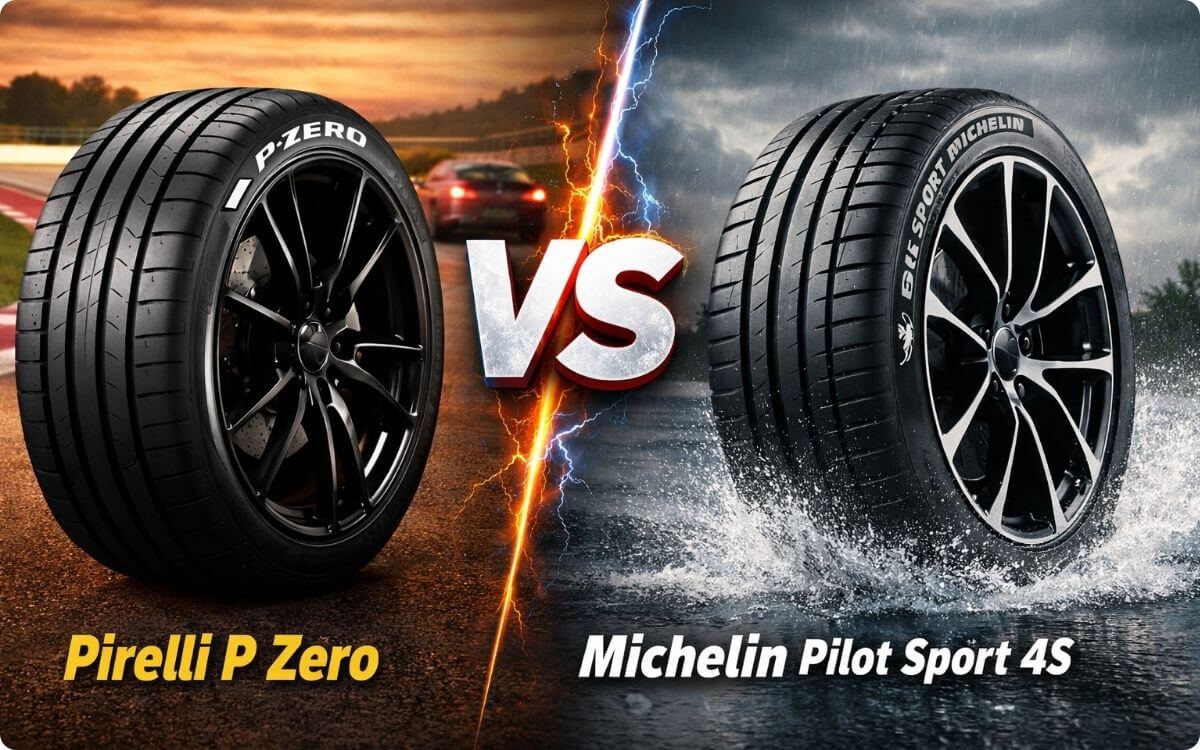
Pirelli P Zero vs Michelin Pilot Sport 4S: Which One Should You Buy?
When comparing Pirelli P Zero vs Michelin Pilot Sport 4S, most drivers are trying to answer one simple question:
Which tire should I buy for my performance car?
Both are ultra-high-performance summer tires. Both come as OEM equipment on premium sports cars. Both promise extreme grip, sharp handling, and high-speed stability.
But they feel different on the road. They wear differently. They perform differently in rain. And depending on how you drive, one may clearly suit you better.
This in-depth comparison breaks it down in clear, practical language so you can choose confidently.
Quick Answer
Short answer: For most people the Michelin Pilot Sport 4S is the better all-round pick; choose the Pirelli P Zero if you want the sharpest steering and a firmer, more athletic feel.
Quick comparison (at a glance)
- Best overall performance: Pilot Sport 4S — balanced wet/dry grip and longer usable life.
- Best steering feel: P Zero — snappier turn-in and more direct feedback.
- Best wet confidence: Pilot Sport 4S — shorter wet stopping distances and stronger water handling.
- Best daily comfort: Pilot Sport 4S — quieter and more forgiving on rough roads.
- Best for OEM-handling match: P Zero (choose OE-marked versions to keep factory balance).
How to decide right now
If you commute, live where it rains, or want lower cost-per-mile → pick the Pilot Sport 4S. If you prioritize instant steering and the “sportiest” feel for dry driving → pick the P Zero.
Check your car’s OE marking and exact tire size before buying to preserve handling and safety.
Overview: Pirelli P Zero vs Michelin Pilot Sport 4S
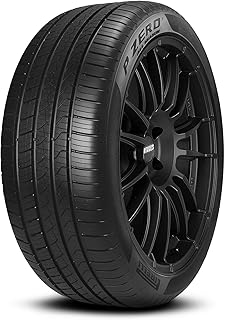
Pirelli P Zero
The P Zero is a max-performance summer tire built for cars that demand quick steering and confident cornering. It’s the kind of tire that feels alive underfoot — very responsive to small driver inputs — and is often chosen for sporty European cars and high-performance sedans.
It’s not a four-season tire: it performs best on warm, dry pavement and can feel firmer than everyday touring tires. If you drive through snow or sustained cold, this isn’t the right pick.
Key features
- Ultra-responsive sidewalls — gives sharp turn-in and direct steering feel.
- High-grip rubber compound — optimized for dry traction at speed.
- Asymmetric tread pattern — balances cornering bite with straight-line stability.
- OEM-tuned versions available — many manufacturers spec a P Zero variant for new cars.
- Reinforced belt package — helps with high-speed stability and steering precision.
- Wide shoulder blocks — improve cornering grip and lateral control.
- Designed for high-speed performance — rated and tested for highway speeds.
- Optimized for feedback — gives a clear road feel to the driver.
Pros and cons
Pros
- Very sharp steering and immediate response.
- Excellent dry grip and high-speed confidence.
- Often available in factory (OEM) fitments for performance cars.
Cons
- The ride can feel firm for daily commuting.
- Tread life is shorter than some all-round performance tires.
- Wet braking and standing-water performance are good but typically behind newer all-round tires.
- Premium price compared with basic summer tires.
If you want a tire that prioritizes direct handling and dry performance — and you accept a firmer ride and shorter tread life — this is a strong choice.
Michelin Pilot Sport 4S
The Pilot Sport 4S is Michelin’s do-it-all max-performance summer tire. It’s tuned to deliver very strong grip in both wet and dry conditions while still being comfortable enough for daily driving.
It isn’t a winter tire — avoid it in snow or freezing temperatures — but for warm-weather driving it aims to balance sharp performance with longer tread life than many track-focused tires.

Key features
- Excellent wet traction thanks to wide grooves that channel water away.
- High-grip rubber compound that holds well at speed.
- Predictable, progressive breakaway — the tire lets you feel the limit before it slides.
- Engineered for consistent performance over many laps or long drives.
- Sidewall construction that balances steering response with ride comfort.
- Available in a wide range of sizes for sports cars and performance sedans.
- Generally lower road noise compared with ultra-stiff performance tires.
- Often offered with mileage or workmanship coverage in some markets.
Pros and cons
Pros
- Outstanding wet and dry braking performance.
- More comfortable and quieter than many pure sport tires.
- Tends to last longer — better cost-per-mile for spirited drivers.
- Very predictable handling that builds confidence quickly.
Cons
- Not as “telepathic” on turn-in as some ultra-stiff track tires.
- Premium price compared with basic summer tires.
- Still unsuitable for cold or snowy conditions.
If you want a tire that performs hard when you ask for it but stays civil the rest of the time, the Pilot Sport 4S is a sensible, high-performing choice.
Side-by-Side Comparison: Pirelli P Zero vs Michelin Pilot Sport 4S
Here’s a clear, easy-to-read side-by-side comparison table for Pirelli P Zero vs Michelin Pilot Sport 4S:
| Feature | Pirelli P Zero | Michelin Pilot Sport 4S |
| Dry Grip | Excellent | Excellent (often slightly stronger in tests) |
| Wet Grip | Very Good | Outstanding (usually better in rain) |
| Steering Feel | Sharper, more direct | Smooth, predictable |
| Ride Comfort | Firmer | More forgiving, quieter |
| Road Noise | Moderate | Generally lower |
| Tread Life | Moderate | Longer (better cost-per-mile potential) |
| High-Speed Stability | Strong | Very strong |
| Track Use | Good for short stints | Better for extended laps |
| Daily Use Balance | Sportier feel, firmer ride | Balanced performance and comfort |
| Best For | Sharp handling enthusiasts | All-around performance with rain confidence |
Dry Performance Comparison
When it comes to dry roads — warm pavement with no rain — both tires are strong. But they behave a bit differently, and those differences are important if you care about how your car feels and responds.
Straight-Line Grip
Straight-line grip means how well a tire holds the road when you accelerate or brake hard in a straight line.
In independent tests, like those from Tire Rack, the Michelin Pilot Sport 4S often stops a little shorter and grips slightly better than the Pirelli P Zero in dry braking tests. That doesn’t mean the P Zero is weak — it still grabs the pavement well — but the PS4S shows a small edge when slowing from high speed.
In everyday driving, you’ll notice both feel secure under hard acceleration or braking. If you’re coming from street tires, either will feel much more planted.
Cornering Stability
Cornering stability is how the tire behaves when you turn hard — whether it feels planted or vague.
The Pirelli P Zero tends to give very direct feedback. When you steer, the car responds quickly. That sharp feeling can be rewarding on smooth roads and twisty sections.
The Pilot Sport 4S offers stability too, but it feels more progressive — the car builds grip more smoothly as you lean into the turn. This makes it easier to feel what the tire is doing without surprises.
Some drivers prefer the instant response of the P Zero. Others like the smoother feel of the PS4S, especially on long winding roads.
High-Speed Confidence
High-speed confidence is how secure the tire feels when you’re cruising fast or on highways.
Both tires are designed for high-speed use and are tested by manufacturers and third-party reviewers for stability. The Pilot Sport 4S generally feels a bit more composed at high speeds, with fewer small jitters on rough pavement. In contrast, the P Zero can feel a touch firmer and more reactive — exciting, but also reminding you that it’s tuned for performance.
Who Wins in Dry Performance?
On raw dry grip and responsiveness, the two are close — neither is a poor performer. But when you consider braking tests, smooth grip build-up, and high-speed stability together, the Michelin Pilot Sport 4S usually has a slight overall edge for most drivers. The Pirelli P Zero still shines if you prefer very sharp steering and a more immediate feel, but the PS4S tends to be the safer all-around choice in dry conditions.
Wet Performance & Hydroplaning Resistance
Driving in the rain is very different from dry roads. When the pavement is wet, the way a tire grips and moves water away becomes much more important. In this section, we look at how the tires behave in rainy conditions and why one usually has an advantage.
Wet Braking Distance
Wet braking distance is how far a tire travels before the car stops when the road is wet.
In tests like those from Tire Rack, the Michelin Pilot Sport 4S generally stops shorter than the Pirelli P Zero on wet asphalt. That means if you brake hard in the rain, the PS4S often brings the car to a stop in less space.
This doesn’t mean the P Zero is unsafe — it still grips well — but the PS4S gives a bit more confidence in rainy braking.
Cornering in Rain
Cornering in the rain is about how much grip you have when turning through a wet curve.
The Pilot Sport 4S shines here because its tread pattern and rubber mix help the tire stay planted as you turn. You might feel the car hold its line without sudden slides.
The P Zero can still corner well, but it tends to reach its grip limit sooner and with less warning. Drivers might notice a quicker transition when the tire is close to losing traction.
Standing Water Stability
Standing water means puddles or water not flowing off the road quickly. In these situations, hydroplaning — when tires ride on water instead of the road — is the biggest worry.
The Pilot Sport 4S has deep water channels and grooves that are good at pushing water away from under the tire. That reduces the chance of hydroplaning at normal speeds.
The P Zero also has grooves to move water, but in heavy standing water the PS4S tends to clear water more effectively. This makes it easier to keep control in deeper wet patches.
Verdict (Wet Roads)
Both tires can handle rainy roads, but the Michelin Pilot Sport 4S usually feels safer and more predictable in wet conditions. It brakes shorter, corners with steadier grip, and handles standing water with less fuss. The P Zero isn’t bad, but if you often drive in rain, the PS4S gives an extra level of confidence.
Steering Feel & Handling Character
Both tires steer and handle well, but they give you different information through the wheel. Below I explain how they differ in plain language so you can pick the one that matches how you like to drive.
Turn-in sharpness
The P Zero gives a very quick, direct response when you turn the wheel — it snaps onto the line with little delay. That makes the car feel eager and very controllable for quick direction changes. The PS4S is still responsive, but it’s a touch more gradual: it builds into the turn smoothly rather than snapping instantly.
Road feedback
With the P Zero you feel more of what the road is doing. Small bumps and surface texture come through the wheel, which some drivers like because it feels “connected.” The PS4S filters a bit more of that noise, so you get useful information without as much harshness — it feels composed and easier on long drives.
Predictability at the limit
When you push toward the grip limit, the P Zero tends to bite earlier and can break away more suddenly. That gives fast, immediate responses but requires quicker reactions. The PS4S lets you reach the limit more gradually; it warns you first and then slips in a smoother, more predictable way. That predictability helps drivers correct errors more calmly.
Practical takeaway
If you prefer instant, sharp steering and enjoy a raw, athletic feel — go with the P Zero. If you want strong performance but a calmer, more forgiving character that’s easier to manage at the edge — the Pilot Sport 4S is the better match.
Ride Comfort & Road Noise
If you drive your car every day, comfort matters. Even performance tires have to deal with rough roads, highway miles, and stop-and-go traffic.
Sidewall stiffness
The P Zero has a firmer sidewall. That helps with sharp handling, but it also means you’ll feel more bumps and cracks in the road.
The Pilot Sport 4S is still sporty, but it has a slightly more forgiving feel. It absorbs small road imperfections better, which makes daily driving easier.
Expansion joints
On bridges or concrete highways, you’ll notice expansion joints — those small gaps that cause a “thump” as you pass over them.
With the P Zero, those impacts feel more pronounced. It’s not uncomfortable, but it’s clearly firm.
The PS4S softens that hit just enough to feel smoother without becoming floaty. Over long drives, that difference adds up.
Highway cruising
At steady highway speeds, both tires are stable. The difference shows up in road noise.
The P Zero can produce a bit more road hum, especially on rough asphalt. It’s not loud, but you’ll hear it.
The Pilot Sport 4S is generally quieter and more relaxed at cruising speeds. Conversations and music feel less interrupted by tire noise.
Which feels more livable day-to-day?
If your car is mostly a weekend toy, the firmer feel of the P Zero may not bother you. Some drivers even prefer that solid, connected sensation.
But if you commute daily or take longer trips, the Michelin Pilot Sport 4S usually feels more comfortable and less tiring. It keeps strong performance while being easier to live with on normal roads.
Track Performance & Heat Management
If you take your car to the track now and then, tires behave differently than they do on the street. This section explains how each tire handles heat and how well they keep their grip over repeated hard laps — in plain language you can act on.
Heat Resistance
On the track, tires get hot fast. A tire that handles heat well will keep its compound working instead of becoming greasy. The Pilot Sport 4S is built to manage heat over longer runs, so it stays grippy as temperatures climb. The P Zero heats and responds quickly, which feels great at first, but it can reach high temperatures sooner on repeated hard laps.
Consistency Over Laps
Consistency means the tire gives similar grip lap after lap. For multi-lap sessions, the PS4S usually holds a steadier level of grip. That makes your times more predictable and lets you push more confidently on later laps. The P Zero is very effective for short bursts — a few fast laps — but you may notice its performance change more between the first and fifth lap.
Fade Characteristics
Fade is when a tire loses performance as it overheats. The PS4S tends to fade more gradually: you feel warning signs and can back off to recover. The P Zero’s change can be sharper — less warning, then a quicker drop in grip. That means recovery and corrections need to be faster with the P Zero.
Tread Life & Warranty Comparison
Tread life and warranties matter because they affect how often you replace tires and the real cost of ownership. Below I explain the rating system, what to expect on the street, and how warranties usually work — in plain language.
UTQG ratings
UTQG (Uniform Tire Quality Grading) is a simple label you’ll sometimes see. It has three parts: treadwear, traction, and temperature. The treadwear number is supposed to compare how long the tire wears versus a reference tire — a higher number usually indicates longer life. Traction and temperature grades tell you about wet grip and heat resistance, but they don’t predict miles. Use UTQG as a rough guide, not a guarantee.
Real-world longevity
How long a tire actually lasts depends more on you than the label. Driving style, vehicle weight, wheel alignment, and road surface make the biggest difference. In general, tires that feel sharper and stiffer (designed for maximum grip) will wear faster under aggressive driving. Tires built to balance grip and comfort often show steadier wear over time. Expect several thousand miles of variation between drivers and sizes — the same tire on two cars can yield very different lifespans.
Mileage warranty (what to watch for)
Some retailers or markets include a mileage warranty on certain sizes; others don’t offer one for ultra-performance models. When a warranty exists it’s usually conditional: it may be pro-rated (you pay part of the replacement) and excludes damage from road hazards, improper inflation, or misalignment. Always read the fine print and keep your purchase receipt and rotation records if you plan to claim a warranty.
Price & Cost-Per-Mile Value
For price and long-term value, here’s a short, practical breakdown comparing Pirelli P Zero and Michelin Pilot Sport 4S.
On price: the Pilot Sport 4S commonly lists higher than the P Zero in many common sizes—shop prices vary by size and region but expect the PS4S to cost noticeably more in typical fitments.
Estimated usable miles (typical, varies by driver & car):
- P Zero: ~25,000 miles per tire (aggressive driving reduces this).
- PS4S: ~30,000–35,000 miles per tire (better balance of grip and wear).
Value calculation (simple): pick a representative size and compare cost per mile.
Example math (concise):
- Assume P Zero = €180/tire and lasts 25,000 miles → €180 ÷ 25,000 = €0.0072 per mile.
- Assume PS4S = €220/tire and lasts 35,000 miles → €220 ÷ 35,000 = €0.0063 per mile.
So even if the PS4S costs ~€40 more per tire up front, it can be cheaper per mile because it lasts longer. Use this same formula with your local prices and realistic mileage for your driving style.
Quick tips: compare local prices for your exact size, check warranty/mileage coverage, and factor in mounting/TPMS/recycling fees when calculating total cost.
OEM vs Aftermarket Versions
Many manufacturers ask tire makers to tweak a model to fit a specific car. The Pirelli P Zero you see on a new sports car is often an OEM-tuned version — different from the same-name tire sold retail.
OEM-marked tires (you’ll see special codes or stamps) are tuned for the carmaker’s goals: ride quality, noise, load rating, and a specific handling feel. Aftermarket versions of the same model usually prioritize a different balance — often sharper steering or a grippier compound — because they don’t have to match factory targets.
In practice this means two tires with the same name can behave differently on your car. If you want the exact handling the factory intended, match the OEM-marked tire. If you want a more aggressive feel or longer life, choose the aftermarket spec and accept small tradeoffs in ride or noise.
Quick checklist before you buy:
- Check the sidewall marking or ask the seller if the tire is an OEM-spec or an aftermarket variant.
- If replacing factory tires on a performance car, favor the OEM-marked version to preserve original handling.
Simple rule: match OEM markings for factory balance; pick aftermarket if you want a different performance tradeoff.
Who Should Choose Between Pirelli P Zero and Michelin Pilot Sport 4S?
Both are strong performance tires. The right one depends on how you drive, where you drive, and what you care about most.
If you enjoy sharp, quick steering and want the car to react instantly when you turn the wheel, the P Zero will likely feel more exciting. It suits drivers who like a firm, sporty feel and don’t mind sacrificing a bit of comfort for that responsiveness.
It’s also a sensible choice if your car originally came with P Zeros and you liked how it felt. Staying with the same tire can keep the car’s balance close to what the manufacturer intended.
On the other hand, if you drive your car every day and want strong performance without giving up comfort, the Pilot Sport 4S is usually the easier tire to live with. It handles spirited driving well but feels calmer and more forgiving on regular roads.
If you frequently drive in the rain, the Michelin often gives more confidence. If you take long highway trips, it may also feel smoother and quieter over time.
Be honest about your driving style. If most of your miles are commuting and weekend fun runs, the PS4S is the more balanced choice. If your priority is sharp feedback and sporty character above everything else, the P Zero may match your personality better.
In simple terms:
Choose the P Zero if you want a sharper, more aggressive feel.
Choose the Pilot Sport 4S if you want strong performance with better everyday comfort and versatility.
Neither is a bad decision — the best one is the one that fits how you actually drive.
Climate-Based Recommendation
For climate-based choices, here’s a simple, practical guide to picking between Pirelli P Zero and Michelin Pilot Sport 4S based on where and how you drive. Each short section ends with a clear action you can take.
Hot climate
On very hot roads, tires run warmer and can wear faster. If you do long highway miles in high temperatures, prefer the tire that manages heat and keeps grip longer. Check pressures more often in hot weather and avoid heavy loads when possible. Action: pick the tire with stronger heat resistance for your size, and check pressure before long runs.
Rain-heavy regions
If you see rain often, choose the tire that gives firmer wet braking and stable handling in standing water. Also, keep tread depth in mind — worn tires lose wet performance fast. Action: prioritize the tire with better water evacuation and inspect tread depth regularly; rotate tires to preserve even wear.
Mixed daily use (commute + spirited drives)
For a mix of commuting and occasional spirited driving, balance matters: you want good daily comfort and reliable performance when you push the car. Consider the tire that feels more comfortable day-to-day while still confident on twisty roads. Action: pick the more balanced option and plan for regular rotations and alignments to maximize life.
Occasional track days
If you hit the track once in a while, you need a tire that performs well on short hard stints but won’t fall apart after a couple of laps. For rare track use, a performance summer tire that’s forgiving with heat and predictable under stress is best. If you track frequently, consider a dedicated track tire instead. Action: for occasional track sessions, monitor temps and pressures closely and avoid sustained overheating; if you go often, switch to a track-specific tire.
Final tip: choose for the condition you face most of the time. If your driving is split, favor the tire that keeps daily life easier — you can always change tires for special use (track, winter) when needed.
Conclusion
Both the Pirelli P Zero and the Michelin Pilot Sport 4S are serious performance tires. You’re not choosing between good and bad — you’re choosing between two different driving personalities.
If you want the best overall balance of grip, comfort, and confidence in different conditions, go with the Michelin Pilot Sport 4S. For most drivers, it’s the safer all-around choice.
If you care most about sharp steering and that immediate, sporty response, the Pirelli P Zero delivers a more aggressive feel. It suits drivers who enjoy a firmer, more connected driving experience.
If wet grip is your top concern, the Michelin has the edge. It generally provides more confidence in heavy rain and standing water.
If your car came from the factory with P Zeros and you liked how it handled, staying with the same version can help maintain that original balance and feel.
Read More: Michelin CrossClimate 2 vs Goodyear Assurance WeatherReady 2
FAQs
Which tire stops shorter in the wet?
In multiple instrumented comparisons, the Pilot Sport 4S posts shorter wet braking distances and stronger wet handling margins — it’s generally the safer pick in rain.
Is one tire noisier than the other?
Measured noise can vary by size and vehicle. Some tests show P Zero marginally quieter in external dB measures, but overall cabin noise depends on wheel size, road surface, and car NVH.
Which is better for the track?
Both perform well for occasional track days. For repeated, high-heat track sessions consider a dedicated track tire. For mixed use (road + some track), PS4S’s durability makes it a better all-rounder.
Are there newer Pirelli or Michelin models to consider?
Tire lines evolve; Pirelli has PZ4/PZ5 iterations in some markets and Michelin releases successor compounds over time. Always compare the exact SKU and production year. For up-to-date, size-specific results, consult recent tyre tests.
