Choosing the correct tire size is essential for your vehicle’s safety, performance, and driving comfort. Our Tire Size Calculator helps you instantly calculate tire diameter, sidewall height, circumference, and revolutions per mile using standard tire size inputs.
Whether you drive a car, SUV, or truck, this calculator makes it easy to understand tire dimensions, visualize size differences, and find compatible alternative tire sizes for your wheel.
Tire Size Calculator
Compare tire dimensions and find compatible alternative sizes.
Summary Results
| Metric | Inches | Metric (mm) |
|---|
Visualization
Alternative Sizes
| Tire Size | Diameter (mm) | Width (mm) | Sidewall (mm) |
|---|
Use the Tire Size Calculator above to calculate accurate tire dimensions in seconds. Simply enter the tire width, aspect ratio, and wheel diameter to see instant results, including a detailed visual representation and compatible alternative sizes.
This tool supports both metric and inch-based measurements and works for passenger cars, SUVs, light trucks, and off-road vehicles.
How to Use the Tire Size Calculator
Using the tire size calculator is quick and beginner-friendly.
Step-by-Step Instructions
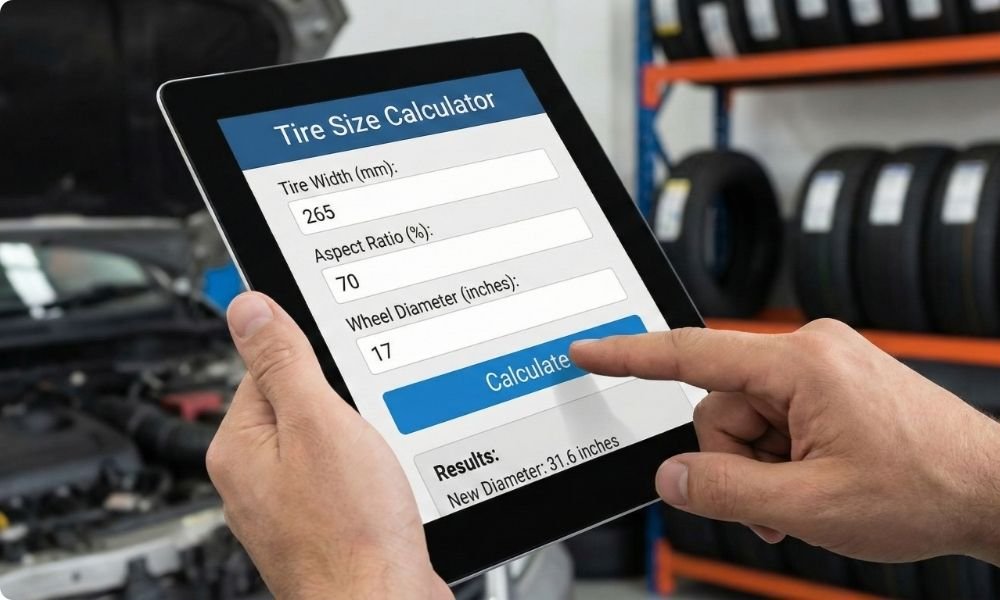
- Enter the tire width in millimeters (example: 265)
- Enter the aspect ratio as a percentage (example: 70)
- Enter the wheel diameter in inches (example: 17)
- Choose whether you plan to change the wheel size
- Click Calculate to view instant results
All calculations update immediately, allowing you to test multiple tire sizes easily.
Tire Size Calculation Results Explained
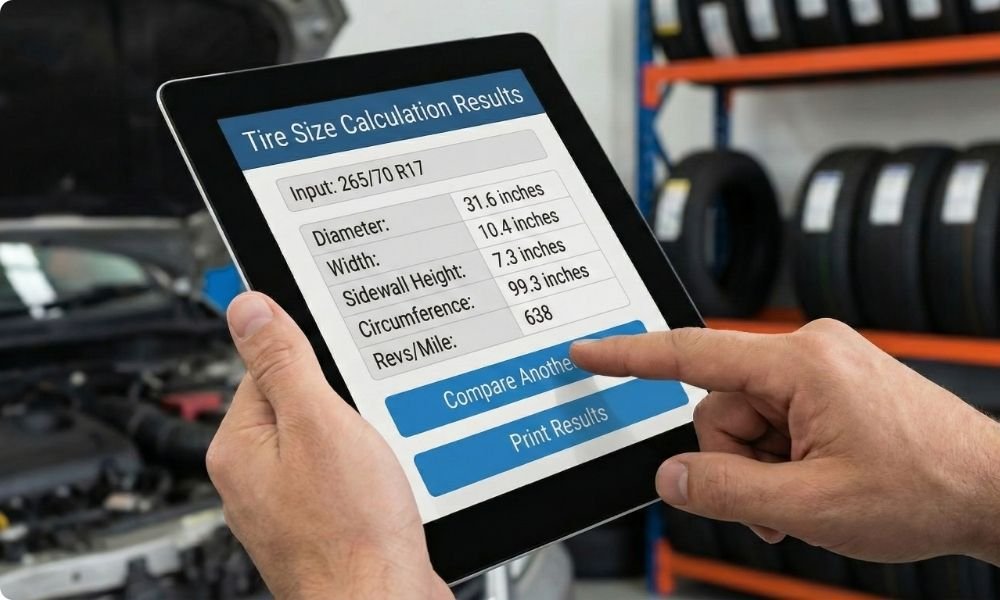
After you enter your tire size, the calculator shows several results. Each one explains a different part of how your tire fits and performs on your vehicle. Understanding these numbers helps you choose the right tire size with confidence.
Overall Tire Diameter
Overall tire diameter is the total height of the tire from the ground to the top when it is fully mounted. This measurement affects how high your vehicle sits and how much space the tire takes up inside the wheel well.
If the diameter is too large, the tire may rub against the fender or suspension parts. If it is too small, your vehicle may sit lower than intended. Keeping the tire diameter close to the original factory size helps maintain proper handling, clearance, and safety.
Tire Sidewall Height
Sidewall height is the distance between the wheel and the outer edge of the tire. It plays a big role in how your vehicle feels while driving.
A taller sidewall usually provides a smoother and more comfortable ride because it absorbs bumps better. A shorter sidewall makes the steering feel more responsive but can result in a firmer ride. Choosing the right sidewall height helps balance comfort and control based on how you drive.
Tire Circumference
Tire circumference is the distance the tire travels in one full rotation. This number is important because it affects how your speedometer and odometer work.
If the tire circumference changes, your vehicle may think it is traveling faster or slower than it actually is. This can lead to inaccurate speed readings and incorrect mileage tracking. Matching the circumference closely to your original tire helps keep these readings accurate.
Revs Per Mile and Revs Per Kilometer
Revolutions per mile or kilometer show how many times the tire rotates while traveling a set distance. Smaller tires rotate more times, while larger tires rotate fewer times.
This information is useful because your vehicle’s systems are designed for a specific rotation range. Large changes can affect fuel economy, shifting behavior, and speed accuracy. Staying within a safe range helps ensure your vehicle continues to perform as intended.
Tire Size Visualization
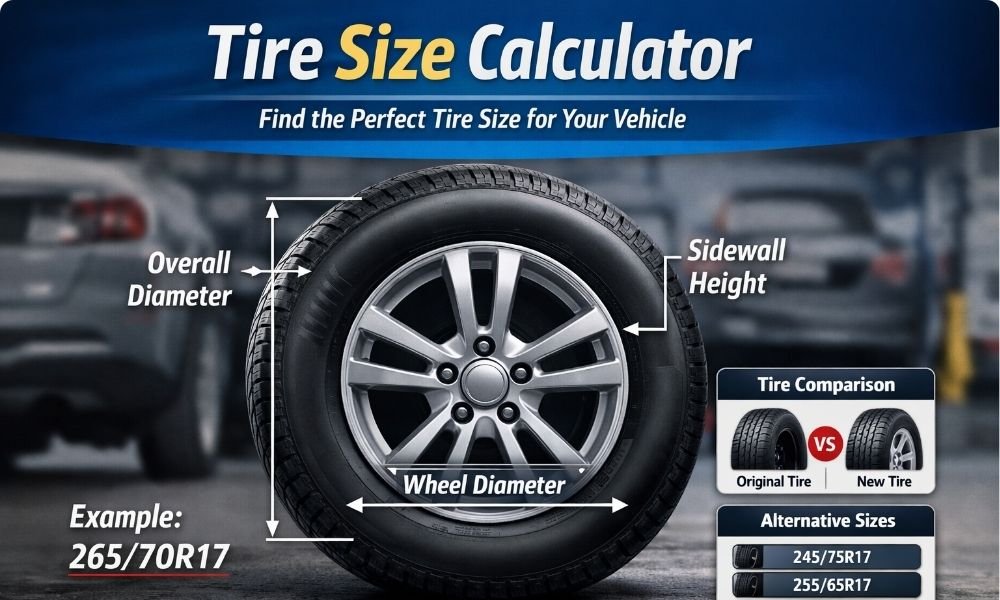
The tire size calculator includes a visual tire and wheel diagram to help you better understand size proportions. This visualization clearly shows:
- Wheel diameter relative to tire size
- Overall tire height
- Sidewall thickness
Visual comparison is especially helpful when upgrading wheels or switching to alternative tire sizes.
Speedometer Accuracy Information
Tire size has a direct impact on speedometer accuracy. When tire diameter changes, the speedometer may display incorrect speeds.
The Speedometer Info section explains:
- Whether your tire size matches OEM specifications
- If speed readings remain accurate
- When recalibration may be necessary
Staying within a safe diameter range helps maintain accurate speed and distance readings.
Alternative Tire Sizes for Your Wheel
This section shows other tire sizes that can fit the same wheel you are using now. These alternative sizes are close to your original tire size, so they work safely without causing problems.
People often look for alternative tire sizes when their exact tire size is unavailable or when they want a different look or driving feel.
What This Section Shows
The alternative tire sizes listed here are carefully selected to stay close to your original tire size. Each option shows how the tire’s height, width, and sidewall compare to your current tire.
You will also see the percentage difference in tire diameter. This number helps you understand how much the new tire size changes compared to the original. Smaller differences are safer and help keep your vehicle working correctly.
Why Alternative Tire Sizes Matter
Choosing the wrong tire size can cause rubbing, poor handling, or incorrect speedometer readings. Alternative tire sizes help you avoid these issues by showing options that stay within a safe range.
These options are useful if you are changing wheel sizes, upgrading for looks, or adjusting for comfort or performance. They also help ensure the tire fits properly inside the wheel well and works with your vehicle’s suspension.
How to Use This Information
Start by choosing an alternative tire size with a small diameter difference from your original tire. Staying close to the factory size helps maintain ride quality, braking performance, and speedometer accuracy.
If you plan to go larger or smaller, check that there is enough space for the tire and that it will not rub when turning or driving over bumps. When in doubt, choosing the closest alternative size is the safest option.
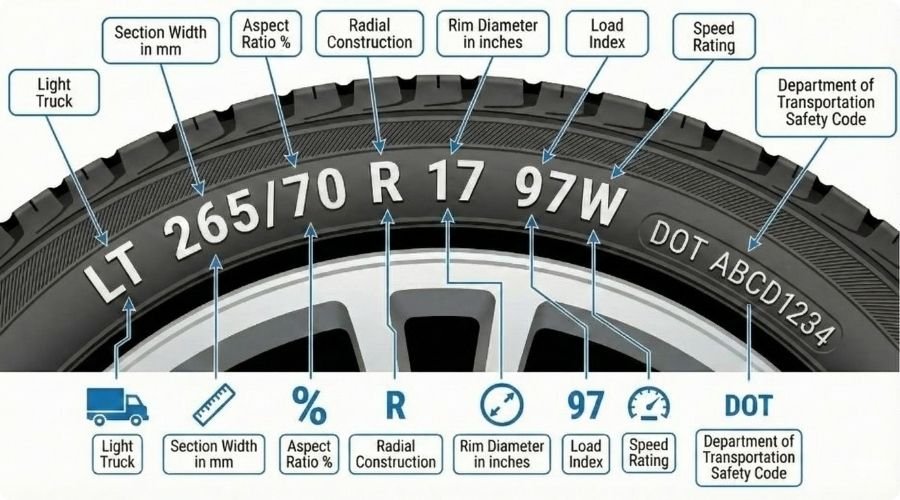
Tire Size Format Explained (Example: 265/70R17)
A tire size may look confusing at first, but it is simply a set of numbers and letters that describe the tire’s shape and the wheel it fits. Let’s break down the example 265/70R17 step by step.
Tire Width (265)
The first number shows how wide the tire is from one side to the other. In this example, the tire is 265 millimeters wide. A wider tire usually gives better grip on the road, while a narrower tire may improve fuel efficiency.
When choosing a tire width, it is important to make sure it fits your wheel and has enough space inside the wheel well.
Aspect Ratio (70)
The second number tells you how tall the side of the tire is compared to its width. A value of 70 means the sidewall height is 70 percent of the tire’s width.
A higher number means a taller sidewall, which often gives a smoother and more comfortable ride. A lower number means a shorter sidewall, which can improve steering response but may feel firmer on rough roads.
Construction Type (R)
The letter “R” stands for radial construction. This is the most common type of tire used on modern vehicles today.
You usually do not need to worry about this part when choosing tires, as almost all passenger vehicle tires use radial construction.
Wheel Diameter (17)
The last number shows the size of the wheel the tire is designed to fit. In this case, the tire fits a 17-inch wheel.
This number must always match your wheel size exactly. A tire with the wrong wheel diameter will not fit and should never be installed.
Why Tire Size Matters
Tire size is more important than many people realize. The size of your tires affects how your vehicle drives, how safe it is, and how comfortable it feels on the road.
When the tire size is correct, your vehicle works the way it was designed to. When the tire size is wrong, small problems can turn into bigger issues over time.
Vehicle Safety and Control
The right tire size helps your vehicle grip the road properly. Tires that are too large or too small can reduce braking performance and make steering feel less stable. This can be especially noticeable during sudden stops or sharp turns.
Using the correct size helps keep your vehicle balanced and predictable while driving.
Speedometer and Mileage Accuracy
Your speedometer and odometer are set to work with a specific tire size. If the tire size changes, the numbers on your dashboard may no longer be accurate.
A larger tire can make your speedometer show a slower speed than you are actually driving. A smaller tire can make it show a faster speed. Keeping the correct tire size helps ensure you know your true speed and mileage.
Ride Comfort and Handling
Tire size also affects how smooth or firm your ride feels. Tires with taller sidewalls usually absorb bumps better and provide a more comfortable ride. Tires with shorter sidewalls may improve handling but can feel stiffer on rough roads.
Choosing the right size helps balance comfort and control based on how you drive.
Fuel Efficiency
The size and weight of your tires can influence how hard your engine has to work. Tires that are too large or too heavy can reduce fuel efficiency.
Staying close to the recommended tire size helps your vehicle use fuel more efficiently and saves money over time.
Proper Fit and Clearance
Correct tire size ensures the tire fits properly inside the wheel well. Tires that are too large may rub against the body or suspension when turning or driving over bumps.
Using the right size helps prevent damage and avoids costly repairs.
Can You Change Tire Size Safely?
Yes, you can change your tire size safely, but only if the change is small and done correctly. Many people change tire sizes for better comfort, appearance, or performance, but it’s important to stay within safe limits.
Changing tire size too much can cause problems with how your vehicle drives and how its systems work.
The 3 Percent Rule Explained Simply
A safe rule to follow is to keep the new tire size within about three percent of your original tire’s overall height. This means the new tire should be very close in size to what your vehicle came with from the factory.
Staying within this range helps prevent rubbing, keeps your speedometer accurate, and ensures your vehicle handles as expected.
When Changing Tire Size Is Usually Safe
Small changes are usually safe when the new tire fits properly on the wheel and there is enough space inside the wheel well. Many drivers safely change tire sizes when replacing worn tires, upgrading wheels, or choosing a different tire style.
Using a tire size calculator helps you check whether the new size stays close to the original.
When You Should Be Careful
Larger changes can cause issues. Tires that are too big may rub against the vehicle when turning or driving over bumps. Tires that are too small can affect braking and stability.
Big changes may also cause the speedometer to show the wrong speed and can put extra strain on vehicle parts.
Special Situations to Keep in Mind
Vehicles that are lifted, lowered, or used for off-road driving may need different tire sizes. In these cases, extra checks are important to make sure the tires fit safely and work properly.
If you are unsure, it’s best to choose the closest tire size to the original or ask a tire professional for advice.
Tire Size Calculator vs Tire Size Comparison Calculator
These two tools are often confused, but they are used for different purposes. Knowing which one to use can save time and help you make a better decision.
Tire Size Calculator
A tire size calculator is used to understand one tire size at a time. You enter a single tire size, and the tool shows important details like the tire’s height, sidewall size, and how it affects speed readings.
This tool is helpful when you want to check your current tire size or understand what a tire size number really means. It is also useful when you want to confirm that a tire size is safe for your vehicle.
Tire Size Comparison Calculator
A tire size comparison calculator is used when you want to compare two different tire sizes side by side. It shows how the new tire size is different from your current one.
This tool helps you see whether a new tire is taller, wider, or closer to the original size. It also shows how much the change could affect speedometer accuracy and vehicle fit.
Which One Should You Use?
If you are looking at one tire size and want to understand it better, start with the tire size calculator. If you are thinking about switching to a different tire size and want to see how it compares to your current one, use the tire size comparison calculator.
Using both tools together gives you the clearest picture and helps you choose a tire size with confidence.
Who Should Use This Tire Size Calculator
This tool is helpful for anyone who wants to understand or check tire sizes. It is especially useful for car owners who are replacing tires and want to make sure they get the right size.
SUV and truck drivers can use it to compare different tire options, especially if they want to upgrade or adjust their tire size. Off-road enthusiasts will find it useful for checking larger tires or alternative sizes for trails and rough terrain.
Mechanics and automotive professionals can use the calculator to quickly check tire sizes for customers or vehicles they work on. Even if you just want to compare two tire sizes before buying, this tool makes it easy to see the differences.
Why Use Our Tire Size Calculator
Our tire size calculator is simple and fast to use. It gives instant and accurate results, so you don’t have to guess about tire size measurements.
The tool also shows a visual diagram, so you can see how the tire size looks and how it compares to your current tire. It suggests alternative tire sizes if you are looking for other options that will still fit your vehicle safely.
The calculator works well on phones, tablets, and computers, making it easy to use wherever you are. Whether you are a beginner or a professional, the tool is designed to be simple, clear, and helpful.
Final Thoughts
Our Tire Size Calculator makes it easy to calculate tire dimensions, understand size differences, and choose compatible alternatives. Whether you are replacing factory tires or planning a wheel upgrade, this tool helps you select the correct tire size with confidence.
Use the calculator above to get accurate results and ensure the perfect fit for your vehicle. 🚗🔥
Frequently Asked Questions – Tire Size Calculator
How accurate is the tire size calculator?
The calculator uses industry-standard formulas and provides highly accurate real-world measurements.
Does tire size affect speedometer accuracy?
Yes. Changing tire diameter alters speedometer and odometer readings.
Can I use this calculator for trucks and SUVs?
Yes. The tire size calculator supports cars, SUVs, trucks, and off-road vehicles.
What happens if the tire diameter is too large?
Oversized tires may cause rubbing, reduced fuel efficiency, and inaccurate speed readings.
Is this tire size calculator free?
Yes. The tire size calculator is completely free and requires no registration.