Toyo Open Country M/T Review (Complete Guide)
Last updated on April 5th, 2026
Mud-terrain tires look aggressive—but are they actually practical for daily driving? Many drivers are drawn to their rugged appearance, but choosing the wrong tire can lead to problems like excessive road noise, a rough ride, and faster tread wear.
The Toyo Open Country M/T is one of the most popular mud-terrain tires on the market, designed for trucks and SUVs that see serious off-road use. It promises strong traction in mud, snow, sand, and rocky terrain, but how does it really perform in everyday driving?
In this Toyo Open Country M/T review, we’ll go beyond the specs and marketing claims. You’ll get an honest, real-world look at its on-road comfort, off-road performance, durability, and overall value—so you can decide if it’s the right tire for your vehicle and driving style.
Who This Tire Is For
This tire is mainly for light truck and SUV owners who drive in mud, snow, rocks, sand, or remote terrain where standard all-season tires struggle. It is also a fit for drivers who like the aggressive look of a mud tire but still want something they can live with on pavement. Toyo lists the Open Country M/T for light truck and SUV/crossover use, and its own positioning is clearly off-road first.
The bigger question is not whether it is capable. It is whether your driving matches the tire’s purpose. If you mostly commute on smooth roads, this is probably more tires than you need. If you regularly go into mud, over rocks, or into winter conditions off-road, the Open Country M/T makes a lot more sense. The product page also shows a 500-mile/45-day trial offer, which gives buyers a little breathing room to test it after purchase.
Quick Overview
The Toyo Open Country M/T is a mud-terrain tire, which means it is built for rough ground rather than smooth roads. It is made for trucks and SUVs, especially the kind of vehicles that see real off-road use. If you drive on dirt trails, mud, rocky paths, or snowy back roads, this tire is designed for that job.
In simple terms, this is an aggressive off-road tire. It has a tough look and a tread pattern made to keep working when the road gets messy. Toyo says it is built for mud, snow, and rocky terrain, and one of its biggest strengths is durability. It is also known for long tread life, which is important if you want a tire that can handle hard use over time.
That said, this kind of tire is not made for everyone. It can be louder and less comfortable on pavement than a normal road tire. So while it is a strong choice for off-road driving, it is best for people who actually need that extra grip and toughness.

Toyo Open Country M/T
Key Specifications of Toyo Open Country M/T
Below is a simple breakdown of the main specifications of the Toyo Open Country M/T based on official data. These values can change slightly depending on tire size, but this gives a clear overall picture.
| Specification | Details |
| Tire Type | Mud-Terrain (M/T) |
| Construction | Light Truck (LT) / Heavy-duty casing |
| Tread Depth | Up to ~21/32 inch (very deep for off-road grip) |
| Load Range | C, D, or E (depends on size) |
| Max Load Capacity | Around 2,270 – 3,750 lbs per tire (size dependent) |
| Max Air Pressure | 35 – 80 PSI (varies by size/load range) |
| Speed Rating | Q / P (up to 99–93 mph depending on size) |
| Tire Weight | Around 58 – 79 lbs (common LT sizes) |
| Overall Diameter | About 33″ – 35″ in popular sizes |
| Rim Width Range | Typically 6.5″ – 9″ (varies by size) |
| Made In | Japan (many sizes) |
Key Features of Toyo Open Country M/T
Aggressive tread design
The Open Country M/T has a very aggressive tread pattern with hook-shaped blocks. That design helps the tire bite into soft ground instead of just spinning on top of it. In mud and loose dirt, that extra grip makes a big difference.
The wide gaps between the tread blocks also help the tire clean itself as it rolls. In simple terms, mud can get pushed back out instead of packing in and making the tire less effective.
Open shoulder blocks
The open shoulders help the tire throw out mud, snow, and small rocks as it moves. This matters because a tire that stays clogged loses grip very quickly.
On rough trails, this design helps the tire keep working when the ground gets messy. It is one of the reasons mud-terrain tires do so much better off-road than regular road tires.
Over-the-shoulder tread
Toyo also carries the tread farther over the shoulder area of the tire. That gives the tire more biting edges when you are driving through deep mud or turning on uneven ground.
This is useful when you are not just driving straight ahead. It helps the tire stay more planted during turns, which can make off-road driving feel more controlled.
Strong polyester construction
The tire uses a tough polyester build, which helps it handle impacts and rough use better. That matters a lot on rocky trails, where sharp edges and hard hits can damage weaker tires.
It also gives added protection to the sidewall, which is one of the most vulnerable parts of a tire off-road. If you often drive over rocks, ruts, or broken ground, this extra strength is a real benefit.
Deep siping
The tread includes deep siping, which helps the tire hold onto wet roads better. That is helpful when the pavement is damp or slippery, because the tire has more edges to grip the surface.
Still, this is a mud-terrain tire, not a highway tire. So while the wet grip is better than you might expect from such an aggressive tire, it still will not feel as safe or as calm in heavy rain as a good road-focused tire.
On-Road Performance of Toyo Open Country M/T
Ride comfort
On the road, the Toyo Open Country M/T has a firmer ride than a regular highway tire. That is normal for a mud-terrain tire. The heavy tread and tough build help it work off-road, but they also make it feel less soft on smooth pavement.
For some drivers, that will not be a problem. For others, especially if they drive long distances every day, the rougher feel may be noticeable. It is the kind of tradeoff you expect when you choose a tire built for dirt, mud, and rocks first.
Road noise
This tire is not quiet. At highway speeds, you will hear a low hum from the tread, and that sound becomes more obvious the faster you go. That is common with aggressive mud-terrain tires because the deep tread blocks move more air and create more noise.
Over time, some owners also say the noise gets louder as the tire wears. That does not mean the tire is failing. It simply means the sound may become more noticeable after many miles, especially if you drive mostly on pavement.
Fuel economy
Fuel economy is another area where this tire gives up some ground. The deep, heavy tread makes the tire work harder as it rolls, which can lead to lower gas mileage.
This is not usually a huge surprise for buyers of mud-terrain tires, but it is still worth saying plainly. If saving fuel is a top priority, this tire is not the best match.
Off-Road Performance of Toyo Open Country M/T
If there is one area where the Toyo Open Country M/T clearly stands out, it is off-road driving. This tire is built for rough places where normal road tires struggle or completely fail. Think muddy trails, rocky paths, sandy tracks, and snowy back roads. That is the environment it was designed for.
But “good off-road” can mean different things depending on the surface. So it helps to break it down into real conditions instead of general claims. This makes it easier to understand what you can actually expect.
Mud performance
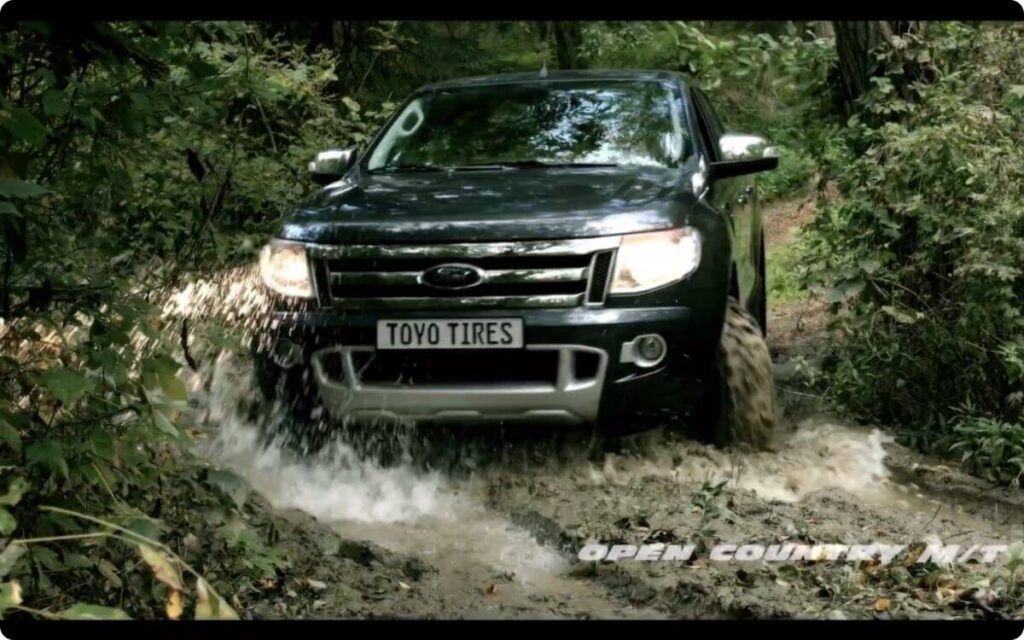
Mud is where this tire feels most at home. The tread is deep and wide, which helps the tire bite into soft, wet ground instead of slipping on top of it. When you press the accelerator, the tire doesn’t just spin—it tries to dig in and move forward.
One of the most useful things here is how the tire clears itself. As it rotates, mud does not stay packed inside the tread for long. It gets pushed out through the open spaces between the blocks. This matters a lot because a tire full of mud quickly loses grip.
In real use, this means you can keep moving through muddy roads where normal tires would get stuck almost immediately. It also helps when you have to slow down or stop in mud and then start again, which is often the hardest part.
There is still a limit, though. In extremely deep or sticky mud, no tire is perfect. If the vehicle is too heavy or the ground is bottomless, even a strong mud tire can struggle. But compared to regular all-season or highway tires, the difference is huge.
Rock crawling
Rocky terrain is a different kind of challenge. Here, it is not just about grip. It is also about strength and control. Sharp rocks, uneven surfaces, and sudden impacts can easily damage weaker tires.
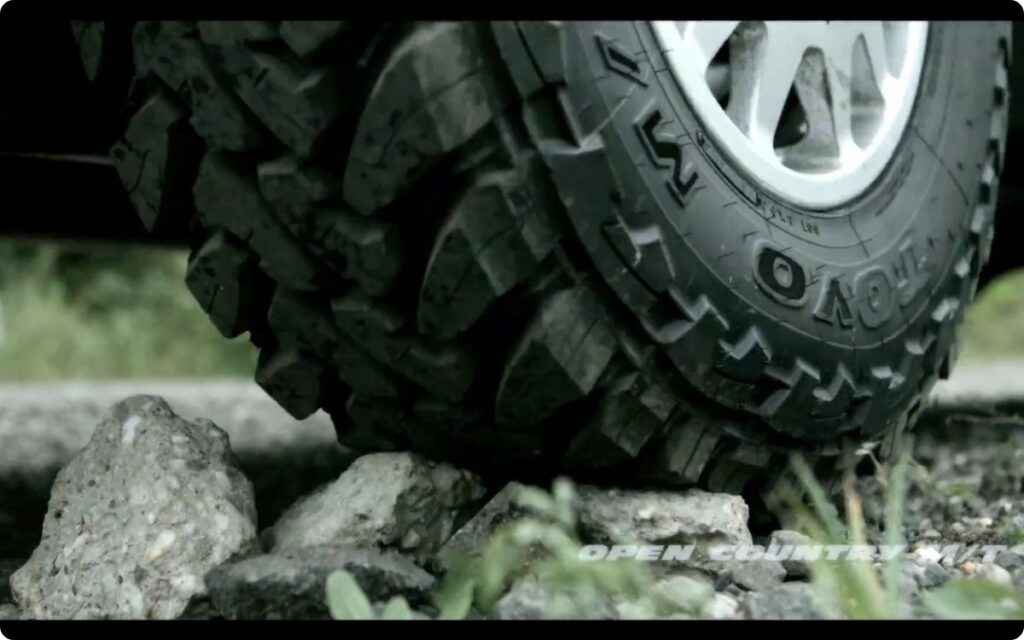
The Open Country M/T is built with a tough internal structure that helps it handle these impacts better. The sidewalls are especially important here. Off-road, tires often get hit from the side or squeezed between rocks. A weak sidewall can cut or puncture in those situations.
With this tire, the sidewall is reinforced to reduce that risk. It does not make it indestructible, but it does give extra protection when you are crawling over rocks or moving slowly through rough trails.
On the ground, the tread also helps by giving the tire more biting edges. This improves grip when you are climbing over uneven surfaces. Instead of sliding off smooth rocks, the tire has more chances to catch and hold.
Still, rock crawling is slow, careful driving. Even with a strong tire, technique matters. You still need to pick your line carefully and avoid sharp impacts when possible. The tire supports you, but it does not remove the risk completely.
Sand driving
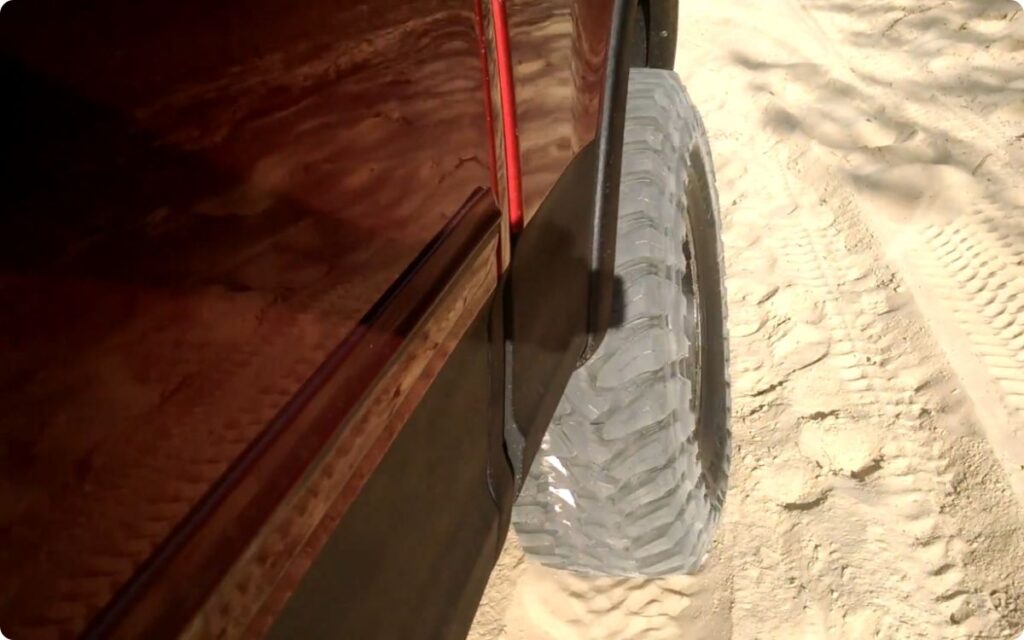
Sand behaves differently from mud or rocks. The main goal in sand is not to dig down, but to float on top of it. If a tire sinks too much, the vehicle gets stuck quickly.
The Open Country M/T can handle sand fairly well when used correctly. One key factor is air pressure. When you reduce the tire pressure (a process often called “airing down”), the tire spreads out and creates a larger contact area with the ground.
This wider footprint helps the vehicle stay on top of the sand instead of digging in. The tread design also plays a role by allowing some movement and flexibility so the tire does not act too stiff in soft terrain.
In real-world driving, this means you can travel across sandy areas like beach tracks or desert-style terrain with more confidence. The tire can maintain forward motion as long as you keep a steady pace and avoid sudden stops or sharp turns.
However, sand driving still requires care. If you stop on a steep sandy slope or try to accelerate too aggressively, even a good tire can dig in. The key is smooth, steady driving.
Snow performance
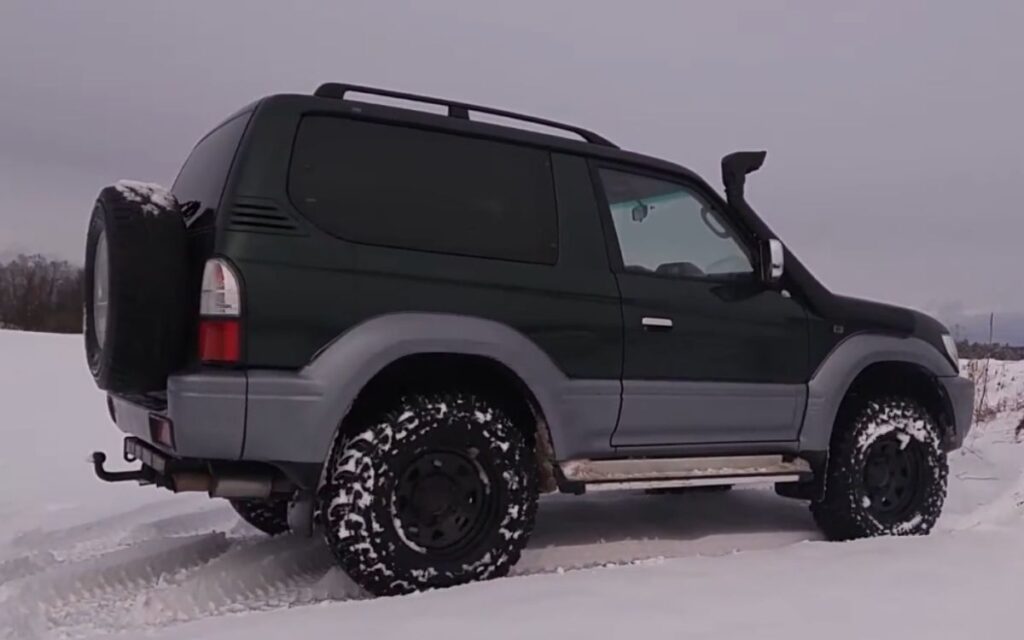
Snow is where things become more mixed. The Open Country M/T is designed to work in snow, especially deep snow where the tire can dig in and find traction. The aggressive tread helps here, similar to how it works in mud.
In deeper snow, the tire can move forward well because the tread blocks can bite into the packed layers underneath. The open design also helps push snow out so it does not clog the tire too quickly.
This makes it useful for rural roads, mountain paths, or off-road winter driving where conditions are rough and unpredictable.
But there is an important limitation. On icy roads, performance is not as strong. Ice requires a softer rubber compound and special siping patterns designed specifically for grip on smooth frozen surfaces. A mud-terrain tire is not built for that level of ice performance.
So while you may feel confident in fresh or deep snow, icy highways or polished frozen roads are a different story. In those conditions, you still need to drive carefully and reduce speed, because grip is limited compared to dedicated winter tires.
Performance Ratings Breakdown of Toyo Open Country M/T
Toyo’s own ratings give a quick picture of what this tire is made for. They also make the tradeoffs easy to see. The Open Country M/T is strongest where off-road grip matters most, and less impressive when comfort and fuel savings become the priority.
Off-road traction: ⭐⭐⭐⭐⭐
This is the tire’s best score, and it makes sense. The Open Country M/T is built for mud, rocks, sand, and snow, so off-road grip is the main reason to buy it. In simple terms, this means the tire is very good at holding onto loose, rough, and uneven ground.
That five-star rating tells you this is not a “looks-only” tire. It is made to do real work off pavement. If you drive off-road often, this is the part of the rating that matters most.
Tread life: ⭐⭐⭐⭐
Tread life is the tire’s ability to last a long time before the tread wears down. A four-star rating is strong for a mud-terrain tire, especially one with such an aggressive design.
This is a good sign for buyers who want durability as well as traction. It suggests the tire is not just built for short-term use on rough terrain. Still, how long it lasts will depend a lot on how you drive, how often you rotate it, and whether you keep it properly inflated.
Comfort and noise: ⭐⭐⭐
A middle rating here means the tire is acceptable, but not especially smooth or quiet. That is normal for a mud-terrain tire. The strong tread that helps off-road also creates more road noise and a firmer ride on pavement.
In everyday driving, this means you should expect some hum and a less soft feel than a regular road tire. It is not a deal-breaker for everyone, but it is something you will notice if you spend a lot of time on highways.
Fuel efficiency: ⭐⭐
This is the weakest score, and it reflects a common tradeoff with aggressive tires. Deep tread and heavy construction usually create more rolling resistance, which can hurt gas mileage.
For most buyers, this tire is not the best choice if fuel savings are a top concern. It is better to think of fuel economy as a cost of getting strong off-road performance. The tire is working harder to give you grip, and that usually means using more fuel on the road.
Pros and Cons of Toyo Open Country M/T
The Toyo Open Country M/T does a few things very well, especially if you drive off-road often. But like any mud-terrain tire, it also has a few tradeoffs you should know about before buying.
Comparison With Alternatives
When people look at the Toyo Open Country M/T, they usually compare it with two popular mud-terrain tires: the Nitto Trail Grappler and the BFGoodrich KM3. All three are built for serious off-road use, but they don’t feel exactly the same on the road or in real driving.
Toyo Open Country M/T vs Nitto Trail Grappler
The biggest difference most drivers notice is noise.
The Toyo Open Country M/T is loud on the highway, but the Nitto Trail Grappler is often a bit quieter. This is because the Trail Grappler has a slightly tighter tread pattern, which helps reduce road sound. In simple terms, it still makes noise, just a little less “humming and roaring” compared to the Toyo.
On durability, both are strong tires, but the Toyo tends to feel a bit more rigid and long-lasting under heavy off-road use. It handles repeated abuse on rough trails very well, especially when you air it down for traction.
For off-road strength, they are very close. Both perform well in mud, rocks, and loose dirt. The Toyo often feels a bit more aggressive in deep mud, while the Nitto gives a more balanced feel between trail use and highway driving.
Toyo Open Country M/T vs BFGoodrich KM3
Noise is also a clear difference here.
The BFGoodrich KM3 is usually louder on the road than the Toyo Open Country M/T. Its wider tread gaps help it grip well off-road, but they also create more road sound. The Toyo is still not quiet, but it is slightly more controlled in comparison.
When it comes to durability, the Toyo generally has an advantage in tread life. It is built with a very strong casing that holds up well over time. The KM3 is also tough, but its softer rubber helps it grip rocks better, which can lead to faster wear depending on driving style.
For off-road strength, the KM3 shines in rocky areas. It grips stones very well and feels very planted on uneven rock trails. The Toyo, on the other hand, performs more consistently across different terrains like mud, sand, and dirt. It is more of an all-around heavy-duty performer.
Read More: Bridgestone Dueler AT Ascent Review
Real-World Ownership Experience
Owner feedback on the official page is mostly positive, and the common themes are even wear, strong mileage, and dependable performance over time. Some owners mention 30,000 miles or more with good wear, while another reports much higher mileage with tread remaining. That does not guarantee the same result for every driver, but it does suggest the tire can hold up well when maintained properly.
What stands out most is that several owners describe the tire as smooth enough for regular use while still being durable enough for hard work. That matters because it shows the tire is not just a marketing piece; people are actually running it for real miles. Still, owner reviews should be read as real-world examples, not promises, because driving style, rotation habits, load, alignment, and terrain all affect tire life.
A practical tip is to keep up with rotations and air pressure checks. That is especially important on a tire like this, where aggressive tread and off-road use can create uneven wear if the tires are ignored. The more carefully you maintain them, the more likely you are to get the kind of wear many owners report.
Price, Warranty & Overall Value
The Toyo Open Country M/T usually costs more than basic highway or all-terrain tires. That higher price reflects the tough design and strong off‑road ability. Mud‑terrain tires in general are more expensive because they are built to handle harder conditions.
Toyo also offers a limited warranty and a short trial period. The warranty covers defects in materials and workmanship, which gives you some protection if the tire has a problem not related to wear. There is also a brief 45‑day or 500‑mile trial offer on new tires, so you can see how they feel on your vehicle and make sure they work for your needs before you fully commit.
When you think about value, it helps to ask what you are buying. If you need strong off‑road performance and a tire that can take rough use without falling apart, this tire delivers that well. The long tread life and rugged build add to its value, especially if you use the tire for real off‑road driving regularly.
On the other hand, if most of your miles are on paved roads and you want the quietest ride or best fuel economy, you may not feel like you are getting your money’s worth. In that case, a tire designed more for everyday driving could be a better value for you.
Overall, the Open Country M/T makes sense if you understand its purpose and buy it for the kind of driving it is built to do. If you match the tire to your driving needs, it can be a solid investment.
Buyer’s Guide
The easiest way to decide is to match the tire type to your real driving, not to the look you want on the truck. If you need the strongest off-road traction and you are often in mud, snow, or rocky terrain, a mud-terrain tire like the Open Country M/T makes sense. If you want more balance for mixed use, Toyo’s Open Country R/T or A/T III may fit better. If most of your driving is on pavement, the H/T II is the more comfort-focused choice. Toyo’s own product lineup and ratings make those differences easy to see.
A simple rule helps here: the more off-road work you do, the more the M/T becomes a good fit. The more highway miles you drive, the more likely you are to appreciate a less aggressive tire. That is the real decision behind this review.
Read More: Are Toyo Tires Good? Honest Toyo Tires Review
FAQs about Toyo Open Country M/T Review
How long do Toyo Open Country M/T tires last?
Toyo highlights long tread life on the product page, and owner comments show a wide range of mileage results, including examples with even wear after tens of thousands of miles. Actual lifespan depends heavily on rotation, alignment, load, terrain, and driving style.
Are they good in the rain?
Toyo says the tire has deep siping to help maintain grip on wet surfaces, and the product’s wet handling rating is 3.5. That means it has wet-weather support, but it is still a mud-terrain tire, so wet-road behavior should be viewed as competent rather than exceptional.
Are they noisy?
Toyo rates quiet ride at 3.0, which suggests some road noise is part of the deal. That is typical for a mud-terrain tire with an aggressive tread pattern.
Can I use them every day?
Yes, many people do, but daily use works best when you accept the tradeoffs. The Open Country M/T can be driven on pavement, and Toyo says the tread design maintains great on-road performance, but the ride, noise, and fuel efficiency are not going to match a highway tire.
Conclusion
The Toyo Open Country M/T is a tire built with a clear purpose: to deliver maximum traction in hard off-road conditions while still being usable on pavement. Its strong construction, aggressive tread, and excellent off-road rating make it a compelling choice for truck and SUV owners who truly need that level of capability.
Its weaknesses are also easy to understand. It is not the quietest tire, it is not the softest riding tire, and it is not the best for fuel economy. But for the driver who needs a tire that can work hard in mud, snow, and rocks, those tradeoffs are part of the package. In that setting, the Open Country M/T looks like a well-focused, trustworthy option.
