Trailer Tire Speed Rating Chart
Driving too fast on the wrong trailer tire is one of the biggest causes of blowouts, yet many trailer owners overlook the small letter stamped on the sidewall. Using the wrong speed-rated tire can lead to overheating, tire failure, and dangerous accidents, especially when towing heavy loads on highways.
In this guide, you’ll get a simple trailer tire speed rating chart, a clear explanation of what each rating means, and practical tips on how to choose the right trailer tire speed rating safely. By the end, you’ll know exactly which ST tires are safe for your trailer and how to tow with confidence.
What Is a Trailer Tire Speed Rating?
A trailer tire speed rating is the maximum speed a tire can handle under proper conditions. It is usually shown as a letter on the tire sidewall. That letter is not just a random code. It tells you the highest speed the tire was tested for while carrying its intended load.
For trailer tires, the speed rating is especially important because trailer tires are built differently from car tires. They are made to support weight, stay stable, and resist heat while towing. They are not designed for the same kind of driving as passenger tires.
That means you should never assume a trailer tire can safely run at the same speed as your tow vehicle. Even if your truck or SUV can go faster, the trailer tires may have a lower limit.
Trailer Tire Speed Rating Chart (Complete Table)
Here is a simple trailer tire speed rating chart with the speed symbols you are most likely to see on trailer tires.
| Speed Symbol | Max Speed (MPH) | Max Speed (KM/H) | Typical Use |
| J | 62 mph | 100 km/h | Older or lower-speed trailer applications |
| K | 68 mph | 110 km/h | Light-duty trailer use |
| L | 75 mph | 120 km/h | Common modern ST trailer tires |
| M | 81 mph | 130 km/h | Higher-speed trailer tires |
| N | 87 mph | 140 km/h | High-speed rated trailer tires |
In many real-world towing situations, the most common ratings you will see are L, M, and N. Some older trailer tires may have lower limits, and some tires may be marked with a manufacturer-specific recommendation that is even more important than the general chart.
Always check the sidewall of the exact tire you own. The rating on the tire itself is the one that matters.
Common Speed Ratings Found on Trailer Tires
Most trailer tires do not use the full range of speed symbols that you might see on passenger tires. Instead, trailer tires usually stay in a smaller range because the design priorities are different.
The most common trailer tire speed ratings are:
L = 75 mph
This is one of the most common modern ratings for ST trailer tires. It works well for everyday towing, especially on highways, as long as the tire is properly inflated and not overloaded.
M = 81 mph
This is a higher-rated trailer tire and gives a little more speed margin. It is still important to remember that the trailer, the load, and the road conditions all matter.
N = 87 mph
This is a higher speed rating for trailer tires, but it does not mean you should always tow that fast. It simply means the tire is built and tested for that limit under proper conditions.
Some older trailer tires may be rated lower than these, so it is always smart to read the sidewall carefully before you tow.
How to Read Trailer Tire Speed Rating
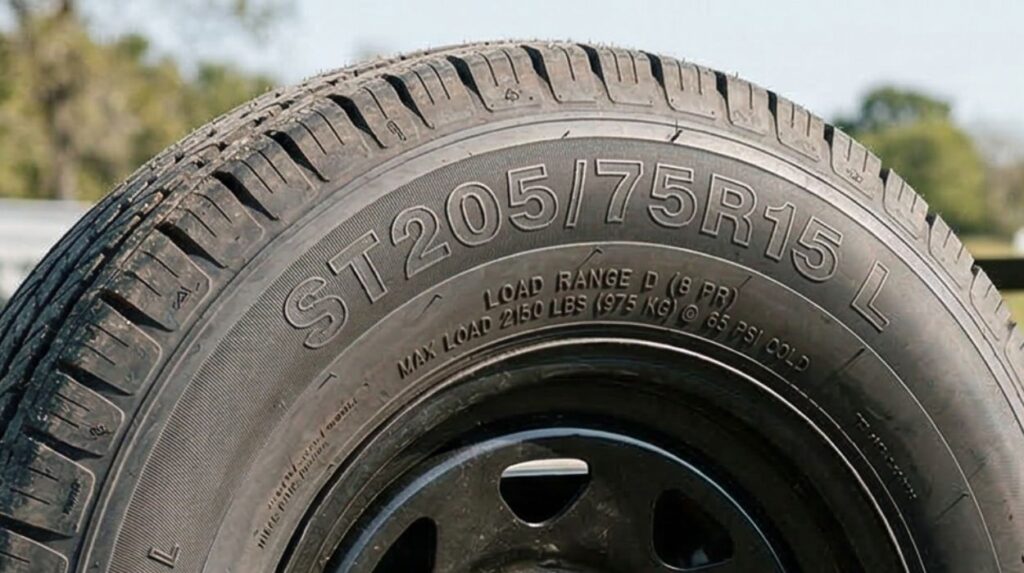
Reading a trailer tire is not difficult once you know what to look for. The speed rating is usually part of a longer tire code printed on the sidewall.
For example, you might see something like:
ST205/75R15 L
Here is what that means:
- ST means Special Trailer
- 205/75R15 describes the tire size
- L is the speed rating
The speed rating letter is usually found near the end of the size code or printed in the tire’s specification information. Sometimes people focus only on the size and ignore the speed symbol, but both matter.
It is also a good idea to check the tire’s load range and maximum inflation pressure. For trailer tires, speed rating and load capacity work together. A tire that can handle the speed but not the load is still unsafe.
What Happens If You Exceed Trailer Tire Speed Rating?
Exceeding a trailer tire’s speed rating can create serious problems, especially on long trips or hot days. Trailer tires carry heavy loads for long periods, and higher speed means more heat. Heat is one of the biggest reasons trailer tires fail.
If you drive too fast for the tire rating, you can run into issues like:
- extra heat buildup
- faster tire wear
- reduced tire life
- blowouts
- loss of control or trailer sway
This risk becomes even greater if the tires are underinflated, overloaded, or older and worn out. A tire that looks okay from the outside may still fail if it is pushed beyond its safe operating range.
A good rule is simple: do not treat the speed rating as a challenge. Treat it as a safety limit.
Why Trailer Tires Have Lower Speed Ratings Than Car Tires
Trailer tires are built for a different job than passenger tires. Car tires are designed to support steering, braking, and driving comfort. Trailer tires do not steer or power the vehicle. Their main job is to carry weight and stay stable behind the tow vehicle.
Because of that, trailer tires usually have:
- stiffer sidewalls
- a focus on load support
- stronger heat resistance for towing
- less emphasis on high-speed performance
That is why trailer tires often have lower speed ratings than car tires. They are not meant to be sporty or fast. They are meant to be strong, stable, and safe under load.
Can You Drive Faster Than 65 mph with Trailer Tires?
Sometimes, yes — but only if the tire is rated for it.
A lot of people still believe trailer tires are always limited to 65 mph. That used to be more common, but many modern ST trailer tires now come with higher ratings like L, M, or N. That said, the exact limit depends on the tire brand, model, and sidewall rating.
So the real answer is:
- If your tire is rated for 65 mph, do not go faster.
- If your tire is rated for 75, 81, or 87 mph, you still need to tow responsibly.
- The tire rating is only one part of the safety picture.
Even if your tire can technically handle a higher speed, it may still be smarter to tow a little slower for safety, fuel economy, and reduced stress on the trailer.
ST vs LT Tires – Speed Rating Differences
ST tires and LT tires are made for different purposes, and that affects their speed ratings.
ST tires are Special Trailer tires. They are made for trailers and are built to handle heavy vertical load and towing stability. Their speed ratings are often lower because their design focuses on load support.
LT tires are Light Truck tires. They are made for trucks and SUVs. They often handle higher speeds and offer different driving characteristics because they are designed for powered, steering vehicles.
In simple terms, ST tires are made for trailers, while LT tires are made for trucks. You should not assume one can replace the other unless the tire manufacturer and trailer specs clearly allow it.
How to Choose the Right Trailer Tire Speed Rating
Choosing the right trailer tire speed rating is about matching the tire to how you actually tow. If you mostly drive short distances on local roads, a standard trailer tire may be enough. If you travel long highway distances, a higher speed rating can give you more margin.
When choosing, think about:
- how fast you usually tow
- how heavy your trailer loads are
- how far you travel
- how hot the weather is where you drive
- whether the tire rating matches the trailer’s real use
It is often better to choose a tire with a little extra margin than to use one that is right at the edge of its limit. Still, higher speed is not a replacement for proper inflation and load management.
Best Practices for Safe Trailer Towing Speed
A trailer tire speed rating is important, but it is not the only thing that keeps you safe. The best towing habits make a big difference.
Keep your tires properly inflated before every trip. Underinflated trailer tires heat up more quickly and are more likely to fail. Do not overload the trailer, even if the tires seem strong enough. Extra weight puts extra stress on the sidewalls and raises heat levels.
It also helps to inspect your tires regularly for cracking, bulges, uneven wear, and age. Trailer tires can age out even when the tread still looks good. If the tire is old, damaged, or worn, do not rely on the speed rating alone.
On longer trips, it is wise to stop and check your trailer tires during breaks. A quick walk-around can help you catch problems before they become dangerous.
FAQs About Trailer Tire Speed Ratings
What is the max speed for trailer tires?
It depends on the tire. Many trailer tires are rated between 62 mph and 87 mph, with common ratings at 75, 81, and 87 mph.
Are all trailer tires limited to 65 mph?
No. That was more common in the past, but many modern trailer tires are rated higher.
Can I use car tires on a trailer?
Usually, no. Trailer tires are designed for trailer loads and sidewall stability. Car tires are not a proper replacement in most cases.
What does “ST” mean on a tire?
ST means Special Trailer. It means the tire was designed specifically for trailer use.
Final Thoughts
Trailer tire speed ratings are easy to overlook, but they matter a lot. The letter on the sidewall tells you how fast the tire is designed to run safely, and that limit should always be respected. For trailer tires, speed is closely tied to heat, load, and long-term safety.
If you remember just one thing, make it this: read the sidewall, match the rating to your towing needs, and do not exceed the tire’s limit. That simple habit can help you avoid blowouts, protect your trailer, and tow with more confidence.
