Truck Wheel Offset Chart: How to Choose the Right Offset for Your Truck
If you are shopping for new truck wheels, wheel offset is one of the first things you should understand. It affects how the wheel sits in the wheel well, how much the tire sticks out, and whether your setup will rub on the suspension or fender. It also changes the look of the truck in a big way.
A wheel that looks great on one truck can fit poorly on another if the offset is wrong. That is why a truck wheel offset chart is so useful. It gives you a simple way to compare wheel positions before you buy, so you can choose a setup that fits your truck, your tires, and the way you drive.
What Is Truck Wheel Offset?
Wheel offset tells you where the wheel sits in relation to the hub. It is usually measured in millimeters and is one of the main numbers you should check before buying aftermarket wheels.
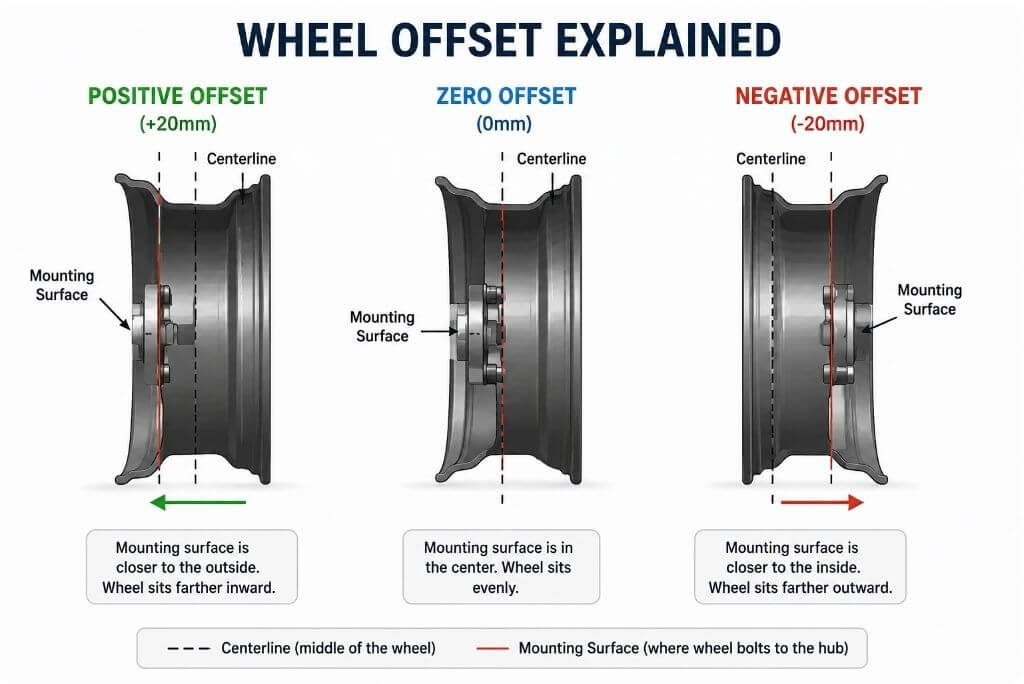
There are three basic types of offset:
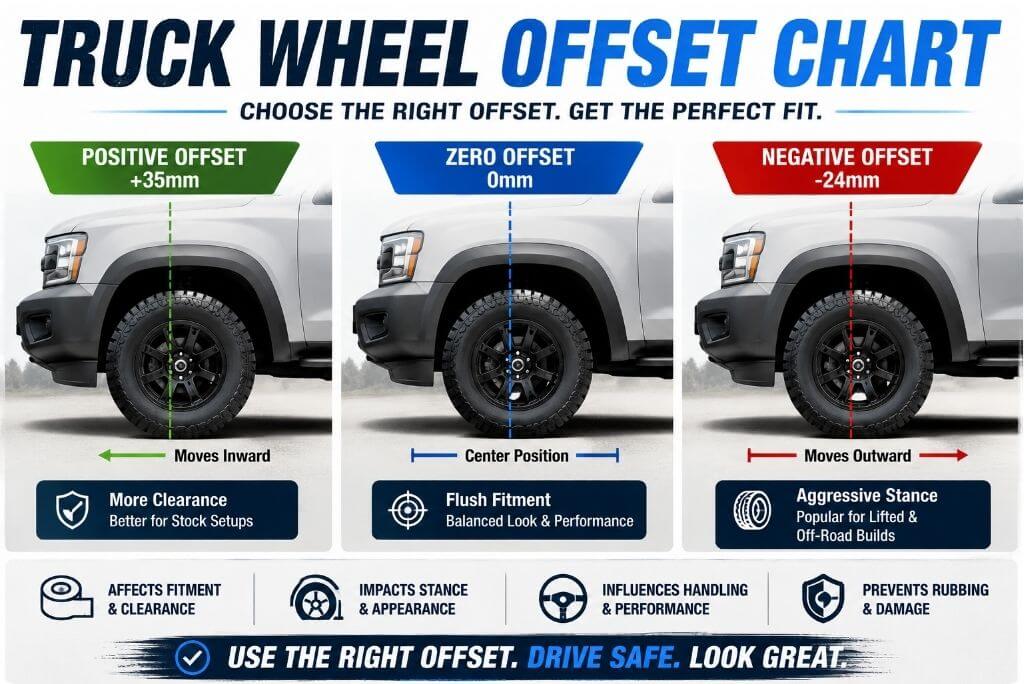
- Positive offset: The hub mounting surface sits closer to the outside of the wheel, so the wheel tucks farther inward.
- Zero offset: The hub mounting surface sits right in the middle of the wheel.
- Negative offset: The hub mounting surface sits closer to the inside of the wheel, so the wheel moves outward.
If you only remember one thing, remember this: offset changes both appearance and fitment. A small change can affect clearance, especially when you run wider tires or add a lift kit.
Truck Wheel Offset Chart
Use this chart as a practical reference when comparing truck wheel fitment. It shows how offset affects wheel position, stance, and overall fitment feel.
| Offset (mm) | Wheel Position | Typical Use | Fitment Feel | Rubbing Risk |
| +50 to +60 | Very far inward | OEM-style fitment, some factory trucks | Very conservative | Very low |
| +40 to +49 | Far inward | Stock trucks, conservative upgrades | Factory-like | Very low |
| +30 to +39 | Inward | Stock and mild aftermarket fitment | Clean and tucked | Very low |
| +20 to +29 | Slightly inward | Daily driving, light aftermarket upgrades | Mild and balanced | Low |
| +10 to +19 | Near center / slightly inward | Street use, mild off-road setups | Slightly aggressive | Low |
| +1 to +9 | Nearly flush | Popular aftermarket fitment | Flush with a clean stance | Low to moderate |
| 0 | Flush | Common aftermarket choice | Even and centered | Moderate |
| -1 to -9 | Slight poke | Leveled trucks, wider tire setups | Mildly aggressive | Moderate |
| -10 to -19 | Noticeable poke | Aggressive street and light off-road builds | Aggressive | Moderate to higher |
| -20 to -29 | Aggressive poke | Lifted trucks, off-road setups | Wide and bold | Higher |
| -30 to -39 | Very aggressive poke | Show trucks, extreme off-road builds | Deep stance | High |
| -40 to -49 | Extreme poke | Wide custom builds | Very aggressive | Very high |
| -50 and below | Maximum poke | Specialized custom applications only | Extreme and custom | Very high |
Important note
Offset alone does not determine fitment. The final result also depends on:
- Wheel width
- Tire width and sidewall shape
- Suspension design
- Lift or leveling kit height
- Brake caliper clearance
- Fender and liner space
A wheel with the same offset can fit very differently depending on these other factors.
How to Read a Truck Wheel Offset Chart
A wheel offset chart is easier to use than it looks. You do not need to be a mechanic to understand it. The goal is simply to see whether a new wheel will sit farther in, farther out, or about the same as your current one.
Start with your current wheel size and offset. You will usually find this on the back of the wheel or in the wheel specs if you still have them. If you are not sure, check the vehicle’s owner’s manual or the wheel seller’s listing.
Then compare it with the new wheel’s offset. A higher positive number means the wheel sits farther inward. A lower number, or a negative number, means it moves outward.
A simple way to check fitment is this:
- Find your current setup
- Compare the new offset
- See how far the wheel moves in or out
- Check for clearance around the suspension and fender
This matters because even a small change can affect fit. A wheel that looks fine on paper may still rub when you turn the steering wheel or drive over a bump.
For example, if your truck has wheels with +35 offset and you switch to 0 offset, the new wheels will sit farther out. That may give the truck a wider stance, but it can also increase the chance of rubbing on the fender liner or mud flap.
The best approach is to think about both looks and fit. A more aggressive wheel can improve stance, but it should still leave enough room for safe driving. A quick chart check before buying can save you from returning wheels that do not fit the way you hoped.
How Wheel Offset Affects Your Truck
Wheel offset affects more than looks. It changes how your truck fits together and how it behaves on the road.
Tire and Suspension Clearance
Positive offset usually moves the wheel farther inward, which can help the tire sit under the fender more neatly. The downside is that it may reduce clearance between the inside of the wheel and parts like the upper control arm or suspension components.
Lower or negative offset moves the wheel outward. That often gives you more inside clearance, but it can create new problems on the outside, especially near the fender liner, bumper, or mud flaps.
Wheel Poke and Stance
Many truck owners care about stance. Offset is one of the biggest factors that controls how much the wheel pokes past the fender. Some people want a flush look. Others want a stronger, wider stance.
A small change in offset can make a truck look much more aggressive without changing the tire size. That is why offset is often just as important as the wheel design itself.
Rubbing Risk
Rubbing happens when the tire contacts a part of the truck during steering or suspension movement. Common rubbing points include the inner fender liner, upper control arm, frame, and front bumper corners.
Lower offset and wider tires raise the rubbing risk, especially on stock trucks. If you drive over bumps, turn sharply, or go off-road, the suspension moves more than you think. A setup that looks fine in the driveway may rub during real driving.
Handling and Component Wear
Offset also changes how the truck feels on the road. Very low or very negative offsets can make steering feel different and put more leverage on wheel bearings and suspension parts. That does not mean every lower-offset wheel is a bad choice, but it does mean you should choose carefully instead of chasing the most aggressive look possible.
Recommended Offset by Truck Setup
The right offset depends on how your truck is set up. These ranges are a practical starting point, not a strict rule.
| Truck Setup | Recommended Offset |
| Stock | +20 to +45 mm |
| Leveling Kit | 0 to +18 mm |
| 2–4″ Lift | -12 to +12 mm |
| 6″+ Lift | -24 to 0 mm, depending on wheel and tire size |
A stock truck usually works best with a more positive offset because that keeps the wheel tucked in and helps avoid clearance issues. A leveled truck can usually handle a more balanced or slightly aggressive offset. Lifted trucks often have more room for lower offsets, but the right fit still depends on tire width and how much poke you want.
The safest approach is to choose an offset based on the full setup, not just the wheel alone.
Wheel Offset vs. Backspacing
Offset and backspacing describe the same general fitment idea, but they measure it differently.
| Feature | Offset | Backspacing |
| Unit | Millimeters | Inches |
| Measured From | Wheel centerline | Wheel mounting surface to inner edge |
| Common Use | Modern wheels | Older or off-road wheel discussions |
| Best For | Quick fitment comparison | Checking inside clearance |
Most truck owners find offset easier to use because it is the standard number listed on many modern wheels. Backspacing can still be helpful, especially when you are comparing older wheels or trying to understand inside clearance more clearly.
The key is not to treat them as separate choices. They work together. Two wheels with the same offset but different widths will not sit in exactly the same place.
Common Truck Wheel Offset Mistakes
A lot of fitment problems happen because buyers focus on looks first and measurements second.
One common mistake is choosing offset without considering wheel width. A 0 offset wheel in a 9-inch width does not fit the same way as a 0 offset wheel in a 10-inch width.
Another mistake is ignoring tire size. Even if the wheel clears, a wider or taller tire may still rub.
Some buyers also choose wheels based only on photos. That is risky, because the same wheel can look mild on one truck and too aggressive on another.
It is also easy to forget about brake and suspension clearance. A wheel may look perfect on paper and still not clear calipers, control arms, or liner parts.
How to Choose the Right Offset for Your Truck
The best offset is the one that matches how you use your truck.
If you mainly drive on the street and want a clean, factory-friendly setup, a more positive offset is usually the safer choice. It keeps the wheels tucked in and helps reduce rubbing risk.
If your truck has a leveling kit and you want a little more stance, a near-zero or mildly negative offset can work well. That often gives a balanced look without going too far.
If you have a lifted truck and want a more aggressive off-road style, a lower offset may make sense. Just remember that more poke is not always better. Past a certain point, you may lose clearance and add stress to parts you use every day.
The smartest choice is the one that fits your truck, your tire size, and your driving needs together.
Frequently Asked Questions
What is the best wheel offset for a truck?
There is no single best offset for every truck. The right choice depends on your suspension, tire size, and the look you want. Stock trucks usually do best with more positive offset, while lifted or leveled trucks can often use lower offsets.
Is 0 offset good for a truck?
Yes, 0 offset can work well on many trucks, especially if you want a flush look. Still, it may not be ideal for every setup. Tire width, wheel width, and suspension clearance all matter.
Does negative offset cause rubbing?
It can. Negative offset moves the wheel outward, which may help inside clearance but can increase the chance of rubbing on the fender or bodywork. Wider tires make this more likely.
Does wheel offset affect wheel bearings?
Yes, especially with very low or very negative offsets. Moving the wheel farther outward changes the leverage on suspension parts and wheel bearings. That does not mean a small change is dangerous, but extreme setups can increase wear over time.
Does wheel width matter as much as offset?
Yes, wheel width matters a lot. Offset and width work together, so you should always consider them as a pair. A wider wheel changes where the tire sits even if the offset number stays the same.
Can I change wheel offset without changing tire size?
You can, and many people do. But even if the tire size stays the same, the way the wheel sits on the truck will change. That can still affect rubbing, stance, and clearance.
Conclusion
A truck wheel offset chart is one of the easiest tools you can use before buying new wheels. It helps you understand how far a wheel will sit inward or outward, how it will affect clearance, and whether it will work with your truck’s setup.
The main thing to remember is that offset is only part of the fitment picture. Wheel width, tire size, suspension height, and driving use all matter too. If you want a clean, practical setup, start with the chart, compare it with your current wheels, and choose the offset that fits your truck instead of chasing looks alone.
The right offset gives you better fitment, fewer surprises, and a truck that looks and drives the way you want.
