Backspacing vs Offset: What’s the Difference?
Choosing a new set of wheels is exciting, but it can quickly become confusing when you start seeing terms like backspacing and offset. At first glance, they seem to describe the same thing, and in some ways, they do. Both measurements affect where a wheel sits on your vehicle, but they are measured differently and can have a big impact on how your wheels fit.
If you choose the wrong backspacing or offset, you could end up with tires that rub against the suspension, hit the fenders when turning, or don’t provide enough brake clearance. Even if the wheels bolt onto your vehicle, poor fitment can affect handling, appearance, and long-term performance.
The good news is that understanding these measurements isn’t as complicated as it sounds. Once you know what each one means and how they work together, you’ll be able to compare wheel specifications with confidence and make better buying decisions.
This guide explains Backspacing vs Offset in simple terms, shows how the two measurements work together, and helps you choose the right wheel fitment with confidence.
What Is Backspacing?
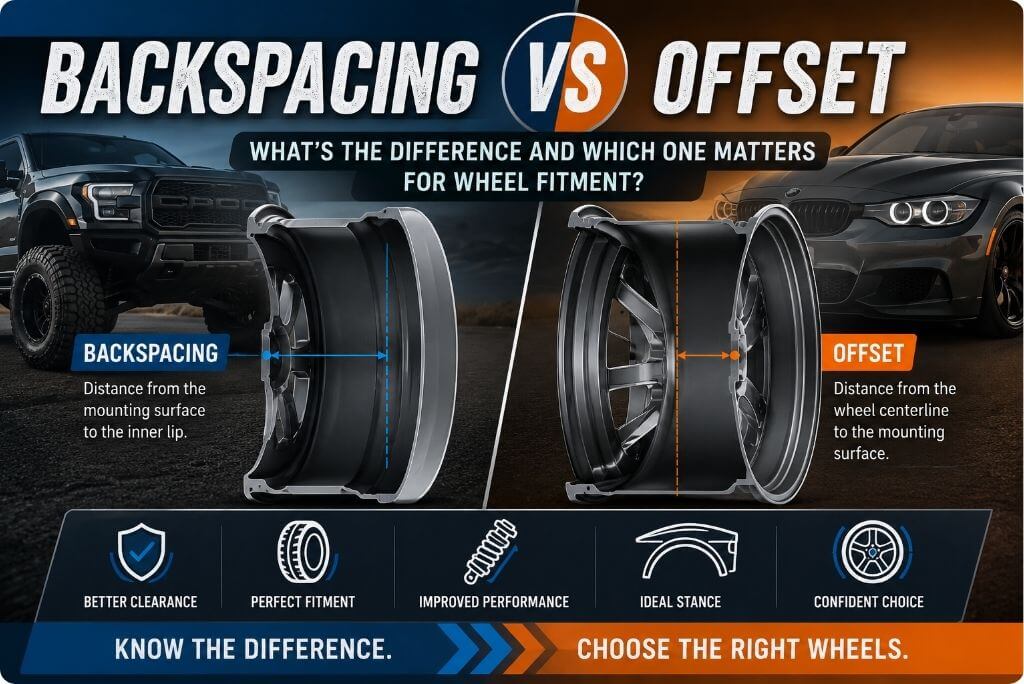
Backspacing is the distance from the wheel’s mounting surface to its inner edge. In simple terms, it tells you how much of the wheel sits inward toward the vehicle.
This matters because it affects space around the brakes, suspension, and other parts inside the wheel well. Too much backspacing can push the wheel too far inward and cause clearance problems. Too little can move the wheel outward more than expected.
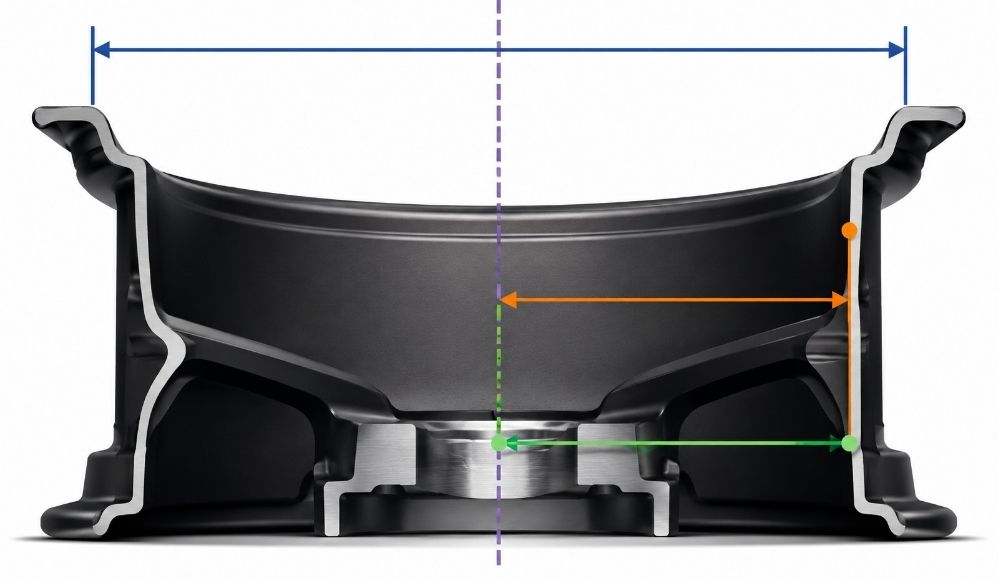
Backspacing is usually measured in inches. It is especially useful when comparing wheels for trucks, Jeeps, and off-road vehicles, where inner clearance often matters a lot.
A good way to think about it is this: backspacing helps answer the question, “How far does the wheel reach into the vehicle?” That makes it a practical number to check before buying new wheels.
What Is Offset?
Offset is the distance between the center of the wheel and the surface that bolts to the vehicle. Unlike backspacing, which is measured from the inner edge of the wheel, offset tells you whether the wheel sits more inward or outward from its center.
Offset is measured in millimeters and is the standard measurement used by most vehicle and wheel manufacturers.
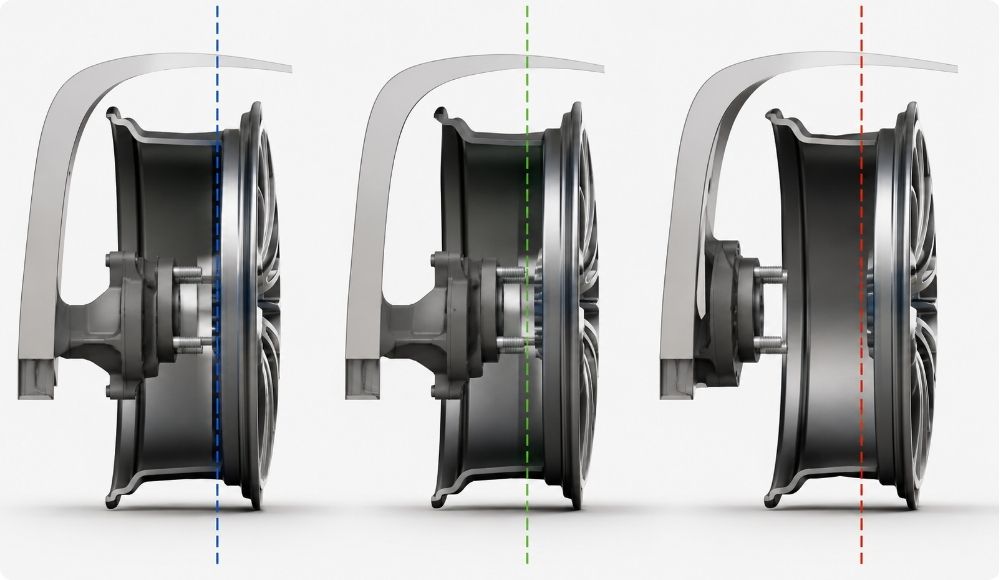
There are three types of offset:
- Positive offset: The mounting surface is closer to the outside of the wheel, so the wheel sits farther inside the wheel well.
- Zero offset: The mounting surface is exactly in the center of the wheel.
- Negative offset: The mounting surface is closer to the inside of the wheel, pushing the wheel farther outward.
Offset affects both the look and the fit of your wheels. A wheel with the wrong offset may rub against suspension parts, stick out past the fender, or change how the vehicle handles.
When shopping for aftermarket wheels, you’ll almost always see offset listed in the specifications. That’s why it’s important to understand what the number means before you buy.
Backspacing vs Offset: Side-by-Side Comparison
Although backspacing and offset describe the same part of a wheel, they use different measurements. Knowing the difference makes it much easier to compare wheels and choose one that fits your vehicle correctly.
| Feature | Backspacing | Offset |
| Measurement unit | Inches | Millimeters (mm) |
| Measured from | Mounting surface to the inner edge of the wheel | Wheel’s centerline to the mounting surface |
| Main purpose | Shows how much space the wheel takes up on the inside | Shows where the wheel sits in relation to the center of the vehicle |
| Commonly used on | Trucks, Jeeps, and off-road vehicles | Modern cars, SUVs, and most aftermarket wheels |
| Easier for | Understanding inner clearance | Comparing wheel specifications between different brands |
The easiest way to think about it is this: backspacing tells you how much room the wheel needs on the inside, while offset tells you whether the wheel sits farther inward or outward.
Neither measurement is better than the other—they simply describe the wheel’s position in different ways. Most modern wheel manufacturers list offset, while backspacing is still popular among truck and off-road owners because it makes it easier to estimate suspension and frame clearance.
If you’re shopping for new wheels, you’ll often see offset in the product specifications. If you’re checking whether a wheel will clear suspension parts or fit a lifted truck, backspacing can be easier to visualize. Understanding both helps you make a more informed fitment decision and avoid buying wheels that don’t fit properly.
How Backspacing and Offset Work Together
By now, you know that backspacing and offset are measured differently. What often confuses buyers is that both measurements describe the same thing—the position of the wheel once it’s mounted on the vehicle.
Think of them as two different ways of looking at the same wheel.
Backspacing tells you how far the wheel extends inward from the mounting surface, while offset tells you how far the mounting surface is from the wheel’s centerline. Neither measurement is “better” than the other. They simply provide different information that helps determine whether a wheel will fit properly.
Wheel Width Changes Everything
One of the biggest mistakes people make is comparing offset numbers without considering wheel width.
For example, imagine two wheels that both have a +20 mm offset:
- Wheel A is 8 inches wide.
- Wheel B is 10 inches wide.
Even though both wheels have the same offset, the wider wheel extends farther inward and farther outward because its centerline is different. This means it may sit closer to the suspension on the inside while also sticking out farther toward the fender.
The same principle applies to backspacing. A wider wheel usually has more backspacing than a narrower wheel with the same offset.
That’s why experienced wheel buyers never compare offset or backspacing alone. They always look at the complete wheel specifications, including:
- Wheel width
- Offset
- Backspacing
- Tire size
- Bolt pattern
- Vehicle suspension setup
Looking at all of these measurements together gives you a much clearer picture of how the wheel will actually fit.
Can You Convert Backspacing to Offset?
Yes, but only if you know the wheel’s width.
Because offset is measured from the wheel’s centerline, you need the wheel width before you can accurately convert one measurement into the other.
Many online wheel fitment calculators can perform this conversion automatically. They are especially useful when comparing aftermarket wheels that list different specifications.
Keep in mind that published wheel width is typically measured at the bead seat rather than the outer lip, so manual calculations may not perfectly match the manufacturer’s specifications. When possible, rely on the measurements provided by the wheel manufacturer.
The most practical takeaway is simple: if you know both the wheel width and either the offset or the backspacing, you can determine the other measurement and better understand how the wheel will sit on your vehicle.
How They Affect Wheel Fitment
Backspacing and offset are more than technical specifications. They directly influence whether a wheel fits safely and performs as expected.
Changing either measurement can affect clearance, handling, and the overall appearance of your vehicle.
Suspension Clearance
The inside of the wheel sits close to important suspension components such as control arms, struts, shocks, and leaf springs.
If a wheel has too much backspacing or too much positive offset, it moves farther inward. This can reduce the available space and may cause the wheel or tire to contact suspension parts.
On the other hand, reducing backspacing or using a more negative offset creates additional room on the inside. This is one reason off-road enthusiasts often choose wheels with less backspacing when installing larger tires.
Before buying new wheels, always make sure there is enough clearance between the tire and the suspension throughout the full range of steering and suspension travel.
Brake Clearance
Modern vehicles often use larger brake calipers than older models. Some performance vehicles also have oversized brake packages that require additional wheel clearance.
A wheel that has the correct bolt pattern and diameter may still fail to clear the brake caliper if its design, offset, or backspacing is unsuitable.
This is why many wheel manufacturers publish brake clearance information or recommend specific wheel sizes for certain vehicles.
If your vehicle has factory performance brakes or an aftermarket brake kit, verify brake clearance before placing an order.
Fender Clearance
Wheel position also determines how close the tire sits to the fender.
A wheel that sits too far inward can limit the space available for wider tires. A wheel that sits too far outward may contact the fender when driving over bumps or turning sharply.
This becomes even more important if you’ve installed lowering springs, lift kits, or larger tires, as suspension changes can significantly affect available clearance.
Checking both the wheel specifications and the tire dimensions helps reduce the risk of rubbing after installation.
Wheel Poke vs. Wheel Tuck
You’ve probably heard enthusiasts talk about poke and tuck.
These terms describe how the wheel sits relative to the fender.
- Wheel poke means the wheel extends outward beyond the fender, creating a wider, more aggressive stance.
- Wheel tuck means the wheel sits farther inside the wheel well, giving the vehicle a more factory-like appearance.
Neither style is automatically better. It depends on your goals, your vehicle, and local regulations regarding tire coverage.
Finding the right balance between appearance and proper clearance is usually the best approach.
Steering and Handling
Wheel position can also influence how a vehicle feels on the road.
Moving the wheels significantly inward or outward changes the relationship between the tires and the suspension geometry. In some cases, this can affect steering response, increase stress on wheel bearings, or change how the vehicle handles bumps and corners.
Small changes within the manufacturer’s recommended range are generally not a problem. Larger changes, however, should be planned carefully—especially if you’re installing wider wheels, larger tires, or modifying the suspension.
When in doubt, choose wheel specifications that closely match those recommended for your vehicle.
Which One Should You Use?
The right choice depends on your vehicle and what you’re trying to achieve. In many cases, you’ll end up using both measurements, but one may be more helpful than the other.
For stock vehicles
If you’re replacing your factory wheels, pay close attention to the offset recommended by the vehicle manufacturer. Matching the original offset helps keep the wheels in the correct position and reduces the chance of rubbing or handling changes.
For aftermarket wheels
Most aftermarket wheel brands list offset in their specifications, so it’s usually the easiest number to compare when shopping. Just remember that offset alone isn’t enough—you should also check the wheel width and tire size.
For lifted trucks and Jeeps
Backspacing is often more useful because it helps you understand how much space the wheel will have around the suspension and frame. This is especially important when using larger tires or aftermarket suspension parts.
For performance cars
Offset is usually the main measurement to consider. The wrong offset can affect tire clearance and the way the car handles, so it’s important to choose wheels that match your vehicle’s fitment requirements.
No matter what you drive, don’t make your decision based on a single number. The best fitment comes from looking at offset, backspacing, wheel width, tire size, bolt pattern, and brake clearance together. Checking all of these before you buy is the best way to avoid fitment problems later.
Common Wheel Fitment Mistakes
Many wheel fitment problems happen because one important detail gets overlooked. Avoiding these common mistakes can save you time, money, and frustration.
Looking only at offset: Offset is important, but it doesn’t tell the whole story. Two wheels with the same offset can fit differently if their widths are different. Always look at the complete wheel specifications.
Ignoring wheel width: A wider wheel takes up more space, even if the offset stays the same. This can reduce clearance on the inside, push the tire closer to the fender, or both.
Forgetting tire size: A wheel may fit perfectly, but the tire mounted on it might not. Wider or taller tires need more room and are more likely to rub when turning or driving over bumps.
Not checking brake clearance: Some wheels don’t leave enough space for large brake calipers. This is especially common on performance vehicles or models with upgraded brakes. Always confirm brake clearance before ordering new wheels.
Assuming wheels from another vehicle will fit: Even if two vehicles have the same bolt pattern, their wheel requirements may be different. Offset, center bore, brake size, and suspension design can all affect fitment. Don’t assume a wheel that fits one vehicle will fit another without checking the specifications.
Taking a few minutes to verify these details before you buy can help you avoid returns, extra costs, and wheels that don’t fit as expected.
How to Measure Backspacing and Read Offset Specifications
How to Measure Backspacing
You don’t need special equipment to measure backspacing. A straightedge and a tape measure are enough for a basic measurement.
To measure backspacing:
- Remove the wheel from the vehicle if it’s installed.
- Lay the wheel face down on a flat surface.
- Place the straightedge across the back edge (inner lip) of the wheel.
- Measure the distance from the wheel’s mounting surface—the flat area that touches the hub—to the bottom of the straightedge.
- Record the measurement in inches. This is the wheel’s backspacing.
For the most accurate result, make sure the straightedge sits flat across the wheel and the tape measure is held straight. Even a small angle can change the measurement.
Keep in mind that wheel designs vary. The shape of the inner lip and bead seat can slightly affect where you measure, so two people may get slightly different results on the same wheel.
If the wheel manufacturer provides an official backspacing specification, use that whenever possible. Factory measurements are usually more accurate than measuring the wheel yourself and are the best choice when comparing wheels before buying.
How to Read Offset Specs
Wheel offset is usually shown as a number followed by “mm” because it is measured in millimeters. You may also see it written with ET, such as ET35 or ET45. The number tells you where the wheel’s mounting surface sits in relation to the center of the wheel.
There are three types of offset:
- Positive offset (+): The wheel sits farther inward, closer to the suspension.
- Zero offset (0): The mounting surface is centered on the wheel.
- Negative offset (-): The wheel sits farther outward, creating a wider stance.
For example, a wheel with +45 mm offset will sit farther inside the wheel well than one with +20 mm offset. A wheel with -12 mm offset will move outward even more.
You can usually find the offset in the wheel manufacturer’s specification sheet, the product page on a retailer’s website, the wheel box, or the product label. If you’re shopping online, it’s often listed with other specifications such as wheel size and bolt pattern.
When comparing wheels, remember one simple rule: a more positive offset moves the wheel inward, while a more negative offset moves it outward. However, offset should never be considered by itself. Always compare it alongside the wheel width and tire size to get a clear picture of how the wheel will fit your vehicle.
Wheel Fitment Checklist Before Buying
Before ordering new wheels, take a few minutes to check the details below. A quick review can help you avoid fitment problems, unnecessary returns, and extra costs.
- Wheel width: Make sure the width is suitable for your vehicle and the tires you plan to use.
- Offset: Check that the offset keeps the wheel in the correct position without causing clearance issues.
- Backspacing: Confirm there is enough room between the wheel and the suspension or frame.
- Bolt pattern: The wheel must match your vehicle’s bolt pattern exactly or it won’t mount properly.
- Center bore: The center hole should fit your vehicle’s hub correctly. If it’s larger, you may need hub-centric rings.
- Tire size: Choose a tire size that works with both the wheel and your vehicle’s available space.
- Brake clearance: Make sure the wheel clears the brake calipers, especially if your vehicle has larger or upgraded brakes.
- Suspension modifications: Lift kits, lowering springs, leveling kits, or wheel spacers can all change how a wheel fits.
If you’re unsure about any of these specifications, compare them with your vehicle’s factory wheel specs or ask the wheel manufacturer before buying. Spending a little extra time checking fitment is much easier than dealing with wheels that don’t fit once they arrive.
Frequently Asked Questions
Is backspacing the same as positive offset?
No. They are different measurements that describe the wheel’s position in different ways. Backspacing measures from the mounting surface to the inner edge of the wheel, while offset measures the distance from the wheel’s centerline to the mounting surface.
Can you convert backspacing to offset?
Yes, but you’ll also need to know the wheel’s width. Since the two measurements use different reference points, wheel width is necessary for an accurate conversion.
Which is more important: backspacing or offset?
Neither is more important on its own.
For most modern vehicles, offset is the standard specification used by manufacturers. Backspacing is often easier to visualize when checking suspension clearance, especially on trucks and off-road vehicles.
The best approach is to consider both measurements together.
Does changing offset affect handling?
It can.
Small changes are usually acceptable, but significant changes may alter steering feel, increase stress on suspension components, or affect wheel bearing loads. Staying close to the manufacturer’s recommended specifications is generally the safest choice.
Will changing the offset cause tire rubbing?
It can if the new wheel moves the tire too close to the suspension or too far toward the fender.
Whether rubbing occurs depends on several factors, including wheel width, tire size, suspension setup, and the amount of offset change. Always check the complete fitment before installing new wheels.
Conclusion
Understanding the difference between backspacing and offset is one of the most important steps in choosing wheels that fit properly.
Although the two measurements are calculated differently, they work together to determine where a wheel sits in relation to the suspension, brakes, and fenders. Looking at only one measurement can lead to poor fitment, while considering the complete picture helps you avoid common problems such as rubbing, clearance issues, and unnecessary modifications.
If you’re shopping for aftermarket wheels, don’t rely on offset or backspacing alone. Compare the wheel width, tire size, bolt pattern, center bore, and your vehicle’s factory specifications before making a decision.
Taking a little extra time to verify these details can save money, prevent installation headaches, and ensure your new wheels not only look great but also perform safely and reliably for years to come.
