Who Makes Kumho Tires?
If you’re researching tires and came across the Kumho brand, one of the first questions you might ask is: Who makes Kumho tires?
It’s a common question, especially since many drivers want to know where their tires come from before spending money on them. Some people are curious about the company’s origins, while others want to know whether ownership affects quality and reliability.
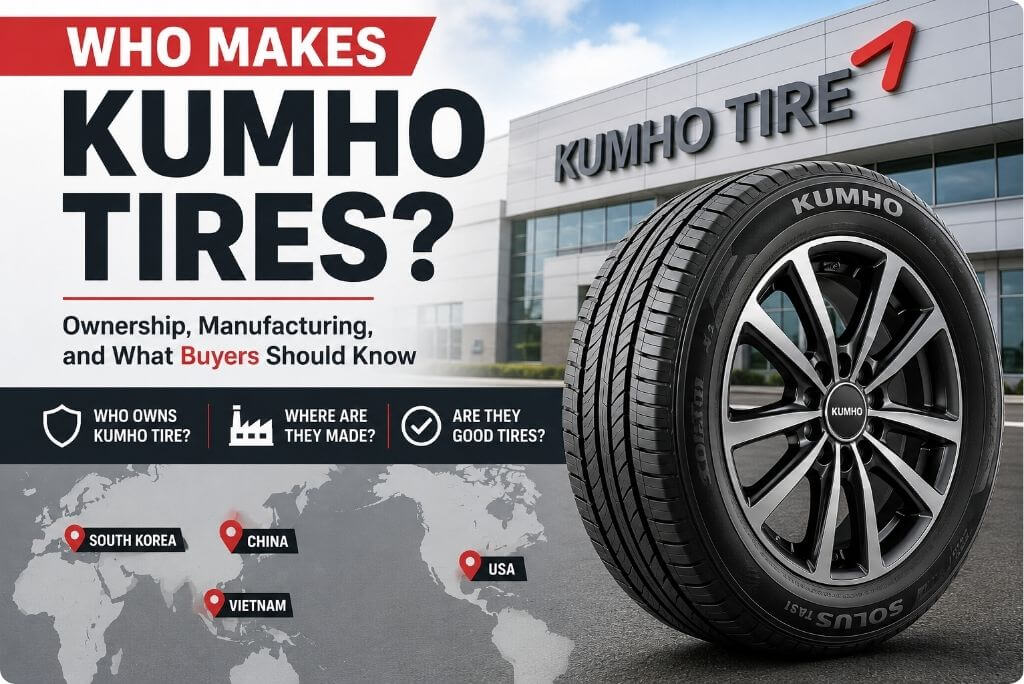
The short answer is that Kumho tires are made by Kumho Tire, a tire manufacturer that started in South Korea and has grown into a global brand. Today, the company operates manufacturing facilities in several countries and sells tires around the world.
In this guide, you’ll learn who makes Kumho tires, where they’re manufactured, how the company is owned, and whether Kumho tires are a good choice for your vehicle.
Quick Answer: Who Makes Kumho Tires?
Kumho tires are made by Kumho Tire Co., a tire manufacturer that was founded in South Korea in 1960.
While Kumho began as an independent Korean company, the business is now majority-owned by Doublestar Group, a Chinese tire manufacturer and industrial company. This ownership change often causes confusion among buyers, but it’s important to understand the difference between ownership and manufacturing.
Kumho remains its own tire brand, producing tires under the Kumho name and operating its own manufacturing facilities, research centers, and product lines.
In simple terms:
- Kumho tires are made by Kumho Tire.
- Kumho originated in South Korea.
- The company is currently owned by Doublestar Group.
- Kumho continues to operate as a global tire manufacturer.
For most drivers, what matters most is not who owns the company but whether the tires perform well, last a reasonable amount of time, and provide good value. We’ll cover that later in this article.
What Kumho Is as a Brand
Kumho has been making tires for more than six decades and has built a strong reputation as a value-focused tire brand.
Unlike premium manufacturers that charge top-tier prices, Kumho aims to provide a balance between performance and affordability. This approach has made the brand popular among drivers who want dependable tires without paying premium-brand prices.
Today, Kumho sells a wide range of tires, including:
- Passenger car tires
- SUV and crossover tires
- Performance tires
- Touring tires
- Light truck tires
The company competes in what many industry professionals consider the mid-tier tire category. This means Kumho generally sits above many low-cost budget brands but below premium manufacturers such as Michelin, Bridgestone, and Continental in terms of pricing and market position.
For many everyday drivers, that middle ground is exactly what they’re looking for.
Who Owns Kumho Tires?
Kumho Tire is a South Korean brand, but its controlling ownership sits with China’s Doublestar Group through Xingwei Korea, which Kumho identifies as its major shareholder. Kumho’s own company history page notes that Doublestar completed the acquisition in 2018, and its 2024 sustainability report still describes Doublestar as the major shareholder chain behind Kumho’s controlling structure.
For buyers, that matters less than many people think. Ownership can influence long-term strategy, investment, and where the company chooses to build factories, but it does not automatically decide how a tire grips, brakes, or wears. Those things come from the tread design, rubber compound, testing standards, and factory quality control. In real driving, that is why a Kumho can feel perfectly stable on a wet highway or in city stop-and-go traffic even though the parent company is based elsewhere. The brand still stands on its own product engineering.
Best for drivers who want value and are judging the tire itself, not the corporate logo. Less important for buyers chasing a premium badge.
Where Kumho Tires Are Made
One reason people ask who makes Kumho tires is because they want to know where the tires are manufactured.
Kumho produces tires in several countries rather than relying on a single factory. This is common throughout the tire industry. Most major tire manufacturers operate multiple production facilities around the world to serve different markets efficiently.
Kumho’s manufacturing network includes facilities in:
South Korea
South Korea remains one of Kumho’s most important production and engineering locations. Since the company was founded there, Korean facilities continue to play a significant role in the brand’s operations.
China
Kumho also operates manufacturing facilities in China. These plants help meet global demand and support distribution throughout Asia and other regions.
Vietnam
Vietnam has become an important manufacturing hub for many tire companies. Kumho uses facilities there to increase production capacity and serve international markets.
United States
Kumho operates a manufacturing facility in Georgia, which helps supply tires to the North American market.
It’s worth noting that the country where a specific Kumho tire is made may vary depending on the tire model, size, and production schedule.
If you want to know where your particular tire was manufactured, you can check the sidewall. The DOT code contains information that can help identify the production plant.
Does Ownership Affect Tire Quality?
This is one of the biggest reasons people search for Kumho in the first place. When a tire brand is owned by a company in another country, some buyers worry that quality will drop. In reality, ownership is only one part of the story.
Tire quality depends more on design, materials, testing, plant standards, and quality control than on the nationality of the parent company. Kumho’s own site shows that it maintains a global R&D network centered in Korea, with technical centers in the U.S., Europe, China, and Vietnam.
Kumho also says it is focused on becoming a “premium brand” and building strength in high-value-added products. That is important because it shows the company is not treating itself like a low-end commodity maker. Whether a specific tire is good still depends on the model, but the company’s own direction is clearly aimed at quality improvement and stronger brand value.
So the honest answer is this: ownership changed, but that does not automatically mean the tires became worse. The better way to judge Kumho is by looking at the company’s engineering network, plant footprint, product testing, and the real-world performance of the specific tire model you are considering.
Are Kumho Tires Any Good?
For many drivers, the answer is yes.
Kumho has earned a reputation for offering solid performance at a reasonable price. The brand isn’t trying to compete directly with the most expensive premium tire manufacturers. Instead, it focuses on delivering good overall value.
One area where Kumho performs particularly well is affordability. Drivers often find that Kumho tires cost noticeably less than premium alternatives while still providing dependable everyday performance.
Ride comfort is another common strength. Many Kumho touring and all-season tires deliver a smooth, quiet driving experience that works well for daily commuting and family vehicles.
Wet-weather performance is generally competitive within the brand’s price category. Many Kumho models offer reliable traction in rain and typical road conditions.
However, there are some limitations.
Premium brands often invest heavily in advanced tire technology, which can result in longer tread life, stronger performance in extreme weather, and sharper handling characteristics. Drivers who prioritize maximum performance may still prefer premium options.
That doesn’t mean Kumho tires are poor quality. It simply means they occupy a different place in the market.
For someone looking for dependable transportation without spending premium-brand money, Kumho is often a sensible choice.
Which Drivers Kumho Tires Are Best For
Kumho tires are especially appealing to drivers who want a practical balance between cost and performance.
They are often a good fit for daily commuters who spend most of their time driving to work, running errands, or traveling on highways.
Families also frequently choose Kumho because the brand offers comfortable and reasonably priced tire options for sedans, minivans, and SUVs.
Budget-conscious buyers are another strong match. If you’re replacing tires on an older vehicle or simply want solid performance without stretching your budget, Kumho can be an attractive option.
SUV and crossover owners may also find several suitable choices within Kumho’s lineup, particularly in the company’s touring and all-season categories.
On the other hand, drivers who demand the highest possible levels of performance, tread life, or specialized winter capability may prefer premium brands designed specifically for those needs.
How Kumho Compares With Other Brands
Many shoppers compare Kumho with other well-known tire manufacturers before making a decision.
Kumho vs Hankook
Hankook and Kumho are both South Korean brands that compete in similar market segments. Hankook is often viewed as slightly more premium, while Kumho is frequently chosen for its value pricing.
Kumho vs Michelin
Michelin is widely considered one of the world’s leading premium tire brands. Michelin tires often offer longer tread life and higher overall performance, but they also come with significantly higher prices.
Kumho typically appeals to drivers who want good performance while spending less.
Kumho vs Bridgestone
Bridgestone is another premium manufacturer known for advanced tire technology and extensive product development. While Bridgestone may outperform Kumho in certain categories, many drivers find Kumho offers better value for everyday use.
Kumho vs Falken
Falken is known for performance-oriented products and enthusiast-focused tires. Depending on the specific model, Falken may have an advantage in sportier driving applications, while Kumho often competes strongly on price and overall value.
The best choice ultimately depends on your budget, driving style, climate, and vehicle type.
Read More: Who Makes Waterfall Tires?
Final Verdict
So, who makes Kumho tires?
Kumho tires are made by Kumho Tire, a company that was founded in South Korea and has grown into a global tire manufacturer. Although the company is now owned by China’s Doublestar Group, Kumho continues to operate under its own brand and produces tires in multiple countries, including South Korea, China, Vietnam, and the United States.
For most drivers, the more important question is whether Kumho tires are worth buying.
The answer is that Kumho generally offers a strong balance of affordability, comfort, and everyday performance. While the brand may not compete directly with the highest-end premium tire manufacturers in every category, it provides solid value for drivers who want reliable tires without paying top-tier prices.
If you’re looking for dependable tires for commuting, family transportation, or everyday driving, Kumho is a brand that deserves serious consideration.
Frequently Asked Questions
Is Kumho a Korean company?
Yes. Kumho Tire was founded in South Korea and remains closely associated with its Korean origins, even though the company is now owned by China’s Doublestar Group.
Is Kumho owned by China?
Yes. Kumho Tire is majority-owned by Doublestar Group, a Chinese company that acquired control of the business in 2018.
Are Kumho tires a budget brand?
Kumho is typically considered a mid-tier tire brand. It sits above many low-cost budget brands while remaining more affordable than premium manufacturers such as Michelin and Bridgestone.
