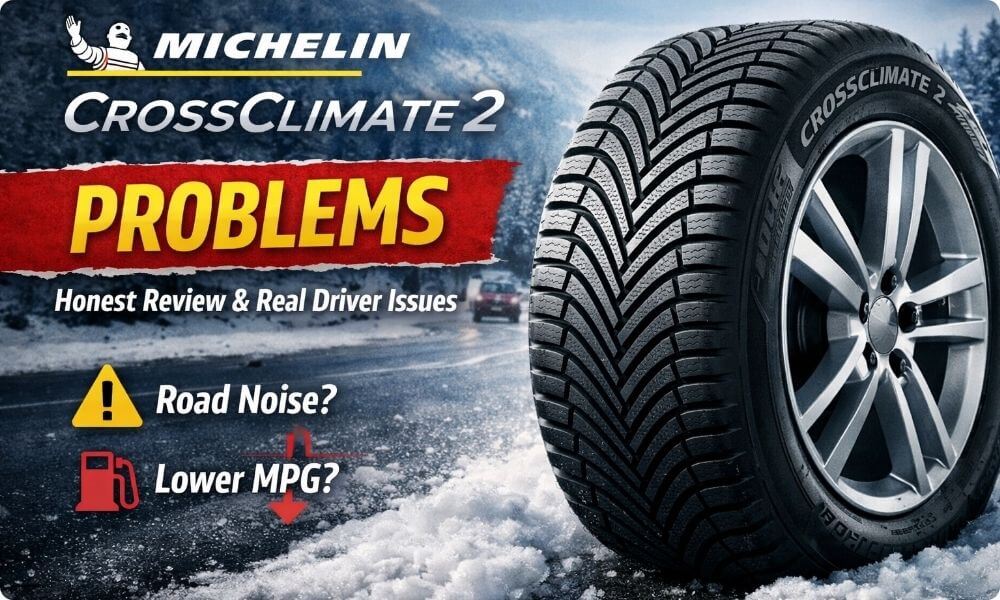
Michelin CrossClimate 2 Problems
The Michelin CrossClimate 2 is often praised as one of the best all-weather tires on the market. With a 3-Peak Mountain Snowflake (3PMSF) rating and Michelin’s reputation for quality, it’s an attractive option for drivers who want year-round capability without swapping tires every season.
But no tire is perfect.
If you’re searching for Michelin CrossClimate 2 problems, you’re likely trying to understand the downsides before spending a premium price—or you already own them and want to know whether what you’re experiencing is normal.
This guide breaks down the most common issues, explains why they happen, and helps you decide whether these tires are right for your driving needs.
Quick overview — Michelin CrossClimate 2
The Michelin CrossClimate 2 is an all-weather tire made to work well in dry, wet, and light snowy conditions all year — not a regular “all-season” tire that only targets mild weather.
Why it works in winter (3PMSF explained simply)
You’ll see a small mountain-and-snowflake symbol on the tire. That means it passed tests for winter traction on snow. In plain words: it’s better in snow than regular all-season tires, but it’s not a full winter tire for deep snow or ice.
Key design features (what they do for you)
- V-shaped tread pattern — lots of tiny edges that help grip wet roads and light snow. This is why it handles rain and snow better.
- Softer rubber compound — the rubber stays flexible in cold temperatures so the tire keeps grip when it’s chilly.
- Reinforced construction — made to be stable at higher speeds and to last a reasonable number of miles.
Intended use — who it’s for
- People who live where winters are mild to moderate (occasional snow, not heavy ice).
- Drivers who want one tire for the whole year (no seasonal tire swaps).
- Commuters and families who value safety in wet and snowy conditions more than a super-quiet or ultra-sporty ride.
Quick spec-style summary
| Feature | What it means for you |
| Type | All-weather tire — year-round use |
| Winter rating | 3PMSF symbol = better in snow than regular all-season |
| Tread style | V-shaped for wet/snow grip |
| Best for | Mixed weather, light-to-moderate snow, convenience |
Common problems drivers report (and why they happen)
Road noise that’s more noticeable on some cars
A frequent complaint is increased road noise, especially at highway speeds. The CrossClimate 2’s aggressive V-pattern and deep siping improve wet and snowy traction, but patterns that bite into the road tend to produce more tread noise than smooth touring tires.
Whether you notice it depends on your vehicle’s cabin insulation, wheel size, and the road surface you drive most. Tire Rack’s product notes and user feedback mention elevated noise for some drivers, even while awarding the tire strong scores in other categories.
Slight hit to fuel economy in real-world driving
Some owners report a small drop in MPG after switching to CrossClimate 2s. Tires that prioritize grip — especially in cold or wet conditions — frequently have higher rolling resistance than eco-touring designs.
Lab numbers vary by size and vehicle, but real-world reports and owner forum threads indicate a measurable difference for some drivers, particularly those who already chase maximum efficiency (hybrid drivers and EV owners are usually most sensitive).
Firmer ride and perceived stiffness
A tire built for confident braking and steering can feel firmer than a comfort-focused touring tire. That stiffness comes from compound and sidewall choices intended to maintain contact patch control.
On smooth pavement you may barely notice it; on rough roads the ride can feel less plush than the quietest grand-touring alternatives. Tire Rack’s testing reports praise handling and comfort generally, but also note that some drivers find the ride on the firm side.
Tread wear in hot climates or with aggressive driving
Michelin positions the CrossClimate 2 as durable, and warranty terms reflect that. Still, several owners in hotter climates or with heavy miles say wear progressed faster than they expected.
Heat and aggressive acceleration accelerate rubber breakdown — that’s true of most performance-oriented all-weathers. Michelin and retailers publish treadlife and warranty details you should check for the size you need.
Mixed reports for extreme ice or deep snow
The CrossClimate 2 is 3PMSF certified and scores very well in many independent wet and snow tests, but it’s not a dedicated winter tire. Some owner reports and forum threads show excellent winter performance for typical snowfall and slush; others say the tire is outmatched on thick ice or in prolonged deep-snow conditions where a true winter tire shines.
Consumer Reports and long-term test data show the CrossClimate 2 performs exceptionally well for an all-weather product, but real-world conditions vary. If you live where winters are severe and frequent, a dedicated winter tire still has the edge.
Are these problems deal-breakers or expected trade-offs?
This tire is designed as a compromise: better year-round traction with a single set of tires instead of the comfort and absolute efficiency of a summer/touring tire or the extreme cold capability of a studless winter tire.
In many cases, what some users call a “problem” is simply the other side of that trade-off. Road noise and slightly firmer ride stem from the same design choices that give superior wet and light-snow stopping.
If you prioritize a quiet, ultra-comfortable commute or maximum MPG above all else, you may see these trade-offs as deal-breakers. If you want confident, emergency-ready traction across seasons and are willing to accept small hits in comfort or efficiency, the CrossClimate 2 often makes sense.
Who should avoid the CrossClimate 2
If your driving life is dominated by long highway miles in a warm climate and you prize whisper-quiet comfort and top fuel economy, a touring or eco-focused tire will usually deliver what you want more efficiently than an all-weather design.
Performance drivers who demand razor-sharp summer handling will also prefer a more specialized high-performance summer tire. Finally, if your winters are long and brutal with sustained deep snow and black ice, a dedicated winter tire remains the safer choice.
Who the CrossClimate 2 is actually great for
For drivers in mixed-condition regions — places with rainy seasons, occasional snow, or unpredictable weather swings — the CrossClimate 2 offers a compelling single-set solution.
It’s also attractive to people who dislike seasonal tire swaps, those who value short wet-braking distances, and drivers who want strong, reliable performance across a wide temperature range without changing tires twice a year.
Independent test summaries and Michelin’s own data emphasize wet and cold braking performance as core strengths.
How it stacks up against alternatives
Comparisons matter because they clarify trade-offs. Against dedicated winter tires, CrossClimate 2 gives better year-round handling and comfort but falls short in extreme ice or deep snow. Against quieter touring tires, it typically wins on wet and winter performance but may be noisier and slightly less efficient.
Tire Rack and Consumer Reports provide side-by-side testing that’s useful if you want measured comparisons for specific sizes and use cases.
For many buyers the decision comes down to which risk they prefer to accept: occasional compromise in winter versus compromise in summer comfort or fuel economy.
Can you minimize these problems? Practical steps
Many of the negative experiences people report can be mitigated with proper setup and driving habits. Keep tire pressures at manufacturer recommended levels, rotate tires at regular intervals, and ensure your vehicle’s alignment and suspension are in good shape — uneven wear or noise can be amplified by poor alignment.
If road noise bothers you, smaller wheel diameters with more sidewall often yield a quieter ride. For EV and hybrid owners sensitive to efficiency, monitor rolling resistance and consider size or model options that balance grip and economy.
If you want a quick checklist:
- Check and maintain correct tire pressure monthly.
- Rotate tires every 5,000–8,000 miles or as recommended.
- Inspect for stone retention and remove debris from sipes.
- Confirm alignment if you notice uneven wear or vibration.
These steps won’t change the tire’s design, but they will help you get the most consistent, long-lasting performance from a set.
Safety notes and recalls — what to watch for
Manufacturers sometimes issue recalls or technical bulletins. Michelin has had voluntary recalls and safety communications related to certain CrossClimate-family products in the past; NHTSA records include recall documentation and safety reports you can check by VIN or tire ID to confirm whether your tires are affected. It’s smart to verify any model-specific notices before purchase or installation.
Are Michelin CrossClimate 2 Problems Worth the Trade-Off?
Short answer: it depends on what you want from your tires. Below is a clear, no-jargon look at the pros and cons, whether the price makes sense, who will be happy long-term, and plain recommendations for common situations.
Simple pros vs cons
Pros
- Better than regular all-season tires in rain and light snow.
- Works year-round, so you can skip seasonal tire changes.
- Good braking and traction in mixed weather.
Cons
- Can be louder on highways than touring tires.
- May lower fuel economy slightly.
- Softer rubber can wear faster in very hot climates.
- Not as good as dedicated winter tires on ice or deep snow.
Cost vs performance — is the price worth it?
- Price: CrossClimate 2 is a premium tire and costs more than many standard all-season tires.
- Value: If you value safety in wet and snowy conditions and like the convenience of one tire all year, the higher price can be worth it.
- If you care most about fuel savings or a quiet, cushioned ride, a cheaper touring all-season tire might be a better value for you.
Who will be satisfied long-term
You’ll likely be happy with CrossClimate 2 if you:
- Live where winters are mild to moderate (occasional snow, not prolonged ice).
- Want one tire for all seasons and dislike changing tires twice a year.
- Put safety in wet or snowy conditions above absolute quiet or peak fuel economy.
You might be disappointed if you:
- Live in a hot climate where tires get very warm all year.
- Want the quietest, most comfortable ride possible.
- Need top performance on ice, deep snow, or for sporty driving.
Clear recommendation scenarios
- You live in a four-season area with occasional snow: Choose CrossClimate 2. It’s a great balance of safety and convenience.
- You live in an area with heavy snow and ice all winter: Use dedicated winter tires in cold months; CrossClimate 2 is not a full winter replacement.
- You commute long highway miles and value a quiet ride: Consider a touring all-season tire instead.
- You drive a hybrid or want max fuel efficiency: Compare rolling resistance numbers; if MPG is critical, look at low-rolling-resistance tires.
FAQ
Are CrossClimate 2s noisy?
They can be more noticeable than the quietest touring tires, especially on certain road surfaces and vehicles. Proper inflation and wheel/tire combination can reduce perception of noise.
Will they reduce my fuel economy?
Some owners report a small MPG penalty. The effect depends on vehicle type, wheel size, and driving style; hybrids and EVs tend to notice efficiency changes more.
Do they work for real winter driving?
They perform strongly for light to moderate snow and slush and carry the 3PMSF rating that indicates winter capability, but dedicated winter tires still outperform them in prolonged, severe winter conditions.
How long do they last?
Warranty and tread-life expectations vary by size and SKU; Michelin and retailers publish treadlife information and warranties, but real wear depends on climate, driving, and maintenance. Check the specific warranty for the model you buy.
Conclusion
If you want one set of tires that will handle rain, occasional snow, and provide solid emergency braking for most of the year, the CrossClimate 2 is a very attractive option. If you want the quietest, softest ride possible or you live somewhere with long, severe winters, consider more specialized tires. Use independent test data, read a handful of owner experiences for your vehicle and climate, and compare warranties and return policies before you buy.
If you’d like, I can write a version of this review targeted to a specific vehicle (compact car, SUV, or EV), create a comparison table with alternative tires in your size, or draft an FAQ optimized for search engines. Which would be most helpful?
