
Michelin CrossClimate 2 Review (2026): Worth It or Not?
Last updated on April 4th, 2026
Choosing tires should feel simple, but for many drivers it does not. You want something that handles rain well, gives you confidence in light snow, lasts a long time, and still feels comfortable on daily drives. The Michelin CrossClimate 2 is built for exactly that kind of buyer: someone who wants one tire that can handle changing weather without making a separate winter tire swap every year. Michelin says the CrossClimate 2 is a 3PMSF-rated all-season tire for cars, SUVs, crossovers, and vans, with a 60,000-mile warranty and a focus on wet, dry, and worn-tread performance.
That is a big promise, so the real question is simple: does it actually deliver enough value to justify the premium price? In this Michelin CrossClimate 2 review, we will look at what it does well, where it compromises, who should buy it, and who should probably keep looking. The goal is not to sell you on the tire. The goal is to help you make a smart choice.
Quick Verdict ⭐
The Michelin CrossClimate 2 is designed for drivers who want one tire that can handle most weather conditions without switching between summer and winter sets.
Best for:
Daily drivers in mixed climates who deal with rain, dry roads, and occasional light snow.
Not ideal for:
Extreme winter conditions or drivers who want sporty, aggressive handling.
3-line summary:
Strength: Excellent all-weather traction in real driving conditions
Weakness: Higher price + slight fuel efficiency trade-off
Verdict: Worth it for most drivers who value safety and convenience over performance or low cost

Michelin CrossClimate 2
What Makes the CrossClimate 2 Different?
The Michelin CrossClimate 2 is built for drivers who want one tire that can handle more than just dry roads. It is made for people who deal with rain, cold weather, and light snow, but do not want the trouble of changing tires twice a year.
That is what sets it apart from many regular all-season tires. A standard all-season tire is usually fine for everyday driving, but it can lose confidence when the weather turns rough. The CrossClimate 2 is designed to stay useful in more conditions, especially when temperatures drop and roads get wet or snowy.
One of the most important things to know is that this is more than a basic all-season tire. It is often called an all-weather tire. That means it is meant to work year-round, not just in mild conditions. In simple terms, it tries to give you a better balance between summer comfort and winter grip.
It also carries the 3PMSF mark, which stands for Three-Peak Mountain Snowflake. You do not need to memorize the term. What matters is that this symbol means the tire has passed a snow traction test and is approved for better winter use than a normal all-season tire. It is not the same as a dedicated winter tire, but it is a strong sign that the tire can handle snow better than most everyday options.
For many drivers, that is the main reason to buy it. If you live somewhere with changing seasons, the CrossClimate 2 can reduce the need to swap between summer and winter tires. That saves time, storage space, and some hassle.
The trade-off is that no tire does everything perfectly. The CrossClimate 2 gives up a little in price and may not feel as sharp as a sporty tire on dry roads. But for drivers who want one tire that can do a lot well, that compromise makes sense.
Key Features & Technology Breakdown
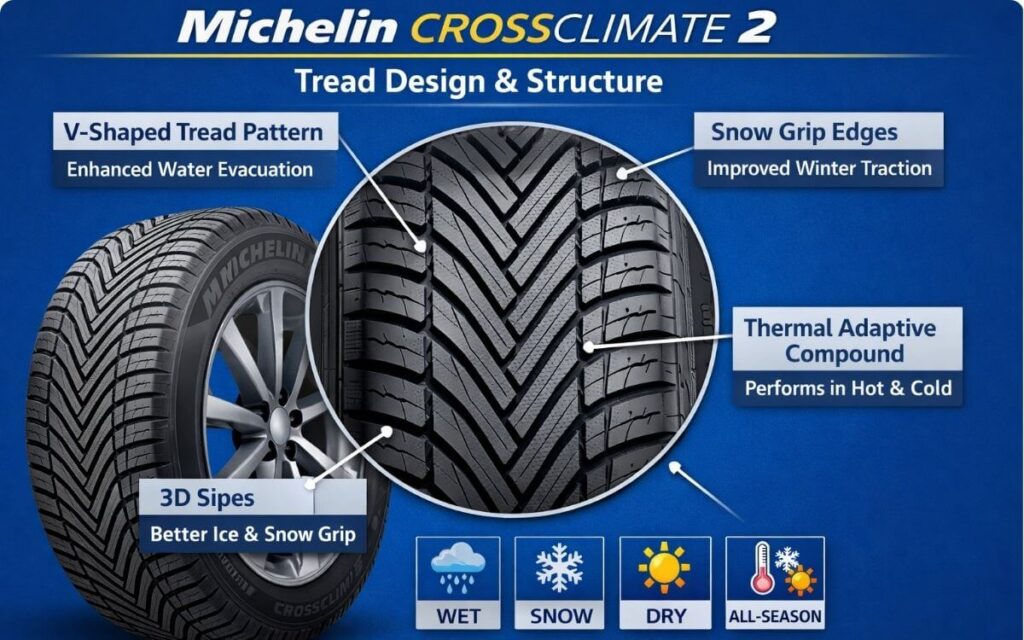
What makes the CrossClimate 2 stand out is that Michelin did not build it like a normal all-season tire. It is designed to handle changing weather more confidently, so you get one tire that can stay useful in dry weather, rain, and light snow without feeling like a weak middle ground. Michelin says the tire is made for all-weather driving, has the 3PMSF snow rating, and is built for dry, wet, and snowy conditions.
One of the biggest design choices is the V-shaped tread. In simple terms, that shape helps push water away from the tire, which lowers the chance of hydroplaning in heavy rain. Michelin also says this tread design helps the tire stay balanced in snow and ice, so the car feels more settled when the road gets slippery.
Another important part is Michelin’s Thermal Adaptive Tread Compound. That is just a fancy way of saying the rubber is meant to stay useful as temperatures change, instead of acting too stiff in the cold or too soft in the heat. Michelin says this helps the tire keep a steady grip in dry, wet, and snowy weather.
The CrossClimate 2 also uses small tread details that help the tire bite into the road. Michelin’s winter-tire guidance explains that sipes are tiny cuts in the tread that improve grip, and Michelin’s 3D sipe design is meant to add stiffness so the tread does not feel too loose while still helping traction. That matters most when roads are wet, cold, or lightly covered in snow.
For comfort, Michelin uses Piano Acoustic Tuning to reduce tread noise. Michelin says this is designed to keep road noise down on both new and worn tires, which is a nice benefit for long drives. That said, noise is still something some drivers notice depending on the car, the road surface, and tire wear, so it is not silent for everyone.
Michelin CrossClimate 2 Real-World Performance Review
Dry Performance
On dry roads, the Michelin CrossClimate 2 feels stable and predictable, which is exactly what most drivers want for everyday use. Braking is strong and confidence-inspiring, especially in normal city and highway driving.
At higher speeds, the tire stays planted. You don’t feel the car wandering or losing control easily, even during quick lane changes. That makes it a good choice for daily commuting and long highway trips.
Where it feels a bit different is in cornering. If you take sharp turns faster than usual, the tire doesn’t feel as sporty or responsive as a performance-focused tire. It leans more toward safety and control rather than sharp handling.
This isn’t really a flaw—it’s a trade-off. The CrossClimate 2 is built to handle many types of weather, not to be a sporty tire. For most drivers, that means it feels secure and easy to drive, even if it’s not exciting on twisty roads.
Wet Performance
In wet conditions, the Michelin CrossClimate 2 feels confident and predictable. Braking is one of its strong points. Even after some wear, it still stops well on rainy roads, which is something many cheaper tires struggle with.
Driving through standing water is also less stressful. The grooves in the tread help push water away from the tire, so the car keeps better contact with the road. This reduces the chances of hydroplaning, especially at highway speeds.
In normal driving, the grip feels secure. You can take turns and drive in the rain without feeling like the car is about to slide.
If you push the tire hard—like taking a fast corner on a wet road—you may notice a bit of understeer. That simply means the car starts to drift slightly wider than expected. It’s not sudden or dangerous, but it shows the tire is tuned more for safety and stability than aggressive driving.
For everyday use in rain, though, it does its job very well and gives a strong sense of control.
Snow & Winter Performance
In light snow and cold weather, the Michelin CrossClimate 2 performs better than most all-season tires. It grips the road well when starting, stopping, and turning, which makes winter driving feel less stressful.
On roads with a thin layer of snow or slush, it stays controlled and predictable. You don’t get that “slipping” feeling as easily as you would with a basic all-season tire. For many drivers, this is enough to handle everyday winter conditions without worry.
Because of that, it can replace winter tires in areas with mild winters. If your roads are usually cleared quickly and snow isn’t too deep, you likely won’t feel the need to switch tires every season.
That said, it’s not a full replacement for a dedicated winter tire. In deep snow or icy conditions, it doesn’t have the same level of grip. If you regularly drive in harsh winter weather, a proper winter tire will still give you more control and safety.
For most people dealing with occasional snow, though, it strikes a very practical balance between convenience and winter performance.
Comfort & Noise
The CrossClimate 2 is usually a comfortable tire for everyday driving. Michelin’s own review summary says drivers describe it as having a smooth, quiet ride and responsive handling on dry roads.
In normal use, that means it should feel calm on the highway and not overly harsh over typical city roads. That makes it a good fit for people who care more about a relaxed drive than sporty road feel.
The small drawback is that noise can build up as the tire wears, and Michelin’s review section includes a few owner comments saying the tires became louder over time. That does not seem to be the norm for everyone, but it is worth knowing before buying.
For most drivers, the comfort level is one of the tire’s strengths. It is quiet enough for daily use, but not every road surface will feel the same, and long-term noise can depend on the car, alignment, and how the tire is maintained.
Tread Life & Durability
The Michelin CrossClimate 2 is built to last longer than many cheaper tires. Michelin backs it with a 60,000-mile treadwear warranty, which gives some confidence that it won’t wear out too quickly.
In real use, many drivers find that the tire holds up well over time, especially if it’s maintained properly. Simple things like regular rotation and keeping the right air pressure can make a big difference in how evenly it wears.
The rubber compound is designed to keep its grip even as the tire ages. That means it doesn’t just last long—it stays usable for longer, which is just as important.
The trade-off is the higher upfront cost. You pay more at the start, but the longer lifespan can balance that out over time. If you skip maintenance or drive aggressively, though, you may not get the full life out of it.
Fuel Efficiency
The Michelin CrossClimate 2 is not the most fuel-efficient tire in its class, but the difference is usually small in everyday driving.
Some drivers report a slight drop in fuel economy after switching to it. This can happen because the tire is built for stronger grip in wet and cold conditions, which sometimes adds a bit more rolling resistance.
In simple terms, that means the engine may need to work slightly harder compared to a very fuel-focused tire. On most cars, the difference is not dramatic, but it can be noticeable over long distances or daily highway use.
For many drivers, this is an acceptable trade-off. You are getting better all-weather safety and control, but you may spend a little more on fuel over time.
Michelin CrossClimate 2 Problems (What You Should Know)
The Michelin CrossClimate 2 is a very capable tire, but it does come with a few downsides that are worth understanding before you buy it. None of these are deal-breakers for most drivers, but they can matter depending on your budget and driving conditions.
One of the first things people notice is the price. It costs more than many regular all-season tires. For some buyers, that higher upfront cost feels heavy, especially if they are used to cheaper options. The value is there over time, but you do pay more at the beginning.
Another small issue is road noise. In many cars, the tire feels quiet and smooth. But in some vehicles, especially on rough roads, you may hear a bit more tire sound than expected. It is not extremely loud, but it is noticeable enough for some drivers to mention it.
Fuel economy is another area where there can be a slight change. Because this tire is built for strong grip in different weather conditions, it may create a little more rolling resistance than simpler touring tires. In real driving, this can lead to a small drop in mileage for some users.
It is also important to be realistic about winter performance. The CrossClimate 2 handles light snow very well for an all-season tire. However, in deep snow or icy roads, it cannot fully match a dedicated winter tire. That difference becomes clear in more extreme winter conditions.
Overall, this tire is designed to be a balanced option rather than a perfect specialist. It gives you safety and performance in many conditions, but not maximum performance in every situation.
In simple terms, it works very well for most everyday driving, but like any tire, it has trade-offs you should understand before making a decision.
Read In deatiled About CrossClimate Problems
Pros and Cons of the CrossClimate 2
Here is a simple, honest look at what the Michelin CrossClimate 2 does well—and where it falls a bit short. This should help you decide if it fits your driving needs.
Overall, it is built more for safety, comfort, and all-weather confidence than for performance driving or budget savings.
Real User Experience
When you look at real drivers talking about the Michelin CrossClimate 2, one idea comes up again and again: it feels balanced, but not perfect.
A common way people describe it is something like, “They’re pretty good everywhere… but everything is a compromise.” That sums it up well. The tire doesn’t try to be the best in one single area. Instead, it tries to be good in many conditions at once.
For daily driving, most people are very satisfied. Commuting in rain, dry roads, or light snow feels safe and predictable. It gives drivers confidence, especially if they don’t want to worry about switching tires every season.
At the same time, it is not a tire that feels exciting or sporty. Drivers who expect sharp handling or very smooth luxury-level comfort sometimes notice it feels more “practical” than “premium performance.”
So the main takeaway from real users is simple: it’s a tire built for peace of mind, not performance thrills. It works best for people who just want one set of tires that can handle almost everything without stress.
Comparison with Alternatives
When people look at the Michelin CrossClimate 2, they usually compare it with a few other popular all-season and all-weather tires. Each one has a slightly different focus, so the “best” choice really depends on what you care about most.
Goodyear Assurance WeatherReady
Goodyear Assurance WeatherReady is probably the closest competitor. It is also made for year-round driving and handles snow better than a normal all-season tire.
From what most drivers and tests show, Goodyear feels a bit more balanced in everyday comfort and can feel slightly more relaxed on the road. The CrossClimate 2, on the other hand, is often stronger in deep rain and snow grip, especially when stopping quickly on slippery roads.
In simple terms: Goodyear feels a bit softer, while Michelin feels a bit more confident in bad weather.
Vredestein HiTrac All Season
Vredestein HiTrac All Season is more of a comfort-focused tire. It is usually smoother and quieter in normal driving compared to the CrossClimate 2.
However, it is not as strong in winter conditions. In light snow or icy roads, it does not give the same level of confidence. It is better suited for drivers who mostly see dry and wet roads, not regular winter weather.
So the choice here is simple: more comfort with Vredestein, more all-weather safety with Michelin.
Kumho Majesty 9 Solus TA91
Kumho Majesty 9 Solus TA91 is a more budget-friendly option. It focuses on giving a comfortable ride at a lower price.
In normal city and highway driving, it can feel fine. But compared to the CrossClimate 2, it is clearly weaker in snow, wet braking, and long-term confidence in harsh weather.
This tire makes sense if you mainly drive in mild weather and want to save money. But if safety in rain and snow matters more, the Michelin is in a different class.
Simple takeaway
If you want the safest all-weather performance, the CrossClimate 2 stands at the top. If you want a softer ride, Goodyear or Vredestein may feel better. If budget is the main concern, Kumho gets the job done—but with more compromises in bad weather.
Read More: Cooper Endeavor Plus Review
Value for Money
The Michelin CrossClimate 2 is not a cheap tire. The price at the start is higher than many normal all-season options, and that can make some buyers hesitate.
But the cost story is not just about what you pay on day one. It’s also about what you avoid spending later.
One big saving is that you do not need a separate set of winter tires. For people in areas with changing seasons, that means no extra tire purchase, no storage costs, and no seasonal tire change fees. Over a few years, that adds up.
Another point is durability. The tire is designed to last longer than many budget options when it is properly maintained. That means fewer replacements over time, which also helps balance the higher starting price.
So while the upfront cost feels high, the long-term picture is different. For most everyday drivers, especially those dealing with rain, cold, and occasional snow, it often works out as better value over the life of the tire rather than just at the purchase moment.
Who Should Buy Michelin CrossClimate 2?
The Michelin CrossClimate 2 is made for drivers who want one tire that can handle most weather conditions without switching sets during the year. It is built more for safety and convenience than performance or low cost.
Perfect for:
This tire is a great fit for daily commuters who drive in mixed weather—dry roads, heavy rain, and occasional cold conditions. It keeps driving simple and predictable for everyday use.
It also works very well for families who care more about safety and stability than sporty driving feel. The added confidence in rain and light snow makes it a reassuring choice for school runs, road trips, and city driving.
If you live in a place with mild winters, where snow comes but doesn’t stay for long, this tire can often replace the need for seasonal tire changes.
Avoid if:
If you enjoy sporty driving or want sharp, fast cornering response, this tire may feel a bit calm and less exciting. It focuses more on control than performance.
It is also not the best choice for areas with very harsh winters, heavy ice, or deep snow. In those conditions, a dedicated winter tire will still perform better.
And finally, if your main goal is the lowest possible price, this tire may feel expensive compared to basic all-season options.
Read More: Michelin CrossClimate 2 vs Defender 2
Final Verdict
The Michelin CrossClimate 2 is one of the most convincing all-weather-style tires you can buy today. It stands out for wet-road confidence, strong snow performance for its category, good ride quality, and long tread life. Michelin’s official testing claims and warranty support make it even more attractive, while independent consumer data shows that real drivers are generally very happy with it.
It is not the best tire for every single situation, and that honesty matters. But for most drivers who want one tire that can handle a wide range of weather with minimal stress, the CrossClimate 2 is an easy recommendation. If your life includes rain, cold weather, and occasional snow, this tire belongs near the top of your shortlist.
FAQs ABout Michelin CrossClimate 2 Review
Is the Michelin CrossClimate 2 good in snow?
Yes. It carries the 3PMSF symbol and is widely regarded as one of the strongest snow-capable choices in the all-season category. Michelin also says it is suitable for occasional winter conditions, while still recommending dedicated winter tires for severe winter driving.
How long does the Michelin CrossClimate 2 last?
Michelin backs it with a 60,000-mile warranty and says it can last up to 15,000 miles longer than four leading competitors in its testing. Consumer survey data from Tire Rack also points to strong treadwear.
Is Michelin CrossClimate 2 noisy?
Most drivers describe it as comfortable, and many reviews are positive about ride quality, but some users do notice a bit more road noise than they would with quieter touring tires. Tire Rack’s data shows good but not perfect noise scores.
Is the Michelin CrossClimate 2 worth the price?
For drivers who want safety, all-weather confidence, and long tread life, yes, it often is. For drivers who only need basic dry-road commuting, a less expensive tire may be enough. The value depends on whether you will use the tire’s wet-weather and winter strengths.
Can Michelin CrossClimate 2 replace winter tires?
Sometimes, but not always. It can be a very good choice for light to moderate winter conditions, but Michelin says dedicated winter tires are still better for frequent snow-covered and icy roads.
