Michelin CrossClimate 2 vs Pilot Sport All Season 4
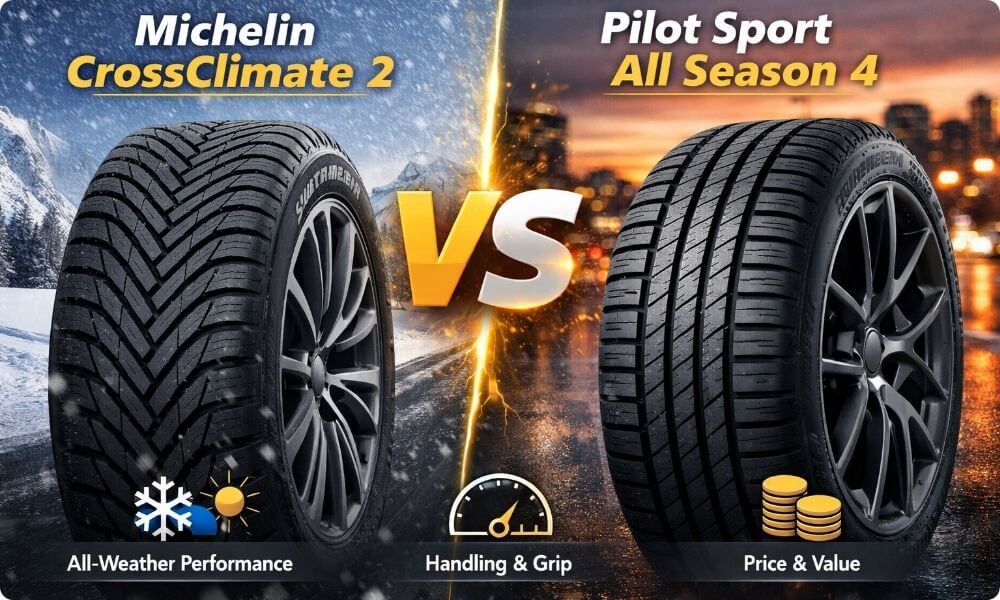
If you’re shopping for new tires, you’ve probably noticed that the Michelin CrossClimate 2 vs Pilot Sport All Season 4 are often mentioned together. Both are all-season tires from the same trusted brand, but they are designed for very different priorities.
The CrossClimate 2 is built for all-weather safety, giving reliable traction in rain, light snow, and colder temperatures. The Pilot Sport All Season 4, on the other hand, is performance-focused, designed to give sharper handling, responsive steering, and strong grip on dry and wet roads.
This comparison isn’t about which tire is better overall—it’s about helping you choose the tire that best fits your driving style, your vehicle, and the weather you face most often. By the end of this guide, you’ll understand the differences clearly and be able to make a confident choice.
Quick Verdict (Busy Readers)
If you want a safe, reliable tire for all weather, including light snow and rainy conditions, the Michelin CrossClimate 2 is the better choice. It offers a comfortable, quiet ride, good traction in cold weather, and confidence year-round. If you want sharper handling, quick steering response, and strong performance on dry and wet roads, and you mostly drive in mild conditions, the Michelin Pilot Sport All Season 4 is a great option.
Choose Michelin CrossClimate 2 if:
- You drive in areas with rain, slush, or light-to-moderate snow.
- You want one tire for year-round use.
- Comfort and quieter driving are important.
- You drive an AWD, FWD, or heavier vehicle where stability is key.
Choose Michelin Pilot Sport All Season 4 if:
- You mostly drive in dry or wet conditions with little snow.
- You want sporty handling and quick, responsive steering.
- You drive a performance sedan, coupe, or lighter SUV.
- You enjoy a firmer ride that gives more feedback on the road.
Bottom line: Both tires are excellent, but your choice should match your climate, driving style, and vehicle type. This quick guide helps you make the right decision fast, without needing to read the full post.
Tire category breakdown — all-weather vs ultra-high-performance all-season
Why tire categories matter more than brand
Tire brands are important, but the type of tire tells you what it was built to do. Choosing between two tires from the same maker usually comes down to their category: one might be built for year-round safety in cold and wet conditions, while the other is built for sporty handling and dry grip. Think of the category as the tire’s job description.
What are all-weather tires (3PMSF rated)?
All-weather tires are made to work well across the year, including in snow and slush. A simple mark on the sidewall — the three-peak mountain with a snowflake (3PMSF) — means the tire passed tests for winter traction. That doesn’t make it a full winter tire, but it does mean it will usually stop and start better in snow than a normal all-season tire. The Michelin CrossClimate 2 is an example of an all-weather tire that carries the 3PMSF mark.
Key points:
- 3PMSF = tested and certified for better snow traction.
- Good for places with regular light-to-moderate snow.
- Not a substitute for dedicated winter tires in extreme ice or deep snow.
What are ultra-high-performance all-season tires?
Ultra-high-performance (UHP) all-season tires focus on grip, steering feel, and handling — especially on dry and wet roads. They’re made for drivers who want sporty responses from their car year-round, but they usually trade some winter ability for sharper handling. The Michelin Pilot Sport All Season 4 is built this way: strong on dry and wet grip, but not aimed at heavy snow performance.
Key points:
- Built for performance: sharper steering, shorter braking on dry pavement.
- Typically not 3PMSF certified, so weaker in snow than all-weather tires.
- Good fit for sporty cars and drivers who prioritize handling over winter traction.
Common misconceptions about “all-season” tires
- “All-season” does not mean “perfect for every winter.” Many all-season tires are fine for mild winters, but not for heavy snow or ice.
- A tire with M+S (mud and snow) stamped on it is not the same as 3PMSF certified; M+S is an older, looser label.
- A performance all-season that handles light snow well still won’t match a proper winter tire in serious cold. If you frequently drive on icy or deep snowy roads, dedicated winter tires are safer.
Michelin CrossClimate 2 Overview
Below is a short, easy-to-read section you can drop into your blog. Language is plain and practical so readers with no tire knowledge can understand and act on it.

What the CrossClimate 2 is designed for
The CrossClimate 2 is made to be a safe, reliable tire you can use all year — including in light-to-moderate snow. It’s not a full winter tire, but it’s built to give better traction in cold, wet, and snowy weather than a typical “all-season” tire.
Target driver profile
- People who want one tire all year and live where winters are usually mild to moderate.
- Commuters and families who value safety in rain and light snow more than sporty handling.
- Drivers who don’t want to swap between summer and winter tires every season.
Ideal climates and driving conditions
- Areas with rainy seasons and occasional snow or slush.
- Places where winter storms are not extreme (not consistently deep snow or heavy ice).
- Everyday driving: commuting, errands, and highway trips.
Key technologies & design
Directional V-shaped tread (what it does)
The tread pattern looks like big V shapes across the tire. Think of the V as little channels that push water and slush away from the tire so it keeps contact with the road. That helps with braking and keeps the car more stable in wet conditions.
3PMSF certification (what the mark means)
You may see a small symbol on the tire that looks like a mountain with a snowflake. That’s called 3PMSF. It means the tire passed tests for winter traction — basically, it performs better in snow than tires that don’t have that mark. It doesn’t mean “as good as a full winter tire,” but it’s a helpful sign for safer winter driving.
Rubber behavior in cold weather (simple)
Rubber gets harder when it’s cold. The CrossClimate 2 uses a rubber mix that stays a bit softer in low temperatures than sport tires. That extra softness helps the tire grip the road better in cold weather and in light snow.
Strengths — what the CrossClimate 2 does well
- Snow and slush traction: Better stopping and pulling in light to moderate snow than many standard all-season tires.
- Wet braking and hydroplaning resistance: V-shaped tread and design help channel water away, reducing the chance of sliding on wet roads.
- Year-round confidence: A single tire you can keep on through most seasons without feeling unsafe in winter weather.
Tradeoffs — what you give up
- Reduced steering sharpness: It won’t feel as crisp or sporty when you push the car through tight turns compared with performance tires.
- Firmer ride feel: Some drivers notice a slightly stiffer ride than softer-comfort-focused tires.
- Small MPG impact for some cars: Rolling resistance can be a bit higher, which in some cases may lower fuel economy by a small amount.
Michelin Pilot Sport All Season 4 overview
What the Pilot Sport All Season 4 is designed for
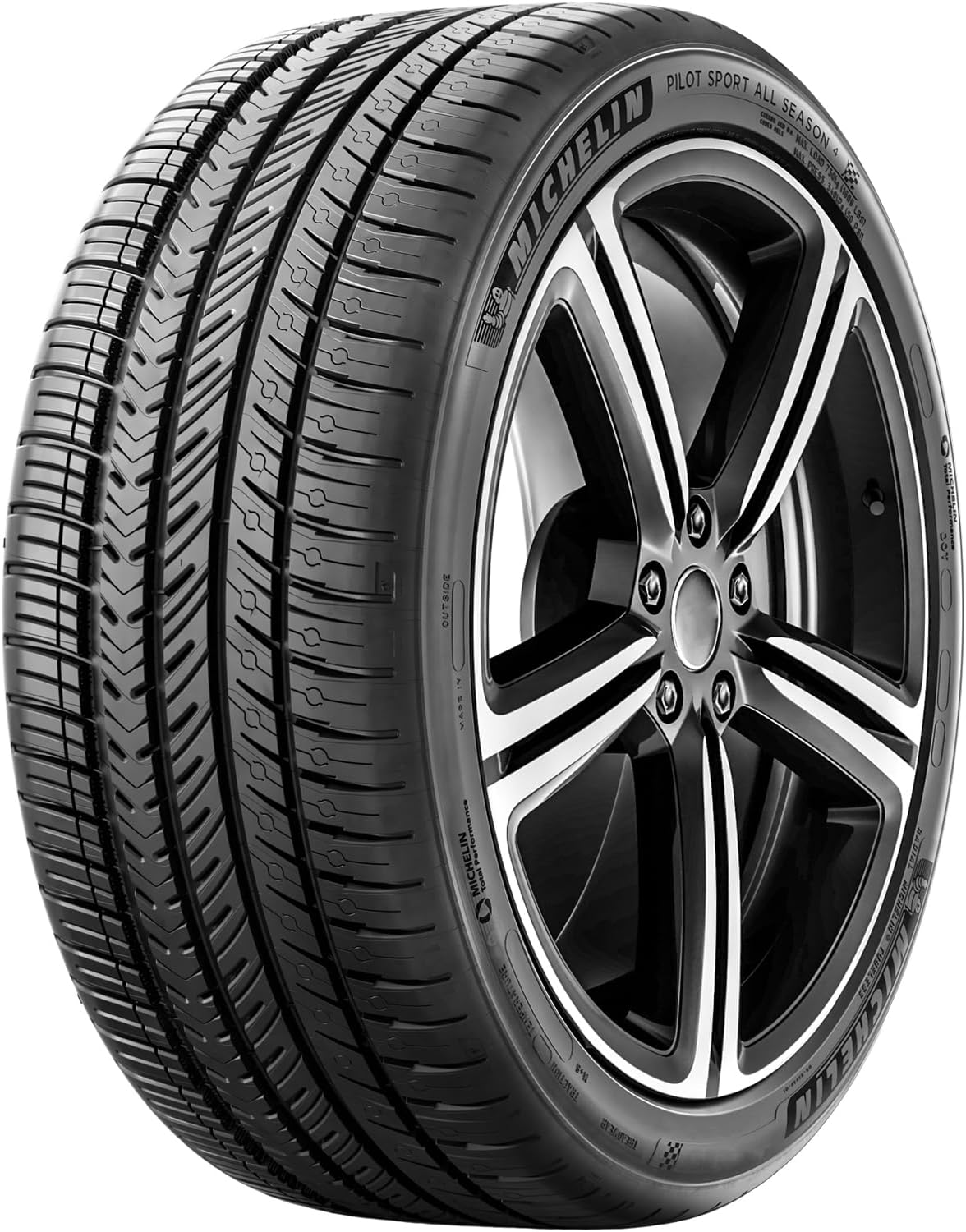
The Pilot Sport All Season 4 (AS4) is built for drivers who want a sporty feel and strong grip most of the year. It aims to deliver precise steering and confident braking on dry and wet roads, while still being usable in light snow when needed.
Who this tire is best for (target driver profile)
- Drivers who enjoy a sharper, more responsive steering feel.
- People who drive sporty sedans, coupes, or performance versions of crossover/SUVs.
- Folks who want one set of tires year-round but don’t face heavy snow or long periods of ice.
Vehicles it pairs best with
- Sport sedans and performance coupes (e.g., BMW 3-series, Audi A4).
- Performance trims of crossovers and luxury vehicles.
If you drive a car where handling and feel matter, this tire was made with that in mind.
Key technologies & what they mean
Asymmetric tread layout
The tread (the patterned part that touches the road) is not the same across the whole tire — one side is built to help grip in corners, the other side helps with braking and water evacuation. In short: the pattern balances steering feel and wet performance.
High-grip compound for dry and wet performance
The rubber mix in the AS4 is designed to stick well to the road at higher temperatures. That helps the car stop shorter and corner more confidently on dry and wet pavement. The compound also has features to help in rain so you’re less likely to hydroplane.
Focus on steering precision and feedback
Construction choices (tire shape, internal layers, tread pattern) are tuned so the tire responds quickly when you turn the wheel. That gives a more direct, “connected” feeling while driving.
Strengths — what this tire does well
- Excellent dry handling: Very good grip and cornering feel for sporty driving.
- Strong wet grip: Designed to brake and corner well in rain; customers and tests praise its wet performance.
- Responsive steering feel: Feels sharp and direct compared with comfort-oriented tires.
Tradeoffs — what you should know before buying
- Limited snow performance: It can handle light snow, but it’s not intended for heavy snow or long winter conditions. Don’t expect winter-tire levels of traction.
- Cold-temperature grip drop-off: Like many performance tires, the rubber gets firmer in cold weather and loses some grip when temperatures are low.
- Not 3PMSF certified: The AS4 is not marked with the mountain-snowflake symbol, so it hasn’t passed the official winter traction test used for all-weather/winter performance. If you need strong winter traction, look for a 3PMSF tire or a dedicated winter tire.
Head-to-Head Performance Comparison: Michelin CrossClimate 2 vs Pilot Sport All Season 4
Dry road performance
On dry pavement, the Pilot Sport All Season 4 usually feels firmer and more planted. That means when you accelerate from a stop, the Pilot Sport grips the road a little better and gets power down with less wheelspin. In corners the Pilot Sport holds its line more confidently; you’ll feel less body roll and more stability when you push through turns.
The steering also feels more direct with the Pilot Sport — when you turn the wheel the car responds quickly and you get clearer feedback about what the front tires are doing. The CrossClimate 2 still performs fine on dry roads for everyday driving, but it won’t be as sharp or as quick to respond as the Pilot Sport.
Drivers who value sporty handling — people with performance sedans, coupes, or anyone who enjoys a more connected steering feel — will notice the difference most. If you drive conservatively or mostly commute, the CrossClimate 2’s dry performance will be perfectly adequate.
Wet road performance
In the rain both tires are designed to be safe, but they go about it differently. The CrossClimate 2’s V-shaped tread channels water away from the contact patch, so it tends to stop and pull more predictably in slush and heavy wet conditions.
The Pilot Sport uses a performance-focused tread and rubber that give it shorter braking distances on wet pavement in many tests, and it resists hydroplaning well when water depth is moderate.
If you regularly drive in heavy, standing water, you’ll feel more confidence in a tire that evacuates water efficiently — that’s where the CrossClimate’s design helps. If your priority is quick wet stopping and sharper handling in rain at higher speeds, the Pilot Sport often has the edge.
Snow and winter performance
Light snow is where the CrossClimate 2 shows its true advantage. Its compound and tread design stay softer at lower temperatures and the tread pattern bites into snow better, so it will accelerate, brake, and steer more reliably in slushy or packed-snow conditions.
In deeper snow or on clear ice, neither tire matches a dedicated winter tire, but the CrossClimate 2 still gives more traction than a typical performance all-season. Cold-weather rubber behavior explains much of this: rubber gets stiff in low temperatures, and the CrossClimate 2 uses a blend that resists that stiffening so it keeps more grip when it’s cold.
The Pilot Sport’s rubber is tuned for warm grip, so its performance drops more noticeably as temperatures fall. In short, if you face regular snowy roads or temperatures that stay near or below freezing, the CrossClimate 2 will feel safer and more predictable; if your winters are mild and snow is rare, the Pilot Sport will be fine for occasional light snow but isn’t the safer choice for true winter conditions.
Practical takeaway
Choose the Pilot Sport All Season 4 if you want sharper dry handling, quicker steering, and shorter braking distances on dry and wet roads, especially at higher speeds. Choose the CrossClimate 2 if you need better year-round security in rain, slush, and light-to-moderate snow and you prefer a tire that keeps working well as temperatures drop.
Ride Comfort, Noise & Daily Driving: Michelin CrossClimate 2 vs Pilot Sport All Season 4
Road Noise Comparison
When driving, the sound of the tires on the road can make a big difference. On the highway, both the CrossClimate 2 and the Pilot Sport All Season 4 are generally quiet, but the CrossClimate 2 tends to absorb more road noise because of its tread design.
In city driving with frequent stops and starts, you might notice the Pilot Sport produces slightly more noise over rough pavement, but it’s still reasonable for everyday use.
The V-shaped tread of the CrossClimate 2 helps reduce the sound of water and slush being pushed out from under the tire, while the Pilot Sport’s performance-focused tread can transmit a bit more vibration to the cabin.
Ride Quality
The feel of the ride depends on how stiff or soft the tire is. The CrossClimate 2 gives a slightly firmer, more cushioned ride that absorbs bumps in the road, making it comfortable for longer trips.
The Pilot Sport All Season 4 is stiffer and more focused on handling, so you’ll feel the road more, which is great for sporty driving but can feel less smooth on uneven roads.
For everyday driving, the CrossClimate 2 usually feels more comfortable, while the Pilot Sport prioritizes feedback and responsiveness over soft ride comfort.
Daily Use Scenarios
For commuting, both tires work well, but the CrossClimate 2’s comfort and lower noise make it easier for daily city traffic.
On road trips, the CrossClimate 2 can keep passengers more comfortable over long hours, while the Pilot Sport provides a sportier, more engaging feel for drivers who enjoy performance.
In stop-and-go traffic, both tires perform safely, but the CrossClimate 2’s softer ride and better wet traction can make a small difference in comfort and confidence.
Summary: If your priority is quiet, smooth daily driving and long-distance comfort, the CrossClimate 2 is the better choice. If you enjoy a sportier feel and sharper feedback while driving, the Pilot Sport All Season 4 is more suited for you, even if the ride is firmer.
Tread Life, Durability & Cost of Ownership: Michelin CrossClimate 2 vs Pilot Sport All Season 4
Treadwear Ratings & Real-World Longevity
Every tire has a treadwear rating from the manufacturer, which gives an estimate of how long the tire might last under normal driving. The CrossClimate 2 and Pilot Sport All Season 4 are designed for different priorities, so their lifespan varies.
The CrossClimate 2 tends to last a bit longer in everyday driving because it focuses on all-weather safety rather than sporty handling. The Pilot Sport, built for performance, may wear faster if you drive aggressively or take sharp turns often.
Both tires come with manufacturer warranties. These usually cover defects in materials or workmanship for a set number of miles. While warranties don’t guarantee how long the tire will last for your driving style, they do provide peace of mind.
In real-world experience, most drivers find that the CrossClimate 2 holds up well over time, especially in wet or winter conditions, while the Pilot Sport may need replacement sooner if used frequently for spirited driving.
Fuel Efficiency Impact
Tires affect how much fuel your car uses because of something called rolling resistance — basically, how hard the tire is to roll along the road.
The CrossClimate 2 has slightly higher rolling resistance than the Pilot Sport, which means it could use a little more fuel over time, but the difference is usually small for normal commuting.
The Pilot Sport is optimized for performance, so rolling resistance is a bit lower, which can save a few miles per gallon, especially on long highway drives.
You’ll notice the difference most if you drive a lot every year. For occasional drivers or city commuters, the MPG change is minor and likely not noticeable.
Pricing & Long-Term Value
The upfront cost of these tires can differ, with the Pilot Sport usually priced higher because it’s a performance tire. The CrossClimate 2 may cost a little less, but because it can last longer in everyday conditions, its long-term value can be better for many drivers.
Which tire offers better value depends on your driving habits. If you prioritize long-lasting, all-weather reliability and fewer tire changes, the CrossClimate 2 is usually the smarter choice. If you prioritize performance, handling, and sporty driving and are okay with replacing tires more often, the Pilot Sport All Season 4 may be worth the extra cost.
Climate-Based Recommendations
Choosing the right tire often depends more on your local weather than the car you drive. Here’s a guide to help you decide between the Michelin CrossClimate 2 and the Pilot Sport All Season 4 based on climate.
Snow-Prone Regions
If your area gets frequent snow, slush, or icy roads, the CrossClimate 2 is the better choice. Its tread and rubber are designed to handle cold temperatures and light-to-moderate snow, giving you more traction and confidence in winter conditions. The Pilot Sport All Season 4 is not 3PMSF certified, so it won’t perform as safely in snow.
Rain-Heavy Climates
Both tires handle rain well, but the CrossClimate 2’s V-shaped tread is designed to move water away from the tire, which helps reduce the chance of sliding in heavy rain. The Pilot Sport also grips wet roads effectively, but if your priority is consistent safety in standing water or wet streets, the CrossClimate 2 has a slight advantage.
Mild Winters
In regions where winters are short and snow is rare, either tire works. The CrossClimate 2 will give peace of mind if temperatures drop and there’s occasional snow, while the Pilot Sport provides better dry handling and sportier performance when it’s mostly warm or wet.
Warm Climates with Occasional Cold Snaps
If you live somewhere that’s usually warm but gets the occasional cold day, the Pilot Sport All Season 4 is a good option. It performs very well in dry and wet conditions, but remember it loses some grip when it gets cold. The CrossClimate 2 is more forgiving in colder temperatures, so if safety during those rare cold days is important, it’s worth considering.
Simple Climate Decision Guide
| Climate / Weather | Recommended Tire | Notes |
| Frequent snow / wintery roads | CrossClimate 2 | Better snow traction, safer in cold and slush |
| Heavy rain / wet conditions | CrossClimate 2 | V-shaped tread channels water, reduces hydroplaning |
| Mild winters / occasional snow | Either tire | CrossClimate safer in cold; Pilot Sport offers sportier handling |
| Mostly warm with rare cold snaps | Pilot Sport All Season 4 | Great dry and wet performance; CrossClimate safer for rare cold days |
Actionable takeaway: Match the tire to your local weather first. If you see regular snow or rain, the CrossClimate 2 is the safer year-round choice. If your winters are mild and you value sporty driving, the Pilot Sport All Season 4 is the better fit.
Vehicle Type Considerations
Choosing the right tire isn’t just about weather — the type of vehicle you drive matters too. Things like drivetrain (how power is sent to your wheels) and vehicle weight affect how a tire performs and what’s safest for your car.
AWD Vehicles
All-wheel-drive (AWD) vehicles send power to all four wheels, which helps with traction in slippery conditions. For AWD cars, the CrossClimate 2 is often the better choice if you drive in rain, snow, or cold weather.
Its all-weather design helps keep the car stable and confident on slippery roads. The Pilot Sport All Season 4 is fine in dry and wet conditions but offers less traction in snow, so it’s best for AWD drivers in areas with mild winters.
FWD Sedans
Front-wheel-drive (FWD) cars have power going to the front wheels, which can make them more prone to understeer (sliding wide) in wet or snowy conditions. Using a tire with good all-weather performance, like the CrossClimate 2, helps improve control in slippery conditions.
If you mostly drive on dry or wet roads with little snow, the Pilot Sport All Season 4 provides better handling and a sportier feel.
Performance Cars
Cars built for performance, like sport sedans or coupes, benefit from tires that give precise steering and better cornering. The Pilot Sport All Season 4 is designed for this purpose — it offers sharper handling, quicker response, and more control at higher speeds.
The CrossClimate 2 works safely for these cars too but prioritizes comfort and all-weather safety over sporty handling.
Crossovers and SUVs
Heavier vehicles like crossovers and SUVs need tires that can handle more weight and keep the vehicle stable. The CrossClimate 2 works well here because it is durable, safe in a variety of conditions, and offers good ride comfort.
The Pilot Sport All Season 4 can also be used on lighter SUVs, but heavier or winter-prone SUVs may benefit more from the CrossClimate 2’s all-weather performance.
Actionable takeaway: Consider both your vehicle type and how you drive. If your car is AWD, heavier, or you face slippery roads, the CrossClimate 2 is usually the safer choice. If you drive a performance-focused car in mostly dry conditions and enjoy sporty handling, the Pilot Sport All Season 4 is likely a better fit.
Final Recommendation: Which Tire Should You Choose?
After looking at performance, comfort, weather, and vehicle type, choosing between the Michelin CrossClimate 2 and the Pilot Sport All Season 4 comes down to your priorities and driving conditions. Neither tire is “wrong”—each is built for different needs.
Choose Michelin CrossClimate 2 if:
- You live in an area with regular rain, slush, or light-to-moderate snow.
- You want one tire you can safely use all year without swapping seasons.
- Comfort and a quieter, smoother ride are important to you.
- You drive an AWD car, FWD sedan, or heavier vehicle where stability in wet or slippery conditions matters.
- You prefer a tire that is forgiving in cold temperatures and keeps traction when it’s chilly.
Choose Michelin Pilot Sport All Season 4 if:
- You mostly drive in dry or wet conditions, with little to no snow or ice.
- You want sharper handling, quicker steering response, and more precise cornering.
- Your car is a performance sedan, coupe, or lighter SUV where a sporty feel is a priority.
- You enjoy driving and want a tire that gives feedback and a connected feel on the road.
- You don’t mind a slightly firmer ride or replacing tires sooner if used aggressively.
Expert Notes & Trusted Testing References
When comparing tires, it helps to look at results from independent testing organizations. Groups like Tire Rack and Consumer Reports regularly test tires in dry, wet, and snowy conditions. They measure things like braking distance, cornering stability, and hydroplaning resistance.
These professional tests match what most drivers experience in real life. For example, if a tire stops short in wet tests, you can expect it to feel more confident in rainy conditions during your daily driving. Similarly, a tire that performs well in light snow testing usually gives better traction on snowy roads than a standard all-season tire.
Using these trusted sources helps you make an informed choice without relying solely on marketing claims. You don’t need to read every test result—just know that tires like the Michelin CrossClimate 2 and Pilot Sport All Season 4 have been evaluated by experts, and their strengths and weaknesses in tests line up closely with real-world performance.
Conclusion: Making the Right Tire Decision With Confidence
Choosing the right tire doesn’t have to be confusing. The key is to think about your driving conditions, your vehicle, and what matters most to you.
If you need a tire that is safe in rain, slush, and light snow, provides a comfortable ride, and works year-round, the Michelin CrossClimate 2 is the better choice. It’s especially helpful in areas with winter weather and for drivers who want peace of mind on wet or slippery roads.
If you prioritize sporty handling, quick steering response, and confident dry and wet performance, and you drive mostly in mild weather, the Michelin Pilot Sport All Season 4 is a great fit. It’s perfect for performance cars, sporty sedans, or drivers who enjoy a more connected, responsive feel on the road.
Remember, neither tire is “wrong.” Each is designed for different priorities. The most important thing is to pick the tire that matches your climate, vehicle type, and driving style. By thinking about these factors, you can make a confident decision and enjoy safer, more comfortable driving all year long.
FAQs
Can the CrossClimate 2 replace winter tires?
The CrossClimate 2 can handle light-to-moderate snow and cold temperatures, so for many drivers it works well year-round. However, it is not a full winter tire. In areas with heavy snow or ice, dedicated winter tires are still safer.
Is the Pilot Sport All Season 4 good in light snow?
The Pilot Sport AS4 can handle occasional light snow, but it is designed mainly for dry and wet roads. It does not have the 3PMSF winter certification, so it is not ideal for regular snowy conditions.
Which tire is quieter over time?
The CrossClimate 2 tends to stay quieter during normal driving, thanks to its tread design that reduces road noise. The Pilot Sport AS4 is slightly louder, especially on rough pavement, because it is designed for performance and sharper handling.
Which tire is safer year-round?
For overall year-round safety, especially in wet, cold, or snowy conditions, the CrossClimate 2 has the advantage. The Pilot Sport AS4 is safe in dry and wet conditions but offers less traction in snow or very cold weather.
Is one better for highway driving?
Both tires perform well on highways. The Pilot Sport AS4 provides sharper handling and more responsive steering at higher speeds, while the CrossClimate 2 offers a smoother, more comfortable ride with consistent grip in rain or light snow. Your choice depends on whether you value sporty handling or all-weather comfort.
