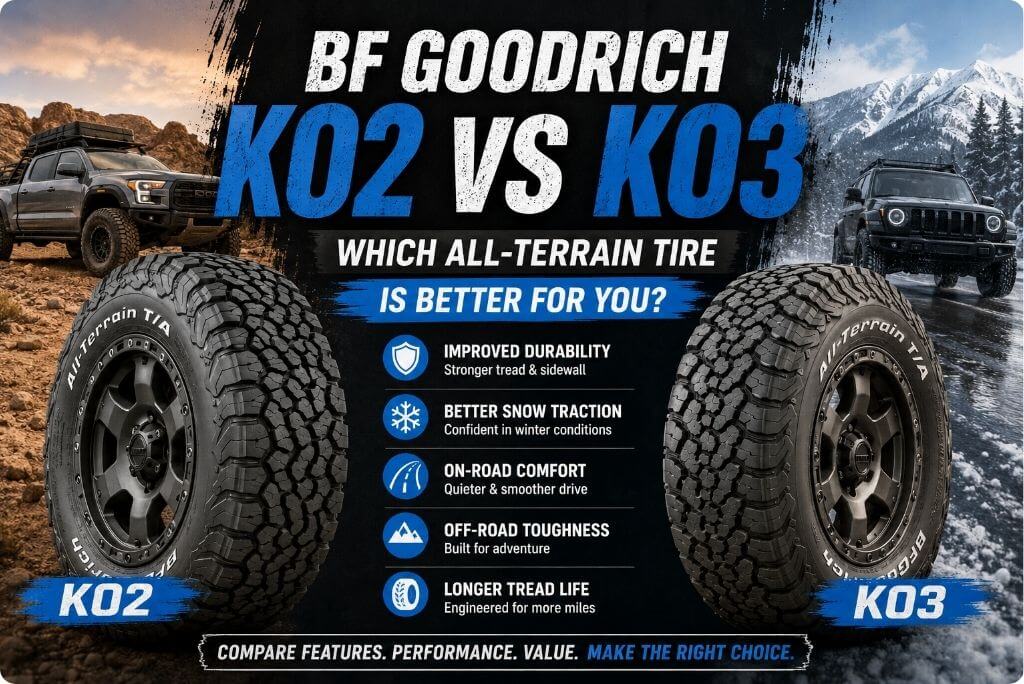
BF Goodrich KO2 vs KO3: Which All-Terrain Tire Is Better for Your Vehicle?
Choosing between the BF Goodrich KO2 vs KO3 comes down to how you drive, where you drive, and what matters most to you on the road. The KO2 has built a strong reputation as a durable all-terrain tire with solid on-road manners, while the KO3 is the newer version with BFGoodrich’s latest updates for improved wear, gravel-road durability, and snow traction. BFGoodrich also says the KO3 keeps the KO2’s core strengths, including sidewall toughness and soft-soil traction.
If you are trying to decide which tire belongs on your pickup, SUV, or overland rig, this guide breaks down the differences in plain language so you can make the right choice for daily driving, towing, off-road trips, and winter use. BFGoodrich positions the KO3 for CUVs, SUVs, and pickups, and says the size rollout is expanding over time.
Quick Verdict
If you’re buying a new set of all-terrain tires today and both options are available in your size, the KO3 will generally be the better choice for most drivers. It builds on the strengths that made the KO2 popular while introducing improvements aimed at durability, wear life, and traction in challenging conditions.
That doesn’t mean the KO2 is suddenly outdated. It remains one of the most respected all-terrain tires ever made and continues to be a solid choice for drivers who want a proven design with years of real-world performance behind it.
BF Goodrich KO2

BF Goodrich KO3

In simple terms:
- Choose the KO3 if you want the newest technology and the latest improvements.
- Choose the KO2 if you prefer a tire with a long-established track record and can find it at a competitive price.
For most buyers, the KO3 gets the edge. For budget-conscious shoppers or loyal KO2 owners, the older tire can still be an excellent option.
What changed from KO2 to KO3?
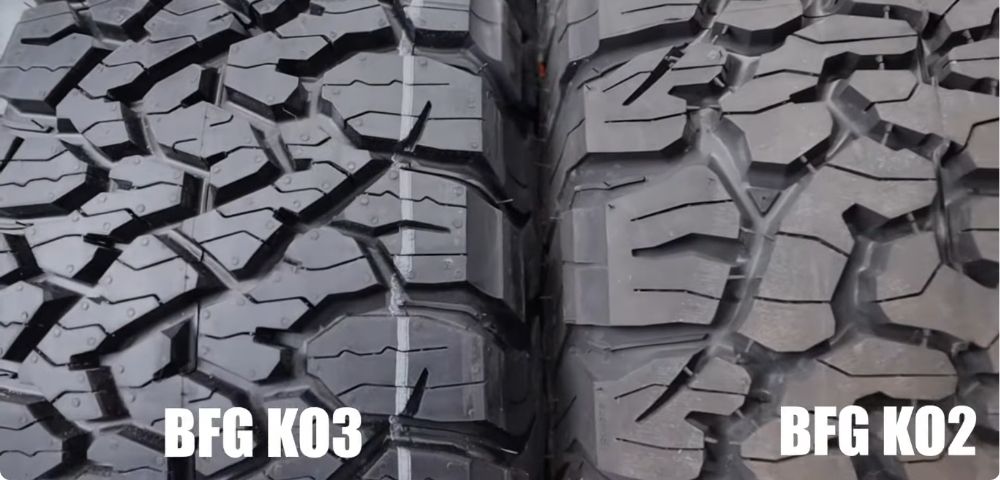
The KO3 is not a total reinvention. BFGoodrich built it to keep what worked on the KO2, especially toughness and off-road grip, while making the tire last longer and handle rough surfaces better. The biggest changes are a new tread design, a new rubber mix, and an updated footprint that spreads wear more evenly.
In plain terms, that means the KO3 should wear more evenly, hold up better on gravel, and give you stronger snow performance. BFGoodrich also says the KO3 uses full-depth 3D locking sipes, which help the tread stay stable as the tire wears down.
The KO2 still has the edge of a long, proven track record, but the KO3 is the smarter choice if you want the newer design and the latest updates in durability and winter traction.
KO2 vs KO3: Side-by-Side Comparison
If you’re trying to decide between the KO2 and KO3, this table highlights the differences that matter most in everyday driving and off-road use.
| Feature | BFGoodrich KO2 | BFGoodrich KO3 |
| Release | Older generation | Newest generation |
| Overall goal | Proven all-terrain performance | Improved version of the KO2 |
| Tread compound | Previous-generation rubber compound | Updated compound designed for longer wear |
| Tread design | Traditional KO2 pattern | Revised design with updated footprint |
| Snow performance | Good winter traction | Improved snow traction and control |
| Gravel-road durability | Strong | Built to better resist gravel-related wear and damage |
| Tread wear | Known for long life | Designed to wear more evenly and last longer |
| Sidewall protection | Excellent | Maintains the same focus on sidewall toughness |
| Off-road capability | Excellent | Excellent, with added durability improvements |
| Highway comfort | Good for an all-terrain tire | Similar, with some drivers reporting a more refined feel |
| Wet-road traction | Good | Improved wet-weather performance |
| Best for | Drivers who want a proven, long-trusted tire | Drivers who want the latest BFGoodrich technology |
| Availability | Still available in many sizes | Size lineup continues to expand |
Quick Take
The KO2 remains a great all-terrain tire and has earned its reputation over many years of real-world use. If you’re already happy with the KO2, there’s no urgent reason to switch.
The KO3 takes the same formula and improves a few key areas that matter to most drivers: tread life, gravel-road durability, and snow performance. For someone buying new tires today, the KO3 will likely be the better fit unless a specific KO2 size or price makes more sense.
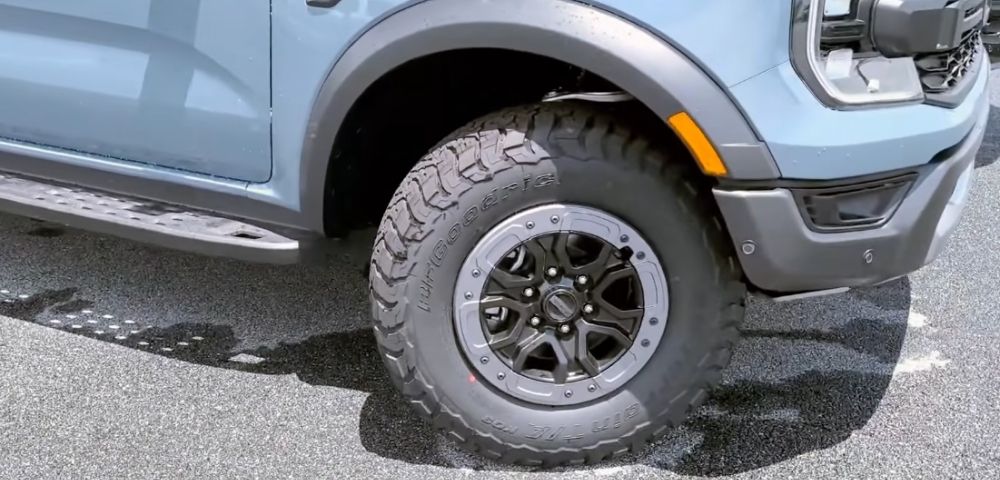
On-Road Performance Comparison Between BF Goodrich KO2 and KO3
For many drivers, most of their miles happen on pavement, not trails. That’s why it’s important to look at how these tires behave during daily driving, long highway trips, and wet-weather conditions.
Highway Comfort
The KO2 has always been known as a comfortable all-terrain tire for long drives. It feels stable on the highway and doesn’t require constant steering corrections.
The KO3 builds on that foundation. While the difference isn’t dramatic, it feels a little more refined on smooth roads. Most drivers moving from a worn-out KO2 to a new KO3 will notice the improvement more than those comparing two brand-new sets.
Ride Quality
Both tires ride well for an all-terrain design. They absorb small bumps and rough pavement without feeling harsh.
That said, neither tire rides like a highway-focused tire. If maximum comfort is your top priority, there are smoother options available. For an all-terrain tire, though, both do a good job balancing comfort and durability.
Road Noise
The KO2 is reasonably quiet, which is one reason it became so popular with daily drivers.
The KO3 remains quiet for an aggressive all-terrain tire. You may still hear some tread noise at highway speeds, but it generally isn’t distracting. Most drivers will have no problem using either tire as a daily driver.
Wet Traction
Wet-road grip is one area where the KO3 aims to improve on the KO2.
In rain, the KO3 feels more confident during acceleration, braking, and cornering. The difference won’t completely change the driving experience, but it can provide a little extra reassurance when roads are slick.
Stability Under Load
If you tow a trailer, carry gear, or regularly haul heavy loads, stability matters.
Both tires feel planted and predictable when carrying weight. The steering stays controlled, and the vehicle remains stable at highway speeds. Most drivers won’t notice a major difference between the two, but both are well-suited for trucks and SUVs that see regular work duty.
Off-Road Performance Comparison Between BF Goodrich KO2 and KO3
Both the KO2 and KO3 are designed for drivers who spend time away from paved roads. Whether you’re driving to a campsite, exploring forest roads, or working on remote job sites, these tires are built to handle rough conditions.
The good news is that both perform well off-road. The difference is that the KO3 aims to improve durability and traction in some of the conditions truck and SUV owners encounter most often.
Gravel Roads
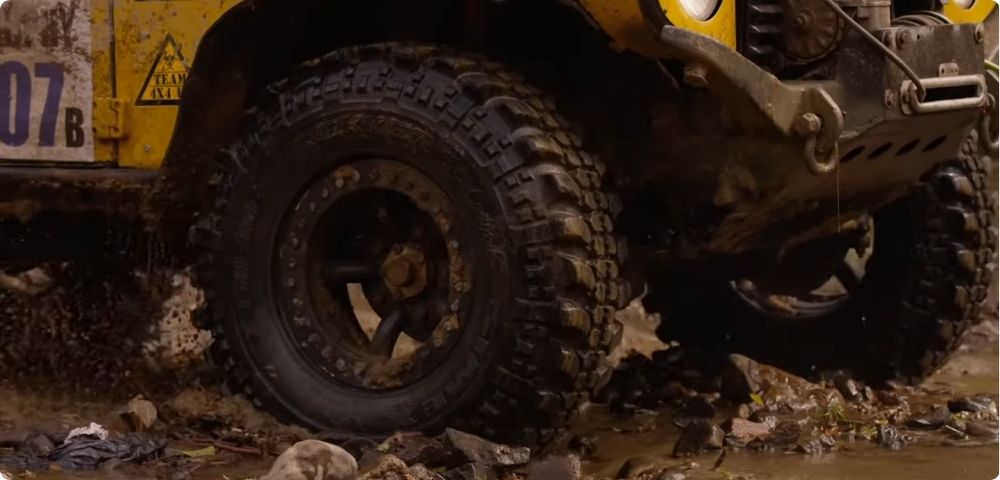
Gravel roads can be harder on tires than many people realize. Sharp stones can chip tread blocks, wear tires faster, and increase the risk of damage over time.
The KO2 has earned a strong reputation on gravel, especially among overland drivers and people who spend long hours on unpaved roads. The KO3 was developed with even more focus on this type of terrain.
For drivers who regularly travel gravel roads, the KO3 should hold up better over the long run. That doesn’t mean the KO2 struggles here—it simply means the KO3 was built to improve on an area where the KO2 was already strong.
Dirt Trails
On dry dirt trails, both tires provide dependable grip and predictable handling. Whether you’re driving through a forest road, a hunting trail, or a remote backcountry route, both feel confident and stable.
The difference between them is small in these conditions. Most drivers would be happy with either tire, and few would notice a major advantage unless they frequently drive challenging terrain.
Soft Soil
Soft ground can quickly become a problem when a tire can’t find enough grip.
Both the KO2 and KO3 do a good job digging into loose dirt and soft surfaces. They help maintain forward movement without constantly spinning the tires.
That said, neither tire is a dedicated mud tire. If you regularly drive through deep mud, there are more aggressive options available. For occasional muddy sections and soft trails, both perform well.
Rock and Rough Surfaces
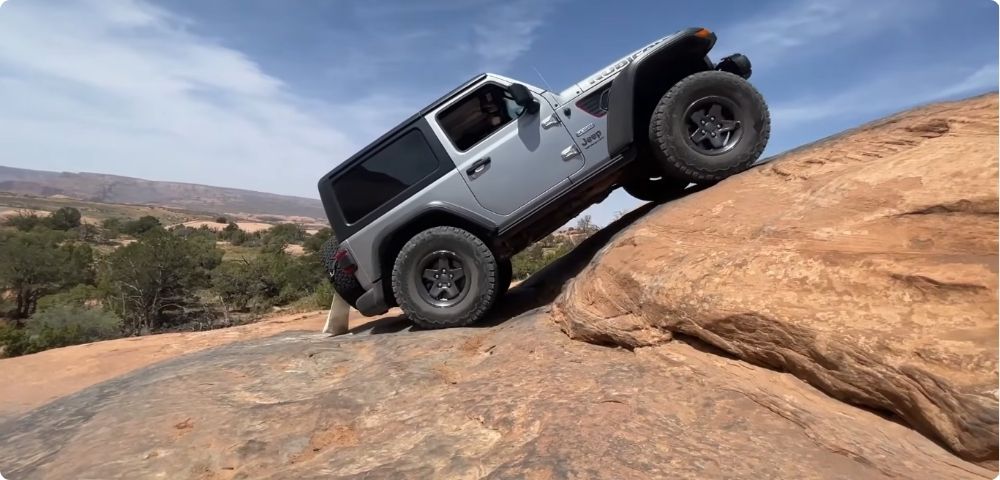
When driving over rocks, ruts, and uneven terrain, control becomes just as important as traction.
The KO2 has proven itself for years in these conditions. It grips well and inspires confidence when the trail gets rough.
The KO3 keeps that same capability while adding updates aimed at improving overall durability. For most drivers, the real benefit isn’t more grip on rocks—it’s the added confidence that the tire can handle repeated abuse over time.
Sidewall Durability
One of the biggest reasons people choose BFGoodrich all-terrain tires is sidewall strength.
Off-road damage often happens on the side of the tire rather than the tread. Sharp rocks, exposed roots, and rough trail edges can cut or puncture weaker tires.
The KO2 built its reputation on being tough in these situations. The KO3 continues that focus, making sidewall protection a key part of its design.
No tire is indestructible, but both the KO2 and KO3 are among the better choices for drivers who regularly leave the pavement behind.
Snow and Winter Use
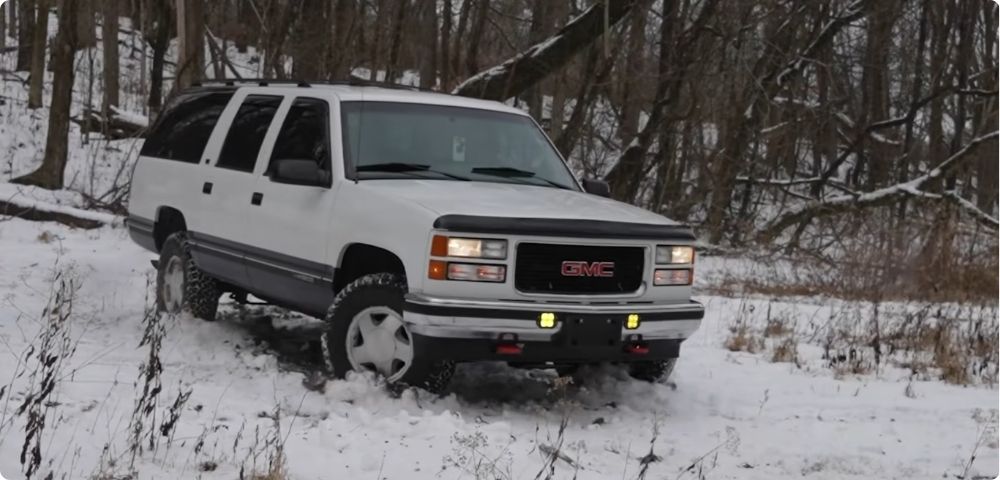
If you regularly drive through snow, winter performance can be just as important as off-road capability. A tire that works well on dry trails may not always feel as confident on cold, slippery roads.
Which Tire Is Better in Snow?
Both the KO2 and KO3 are designed to handle winter conditions better than a typical all-season tire. They provide good traction in light to moderate snow and can help maintain control on snowy roads.
The KO3 has the advantage here. BFGoodrich designed it with improved snow performance in mind, so it tends to offer a little more grip and confidence when roads are covered with snow.
The difference isn’t huge, but if winter driving is a regular part of your year, the KO3 is the stronger choice.
What “All-Terrain” Really Means in Winter
Many drivers see “all-terrain” and assume the tire can handle every winter condition without compromise. That’s not always the case.
An all-terrain tire is built to perform in many different environments, including pavement, dirt, gravel, and snow. The goal is versatility, not specialization.
That means both the KO2 and KO3 can handle occasional winter weather well, but they are still trying to balance winter grip with year-round usability.
Who Still Needs Dedicated Winter Tires?
If you mostly see a few snowstorms each year, either tire should be more than capable.
However, dedicated winter tires are still the better option if you regularly drive in:
- Deep snow
- Ice-covered roads
- Mountain regions
- Areas with long, harsh winters
Winter tires are designed specifically for cold temperatures and icy conditions. They can stop shorter, grip better, and provide more confidence when conditions become severe.
Towing, Hauling, and Daily Driving
For many truck and SUV owners, life isn’t split between highway driving and off-roading. Most vehicles do a bit of everything—commuting during the week, hauling gear on weekends, and occasionally towing a trailer or camper. That’s why this section often matters more than any off-road test.
Which Tire Handles Weight Better?
Both the KO2 and KO3 are designed for trucks and SUVs that regularly carry heavy loads. Whether you’re hauling tools, camping gear, or pulling a trailer, both tires feel stable and predictable.
In real-world use, there isn’t a dramatic difference between them when it comes to carrying weight. The KO3 may feel slightly more composed in some situations, but most drivers won’t notice a major change.
As always, choosing the correct tire size and load rating matters more than choosing between the KO2 and KO3.
Which Is Better for Commuting?
If your truck spends most of its time on paved roads, the KO3 gets a slight edge.
It feels a little more refined during everyday driving and was designed with improvements in tread wear and overall road performance in mind. Over thousands of miles, that can make a difference for drivers who use their vehicle as a daily commuter.
The KO2 is still a comfortable tire for everyday use, but the KO3 feels more like a modern update rather than a complete redesign.
Which Is Better for Mixed-Use Vehicles?
This is where the KO3 makes the strongest case for itself.
Many drivers need one tire that can handle work, family trips, towing, bad weather, and occasional off-road adventures. The KO3 was built with exactly that type of use in mind.
The KO2 can certainly do all of those things as well, which is why it remained popular for so many years. The difference is that the KO3 adds a few improvements without giving up the versatility that made the KO2 successful.
Size Availability and Fitment
Before choosing between the KO2 and KO3, it’s worth checking whether your tire size is available.
The KO3 was launched in phases, which means not every size became available at the same time. BFGoodrich has been steadily adding new sizes, and the rollout is now nearing completion. As new KO3 sizes arrive, the matching KO2 sizes are gradually being discontinued.
For most buyers, this simply means the KO3 is becoming the main option going forward. However, depending on your vehicle, you may still find both tires available, or you may discover that only one is offered in your preferred size.
Before making a final decision, check the exact tire size listed on your vehicle or current tires. A tire that looks perfect on paper isn’t much help if it isn’t available in the size your vehicle needs.
If both options are available, you can focus on performance and price. If only one is available, your decision may already be made for you.
Who Should Buy the KO2?
The KO2 is a great choice for drivers who prefer a tire with a long track record. It has been used for years by truck owners, overlanders, and off-road enthusiasts, so its strengths and weaknesses are well known.
It’s also worth considering if you find a good deal on existing KO2 inventory or need a size that may not yet be widely available in the KO3 lineup.
The biggest reason to choose the KO2 is confidence in a proven product. Many drivers like knowing they’re buying a tire that has already been tested in countless real-world conditions.
The only drawback is that it is no longer the newest option in the BFGoodrich lineup. If having the latest improvements matters to you, the KO3 may be the better fit.
For buyers who value a trusted reputation over having the newest design, the KO2 remains an easy recommendation.
Who Should Buy the KO3?
For most buyers shopping today, the KO3 is the tire that makes the most sense.
It’s the better choice if you want BFGoodrich’s newest all-terrain design and the latest updates in areas that matter to everyday drivers. The improvements aren’t dramatic, but they are focused on real-world use rather than marketing claims.
The KO3 is especially appealing for people who regularly drive on a mix of pavement, gravel roads, dirt trails, and winter roads. It was designed to be a versatile tire that can handle changing conditions without asking you to make major compromises.
It’s also a smart option for drivers who keep their vehicles for a long time and want the latest improvements in tread life and durability. Over thousands of miles, those small upgrades can add up.
The only potential downside is that the KO3 is newer, which means it doesn’t yet have the decades-long reputation that helped make the KO2 so popular. Some buyers prefer a tire with a longer real-world history.
Still, if you’re buying a new set of tires today and both options are available in your size, the KO3 is the one most drivers should choose. It keeps the strengths that made the KO2 successful while adding useful improvements for modern truck and SUV owners.
Read More: Kenda Klever RT Review
Final Recommendation
When comparing the BF Goodrich KO2 vs KO3, there is no bad choice.
The KO2 remains one of the most trusted all-terrain tires on the market and continues to deliver dependable performance on highways, trails, gravel roads, and in winter weather.
However, if you’re purchasing a new set today and both options are available, the KO3 deserves serious consideration. It was specifically developed to improve upon the KO2 in areas that matter to real-world drivers, including tread wear, gravel durability, and snow performance.
For most truck and SUV owners, the KO3 will be the better long-term investment.
For drivers who already know and trust the KO2—or who find it at an attractive price—the older tire still represents a smart purchase.
Ultimately, the best tire is the one that matches your driving habits, climate, and budget. Understanding how you actually use your vehicle will help you make the right decision far more than marketing claims ever will.
Frequently Asked Questions
Is the KO3 quieter than the KO2?
Many drivers expect the KO3 to offer improvements in overall road manners, although actual noise levels can vary depending on vehicle type, tire size, road surface, and inflation pressure.
Is the KO3 worth upgrading from the KO2?
If your current KO2s are worn out and you’re buying a replacement set, the KO3 is a logical upgrade because it incorporates the latest improvements from BFGoodrich.
Which tire is better in snow?
Both perform well in snowy conditions, but the KO3 was developed with improved snow performance in mind, giving it an advantage for drivers who regularly encounter winter weather.
Which tire lasts longer?
The KO3 was designed with improved wear characteristics, which may help extend tread life under certain driving conditions.
Which tire is better for towing?
Both are capable choices for towing and hauling. The best option depends on your vehicle, load requirements, and preferred tire size.
