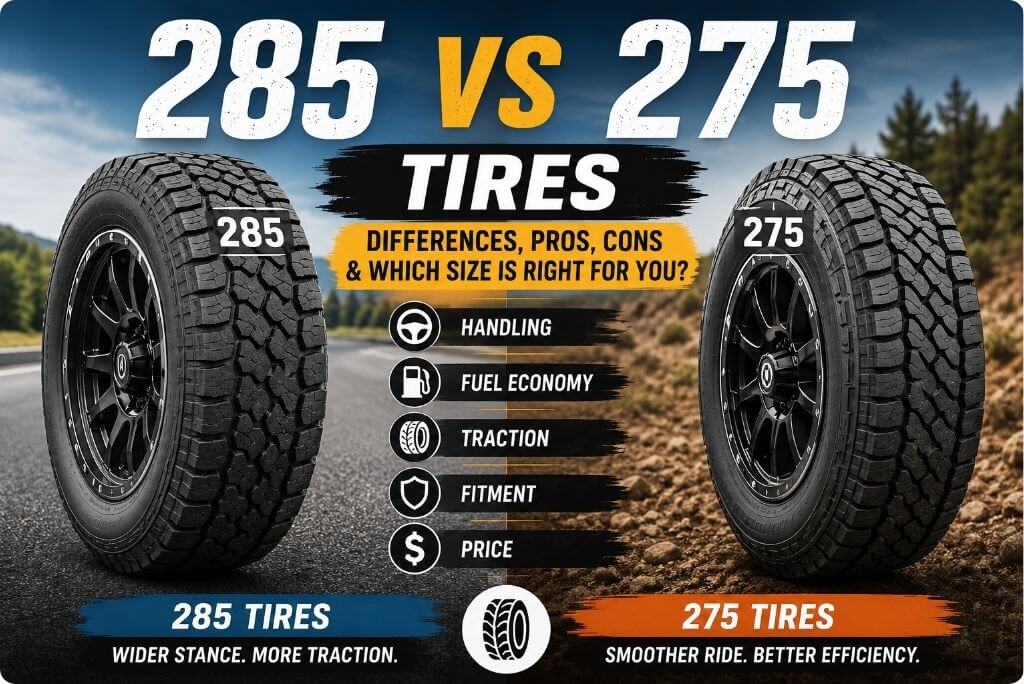
285 vs 275 Tires:Which Size Is Right for You?
Choosing between 285 and 275 tires may seem like a small decision, but those extra 10 millimeters can affect how your vehicle drives, feels, and even looks.
Some drivers want a wider tire for better traction and a more aggressive appearance. Others prefer a setup that offers better fuel economy and easier fitment. The right choice depends on your vehicle, your driving habits, and what matters most to you.
In this guide, we’ll compare 285 vs 275 tires in simple terms, explain the real-world differences, and help you decide which tire size makes the most sense for your needs.
Quick Answer: Should You Choose 285 or 275 Tires?
In most cases, 275 tires are the safer and easier choice for everyday driving. They usually fit more easily, feel a little lighter on the road, and may offer slightly better fuel economy.
285 tires are a better fit for drivers who want a wider, more aggressive look or who need more traction for off-road use. They can work very well, but they may also bring fitment issues depending on your wheels, suspension, and vehicle clearance.
A simple way to think about it is this:
- Choose 275 tires if you want easier fitment, a smoother daily driving setup, and better efficiency.
- Choose 285 tires if you want a wider stance, stronger traction, and a more rugged look, and your vehicle can handle the size.
What Do Tire Size Numbers Mean?
Tire size numbers can look confusing at first, but they are actually easy to read once you know what each part means.
Take 275/65R18 as an example:
- 275 = tire width in millimeters
- 65 = sidewall height as a percentage of the width
- R = radial construction
- 18 = wheel diameter in inches
When comparing 285 vs 275 tires, the main number that changes here is the width. A 285 tire is 10 millimeters wider than a 275 tire. That may not sound like much, but it can affect fitment, handling, and appearance.
How Much Wider Is a 285 Tire Than a 275 Tire?
A 285 tire is 10 mm wider than a 275 tire. That equals about 0.39 inches.
That small difference can still matter, especially if your vehicle already has tight wheel wells, limited fender clearance, or a setup that runs close to the edge.
285 vs 275 Tires Comparison Table
| Feature | 275 Tires | 285 Tires |
| Width | Narrower | Wider |
| Road Comfort | Very good | Good |
| Fuel Economy | Slightly better | Slightly lower |
| Steering Feel | Lighter | Heavier |
| Dry Grip | Good | Better |
| Off-Road Traction | Good | Better |
| Hydroplaning Resistance | Often better | Slightly lower |
| Appearance | More factory-like | More aggressive |
| Fitment Difficulty | Easier | May need more care |
| Cost | Usually lower | Usually higher |
This table gives the short version. The best tire size depends on what you value most.
Difference Between 285 and 275 Tires
Tire Width
A 285 tire is wider than a 275 tire. That extra width gives the tire a slightly bigger footprint on the road, which can help it feel more planted, especially when cornering or driving on loose ground.
The tradeoff is that wider tires can feel a little heavier and may use a bit more fuel. The difference is not huge, but it can matter if you drive every day.
Contact Patch
The contact patch is the part of the tire that actually touches the road. A wider tire usually has a larger contact patch, which can improve grip.
That does not mean wider is always better. The tire’s tread design and rubber also matter. But in general, a 285 tire may give you a little more traction than a 275, especially in dry conditions or off-road use.
Vehicle Clearance
This is where the size change can cause problems. A 285 tire may fit differently inside the wheel well, and on some vehicles it can rub against the fender liner, suspension parts, or body trim.
A 275 is usually the safer choice if your vehicle is close to stock height or already has limited space. Before upsizing, it is worth checking clearance carefully so you do not end up with rubbing when turning or hitting bumps.
Steering Response
A 275 tire often feels a bit lighter and easier to turn. That can make daily driving and parking feel simpler.
A 285 tire may feel more stable, but it can also make steering slightly heavier. For most drivers, the difference is not dramatic, but it is noticeable if you pay attention.
285 vs 275 Tires for Daily Driving
Ride Comfort
For daily driving, 275 tires usually feel a little easier to live with. They can give a smoother, more relaxed ride, especially on regular roads and highway trips.
A 285 tire may feel firmer or slightly heavier on the road. The difference is not extreme, but if comfort matters most, 275 is often the simpler choice.
Road Noise
Road noise depends a lot on the tire model, but width can play a small part too. A wider tire may sometimes create a little more hum on rough pavement.
That said, a quiet 285 can still be quieter than a noisy 275. Tread design matters more than size alone, so it is worth checking the tire pattern as well.
Fuel Efficiency
In everyday driving, 275 tires are usually the better pick if you want to save fuel. They often roll a little easier, which can help the vehicle use less gas.
285 tires may use slightly more fuel because they are wider and can create more rolling resistance. The difference may be small, but over time it can add up.
Wet Weather Performance
In rain, a narrower tire can sometimes feel more reassuring because it may move through water more easily. That can help reduce the chance of hydroplaning on wet roads.
A 285 tire can still perform well in rain, especially if it has a good tread design. But for regular commuting in wet weather, 275 tires are often the more practical choice.
For most commuters, 275 tires are often the more practical choice. They are usually easier to live with, more efficient, and a little simpler to manage day to day.
285 vs 275 Tires for Off-Road Driving
Traction on Dirt and Mud
A 285 tire can give you a little more bite on loose ground because it has a wider footprint. That can help the tire feel more stable in dirt, mud, and uneven terrain.
A 275 tire can still do the job well, but it may not feel quite as planted when the ground gets soft or slippery.
Sand Performance
In sand, a wider tire can sometimes help the vehicle stay on top of the surface instead of sinking in as quickly. That is one reason many off-road drivers like 285 tires.
Still, tire pressure matters just as much as size. A 275 tire with the right pressure can perform better than a 285 that is not set up properly.
Ground Contact
A 285 tire gives more rubber on the ground, which can improve grip on rocks, ruts, and uneven trails. That extra contact can make the vehicle feel more secure in rough conditions.
The downside is that a wider tire can sometimes feel less nimble in tight trails or narrow spaces.
Sidewall Protection
Off-road tires are not only about width. The sidewall matters too, because it helps protect the tire from cuts and damage on rocks or rough edges.
A 285 tire may offer a bit more support and a tougher stance, but a strong 275 tire can also handle serious off-road use if the construction is right.
Drivers who frequently leave paved roads may benefit from 285 tires.
Will 285 Tires Fit If Your Vehicle Uses 275 Tires?
Sometimes yes, but not always. A 285 tire is wider, so it may fit on the same vehicle without problems, or it may rub depending on the setup. The tire size alone does not tell the full story.
Wheel Width
Your wheels need to be the right width for the new tire. If the wheel is too narrow or too wide, the tire may not sit correctly or wear the way it should.
Wheel Offset
Offset affects how far the wheel sits in or out of the wheel well. Even a small change here can make a 285 tire stick out more or sit closer to the suspension.
Suspension Design
Some vehicles have more space around the tires than others. A 285 may fit one truck easily but rub on another that looks almost the same.
Fender Clearance
This is often where problems show up. A wider tire can touch the fender liner or body parts when turning, braking, or going over bumps.
Lift Kits and Modifications
A lifted or leveled vehicle usually has a better chance of fitting 285 tires. Without those changes, clearance can be tight on some vehicles.
Fitment Checklist
Before switching from 275 to 285 tires, check these things:
- Wheel width is suitable for the tire
- Offset will not push the tire into the fender or suspension
- There is enough space when turning and hitting bumps
- The tire will not rub the liner or body trim
- Your lift or leveling setup, if any, supports the change
If you are unsure, measure carefully before buying. A tire that looks like a small upgrade can still cause big fitment problems if the space is tight.
Pros and Cons of 275 Tires
Pros
275 tires are often the easier choice because they are simpler to fit and usually more forgiving on stock vehicles. They often give you:
- Easier fitment
- Slightly better fuel economy
- Lighter steering feel
- Lower purchase cost
- Better everyday practicality
Cons
The main tradeoff is that they may not give you the wider look or extra traction some drivers want. They can also feel a bit less aggressive on larger trucks and SUVs.
- Smaller footprint
- Less bold appearance
- Slightly less off-road grip
For most street-driven vehicles, though, the pros of 275 tires are hard to ignore.
Pros and Cons of 285 Tires
Pros
285 tires appeal to drivers who want a stronger stance and a more capable feel. Their benefits often include:
- Wider footprint
- Better dry traction
- More aggressive appearance
- Better off-road potential
- Stronger visual presence
Cons
The downsides are usually tied to fitment and efficiency.
- May rub on some vehicles
- Slightly lower fuel economy
- Can cost more
- May require wheel or suspension changes
285 tires are a good option when your vehicle can handle them and you really want the extra width.
Read More: 265 vs 275 Tires: Which is Right for You?
Which Tire Size Is Better for Different Driving Needs?
Best for Daily Driving: 275 Tires
For most people, 275 tires are the better everyday choice. They are usually easier to live with and work well for commuting, errands, and highway trips.
If your vehicle spends most of its time on paved roads, 275 tires are often the more practical option.
Best for Off-Road Use: 285 Tires
If you regularly drive on dirt, sand, or trails, 285 tires may be the better fit. Their wider footprint can provide more grip and a more confident feel on loose surfaces.
Just make sure your vehicle has enough room for the wider tires.
Best for Towing
There is no single winner here. Towing performance depends more on the tire’s load rating and your vehicle’s setup than on whether the tire is a 275 or a 285.
Before towing heavy loads, always check that the tires are rated for the weight you plan to carry.
Best for Appearance: 285 Tires
If looks matter to you, 285 tires usually have the edge. Their extra width gives many trucks and SUVs a wider, more aggressive stance.
The tradeoff is that they can sometimes require more attention to fitment.
Best for Fuel Economy: 275 Tires
If saving fuel is a priority, 275 tires are generally the better choice. They often require slightly less effort to roll, which can help improve efficiency over time.
For many drivers, the difference is small, but every little bit can add up over thousands of miles.
In simple terms, choose 275 tires if you value everyday practicality and efficiency. Choose 285 tires if you want a bolder look and spend more time off the pavement.
285 vs 275 Tires: Which One Should You Buy?
Choose 275 tires if you want a setup that is comfortable, easy to fit, and affordable. They are a great option for daily driving and can also help you get slightly better fuel economy.
Choose 285 tires if you want a wider, more aggressive look and spend time driving on dirt roads, trails, or other off-road surfaces. They can offer more traction, but they may cost more and sometimes require extra clearance.
There is no one-size-fits-all answer. The best tire size is not necessarily the widest one. It is the one that matches your vehicle, fits properly, and works best for the way you drive.
If comfort, efficiency, and simplicity matter most, go with 275 tires. If you want a bolder stance and better off-road capability, 285 tires may be the better choice.
Related Topic: 265 vs 285 Tires: What’s the Difference?
FAQs
Are 285 tires wider than 275 tires?
Yes. A 285 tire is 10 millimeters wider than a 275 tire, which is about 0.39 inches.
Can I replace 275 tires with 285 tires?
Sometimes, yes. It depends on wheel width, offset, suspension, and clearance. Always check fitment before buying.
Do 285 tires reduce fuel economy?
They can. Wider tires often create more rolling resistance, which may lower fuel economy slightly.
Are 285 tires better for off-roading?
Often, yes. Their wider footprint can help with traction on loose surfaces like dirt, sand, and mud.
Which is better for daily driving: 275 or 285 tires?
For most drivers, 275 tires are better for daily use because they are easier to fit, more efficient, and usually more comfortable.
Final Thoughts
When comparing 285 vs 275 tires, the better choice depends on how you drive and what your vehicle can safely handle. A 275 tire is usually the more practical option for daily driving, better fuel economy, and easier fitment. A 285 tire can be a great upgrade for drivers who want more traction, a wider stance, and a tougher look, as long as the setup has enough clearance.
The best tire is not just the one that looks biggest. It is the one that fits well, drives well, and makes sense for your needs.
