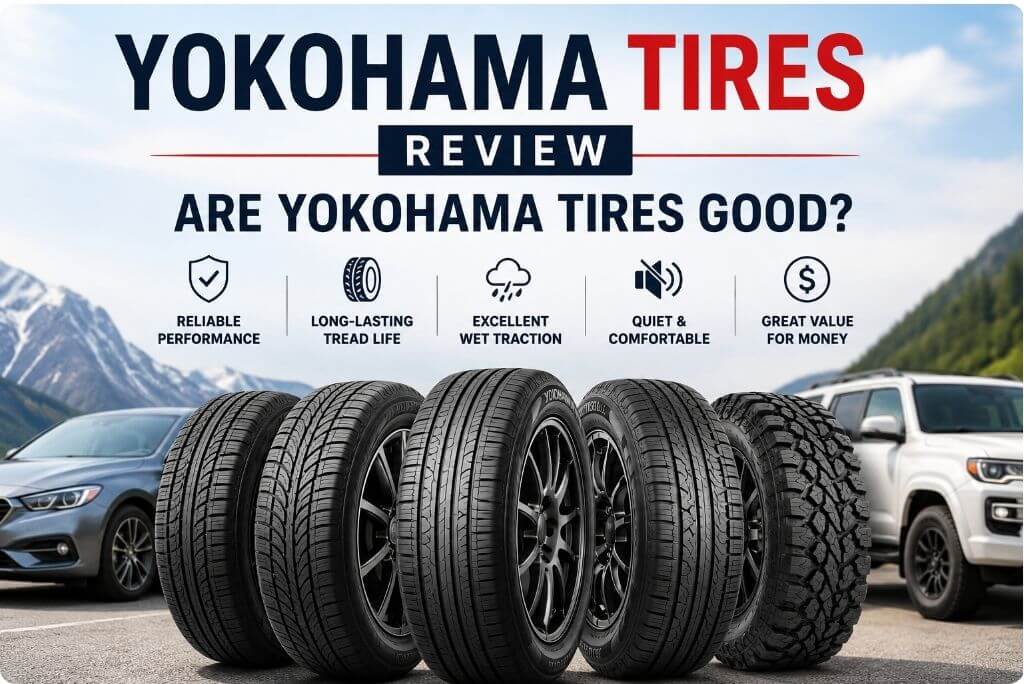
Yokohama Tires Review: Are Yokohama Tires Good?
If you are shopping for new tires, you may be asking yourself, are Yokohama tires good? In this Yokohama Tires Review, we will take a close look at their performance, comfort, tread life, value, and the best Yokohama tire models so you can decide whether they are the right fit for your vehicle and driving needs.
Quick Verdict — Are Yokohama Tires Good?
Yes, Yokohama tires are good. They offer a strong mix of performance, comfort, and value, which is why they are a popular choice for everything from family cars to SUVs and performance vehicles.
One of Yokohama’s biggest strengths is balanced performance. Most models provide confident handling, good wet-road traction, and a comfortable ride. The brand also offers tires for almost every need, including daily commuting, highway driving, off-roading, and winter conditions.
The trade-off is that not every Yokohama tire leads its class in tread life or ride comfort. Some performance and off-road models can wear faster or create more road noise than premium touring tires from competitors.
Yokohama is a smart buy if you want dependable performance without paying top-tier prices. The brand is especially well-suited for:
- Daily drivers who want comfort and all-season capability
- Performance enthusiasts who enjoy responsive handling
- SUV and truck owners looking for highway or all-terrain options
- Drivers who need dedicated winter tires for snowy conditions
If your main goal is the absolute longest tread life or the quietest possible ride, you may prefer certain models from brands like Michelin. But for most drivers, Yokohama delivers a well-rounded driving experience and offers excellent value for the money.
What Makes Yokohama Tires Worth Considering?
Balanced Performance
Yokohama tires are known for offering a good balance of grip, comfort, and handling. Many drivers like them because they feel predictable and secure in everyday driving.
On dry roads, most Yokohama tires provide good traction and stable cornering. In wet conditions, many models do a strong job of maintaining grip and resisting slipping on rainy roads.
The steering usually feels responsive, so the vehicle reacts quickly without feeling overly sensitive. Braking performance is also generally strong, giving drivers more confidence in normal driving conditions.
Broad Product Range
One reason Yokohama appeals to many drivers is its wide selection of tires.
The brand offers:
- Touring tires for comfort and long drives
- All-season tires for year-round use
- Performance tires for better handling and grip
- Winter tires for snow and cold temperatures
- All-terrain and mud-terrain tires for SUVs and trucks
This variety makes it easier to find a Yokohama tire that matches your vehicle and driving habits.
Comfort and Everyday Usability
Many Yokohama tires are designed with daily driving in mind. They usually deliver a smooth ride and stay reasonably quiet on the road.
Highway driving often feels stable and comfortable, which helps reduce fatigue on longer trips. Around town, the tires generally absorb bumps well and provide a relaxed driving experience.
That said, some off-road and performance-focused models can be firmer and noisier than touring tires.
Value for the Money
Yokohama sits between budget brands and premium brands in the market. It often gives drivers many of the features found in more expensive tires without the highest price tag.
While some premium brands may offer slightly longer tread life or a quieter ride, Yokohama frequently delivers a strong mix of performance, comfort, and versatility for the money. For many drivers, that balance makes the brand worth considering.
The 10 Best Yokohama Tires
Specs note: Yokohama publishes warranty mileage by model and size. Load index, speed rating, tread depth, and UTQG can also vary by size, so the exact figures should be checked on the size listing for the tire you need.
1. Best All-Terrain Tire — Yokohama Geolandar A/T G015
Best for SUVs, crossovers, and light trucks. This is the tire I would point most mixed-use drivers to first, because it handles wet highways, gravel roads, and light trails without feeling clumsy on pavement. In a real week of commuting, hauling groceries, and taking one muddy campsite road, it feels like a tire that stays calm instead of busy.

Key specifications
- Tread-life warranty: up to 60,000 miles; 50,000 miles on LT/high-flotation sizes.
- Tread depth / load index / speed rating / UTQG: size-dependent.
- Severe snow rating: yes, 3PMSF.
Pros
- Strong all-weather traction, including severe snow service in the U.S.-market version.
- Good on-road comfort for an all-terrain tire, with less road noise than many aggressive A/T options.
- Long tread-life claim: up to 60,000 miles on P-/Euro-metric sizes and 50,000 miles on LT/high-flotation sizes.
Cons
- Not as sharp or quiet as a pure highway tire.
- If most of your driving is paved-road commuting, you may be carrying more tread than you need.
2. Best Budget Touring Tire — Yokohama AVID Touring-S
Best for daily commuters and compact cars. This tire makes the most sense for drivers who want a quiet, predictable ride without paying for a premium grand-touring model. In stop-and-go city driving, it feels stable and easygoing, and on the highway it aims for comfort more than sportiness.

Key specifications
- Tread-life warranty: up to 65,000 miles.
- Tread depth / load index / speed rating / UTQG: size-dependent.
- Severe snow rating: not the main focus of this model.
Pros
- Up to 65,000-mile limited treadwear warranty.
- Built for a quiet ride and steady everyday handling.
- Good fit for drivers who want a simple, no-drama all-season tire.
Cons
- Not the best choice if you want sporty steering or very strong wet-weather braking.
- Less refined than Yokohama’s top comfort-focused touring tires.
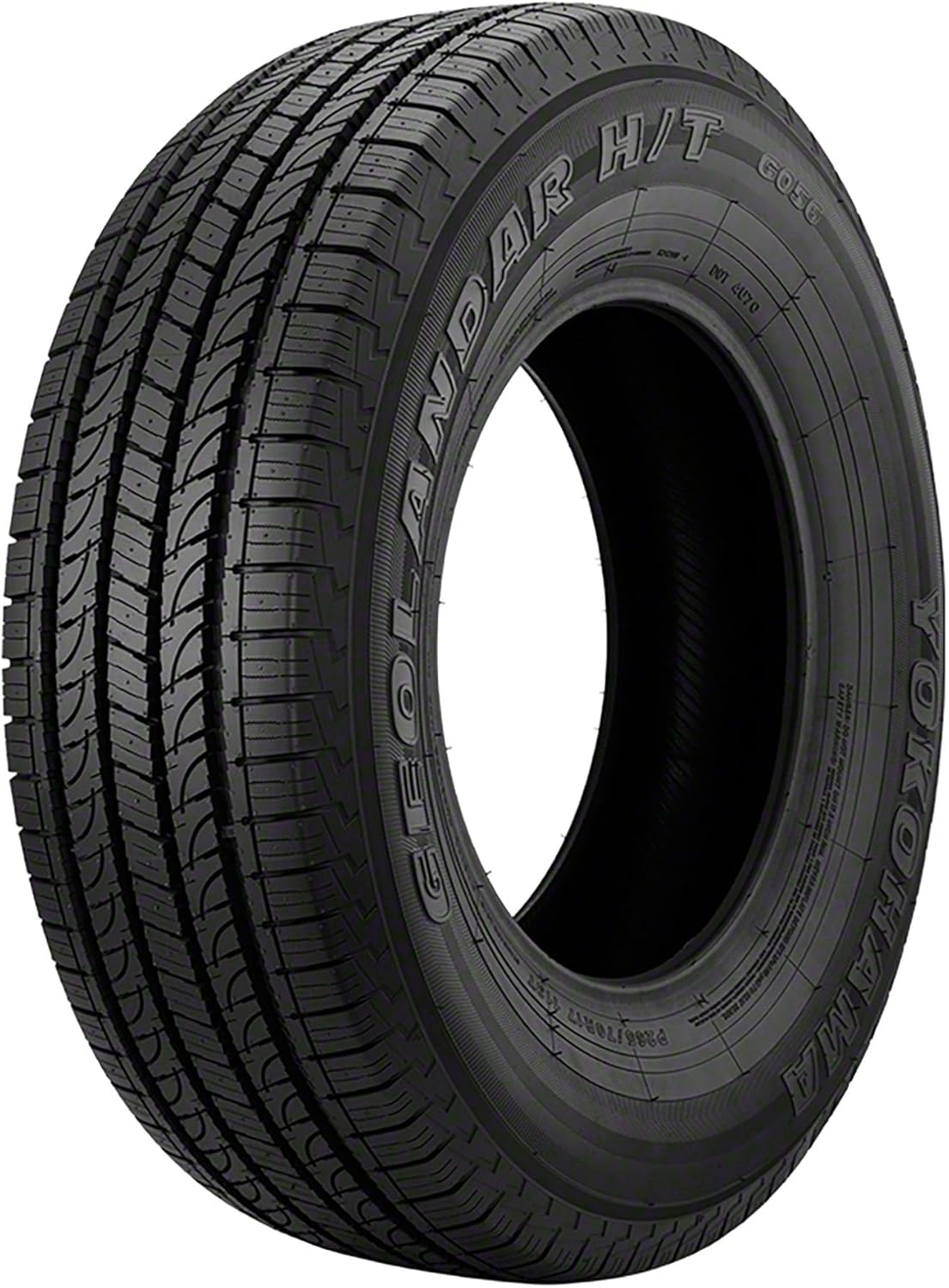
3. Best Highway Tire for SUVs and Trucks — GEOLANDAR H/T G056
Best for highway-focused SUV and truck owners. This is the tire to choose when most of your miles are pavement, especially if you want a calmer ride on long trips and a tire that feels settled under a heavier vehicle. On a fully loaded SUV at freeway speed, it is aimed at comfort and durability, not off-road bite.
Key specifications
- Tread-life warranty: up to 70,000 miles on P-/Euro-metric sizes.
- Tread depth / load index / speed rating / UTQG: size-dependent.
- Severe snow rating: not the main selling point.
Pros
- Up to 70,000-mile limited treadwear warranty on P-/Euro-metric sizes.
- Built with heavy-duty use in mind, including towing and hauling.
- Strong fit for highway miles, family trips, and daily driving in larger vehicles.
Cons
- Not meant for serious off-road use.
- More about stability and mileage than sharp handling.
Read More: Yokohama Geolandar G055 Review
4. Best Overall Touring Tire — Yokohama Avid Ascend GT
Best for sedans and family vehicles. This is one of Yokohama’s most balanced tires: quiet enough for commuting, confident enough for rainy highways, and durable enough for long ownership. In a real family road trip with passengers and luggage, it is the kind of tire that fades into the background in a good way.

Key specifications
- Tread-life warranty: up to 65,000 miles.
- Tread depth / load index / speed rating / UTQG: size-dependent.
- Severe snow rating: not the core focus, but the tire is built for year-round use.
Pros
- Up to 65,000-mile limited treadwear warranty.
- Quiet ride with strong all-season traction, including wet and light-snow use.
- Good balance of comfort, mileage, and steering response.
Cons
- Not as sporty as the ADVAN line.
- Drivers chasing the softest possible ride may prefer the Ascend LX instead.
5. Best Premium Comfort Tire — Yokohama Avid Ascend LX
Best for drivers prioritizing comfort and quietness. This is the tire you notice less the more you drive it, which is usually a compliment. In heavy city traffic and on rough suburban roads, it is tuned to smooth out the ride and keep the cabin calm.

Key specifications
- Tread-life warranty: up to 85,000 miles.
- Tread depth / load index / speed rating / UTQG: size-dependent.
- Severe snow rating: not the main target; this is a comfort touring tire.
Pros
- Up to 85,000-mile treadwear warranty on the main warranty listing, one of the longest in Yokohama’s passenger lineup.
- Built for a quiet ride and long-term reliability.
- Excellent fit for sedans, crossovers, and minivans that do a lot of commuting.
Cons
- Less engaging to drive than performance-focused tires.
- If you want sharper steering, this is not the first pick.
6. Best Mud-Terrain Tire — Yokohama Geolandar M/T G003
Best for serious off-road enthusiasts. This tire is for drivers who actually use mud tires the way they were meant to be used: deep mud, loose rock, rough trails, and hard terrain. On a rocky trail or in thick mud, the aggressive tread makes sense; on the highway, you pay for that capability with more noise and a firmer feel.

Key specifications
- Tread-life warranty: no mileage warranty highlighted on the main product page; the listing focuses on satisfaction guarantee and durability.
- Tread depth / load index / speed rating / UTQG: size-dependent.
- Severe snow rating: not the main purpose of this tire.
Pros
- Built for serious off-road traction and durability.
- Strong on loose gravel, rocks, and mud.
- Designed with wear resistance in mind despite its aggressive tread.
Cons
- Noisy on pavement compared with highway or all-terrain tires.
- Ride quality is firmer, and steering feel is less relaxed on daily commutes.
7. Best Ultra-High-Performance All-Season Tire — Yokohama ADVAN Sport A/S+
Best for sports cars and performance sedans. This is the tire for drivers who want sharper steering, stronger braking, and more confidence at speed without giving up year-round use. On a fast highway merge or a quick lane change in the rain, it feels more precise than a typical touring tire.

Key specifications
- Tread-life warranty: up to 55,000 miles; 27,500 miles on staggered and EV fitments.
- Tread depth / load index / speed rating / UTQG: size-dependent.
- Severe snow rating: not the main emphasis, but it is built for year-round performance.
Pros
- Crisp handling and strong cornering response.
- Good wet and winter traction for an ultra-high-performance all-season tire.
- Quiet enough to work as a daily driver tire.
Cons
- Usually not the longest-wearing option in the lineup.
- A firmer ride than Yokohama’s comfort tires.
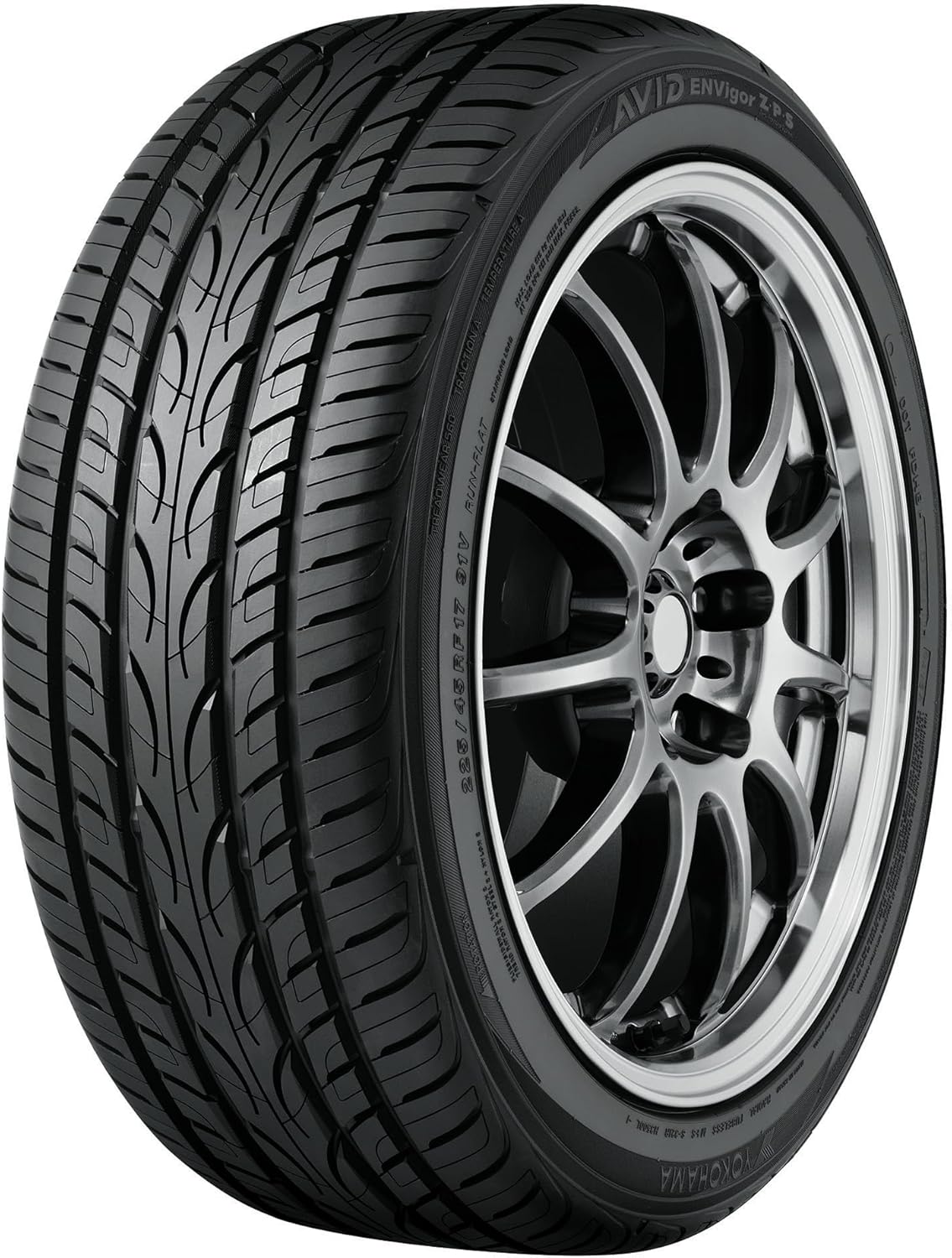
8. Best Run-Flat Tire — Yokohama AVID ENVigor ZPS
Best for drivers wanting run-flat capability. The big reason to buy this tire is simple: if you lose air, it is designed to keep going for up to 50 miles at 50 mph. That is a real advantage for a late-night highway drive or a busy commute when stopping immediately is not practical.
Key specifications
- Tread-life warranty: the product page emphasizes the standard limited warranty and 30-day trial, not a standout mileage promise.
- Tread depth / load index / speed rating / UTQG: size-dependent.
- Severe snow rating: not the main focus.
Pros
- Run-flat design can maintain mobility for up to 50 miles at 50 mph with no air pressure.
- Good wet traction and responsive handling.
- Tuned to reduce tread noise for a smoother daily drive.
Cons
- Run-flat tires usually ride firmer than standard tires.
- If comfort and long wear matter more than emergency mobility, another touring tire may be a better fit.
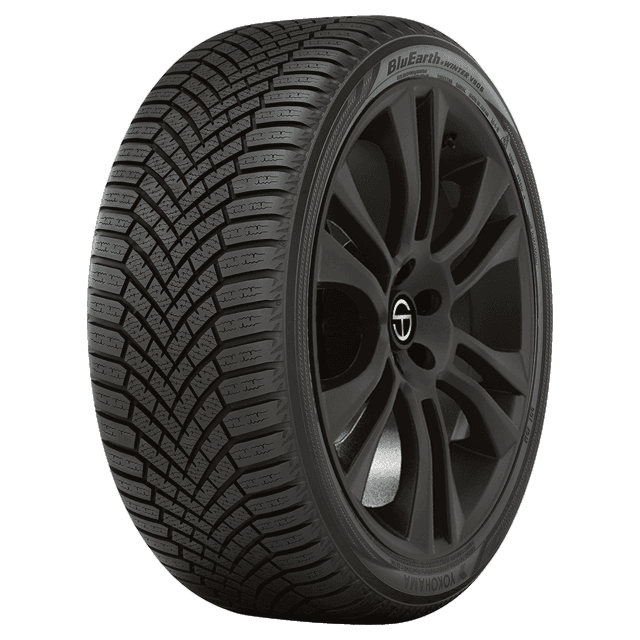
9. Best Winter Tire — Yokohama BluEarth Winter V906
Best for snow and cold-weather driving. This is the tire to choose when winter is not just “a little cold” but regular snow, slush, and icy mornings. In a freezing commute with packed snow on side streets and wet slush on main roads, the whole point of this tire is to keep grip when all-season tires start to feel vague.
Key specifications
- Tread-life warranty: the main product page highlights a 30-day trial satisfaction guarantee, not a mileage warranty.
- Tread depth / load index / speed rating / UTQG: size-dependent.
- Severe snow rating: winter-specific design; the product page focuses on snow, ice, and wet traction.
Pros
- Designed for strong snow, ice, and wet performance in cold weather.
- Winter-focused tread and compound help the tire stay flexible in freezing temperatures.
- Good choice for drivers who need more confidence than an all-season tire can give in winter.
Cons
- Not meant to stay on the car year-round in warm weather.
- Will wear faster if used through spring and summer.
10. Best Grand Touring All-Season Tire — Yokohama YK740 GTX
Best for long-distance drivers and family vehicles, with one important caveat: this model is discontinued, so it is mainly a closeout or remaining-stock option now. When it was on the market, it was aimed at drivers who wanted a quiet, long-wearing touring tire for daily commuting and highway use.
Key specifications
- Tread-life warranty: 60,000 miles.
- Tread depth / load index / speed rating / UTQG: size-dependent. One retail listing shows a V-rated 255/55R18 size with UTQG 740 A A and 12/32 tread depth, but that can vary by size.
- Severe snow rating: not the core purpose of this touring model.
Pros
- Designed for long-wearing all-season comfort and a quiet ride.
- Up to 60,000-mile warranty in Yokohama’s warranty listing.
- Good fit for drivers who want a relaxed highway tire rather than a sporty one.
Cons
- Discontinued, so availability is limited.
- If you cannot find it in the correct size, the newer YK-GTX All Season is the closer current alternative.
How Yokohama Tires Perform in Real-World Driving
Dry-Road Driving
Yokohama tires generally perform very well on dry roads. Most models provide plenty of grip, which helps the vehicle feel planted and predictable during everyday driving.
The steering usually feels responsive and easy to control. Small inputs at the steering wheel are met with quick reactions from the tires, which can make the vehicle feel more connected to the road.
When taking curves or highway ramps, many Yokohama tires remain stable and composed. They hold their line well and inspire confidence without feeling overly stiff.
Braking performance is also a strong point. Most Yokohama tires provide dependable stopping power on dry pavement, helping drivers feel more secure in traffic and during sudden stops.
Some of the best Yokohama models for dry-road performance include:
- Yokohama Advan Sport A/S+ for sporty handling and strong grip
- Yokohama Avid Ascend GT for balanced everyday performance
- Yokohama YK740 GTX for stable highway driving and responsive steering
- Yokohama Geolandar A/T G015 for drivers who want capable on-road performance along with light off-road ability
Performance-oriented models like the Advan Sport A/S+ may ride a little firmer than comfort-focused touring tires, but they offer sharper handling and more grip for drivers who enjoy an engaging driving experience.
Wet-Weather Driving
Wet-road performance is one of Yokohama’s stronger areas. Many of the brand’s tires maintain good grip in the rain, helping drivers feel more confident during daily commutes and highway trips.
Most Yokohama tires are designed to move water away from the tread. This helps reduce hydroplaning, which happens when a tire rides on a thin layer of water instead of staying in contact with the road. While no tire can completely prevent hydroplaning, many Yokohama models handle standing water well when driven at reasonable speeds.
Rain traction is generally dependable. The tires hold the road well during acceleration and when changing lanes or taking turns on wet pavement.
Braking performance is also impressive on many models. The tires usually stop predictably on wet roads, which can provide extra peace of mind during sudden braking situations.
Some of the strongest Yokohama models for rainy conditions include:
- Yokohama Avid Ascend GT – Excellent all-around wet traction and braking for daily driving.
- Yokohama YK740 GTX – Strong rain performance with a comfortable, confident feel on highways.
- Yokohama Advan Sport A/S+ – Very good wet grip and responsive handling for performance-oriented drivers.
- Yokohama Geolandar A/T G015 – Dependable wet-road performance for SUVs and light trucks.
Even the best rain-performing tires have limits. During heavy rain, reducing speed and leaving extra stopping distance is still the safest approach.
Snow and Winter Driving
Not all Yokohama tires perform the same in winter. Some all-season models can handle light snow and cold temperatures reasonably well, but they are not designed for severe winter weather.
For occasional snow, an all-season tire may provide enough traction for everyday driving. However, once roads become covered in deep snow, slush, or ice, stopping and turning become much more difficult.
This is where winter-specific tires make a noticeable difference. They are built with special rubber compounds that stay flexible in freezing temperatures and tread patterns that grip snow and ice more effectively. The result is better traction, shorter stopping distances, and more confidence on slippery roads.
The Yokohama Bluearth Winter V906 is designed for these tougher winter conditions. It provides strong grip on snow-covered roads and maintains good control in cold weather. It is a good choice for drivers who regularly deal with snowy winters and need extra confidence when braking, accelerating, and turning.
The trade-off is that winter tires are made for cold conditions. They wear faster in warm weather and should be switched out when temperatures rise consistently. For drivers who only see an occasional dusting of snow, a quality all-season tire may be the more practical option.
Highway and Commuting Comfort
Yokohama offers several tires that are well-suited for daily commuting and long highway drives. Many of their touring and grand touring models focus on comfort rather than outright performance.
Road noise is generally well controlled on these tires. At city and highway speeds, they tend to stay reasonably quiet, which can make conversations and long trips more pleasant.
Ride quality is another strong point. Many Yokohama tires absorb small bumps and rough pavement nicely, helping the vehicle feel smooth and settled instead of harsh.
For longer drives, comfort matters just as much as grip. Tires that stay quiet and stable can reduce driver fatigue, especially during extended highway trips. Many Yokohama touring models do a good job of delivering that relaxed driving experience.
Some of the best Yokohama tires for frequent highway use include:
- Yokohama Avid Ascend LX – One of the brand’s most comfort-focused tires, with a smooth and quiet ride.
- Yokohama Avid Ascend GT – A good balance of comfort, all-season grip, and long-distance stability.
- Yokohama YK740 GTX – Provides a refined ride and confident highway manners for everyday driving.
- GEOLANDAR H/T G056 – A comfortable highway tire designed for SUVs and pickup trucks.
Keep in mind that not every Yokohama tire is built for maximum comfort. Performance and off-road models, such as the Advan Sport A/S+ and Geolandar M/T, usually produce more road noise and have a firmer ride than the brand’s touring tires.
Off-Road and Rugged Use
Yokohama’s Geolandar lineup is one of the brand’s biggest strengths for SUV and truck owners. These tires are built to handle rougher terrain while still offering dependable performance for everyday driving.
If your driving includes dirt roads, gravel paths, or occasional trails, the Yokohama Geolandar A/T G015 is a strong choice. It provides extra traction on loose surfaces and can handle light off-road adventures without giving up too much on-road comfort.
For more demanding conditions, the Yokohama Geolandar M/T is designed for deep mud, rocky trails, and uneven terrain. Its aggressive tread helps it grip challenging surfaces where regular road tires would struggle.
There are trade-offs, though. Off-road tires usually have larger tread blocks, which can create more road noise and a firmer ride on pavement. They may also feel less responsive during highway driving compared with touring tires.
For most drivers who split their time between paved roads and occasional off-road trips, the Geolandar A/T G015 offers the best balance. The Geolandar M/T makes more sense for drivers who regularly tackle tough off-road conditions and are willing to accept some compromises in everyday comfort.
How Long Do Yokohama Tires Last?
Tread Life Expectations
Yokohama tires generally offer good tread life, but how long they last depends on the type of tire you buy and how you drive.
Touring tires usually last the longest because they are designed for daily driving and highway use. Performance tires often wear faster because they use softer rubber to improve grip. Off-road tires can also wear more quickly, especially if they spend a lot of time on pavement.
For many drivers, a set of Yokohama tires can last anywhere from around 40,000 to 80,000 miles. Actual lifespan varies by tire model and driving conditions.
What Affects Tread Life?
Several factors can make tires wear out faster or help them last longer.
- Driving style: Hard acceleration, aggressive cornering, and frequent hard braking can shorten tire life.
- Tire rotation: Rotating the tires regularly helps them wear more evenly.
- Alignment: Poor alignment can cause uneven wear and reduce tire life.
- Air pressure: Tires that are underinflated or overinflated may wear faster.
- Road conditions: Rough roads, potholes, and gravel can increase tire wear.
Regular maintenance often has just as much impact on tire life as the tire itself.
Yokohama Models Known for Longer Wear
Several Yokohama tires are built with longevity in mind:
- Yokohama Avid Ascend LX – One of the brand’s best choices for comfort and long tread life.
- Yokohama Avid Ascend GT – Offers a strong balance of durability, comfort, and all-season performance.
- Yokohama YK740 GTX – Designed for long highway miles and dependable everyday use.
- GEOLANDAR H/T G056 – Built for SUVs and trucks that spend most of their time on the road and need lasting performance.
No tire lasts forever, but with proper maintenance, many Yokohama models provide enough tread life to give drivers years of dependable service.
Pros and Cons of Yokohama Tires
Pros
- Strong wet-weather traction across many core models.
- Good comfort and low-noise options for daily driving.
- Several models offer long mileage warranties.
- The lineup covers commuting, performance, winter, SUV, truck, and off-road needs.
Cons
- The wrong model can feel too noisy or too soft for your needs, especially if you buy an off-road tire for mostly highway use.
- Some performance-oriented models trade tread life for sharper handling.
- Winter performance varies a lot by model, so not every Yokohama tire is a snow tire.
- A few models are sold through specific channels only, such as the YK-GTX All Season through Discount Tire.
Yokohama Tires vs Other Popular Brands
Yokohama vs Michelin
Michelin usually has the edge in ride quality and tread life. Its tires often feel a little smoother and last longer, which is why many drivers see it as the premium choice.
Yokohama is often more affordable while still delivering strong performance. It may not match Michelin on long-term wear, but it gives many drivers a very good mix of grip, comfort, and price.
If you want the best all-around balance without paying top dollar, Yokohama makes a strong case. If your main goal is maximum comfort and long tread life, Michelin may be worth the extra cost.
Yokohama vs Bridgestone
Yokohama and Bridgestone are both respected brands, but they often appeal to different priorities. Yokohama is often known for strong wet grip and good value, while Bridgestone has a reputation for a broad lineup and refined everyday comfort.
In many cases, Yokohama feels like the better buy for drivers who want solid performance without overspending. Bridgestone may be the better pick if you want a slightly more polished ride and are willing to pay more.
Yokohama also offers a wide range of choices, especially for drivers looking at touring, performance, and SUV tires. That makes it easier to find a model that fits your needs.
Yokohama vs Continental
Continental is often stronger in handling and wet-weather confidence, especially on premium touring and performance tires. Its tires can feel very precise and secure, especially in rain.
Yokohama is still a very good choice, especially for drivers who want dependable performance at a lower price. It may not always feel as sharp as Continental, but it often gives more value for the money.
For comfort on long drives, both brands do well, though Continental often has a slight edge in refinement. If price matters, Yokohama usually makes the decision easier without giving up much everyday performance.
Which Yokohama Tire Should You Buy?
For everyday sedans and commuter cars
The best starting points are the AVID Touring-S, AVID Ascend LX, and YK-GTX All Season. These tires lean toward quietness, smooth ride quality, wet-road confidence, and long tread life, which is exactly what most commuters need.
For sporty cars and performance-focused drivers
Look at the ADVAN Sport A/S+ first, then the AVID ENVigor ZPS if you need run-flat capability. Both are more responsive than a standard touring tire, but the ADVAN is the more modern all-season performance choice, while the ENVigor ZPS adds the security of run-flat use.
For SUVs and crossovers
The GEOLANDAR H/T G056 is best for mostly-road use, while the GEOLANDAR A/T G015 is the better choice if you want extra toughness, snow confidence, and light off-road ability. The right choice depends on how often you leave pavement.
For winter driving
Choose the BluEarth Winter V906 if you need a true winter tire. It is the clearest answer in this list for snow, slush, and ice.
For trucks and serious off-road use
Choose the Geolandar M/T G003 if your driving really matches a mud-terrain tire. If not, the Geolandar A/T G015 is usually the more sensible and comfortable option.
For drivers wanting the best overall value
The best value choices in this list are usually the AVID Ascend LX, AVID Touring-S, YK-GTX All Season, and GEOLANDAR A/T G015. They combine useful real-world performance with strong warranty coverage and clear everyday benefits.
FAQs: Yokohama Tires Review
Are Yokohama tires good?
Yes. Yokohama makes strong tires for commuting, touring, performance, winter, SUV, truck, and off-road use. The brand is especially good at offering a wide range of tires that balance comfort, traction, and value.
Which Yokohama tire is best for everyday driving?
For most drivers, the AVID Touring-S, Avid Ascend LX, and Avid Ascend GT are the best everyday choices. They are all designed around comfort, stable handling, and all-season usability.
Are Yokohama tires good in the rain?
Yes, many of Yokohama’s popular models are designed with wet traction in mind. The AVID Ascend GT, AVID Ascend LX, ADVAN Sport A/S+, GEOLANDAR H/T G056, and BluEarth Winter V906 all highlight wet-weather grip in their design.
Are Yokohama tires good for SUVs and trucks?
Yes. The GEOLANDAR family is built for that exact job, especially the A/T G015 and H/T G056. The M/T G003 is there for drivers who need more serious off-road traction.
Are Yokohama winter tires worth it?
If you drive in real winter conditions, yes. The BluEarth Winter V906 is specifically designed for snow, ice, and cold-weather handling, which makes it a better choice than an all-season tire in harsh winter weather.
Final Verdict
So, are Yokohama tires good? For most buyers, yes. The brand does a very good job of covering the needs that matter most in daily driving: comfort, wet traction, reasonable tread life, and useful options for different vehicle types. The best part is that Yokohama gives you many ways to shop, whether you need a smooth touring tire, a sporty all-season tire, a real winter tire, or a rugged SUV and truck tire.
If you want the safest, simplest recommendation, start with the tire that matches your driving life, not just your vehicle size. For commuting, look at AVID Touring-S or Avid Ascend LX. For family all-season use, Avid Ascend GT is a strong all-rounder. For SUVs, GEOLANDAR H/T G056 and GEOLANDAR A/T G015 are both excellent depending on how much road vs. rough terrain you face. And for winter or performance driving, the brand has dedicated models that are better than trying to force one tire to do everything.
