Toyota Camry Bolt Pattern (2026–1990): Complete Year-by-Year Chart
Buying new wheels for your Toyota Camry starts with knowing one critical specification—the bolt pattern. Whether you’re replacing a damaged factory wheel, upgrading to aftermarket rims, or checking if wheels from another Toyota will fit, using the correct bolt pattern is essential for proper installation and safe driving.
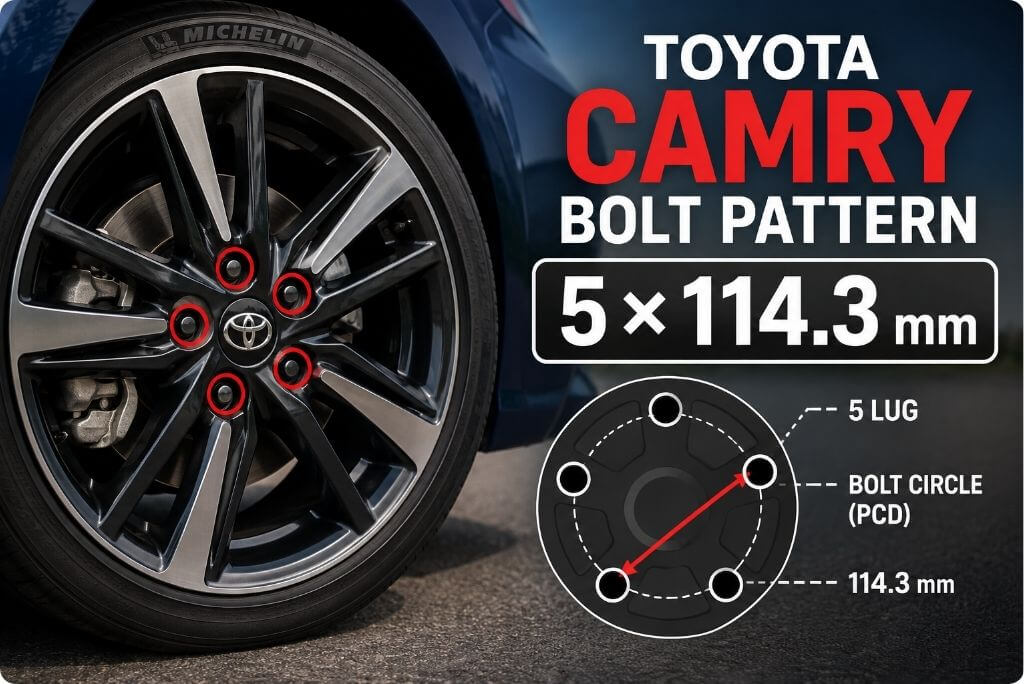
For U.S.-market Toyota Camry models built between 1990 and 2026, the factory bolt pattern is 5×114.3 mm (5×4.5 inches). However, matching the bolt pattern alone doesn’t guarantee that a wheel will fit correctly. You’ll also need to confirm the center bore, wheel offset, thread size, load capacity, and wheel dimensions before making a purchase.
To make your search easier, this guide includes a verified Toyota Camry bolt pattern chart for every model year from 2026 back to 1990. You’ll also find OEM wheel specifications, generation-by-generation changes, wheel compatibility, measurement tips, and answers to the most common fitment questions so you can choose the right wheels with confidence.
Quick Answer
The Toyota Camry bolt pattern is 5×114.3 mm (5×4.5 inches) for all U.S.-market model years from 1990 through 2026. Every Camry in this range uses five lug holes arranged on a 114.3 mm pitch circle diameter (PCD).
Most U.S. Camry models also share these factory wheel specifications:
| Specification | Value |
| Bolt Pattern | 5×114.3 mm (5×4.5″) |
| Lug Holes | 5 |
| Center Bore | 60.1 mm |
| Thread Size | M12×1.5 |
Before ordering replacement wheels, don’t rely on the bolt pattern alone. Two wheels can share the same 5×114.3 bolt pattern but still fit differently because of differences in offset, center bore, wheel width, or brake clearance. The year-by-year chart below helps you identify the correct factory specifications for your specific Toyota Camry model.
Toyota Camry Bolt Pattern Chart by Year (2026–1990)
Use the chart below to find the correct factory wheel specifications for your specific Toyota Camry model year. This section covers every U.S.-market Camry from 2026 back to 1990.
| Year | Generation | Bolt Pattern | Lug Holes | PCD | Center Bore | Thread Size | OEM Wheel Size | Offset |
| 2026 | XV80 (9th Gen) | 5×114.3 | 5 | 114.3 mm | 60.1 mm | M12×1.5 | 16″, 18″, 19″ | +40 to +50 mm |
| 2025 | XV80 (9th Gen) | 5×114.3 | 5 | 114.3 mm | 60.1 mm | M12×1.5 | 16″, 18″, 19″ | +40 to +50 mm |
| 2024 | XV70 (8th Gen) | 5×114.3 | 5 | 114.3 mm | 60.1 mm | M12×1.5 | 16″, 17″, 18″, 19″ | +40 to +50 mm |
| 2023 | XV70 (8th Gen) | 5×114.3 | 5 | 114.3 mm | 60.1 mm | M12×1.5 | 16″, 17″, 18″, 19″ | +40 to +50 mm |
| 2022 | XV70 (8th Gen) | 5×114.3 | 5 | 114.3 mm | 60.1 mm | M12×1.5 | 16″, 17″, 18″, 19″ | +40 to +50 mm |
| 2021 | XV70 (8th Gen) | 5×114.3 | 5 | 114.3 mm | 60.1 mm | M12×1.5 | 16″, 17″, 18″, 19″ | +40 to +50 mm |
| 2020 | XV70 (8th Gen) | 5×114.3 | 5 | 114.3 mm | 60.1 mm | M12×1.5 | 16″, 17″, 18″, 19″ | +40 to +50 mm |
| 2019 | XV70 (8th Gen) | 5×114.3 | 5 | 114.3 mm | 60.1 mm | M12×1.5 | 16″, 17″, 18″, 19″ | +40 to +50 mm |
| 2018 | XV70 (8th Gen) | 5×114.3 | 5 | 114.3 mm | 60.1 mm | M12×1.5 | 16″, 17″, 18″, 19″ | +40 to +50 mm |
| 2017 | XV50 (7th Gen) | 5×114.3 | 5 | 114.3 mm | 60.1 mm | M12×1.5 | 16″, 17″, 18″ | +35 to +45 mm |
| 2016 | XV50 (7th Gen) | 5×114.3 | 5 | 114.3 mm | 60.1 mm | M12×1.5 | 16″, 17″, 18″ | +35 to +45 mm |
| 2015 | XV50 (7th Gen) | 5×114.3 | 5 | 114.3 mm | 60.1 mm | M12×1.5 | 16″, 17″, 18″ | +35 to +45 mm |
| 2014 | XV50 (7th Gen) | 5×114.3 | 5 | 114.3 mm | 60.1 mm | M12×1.5 | 16″, 17″, 18″ | +35 to +45 mm |
| 2013 | XV50 (7th Gen) | 5×114.3 | 5 | 114.3 mm | 60.1 mm | M12×1.5 | 16″, 17″, 18″ | +35 to +45 mm |
| 2012 | XV50 (7th Gen) | 5×114.3 | 5 | 114.3 mm | 60.1 mm | M12×1.5 | 16″, 17″, 18″ | +35 to +45 mm |
| 2011 | XV40 (6th Gen) | 5×114.3 | 5 | 114.3 mm | 60.1 mm | M12×1.5 | 16″, 17″ | +45 mm |
| 2010 | XV40 (6th Gen) | 5×114.3 | 5 | 114.3 mm | 60.1 mm | M12×1.5 | 16″, 17″ | +45 mm |
| 2009 | XV40 (6th Gen) | 5×114.3 | 5 | 114.3 mm | 60.1 mm | M12×1.5 | 16″, 17″ | +45 mm |
| 2008 | XV40 (6th Gen) | 5×114.3 | 5 | 114.3 mm | 60.1 mm | M12×1.5 | 16″, 17″ | +45 mm |
| 2007 | XV40 (6th Gen) | 5×114.3 | 5 | 114.3 mm | 60.1 mm | M12×1.5 | 16″, 17″ | +45 mm |
| 2006 | XV30 (5th Gen) | 5×114.3 | 5 | 114.3 mm | 60.1 mm | M12×1.5 | 15″, 16″ | +45 mm |
| 2005 | XV30 (5th Gen) | 5×114.3 | 5 | 114.3 mm | 60.1 mm | M12×1.5 | 15″, 16″ | +45 mm |
| 2004 | XV30 (5th Gen) | 5×114.3 | 5 | 114.3 mm | 60.1 mm | M12×1.5 | 15″, 16″ | +45 mm |
| 2003 | XV30 (5th Gen) | 5×114.3 | 5 | 114.3 mm | 60.1 mm | M12×1.5 | 15″, 16″ | +45 mm |
| 2002 | XV30 (5th Gen) | 5×114.3 | 5 | 114.3 mm | 60.1 mm | M12×1.5 | 15″, 16″ | +45 mm |
| 2001 | XV20 (4th Gen) | 5×114.3 | 5 | 114.3 mm | 60.1 mm | M12×1.5 | 14″, 15″, 16″ | +45 mm |
| 2000 | XV20 (4th Gen) | 5×114.3 | 5 | 114.3 mm | 60.1 mm | M12×1.5 | 14″, 15″, 16″ | +45 mm |
| 1999 | XV20 (4th Gen) | 5×114.3 | 5 | 114.3 mm | 60.1 mm | M12×1.5 | 14″, 15″, 16″ | +45 mm |
| 1998 | XV20 (4th Gen) | 5×114.3 | 5 | 114.3 mm | 60.1 mm | M12×1.5 | 14″, 15″, 16″ | +45 mm |
| 1997 | XV20 (4th Gen) | 5×114.3 | 5 | 114.3 mm | 60.1 mm | M12×1.5 | 14″, 15″, 16″ | +45 mm |
| 1996 | XV10 / XV20* | 5×114.3 | 5 | 114.3 mm | 60.1 mm | M12×1.5 | 14″, 15″, 16″ | +40 to +45 mm |
| 1995 | XV10 (3rd Gen) | 5×114.3 | 5 | 114.3 mm | 60.1 mm | M12×1.5 | 14″, 15″ | +40 mm |
| 1994 | XV10 (3rd Gen) | 5×114.3 | 5 | 114.3 mm | 60.1 mm | M12×1.5 | 14″, 15″ | +40 mm |
| 1993 | XV10 (3rd Gen) | 5×114.3 | 5 | 114.3 mm | 60.1 mm | M12×1.5 | 14″, 15″ | +40 mm |
| 1992 | XV10 (3rd Gen) | 5×114.3 | 5 | 114.3 mm | 60.1 mm | M12×1.5 | 14″, 15″ | +40 mm |
| 1991 | XV10 (3rd Gen) | 5×114.3 | 5 | 114.3 mm | 60.1 mm | M12×1.5 | 14″, 15″ | +40 mm |
| 1990 | V30 (2nd Gen, U.S. market) | 5×114.3 | 5 | 114.3 mm | 60.1 mm | M12×1.5 | 13″, 14″ | +45 mm |
* 1996 was a transition year in the U.S. market.
Toyota Camry Bolt Pattern by Generation
If you’re unsure about your Camry’s model year, identifying its generation is another easy way to confirm the correct wheel specifications. While the 5×114.3 mm bolt pattern remains the same across U.S.-market Toyota Camry models from 1990 through 2026, Toyota introduced different wheel sizes and offset ranges as each generation evolved.
9th Generation (2025–Present)
- Bolt Pattern: 5×114.3 mm (5×4.5″)
- Lug Holes: 5
- Center Bore: 60.1 mm
- Thread Size: M12×1.5
- Factory Wheel Sizes: 16″, 18″, and 19″
The ninth-generation Camry continues to use Toyota’s long-established 5×114.3 bolt pattern, making it compatible with many OEM and aftermarket wheels designed for modern Toyota vehicles. However, always verify the wheel offset and brake clearance before swapping wheels from another model.
8th Generation (2018–2024)
- Bolt Pattern: 5×114.3 mm (5×4.5″)
- Lug Holes: 5
- Center Bore: 60.1 mm
- Thread Size: M12×1.5
- Factory Wheel Sizes: 16″, 17″, 18″, and 19″
Although the bolt pattern remained unchanged, Toyota introduced new wheel designs and larger factory wheel options on higher trims. Matching the offset is just as important as matching the bolt pattern when replacing these wheels.
7th Generation (2012–2017)
- Bolt Pattern: 5×114.3 mm (5×4.5″)
- Lug Holes: 5
- Center Bore: 60.1 mm
- Thread Size: M12×1.5
- Factory Wheel Sizes: 16″, 17″, and 18″
Most factory and aftermarket wheels built for this generation are easy to source because Toyota kept the same hub and bolt pattern. Always confirm the wheel width and offset before installation.
6th Generation (2007–2011)
- Bolt Pattern: 5×114.3 mm (5×4.5″)
- Lug Holes: 5
- Center Bore: 60.1 mm
- Thread Size: M12×1.5
- Factory Wheel Sizes: 16″ and 17″
This generation shares the same core wheel mounting specifications as newer Camry models, making wheel upgrades relatively straightforward when the offset and center bore are compatible.
5th Generation (2002–2006)
- Bolt Pattern: 5×114.3 mm (5×4.5″)
- Lug Holes: 5
- Center Bore: 60.1 mm
- Thread Size: M12×1.5
- Factory Wheel Sizes: 15″ and 16″
Many owners upgrade these models with larger OEM Toyota wheels. While the bolt pattern matches, it’s still important to verify tire size, offset, and overall wheel clearance.
4th Generation (1997–2001)
- Bolt Pattern: 5×114.3 mm (5×4.5″)
- Lug Holes: 5
- Center Bore: 60.1 mm
- Thread Size: M12×1.5
- Factory Wheel Sizes: 14″, 15″, and 16″
These Camry models use the same basic hub specifications as later generations, giving owners a wider selection of compatible replacement wheels.
3rd Generation (1992–1996)
- Bolt Pattern: 5×114.3 mm (5×4.5″)
- Lug Holes: 5
- Center Bore: 60.1 mm
- Thread Size: M12×1.5
- Factory Wheel Sizes: 14″, 15″, and 16″
Toyota standardized the 5×114.3 bolt pattern for this generation, which continued on future U.S.-market Camry models.
2nd Generation (1990–1991)
- Bolt Pattern: 5×114.3 mm (5×4.5″)
- Lug Holes: 5
- Center Bore: 60.1 mm
- Thread Size: M12×1.5
- Factory Wheel Sizes: 13″ and 14″
Even the earliest U.S.-market Camry models covered in this guide use the same bolt pattern found on today’s Camry, although factory wheel sizes were smaller.
Across every generation, the Toyota Camry’s 5×114.3 mm bolt pattern has remained unchanged in the U.S. market. This makes wheel compatibility easier than many drivers expect, but the center bore, wheel offset, width, and brake clearance should always be checked before installing replacement or aftermarket wheels.
What Is the Bolt Pattern for a Toyota Camry?
The bolt pattern (also called the lug pattern or PCD) is one of the most important wheel specifications on your Toyota Camry. It tells you how many lug holes the wheel has and the diameter of the circle they form. If this specification doesn’t match your vehicle, the wheel cannot be installed safely.
For all U.S.-market Toyota Camry models from 1990 through 2026, the factory bolt pattern is:
5×114.3 mm (5×4.5 inches)
Here’s what those numbers mean:
- 5 = The wheel uses five lug holes (or wheel studs).
- 114.3 mm = The diameter of the bolt circle, also known as the Pitch Circle Diameter (PCD).
Why the Bolt Pattern Matters
The bolt pattern is the first specification you should verify when buying replacement wheels. Even if a wheel looks similar or comes from another Toyota model, it won’t fit correctly unless the bolt pattern matches your Camry.
However, matching the bolt pattern is only the first step. A proper wheel fit also depends on several other specifications, including:
- Center Bore: 60.1 mm
- Thread Size: M12×1.5
- Wheel Offset: Varies by model year and wheel size
- Wheel Width and Diameter: Must be compatible with your vehicle and tires
- Load Rating: Should meet or exceed Toyota’s original specifications
Can Two Wheels Have the Same Bolt Pattern but Still Not Fit?
Yes. This is one of the most common mistakes people make when shopping for wheels.
For example, two wheels may both use a 5×114.3 bolt pattern, but one could have a different offset, a larger center bore, or a wider wheel design that interferes with the suspension or brakes. That’s why professional wheel shops always verify all wheel specifications, not just the bolt pattern.
The year-by-year chart above gives you the factory bolt pattern for every Toyota Camry from 2026 back to 1990, but before purchasing replacement wheels, it’s a good idea to compare the complete wheel specifications to ensure a safe and proper fit.
Toyota Camry Wheel Specifications
Before ordering replacement wheels, it’s important to look beyond the bolt pattern. A wheel may have the correct 5×114.3 bolt pattern but still fail to fit your Toyota Camry if the center bore, offset, wheel size, or thread specification is different.
The table below summarizes the key factory wheel specifications for U.S.-market Toyota Camry models (1990–2026).
| Specification | Factory Specification | Why It Matters |
| Bolt Pattern | 5×114.3 mm (5×4.5″) | Determines whether the wheel can be mounted to the hub. |
| Lug Holes | 5 | The wheel must have five mounting holes to match the factory hub. |
| Center Bore | 60.1 mm | Centers the wheel on the hub and helps prevent vibration. |
| Thread Size | M12×1.5 | Required for using the correct lug nuts and maintaining proper thread engagement. |
| Lug Nut Hex Size | 21 mm (13/16″) | The standard socket size used to tighten or remove factory lug nuts. |
| Recommended Lug Nut Torque | 76 ft-lb (103 Nm) | Helps ensure the wheels are tightened evenly without over- or under-torquing. |
| OEM Wheel Sizes | 13″–19″ (varies by year and trim) | Factory wheel diameter depends on the model year and trim level. |
| Typical Offset Range | +35 mm to +50 mm | Keeps the wheel properly positioned for suspension, steering, and brake clearance. |
Which Specifications Should You Check Before Buying Wheels?
Many drivers focus only on the bolt pattern, but that’s only one part of proper wheel fitment. Before purchasing OEM or aftermarket wheels for your Camry, verify these specifications in this order:
- Bolt Pattern – Must be 5×114.3.
- Center Bore – Ideally 60.1 mm, or use hub-centric rings if the wheel has a larger center bore.
- Offset – A significantly different offset can affect steering feel, tire clearance, and suspension geometry.
- Wheel Width and Diameter – Make sure the wheels are compatible with your tire size and trim level.
- Load Rating – Replacement wheels should meet or exceed Toyota’s original load capacity.
Pro Tip
If you’re buying used OEM Toyota wheels or aftermarket wheels online, ask the seller for the bolt pattern, center bore, offset, wheel width, and wheel diameter before purchasing. Confirming these five specifications beforehand can help you avoid buying wheels that bolt on but don’t fit or perform correctly.
Did the Toyota Camry Bolt Pattern Ever Change?
If you’re researching wheels for different Camry model years, you might wonder whether Toyota ever changed the factory bolt pattern. For U.S.-market Toyota Camry models covered in this guide (1990–2026), the answer is no—the factory bolt pattern remained 5×114.3 mm (5×4.5 inches) throughout these model years.
While the bolt pattern stayed the same, several other wheel specifications evolved as the Camry was redesigned over the years.
What Changed Instead?
Toyota updated a number of wheel and tire specifications to improve handling, ride comfort, and accommodate larger brakes on newer models.
Some of the most noticeable changes include:
- Larger factory wheel diameters, growing from 13–14 inch wheels on early models to available 19-inch wheels on newer trims.
- Different wheel widths depending on the trim level and generation.
- Offset adjustments to match suspension and body design changes.
- Wider tire options on sport-oriented trims such as the XSE.
These changes mean that two Camry wheels may share the same bolt pattern but still fit differently.
Why This Matters When Buying Wheels
A common misconception is that matching the bolt pattern guarantees a perfect fit. In reality, a wheel with the correct 5×114.3 bolt pattern can still cause problems if the offset or wheel dimensions differ significantly from Toyota’s original specifications.
Before installing replacement wheels, confirm that the following specifications are compatible with your vehicle:
- Wheel offset
- Wheel width
- Wheel diameter
- Center bore
- Tire size
- Brake and suspension clearance
Checking these specifications together helps ensure proper fitment, predictable handling, and adequate clearance throughout the suspension’s full range of motion.
The next section explains how to measure a bolt pattern, which is useful if you’re verifying the specifications of aftermarket or used wheels before buying them.
How to Measure a Toyota Camry Bolt Pattern
In most cases, you won’t need to measure the bolt pattern on your Toyota Camry because you can confirm it by the model year using the chart above. However, measuring the bolt pattern is useful when you’re buying used wheels, checking aftermarket rims, or verifying wheels with missing specifications.
What You’ll Need
- A tape measure or ruler with millimeter markings
- A caliper (recommended for better accuracy)
- A clean wheel with the lug holes clearly visible
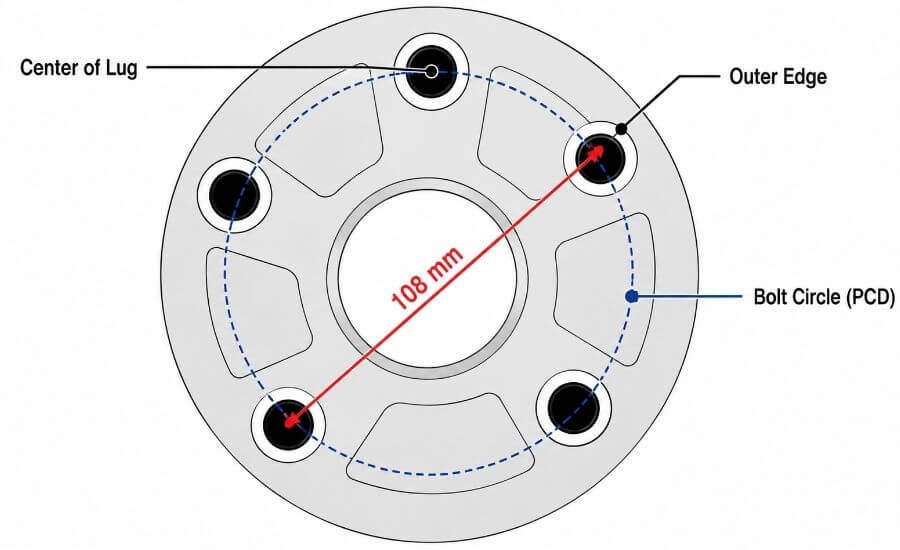
How to Measure a 5-Lug Bolt Pattern
Unlike a 4-lug or 6-lug wheel, a 5-lug bolt pattern cannot be measured directly from one hole to the opposite hole because there isn’t a lug hole directly across from it.
To measure a 5×114.3 bolt pattern:
- Identify any one lug hole.
- Measure from the center of that lug hole to the outer edge of the lug hole farthest away.
- Record the measurement in millimeters.
- A measurement close to 114.3 mm indicates a 5×114.3 bolt pattern.
Common Measuring Mistakes
Even a small measuring error can lead to ordering the wrong wheels. Avoid these common mistakes:
- Measuring from edge to edge instead of center to edge.
- Measuring in inches without converting correctly.
- Measuring while the lug nuts are still installed.
- Assuming every 5-lug Toyota wheel uses the same bolt pattern.
A Faster Way to Verify Wheel Fitment
If you know your Toyota Camry’s model year, the easiest and most reliable method is to use the year-by-year bolt pattern chart in this guide. It provides the factory specifications without requiring any manual measurements.
If you’re inspecting a used wheel, ask the seller for these specifications before purchasing:
- Bolt pattern
- Center bore
- Offset
- Wheel size (diameter × width)
- Part number (if it’s an OEM wheel)
Verifying these details takes only a few minutes and can save you from buying wheels that require modifications or don’t fit your Camry at all.
Toyota Camry Wheel Compatibility Guide
The Toyota Camry is one of the easier Toyota models to work with when it comes to wheel fitment, but compatibility still depends on more than the bolt pattern. A wheel can share the correct 5×114.3 mm pattern and still create problems if the offset, center bore, width, or brake clearance is off.
What Usually Fits Best
For most U.S.-market Camry models, wheels that are closest to factory specifications will give you the best fit and the least chance of issues. That means looking for wheels that match:
- Bolt Pattern: 5×114.3 mm
- Center Bore: 60.1 mm
- Thread Size: M12×1.5
- Offset: Close to the factory range for your model year
- Wheel Width and Diameter: Similar to OEM specifications
Camry-to-Camry Wheel Swaps
Many Camry wheels can swap between different model years because the bolt pattern stayed the same across the U.S.-market lineup covered in this guide. Still, a direct swap is not always automatic.
Before reusing wheels from another Camry generation, check:
- Whether the wheel clears the brakes
- Whether the offset keeps the wheel inside the fender
- Whether the tire size matches your current setup
- Whether the center bore is correct or needs hub-centric rings
Toyota and Lexus Wheel Compatibility
Some Toyota and Lexus wheels may physically bolt onto a Camry if they share the same 5×114.3 pattern, but that does not mean they are a perfect fit. Differences in offset, hub bore, and wheel width can change how the wheel sits on the car.
Always compare the full wheel specification, not just the lug pattern, before assuming interchangeability.
What to Check Before Buying Used Wheels
If you’re shopping for used OEM or aftermarket wheels, ask for these details first:
- Bolt pattern
- Center bore
- Offset
- Wheel width
- Wheel diameter
- Part number, if available
A wheel that looks right in photos can still be wrong for your Camry once it is mounted. Checking these specs before buying helps avoid fitment issues, vibration, and returns.
Best Rule to Follow
If you are unsure about compatibility, stay as close as possible to the original wheel specifications for your exact Camry year and trim. That gives you the safest chance of a proper fit without rubbing, steering interference, or unwanted handling changes.
Can You Use Wheels With a Different Bolt Pattern?
The short answer is no. A replacement wheel should always match your Toyota Camry’s factory bolt pattern. Installing a wheel with a different bolt pattern can prevent the wheel from seating correctly on the hub, increasing the risk of vibration, uneven lug nut pressure, and wheel damage.
What Happens If the Bolt Pattern Doesn’t Match?
Even a small difference in bolt pattern can cause installation problems. For example, a wheel with a 5×112 or 5×120 bolt pattern is not designed to fit a Camry that requires 5×114.3.
Trying to force a mismatched wheel into place may result in:
- The wheel not sitting flush against the hub
- Uneven pressure on the lug nuts or wheel studs
- Excessive vibration while driving
- Premature wear on wheel studs and lug nuts
- Reduced handling and braking performance
If the wheel doesn’t mount naturally, it isn’t the correct fit.
What About Wheel Adapters?
Wheel adapters are available for changing one bolt pattern to another, but they also change the wheel’s effective offset and add another component between the wheel and the hub.
While some owners use adapters for custom builds, they are generally not necessary for everyday street-driven Camrys when properly fitting wheels are widely available.
If you choose to use wheel adapters, make sure they are:
- Designed for your exact vehicle and wheel specifications
- Manufactured from high-quality materials
- Installed according to the manufacturer’s torque specifications
- Inspected regularly for wear or loosening
A Better Alternative
Instead of using adapters, choose wheels that already match your Camry’s factory specifications. This simplifies installation, preserves the original suspension geometry, and reduces the chance of fitment problems.
When comparing replacement wheels, verify all of the following before purchasing:
- Bolt pattern
- Center bore
- Offset
- Wheel width
- Wheel diameter
- Load rating
Taking a few extra minutes to confirm these specifications is usually much easier—and safer—than trying to make an incompatible wheel fit.
What Other Wheel Specs Matter Besides the Bolt Pattern?
Matching the correct bolt pattern is only the first step in choosing replacement wheels. Before you buy OEM or aftermarket wheels for your Toyota Camry, there are several other specifications that determine whether the wheels will fit properly and perform as expected.
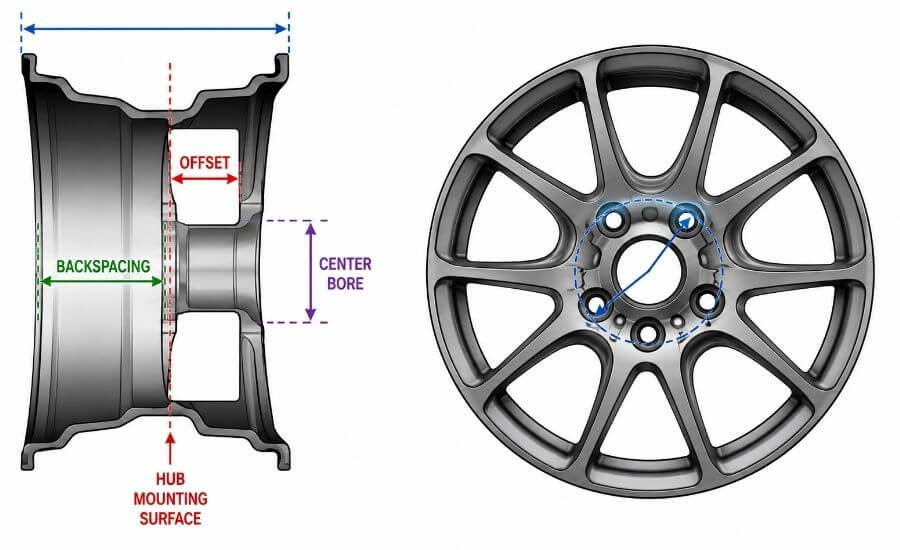
Offset
Wheel offset is the distance between the wheel’s mounting surface and its centerline. It determines how far the wheel sits inward or outward relative to the suspension and fender.
A wheel with an incorrect offset may:
- Rub against the suspension or fender
- Change steering feel
- Increase tire wear
- Reduce brake or suspension clearance
When replacing your wheels, choose an offset that’s as close as possible to the factory specification for your Camry.
Center Bore
The center bore is the hole in the middle of the wheel that fits over the vehicle’s hub.
- A smaller center bore won’t fit over the hub.
- A larger center bore can usually be used with hub-centric rings to help keep the wheel properly centered.
A correctly centered wheel helps reduce the chance of highway-speed vibration.
Wheel Width
Wheel width affects which tire sizes can be safely installed.
A wheel that’s too narrow or too wide for your tires can affect:
- Tire wear
- Handling
- Ride comfort
- Sidewall support
If you’re reusing your current tires, make sure the new wheel width falls within the tire manufacturer’s recommended range.
Backspacing
Backspacing measures the distance from the wheel’s mounting surface to the inner edge of the wheel.
Although most manufacturers list offset instead of backspacing, both measurements describe how the wheel sits inside the wheel well. Backspacing becomes especially important when checking clearance around suspension components or brake hardware.
Load Rating
Every wheel has a maximum load rating.
The replacement wheel should have a load capacity that meets or exceeds the original factory wheel. Installing wheels with an insufficient load rating can compromise durability and safety, especially when carrying passengers or cargo.
Lug Seat Type
The lug seat is the surface where the lug nut contacts the wheel.
Common seat types include:
- Conical (Cone Seat)
- Ball (Radius Seat)
- Flat Seat
The lug nuts must match the wheel’s seat design. Even if the thread size is correct, using the wrong lug seat type can prevent the wheel from seating properly and may lead to loosening over time.
Common Toyota Camry Wheel Fitment Mistakes
A wheel can have the correct Toyota Camry bolt pattern and still fit poorly if another specification is wrong. This is one of the biggest mistakes buyers make when shopping for replacement or aftermarket wheels.
1. Checking Only the Bolt Pattern
Many buyers stop after confirming 5×114.3 mm, but that is only one part of fitment. A wheel with the right bolt pattern can still sit too far inboard or outboard if the offset is incorrect.
2. Ignoring the Center Bore
The Camry uses a 60.1 mm center bore. If the wheel bore is too small, it will not mount. If it is larger, you may need hub-centric rings to help center the wheel properly.
3. Choosing the Wrong Offset
Offset affects how far the wheel sits inside or outside the fender. A wheel with the wrong offset can create rubbing, steering issues, or a wider stance than intended.
4. Overlooking Wheel Width
Two wheels can share the same bolt pattern and still require different tire sizes or clearances. A wider wheel may look fine on paper but interfere with suspension parts or the inner fender.
5. Reusing the Wrong Lug Nuts
The Camry uses M12×1.5 thread size, so the lug nuts must match that specification. Using the wrong lug nuts can damage the threads or prevent proper tightening.
6. Forgetting About Brake Clearance
Some wheels fit the bolt pattern and still fail because the inner barrel does not clear the brakes. This is especially important when moving between different trims or wheel sizes.
7. Buying Based on Photos Alone
Used wheels often look compatible in photos, but photos do not show offset, bore size, or width. Always confirm the full specification before buying.
Best Habit to Follow
Before you buy any wheel for a Toyota Camry, check these five details together:
- Bolt pattern
- Center bore
- Offset
- Wheel width
- Thread size
When all five match your Camry’s needs, the chance of a proper fit is much higher.
Related Topic: Toyota Camry Tire Pressure
Frequently Asked Questions
Is every Toyota Camry 5×114.3?
For the U.S.-market models covered in this guide, yes. The Camry has used 5×114.3 across the model years listed here.
What does 5×114.3 mean?
It means the wheel has 5 lug holes and the holes are arranged on a 114.3 mm bolt circle.
Where can I check my Toyota Camry bolt pattern?
The easiest way is to use your vehicle’s model year and compare it with the year-by-year chart in this guide. You can also verify the specs on the wheel itself or in factory documentation.
Conclusion
Finding the correct Toyota Camry bolt pattern doesn’t have to be complicated. For U.S.-market Camry models from 1990 through 2026, the factory bolt pattern is 5×114.3 mm (5×4.5 inches), making wheel selection easier than many drivers expect.
However, choosing the right wheel involves more than matching the bolt pattern. Before purchasing replacement or aftermarket wheels, take a few minutes to verify the center bore, offset, wheel width, load rating, and lug seat type. Checking these specifications together helps ensure proper fitment, reliable performance, and long-term safety.
If you’re unsure about your vehicle’s specifications, use the year-by-year chart in this guide as your starting point. It provides a quick way to identify the factory wheel specifications for your exact Toyota Camry model year before you buy new wheels.
Sources and References
The information in this guide has been compiled and cross-checked using manufacturer documentation and trusted wheel fitment resources, including:
- Toyota Owner’s Manuals
- Toyota Parts Catalog
- Toyota Technical Information System (TIS)
- OEM wheel specification databases
- Reputable wheel fitment reference databases
Because wheel specifications may vary by market, production date, or trim level, always verify the specifications for your specific Toyota Camry model year before purchasing replacement wheels or tires.
