
Continental CrossContact LX20 Review
Last updated on November 30th, 2025
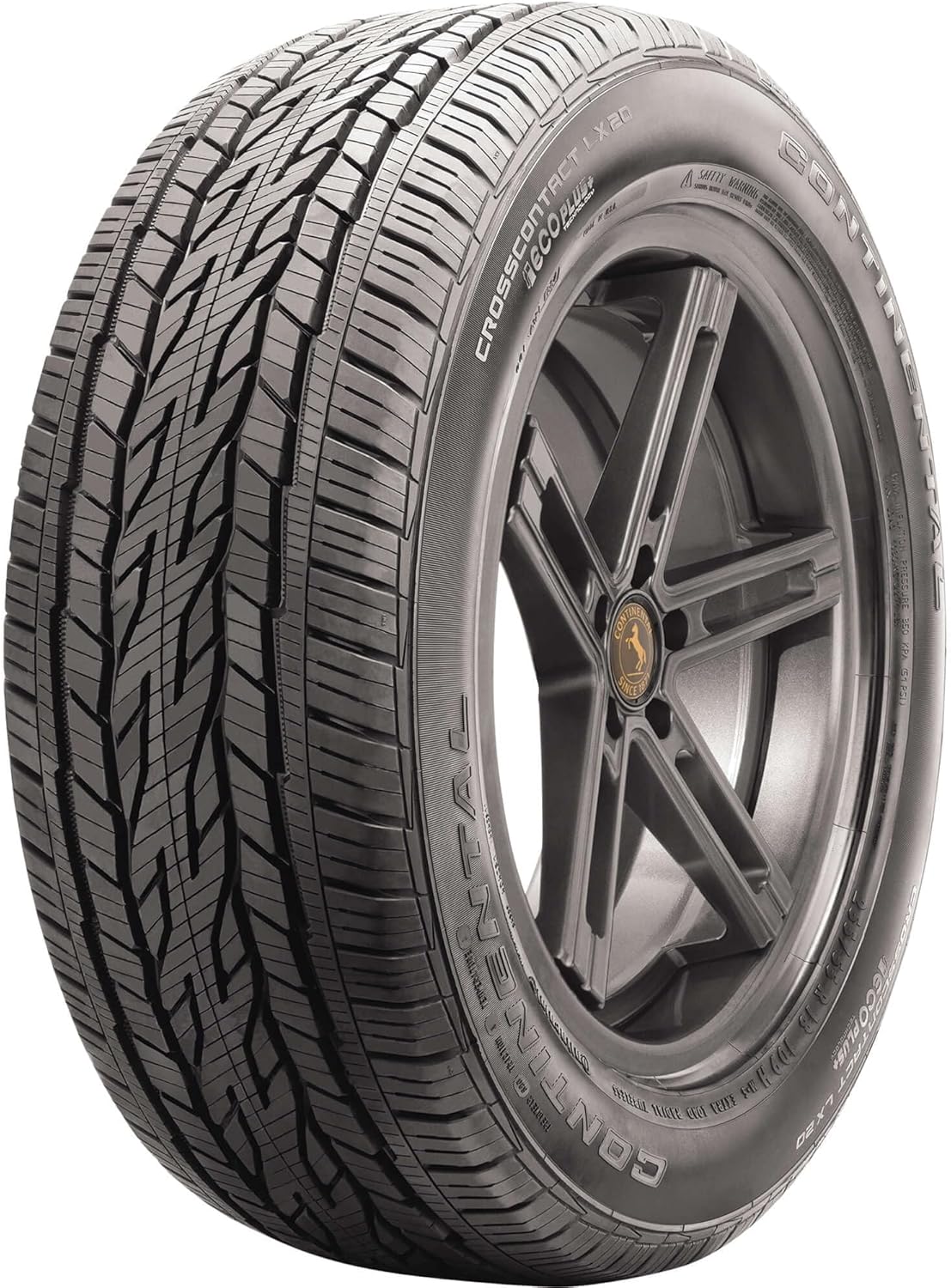
If you’re searching for a quiet, comfortable, and long-lasting tire for your SUV or crossover, you’ve probably come across the Continental CrossContact LX20. In this Continental CrossContact LX20 review, I’ll break down exactly how this tire performs in real-world driving, how long it lasts, how it compares to competitors, and most importantly — whether it’s the right choice for your vehicle in 2025.
The LX20 is the upgraded version of the original CrossContact LX and is designed primarily for highway and city driving comfort, with added technology focused on fuel efficiency and wet-road safety.
Let’s dive in.
Quick verdict (TL;DR)
- Overall: Strong choice for drivers prioritizing quiet, comfortable highway driving and reliable wet performance.
- Score: ⭐ 8.6 / 10 (comfort 9.0, wet braking 8.5, tread life 8.5, light snow 7.0, value 8.0)
- Best for: Long-distance commuters, families, anyone who wants a quiet, fuel-efficient touring SUV tire.
- Not ideal for: Heavy snow/ice conditions, aggressive off-road use, or drivers seeking high-performance sporty handling.
- Recommendation: Buy if you drive mostly on paved roads and prioritize comfort + fuel efficiency; consider winter-specific tires for heavy snow areas.
(Throughout the review I reference Continental’s product specs, independent test and owner feedback to support the conclusions.)
Key features & what they mean for drivers
EcoPlus Technology & tread compound
Continental uses EcoPlus™ compound (Tg-F polymers and +Silane additives) aimed at reducing rolling resistance for better fuel economy while improving wet braking and treadwear. In practice that means slightly better MPG and secure wet grip without sacrificing comfort.
Symmetric tread & Smooth Response Technology
The LX20’s symmetric tread pattern and Smooth Response design create continuous rolling surfaces for quieter operation and precise steering feel — this is why many owners report a noticeably smoother, less noisy ride than many OEM or economy tires.
Traction grooves and biting edges
Specialized groove geometry and added biting edges (Traction Grooves/X-Sipe edges) help evacuate water and provide more edges for snow traction — improving hydroplaning resistance and light-snow handling, though it’s still an all-season tire, not a dedicated winter tire.
Vehicle compatibility & available sizes
This section tells readers which vehicles the Continental CrossContact LX20 fits and how to choose the right size. Keep language short and practical.
What kinds of vehicles is this tire made for?
- SUVs and crossovers (CUVs) — cars like the RAV4 or CR-V.
- Light trucks and minivans — family haulers and small trucks.
In short: it’s designed for passenger utility vehicles that need a comfortable, quiet ride.
Popular vehicle examples
- Toyota RAV4
- Honda CR-V
- Subaru Forester
- Ford Explorer
(These are examples — exact fit depends on the model year and trim.)
Typical rim sizes
Tires are made to fit different wheel (rim) diameters. Common sizes for this model include:
- 16″ to 20″ rims (some sizes may go above 20″ depending on the vehicle).
The number is the wheel diameter in inches. Make sure the tire size you buy matches your wheel.
Load ratings (Standard vs XL)
- Load rating tells you how much weight a tire can safely carry.
- Standard is fine for most passenger SUVs.
- XL (Extra Load) means the tire is reinforced to carry more weight — useful for heavier vehicles, heavy cargo, or towing.
If you often carry lots of weight or tow things, consider XL-rated tires.
Speed ratings (what T, H, V mean)
Speed rating letters are a safety guideline for the tire’s maximum designed speed:
- T = up to 118 mph (190 km/h)
- H = up to 130 mph (210 km/h)
- V = up to 149 mph (240 km/h)
You don’t need a high speed rating unless your vehicle or driving habits require it. Always follow the vehicle manufacturer’s recommendation.
Tip — How to pick the right size for your vehicle (step-by-step)
- Check the door placard or owner’s manual. The easiest, safest place to find the factory tire size and load/speed requirements.
- Look at your current tire’s sidewall. You’ll see a code like 225/65R17 — that’s the exact size.
- Match load and speed requirements. Use the same or better load index and the same or higher speed rating than the factory tire.
- If you want a different rim size, talk to a tire shop — changing rim size affects ride, speedometer accuracy, and clearance.
- Ask a pro when unsure. A reputable tire shop or dealer can confirm fitment and suggest the best SKU for your vehicle and driving needs.
Ride Comfort & Road Noise (One of Its BIG Strengths)
The first thing most drivers notice after installing this tire is how quiet their car suddenly feels.
On the highway, the ride becomes smooth and calm. Instead of hearing a constant humming or buzzing sound from the road, there is mostly… silence. You can have a normal conversation without raising your voice. You can enjoy music or a podcast without turning up the volume. For people who spend a lot of time on highways, this small change makes a big difference.
In the city, where roads are often uneven, full of patches, small holes, or speed bumps, the tire still feels soft and comfortable. When you drive over rough spots, the tire helps soften the impact. Instead of feeling every bump through the steering wheel or seat, the car feels more stable and relaxed. This is especially noticeable for people who frequently drive through busy downtown roads.
Vibration is another problem that many drivers don’t realize they live with—until it’s gone. With this tire, vibration through the steering wheel and floor is reduced. The drive feels cleaner and smoother, even at higher speeds. You don’t feel that small, constant shaking that older or cheaper tires often cause.
When compared to many factory-installed (OEM) tires, the difference is even clearer. Many stock tires are designed mainly to be cheap, not to be comfortable. They often become noisy after a short time, especially on concrete roads. This tire is built with comfort in mind, so it stays quieter for much longer.
Why this tire is great for:
✅ Families – Quiet and smooth rides mean sleeping kids won’t be disturbed, and long drives feel less tiring.
✅ Long-distance drivers – Less noise and vibration reduce fatigue on highways.
✅ Uber/Lyft drivers – A smoother ride gives passengers a better experience and can even lead to better ratings.
Dry, Wet & Light Snow Performance (Safety Focus)
When you’re driving, the most important question is simple: Do I feel safe on the road? That’s where this tire really shows its strength.
Let’s break it down in the easiest way possible.
Dry Roads – Stable and Easy to Control
Safety Rating: 9/10
Imagine driving on a warm, dry afternoon. The road is clear, and traffic is moving fast. With this tire, the steering feels predictable. When you turn the wheel, the car follows smoothly. There is no lag and no drifting feeling.
When you go around corners, the car stays balanced and in control. You don’t feel like it’s sliding or leaning too much. That extra stability helps you feel confident, especially when changing lanes or making quick turns.
Braking is also strong. When you press the brake pedal, the car slows down in a steady and controlled way. There’s no sudden sliding or skidding. It feels firm, secure, and reliable.
Wet Roads – Built for Rainy Conditions
Safety Rating: 8.5/10
Rain is where many tires start to struggle — but not this one.
On wet roads, the tire pushes water away instead of letting it build up underneath. This helps prevent hydroplaning, which is that scary moment when your car starts to “float” on top of the water instead of gripping the road.
Even during heavy rain, you can still feel that the tire is holding onto the road. On the highway, it keeps its grip and doesn’t suddenly lose control. You can change lanes and make turns without feeling nervous.
Braking in the rain also feels safe. The car stops in a straight line instead of slipping forward. This matters a lot when a traffic light suddenly turns red or a car stops in front of you.
Light Snow – Good for Small Surprises
Safety Rating: 7/10
This tire does offer M+S (Mud and Snow) performance, which means it can handle light snow and cold weather better than normal summer tires.
If there’s a light dusting of snow on the road or cold, slippery pavement, the tire can still give you control. You can drive at lower speeds and feel reasonably safe going to work or the grocery store.
However, it’s very important to know that this is NOT a true winter tire.
In deep snow, heavy ice, or extreme winter conditions, this tire will struggle. It is not designed for harsh winters. If you live in an area with long, snowy seasons, you will still need proper winter tires.
Think of it this way: this tire is good for “surprise snow days,” but not for a full winter season.
Quick Safety Summary
| Road Condition | Safety Rating | Simple Explanation |
| Dry Roads | 9/10 | Strong grip, stable turns, safe braking |
| Wet Roads | 8.5/10 | Excellent in rain, resists hydroplaning |
| Light Snow | 7/10 | Fine for small amounts, not heavy snow |
This tire is a safe and reliable choice for everyday driving in dry and wet conditions, and it can handle light snow when needed. Just don’t expect it to replace a winter tire in extreme weather.
Real-World Tread Life & Warranty
When you buy a tire, you’re not just paying for rubber — you’re paying for how many safe miles it will carry you. So, the big question is: How long will this tire actually last in real life?
Let’s talk about that in the simplest way possible.
What the UTQG Rating Really Means
You might see a number on the tire like “700 A A”. This is called the UTQG rating. While it looks technical, the main part you need to focus on is the first number — 700.
This number is a rough guide that tells you how long the tire should last compared to others. In simple terms:
- A tire rated 300 may last around 30,000 miles
- A tire rated 500 may last around 50,000 miles
- A tire rated 700 may last 70,000 miles or more
It’s not an exact promise — it’s just a helpful clue. Higher number = longer life.
The other letters (A, A) relate to braking and heat resistance. The good news is: these tires score well there, which means they are built to be safe and durable in everyday driving.
How Long It Actually Lasts (Miles & Years)
In normal, real-world driving, most drivers can expect:
- 60,000 to 70,000 miles
- Around 4 to 6 years of use (for the average driver)
If you have smooth driving habits and take care of the tires, they can even last longer. People who mainly drive on highways (instead of rough city roads) often see the best mileage.
This makes it a great long-term investment for families, commuters, and ride-share drivers.
What Affects How Fast the Tire Wears Down?
Even the best tire will wear out faster if it’s not treated well. A few things that make a big difference:
- Driving too fast all the time
- Hard braking or fast, sharp turns
- Carrying very heavy loads often
- Roads with potholes or rough surfaces
- Not rotating or aligning the tires
Your driving style plays a bigger role than most people think.
Smooth and steady = longer tire life.
Continental’s Treadwear Warranty
Continental offers a limited treadwear warranty on this tire. In simple words, it means:
If the tire wears out earlier than expected under normal driving conditions, Continental may help replace it or give a discount on a new one.
This shows that the company is confident in how long the tire will last. It adds an extra level of peace of mind to your purchase.
(Always check with the seller for the exact warranty details in your area.)
Easy Maintenance Tips to Get the Full Life
These small habits can make your tire last thousands of miles longer:
1. Rotate your tires regularly
Move the tires to different positions every 5,000 – 7,000 miles. This helps them wear evenly.
2. Keep your wheels aligned
If your car pulls to one side, get it checked. Bad alignment wears out tires very quickly.
3. Check tire pressure monthly
Under-inflated tires wear faster and waste fuel. Over-inflated tires feel hard and wear in the middle. The right pressure = longer life + safer driving.
These simple steps take just a few minutes but can save you a lot of money in the long run.
Pros & Cons (Honest Review)
Pros
- Very quiet and comfortable at highway speeds.
- Strong wet braking and hydroplaning resistance.
- Long tread life potential; conservative UTQG numbers in many sizes.
- Designed with fuel efficiency in mind (lower rolling resistance).
Cons
- Not suited for heavy snow or long icy conditions — not a winter tire.
- Some owners report warranty claim frustrations or faster wear under certain circumstances (align/vehicle dependent).
- Generally priced above budget options (but often below some premium competitors depending on size and market).
CrossContact LX20 vs. the top competitors
Imagine you’re standing in a tire shop with four boxes in front of you: Continental CrossContact LX20, Michelin Defender LTX, Pirelli Scorpion Verde, Bridgestone Dueler H/L Alenza Plus, and Goodyear Assurance WeatherReady. Each box promises comfort, safety, and long life — but each has a slightly different personality. Here’s how they compare, in plain language.
Continental CrossContact LX20
Think of the LX20 as the quiet, smooth friend who makes long drives easier. It’s built to be comfortable on highways, to resist water well in the rain, and to last a long time in normal driving. Continental also promotes fuel-saving tech and offers mileage warranties on many sizes. If you want a calm, family-friendly ride, this is the tire to consider.
- Price: Mid-to-premium (varies by size and seller).
- Comfort: Excellent — very quiet and smooth.
- Tread life: Strong — many sizes carry high UTQG numbers and 60–70k warranty options.
- Wet performance: Very good — designed to evacuate water and reduce hydroplaning.
- Best for: Families, commuters, long-distance drivers who want a quiet, reliable all-season tire.
Michelin Defender LTX
Michelin’s Defender LTX is the one in the group known for long life. People who want the most miles out of their tires often lean to Michelin. It’s also very safe in wet conditions and has a reputation for solid all-around performance. If you’re trying to maximize miles between replacements, this one shines.
- Price: Often a bit higher than average (Michelin’s premium positioning).
- Comfort: Very good — comfortable and refined for highway driving.
- Tread life: Excellent — engineered for long tread life and often shows high UTQG numbers.
- Wet performance: Strong — designed to keep grip in rain and slush.
- Best for: Drivers who want maximum mileage and a reliable all-round performer (commuters and fleet owners).
Pirelli Scorpion Verde
Pirelli’s Scorpion Verde leans toward good dry grip and fuel efficiency. It’s engineered to be quiet and fairly long-lasting, and it markets itself as a greener, low-rolling-resistance option. If you mostly drive on dry roads and want good handling plus low fuel use, this tire is tempting.
- Price: Comparable to other premium touring tires; can vary by market.
- Comfort: Good — low internal noise, though some users report it can get firmer as it wears.
- Tread life: Good — many users report solid mileage (often 40–60k reported in reviews).
- Wet performance: Generally good, though some tests note mixed results in sharp wet cornering.
- Best for: Drivers who want responsive dry-road handling plus decent fuel economy.
Bridgestone Dueler H/L Alenza Plus
Bridgestone’s Alenza Plus is built to be quiet, comfortable, and long-lived — with some sizes backed by very long mileage warranties (even up to 80k in certain lines). It’s a balanced tire for highway cruising with solid wet and dry grip. If you want comfort and a long warranty, Bridgestone is worth a look.
- Price: Mid-to-premium.
- Comfort: Excellent — owners often praise its quiet ride.
- Tread life: Very good — long limited warranties available on many sizes.
- Wet performance: Solid — good hydroplaning resistance and wet grip.
- Best for: Drivers wanting a quiet, long-wearing touring tire with strong warranty backing.
Goodyear Assurance WeatherReady
Goodyear positions WeatherReady as an all-weather tire with special focus on wet traction and evolving grooves that keep working as the tire wears. It’s a great choice if you frequently drive in heavy rain or want the flexibility of an all-weather tire that can handle occasional snow.
- Price: Mid-range (depends on size and seller). Gear reviews show a $200–$280 range for common sizes.
- Comfort: Good — generally smooth and quiet in most sizes.
- Tread life: Good — many sizes carry mileage warranties around 60k.
- Wet performance: Excellent — designed specifically to move water and resist hydroplaning.
- Best for: Drivers in rainy climates or those who want confident wet-road performance and decent winter capability without swapping tires.
Quick decision guide — which one should you pick?
- Pick the Continental CrossContact LX20 if you want the quietest, most comfortable ride for family trips and highway miles, plus very good wet performance.
- Pick the Michelin Defender LTX if your priority is maximum tread life and a strong all-round, durable tire.
- Pick the Pirelli Scorpion Verde if you drive mostly on dry roads and want good handling with fuel savings.
- Pick the Bridgestone Alenza Plus if you want comfort + a long mileage warranty and a refined highway ride.
- Pick the Goodyear Assurance WeatherReady if you need top wet-weather performance and all-weather flexibility.
Customer Reviews and Ratings
To provide a well-rounded Continental CrossContact LX20 review, it’s important to look beyond the test data and hear from the real drivers who’ve put thousands of miles on these tires. We analyzed user reviews from trusted sources like Tire Rack, Discount Tire, and online SUV forums to bring you a snapshot of what owners think in 2025.
⭐ Overall Ratings (As of 2025)
- Tire Rack: ★★★★☆ (4.4/5)
- Discount Tire: ★★★★☆ (4.6/5)
- Amazon: ★★★★☆ (4.3/5)
👍 Common Praise:
- Quiet Ride:
“Even at highway speeds, these tires are whisper quiet. Made my CR-V feel like a luxury vehicle.” – Tire Rack user - Great Tread Life:
“I’ve put 55,000 miles on them and there’s still good tread left. Worth every penny.” – Discount Tire reviewer - Improved MPG:
“Got a noticeable bump in fuel economy after switching from the stock tires.” – Toyota RAV4 driver on Reddit
👎 Common Complaints:
- Winter Performance:
“They’re fine in light snow, but not something I’d trust in a serious winter storm.” - Price Point:
“More expensive than some other tires, but you’re paying for quality and comfort.”
🛠 Noteworthy Trends:
- Highly rated by families, commuters, and highway drivers
- Slight dip in satisfaction among drivers in northern snowy climates
- Strong reputation for longevity, ride comfort, and fuel savings
Who Should Buy This Tire
This tire is perfect for you if…
You want a quiet, smooth, and comfortable ride
If road noise bothers you or you spend a lot of time on highways, this tire is like a soft pillow for your car. It keeps the ride calm and peaceful, even on long trips.
You drive a family SUV, CUV, minivan, or light truck
This tire was made for everyday vehicles, especially those used for school runs, groceries, commuting, and road trips.
You drive mostly on dry and wet roads
It performs very well in normal weather and rainy conditions. If your weather is mostly clear or rainy, this tire will keep you feeling safe and in control.
You care about long tread life and good value
This tire is built to last. If you don’t want to keep replacing tires every year or two, this one makes sense.
You are a commuter or ride-share driver (Uber/Lyft)
Long hours on the road? This tire will stay comfortable and quiet — which is great for both you and your passengers.
This tire may NOT be right for you if…
You live in an area with heavy snow and icy winters
While it can handle light snow, this is not a true winter tire. If your roads stay icy for months, you’ll need something specially made for winter.
You drive off-road or on rough terrain
This tire is designed for smooth roads, not rocks, mud, or trails. If you often go off-roading or camping on rough land, look for an all-terrain tire instead.
You want a sporty, aggressive driving feel
If you like sharp turns, fast cornering, and a “performance car” feel, this isn’t the tire for you. It’s built for comfort — not racing.
Your top priority is the cheapest tire possible
This is a quality, premium touring tire. If your budget is very tight, there are cheaper options — but you may lose comfort and durability.
Buying guide & tips
- Check exact size/warranty before purchase — warranty terms and mileage guarantees vary by SKU and region.
- Shop around: compare local shops, Tire Rack, SimpleTire, national retailers — prices vary by size and season.
- Install & balance: have tires mounted, balanced, and aligned by a reputable shop to avoid uneven wear.
- When to replace: replace at 2/32″ for safety; consider swapping to winter tires when temperatures routinely fall below ~45°F (7°C).
- Rotation: rotate every 5–7.5k miles (or per vehicle manual) to maximize tread life.
Conclusion — Is the Continental CrossContact LX20 Worth It?
The Continental CrossContact LX20 is a solid all-season touring tire designed for SUVs, crossovers, and light trucks. It shines in quiet, comfortable highway driving, offers excellent wet braking, and can provide long tread life when properly maintained.
It’s ideal for families, daily commuters, and long-distance drivers who value safety, comfort, and reliability. However, if you frequently drive off-road, face heavy snow or icy conditions, or crave a sporty, high-performance feel, this tire may not meet your needs.
Overall, if your goal is a peaceful, dependable ride with strong all-around performance, the CrossContact LX20 is a smart choice. Pair it with proper tire care — regular rotation, alignment checks, and correct tire pressure — to get the most miles and comfort out of your investment.
FAQs
Still have questions before buying? Here are answers to some of the most frequently asked questions about the Continental CrossContact LX20 in 2025:
Is the Continental CrossContact LX20 good in snow?
The LX20 performs reasonably well in light snow thanks to its siped tread blocks and all-season compound. However, it’s not 3PMSF-rated (Three-Peak Mountain Snowflake), so it’s not designed for severe winter conditions. For heavy snow or icy roads, consider a dedicated winter tire or an all-weather alternative.
How many miles can I expect from the CrossContact LX20?
Continental offers a 70,000-mile limited treadwear warranty, and many drivers report getting 60,000–75,000 miles depending on driving habits and rotation schedule. That’s excellent longevity for a tire in this class.
Is the CrossContact LX20 a quiet tire?
Yes, it’s one of the quietest tires in the all-season SUV category. Its symmetrical tread design and noise-reducing tread blocks make it ideal for highway driving, long commutes, and family road trips.
What vehicles are compatible with the CrossContact LX20?
This tire is a great match for many popular SUVs, CUVs, and crossovers, including:
- Toyota RAV4
- Honda CR-V
- Subaru Outback
- Ford Escape / Explorer
- Hyundai Santa Fe
- Nissan Rogue
- Jeep Cherokee
Always check tire specs to match your vehicle’s load and speed rating.
Is the CrossContact LX20 still a good buy in 2025?
Yes. Despite being on the market for several years, the CrossContact LX20 continues to be a strong contender for drivers who want a durable, fuel-efficient, and comfortable all-season tire. While newer models exist, its value and reliability remain hard to beat.
