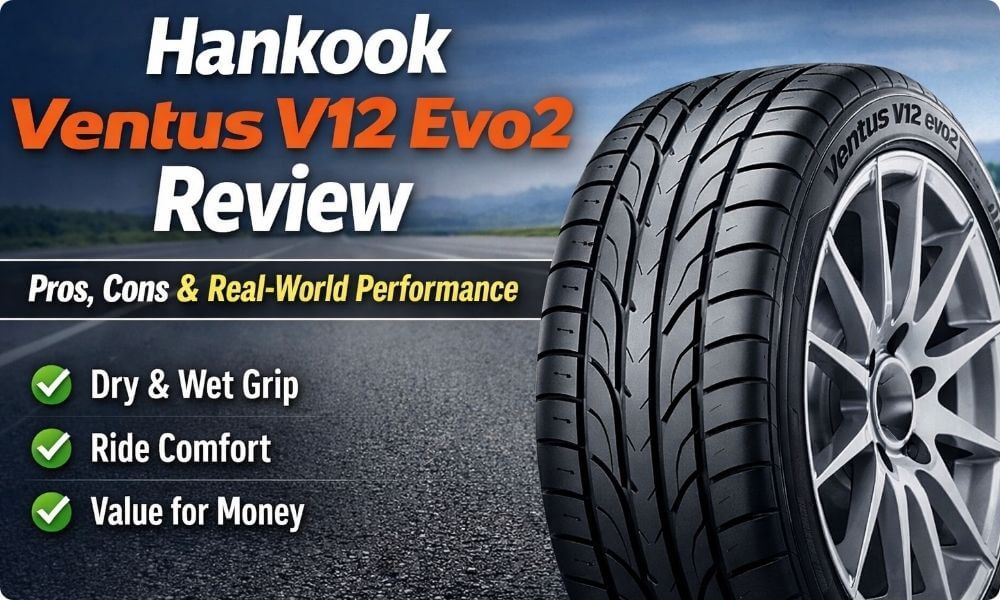
Hankook Ventus V12 Evo2 Review
Choosing the right performance tire can feel confusing, especially when you want strong grip and sharp handling without paying premium-brand prices. The Hankook Ventus V12 Evo2 has been popular for years among drivers who want sporty performance at a more reasonable cost. But with newer tires on the market, is it still a smart choice today?
This Hankook Ventus V12 Evo2 review breaks down how the tire performs in real-world driving, what it does well, where it falls short, and who it’s actually best for. The goal is simple: help you decide if this tire fits your driving style, car, and expectations.
Who This Tire Is For
The Hankook Ventus V12 Evo2 is designed for drivers who enjoy a more engaging driving experience but still rely on their car every day. It’s aimed at people who want confident cornering, responsive steering, and good wet traction without paying the higher prices often associated with top-tier performance brands.
This tire is a strong option for:
- Sporty sedans, coupes, and hatchbacks
- Drivers in warm or mild climates
- Daily drivers who enjoy spirited driving on weekends
If you’re looking for a quiet touring tire or something that can handle snow and freezing temperatures, this won’t be the right fit. But if performance matters and value is important, the Ventus V12 Evo2 deserves a close look.
Hankook Ventus V12 Evo2 — Overview
Key specifications
- Tire type: Ultra-high-performance summer — built for warm weather, grip and sporty handling (not for snow or freezing temps).
- Available sizes: Offered in a wide range for sedans, coupes and hot hatches — check the sidewall or retailer for exact fits.
- Speed ratings: Vary by size — the rating on the tire shows the maximum safe speed for that size.
- Load ratings: A number on the sidewall that tells how much weight each tire can carry.
- UTQG rating: Three-part industry code for treadwear, traction and temperature. Higher treadwear usually means longer life; traction/temperature show grip and heat resistance.
- Treadwear warranty: Some sizes may have a limited manufacturer warranty — check Hankook or your seller for terms and mileage coverage.
Design & technology highlights
- Silica-enhanced tread compound: Rubber mixed with silica for better grip, especially in wet conditions.
- Directional tread pattern: V-shaped grooves that help channel water away to reduce hydroplaning (must be mounted in the correct direction).
- Wide shoulder blocks: Bigger outer tread blocks for firmer grip during cornering and sharper steering.
- High-grip summer compound: A softer, stickier rubber that improves braking and handling on warm roads (not suited for cold or snowy conditions).

Real-World Driving Performance
Dry Road Performance
On dry pavement, the Hankook Ventus V12 Evo2 feels confident and responsive. Steering response is quick, and the tire provides solid feedback, which makes the car feel more connected to the road. During cornering, the tire holds its line well and doesn’t feel soft or vague.
Braking performance is also strong, especially at city and highway speeds. For everyday spirited driving, the grip level is more than enough, and most drivers will feel comfortable pushing a bit harder on twisty roads.
Wet Road Performance
Wet performance is one of the strong points of this tire. In light and moderate rain, traction remains predictable, and the car feels stable even during braking or turning. The tread design helps reduce hydroplaning when driving through standing water, though like most summer tires, caution is still needed in heavy rain at high speeds.
Compared to cheaper performance tires, the Ventus V12 Evo2 generally inspires more confidence when the road gets wet.
Ride Comfort & Noise Levels
For a performance tire, ride comfort is surprisingly decent. Small bumps and rough pavement are handled well enough for daily commuting, though you will feel the road more than with a touring tire.
Road noise is moderate when the tire is new. As the tread wears, noise can increase slightly, especially at highway speeds. It’s not unbearable, but drivers who prioritize a quiet ride should be aware of this trade-off.
Longevity & Durability
Tread life is average for an ultra-high-performance summer tire. Many drivers report usable performance for around 20,000 to 30,000 miles, depending on driving style, alignment, and rotation habits.
As the tire wears, grip gradually decreases, particularly in wet conditions. Regular rotations and proper inflation help extend its life, but this is not a tire meant to last forever. Heat resistance is good for daily driving and occasional spirited use, but it’s not designed for track abuse.
Cold temperatures are a concern. Once temperatures drop near freezing, the rubber hardens and grip drops noticeably. This tire should not be used in winter conditions.
Fuel Efficiency & Rolling Resistance
The Ventus V12 Evo2 is not designed with fuel efficiency as a top priority. Rolling resistance is higher than that of touring or all-season tires, which may lead to a small drop in fuel economy.
Most drivers will see only a minor difference, but if maximizing MPG is important to you, this tire may not be ideal. The trade-off is improved grip and handling, which many drivers find worth it.
Pros and Cons Summary
The Hankook Ventus V12 Evo2 offers strong value, but it’s not perfect.
Pros
- Strong dry grip and responsive handling
- Reliable wet traction for a summer tire
- Sporty feel without premium pricing
- Wide range of sizes available
Cons
- Not suitable for cold or winter conditions
- Tread life is average, not exceptional
- Road noise can increase as the tire wears
Comparison With Competing Tires
Hankook Ventus V12 Evo2 vs Michelin Pilot Sport Series
Michelin Pilot Sport tires generally offer sharper handling and longer tread life, but they also cost significantly more. For drivers who want top-tier performance and don’t mind paying extra, Michelin has the edge. However, the Ventus V12 Evo2 delivers very respectable performance at a much lower price, making it a better value for many daily drivers.
Hankook Ventus V12 Evo2 vs Continental ExtremeContact Sport
The Continental ExtremeContact Sport tends to perform slightly better in wet conditions and offers a smoother ride. It also comes at a higher price point. The Hankook is a solid alternative if you want sporty handling and are willing to accept a bit more noise and slightly less refinement.
Best Vehicles for the Ventus V12 Evo2
This tire works best on sporty, performance-oriented vehicles such as compact sport sedans, hot hatches, and coupes. Cars like the BMW 3 Series, Audi A4, Honda Civic Si, Volkswagen GTI, and similar models pair well with this tire.
It’s a good match for drivers who enjoy responsive handling and live in regions with warm or mild climates year-round.
Who Should Buy This Tire (And Who Shouldn’t)
The Ventus V12 Evo2 is a good choice for drivers who want a sporty feel without paying premium-brand prices. If you enjoy spirited driving, value good wet and dry grip, and don’t expect extreme tread life, this tire makes sense.
It’s not a good option for drivers in cold or snowy climates, those who want a very quiet ride, or anyone looking for maximum mileage from a set of tires.
Pricing & Value for Money
Pricing varies by size and retailer, but the Ventus V12 Evo2 is commonly offered at a lower MSRP than equivalent Michelin or Continental tires. Retailers often list it in a competitive mid-range price slot that appeals to budget-conscious performance buyers.
Because it delivers strong dry grip, good wet traction, and reasonable comfort at this price, many buyers see it as a good value—especially if you’re not chasing the last tenth of lap time.
Final Verdict: Is the Hankook Ventus V12 Evo2 Worth It?
Yes, for the right driver, the Hankook Ventus V12 Evo2 is still worth buying. It delivers strong dry handling, dependable wet performance, and a sporty driving feel at a price that’s easier to justify than many premium alternatives.
It’s not the newest or most advanced tire on the market, but it remains a smart choice for daily drivers who want enjoyable performance without paying extra for a brand name.
FAQs About the Hankook Ventus V12 Evo2 Review
Is the Ventus V12 Evo2 good in rain?
Yes—compared with older summer tires it performs well in rain thanks to its silica compound and drainage-focused tread design. It maintains good wet braking and resists hydroplaning better than many older designs, though it’s still a summer tire and works best at warmer temperatures.
How long do Hankook Ventus V12 Evo2 tires last?
Expect mid-range tread life for a performance summer tire. UTQG numbers around 320 suggest moderate longevity; real mileage will depend on driving style, alignment, and road surfaces. Regular rotation and proper inflation help maximize life.
Can you use them in cold weather?
No. The compound is summer-specific—cold temperatures dramatically reduce grip and safety. Switch to winter or all-season tires when temperatures are regularly low.
Are they good for spirited driving?
Yes, for street-level spirited driving. They provide confident grip and handling for enthusiastic driving on dry and wet roads, but if you plan frequent track days you might prefer a track-focused tire.
