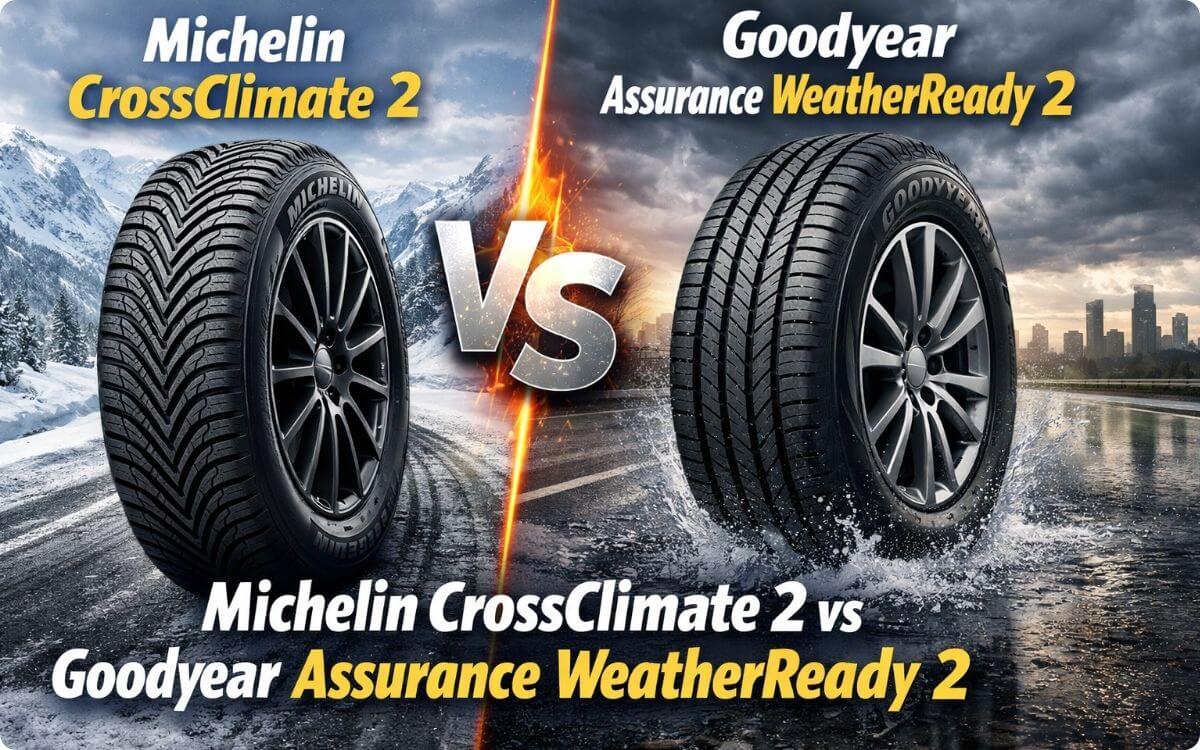
Michelin CrossClimate 2 vs Goodyear Assurance WeatherReady 2
Choosing the right all-weather tire can feel overwhelming, especially when you’re comparing two top options like michelin crossclimate 2 vs goodyear assurance weatherready 2. Both are designed to handle rain, light snow, and everyday driving without needing seasonal tire changes. But which one actually performs better where it matters most — wet roads, winter traction, comfort, and long-term value?
In this guide, we’ll break down the real differences between the Michelin CrossClimate 2 and the Goodyear Assurance WeatherReady 2 in simple, practical terms. No confusing technical language. No marketing hype. Just clear explanations to help you decide which tire fits your climate, driving style, and budget.
If you’re looking for a confident, year-round tire and want to make the right investment the first time, this comparison will give you the answers you need.
Quick Snapshot
Choose CrossClimate 2 if you drive in heavy rain often and want strong, consistent braking.
Choose WeatherReady 2 if you see regular light snow and prefer a slightly softer, more comfortable ride.
Both are solid all-weather options. The right choice depends on your climate and driving style.
At-a-Glance Comparison
| Category | CrossClimate 2 | WeatherReady 2 |
| Wet Grip | Excellent | Very Good |
| Snow Traction | Very Good | Excellent (light snow/slush) |
| Comfort / Noise | Firm but controlled | Slightly softer ride |
| Tread Life | Strong long-term wear | Good, slightly softer compound |
| Warranty | Competitive mileage warranty | Competitive mileage warranty |
| Price | Usually higher upfront | Often slightly lower |
(Exact prices and warranty terms vary by size and retailer.)
Best For
- Best for rainy climates → CrossClimate 2
- Best for light snow and slush → WeatherReady 2
- Best for long highway driving → CrossClimate 2
- Best for city comfort → WeatherReady 2
- Best value → Depends on local price and expected mileage
Who should consider these tires?
Both tires are aimed at drivers who want one set of tires that handles year-round without swapping to dedicated winter rubber. Typical buyers are daily commuters, owners of small SUVs or sedans, and families in regions with rainy seasons and occasional light snow.
If you live where winters are severe (deep snow, long periods below freezing), you should still consider a dedicated winter tire. Likewise, performance drivers or off-road users will want more specialized rubber.
Understanding “all-weather” tires
“All-weather” means the tire is designed to give better winter traction than a typical “all-season” tire while still performing well in warm, wet conditions. A few useful points:
- Look for the Three-Peak Mountain Snowflake (3PMSF) symbol on the sidewall — that’s the industry marker for acceptable winter performance.
- Standards and classifications come from organizations that set testing and marking guidance — for example, the European Tyre and Rim Technical Organisation and the Tire and Rim Association publish technical rules used by manufacturers and testers. In the U.S., safety guidance and research often references work from the National Highway Traffic Safety Administration.
- “All-weather” is not “all-conditions.” These tires are a compromise: better than an all-season in winter, but not as specialized as a winter tire in extreme cold and deep snow.
A practical tip: if your region averages only occasional snow or short cold snaps, a high-quality all-weather tire is a strong, convenient choice.
Overview of each tire
Michelin CrossClimate 2 — what it is and who it fits
The CrossClimate 2 is Michelin’s premium all-weather option. It’s built to prioritize consistent grip as the tire wears, with a directional tread that evacuates water well and a compound that keeps flexibility in cooler temperatures. In short, it’s engineered for long life, stable wet performance, and dependable light-snow traction.
Key features
- Tread that pushes water outward quickly, so the tire keeps contact in heavy rain.
- A rubber mix that stays a bit flexible when it’s cold, helping grip on chilly mornings.
- Lots of fine cuts (sipes) across the tread that keep biting edges as the tire wears down.
- Larger shoulder blocks that make the car feel steady in corners and under load.
- Engineered to roll with less resistance, which can save a little fuel over many miles.
- Typically sold with a strong mileage expectation and a solid warranty from the maker.

Strengths you’ll notice: confident braking on wet and dry, solid mileage expectations, and predictable handling.
Trade-offs: it sits at a higher price point, and some drivers describe a slightly firmer ride compared with softer touring tires.
Best for drivers who value longevity, safety in mixed wet/snow climates, and long mileage between purchases.
Goodyear Assurance WeatherReady 2 — what it is and who it fits
The Assurance WeatherReady 2 aims for a balance of comfort, winter grip, and everyday usability. It uses groove geometry and siping designed to move water and slush, and its construction tends to give a somewhat plush ride. Many drivers find it feels comfortable and confident in wet and light winter conditions.
Key features
- Tread layout with mixed block sizes that helps cut down road noise and smooth the ride.
- Grooves designed to move slush and water away from the contact patch, helping maintain grip.
- Close-packed siping that helps the tire bite into snow and wet surfaces.
- A compound tuned to give quick, predictable braking on wet roads in many common sizes.
- Sidewalls that flex a bit for comfort, which passengers will appreciate on long trips.
- Often priced a bit lower than premium rivals, so it’s easier on the wallet at purchase.

Strengths you’ll notice: very good wet braking at many sizes, comfortable ride, and typically a friendlier upfront price.
Trade-offs: warranty mileage can be slightly lower in some markets, and fuel efficiency may be a touch behind the most fuel-focused competitors.
Best for drivers who want a quieter, more comfortable daily ride with solid wet and light-snow capability at a more accessible price.
Head-to-Head Michelin CrossClimate 2 vs Goodyear Assurance WeatherReady 2 Performance Comparison
Between Michelin CrossClimate 2 and Goodyear Assurance WeatherReady 2, the differences show up where it matters most: wet roads, snow and slush, dry grip, comfort, tread life, and fuel use. Below I explain each area in plain language so you can picture real driving.
Wet Performance (Most important for many buyers)
Hydroplaning resistance is how well a tire keeps contact with the road when there’s standing water. A tire that channels water away quickly will keep rubber on pavement longer and help you steer through heavy rain.
Wet braking feel is the bite you feel when you press the brake on a soaked road. Some tires give a firmer, predictable stop; others feel softer but still stop short. Stability at highway speeds is how steady the car feels during heavy rain — whether the car wanders or tracks straight.
Imagine driving through a sudden downpour on the highway at 65 mph. A good tire keeps you tracking straight, resists lifting on puddles, and lets you brake without a long, scary slide. In an emergency braking scenario — say a car brakes in front of you — the best tires give a short, predictable stop and keep steering available so you can swerve if needed.
Winner for wet roads: the tire that stops shorter in real tests and feels more confident when you brake hard. For many drivers that will be the WeatherReady 2 for wet stopping, though CrossClimate 2 shines at resisting hydroplaning on deep water.
Snow & Slush Traction
Light snow acceleration is about getting moving without spinning wheels. Slush channeling is how well the grooves push slush away from the contact patch so the tire actually grips pavement. Cornering grip in cold weather is how the tire holds when you turn on a cold, wet surface.
Tread pattern matters: wide, V-shaped channels move water and slush outward, while dense, zigzag sipes bite into snow and ice. That’s why a tire with more fine siping and a flexible compound can feel better in slushy conditions — it literally traps and holds small amounts of snow between the tread blocks to grip the road.
Winner for snow: the tire that maintains traction when the road is cold and slushy. CrossClimate 2 usually has the edge in light snow and icy patches because of its siping and compound design.
Dry Road Handling
Steering responsiveness is how quickly the car follows small changes in the wheel. High-speed stability is whether the car feels planted at highway speed. Cornering confidence is whether you trust the tire when turning — does it feel like it will hold or slip?
Tires tuned for winter bite sometimes trade a little sharpness in dry corners for better cold-weather grip. That means a very winter-capable all-weather might not feel as snappy on a warm, twisty road as a pure summer tire. For everyday driving, both tires offer safe, stable dry handling; one may feel a touch crisper, the other a touch softer and easier to live with.
Ride Comfort & Road Noise
Road texture absorption is how well the tire smooths out bumps. Highway noise levels and cabin vibration are what you and your passengers actually hear and feel on long drives.
Tread blocks and the pattern affect sound frequency: big, regular blocks tend to make low, droning noise; varied block sizes and staggered patterns break up sound and make the tire quieter. A softer sidewall absorbs small imperfections better, giving a more comfortable ride, while a stiffer sidewall improves precision but can transmit more vibration.
If you spend lots of time on long trips or have a family, comfort and low noise can matter as much as raw grip.
Tread Life & Warranty
Warranty mileage tells you what the maker expects the tire to deliver under normal use. Real-world longevity depends on driving style, rotation schedule, and alignment. Wear pattern stability is whether the tire wears evenly or develops cupping and feathering that shortens life.
A simple way to compare value is cost per mile. Example:
Cost per mile = purchase price ÷ expected tread miles.
If Tire A costs $800 and lasts 50,000 miles, cost per mile = $0.016.
If Tire B costs $700 and lasts 40,000 miles, cost per mile = $0.0175.
That math shows the more expensive tire can be cheaper over time if it lasts longer. Remember to factor in real habits: aggressive braking, lots of city driving, or hitting curbs will reduce life for any tire.
Winner for better long-term value: the tire with a lower cost per mile after you include expected lifespan and fuel effects. Often the CrossClimate 2 wins here if it lasts noticeably longer.
Fuel Efficiency Impact
Rolling resistance is the force that resists your tire rolling forward. Lower rolling resistance means your engine doesn’t work as hard, so you use less fuel.
In everyday terms, don’t expect huge MPG jumps — improvements are usually a fraction of a mile per gallon. But over thousands of miles, a small gain adds up. If you drive a lot on highways, a tire with lower rolling resistance reduces fuel cost steadily. If most of your driving is short city trips, the effect will be smaller.
Be realistic: choose a tire that balances grip and efficiency. A tire that saves a little fuel but makes braking or traction worse isn’t a good trade.
Price comparison & value analysis
Upfront, WeatherReady 2 commonly sells for less than CrossClimate 2. But price is only part of the picture. To compare long-term value, use a simple example:
Imagine:
- CrossClimate 2 price (set): $800
- WeatherReady 2 price (set): $700
- CrossClimate 2 expected life: 50,000 miles
- WeatherReady 2 expected life: 40,000 miles
Cost per mile:
- CrossClimate 2 = $800 ÷ 50,000 = $0.016 per mile
- WeatherReady 2 = $700 ÷ 40,000 = $0.0175 per mile
In this example, Michelin becomes cheaper per mile despite the higher purchase price. Add fuel savings (if CrossClimate is a bit more efficient) and the long-term value tilts further. Conversely, if your driving is low annual mileage and you replace tires less often for other reasons, the lower upfront cost of WeatherReady 2 may be more attractive.
Tip: get local price quotes for the sizes you need, and ask about seasonal promotions or rebates — tire prices can vary a lot by size and retailer.
Climate-based recommendation guide
These suggestions are practical and simple:
- If you live in a rainy, temperate area with occasional snow: Both tires work, but WeatherReady 2 is a strong choice for wet stopping and comfort. CrossClimate 2 remains excellent if you prefer longer wear and slightly better winter margin.
- If you face frequent light snow, icy mornings, or short cold snaps: CrossClimate 2 is the safer pick.
- If winters are severe (deep snow, long freezing conditions): Use a dedicated winter tire in winter months — neither all-weather will match a proper winter tire under extreme conditions.
- If you do a lot of highway driving and care about fuel economy and mileage: Lean toward CrossClimate 2 for lower rolling resistance and longevity.
- If you want the most comfortable everyday drive and a friendlier price: WeatherReady 2.
Vehicle-type recommendations
Not every tire feels the same on every vehicle. Here’s quick guidance:
- Sedans and compact cars: Both tires fit well; WeatherReady 2 gives a softer, comfortable feel for daily city and highway driving. CrossClimate 2 is good if you want durability and fuel savings.
- Compact / midsize SUVs: CrossClimate 2 shines for heavier vehicles needing stability and tread life; WeatherReady 2 is great if you prioritize ride comfort and wet stopping.
- Minivans / family cars: Comfort and predictable wet braking matter — WeatherReady 2 is often preferred, but CrossClimate 2 is excellent if you want a longer-lasting, all-around tire.
Tip: always check manufacturer recommended load index and speed rating for your vehicle — don’t downsize to a tire incapable of carrying your vehicle’s weight.
Pros & Cons summary table
Use this table to compare the two tires at a glance.
| Category | Michelin CrossClimate 2 | Goodyear Assurance WeatherReady 2 |
| Wet braking | Very good and stable | Often slightly shorter stopping distances |
| Wet handling | Strong and predictable | Slight edge in agility at some sizes |
| Hydroplaning resistance | Excellent | Good |
| Snow & ice | Better in light snow/ice | Strong, but a bit behind in icy tests |
| Dry handling | Crisp, confident | Balanced, slightly less sharp |
| Ride comfort | Slightly firmer | Plush and comfortable |
| Noise | Quiet | Quiet and comfortable |
| Tread life / longevity | High — great wear | Comparable, varies by size |
| Fuel efficiency | Lower rolling resistance | Slightly higher rolling resistance |
| Upfront price | Higher (premium) | Usually lower (more value upfront) |
How to read it: focus on the categories that matter to you — if wet braking is the top priority, favor WeatherReady 2; if long life and fuel efficiency matter more, CrossClimate 2 scores higher.
Frequently Asked Questions
Is Michelin CrossClimate 2 worth the higher price?
Yes, if you value longer tread life, slightly better fuel economy, and stronger light-snow/ice performance. Over many miles, the cost per mile can favor CrossClimate 2.
Is Goodyear Assurance WeatherReady 2 good in heavy snow?
It performs well in light to moderate snow, but in heavy, sustained winter conditions a dedicated winter tire is safer.
Are both tires 3PMSF rated?
Many sizes of both tires carry the Three-Peak Mountain Snowflake mark. Always check the sidewall of the specific size before buying.
Which one lasts longer?
CrossClimate 2 is marketed and often reported to have excellent longevity. Actual life depends on driving habits, alignment, load, and rotation frequency.
Can I use either year-round?
Yes — both are designed for year-round use in mixed climates. If you face extreme winter conditions regularly, swap to dedicated winter tires in the coldest months.
Final verdict
Both the Michelin CrossClimate 2 and the Goodyear Assurance WeatherReady 2 are excellent all-weather tires, but they tilt toward slightly different priorities.
Choose Michelin CrossClimate 2 if you want:
- Strong long-term value through mileage and fuel efficiency
- Extra assurance in light snow and icy patches
- Controlled, predictable handling
Choose Goodyear Assurance WeatherReady 2 if you want:
- Slightly better wet stopping in many sizes
- A softer, more comfortable everyday ride
- Lower upfront cost while still getting solid year-round performance
If you’re unsure: look up local prices for your exact tire size, check warranty mileage, and consider how you drive (highway vs city), how often you see snow, and which trade-offs matter most to you. Make the final choice based on the scenarios you actually drive in — that’s what will affect safety and satisfaction most.
