8 Ply vs 10 Ply Tires: Which One Do You Actually Need?
You start noticing the debate the moment it’s time to replace your truck tires. One person says 10 ply tires are stronger and better for towing, while someone else warns they’ll make your truck ride like a dump truck. Suddenly, a simple tire upgrade feels a lot more confusing than expected.
The difference between 8 ply vs 10 ply tires matters more than most drivers realize. The wrong choice can affect ride comfort, fuel economy, towing stability, off-road durability, and even how your truck handles on rough roads every day.
For some trucks, 10 ply tires are exactly what’s needed. For others, they’re unnecessary weight and stiffness. The key is understanding how these tires actually perform in real-world driving instead of just assuming “heavier-duty” automatically means better.
Quick Answer: 8 Ply vs 10 Ply Tires
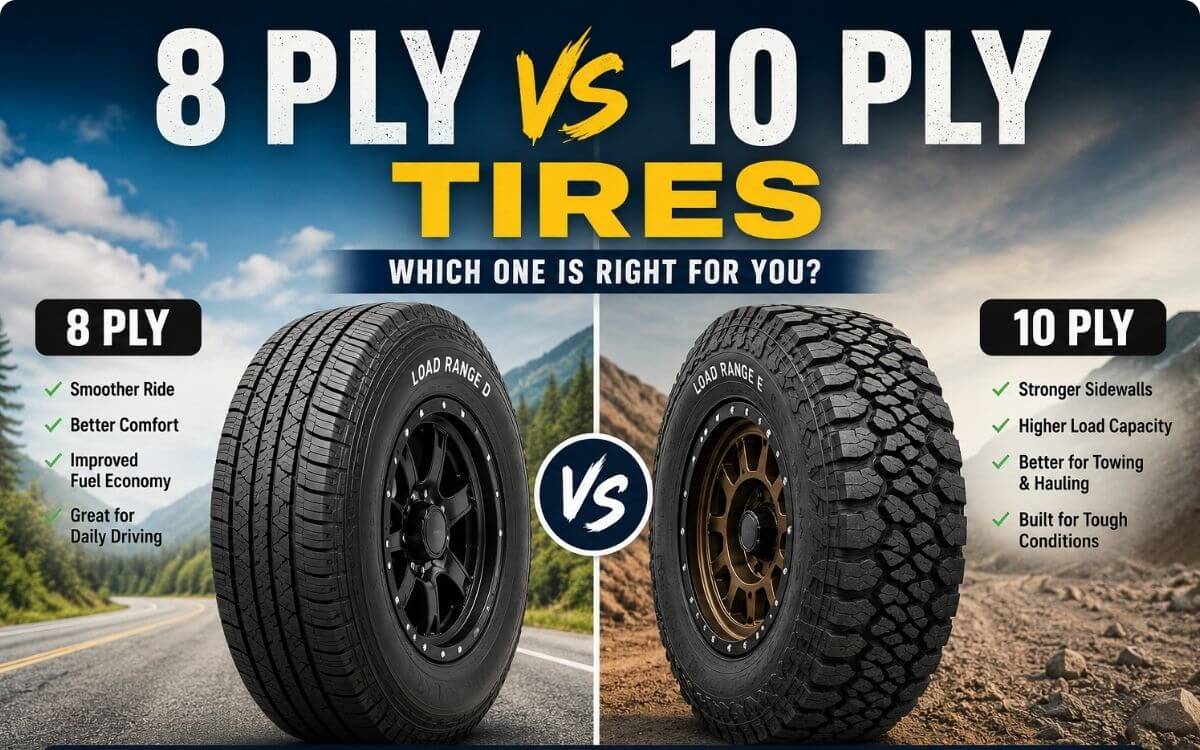
For most daily-driven trucks and SUVs, 8 ply tires are usually the better choice because they offer a smoother ride, lighter steering feel, and better fuel economy while still handling moderate towing and hauling.
10 ply tires are better suited for drivers who regularly tow heavy trailers, carry large payloads, drive rough job sites, or spend time on rocky off-road terrain where stronger sidewalls and higher load capacity matter.
One important thing to know is that modern “8 ply” and “10 ply” tires do not actually contain eight or ten physical layers anymore. These terms now refer to a tire’s load rating and strength rather than the literal number of plies inside the tire.
In most cases:
- 8 ply tires = Load Range D
- 10 ply tires = Load Range E
That difference affects ride comfort, towing stability, durability, tire pressure, and overall driving feel.
What Does “Ply Rating” Actually Mean?
Years ago, tire manufacturers used multiple layers of fabric, called plies, to strengthen tires. A “10 ply tire” literally had ten layers built into its construction. Modern radial tires work differently. Today’s tires use stronger materials, so they no longer need as many physical plies to achieve the same strength.
That means a modern 10 ply tire may only contain two or three actual plies, but it still delivers the carrying strength that older 10 ply tires once provided.
This is why the term “ply rating” can confuse people. It’s now more of a strength classification than a description of physical construction.
Most truck tires today are classified by load range rather than actual ply count.
- Load Range D usually equals an 8 ply rating
- Load Range E usually equals a 10 ply rating
The higher the load range, the more weight the tire can safely carry and the higher air pressure it can handle.
Why Modern Tires Still Use Ply Ratings
Even though tire construction has changed, the old terminology never disappeared. Drivers, tire shops, and manufacturers still use ply ratings because they’re familiar and easy to recognize.
When someone says “10 ply tires,” they usually mean:
- stronger sidewalls
- higher load capacity
- heavier-duty truck tires
The term stuck around because it gives buyers a quick idea of how tough the tire is designed to be.
Load Range vs Ply Rating
This is where many truck owners get confused.
Ply rating and load range are related, but load range is the more accurate way to judge a tire’s capability.
For example:
- An 8 ply tire is commonly Load Range D
- A 10 ply tire is commonly Load Range E
But what really matters is:
- maximum load capacity
- air pressure rating
- intended use
Two tires with the same ply rating can still behave differently depending on their design, tread, and construction.
That’s why looking only at “8 ply vs 10 ply” without checking the tire’s actual load rating can lead to poor choices.
8 Ply vs 10 Ply Tires: Side-by-Side Comparison
| Feature | 8 Ply Tires | 10 Ply Tires |
| Typical Load Range | D | E |
| Ride Comfort | Smoother | Stiffer |
| Towing Stability | Good | Better |
| Sidewall Strength | Moderate | Stronger |
| Puncture Resistance | Good | Excellent |
| Fuel Economy | Better | Slightly Worse |
| Tire Weight | Lighter | Heavier |
| Road Noise | Usually Quieter | Can Be Louder |
| Off-Road Durability | Moderate | Better |
| Max PSI | Lower | Higher |
| Steering Feel | Lighter | Heavier |
| Best For | Daily driving, light towing | Heavy towing, hauling, work use |
| Cost | Usually Lower | Usually Higher |
While these differences may seem small on paper, they become very noticeable in real driving situations.
Ride Comfort and Daily Driving Differences
For everyday driving, ride quality is one of the first things people notice.
An 8 ply tire usually feels a little more forgiving over potholes, broken pavement, and rough city streets. If you spend most of your time commuting, running errands, or taking long highway drives without much towing, this can make a big difference.
A 10 ply tire often feels firmer. Some drivers like that because it makes the truck feel more planted, but others find it tiring over time. On lighter trucks, the difference can be especially noticeable. The truck may feel more rigid and less relaxed on bad roads.
That does not mean 10 ply tires are uncomfortable by default. Tire pressure matters a lot too. A tire that is inflated too hard will ride rough even if it is the “right” tire for the job.
Why Some Drivers Regret Switching to 10 Ply Tires
A lot of regret comes from buying 10 ply tires for looks or because they sound tougher. That usually works out poorly when the truck is used mostly for daily driving.
Common complaints include:
- a rougher ride
- more road noise
- less comfort over potholes
- no real benefit for the way the truck is used
- slightly worse fuel economy
If the truck is not carrying heavy weight often, the upgrade can feel unnecessary. Many drivers ended up wishing they had stayed with a lighter-duty option that better matched their normal use.
Towing and Hauling Performance
This is where 10 ply tires start to make more sense.
When a truck is carrying a heavy payload or towing a trailer, the sidewall has to work harder. A stronger tire helps keep the truck stable, especially when weight shifts around during braking, cornering, or going over uneven roads.
A 10 ply tire is often the better choice if you tow regularly. It can help the truck feel more stable and controlled, and it is less likely to flex too much under load. That added strength is one reason people use Load Range E tires on work trucks, camper setups, and vehicles that carry tools or equipment.
An 8 ply tire can still tow safely in many situations. The key is whether the load is light or moderate, and whether the tire’s load rating matches the job. For occasional towing, an 8 ply tire is often enough. For frequent towing or heavier trailers, 10 ply is usually the safer and more practical choice.
Best Option for Half-Ton Trucks
Half-ton trucks are a common place where people overbuy tire strength.
If you own a half-ton truck and mostly drive it empty, an 8 ply tire is often the better fit. You get better ride comfort, lower weight, and usually a more relaxed driving feel. That matters a lot if the truck is your daily driver.
If you tow a camper, utility trailer, or boat often, then a 10 ply tire starts to make more sense. You are more likely to benefit from the stronger sidewall and added load support. The key is to match the tire to your actual towing habit, not just the truck badge.
Best Option for Heavy-Duty Trucks
If you drive a heavy-duty truck and regularly haul or tow near the upper end of the truck’s capability, 10 ply tires are usually the smarter choice.
That is especially true if:
- you carry tools, lumber, or equipment
- you tow a trailer often
- you drive with a full bed load
- you need stronger sidewall support for work use
In those situations, the firmer ride is a fair trade for better stability and durability.
Off-Road and Gravel Road Performance
Off-road use is another area where 10 ply tires can shine.
Rocks, ruts, sticks, and rough dirt roads can be hard on sidewalls. A stronger tire is usually better at resisting cuts, punctures, and damage from sharp edges. If you drive on gravel roads often or spend time in rocky terrain, that extra protection can matter.
A 10 ply tire also tends to handle abuse better when the vehicle is loaded. That is why many overlanders, work truck drivers, and people who travel on rough back roads like them.
When 8 Ply Tires Are Enough Off-Road
For light trails, camping roads, and mild weekend off-roading, 8 ply tires are often enough. If you are not carrying heavy gear and the terrain is not especially sharp or rough, you may not need the extra stiffness of a 10 ply tire.
In fact, a lighter tire can sometimes feel more comfortable and flexible on softer terrain, especially if the vehicle is not heavily loaded.
When 10 Ply Tires Become Worth It
A 10 ply tire becomes more valuable when the terrain gets more punishing.
That includes:
- sharp rocks
- construction sites
- frequent gravel road driving
- long trips far from repair shops
- off-road travel with heavy cargo
In those cases, the stronger sidewall can help prevent damage and reduce the chance of getting stuck with a tire failure in a remote place.
Winter and Wet Weather Performance
Ply rating is not the main thing that controls snow or wet-road grip. Tread design, rubber compound, and tire condition matter more. That said, load range can still affect how the tire feels on slippery roads.
An 8 ply tire may feel a little more forgiving in cold weather because it is often less stiff. A 10 ply tire may feel firmer and more truck-like, which can be a good thing when the vehicle is loaded, but it does not automatically mean better traction.
If you drive in snow often, make sure you are paying attention to the tire’s actual tread pattern and winter performance, not just the ply rating.
Fuel Economy, Tire Weight, and Handling Trade-Offs
There is no way around it: stronger tires often come with a few trade-offs.
A 10 ply tire is usually heavier than an 8 ply tire. That extra weight can affect fuel economy because the engine has to work harder to move the vehicle. It can also affect acceleration slightly. You may not notice it every second, but over time the difference can add up.
Handling can change too. Heavier, stiffer tires can make steering feel firmer, which some drivers like. But they can also make the truck feel less smooth and a little less agile. Braking can feel different as well, especially if the tires are much heavier than the original setup.
That does not mean 10 ply tires are bad. It just means they are built with a different priority. They are made for strength first, comfort second.
Tire Pressure Matters More Than Most Drivers Think
This is one of the most overlooked parts of the whole discussion.
A lot of people blame the tire when the real problem is pressure. If a 10 ply tire feels harsh, it may simply be inflated too much for normal driving. Many truck owners run max pressure all the time, even when the truck is empty, and that can make the ride much stiffer than it needs to be.
Your truck’s door sticker gives a starting point for proper inflation. That recommendation is usually based on normal road use, not maximum towing. When you tow or carry heavy loads, pressure may need to increase. But for everyday driving, max PSI is not always the right choice.
Common Tire Pressure Mistakes
The most common mistakes are easy to avoid:
- running max PSI all the time
- ignoring the vehicle’s recommended pressure
- using the same pressure for towing and daily commuting
- underinflating when the truck is loaded
The right pressure helps a tire perform the way it was designed to. It also improves comfort, wear, and safety.
Durability and Tread Life Differences
People often assume that a 10 ply tire will always last longer. Sometimes that is true in tough use, but not always in normal driving.
A stronger tire can resist sidewall damage better and may hold up better under heavier loads. That can help it last longer in the right kind of use. But tread life is also affected by alignment, inflation, driving style, road conditions, and load.
A tire that is too stiff for the vehicle may even wear in a less ideal way if it is not used correctly. So durability is not just about the number of plies. It is about matching the tire to the truck and the job.
If you want the longest life possible, focus on:
- proper inflation
- regular rotations
- good alignment
- not overloading the tire
- choosing the correct load range
Which Tire Type Is Right for Your Driving Style?
This is the part that matters most.
Choose 8 Ply Tires If You:
8 ply tires are usually the better choice if you:
- drive mostly on roads
- use your truck as a daily driver
- tow only occasionally
- want a more comfortable ride
- care about fuel economy
- do not carry very heavy loads
For many drivers, this is the sweet spot. It gives enough strength without turning the truck into something harsh and overbuilt.
Choose 10 Ply Tires If You:
10 ply tires are usually the better choice if you:
- tow trailers often
- carry heavy payloads
- drive on rough job sites
- spend time on gravel or rocky roads
- want stronger sidewall protection
- need a more heavy-duty setup
If your truck works hard, the firmer ride is often worth it. You are getting strength where it actually matters.
Common Mistakes Drivers Make When Choosing Truck Tires
One of the most common mistakes is assuming that heavier-duty always means better.
In reality, the best tire is the one that fits your actual driving needs.
Another mistake is buying Load Range E tires purely for appearance or because someone online recommended them without considering comfort or daily driving habits.
Some drivers also confuse ply rating with overall tire quality. A 10 ply tire is not automatically safer or better made than an 8 ply tire. It’s simply designed for different workloads.
Ignoring factory load recommendations can also create problems. Your truck’s suspension, weight, and intended use all play a role in choosing the right tire.
FAQ: 8 Ply vs 10 Ply Tires
1. Are 10 ply tires better than 8 ply tires?
10 ply tires are better for heavy towing, hauling, and rough road use because they have stronger sidewalls and higher load capacity. For everyday driving, 8 ply tires are often more comfortable and efficient.
2. Do 10 ply tires ride rougher than 8 ply tires?
Yes, usually they do. 10 ply tires are stiffer, so they can feel firmer over bumps and rough pavement. That extra stiffness helps with load carrying, but it can reduce ride comfort on lightly loaded trucks.
3. Can 8 ply tires tow safely?
Yes, 8 ply tires can tow safely if the trailer and cargo stay within the tire’s load rating and your truck’s limits. For light to moderate towing, they are often enough.
4. Are 10 ply tires bad for daily driving?
Not bad, but they may feel harsher and slightly reduce fuel economy compared with 8 ply tires. If you mostly drive empty or commute long distances, 8 ply tires are usually the better fit.
5. What is the main difference between 8 ply and 10 ply tires?
The main difference is load capacity and sidewall strength. 10 ply tires are designed for heavier-duty use, while 8 ply tires usually offer a better balance of comfort and everyday performance.
Final Verdict: Should You Choose 8 Ply or 10 Ply Tires?
The best choice comes down to how you use your truck.
If you drive mostly empty, value comfort, and only tow now and then, 8 ply tires are usually the smarter choice. They are often smoother, lighter, and better suited to everyday use.
If you tow regularly, carry heavy loads, or drive on rough work roads, 10 ply tires are usually the better fit. They give you more strength, more stability, and better protection when the truck is working hard.
The real goal is not to buy the toughest tire. The real goal is to buy the right tire for your load, your roads, and your driving style. That is how you get better comfort, better safety, and better long-term value.
