Best Tires for Subaru Outback (2026)
Choosing the best tires for Subaru Outback can completely change how the vehicle feels on the road. The Outback already has a strong reputation for comfort, confidence, and all-weather capability, but the right tires can make it quieter, safer in rain, better in snow, and more capable on gravel or dirt roads. The wrong tires can do the opposite. They can add noise, reduce fuel economy, and make the car feel less planted than it should.
That is why this guide does not just throw out a random list of tires. It focuses on how Outback owners actually drive. Some need a tire for long highway commutes. Some want more grip in snow. Some want a better tire for camping and forest roads. Others want the best all-around tire and do not want to think about it again for years. This guide is built around those real needs.
Quick Recommendations by Driving Style
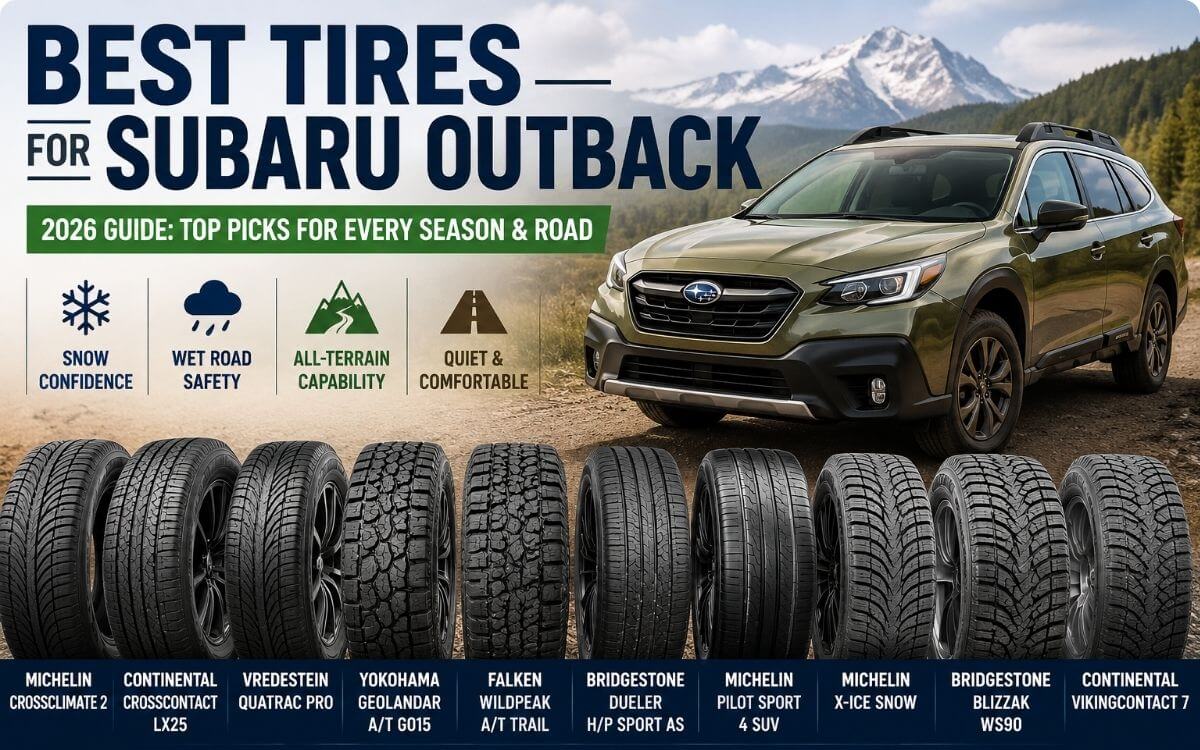
| Driving Need | Recommended Tire |
| Best Overall for Most Outback Owners | Michelin CrossClimate 2 |
| Best Highway Comfort Tire | Continental CrossContact LX25 |
| Best Premium All-Weather Tire | Vredestein Quatrac Pro |
| Best for Gravel Roads & Camping | Yokohama Geolandar A/T G015 |
| Best All-Terrain Upgrade | Falken Wildpeak A/T Trail |
| Best Performance-Oriented Tire | Bridgestone Dueler H/P Sport AS |
| Best Summer Handling Tire | Michelin Pilot Sport 4 SUV |
| Best Snow Tire for Ice & Extreme Winter | Michelin X-Ice Snow |
| Best Deep Snow Winter Tire | Bridgestone Blizzak WS90 |
| Best Winter Tire for Highway Stability | Continental VikingContact 7 |
The most important thing to understand here is that there is no single “best” tire for every Subaru Outback driver. The best choice depends on climate, road conditions, and how much comfort, snow traction, or ruggedness matters to you.
How We Selected These Tires for the Subaru Outback
The Subaru Outback is not a typical SUV, and it should not be treated like one in a tire guide. It is a comfortable daily driver with real all-weather ability, but it also needs tires that suit its balance of ride comfort, AWD traction, and highway manners. A tire that works well on a truck or a lifted crossover may feel too loud or too heavy on an Outback. A soft, comfort-focused touring tire may be great for commuting but weak for dirt roads or mountain winters.
That is why the selection here focuses on a few key real-world factors. First is wet-road braking, because many Outback owners deal with rain, slush, and cold pavement more often than deep snow. Second is comfort, since the Outback is often used for long road trips. Third is winter performance, because a lot of buyers cross-shop the Outback specifically for snow use. Fourth is gravel-road and light trail capability, especially for Wilderness owners or drivers who spend weekends outdoors. And finally, we considered tread life and day-to-day livability, because a great tire should not only perform well on paper but also feel good after thousands of miles.
Best Overall Tires for Subaru Outback
Michelin CrossClimate 2 — Best Overall for All-Weather Driving
- Tire type: All-weather touring
- 3PMSF rated (severe snow capable)
- Strong wet, slush, and cold-weather performance
- High stability under load (SUV-friendly design)
- Long tread life for its category
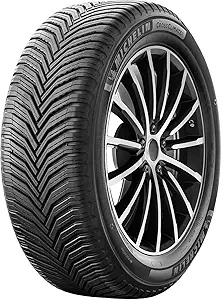
The CrossClimate 2 is the most complete “no-season-change” tire you can put on a Subaru Outback if you drive in mixed conditions. It behaves like a premium touring tire in summer, but adds a level of winter and slush confidence that most all-seasons simply cannot match. On Subaru’s AWD system, it feels especially balanced because it provides consistent grip front-to-rear, even in unstable conditions.
On the road, the biggest difference shows up in wet weather. During a real heavy rain highway drive, where standing water builds in wheel tracks, the tire stays composed and resists hydroplaning far longer than standard touring tires. Emergency braking in those conditions feels controlled rather than delayed, with a predictable, linear stop that inspires confidence at speed.
In winter slush and light snow, the CrossClimate 2 is surprisingly capable. It doesn’t replace a dedicated winter tire in deep ice conditions, but for mixed urban winter driving—wet mornings, refrozen slush, and plowed highways—it performs with a stability that makes seasonal tire changes unnecessary for many drivers.
Ride quality is slightly firmer than comfort-focused touring tires. On rough city roads with broken asphalt, you will feel sharper impacts compared to softer grand touring options, but the trade-off is a more stable, controlled feel at highway speeds. Road noise stays well managed, even as the tire wears, though it is not as silent as a pure touring tire.
Fuel economy takes a small hit due to the aggressive tread design and winter-capable compound. Most drivers notice a subtle drop in MPG compared to low rolling resistance highway tires.
Pros
- Excellent wet and slush braking confidence
- Strong highway stability at speed
- True year-round usability (no seasonal swaps)
- Reliable winter traction for an all-weather tire
- Consistent performance as it wears
Cons
- Firmer ride than traditional touring tires
- Higher purchase cost
- Slight reduction in fuel economy
Best for drivers who face changing weather and want one tire that simply works year-round. Avoid it if you prioritize maximum ride softness or need a dedicated deep-ice winter tire.
Continental CrossContact LX25 — Best for Quiet Highway Comfort
- Tire type: Premium touring all-season
- Focus on low noise and comfort
- Strong wet-road stability
- Long treadwear design
- Highway-optimized compound

The CrossContact LX25 is tuned for one thing: making the Subaru Outback feel calm, quiet, and effortless on pavement. It is one of the most refined touring tires in this category, especially for drivers who spend long hours on highways or do daily commuting with family passengers.
At highway speeds, the tire stands out immediately for its low cabin noise. On coarse asphalt, where many tires begin to drone, the LX25 stays muted and smooth. In real-world driving, this makes long trips less fatiguing, especially when combined with the Outback’s naturally comfortable suspension.
During heavy rain highway driving, the tire maintains stable braking and predictable steering, but it does not feel as aggressively grippy as all-weather options like the CrossClimate 2. Instead, it focuses on smooth, progressive behavior rather than sharp traction response.
In city traffic, the ride quality is soft and forgiving over potholes and speed bumps. This is where the LX25 feels most at home—low-speed comfort with minimal cabin harshness. Over time, tread wear is generally even on Subaru AWD systems, provided rotations are done regularly, which helps preserve its quiet character.
Its biggest limitation appears in winter conditions and rough terrain. In slush or snow-covered roads, traction is acceptable but not confidence-inspiring compared to true winter-rated or all-weather tires. It is clearly a pavement-focused tire.
Pros
- Extremely quiet on highways
- Very smooth ride over rough pavement
- Strong wet braking stability
- Excellent tread life potential
- Comfortable for long-distance family travel
Cons
- Limited snow and slush capability
- Not suitable for rough gravel or trails
- Less responsive steering feel
Best for drivers who stay mostly on highways and want maximum comfort and quietness. Avoid it if you regularly encounter snow, gravel roads, or need year-round all-weather confidence.
Vredestein Quatrac Pro — Best Premium All-Weather Alternative
- Tire type: Ultra-high-performance all-weather
- 3PMSF rated
- Strong wet and cold-weather grip
- Sport-oriented steering response
- Balanced year-round capability

The Quatrac Pro sits between comfort-focused touring tires and more aggressive all-weather designs. It is aimed at drivers who want year-round usability but prefer a more responsive, engaging feel behind the wheel than typical comfort-oriented tires provide.
On the road, the most noticeable characteristic is steering precision. During highway lane changes or fast on-ramp entries, the tire responds more directly than the LX25 and feels more controlled than softer touring options. This makes the Outback feel slightly more planted and confident in dynamic driving situations.
In real-world wet conditions, especially during sustained heavy rain, the Quatrac Pro performs strongly. Braking is stable, and the tire maintains grip without the floaty sensation that can appear in lower-performance all-seasons. On colder mornings, it also holds traction well on damp or lightly snow-covered roads.
In light snow, it performs respectably for an all-weather tire, offering enough grip for most urban winter use. However, in deeper snow or prolonged icy conditions, it falls behind dedicated winter tires and slightly behind the CrossClimate 2 in overall consistency.
The trade-off appears in wear and refinement. Road noise stays controlled early on, but it can increase more noticeably over time compared to Michelin or Continental touring-focused options. Tread life is also typically shorter, especially under high-mileage use or aggressive driving.
Pros
- Sharper, more responsive steering feel
- Excellent wet-road grip and stability
- Good all-weather capability
- More engaging drive than typical touring tires
Cons
- Shorter tread life than premium competitors
- Slight increase in road noise over time
- Limited availability in some sizes/regions
Best for drivers who want year-round usability but prefer a more connected, responsive driving feel. Avoid it if maximum tread life and long-term comfort are your top priorities.
Best All-Terrain Tires for Subaru Outback
Yokohama Geolandar A/T G015 — Best Balanced Adventure Tire
- Tire type: All-terrain
- 3PMSF rated
- Strong wet and winter traction for the category
- Balanced on-road/off-road design
- Best for gravel, dirt, and light trail use

The Geolandar A/T G015 is a smart choice for Outback owners who want extra grip on dirt, gravel, and wet roads without turning the vehicle into a noisy truck. It keeps the Outback comfortable on pavement, but it gives you noticeably more confidence when the road turns loose, rough, or muddy.
On the highway, the tire feels settled and predictable. It is not as crisp as a touring tire, but it does not feel vague either. In real driving, that matters when you are loaded with camping gear and running 70 mph on the interstate before heading onto forest roads. The tire stays composed, and it handles broken pavement and gravel transitions better than a standard all-season.
In light snow and slush, the G015 is genuinely useful. It is not a dedicated winter tire, but the snow rating and tread design give it better cold-weather security than many drivers expect from an all-terrain tire. On dirt roads, washboard surfaces, and campground access trails, it absorbs small bumps well and feels more durable than low-profile highway tires.
Its main compromise is road noise. It is still livable every day, but you will hear more tread sound than with a comfort-focused all-season. Steering response is also a little slower, especially at highway speeds.
Pros
- Comfortable for daily driving
- Strong gravel-road stability
- Good snow performance for an A/T tire
- Better wet grip than many rugged tires
- Durable feel on rough surfaces
Cons
- More road noise than touring tires
- Less sharp steering on pavement
- Not ideal for drivers who want the quietest ride
Best for weekend adventurers, rural drivers, and mild overlanding. Avoid it if your Outback spends almost all its time on smooth highways and you want near-touring comfort.
Falken Wildpeak A/T Trail — Best Aggressive All-Terrain Tire
- Tire type: Light all-terrain
- 3PMSF rated
- Strong gravel, mud, and snow performance
- Reinforced adventure-oriented construction
- Designed for crossover and SUV use

The Wildpeak A/T Trail is the more serious choice for Outback drivers who actually leave the pavement often. It looks and feels more rugged, and that extra toughness shows up on gravel, trail access roads, mud, and winter slush. On an Outback Wilderness, it makes a lot of sense because it matches the car’s mission better than a mild touring tire.
In real use, the tire feels heavier than a highway-oriented option. You notice it when accelerating from a stop, and the steering has a slightly more planted but less nimble feel. That trade-off becomes obvious in city driving and on long highway stretches, where the Outback loses a bit of its light, easy character.
Off-road, the Wildpeak A/T Trail is where it earns its keep. On gravel climbs, muddy campsites, and broken forest roads, it grips well and feels more secure than balanced all-terrain designs. In snow, it also performs very well for an A/T tire, especially in cold, mixed conditions.
The downside is comfort and efficiency. Road noise increases as the tread wears, and fuel economy usually takes a small hit because of the tire’s weight and rolling resistance. It is still manageable for daily driving, but it is not the tire for someone chasing maximum MPG or a soft, quiet ride.
Pros
- Excellent for trail access roads and rough terrain
- Strong winter traction for an A/T tire
- Durable, secure feel on loose surfaces
- Good match for Outback Wilderness trims
Cons
- Heavier steering feel
- Lower fuel efficiency
- Louder over time than a touring tire
Best for outdoor-focused owners, mountain drivers, and frequent campers. Avoid it if most of your driving is urban commuting and you care most about quietness and MPG.
Best Performance Tire for Subaru Outback
Bridgestone Dueler H/P Sport AS — Best for Sharper On-Road Handling
- Tire type: Performance all-season SUV tire
- Tuned for sharper steering response
- Strong wet-road stability for its category
- Optimized for paved-road driving dynamics
- Lower emphasis on winter/off-road capability

The Dueler H/P Sport AS is the closest thing to a “sport tire feel” in an SUV-friendly package for the Subaru Outback. It is designed for drivers who find standard touring tires too soft and want quicker steering response, tighter cornering, and a more controlled feel on paved roads.
On the road, the first thing you notice is steering sharpness. Compared to comfort-focused tires, the Outback feels more immediate when you turn the wheel. At highway speeds, especially during quick lane changes or on-ramps, the tire reacts faster and reduces that slight delay you feel with softer grand touring setups. It makes the Outback feel more planted when driven briskly.
In real-world wet driving, such as a sudden heavy rain braking event on a highway, the tire maintains solid stability. It does not feel as progressive as an all-weather tire like the CrossClimate 2, but it delivers controlled stopping power and stable lane tracking. Where it performs best is maintained wet traction at speed rather than extreme snow or slush conditions.
City driving feels more connected as well. During stop-and-go traffic and tight turns, the tire gives better feedback through the steering wheel, which helps the driver place the vehicle more precisely. However, that same responsiveness comes with a slightly firmer ride over potholes and rough pavement.
It is not intended for off-road use. On gravel or broken rural roads, traction is acceptable, but comfort drops quickly compared to all-terrain options. In deep snow or icy conditions, performance is clearly limited, and this is where dedicated winter or all-weather tires are the safer choice.
Pros
- Noticeably sharper steering response
- Stable and confident at highway speeds
- Good wet-road braking control
- Makes the Outback feel more agile on pavement
Cons
- Firmer ride over rough roads
- Weak deep snow performance
- Not suitable for off-road or gravel-heavy use
Best for turbo XT or drivers who prioritize on-road driving engagement and want a more responsive, controlled feel from their Outback. Avoid it if you regularly drive in snow, use gravel roads, or prioritize comfort over handling precision.
Best Summer Tire for Subaru Outback
Michelin Pilot Sport 4 SUV — Best Dry and Wet Performance Tire
- Tire type: Max performance summer SUV tire
- Strong dry grip and cornering stability
- Excellent warm-weather wet braking
- Precise steering response
- Designed for pavement performance only

The Pilot Sport 4 SUV is the tire for Outback drivers who want the car to feel sharper, more settled, and more confident on pavement than any all-season or all-weather tire can deliver in warm weather. It is not built for year-round compromise. It is built for grip, steering precision, and braking control when temperatures stay consistently warm.
On dry roads, the difference is immediate. The Outback turns in faster, holds a line more cleanly, and feels less soft through fast sweepers and highway ramps. At higher speeds, the tire gives the vehicle a more secure, performance-oriented stance. That matters for Outback XT owners who use the car as a quick daily driver and want better response without moving to a different vehicle.
In wet weather, the tire is still strong. During a hard stop in summer rain, it delivers stable braking and clear feedback through the pedal and steering wheel. It feels trustworthy in fast highway rain, provided temperatures remain warm and the road surface is not cold enough to dull the compound.
This tire works best in hot or mild climates where freezing mornings are rare. Around town, it feels more controlled than a touring tire, but the ride is firmer and less forgiving over broken pavement. Road noise is usually well managed at first, though the focus is clearly on performance, not softness.
The biggest limitation is simple: this is not a cold-weather tire. Once temperatures drop near freezing, grip falls off, and it is not suitable for snow, ice, or slush. That makes it a seasonal choice, not a year-round solution.
Pros
- Sharp steering and strong road feel
- Excellent dry and wet warm-weather grip
- Stable at highway speed
- Great for sporty Outback XT driving
Cons
- Unsafe in freezing temperatures
- Not suitable for snow or ice
- Firmer ride than comfort tires
Best for warm-climate drivers who want the most engaging on-road feel. Avoid it if your Outback sees winter conditions, cold mornings, or any meaningful snow use.
Best Winter Tires for Subaru Outback
Michelin X-Ice Snow — Best Winter Tire for Ice and Daily Winter Driving
- Tire type: Studless winter tire
- Strong ice braking and cold-weather grip
- Quiet and comfortable for winter highway use
- Long tread life for the category
- Best in mixed winter conditions

The X-Ice Snow is the winter tire I’d choose for an Outback that sees a lot of cold pavement, icy mornings, and long commutes where control matters more than aggressive deep-snow bite. It is built to feel calm and predictable, which is exactly what many drivers want when winter is long but not always stormy.
On icy roads, the tire feels secure under braking and steady through gentle steering inputs. In a real commute on a cold highway with polished lanes and intermittent black ice, it gives the Outback a more confident, less nervous feel than many winter tires. It is especially strong in mixed winter conditions where you get frozen pavement, wet slush, and cleared roads all in the same drive.
Compared with more aggressive snow tires, the X-Ice Snow is smoother and quieter at highway speed. It does not feel vague, but the steering is softer and less immediate than a sportier winter or all-weather tire. That trade-off pays off in comfort and reduced driver fatigue during long winter trips.
Tread life is one of its best qualities. For a winter tire, it wears well and holds its behavior nicely over multiple seasons if rotated properly. The downside is that it is not the most aggressive choice for deep, loose snow.
Pros
- Excellent ice and cold-road braking
- Comfortable and quiet on the highway
- Strong treadwear for a winter tire
- Predictable in mixed winter conditions
Cons
- Softer steering feel
- Not the most aggressive in deep snow
- Best performance drops off in warm weather
Best for long winter commutes, icy highways, and drivers who want a refined winter tire. Avoid it only if your winters are dominated by deep, unpacked snow and you want the most aggressive bite possible.
Bridgestone Blizzak WS90 — Best Deep Snow and Severe Winter Tire
- Tire type: Studless winter tire
- Excellent deep snow and packed snow traction
- Strong slush and storm performance
- Designed for severe winter conditions
- Best used only in cold months

The Blizzak WS90 is the tire for Outback drivers who deal with serious winter weather and want maximum confidence when the roads are covered. It is not subtle, and that is the point. This tire is made to dig in when snow is deep, packed, or constantly changing into slush.
In real snowstorm driving, the WS90 feels like it gives the Outback extra traction at every step. Pulling out of a snow-covered driveway, climbing through rutted neighborhood streets, or braking on packed snow all feel more controlled than with a milder winter tire. It is especially impressive in the first few miles after a storm, when roads are still messy and unpredictable.
Slush performance is also one of its strengths. The tire moves through heavy slush with more authority than most winter tires, and packed snow traction stays strong even when the surface gets uneven. At highway speeds, it remains dependable, though it is not as quiet or refined as the X-Ice Snow or VikingContact 7.
The trade-off is wear. The WS90 tends to give up tread life faster than some rivals, especially if you leave it on too long into spring. It also loses its best behavior quickly when temperatures rise, so it really needs to be used as a true winter tire only.
Pros
- Outstanding in deep snow
- Very strong storm-day traction
- Confident in packed snow and slush
- Excellent choice for harsh winters
Cons
- Faster tread wear
- Less refined in warm weather
- Slightly noisier than quieter winter competitors
Best for drivers in harsh northern climates, frequent snowstorms, and roads that stay covered for long stretches. Avoid it if your winters are mild or if you want one tire that stays comfortable well beyond the cold season.
Continental VikingContact 7 — Best Winter Tire for Comfort and Control
- Tire type: Studless winter tire
- Balanced snow, slush, and wet-road performance
- Quiet and refined for highway use
- Strong winter comfort and control
- Best for mixed winter climates

The VikingContact 7 is the balanced choice for Outback owners who want winter traction without giving up refinement. It does not chase the most aggressive snow bite, but it delivers a very composed feel in the conditions most drivers actually face: cold rain, slush, light snow, and cold highways.
On the road, it feels smooth and controlled. During a wet winter commute with slushy lanes and cold pavement, the tire stays stable under braking and lane changes without feeling nervous or harsh. It gives the Outback a calm, secure personality that works especially well for drivers who spend a lot of time on plowed highways and mixed-condition roads.
One of its biggest advantages is comfort. Compared with some winter tires, it is noticeably quieter and more relaxed at highway speed. That matters on long trips, where constant tread noise can wear on you. The steering feel is balanced rather than sharp, which suits daily driving well.
Its limitation shows up in extreme snow. If the roads are constantly deep, soft, or heavily drifted, the Blizzak WS90 has more bite. The VikingContact 7 is the better tire when winter is mixed rather than extreme.
Pros
- Very comfortable for a winter tire
- Quiet on highways
- Strong wet winter road performance
- Predictable and easy to drive
Cons
- Less aggressive in deep snow than Blizzak
- Not the most forceful winter tire under extreme conditions
- Steering feel is tuned more for comfort than sharpness
Best for drivers who want a quiet, controlled winter tire for mixed snow and rain climates. Avoid it only if your area gets frequent heavy snow and you need maximum traction above all else.
Read More: Best Tires for Toyota Tacoma
All-Season vs All-Weather vs All-Terrain Tires for Subaru Outback
This is one of the biggest areas of confusion for Outback shoppers, and it matters because the tire type often matters more than the brand name.
All-season tires are the most common choice and usually deliver decent comfort, tread life, and wet-weather performance. The problem is that many all-season tires start to fall short when the temperature drops or snow becomes frequent.
All-weather tires are different. They are designed to offer better cold-weather and snow performance while still working year-round. For many Outback drivers, this is the sweet spot because it reduces the need to switch between summer and winter tires in moderate climates.
All-terrain tires are the answer for drivers who spend more time on gravel, dirt, or rough surfaces. They add toughness and trail confidence, but they usually come with more road noise and a small hit to comfort and efficiency.
If your winter is mild, a strong all-weather tire may be enough. If your winters are serious, dedicated winter tires are still the best answer. If your weekends involve dirt roads and trail access, an all-terrain tire may be the smarter choice.
Real-World Trade-Offs Most Subaru Outback Owners Don’t Consider
Tire Noise Over Time
A tire may seem quiet when it is new, but that can change as it wears. Some all-terrain tires become louder as the tread ages. Some touring tires stay refined for much longer. This is one reason why a tire that sounds great on day one is not always the best long-term choice. Outback owners who value a calm cabin should think beyond the first few thousand miles.
Fuel Economy and Tire Weight
Heavier tires can hurt fuel economy and make the Outback feel less eager off the line. This matters most when moving from a standard touring tire to a more aggressive all-terrain design. The difference may not seem huge at first, but over time it can affect both MPG and driving feel.
Ride Comfort and Sidewall Feel
The Outback is popular partly because it rides well. A tire with a stiff sidewall or aggressive tread can make the vehicle feel firmer and less relaxed on rough pavement. That is not always a bad thing, but it is worth understanding before buying.
AWD Tire Wear Considerations
Subaru AWD systems work best when all four tires are in good shape and closely matched in wear. That means rotation matters. It also means that replacing only one tire can create problems if the others are too worn. Outback owners should keep an eye on tread depth and maintain consistent tire wear across the set.
Read more: Best Tires for Tesla Model 3
Subaru Outback Tire Buying Guide
Choosing the Right Tire Size
Before buying, always check the correct tire size for your specific Outback trim. Size matters for safety, comfort, speedometer accuracy, and clearance. The Outback Wilderness may have different needs than a base trim or XT model, so it is worth verifying fitment before making a purchase.
Understanding Load Ratings and Speed Ratings
These ratings tell you how much weight the tire can handle and what kind of performance it is built for. They are easy to ignore, but they matter. A tire that is not suited to the vehicle’s needs can wear poorly or feel unstable.
What Matters Most for Outback Owners
The best Outback tire usually comes down to a few major priorities: wet traction, snow confidence, road noise, comfort, durability, and light off-road use. Most drivers do not need the most extreme tire in any one category. They need the tire that balances all of these things well.
When to Replace Your Tires
Tires should be replaced when tread gets too low, when wear becomes uneven, or when age starts to weaken the rubber. Even if the tread still looks acceptable, older tires can lose performance, especially in wet or winter conditions. For a vehicle like the Outback, tire condition has a real effect on overall safety and driving confidence.
Frequently Asked Questions
What are the best tires for Subaru Outback in snow?
The best winter tires for serious snow are the Bridgestone Blizzak WS90, Michelin X-Ice Snow, and Continental VikingContact 7. If you want one tire year-round with good snow performance, the Michelin CrossClimate 2 is a very strong all-weather option.
Are all-weather tires better than all-season tires for the Outback?
For many drivers, yes. All-weather tires usually give better cold-weather and snow performance than standard all-season tires while still working year-round.
Do all-terrain tires reduce Subaru Outback MPG?
Usually yes, at least a little. They are often heavier and more aggressive, which can affect fuel economy and acceleration.
What is the quietest tire for Subaru Outback?
The Continental CrossContact LX25 is one of the best choices if quiet highway comfort is a top priority.
How long do Subaru Outback tires usually last?
That depends on the tire, the roads you drive, how often you rotate them, and how hard you brake and corner. Touring tires usually last longer than more aggressive all-terrain or winter tires.
Final Verdict: Which Tire Should Most Subaru Outback Owners Buy?
For most Subaru Outback owners, the Michelin CrossClimate 2 is the best overall choice because it balances comfort, wet traction, and winter confidence better than almost anything else in the category. If your driving is mostly paved and quiet highway comfort matters most, the Continental CrossContact LX25 is an excellent alternative. If you want more adventure capability, the Falken Wildpeak A/T Trail and Yokohama Geolandar A/T G015 are both strong picks.
For drivers in serious winter climates, the right choice is still a dedicated winter tire. The Michelin X-Ice Snow, Bridgestone Blizzak WS90, and Continental VikingContact 7 all offer real cold-weather advantages that no all-season tire can fully replace.
The best tire is the one that fits your climate, your roads, and the way you actually use your Outback. When you choose based on real driving needs instead of just brand names or marketing claims, you end up with a tire that makes the vehicle safer, more comfortable, and more enjoyable every day.
