265 vs 285 Tires: What’s the Difference?
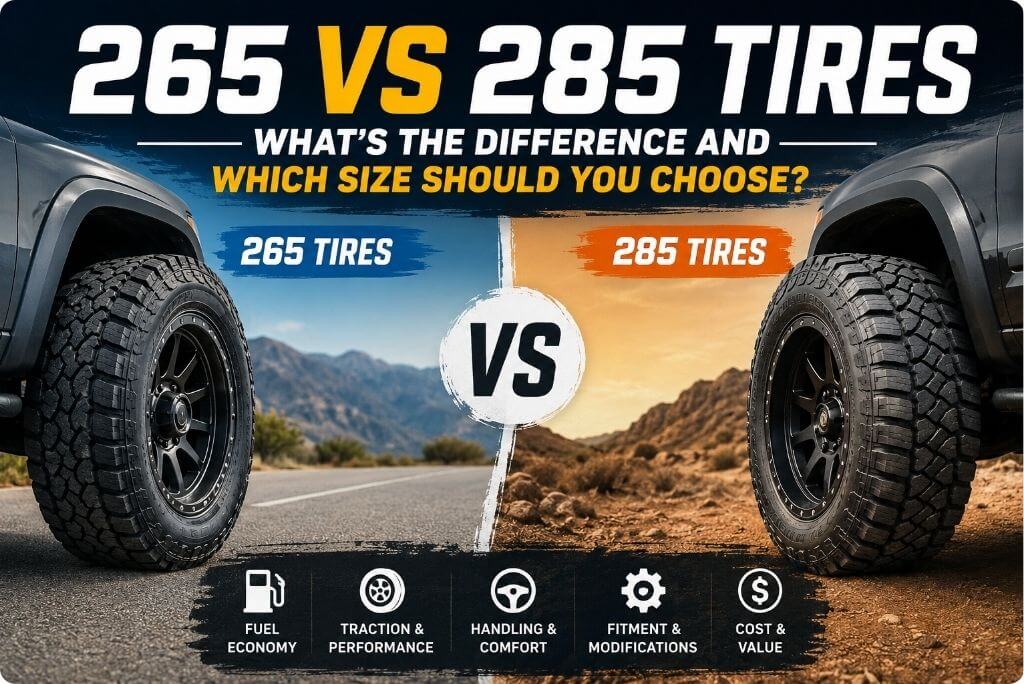
Choosing between 265 vs 285 tires is a common decision for truck and SUV owners, especially when they want a better look, more traction, or a different driving feel. At first glance, the difference sounds small. It is only 20 mm wide. But on the road, that small change can affect fuel economy, steering feel, fitment, ride comfort, and off-road performance.
The best tire size is not always the widest one. In many cases, 265 tires are the smarter choice for daily driving, while 285 tires make sense for drivers who want more traction or a more aggressive stance. The right answer depends on how you use your vehicle, how much modification you want to do, and what matters most to you.
Quick Verdict
Choose 265 tires if you prioritize fuel economy, drive mostly on-road, want lower costs, and prefer easier fitment.
Choose 285 tires if you frequently drive off-road, want a wider stance, need extra traction in sand, mud, or loose terrain, and do not mind slightly higher costs.
Understanding Tire Sizes
To compare 265 vs 285 tires properly, it helps to know what the numbers actually mean. Tire sizing can look confusing at first, but the width part is simple once it is broken down.
What Does 265 Mean?
A tire size like 265/70R17 has three main parts.
- 265 is the tire width in millimeters.
- 70 is the aspect ratio, which means the sidewall height is 70% of the tire width.
- R17 means the tire is made for a 17-inch wheel.
So when people say “265 tires,” they are talking about a tire that is 265 mm wide.
What Does 285 Mean?
A 285 tire is also measured by width in millimeters. In a size like 285/70R17, the width is 285 mm instead of 265 mm. That means the tire is wider across the tread and sidewall area.
In simple terms, a 285 tire is a wider tire. That extra width can help with traction and stance, but it can also bring trade-offs like more weight, slightly lower fuel economy, and a higher chance of rubbing on some vehicles.
How Much Wider Is a 285 Tire?
| Size | Width (mm) | Width (inches) |
| 265 | 265 | 10.43 |
| 285 | 285 | 11.22 |
That is a difference of 20 mm, or about 0.79 inches. It does not sound huge, but it can be enough to change how the vehicle feels and whether the tire clears your fenders, suspension parts, or mud flaps.
A wider tire also changes the look of the vehicle. Many drivers like the fuller, more aggressive stance of a 285 tire. Others prefer the cleaner fit and lighter feel of a 265.
265 vs 285 Tires: Quick Comparison Table
| Category | 265 Tires | 285 Tires |
| Width | Narrower | Wider |
| Fuel Economy | Better | Lower |
| Highway Comfort | Better | Good |
| Dry Traction | Good | Better |
| Wet Traction | Good | Better |
| Snow Performance | Often better | Good |
| Mud Performance | Good | Better |
| Sand Performance | Good | Better |
| Off-Road Capability | Good | Better |
| Tire Cost | Lower | Higher |
| Fitment Ease | Easier | Harder |
This table gives the short version, but the real decision comes down to how each size affects your driving experience.
265 vs 285 Tires: Key Differences
The biggest difference between these two tire sizes is not just appearance. It is how the tire behaves in real-world use.
Width and Vehicle Stance
A 285 tire gives the vehicle a wider, more muscular look. That is one reason many truck and SUV owners choose it. It fills the wheel well better and can make the vehicle look more capable.
A 265 tire has a narrower profile, which often looks more factory-like and tidy. For drivers who want a clean setup without extra work, this can be a plus.
The width also affects the contact patch, which is the part of the tire touching the road. A wider tire can spread the vehicle’s weight over a larger area, which may help with traction in some situations. But wider does not automatically mean better in every condition.
Fuel Economy
One of the most noticeable trade-offs with 285 tires is fuel economy. Wider tires usually create more rolling resistance, and they often weigh more too. That means the engine has to work a little harder to move the vehicle.
In daily driving, the difference may be small, but over time it can add up. A driver who spends a lot of time commuting or doing highway miles may notice that 265 tires are easier on fuel.
If saving money at the pump matters to you, 265 tires usually make more sense. If fuel cost is not a major concern and you want the look or traction benefits of 285s, the trade-off may be worth it.
Handling and Steering
265 Tires
265 tires often feel lighter and easier to steer. They can make the vehicle feel a little more responsive, especially at lower speeds and during parking. This is one reason many drivers prefer them for daily use.
Because they are narrower, they can also feel a bit more precise on the road. For drivers who spend most of their time on pavement, that can be a real advantage.
285 Tires
285 tires usually feel more planted, especially at speed. Some drivers like the more solid feel, and on certain vehicles, the wider tire can improve cornering confidence.
The trade-off is that steering may feel heavier. You may notice slightly more effort when turning at slow speeds or maneuvering in tight spaces. For some drivers, that is a fair trade for the added width and grip.
Ride Comfort and Road Noise
Ride quality depends on more than just tire width, but size does play a role.
265 tires often feel a little smoother and quieter on the road. They may be more comfortable for long highway drives, especially if your vehicle already has a stiff suspension.
285 tires can still ride well, but depending on the tire model, they may produce a bit more road noise or feel slightly firmer. That is especially true if you choose a more aggressive all-terrain or mud-terrain tire in a 285 size.
If your vehicle is mostly a family hauler, commuter, or road-trip machine, the 265 size often provides the better everyday experience.
Traction and Performance
This is where many buyers get stuck, because the best choice depends on where and how you drive.
Dry Roads
On dry pavement, 285 tires can offer a stronger grip feel. Their wider footprint can help the vehicle feel more secure in corners and during hard acceleration.
That said, 265 tires still provide more than enough grip for normal street use. For most drivers, the difference on dry roads is not dramatic enough to justify choosing one size over the other by itself.
Wet Roads
In wet conditions, wider is not always better. A tire that is too wide can sometimes be more likely to feel floaty on slick surfaces, depending on the tread design and vehicle weight.
A quality 265 tire often performs very well in the rain. In many cases, it can even feel more predictable than a wider tire, especially if the vehicle is light or the tire model is not designed for wet traction.
Snow
This is one area where narrower tires often have an advantage. A 265 tire can cut through snow more easily than a wider 285 tire, which may help with traction in deep or packed snow.
That does not mean 285 tires are bad in winter. Tread design matters a lot. But if you live somewhere with heavy snow and ice, a 265 setup can be the safer, more practical choice.
Mud
Mud usually favors wider tires. A 285 tire can give you a larger footprint and a bit more bite when the terrain gets soft and slippery.
If your vehicle sees muddy trails often, the 285 size may offer a meaningful advantage. For light off-road use, though, 265 tires can still do the job well.
Sand
Sand also often favors a wider tire. A 285 can help the vehicle float better on loose surfaces, especially when aired down properly. That is one reason many overlanders and beach drivers like wider tires.
Still, tire pressure and tread pattern matter just as much as width. A well-chosen 265 tire can also perform well in sand if used correctly.
Off-Road Performance: Is 285 Worth the Upgrade?
For off-road driving, 285 tires usually have the edge. They can offer better traction, a stronger stance, and more confidence on loose terrain.
A wider tire can be especially useful in mud, sand, and certain rocky conditions where grip and footprint matter. Many drivers also like the more aggressive appearance that comes with the upgrade.
But 285 is not automatically the best choice for every off-road build. If your off-road use is mild, like forest roads, gravel, and occasional trails, 265 tires may be all you need. They are often easier to fit, lighter, and less expensive.
The real question is how hard you actually drive off-road. For weekend adventures and light trails, 265 may be the better balance. For frequent off-road use or a build focused on capability, 285 can be worth it.
Read More: 265 vs 275 Tires
Will 285 Tires Fit Without Modifications?
This is one of the most important questions people ask when comparing 265 vs 285 tires. A tire can sound great on paper, but if it rubs your suspension or fenders, the upgrade can turn into a headache.
Factors That Affect Fitment
Several things affect whether 285 tires will fit properly.
- Wheel width: Some wheels are better suited for wider tires than others.
- Wheel offset: Offset changes how far the tire sits in or out of the wheel well.
- Suspension setup: Stock suspension, leveling kits, and lift kits all affect clearance.
A 285 tire may fit one truck easily and rub badly on another. That is why fitment should always be checked for your exact vehicle and wheel setup.
Common Fitment Problems
When a 285 tire does not fit well, the issues usually show up in a few common places.
- Fender rubbing
- Mud flap contact
- Inner wheel well contact
- Suspension clearance problems
These problems are more likely if your truck or SUV is stock and you try to move to a wider tire without changing anything else.
When You May Need Modifications
Some vehicles can run 285 tires with no issues. Others need small changes to make them work properly.
- Leveling kit: May help with front-end clearance.
- Lift kit: Gives more room for larger tire setups.
- Minor trimming: Sometimes needed for full clearance.
- Aftermarket wheels: Can improve fitment depending on offset and width.
If you want the safest, lowest-hassle setup, 265 tires are usually easier to live with. If you are willing to make small changes for better stance or off-road capability, 285 tires can be a solid upgrade.
Read More: 215 vs 225 Tires
Real-World Scenarios: Which Tire Size Is Best?
The easiest way to choose between 265 and 285 tires is to think about how you actually use your vehicle.
Daily Driver
Winner: 265 Tires
For daily commuting, 265 tires usually make more sense. They often cost less, steer more easily, and help preserve fuel economy. They also tend to be the simpler choice for stock vehicles.
If your truck or SUV spends most of its life on pavement, 265 is usually the smarter option.
Highway and Road Trips
Winner: 265 Tires
Long highway drives tend to favor 265 tires. They usually run a little quieter and more efficiently, which makes them better for long-distance comfort and lower fuel use.
For drivers who travel often or rack up highway miles, this can save money and make the vehicle feel less tiring to drive.
Weekend Off-Roader
Winner: 285 Tires
If you spend weekends on trails, in mud, or on sand, 285 tires often make sense. They provide a wider footprint and a more capable feel in loose terrain.
That wider stance can be especially useful if you want a more aggressive look and better off-road confidence.
Overlanding Build
Winner: Depends on Use
For an overlanding setup, the right choice depends on how much time you spend on-road versus off-road.
- Mostly highway and long-distance travel: 265
- Mostly trails and rough terrain: 285
Overlanding often requires a balance between comfort, range, fitment, and capability. Because of that, many drivers still prefer 265 tires for practical reasons, even on adventure builds.
Cost Comparison
Tire size affects more than just performance. It can also affect your wallet.
Tire Purchase Price
In many cases, 285 tires cost more than 265 tires. Wider tires often use more material, and that can raise the price. The exact difference depends on brand, tread design, and tire category, but 285s are usually the more expensive option.
Fuel Costs Over Time
The fuel difference between 265 and 285 tires may not be huge on a single tank, but it adds up over months and years. Wider tires usually increase rolling resistance, which can reduce fuel economy.
If you drive a lot, that extra fuel cost may matter more than the tire price difference itself.
Total Value Comparison
When you add up purchase price, fuel use, and possible fitment changes, 265 tires often deliver better overall value for everyday drivers.
285 tires can still be worth it, but mainly for drivers who truly need the extra width, stance, or off-road traction.
Common Mistakes When Choosing Between 265 and 285 Tires
A lot of buyers focus only on the look of the tire. That is one of the biggest mistakes.
Another common mistake is ignoring fitment. A tire that looks perfect in a photo may rub badly on your vehicle.
Some people also forget about fuel economy. A wider tire may look great, but it can cost more to run over time.
It is also easy to assume that wider tires are better in every situation. That is not true. Snow, highway comfort, cost, and steering feel can all favor the narrower size.
The best choice is the one that matches your driving habits, not the one that looks biggest on the wheel.
Frequently Asked Questions
Are 285 Tires Better Than 265 Tires?
Not always. 285 tires are usually better for off-road traction and a wider stance, while 265 tires are often better for fuel economy, easier fitment, and daily driving.
Do 285 Tires Reduce Gas Mileage?
They often do, at least a little. Wider tires usually create more rolling resistance and may weigh more, which can lower fuel economy compared with 265 tires.
Will 285 Tires Rub on a Stock Truck?
They might. It depends on your vehicle, wheel offset, suspension height, and wheel width. Some stock vehicles can fit 285 tires, but others need a leveling kit, lift, or minor trimming.
Are 285 Tires Better in Snow?
Not always. In many cases, 265 tires perform better in snow because the narrower width can help them cut through snow more effectively.
Can I Use 285 Tires on Stock Wheels?
Sometimes yes, sometimes no. The answer depends on the width and offset of the wheel. Fitment should always be checked before making the switch.
Is It Worth Upgrading From 265 to 285 Tires?
It can be worth it if you want more off-road traction, a tougher look, or a wider footprint. For daily driving, though, many people find that 265 tires already do the job well and cost less to run.
Final Verdict
There is no single winner in the 265 vs 285 tire debate. The right choice depends on how you use your vehicle and what matters most to you.
For most drivers, 265 tires are the better all-around option. They are easier to fit, usually cost less, and often provide better fuel economy. If your truck or SUV spends most of its time on paved roads, a 265 tire is hard to beat.
A 285 tire makes more sense if you regularly drive off-road or want a wider, more aggressive look. The extra width can provide more traction in loose terrain, but it may also bring higher costs and possible fitment challenges.
Before making a decision, think about your daily driving habits rather than focusing only on appearance. Choosing the tire size that matches your real needs will give you the best results and save you money in the long run.
