Best RV Tires (2026): Top Picks
Choosing the best RV tires is one of the most important decisions an RV owner can make. Unlike normal car tires, RV tires carry heavy loads for long distances and often sit unused for long periods. That combination of weight, heat, and aging rubber means a poor tire choice can lead to serious problems on the road.
Many RV tire failures happen suddenly during highway driving. Blowouts can damage the RV body, cause loss of control, or end a trip early. The right tire improves stability, handles heavy loads safely, and lasts longer under real travel conditions.
In this guide, you’ll learn which RV tires are worth buying, how to choose the right type for your RV, and what maintenance steps help prevent tire failures. Whether you own a travel trailer, fifth-wheel, or motorhome, understanding your tire options will help you travel with more confidence.
Quick Comparison Table: Best RV Tires
| Tire | Best For | Tire Type | Load Rating | Key Feature |
| Bridgestone Dueler H/T 685 | Best Overall | LT | E | Long tread life |
| Cooper Discoverer HT3 | Premium Pick | LT | E | Commercial durability |
| Maxxis M8008 ST Radial | Budget Pick | ST | E | Strong trailer tire |
| Libra Gremax All-Steel RV Radial | Best Tire Set | ST | G | All-steel construction |
| Goodyear Endurance RV Tire | Best for Trailers | ST | E | Trailer-specific design |
| Cooper Discoverer S/T Maxx | Best Off-Road | LT | E | Aggressive tread |
| Bridgestone Duravis M700 HD | Best Multi-Terrain | LT | E | Heavy-duty durability |
The Best RV Tires: Our Top 7 Picks
The tires below were selected based on durability, load capacity, reliability, and real-world RV performance. RV owners often prioritize stability and heat resistance because long highway drives and heavy loads can quickly wear down weaker tires.
Bridgestone Dueler H/T 685 — Editor’s Choice

This tire is built for long highway drives and towing. It focuses on a quiet, stable ride and long tread life, which is why many RV owners choose it for Class C motorhomes or for towing travel trailers.
The Dueler H/T 685 is not an off-road tire — it’s made to be steady on paved roads, resist wear, and handle the extra heat that comes from towing. That makes it a good match for people who spend most of their miles on highways and want a dependable, low-noise tire.
Key features
- Highway-tuned tread for a smooth, quiet ride.
- Durable tread compound that extends mileage.
- Sturdy sidewall construction for load support while towing.
- Good wet-road traction for safer braking in rain.
- Even wear design to help tires last longer.
- Available in common light-truck sizes suitable for many RVs.
- Balanced for steady handling at highway speeds.
- Designed to manage heat buildup during long hauls.
- Manufacturer support and warranty options.
Pros
- Long tread life — you get more miles before replacement.
- Smooth, quiet highway performance.
- Reliable wet traction for everyday driving.
- Strong enough for many towing setups.
Cons
- Not intended for serious off-road use.
- Can be heavier than passenger-car tires (adds a bit of rolling weight).
- Premium models cost more than basic trailer-only tires.
If your RV trips are mostly on paved roads and you want a comfortable, dependable tire that handles towing well, the Dueler H/T 685 is a practical choice.
Cooper Discoverer HT3 — Premium Pick

The Cooper Discoverer HT3 is a highway tire designed for heavy-duty pickup trucks and commercial vehicles. Because of its strong build and stable handling, many RV owners also use it when towing travel trailers or driving Class C motorhomes.
This tire focuses on durability and stability. It’s built to handle heavy loads while keeping the ride smooth on long highway drives. If your RV trips mostly involve paved roads and long distances, this tire is designed for that kind of travel.
Another thing many drivers notice is how evenly the tire wears over time. The tread is designed to reduce uneven wear, which helps the tire last longer when carrying heavy loads or towing a trailer.
It’s not meant for deep mud or rocky trails. But for highway travel, it offers a good balance of strength, comfort, and reliability.
Key features
- Designed for heavy-duty trucks and commercial use
- Strong internal structure to support heavy loads
- Wide tread pattern that improves road contact
- Helps promote even tread wear over time
- Good traction on wet roads
- Built for stable highway handling
- Durable rubber compound designed for long mileage
- Reinforced shoulders that help the tire keep its shape under load
- Designed to reduce heat buildup during long drives
Pros
- Strong and reliable for towing
- Long tread life with even wear
- Stable handling on highways
- Good wet-road traction
Cons
- Not ideal for off-road terrain
- Can feel firm compared with softer touring tires
- Usually priced higher than budget tires
For RV owners who tow often or drive long highway routes, the Cooper Discoverer HT3 is a dependable option that focuses on strength and durability rather than off-road performance.
Maxxis M8008 ST Radial — Budget Buy
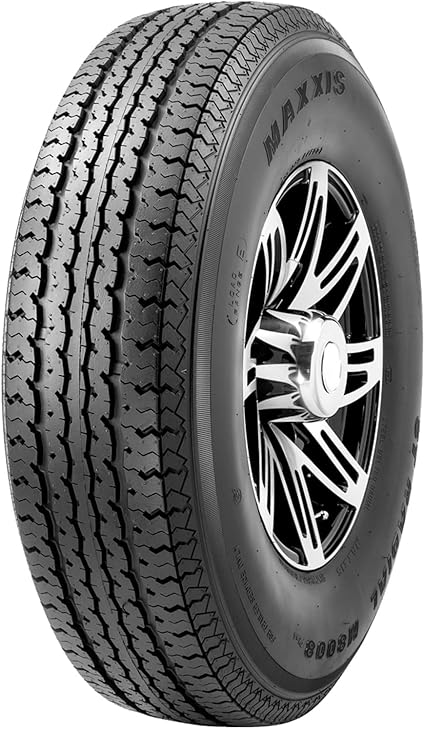
The Maxxis M8008 ST Radial is one of the most trusted trailer tires used by RV owners. It’s built specifically for trailers, which means it focuses on stability and load support rather than steering or comfort.
Many RV travelers choose this tire because it offers reliable performance without being too expensive. It’s commonly used on travel trailers and fifth-wheel RVs that spend most of their time on highways.
The tire is designed with strong sidewalls to help control trailer sway. That extra stiffness helps keep the trailer steady when driving at highway speeds or when facing crosswinds.
Another reason people like this tire is its durability. The tread compound is made to resist heat and wear during long trips, which is important because trailer tires carry a lot of weight for long periods.
Key features
- Designed specifically for trailer use (ST tire type)
- Strong sidewall construction to improve trailer stability
- Durable rubber compound that helps reduce wear
- Tread pattern designed for steady highway driving
- Good load-carrying capacity for heavy trailers
- Built to resist heat during long highway trips
- Available in many common trailer tire sizes
- Reinforced internal structure for extra strength
- Designed to reduce uneven tread wear
Pros
- Reliable and widely trusted trailer tire
- Good balance of price and durability
- Helps reduce trailer sway
- Handles heavy loads well
Cons
- Not designed for motorhomes or tow vehicles
- Limited off-road capability
- Ride comfort isn’t important since it’s a trailer tire
For RV owners looking for a dependable trailer tire that won’t break the budget, the Maxxis M8008 ST Radial is a practical and proven choice.
Libra Gremax All-Steel RV Radial — Best Tire Set

The Libra Gremax All‑Steel RV Radial is a heavy-duty trailer tire designed for RV owners who need extra strength. Unlike many standard trailer tires, this one uses an all-steel internal structure. That stronger construction helps the tire handle heavy loads and long highway trips more confidently.
Many RV owners choose this tire when their trailers carry a lot of weight. The steel reinforcement helps the tire keep its shape under pressure, which can improve stability and reduce the risk of damage on long drives.
Another benefit is durability. Steel-reinforced tires usually resist wear better than standard polyester trailer tires. This can be helpful for RVs that travel long distances or carry heavier gear.
That said, these tires are heavier than typical trailer tires. For some RV setups, that extra weight isn’t a problem, but it’s something to keep in mind.
Key features
- All-steel internal construction for added strength
- Designed for heavy RV trailers and fifth-wheels
- High load capacity compared with many standard trailer tires
- Reinforced sidewalls that help maintain tire shape under load
- Built for long highway trips
- Strong structure that helps resist tread wear
- Available in popular trailer tire sizes
- Designed to improve stability when towing
- Built to handle higher tire pressure for heavy loads
Pros
- Very strong construction
- High load capacity for heavy trailers
- Good stability during highway towing
- Durable for long trips
Cons
- Heavier than standard trailer tires
- Ride comfort isn’t a priority since it’s a trailer tire
- Availability can vary depending on size
For RV owners with large trailers or heavy fifth-wheels, the Libra Gremax All-Steel RV Radial can be a strong and dependable option that focuses on strength and load support.
Goodyear Endurance Trailer Tire — Best for Trailers
The Goodyear Endurance Trailer Tire is one of the most well-known trailer tires used by RV owners. It’s designed specifically for trailers, so the focus is on stability, strength, and long highway performance rather than ride comfort.
Many RV travelers like this tire because it handles long trips well. The design helps reduce heat buildup during highway driving, which is important since trailer tires often carry heavy loads for many hours at a time.
Another reason it’s popular is its strong sidewall design. The tire is built to resist cuts and small road hazards, which can help reduce the chances of damage during travel.
It’s not the cheapest trailer tire on the market, but many RV owners feel the reliability makes it worth the cost.
Key features
- Designed specifically for RV and trailer use
- Strong internal structure to support heavy loads
- Durable sidewalls that help resist cuts and damage
- Tread pattern designed for stable highway towing
- Built to reduce heat buildup during long drives
- Good load capacity for travel trailers and fifth-wheels
- Available in many common trailer tire sizes
- Designed for even tread wear over time
- Made to provide steady tracking behind the tow vehicle
Pros
- Very reliable for long RV trips
- Strong sidewall protection
- Good stability when towing
- Widely trusted by RV owners
Cons
- More expensive than some trailer tires
- Not designed for motorhomes or tow vehicles
- Limited traction on rough off-road terrain
For RV owners who want a dependable trailer tire for long highway trips, the Goodyear Endurance is often considered one of the safest and most trusted options available.
Cooper Discoverer S/T Maxx — Best Off-Road RV Tire

The Cooper Discoverer S/T Maxx is a tough tire designed for drivers who travel beyond paved roads. It’s often used on heavy trucks, but many RV owners choose it when their trips include gravel roads, forest trails, or rough campsites.
This tire sits between an all-terrain and a mud tire. That means it can handle dirt and rocky surfaces better than standard highway tires, while still performing well on paved roads.
One thing that stands out about this tire is its strong sidewall design. The reinforced sidewalls help protect the tire from cuts and damage when driving on rough ground. That can be helpful for RV travelers who visit remote camping areas.
Because of its aggressive tread pattern, the tire grips well on loose surfaces. The trade-off is that it may produce a bit more road noise than a smooth highway tire.
Key features
- Hybrid tread design for both on-road and off-road driving
- Strong reinforced sidewalls for added durability
- Deep tread pattern that improves traction on loose surfaces
- Built to resist cuts and damage from rocks or debris
- Durable rubber compound designed for longer tread life
- Good stability when towing or carrying heavy loads
- Designed to perform on gravel, dirt, and uneven terrain
- Available in many popular light-truck tire sizes
- Built to handle heavy vehicles and demanding conditions
Pros
- Excellent traction on dirt and gravel roads
- Very strong sidewalls
- Durable for tough travel conditions
- Good choice for off-grid camping trips
Cons
- Slightly louder than highway tires
- Can feel firmer on paved roads
- More expensive than basic all-terrain tires
For RV owners who like exploring remote campsites or traveling on rough roads, the Cooper Discoverer S/T Maxx offers the durability and traction needed for more adventurous trips.
Bridgestone Duravis M700 HD — Best Multi-Terrain Tire

The Bridgestone Duravis M700 HD is a heavy-duty tire built for work trucks that operate in tough conditions. Because of its strong construction and durable tread, some RV owners use it when they need a tire that can handle mixed terrain and heavy loads.
This tire is designed to last in demanding environments. The tread pattern is deeper and stronger than a typical highway tire, which helps it grip loose surfaces like gravel or dirt roads.
Another advantage is durability. The tire is made to resist cuts and damage from rough terrain. That can be helpful if your RV trips include unpaved roads, campgrounds with gravel paths, or remote travel areas.
However, because it’s built for toughness, it can feel a bit firmer and slightly louder on smooth highways compared to standard highway tires.
Key features
- Heavy-duty construction designed for demanding conditions
- Deep tread pattern for better traction on gravel and dirt roads
- Reinforced structure that supports heavy loads
- Durable rubber compound designed for longer tire life
- Strong sidewalls that help resist cuts and punctures
- Built to perform in both on-road and off-road conditions
- Designed to maintain traction in wet weather
- Available in multiple light-truck sizes suitable for RV towing
- Built to handle the stress of heavy vehicles and equipment
Pros
- Very durable for rough travel conditions
- Handles heavy loads well
- Good traction on gravel and dirt roads
- Strong resistance to damage
Cons
- Slightly louder than highway tires
- Ride may feel firmer on paved roads
- Usually costs more than standard highway tires
For RV owners who travel through a mix of paved roads and rough terrain, the Bridgestone Duravis M700 HD offers the strength and durability needed for tougher travel conditions.
How to Choose the Best RV Tires
Picking the right tire isn’t about the brand alone. There are a few technical but easy-to-understand points to check so you end up with the tire that matches how and where you travel.
Load Rating (Load Range)
RV tires are chosen to carry heavy weight. Load range (often shown as letters like D, E, F, G) and the load index are your first checkpoints. Always match or exceed the original equipment (OE) load rating and check your vehicle’s placard for the manufacturer’s recommended tire pressure for a given load. If you’re approaching or over the factory gross vehicle weight, step up to a higher load range.
Tire Type — ST vs LT
ST (Special Trailer) tires are designed for trailers: stiffer sidewalls, built to carry a towload, and engineered to carry weight without steering forces. LT (Light Truck) tires are designed for powered vehicles (motorhomes, tow vehicles) and generally offer better steering control and sometimes better traction. Use ST on trailer axles and LT where the axle is steerable or driven — but always follow the chassis and tire manufacturer’s guidance.
Tire Size and Reading the Code
Tire size markings (for example ST225/75R15 or LT235/85R16) tell you width, aspect ratio, radial construction, and rim diameter. When replacing tires, match the OE size unless you have a documented reason and professional advice to change it. Rim compatibility and load rating must also match.
Tread Design
Highway-tread tires prioritize smooth, quiet rides and long mileage. All-terrain designs trade some comfort for grip on loose surfaces. Trailer-specific treads focus on even wear under load and stable tracking. Pick a tread based on your travel style — mostly highway, mixed roads, or off-grid.
Heat Resistance and Construction
Heat is the enemy of RV tires, because heavy loads produce more heat. Look for tires advertised for heat resistance or with reinforced sidewalls/steel belts. Trailer applications especially benefit from tire constructions that manage heat and reduce the risk of failure on long hauls.
Types of RV Tires Explained
There are a few categories commonly used for RVs; knowing the difference helps you avoid costly mistakes.
- ST (Special Trailer) tires: Built for trailers, with stiff sidewalls and high load capability. They don’t wear like passenger tires and aren’t intended for steering axles.
- LT (Light Truck) tires: Used on motorhomes and tow vehicles; better for steering loads and often used where traction is important.
- All-steel or commercial-grade radials: These offer extra strength and longer life for very heavy rigs.
When in doubt, match tire type to axle function: trailers → ST; motorhome drive/steer axles → LT or OE recommendation.
How Long Do RV Tires Last?
Tire lifespan depends on use and storage, but a widely recommended rule is to inspect tires carefully once they’re more than five years old and to replace them around the 5–7 year mark if they show aging signs — even when tread looks OK. Some organizations and retailers note slightly different windows, but the general safety guidance is to let calendar age be a deciding factor because UV, heat, and time degrade rubber.
A few practical notes:
- Tires can wear out before they age out (heavy use), or age out long before tread is gone (UV, ozone, heat).
- Always read the tire’s DOT code (last four digits show week and year of manufacture) and track tire age.
- If you see cracks, bulges, or uneven wear, treat the tire as a safety concern regardless of age.
Common Causes of RV Tire Blowouts
Blowouts usually happen for obvious reasons once you know what to check:
- Underinflation: Causes excessive flexing and heat buildup.
- Overloading: Exceeding the tire’s load capacity creates stress and heat.
- Tire age: Rubber hardens and loses elasticity with time.
- Road hazards: Potholes, debris, and curbing can damage sidewalls.
- Poor maintenance: Wrong pressure, no inspections, or delayed rotation.
Preventing blowouts is straightforward: correct pressure, correct load, regular inspections, and replacing aged tires before they fail.
How to Prevent RV Tire Blowouts
A few routine habits go a long way toward safety:
- Check tire pressures cold, before driving, and use the manufacturer’s pressure for the load.
- Invest in a TPMS (tire pressure monitoring system) — it’s a small price for early warning on highway trips.
- Inspect tires visually before every major trip for cracks, bulges, or foreign objects.
- Keep weight in check — know your RV’s gross vehicle weight rating (GVWR) and payload capacity.
- Replace tires based on age and condition, not just tread depth.
A TPMS and a little habit-driven maintenance will reduce the chance of an unexpected tire failure dramatically.
RV Tire Maintenance Tips
Routine care makes tires safer and last longer. Follow these simple steps:
- Maintain correct pressure for the actual load each time you travel.
- Check tires for cuts, sidewall cracks, and uneven wear.
- Rotate or replace tires in matched sets when appropriate (especially for trailer axles).
- Store the RV under cover or use tire covers to reduce UV exposure when parked long periods.
- If you’re unsure about a condition, have a tire professional inspect it; a visual check is not always enough.
RV Tire Buying Guide — Step-by-Step
- Check the placard or owner’s manual for the recommended tire size and pressure.
- Read the DOT code on your current tires to know their age. (Last 4 digits = week/year.)
- Choose the correct tire type (ST for trailers, LT for steer/drive axles where applicable).
- Compare load ranges and pick tires that meet or exceed the OE requirements.
- Consider your travel style — mostly highway, off-grid, or mixed — and pick tread construction accordingly.
- Read real user reviews for long-term feedback, but weigh them against manufacturer specs and expert guidance. (Many buyer guides list the top options and highlight different use cases.)
Frequently Asked Questions
How often should RV tires be replaced?
Treat age as important: inspect at 5 years and seriously consider replacement around 5–7 years depending on exposure and condition. Many industry and retail sources give similar guidance, and safety-focused shops often encourage conservative replacement schedules for RV use.
Are LT tires better than ST tires?
They serve different jobs. ST tires are built for trailer axles and heavy static loads; LT tires are built for powered axles and steering. Use the tire type suited to the axle function and manufacturer recommendations.
What PSI should RV tires run?
Follow the vehicle placard for cold inflation pressure at the intended load. A tire run on too low pressure will overheat; too high pressure reduces footprint and traction.
Can I upgrade my RV tire load rating?
Yes, but only if the wheel fits and the chassis and suspension can support the changed load dynamics. Upgrading load capacity without professional review can create handling issues.
Final Verdict: Which RV Tire Is Best?
The best RV tire depends on your RV type and travel style.
For overall reliability and highway travel, the Bridgestone Dueler H/T 685 is an excellent choice.
Travel trailer owners often prefer the Goodyear Endurance because it’s designed specifically for trailer use.
If you want an affordable option with strong durability, the Maxxis M8008 ST Radial offers excellent value.
Choosing a quality RV tire improves safety, stability, and peace of mind on long trips. With the right tires and proper maintenance, your RV adventures can be smoother and far more enjoyable.
