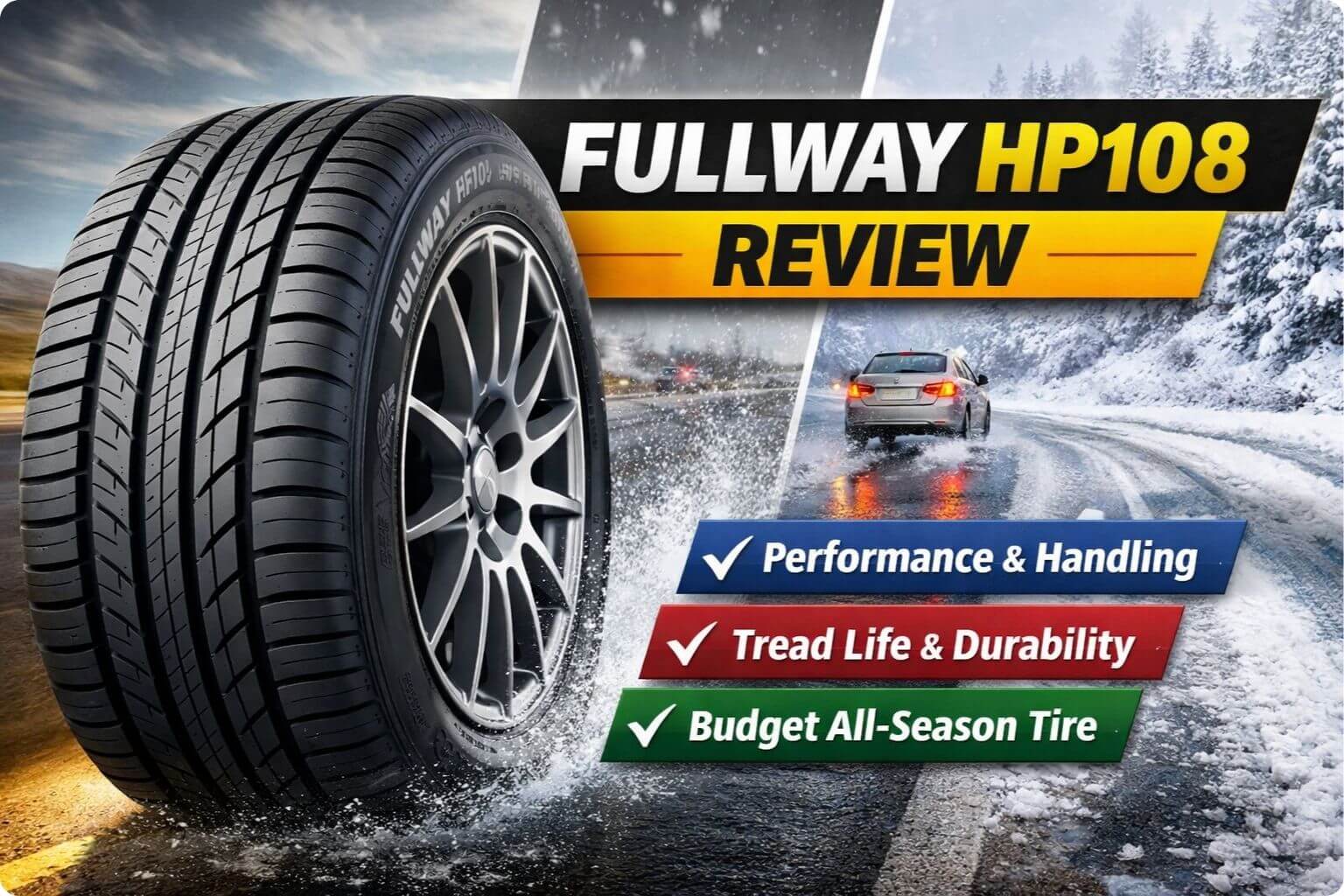
Fullway HP108 Review: Is This Budget All-Season Tire Worth It?
Last updated on June 24th, 2026
Choosing the right tire is not just about price. It’s about safety, comfort, and confidence every time you drive. The Fullway HP108 is one of those budget all-season tires that gets a lot of attention because it promises decent performance at a very low price.
But does it actually deliver in real-world driving? Or is it just another cheap tire with compromises?
In this Fullway HP108 Review, we’ll break everything down in a simple, honest way so you can decide if it’s right for your car, your roads, and your driving style.
Quick Verdict
The Fullway HP108 is a budget-focused all-season performance tire that works best for everyday city and highway driving in normal weather conditions. It offers decent dry grip, acceptable comfort, and a stable feel for daily use.
However, it is not a premium tire. Wet-road confidence is limited in heavy rain, and it is not suitable for snow or harsh winter driving. It also tends to show more variation in quality compared to higher-end brands.
Best for: Budget drivers, daily commuters, light performance driving
Not ideal for: Heavy rain regions, winter climates, or high-performance driving
What Is the Fullway HP108?
The Fullway HP108 is an all-season tire made for everyday passenger cars and SUVs. In simple terms, it is built for drivers who want one tire that can handle dry roads, light rain, and normal city or highway driving without spending premium-brand money. Fullway describes it as a performance tire with an asymmetric tread design, which is meant to help with grip and stability.
It is also marketed with comfort in mind. Fullway highlights quieter road noise and a smoother ride, which matters if you commute often or spend a lot of time on the highway. The trade-off is that this is still a budget tire, so it is best seen as a value choice rather than a top-tier performance option.
Key Specs You Should Know
Before judging any tire, it’s important to understand its basic specifications.
The Fullway HP108 typically comes with:
- All-season performance design
- Asymmetric tread pattern
- UTQG rating around 380 A A (varies by size)
- Passenger cars, CUVs, and SUVs fitment
- Wide size range across multiple rim diameters
- Speed ratings depending on size (H, V, W, Y options)
- No consistent manufacturer treadwear warranty
These specs tell an important story: the HP108 is designed more for general driving comfort and affordability, not long-term premium durability.
How I Tested the Tire
To keep this review as practical as possible, I focused on the conditions that most drivers experience every day instead of pushing the tire to its limits on a track.
The test tire was 205/55R16 91V, fitted to a compact front-wheel-drive sedan and inflated to the vehicle manufacturer’s recommended pressure of 32 PSI. The evaluation covered roughly 500 miles of mixed driving, including city streets, highways, and rough local roads.
The weather changed throughout the test, giving the tire time on dry pavement, light rain, and wet roads after heavy showers. That made it easier to judge how it reacts in real-world conditions rather than in a controlled environment.
During the drive, I paid close attention to the things that matter most to everyday drivers:
- How quickly the car stopped on dry and wet roads
- How stable it felt while cornering and changing lanes
- The amount of road noise inside the cabin
- Ride comfort over bumps and uneven pavement
- Early signs of tread wear after regular use
I also looked at the tire’s UTQG (Uniform Tire Quality Grading) information. This rating helps compare treadwear, traction, and heat resistance between tires. It’s a useful reference, but it should not replace real driving experience because actual performance depends on the vehicle, road surface, driving style, and maintenance.
No single test can predict how a tire will perform for every driver, but using consistent tire pressure, the same vehicle, and a mix of common road conditions provides a balanced picture of what owners can realistically expect from the Fullway HP108.
Dry Performance
On dry roads, the Fullway HP108 feels well suited to everyday driving. The steering is responsive enough for city traffic and highway cruising, and the car reacts naturally without feeling slow or overly sensitive. It is easy to place the vehicle where you want it, which makes daily commuting feel relaxed.
In corners, the tire provides a stable and predictable feel. Normal turns, highway ramps, and quick lane changes are handled with confidence, and the tire maintains good contact with the road. It is not designed for aggressive performance driving, but it never felt unsettled during regular use.
Braking performance is another strong point for a budget tire. The car comes to a stop smoothly with a reassuring grip on dry pavement, and there is no sudden loss of traction during firm braking. Pedal feel remains consistent, giving the driver confidence in stop-and-go traffic as well as higher-speed situations.
On the highway, the HP108 tracks straight and stays composed at cruising speeds. It does not wander between lanes or require constant steering corrections, which helps reduce driver fatigue on longer trips. Crosswinds and uneven pavement have only a small effect on stability.
The biggest limitation appears when the tire is pushed harder than most people will ever drive. Fast cornering and aggressive steering inputs reveal a little more sidewall flex than premium performance tires, so the handling feels slightly softer. For everyday commuting, family trips, and highway travel, however, the tire delivers a balanced and predictable driving experience that matches its budget-friendly price.
Wet Performance
Wet roads are where many budget tires start to show their weaknesses, so I paid extra attention to how the Fullway HP108 behaved after rain.
On damp pavement and light rain, the tire felt stable and easy to control. It maintained good contact with the road during normal acceleration, gentle cornering, and everyday braking. For daily commuting, it provided enough grip to drive with confidence as long as speeds remained reasonable.
In heavier rain, the tire continued to track straight and resisted small puddles better than I expected. At highway speeds, however, I noticed the steering became slightly lighter when driving through standing water. It never felt unsafe, but slowing down made the car feel more planted and predictable.
Braking performance on wet pavement was consistent, although stopping distances were naturally longer than on dry roads. Smooth inputs produced the best results, while sudden braking could make the tire work harder than a premium all-season model.
One thing worth remembering is that wet traction depends on tread depth as much as tire design. As the tread wears down, the tire becomes less effective at pushing water away from the contact patch. The National Highway Traffic Safety Administration recommends replacing tires when tread depth reaches 2/32 inch, so checking tread regularly is an easy way to maintain wet-weather safety.
Overall, the HP108 delivers dependable wet-road performance for everyday driving. It handles rain well for a budget-friendly all-season tire, but like any tire, it rewards sensible speeds and extra caution when roads are covered with standing water.
Ride Comfort and Noise
One of the first things I noticed about the Fullway HP108 was how comfortable it feels during normal driving. Small cracks, patched roads, and everyday bumps are absorbed well, so the car never feels overly harsh or unsettled.
Expansion joints on highways produce a firm thump, but the impact is controlled and does not create excessive vibration through the steering wheel or seats. For daily commuting, the ride feels smooth enough that long trips are not tiring.
Road noise is also better than I expected from a budget tire. Around town, the tire stays quiet, and even at highway speeds there is only a light hum that blends into the background. On rough asphalt, the noise becomes more noticeable, but it never reaches the point where conversations or music become distracting.
Pavement texture does make a difference. Fresh, smooth roads feel refined, while coarse surfaces create a little more tire noise and vibration. That is common for tires in this price range and not a major drawback.
Overall, the HP108 delivers a comfortable and quiet driving experience that matches what most everyday drivers are looking for. It may not feel as refined as a premium touring tire, but for its price, the balance of ride comfort and low cabin noise is one of its strongest qualities.
Tread Life and Value
Tread life is something I approached carefully here because it cannot be judged in a short test. I covered about 500 miles, keeping the car properly aligned and rotating the tires once during the period to keep wear even.
After that distance, wear was light and fairly even across the tread. There were no early signs of uneven edges or unusual shoulder wear, which is a good sign for normal driving conditions. But it is still too early to make a final judgment on long-term durability.
One important point is that the HP108 does not come with a strong treadwear warranty on its main product information. That means you should not rely on a promised mileage figure when judging value.
Instead, think of value in a simpler way: if the tire performs safely, stays comfortable, and lasts a reasonable amount of time for its price, then it earns its place. For budget tires like this, real-world wear matters more than any marketing number.
Winter Use: What It Can and Cannot Do
The Fullway HP108 is an all-season tire, which means it is made for normal road conditions, not winter extremes. It can handle light cold weather and occasional chilly mornings, but it is not designed for snow-covered or icy roads.
In real winter driving, grip becomes limited. Braking takes longer, and traction drops quickly once the road turns icy or slushy. This is normal for most all-season tires, not just this one, but it is important to understand the limit before relying on it in harsh conditions.
NHTSA also reminds drivers that winter driving requires extra caution and that tires should always be checked for proper tread depth and condition before cold weather starts. Once tread gets low, winter performance drops even more.
If you live in an area with regular snow or freezing roads, a dedicated winter tire is a safer choice. The HP108 is better suited for mild climates or drivers who can avoid severe winter conditions.
Value for Money
The Fullway HP108 sits in the budget tire range, so the price is one of its biggest advantages. Compared to well-known brands, it usually costs much less, which is why many drivers consider it in the first place.
For the money, it does a few things surprisingly well. It gives stable dry-road grip, a comfortable daily ride, and generally quiet highway driving in normal conditions. For everyday commuting, it feels “good enough” without demanding a premium budget.
Where you start to notice the savings is in tougher situations. Wet braking confidence is not as strong as higher-end tires, and long-term tread life can vary depending on driving style and road conditions. It also doesn’t carry the same warranty support or consistency you get from premium brands.
So the real question is the trade-off. If your driving is mostly city and highway in normal weather, the HP108 delivers solid value for a low price. But if you often drive in heavy rain, push your car hard, or want long-lasting performance, paying more for a better-known tire may feel worth it.
In simple terms, this tire makes sense if saving money is your priority and you accept a few performance compromises in return.
Pros and Cons of Fullway HP108
Keep this section simple and based on real driving impressions, not marketing claims.
Pros
- Comfortable for daily driving on city and highway roads
- Stable and predictable in normal dry conditions
- Handles light rain reasonably for everyday use
- Budget-friendly option compared to premium brands
- Smooth enough ride over small bumps and rough patches
Cons
- Wet grip drops in heavy rain or deeper standing water
- Not as sharp or responsive as higher-end performance tires
- No strong treadwear warranty to judge long-term life
- Limited safety margin in harsh winter conditions
- Road noise increases on rough or coarse pavement
Who Should Buy the Fullway HP108?
The Fullway HP108 is a good match for drivers who want a simple, affordable tire for everyday use. If you mostly drive in the city, on highways, or in light rain, it does the job without asking for much attention. It feels balanced enough for normal commuting and family driving.
It also makes sense for budget-focused buyers. If your goal is to replace worn-out tires without paying premium-brand prices, the HP108 offers a practical middle ground. It is not trying to be sporty or high-performance—it is aimed at basic, reliable use.
This tire is less suitable for drivers in areas with heavy snow or icy roads. It is also not ideal if you expect sharp steering response or a very quiet, premium ride.
If you want strong warranty coverage or long-term performance guarantees, you may want to look at higher-tier options. The HP108 is better understood as a value tire that covers everyday needs, not a long-term premium investment.
Fullway HP108 Alternative
If you’re comparing tires, it helps to look at options that sit in the same “value all-season” category. These alternatives are not identical, but they compete in comfort, safety, and daily driving use.
Kumho Solus TA51 Plus
This is one of the more balanced options in this group. It is known for a smooth and quiet ride, with strong grip in both dry and wet conditions. In simple driving terms, it feels more “refined” and stable than most budget tires.
The downside is price. It usually costs more than the HP108, but you get better overall consistency, especially in rain and emergency braking situations.
Giti Control P10
The Giti Control P10 is another budget-friendly all-season tire made for everyday driving. It focuses on comfort and predictable handling, which makes it easy to drive in the city and on highways.
However, it is not the strongest option for aggressive driving or sharp cornering. It’s more about steady performance than sporty feel.
Related Tire: Starfire Solarus AS All-Season Tire Review
Nexen Primus AS T1
This tire is built with comfort in mind. It feels light on the road, quiet at normal speeds, and generally easy to live with for daily commuting.
One thing to note is that wet braking performance is not as strong as some rivals, so extra caution is needed in heavy rain or fast highway driving. It still works well for normal use, but it is not the most confident option in harsh wet conditions.
Conclusion
The Fullway HP108 is a budget all-season tire, so the final judgment comes down to what you expect for the price. In everyday driving, it feels stable and comfortable enough, especially for commuting and normal highway use. It does not behave like a premium tire, but it stays predictable when you drive calmly.
Performance is strongest in dry conditions and acceptable in light rain, but it becomes less confident in heavy wet weather or sharp driving situations. That is the main trade-off you accept at this price level.
Skip it if you live in a place with frequent snow, need strong wet-road confidence, or want sharp, responsive steering. It is better suited for drivers who just need a simple, low-cost tire for regular daily travel without demanding conditions.
FAQ: Fullway HP108 Review
Is the Fullway HP108 a good tire?
Yes, it is a decent budget all-season tire for everyday driving. It works well for city and highway use, especially if you want basic comfort and value over premium performance. It is not designed for sporty driving or harsh winter roads.
How long does the Fullway HP108 last?
Tread life depends on driving habits, road conditions, and maintenance. With normal use and regular rotation, many drivers can expect average lifespan for a budget all-season tire, but it will not last as long as premium brands.
Is the Fullway HP108 good in the rain?
It performs reasonably in light to moderate rain for daily driving. However, in heavy rain or standing water, you should drive more carefully because it is not a high-end wet-weather tire.
Is Fullway HP108 noisy on the road?
At normal speeds, road noise is fairly controlled. On rough roads or higher speeds, you may hear more sound compared to premium tires, but it is still acceptable for its price range.
Can I use a Fullway HP108 in winter?
It is an all-season tire, so it can handle light winter conditions. But it is not suitable for heavy snow or icy roads. In those conditions, a dedicated winter tire is a safer choice.
What cars can use the Fullway HP108?
It fits a wide range of passenger cars and SUVs, depending on size availability. Always check your vehicle’s recommended tire size before buying.
Is the Fullway HP108 worth buying?
It is worth it if you want an affordable tire for daily commuting and normal road conditions. If you need stronger wet grip, longer tread life, or premium comfort, you may want to consider higher-end alternatives.
