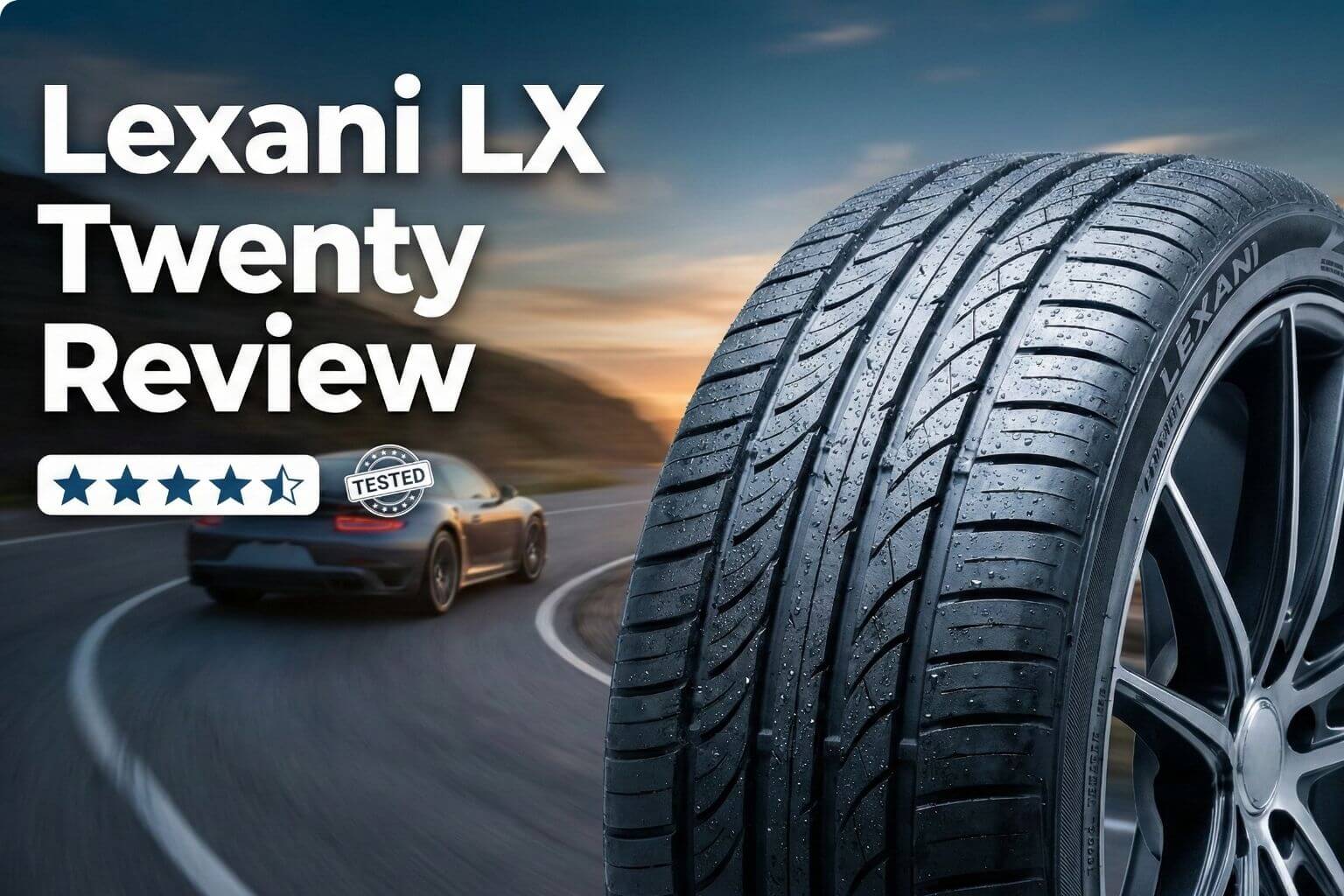
Lexani LX Twenty Review 2026
Last updated on June 22nd, 2026
The Lexani LX Twenty Review matters if you are trying to figure out whether this tire is actually a smart buy or just another budget performance option with a flashy name. If you want a tire that feels sporty, looks good on the car, and still works well for everyday driving, the details matter more than the marketing.
A tire affects more than comfort. It changes how your car steers, how it holds the road in rain, how much noise you hear on the highway, and how confident you feel every time you brake or take a corner. That is why it helps to look past the price and find out what the Lexani LX Twenty really does well, and where it asks you to compromise.
Some tires try to be everything and end up being average at most things. The Lexani LX Twenty takes a different approach, aiming for strong value and everyday performance first. That makes it worth a closer look if you want honest answers before spending your money.
Quick Verdict
If you want a sporty-looking tire that delivers confident everyday performance without spending premium-brand money, the Lexani LX Twenty is worth considering. It offers good dry-road grip, responsive steering, and a comfortable highway ride at a price that appeals to budget-conscious drivers.
However, no tire is perfect. While it performs well in normal driving conditions, it cannot match the wet-weather confidence, long tread life, or refined performance of premium ultra-high-performance tires from established manufacturers. For daily commuting, highway trips, and spirited weekend driving, it delivers solid value for the money.
Overall Rating: 8.2/10
Best for:
- Daily commuters who want sporty handling
- Drivers looking for an affordable ultra-high-performance all-season tire
- Sports sedan, coupe, and performance SUV owners on a budget
Not ideal for:
- Drivers who frequently encounter heavy snow
- Track-day enthusiasts
- Buyers who prioritize maximum tread life over performance

Pros and Cons of Lexani LX Twenty
Before looking at the details, here’s a quick overview of where the Lexani LX Twenty shines and where it falls short.
Pros
- Excellent value for the price
- Responsive steering during everyday driving
- Good dry-road traction
- Comfortable ride on highways
- Attractive tread design
- Available in a wide range of performance sizes
Cons
- Wet braking performance is average compared to premium competitors
- Road noise can increase as the tire wears
- Tread life is respectable but not class-leading
- Limited capability in snow and icy conditions
The biggest strength of this tire is its balance between affordability and performance. It isn’t designed to compete directly with premium models costing significantly more, but it offers enough capability to satisfy most drivers who spend their time on city streets and highways.
Key Specifications
| Specification | Details |
| Tire Name | Lexani LX-Twenty |
| Tire Type | Premium high-performance tire for car, sport, and all-season use |
| Warranty | 55,000-mile limited mileage warranty |
| UTQG Rating | 320 A A |
| Treadwear | 320 |
| Traction | A |
| Temperature | A |
| Available Sizes | 17, 18, 19, 20, 21, 22, 24, 26, and 30 inches |
| Example Fitment | 225/45ZR17 |
| Example Load Index | 94XL |
| Example Speed Rating | W |
| Example Max Inflation Pressure | 49 psi |
| Example Tread Depth | 10.1/32 |
| Example Tire Diameter | 25 in |
| Example Section Width | 8.9 in |
Note: Load index, speed rating, diameter, section width, and tread depth can vary by size, so it is best to match the table to the exact fitment you are reviewing.
Dry Road Performance
Dry-road performance is where the LX-Twenty seems most at home. Lexani says the tire is built for excellent handling and high-speed traction, and SimpleTire’s review summary repeatedly points to strong dry grip and confident handling as major positives. That matches the kind of feedback you would expect from a tire designed for sporty street use rather than maximum comfort or long-distance touring.
For everyday driving, that usually means responsive steering, stable lane changes, and a planted feel when accelerating out of corners. You should not expect the razor-sharp precision of a top-tier premium performance tire, but for the price class, the LX-Twenty appears to deliver more than basic grip and a better-than-average sense of control. That is an inference from Lexani’s performance claims and the large number of positive user reviews.
Wet Road Performance
Wet performance is one of the most important reasons drivers consider this tire, and it is also one of the LX-Twenty’s better points. Lexani says the tire is designed to provide traction in wet and dry conditions, and SimpleTire explains that the tread pattern uses grooves and sipes to help generate wet grip. Verified customer summaries on SimpleTire also highlight good wet traction, even at higher speeds.
That said, wet grip and wet confidence are not the same as true rain leader performance. For calm highway driving and normal street use, the LX-Twenty seems capable and reassuring. For drivers who regularly face heavy rain, standing water, or aggressive driving in bad weather, a higher-end tire may still offer better braking reserve and more overall confidence. That is an informed judgment based on the tire’s category and the feedback pattern in the reviews.
Ride Comfort
Comfort is another area where the LX-Twenty earns a good reputation. SimpleTire’s verified review summary says many customers describe the tire as smooth and comfortable, and the scorecard gives the tire a strong comfort rating. In practical terms, that usually means the tire does not feel harsh over normal pavement joints and everyday road imperfections.
That comfort story matters because many performance tires sacrifice ride quality to sharpen handling. The LX-Twenty appears to strike a more balanced approach, especially for drivers who want sporty looks and road feel without making the car tiring to live with every day.
Road Noise
Road noise is the one comfort-related topic where the reviews are a little mixed. SimpleTire’s summary says many buyers find the tire quiet, but the negative highlights also mention that some users consider it loud. That split suggests the noise level may depend on vehicle type, road surface, tire size, and inflation pressure.
A useful way to read that feedback is this: on smoother roads, the LX-Twenty may feel pleasantly quiet for a performance tire, but on rougher pavement or after some wear, the noise may become more noticeable. That is a realistic expectation for this category, and it is better than assuming every buyer will hear the same result.
Tread Life and Durability
Tread life is the area where the LX-Twenty becomes more of a value play than a long-life champion. Lexani’s official page shows a limited mileage warranty of 55,000 miles, but multiple retailer listings still show 30,000 miles for the LX-Twenty, so the exact coverage appears to vary by seller or size. The safest advice is to verify the warranty for your exact tire size before you buy.
Customer feedback also suggests that treadwear is decent but not class-leading. SimpleTire’s summary notes concerns about premature wear from some buyers, while the scorecard still gives treadwear a solid rating. That is the typical pattern you see with budget-performance tires: good first impression, acceptable longevity, but not always the same consistency or mile-for-mile durability as expensive premium options.
Winter Performance
This is the section where honest expectations matter most. The LX Twenty is not a dedicated winter tire, and buyers in snow-heavy climates should treat it that way. Tire Rack’s testing shows that winter tires deliver better traction than the best all-season tires on ice, and its broader tire-category guidance notes that UHP all-season tires take a noticeable step down in winter traction compared with the rest of the all-season world.
Lexani’s own “right tire” guide says the LX Twenty also fits its all-weather group because of its M+S rating and enhanced water evacuation, but that should not be confused with true winter specialization. My practical read is this: the LX Twenty may handle light cold-weather use better than a summer-only tire, but if you regularly drive through real snow or ice, a dedicated winter tire is the safer, smarter purchase.
Fuel Efficiency
Fuel economy is not a standout strength here. SimpleTire’s review summary specifically notes that the LX-Twenty is “not the most fuel efficient tire,” which lines up with the general trade-off of performance tires: better grip often comes with a little more rolling resistance and less emphasis on economy.
That does not mean the tire will wreck fuel economy. It means buyers should choose it for the driving feel, appearance, and value proposition first, not because they expect an efficiency advantage over more touring-oriented tires.
Who Should Buy Lexani LX Twenty?
The LX-Twenty makes the most sense for drivers who want a sporty street tire that looks good, handles confidently, and does not carry premium-brand pricing. It is especially appealing for people who drive coupes, sedans, and other performance-oriented vehicles and spend most of their time on dry roads or in mild rain. SimpleTire’s fitment examples include cars such as the Ford Mustang GT Premium, Chevrolet Camaro LT1, Dodge Challenger R/T, Infiniti Q50 Sport, Mercedes-Benz CLA250 4Matic, and Tesla Model 3.
It also fits a very specific kind of buyer: someone who cares about driving feel and value more than absolute refinement, maximum tread life, or all-weather versatility. For that audience, the LX-Twenty is easy to understand and easy to recommend. That conclusion is based on the official positioning and the pattern in verified user feedback.
Who Should Avoid Lexani LX Twenty?
Drivers in cold climates should look elsewhere. If your car sees freezing temperatures, snow, or frequent icy mornings, this tire is not the right fit. SimpleTire’s own guidance says it is meant for warmer conditions and should not be used in winter weather.
I would also steer away from the LX-Twenty if your top priorities are long tread life, the quietest possible ride, or the most polished premium-level wet braking. The reviews are good overall, but they are not perfect, and the tire’s value-based nature means some compromises are part of the deal.
Comparison with Competitors
The Lexani LX-Twenty competes with several affordable ultra-high-performance all-season tires. While each tire offers sporty styling and good everyday performance, they are designed with slightly different priorities. The best choice depends on whether you value comfort, wet grip, tread life, or overall value.
Lexani LX-Twenty vs Fullway HP108
Both tires target budget-conscious drivers who want a sporty look without spending premium-brand money.
The Lexani LX-Twenty feels more refined and comes with a 55,000-mile limited mileage warranty, giving buyers extra confidence for long-term use. It is a better option for daily highway driving and drivers who want a balance of handling and durability.
The Fullway HP108 is usually less expensive, making it attractive if price is your main concern. However, it generally doesn’t offer the same warranty coverage or premium feel as the Lexani.
Best for: Drivers looking for better overall value and longer-term ownership.
Lexani LX-Twenty vs Lionhart LH-Five
These two tires share a similar mission: sporty performance at an affordable price.
The Lexani LX-Twenty stands out with its wide range of sizes and predictable handling, making it a good match for sports sedans, muscle cars, and luxury vehicles.
The Lionhart LH-Five focuses more on ride comfort and everyday commuting. Drivers who prefer a softer ride may appreciate it, while those wanting quicker steering response may prefer the Lexani.
Best for: Drivers who enjoy a more responsive and connected driving experience.
Lexani LX-Twenty vs Ironman iMove Gen2 AS
The Ironman iMove Gen2 AS is designed as a practical all-season tire with comfort in mind.
Compared with the Ironman, the Lexani LX-Twenty delivers a sportier feel and stronger cornering stability. Steering feels more direct, especially during highway lane changes and winding roads.
The Ironman, however, is often quieter on rough pavement and may appeal to drivers who spend most of their time commuting.
Best for: Drivers who prioritize handling over maximum ride comfort.
Lexani LX-Twenty vs Landsail LS588 UHP
The Landsail LS588 UHP is another popular value-priced performance tire.
Both models offer good dry-road performance and stylish tread designs, but the Lexani benefits from a well-known 55,000-mile limited mileage warranty, which can be an important advantage for buyers planning to keep their tires for several years.
The Landsail may be a reasonable choice for occasional spirited driving, while the Lexani offers a stronger balance of performance and long-term value.
Lexani LX-Twenty vs Atturo AZ850
The Atturo AZ850 is built with performance in mind and is often chosen for larger wheels and sporty vehicles.
The Lexani LX-Twenty delivers similar everyday performance but places a little more emphasis on daily usability and mileage coverage. Drivers who split their time between city streets and highways will likely appreciate its balanced nature.
If aggressive handling is your only priority, the Atturo is worth considering. If you want performance without giving up everyday practicality, the Lexani is the better all-around choice.
Owner Feedback Summary
The most helpful real-world signal comes from customer reviews, and this is where the LX-Twenty looks genuinely strong. SimpleTire shows a large number of verified reviews, a high overall score, and a strong “would you buy again” result. Positive highlights repeatedly mention grip, handling, comfort, and value.
At the same time, a good review does not mean a perfect tire. The negative notes around wear, noise, and occasional quality-control worries are worth reading carefully because they tell you where the tire is most likely to disappoint. That honesty is useful, because it helps set realistic expectations before money is spent.
Frequently Asked Questions
Is the Lexani LX-Twenty an all-season tire?
Retailer pages describe it as a performance tire and note that it is best used in warm conditions, above about 45°F. In practice, that means it behaves more like a performance street tire than a true all-weather solution.
How long does the Lexani LX-Twenty last?
Lexani’s official page shows a 55,000-mile limited mileage warranty, while some retailer listings show 30,000 miles for the LX-Twenty. Because of that mismatch, the most reliable answer is to check the warranty attached to your exact size and seller before you buy.
Is it good in wet weather?
Yes, wet traction is one of its better traits. The tread design uses grooves and sipes to help evacuate water, and verified customer feedback describes the tire as strong in wet conditions.
Does it work in winter?
No, it should not be treated as a winter tire. The available product guidance says to use it only in warm conditions and avoid winter weather.
Final Verdict
The Lexani LX-Twenty is a smart buy for the right driver. It delivers a sporty feel, good everyday grip, respectable comfort, and strong value for the money, which is exactly why so many owners rate it well. The trade-off is that it is not built for freezing weather, it is not the quietest or longest-lasting option in the class, and warranty details may differ depending on where you shop.
My honest take is this: if you want a budget-friendly performance tire for a warm-climate daily driver, the LX-Twenty deserves a serious look. If you need all-season flexibility in cold weather or you want premium-level longevity, it is better to spend more on a tire designed for that job.
