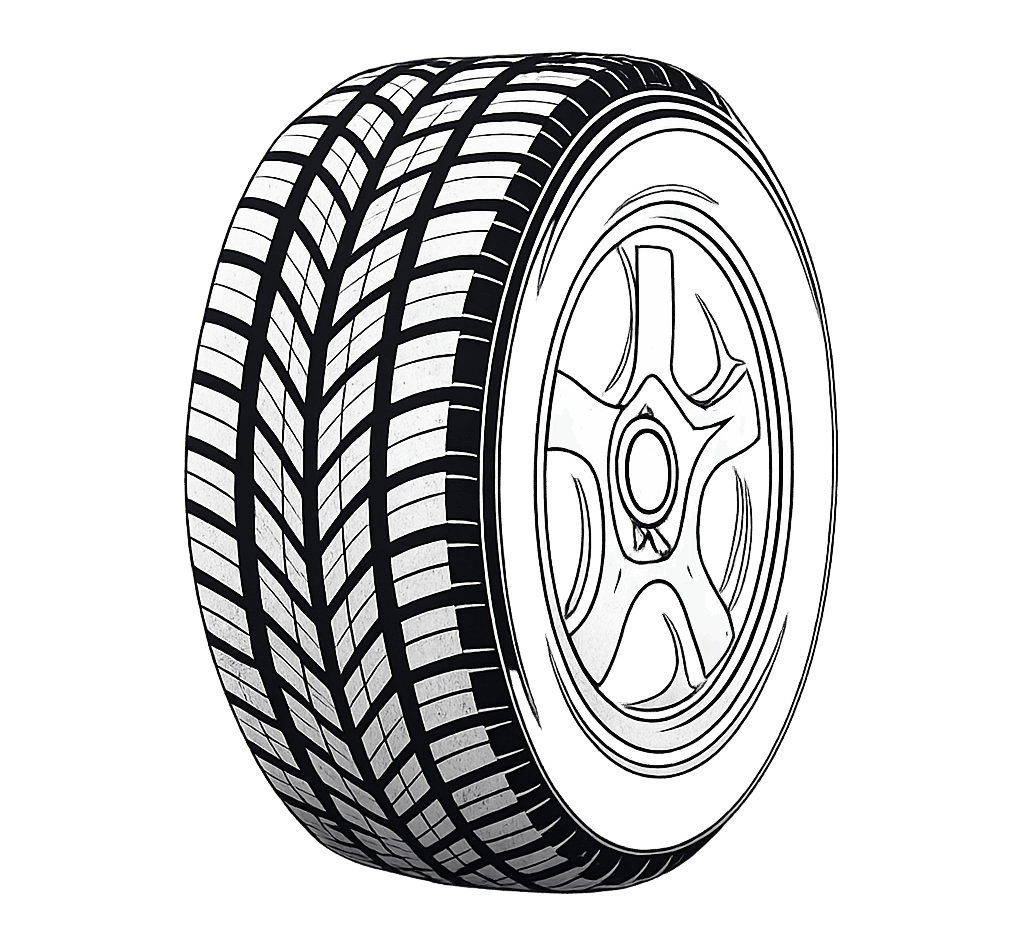

How Much Does a Tire Weigh? (Average Tire Weight by Type and Size)
Last updated on November 30th, 2025
If you’ve ever asked “How much does a tire weigh?”, the answer depends a lot on the vehicle and the tire type. Passenger-car tires commonly fall in the 15–25 lb range, while light-truck and many SUV tires are substantially heavier — often 35–100+ lb depending on size, construction, and load rating.
In this guide you’ll find clear averages by tire size and type, real manufacturer weights you can reference, simple methods to weigh a tire yourself, and why tire weight matters for fuel economy, ride comfort, and performance.
Read on to get the exact numbers you need and practical tips for choosing or measuring the right tire.
Average Tire Weight by Vehicle Type
Tire weight varies widely across vehicle types. Passenger car tires are lightest, while heavy-duty truck tires can weigh over 100 pounds. Here’s a quick reference table for common tire categories:
| Vehicle type | Typical weight per tire | Typical weight range |
| Passenger car | 20–27 lbs | 15–30 lbs |
| Compact car | 15–20 lbs | 12–22 lbs |
| Crossover / SUV | 30–48 lbs | 25–55 lbs |
| Light truck / pickup | 50–80 lbs | 45–90 lbs |
| Heavy-duty truck | 100–150+ lbs | 90–200+ lbs |
| Motorcycle | 8–15 lbs | 6–20 lbs |
✅ Tip: When replacing multiple tires, remember that the combined weight can quickly add up — replacing all four SUV tires could mean lifting nearly 200 pounds total.
What Affects How Much a Tire Weighs?
Not all tires weigh the same — and there’s a good reason for that. The weight of a tire depends on several simple things, like how big it is, what it’s made of, and what kind of driving it’s built for. Let’s look at each one in plain language.
1. Tire Size and Width
Think of tires like shoes for your car.
A small car wears “sneakers,” while a big truck wears “work boots.”
The larger and wider a tire is, the more rubber and materials it needs, which makes it heavier. A small car tire might weigh around 20 pounds, while a big off-road truck tire can easily double that. So if your vehicle has big, wide tires, it’s naturally going to have more weight sitting on each wheel.
2. Tire Type and Construction
Tires are built differently depending on what they’re made to do.
For example, an all-terrain tire is designed to handle dirt, gravel, and mud. To survive rough conditions, it’s built with thicker rubber and stronger sidewalls — and that adds extra pounds.
Meanwhile, a regular highway tire for a family car doesn’t need that heavy-duty protection, so it’s lighter and smoother.
Think of it like wearing hiking boots versus running shoes — both protect your feet, but one’s built tougher and weighs more.
3. Material Composition
Inside every tire, there’s more than just rubber.
Modern tires are made from a mix of rubber, steel, and fabric layers that give them strength and flexibility. The more steel belts a tire has, the heavier it becomes.
For instance, truck tires often have extra layers of steel inside to handle heavy loads, while smaller car tires use lighter materials. That’s why truck tires tend to feel much heavier when you try to lift them.
4. Tread Design and Ply Rating
The tread — those grooves on the tire — also plays a role in how much it weighs.
A tire with deep, rugged tread (like one made for off-roading) has more rubber packed into it. That makes it heavier than a smooth, low-profile tire designed for highway driving.
The ply rating, or how many layers are inside the tire, also matters. More layers mean more strength — and more weight. That’s why tires meant for hauling or towing are heavier than standard ones.
💡 Expert Insight:
According to Goodyear’s technical data, a tire’s construction and tread design can change its weight by up to 25%. In other words, two tires that look the same on the outside might weigh very differently depending on how they’re built.
Why Tire Weight Matters
Tire weight might seem like a small detail, but it actually affects how your car drives, how much fuel you use, and even how safe your trips are. Think of it like this — just as carrying a heavy backpack changes how you move, heavier tires change how your car performs.
Let’s break it down in simple terms.
1. Fuel Efficiency
Imagine walking with heavy boots versus lightweight sneakers. The heavier your shoes, the more energy you need to move. Cars work the same way.
When your tires are heavier, your engine has to work harder to get them rolling, which means it uses more gas. Lighter tires roll more easily and can help improve your miles per gallon (MPG).
So if you’re trying to squeeze the most out of every tank of fuel, knowing your tire weight can make a difference — especially if you do a lot of city driving or long commutes.
2. Handling and Ride Comfort
Tire weight also affects how your car feels on the road.
Lighter tires make your car easier to steer and more responsive — perfect for drivers who enjoy quick turns or smooth handling. On the other hand, heavier tires can make the car feel more stable, especially on highways or rough roads.
It’s a bit like comparing a skateboard and a bicycle. The skateboard turns faster, but the bike stays steadier. Both have their advantages — it just depends on what kind of driving you do most.
Towing and Load Capacity
If you drive a truck or SUV and use it for towing, tire weight becomes even more important.
Heavier tires are often built stronger to carry heavy loads safely. They have thicker layers and tougher materials that help them handle the extra pressure. That means if you’re pulling a trailer, hauling tools, or loading up for a family road trip, heavier-duty tires are usually the safer choice.
Simply put — the right tire weight helps your vehicle stay balanced and reliable under stress.
4. Performance Upgrades
For drivers who care about performance, lighter tires can feel like a secret weapon.
Less weight on your wheels means your car can speed up faster and stop more smoothly. Even a small weight change can make a big difference in how your vehicle handles.
Example: Replacing four 50-pound tires with 35-pound performance tires removes 60 pounds of total weight from your car. That’s like taking a passenger out of the vehicle — you’ll notice better cornering, quicker acceleration, and more responsive braking.
How to Find or Estimate Tire Weight
If you’re curious about how much your tires weigh, you don’t need special tools or technical know-how to find out. In fact, there are several simple ways to check — whether you’re planning to replace your tires, ship them, or just want to understand your car better.
Let’s walk through a few easy methods.
1. Check Manufacturer Specifications
The easiest and most reliable way to find out how much your tire weighs is to check the manufacturer’s website.
Brands like Michelin, Continental, Goodyear, and Tire Rack list detailed information about each tire model — including the exact weight. You can usually find this in the “specifications” or “technical details” section of the product page.
It’s just like looking up a product online to check its size or shipping weight. The tire listing will tell you everything you need to know.
2. Read the Tire Sidewall Code
If you take a close look at your tire, you’ll see a code printed right on the side. It might look something like this: P215/65R16.
That code isn’t just random numbers — it tells you the tire’s width, height, and rim size. Once you know those details, you can use online tire weight calculators to get a good estimate of how much your tire weighs.
It’s kind of like plugging your shoe size into an online chart — you’ll get a close idea of what fits your car.
3. Use a Scale
If you have access to a garage, workshop, or even a large shipping scale, you can weigh a tire yourself.
Just place the tire on the scale (with or without the rim) and note the number. If you’re checking for all four tires, multiply that number by four to see the total tire weight your vehicle is carrying.
This method is especially handy if you’re shipping tires or comparing different sets before buying.
4. Ask Your Mechanic or Tire Dealer
If you’re not sure or just want a quick answer, ask your mechanic or local tire shop. They deal with tires every day and can easily tell you the weight of your specific tire model.
Most shops also have digital systems that show tire details by vehicle make and model, so you’ll get accurate information without having to do any research yourself.
It’s the fastest and simplest way to get the right number — and you might even get some extra advice on tire performance or upgrades while you’re there.
Real-world example: why a 60 lb difference matters
Imagine your SUV uses four 45-lb tires (180 lbs total). Upgrading to heavier off-road tires at 60 lbs each adds 60 lbs total per axle (240 lbs total for four tires)—that’s roughly the weight of an extra passenger and their luggage. That additional unsprung weight can slightly reduce MPG and change handling feel.
Unique insights to add to your post (ways to differentiate)
- Local context: provide shipping or disposal costs in your primary market (estimates for pickup vs. drop-off).
- DIY handling tips: best ways to move heavy tires safely (use of tire carts, lift techniques).
- Weight vs. performance tradeoff table: show typical weight increases for popular all-season ➜ all-terrain swaps and expected impacts.
- Short case study: weigh two tires (stock vs. aftermarket) and show exact differences and estimated MPG impact using a simple math example.
Read More: Why Is My Tire Pressure Light Still On After Filling Tires? Here’s What It Really Means
FAQs About Tire Weight
1: How much does a car tire weigh with a rim?
A standard car tire with its rim typically weighs 40–60 lbs, depending on rim material (aluminum or steel).
2: How much does an SUV tire weigh?
Most SUV tires weigh 35–48 lbs, but off-road or all-terrain versions can exceed 50 lbs.
3: Do heavier tires affect gas mileage?
Yes — heavier tires slightly reduce fuel efficiency due to higher rolling resistance.
4: How much does a truck tire weigh compared to a car tire?
Truck tires often weigh twice as much as passenger tires, ranging from 60 to 120 lbs each.
5: Does tire weight affect acceleration or braking?
Absolutely. Lighter tires reduce rotational mass, improving acceleration and braking response.
Conclusion: Understanding Tire Weight Helps You Make Better Choices
Knowing how much a tire weighs helps you make smarter decisions about fuel economy, performance, and safety. Whether you drive a sedan, SUV, or pickup, choosing the right tire weight can make a noticeable difference in handling and comfort.
If you’re upgrading or comparing tire options, consider the weight as part of your buying decision — it’s just as important as tread pattern or brand.
