Motorcycle Tire Conversion Chart: Complete Guide to Metric, Standard & Inch Sizes
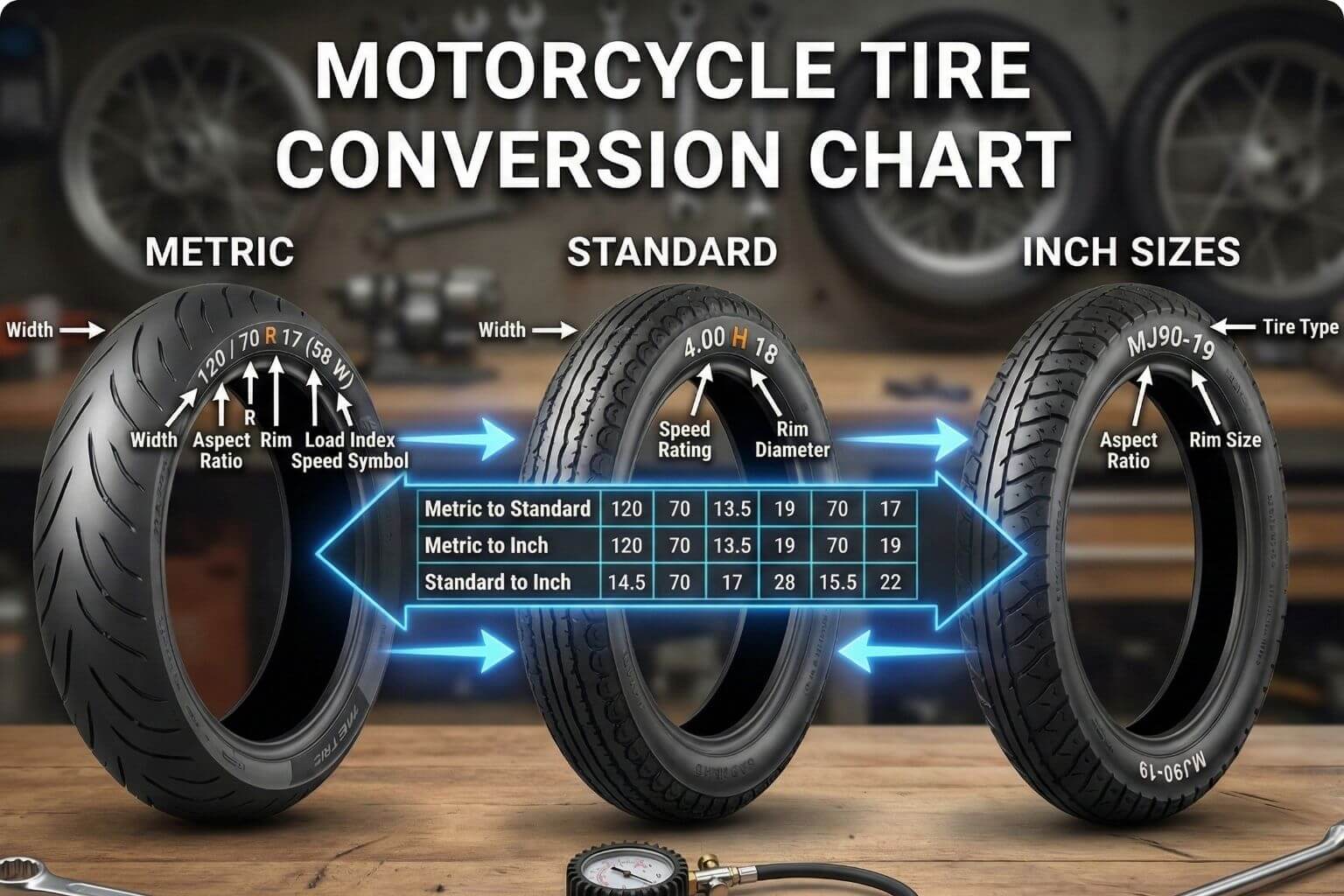
Choosing the right tire for your motorcycle can be confusing, especially with different sizing systems like metric, inch, and alpha. That’s where a motorcycle tire conversion chart becomes a helpful tool. It makes it easier to find equivalent sizes across brands and formats, ensuring your new tires fit safely and perform as expected.
In this guide, we’ll explain how to read tire sizes, show common conversions, and cover real-world examples to help you pick the right tires for your bike. Whether you ride a sportbike, cruiser, or adventure motorcycle, understanding tire sizing can improve handling, comfort, and safety on every ride.
Why motorcycle tire size conversions matter
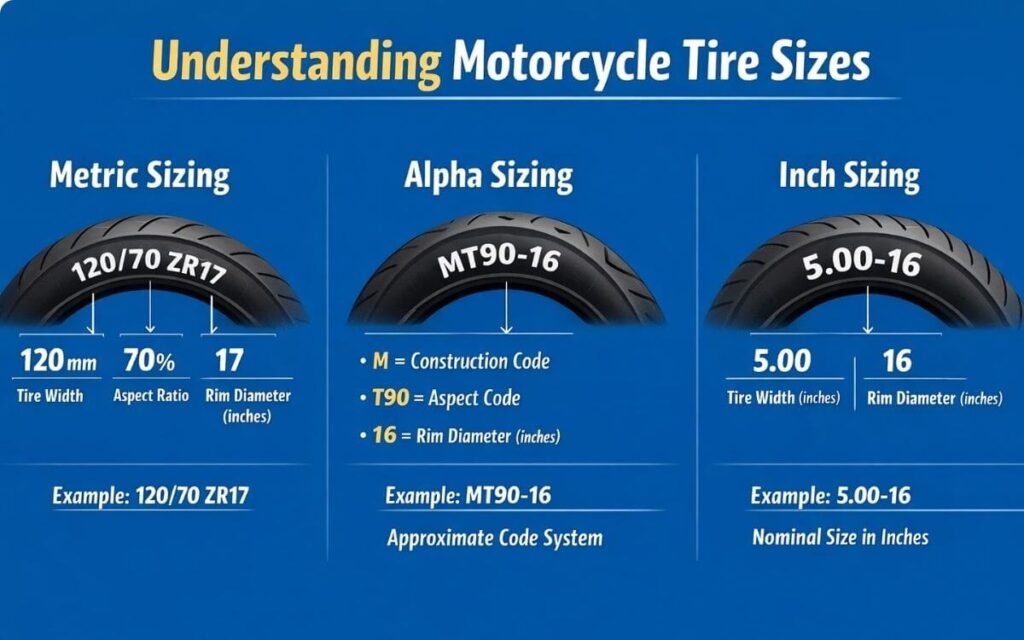
Motorcycle tires are specified using several different conventions — metric (e.g., 110/80-19), alphanumeric/legacy codes (e.g., MT90-16), and older inch/section-width formats (e.g., 3.50-18).
Riders, mechanics and parts departments rely on conversion charts when replacing tires, fitting non-OEM sizes for performance or clearance, and cross-referencing older motorcycles’ recommended sizes.
Using the wrong size can change steering geometry, stability and braking performance and may overload rims or fail to clear bodywork.

How to decode a motorcycle tire sidewall
A typical metric motorcycle sidewall marked 110/80-19 M/C 59V contains several separate data points:
- 110 — section width in millimetres (mm). (Width across tread from sidewall to sidewall.)
- 80 — aspect ratio: sidewall height expressed as a percentage of section width (80% of 110 mm = 88 mm sidewall).
- 19 — rim diameter in inches.
- M/C — motorcycle designation.
- 59 — load index (look up in a load index table).
- V — speed rating (max speed category).
Alphanumeric sizes (e.g., MT90-16) are legacy codes. They encode an approximate profile/section and rim diameter but do not explicitly show width in millimetres — that’s why a conversion chart is required to map the alpha code to a metric equivalent. Manufacturer guidance and independent charts make the mapping explicit.
Tube vs. tubeless: sidewall text will often indicate “TUBELESS” or “TUBE TYPE”. Do not assume interchangeability — the rim must also be compatible.
Motorcycle tire conversion cheat sheet (quick reference)
Below is a short, quick-lookup mini table for very common equivalences (metric → approximate inch section → common alpha code where used).
| Metric | Approx. section (in) | Typical alpha |
| 80/90-21 | 3.15″ | MH90 |
| 90/90-19 | 3.54″ | MJ90 |
| 100/90-19 | 3.94″ | MM90 |
| 110/80-19 | 4.33″ | — |
| 110/90-19 | 4.33″ | MN90 |
| 120/70-17 | 4.72″ | — |
| 130/90-16 | 5.12″ | MT90 |
(Values rounded for quick use. For full dimensional calculations see the complete chart below.) Data sources: industry conversion tables from Continental, Cycle Gear and motorcycle technical references.
Complete motorcycle tire conversion chart (selected common sizes — metric → inch → alpha)
The table below lists commonly encountered sizes with the following calculated fields:
- Section (in) — section width in inches (metric width ÷ 25.4).
- Diameter (in) — overall tire diameter (rim diameter + 2 × sidewall height), converted to inches and rounded.
- Circumference (in) — rolling circumference (π × diameter) rounded.
Note: these are calculated geometric values. Actual measured diameter and circumference vary by tread profile and manufacturer tolerance; use them as accurate approximations for clearance and speedometer work.
| Metric | Alpha | Section (in) | Diameter (in) | Circumference (in) |
| 80/90-21 | MH90 | 3.15 | 26.67 | 83.78 |
| 90/90-21 | MJ90 | 3.54 | 27.38 | 86.01 |
| 90/90-19 | MJ90 | 3.54 | 25.38 | 79.73 |
| 100/90-19 | MM90 | 3.94 | 25.79 | 81.00 |
| 110/80-19 | — | 4.33 | 25.93 | 81.46 |
| 110/90-19 | MN90 | 4.33 | 26.09 | 81.95 |
| 120/70-17 | — | 4.72 | 23.61 | 74.19 |
| 120/80-18 | MR90 | 4.72 | 25.07 | 78.78 |
| 130/80-17 | — | 5.12 | 25.47 | 79.98 |
| 130/90-16 | MT90 | 5.12 | 25.21 | 79.21 |
| 140/80-17 | — | 5.51 | 26.60 | 83.55 |
| 150/80-16 | MV85 | 5.91 | 25.45 | 79.95 |
| 160/60-17 | — | 6.30 | 24.56 | 77.15 |
| 170/60-17 | — | 6.69 | 25.03 | 78.64 |
(This table is a representative selection. Full OEM or manufacturer tables should be consulted for uncommon sizes.)
Tire size conversion chart for street tires
Street (road/touring/sport) tires are dimensioned with emphasis on predictable contact patch and sidewall geometry — many legacy bikes use alpha codes that map to metric equivalents. The table below pairs common street metric sizes to their old-style inch sections and legacy alpha where used.
| Metric | Inch section (approx) | Alpha (common) | Typical use |
| 100/90-19 | 3.94″ | MM90 | Classic road/front |
| 110/80-19 | 4.33″ | — | Modern large-wheel front |
| 110/90-19 | 4.33″ | MN90 | Larger front/rear |
| 120/70-17 | 4.72″ | — | Sport/front |
| 130/80-17 | 5.12″ | — | Cruiser/rear |
| 130/90-16 | 5.12″ | MT90 | Metric ↔ alpha rear |
Notes for street tires: rim width, fender/fork clearance and load index must match the motorcycle’s specification. Even between manufacturers the same nominal size can have slightly different contact patches and rolling diameters — check manufacturer measured dimensions when exact clearance or speedometer accuracy matters.
Tire size conversion chart for off-road tires
Dirt and dual-sport tires use different conventions (smaller rim diameters, tall aspect ratios and common use of 60/100 and 70/100 sizing). Off-road alpha codes and inch sections can be quite different from street equivalents.
| Metric | Typical inch | Alpha | Typical fitment |
| 60/100-17 | 2.36″ | — | Small trial/front |
| 70/100-19 | 2.76″ | — | Enduro/front |
| 80/90-21 | 3.15″ | MH90 | Trials/enduro/front |
| 90/90-21 | 3.54″ | MJ90 | Enduro/front |
| 110/100-18 | 4.33″ | — | Off-road rear |
| 120/90-18 | 4.72″ | MR90 | Dual-sport rear |
Notes for off-road: knobby block height substantially changes effective diameter and clearance; tubes are still common on many off-road wheels. For trail work, prioritize rim/tube compatibility and check manufacturer guidance on bead/sealing and inner tube sizing.
Conversion table for common motorcycle tire sizes (everyday rider reference)
A short, no-friction table for owners who want to cross-reference quickly (metric → usual alpha/inch mapping). Use this when matching commonly stocked tires.
| Metric | Typical alpha | Typical inch |
| 80/90-21 | MH90 | 3.15″ |
| 90/90-19 | MJ90 | 3.54″ |
| 100/90-19 | MM90 | 3.94″ |
| 110/80-19 | — | 4.33″ |
| 120/70-17 | — | 4.72″ |
| 130/90-16 | MT90 | 5.12″ |
(Remember: alpha codes are approximations and historically vary by supplier. Always confirm with a current manufacturer table.)
Practical examples of tire size swaps
Below are worked examples illustrating how a change affects diameter, circumference and therefore speedometer reading and handling.
Example 1: 110/80-19 vs 100/90-19
- 110/80-19: calculated overall diameter ≈ 25.93 in (≈658.6 mm).
- 100/90-19: calculated overall diameter ≈ 26.09 in (≈663.4 mm).
Difference in diameter ≈ -0.61% (110/80-19 is slightly smaller), circumference difference ≈ 0.6% — small but measurable on a precise speedometer.
Small sidewall differences affect ride height and steering geometry slightly; this swap is usually acceptable if load/speed ratings and clearance are okay.
(calculation method: section × aspect ratio → sidewall → overall diameter; see method described in the math section).
Example 2: 120/70-17 vs MT90-16 (130/90-16)
- 120/70-17: calculated diameter ≈ 23.61 in.
- MT90-16 (≈130/90-16): calculated diameter ≈ 25.21 in.
Difference ≈ -6.35% — a large change. This is not a direct swap: rim diameter differs (17″ vs 16″) and overall diameter change is significant.
Expect major speedometer/gear ratio effects and potential clearance problems; do not mix these without confirming fitment and gearing impact.
Example 3: What happens if you go wider?
Wider tires increase section width and often the sidewall profile. Wider tires can:
- Increase contact patch and straight-line traction, but may slow steering (slower turn-in).
- Change effective rolling diameter slightly and affect speedometer accuracy.
- Require wider rim widths and possibly create clearance issues at the swingarm or chain. Always check the recommended rim width range before increasing section width.
How to Choose the Correct Motorcycle Tire Size (Step-by-Step)
Choosing the right tire size is important for safety, handling, and comfort. Here’s an easy step-by-step guide.
1. Check the Manufacturer’s Recommendations First
Your bike’s manual tells you the correct tire sizes. This is the safest place to start. Look for:
- Front and rear tire size
- Load rating (how much weight the tire can carry)
- Speed rating (how fast the tire can safely go)
Tip: Always follow these recommendations if you’re unsure.
2. Decide: Stock Geometry or Custom Setup
- Stock geometry: Stick to the sizes listed in the manual. This keeps the bike’s handling exactly as designed.
- Custom setup: If you want a wider tire, lower profile, or different style, you’ll need to be careful. Big changes can affect safety and handling.
3. Use a Conversion Chart
If you need a different size, a conversion chart helps you find an equivalent tire. For example:
- 4.00-18 → 110/90-18
- 120/70-17 → 4.25-17
Tip: These are approximate equivalents. Always double-check fit and load ratings.
4. Check Physical Clearances
Before buying, make sure the new tire fits safely. Check all areas where the tire could rub:
- Swingarm: Make sure the rear tire has enough space when the suspension is fully compressed.
- Forks: Ensure the front tire doesn’t touch the forks during turns or bumps.
- Fenders: Check both front and rear fenders for enough clearance.
- Chain or belt: Make sure the tire won’t rub the chain, belt, or sprockets.
Tip: A few millimeters of space can make a big difference.
5. Consider Your Riding Style
Different types of riding require different tire choices:
- Touring: Look for tires that are stable and can handle heavier loads.
- Sport riding: Tires that steer quickly and provide good grip are ideal.
- Off-road / adventure: Wider tires with taller profiles help with traction on dirt and uneven surfaces.
6. Know When NOT to Convert Sizes
Some changes are too risky:
- ABS or speedometer interference: Changing tire diameter too much can affect sensors.
- Extreme width changes: Making the tire much wider or narrower can make the bike hard to control.
- Rim width limitations: The tire must match the rim. Too wide or narrow is unsafe.
How Tire Size Affects Handling and Safety
Jake had been riding his motorcycle for a few years when he started thinking about changing his tires. He wanted better cornering for sport riding, but he also liked comfort for long weekend trips. As he learned, even small changes in tire size could make the bike feel very different — and sometimes unsafe.
Width Matters
One day, Jake swapped his stock 120/70-17 front tire for a slightly wider 130/70-17. At first, it felt solid and planted on the road. But when he leaned into a tight turn, the bike didn’t respond as quickly.
He realized that wider tires make steering slower, while narrower tires make it quicker and easier to lean in. From that ride, Jake learned that width changes can affect how the bike handles, especially in corners.
Sidewall Height (Aspect Ratio)
Next, Jake tried a tire with a lower sidewall. Suddenly, the bike felt sharper and more responsive when cornering. On the other hand, his friend rode a bike with taller tires, and it felt softer and smoother over bumps. Jake understood that lower sidewalls give sportier handling, while higher sidewalls provide more comfort. He realized he had to choose based on whether he wanted speed and agility or a smoother ride.
Tire Diameter and Ride Height
Jake also learned about tire diameter. When he tried a slightly bigger rear tire, the back of his bike felt higher. His speedometer showed a slightly slower speed than he was actually going.
He understood that changing diameter affects ride height and speedometer accuracy, and even small differences could make a noticeable change in how the bike feels and reads.
Tire Construction
During a workshop, Jake heard a tip from a mechanic: never mix radial and bias-ply tires unless the bike is specifically designed for it. He learned that different constructions can make handling unpredictable, especially in turns or emergency stops. Using the recommended tire type keeps the bike safe and stable.
Warnings Jake Learned the Hard Way
Jake realized that conversion charts are helpful for finding approximate sizes, but they shouldn’t be used blindly. He remembered a friend who put on a much wider tire without checking clearance, and it rubbed against the swingarm — a dangerous mistake.
Jake decided he would always consult a professional if he wanted to make big changes, ride at high speeds, or carry heavy loads.
Tire Sizing Differences Between Brands
Not all tires with the same numbers are exactly the same. Different brands may measure or design their tires slightly differently, so it’s important to know what to watch for.
Brand Differences Matter
For example, a 120/70-17 tire from Michelin might actually be a little wider or narrower than the same size from Dunlop or Pirelli. The difference can be up to 10 millimeters, which may not seem like much, but it can affect handling, clearance, and fit on your rim.
Tip: Always check the specific brand’s fitment information before buying, even if the size matches your bike’s manual.
Rim Width Affects Tire Width
The actual width of a tire once mounted depends on the rim it’s put on. A tire on a narrow rim will be slightly narrower, and on a wider rim it will spread out more.
Tip: Make sure the rim width falls within the manufacturer’s recommended range for that tire size. Using a tire outside the recommended rim width can change how the bike handles or even make it unsafe.
Conversions Are Approximate
When using conversion charts (metric ↔ inch ↔ alpha), remember that they are estimates, not exact matches.
- A 120/70-17 tire may be close to 4.25-17, but small differences exist depending on brand, rim, and construction.
- Always double-check clearance, load rating, and speed rating before swapping.
How to Read Manufacturer Fitment Guides
Tire makers usually provide a guide showing which sizes fit which bikes. These guides tell you:
- Compatible front and rear tire sizes
- Recommended rim widths
- Load and speed ratings
Tip: Use these guides as a safety reference. Even if a conversion chart says a size “fits,” always verify with the manufacturer’s recommendations.
The math: rolling circumference, diameter, and speedometer error
How to calculate approximate tire diameter (mm)
Diameter ≈ 2 × (section width in mm × aspect ratio/100) + rim diameter in mm
Example: 120/70-17
- Section width = 120 mm
- Aspect ratio = 70% → sidewall height = 120 × 0.70 = 84 mm
- Rim diameter (17 in) = 17 × 25.4 = 431.8 mm
- Approx diameter = 2×84 + 431.8 = 599.8 mm
Rolling circumference
Circumference = π × Diameter
Percent difference between old and new
% change = 100 × (new diameter ÷ old diameter − 1)
A few practical notes:
- Changing diameter by ~3% will make the speedometer read about 3% high/low (i.e., at an indicated 60 mph, your actual speed could be ~61.8 or 58.2 mph depending on direction).
Manufacturers often allow only a small percent change; on cars ABS/ESC systems may be affected. For motorcycles, even smaller changes can alter handling feel or speedometer accuracy. Use the formula to quantify changes before swapping.
Common Mistakes & Troubleshooting
| Mistake | Problem | Fix |
| Wrong rim width | Tire sits poorly | Use manufacturer-recommended rim range |
| Ignoring clearance | Rubbing/damage | Measure space and test fit |
| Mixing tire types | Unstable handling | Stick to recommended type |
| Blindly using charts | Fit issues | Verify load, speed, rim, and clearance |
| Ignoring speedometer/ABS | Inaccurate readings | Keep diameter changes minimal |
| Ignoring riding style | Unsafe/uncomfortable | Match tire to riding type |
Final checklist before you buy
- Read the owner’s manual for OEM sizes.
- Confirm load and speed ratings meet or exceed OEM.
- Verify rim width is compatible with the new tire.
- Measure clearance with the suspension at full travel.
- Keep diameter change under 3–5% when possible.
- Test ride gently for the first 20–50 miles and re-check for unusual wear or rubbing.
Frequently Asked Questions (FAQ)
1. Can I replace a 110/80-19 with a 100/90-19?
Yes, you can sometimes swap sizes that are close, but there are trade-offs. A slightly narrower tire (100 mm vs 110 mm) may make steering quicker, but it could also reduce stability and grip. Always check clearance, rim width, load rating, and the bike manual before making the swap.
2. Will a wider tire give me better grip?
Not necessarily. A wider tire gives more contact with the road, but it also slows steering and may change handling. Grip depends on tire compound, profile, and riding style — not just width. Always choose a size recommended by your bike or the tire manufacturer.
3. Can I mix inch and metric sizes?
You can, but it’s only safe if the conversion is close. Conversion charts give approximate equivalents, but they are not exact. Always check clearances, rim compatibility, and load ratings, and consult a professional if unsure.
4. How close does a conversion need to be?
A safe rule of thumb: the new tire’s overall diameter should be within 3–5% of the original. This keeps handling, braking, and speedometer readings accurate. Small differences are usually fine, but bigger changes can affect safety.
5. Does tire size affect fuel economy?
Yes, but only slightly. Bigger or wider tires may increase rolling resistance, which can use a little more fuel. Narrower tires may improve efficiency but could reduce stability or grip. The effect is usually small compared to riding style and bike weight.
6. Are conversion charts accurate for all motorcycles?
No. Conversion charts are guidelines, not exact rules. Different brands, tire constructions, and rim widths can change how a tire fits. Always check manufacturer recommendations, rim width limits, and clearance before swapping sizes.
Conclusion
Choosing the right motorcycle tire size is more than just reading numbers on the sidewall. The width, sidewall height, diameter, and type of tire all affect how your bike handles, how comfortable the ride feels, and even your safety on the road.
Using a tire conversion chart can help you find equivalent sizes, but remember that these charts are guides, not exact rules. Always check your bike’s manual, consider rim width and clearance, and match the tire to your riding style. Small changes can improve performance, but big changes may affect stability, braking, or even your speedometer reading.
By understanding how tire size affects handling and following the tips in this guide, you can make informed choices that keep your bike safe, comfortable, and fun to ride — whether you’re cruising the city streets, carving corners on a sportbike, or tackling dirt trails.