
Bridgestone Blizzak DM-V2 Review 2026
Last updated on May 19th, 2026
The first time your SUV slides a little longer than expected at a snowy intersection, you start looking at winter tires very differently. A lot of drivers switch to dedicated snow tires after realizing AWD alone doesn’t help much when it’s time to brake on ice or turn through slush-covered roads.
That’s why the Bridgestone Blizzak DM-V2 continues to get so much attention from SUV and crossover owners living in serious winter climates. It’s built for drivers who deal with freezing mornings, packed snow, icy highways, and roads that stay dangerous long after the storm ends.
This Bridgestone Blizzak DM-V2 Review takes a real-world look at how the tire actually performs beyond the marketing claims — including snow traction, ice braking, highway comfort, tread life, and whether it’s still worth buying compared to newer winter tire options.
Bridgestone Blizzak DM-V2 Overview
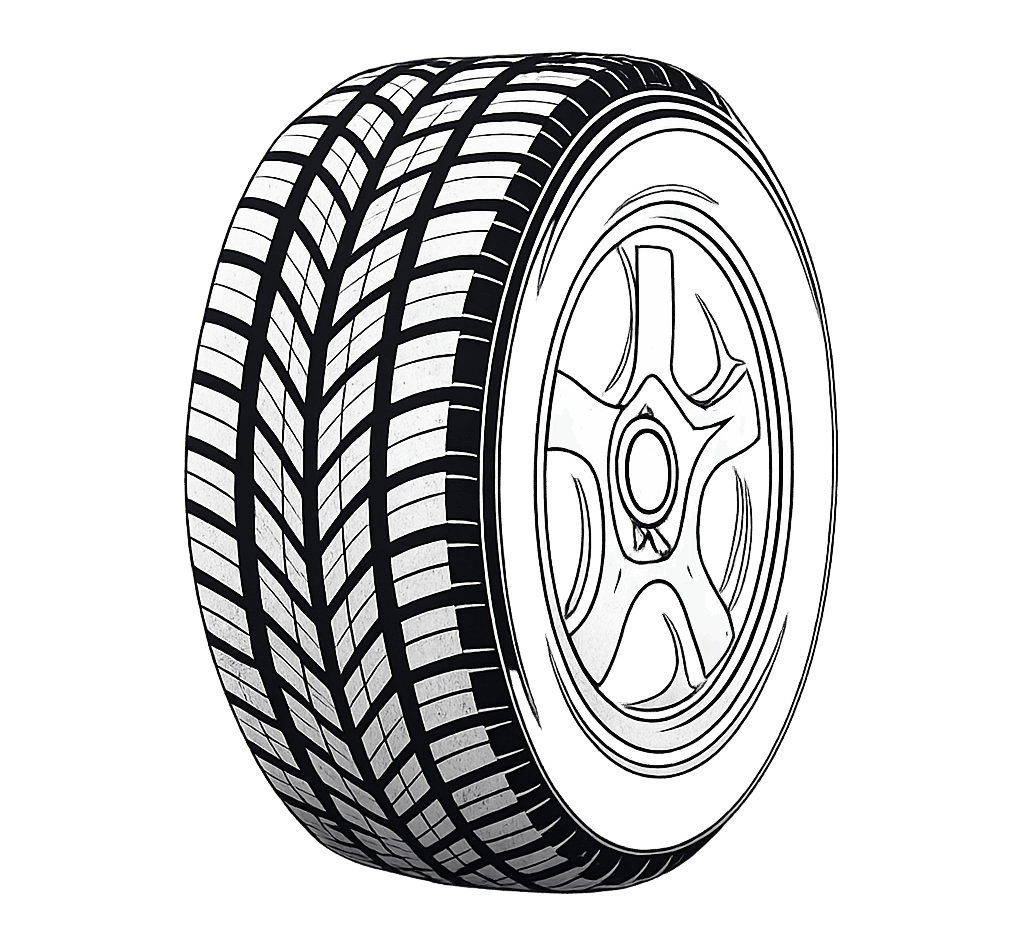
The Bridgestone Blizzak DM-V2 is a studless winter tire built for SUVs, crossovers, and light trucks that need real traction in snow and ice, not just cold-weather competence. Its tread uses Bridgestone’s Multicell compound to help the tire grip on slick surfaces, while 3D zigzag sipes and a directional pattern work together to improve bite, steering stability, and water evacuation. In simple terms, it is designed to stay flexible in freezing weather and keep finding grip when the road surface gets ugly.
On the road, that usually means a calm, secure feel in winter driving. In city traffic, the tire tends to brake with more confidence than an all-season tire when intersections are glazed with packed snow or slush. At highway speed, it feels stable for a winter tire, especially in a crossover or SUV where extra weight can help settle the ride. In deep snow, the tread pattern helps the tire claw forward without feeling vague or loose.

A good example is an icy morning commute after overnight snowfall. The DM-V2 is the kind of tire that gives you more confidence when you are stopping at lights, climbing a snowy ramp, or changing lanes through slush. That is where its design matters most.
The trade-off is that this grip-first setup usually comes with softer dry-road feel and faster wear than a milder winter or all-weather tire. It is not the best choice for warm climates or drivers who want long tread life above all else.
This tire is best for SUV and crossover drivers who face real winter weather often. If your winters are mild, mostly dry, or short, a less aggressive option may make more sense.
Real-World Snow Performance
Deep Snow Traction
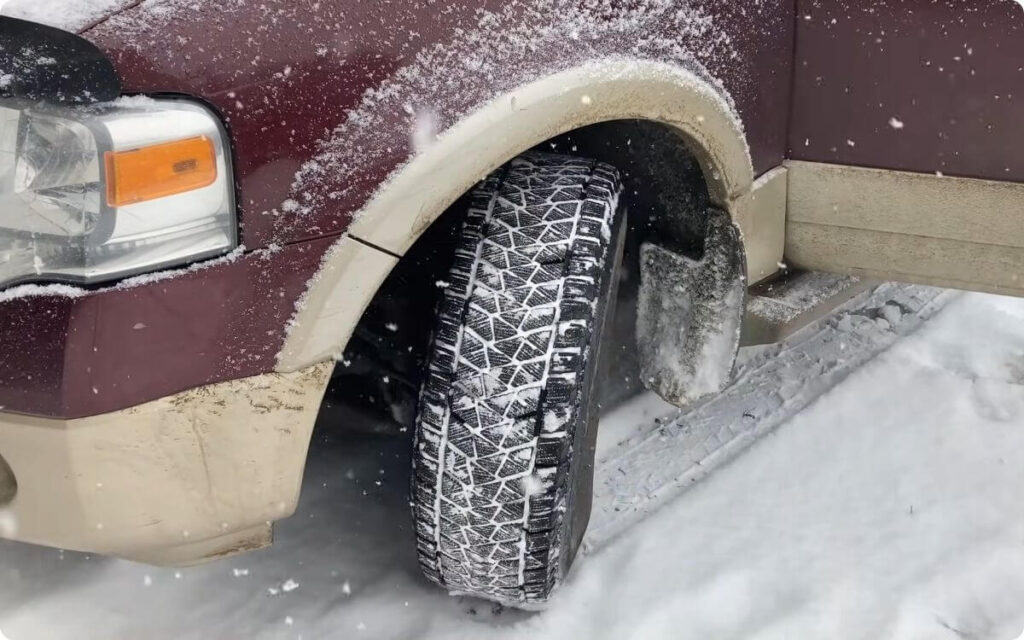
The Blizzak DM-V2 performs best in the kind of winter conditions that overwhelm ordinary all-season tires. In deep, unplowed snow, the tire digs in aggressively and maintains forward momentum well for an SUV-focused winter tire. The directional tread clears snow efficiently, which helps prevent the tire from packing up and losing traction during repeated acceleration.
On steep neighborhood hills or rural back roads after a fresh snowfall, the DM-V2 feels especially strong during low-speed climbs. Even heavier crossovers and midsize SUVs stay composed instead of constantly triggering traction control. The tire also keeps a planted feel during highway driving in active snowfall, where some winter tires can start to feel floaty or nervous.
The trade-off is that the tread feels softer on cleared pavement afterward. Drivers coming from performance-oriented all-seasons may notice slower steering response once roads dry out.
This tire makes the most sense for drivers who regularly face deep snow, mountain travel, or poorly plowed roads. If your winters are mostly cold but dry, the aggressive snow focus may be more than you need.
Packed Snow Handling
On compacted snow, the DM-V2 delivers predictable steering and reassuring braking. The tire does not feel sporty, but it gives the driver a clear sense of available grip, which matters more during winter commuting than sharp handling.
In real-world driving, this shows up during stop-and-go traffic, snowy roundabouts, and freeway exits where packed snow becomes slick and polished. The tire tracks cleanly through corners without the front end washing wide too early, and braking remains consistent even after multiple stops in freezing temperatures.
There is still some tread squirm during quicker steering inputs, especially on taller SUVs, but it remains controlled and confidence-inspiring for a winter-focused setup.
Slush Performance
Slush is where many winter tires start to feel unstable, especially during lane changes at highway speed. The DM-V2 handles these conditions better than most aggressive snow tires thanks to its ability to evacuate water and semi-melted snow quickly.
During wet, slushy commutes, the tire stays composed instead of feeling like it is skating across the surface. Highway lane changes feel stable, and hydroplaning resistance is strong for a dedicated winter tire.
Drivers in regions with frequent freeze-thaw cycles will appreciate this balance. However, in warmer rainy conditions, the softer tread can still feel less precise than an all-weather or touring tire.
Ice Traction and Winter Braking
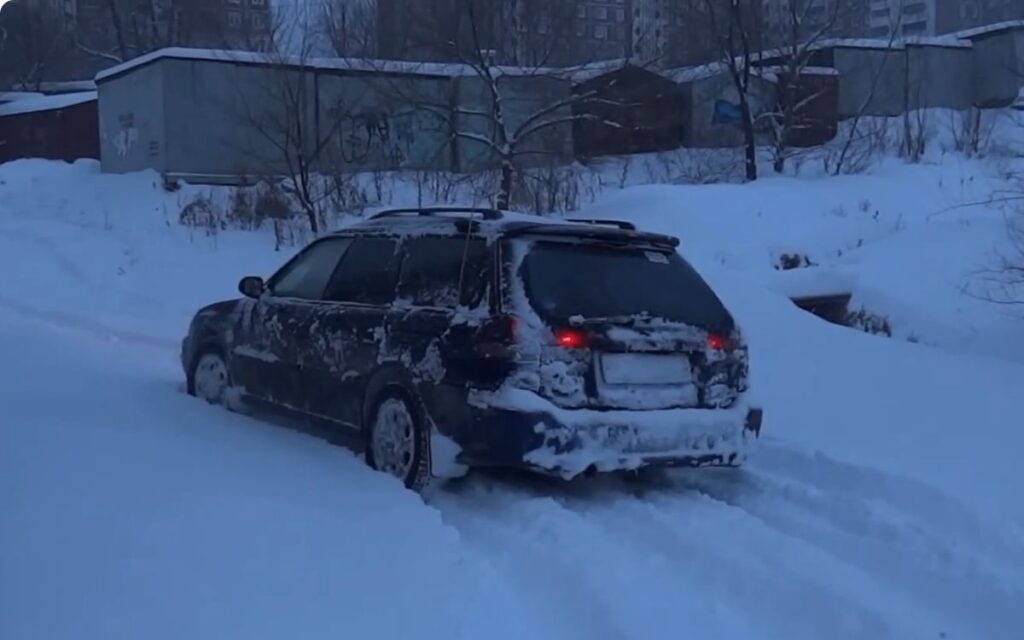
On ice, the Blizzak DM-V2 earns its reputation quickly. It stays flexible in very cold temperatures and gives you more bite during the first touch of the brakes than most all-season tires. The difference is easy to feel at an icy intersection: instead of the tire sliding immediately into ABS, it usually gives the system a little more to work with, so the stop feels shorter and more controlled.
In real driving, that matters most when you are braking for a red light on a frozen road or slowing down on a black-ice patch at the end of a shaded bridge. The DM-V2 still needs careful inputs, but it gives the driver more warning and more usable grip than a typical all-season setup.
That said, black ice is still black ice. No winter tire can make it safe. The DM-V2 improves confidence, not physics.
This tire is best for drivers who deal with frequent freezing roads, icy morning commutes, or mixed snow-and-ice conditions. It is less compelling for drivers who rarely see true ice, because the extra grip comes with a softer, more specialized winter feel that is wasted in mild weather.
Dry Road and Highway Driving Experience
Steering Feel and Handling
Like most aggressive winter tires, the Blizzak DM-V2 prioritizes grip over sharp handling. The steering feels softer and slightly slower compared to an all-season or touring tire, especially during quick lane changes on dry pavement. You notice it most in warmer winter conditions where the tread blocks flex more under load.
That softer feel does not make the tire unstable, though. During everyday driving, the DM-V2 remains predictable and easy to control. On long highway curves or city ramps, it leans progressively instead of suddenly losing composure. SUV drivers will likely appreciate the calm, secure feel more than sporty response.
In real-world driving, the tire feels most comfortable during cold-weather commuting and highway travel rather than aggressive cornering. Drivers who expect crisp steering feedback may find it too relaxed.
Road Noise and Ride Comfort
The DM-V2 is quieter than many older-generation winter tires, especially at city speeds. There is still a noticeable winter-tire hum on coarse highway pavement, but it stays fairly subdued for a tire with this much snow traction.
Ride comfort is one of its stronger qualities. The softer construction absorbs rough winter roads well, including broken pavement, potholes, and expansion joints that are common during freezing months. On long interstate drives, the tire maintains a smooth, low-fatigue feel that works especially well on crossovers and midsize SUVs.
Highway Stability
At interstate speeds, the DM-V2 feels planted and confidence-inspiring in bad weather. During active snowfall or slushy highway driving, the tire tracks straight without requiring constant steering correction.
Crosswinds and sudden lane changes are handled reasonably well for a winter-focused tire, although rapid steering inputs still reveal some tread softness. Drivers in snowbelt regions or areas with long winter commutes will benefit most from this stable, secure highway behavior. Drivers prioritizing sporty dry-road handling may prefer a less aggressive winter setup.
Wet Weather Performance
The DM-V2 is not just a snow tire; it is a strong wet-weather tire for cold, messy roads. In cold rain, it keeps its grip better than most all-season tires because the compound stays pliable when temperatures drop. That matters on damp morning commutes, where a tire can feel fine in the parking lot but lose confidence fast on slick intersections and worn asphalt.
Under braking, the DM-V2 feels secure and predictable. In a hard stop on a rainy highway exit, it gives the driver good feedback before the ABS steps in, and it resists the vague, floaty feel that weaker winter tires sometimes develop in standing water. Hydroplaning resistance is solid for a winter tire, especially in slush and shallow puddles, though it still is not a substitute for an all-weather tire in warmer, rain-heavy climates.
The main trade-off is that this wet grip comes from a softer winter-focused tread, so steering can feel less crisp than a touring tire on dry pavement.
It is best for drivers in cold, wet winters who need one tire to handle rain, slush, and light snow. Drivers in mostly rainy but mild climates may be better served by an all-weather tire.
Tread Life and Long-Term Ownership
The Blizzak DM-V2 is a winter tire, so tread life depends heavily on how long it spends on cold roads instead of warm pavement. Under normal winter use, many drivers will see several seasons of service, but not the kind of mileage you would expect from a touring all-season tire. Soft winter compounds wear faster, especially if the tire is driven in mild weather, used aggressively in city traffic, or left on the vehicle too late into spring.
After two to four winters, the DM-V2 usually still works well, but the sharpest snow and ice bite starts to fade as the tread wears down. On a snowy commute, that can mean the tire still feels safe and predictable, but it may not have the same instant grip it had in its first season. That is normal for a winter tire, not a defect.
Store it cool, dry, and out of sunlight, and keep it away from ozone sources like electric motors. Rotate it regularly, and check pressures often in cold weather, because winter drops can make an already-soft tire feel sluggish and uneven. It is best for drivers who use winter tires only in winter. Drivers who leave them on year-round will wear them out too fast.
Fuel Economy and Efficiency
The Blizzak DM-V2 is not designed around low rolling resistance, so most drivers should expect a small drop in fuel economy compared to touring all-season tires. The softer winter compound and aggressive tread create more drag, especially during cold-weather highway driving.
In real-world use, SUV and crossover owners may notice slightly lower MPG during long interstate commutes or stop-and-go winter traffic. The effect is usually modest, but it becomes more noticeable on heavier AWD vehicles where winter tires already add extra rolling resistance. EV drivers may also see a temporary range drop during colder months.
The trade-off is simple: the tire sacrifices some efficiency to deliver stronger snow and ice grip. That extra traction is usually worth it for drivers dealing with harsh winters, steep roads, or icy morning commutes.
Drivers focused mainly on fuel savings or mild-weather efficiency may prefer an all-weather tire instead. The DM-V2 makes the most sense for people who prioritize winter safety and cold-weather confidence over maximizing fuel economy.
Best Vehicles and Driving Scenarios for the DM-V2
The DM-V2 is especially strong on SUVs and crossovers because it matches the way those vehicles are usually used in winter. It works well with AWD and 4WD systems, but it is important to remember that drivetrain alone does not replace tire grip. AWD helps you get moving, but the tires are still responsible for braking and cornering.
This tire is a strong choice for drivers in snow-heavy regions, mountain areas, and places that deal with frequent freeze-thaw cycles. If you often drive on unplowed side roads, icy parking lots, or slushy highways, the DM-V2 fits that environment very well.
It is less attractive for drivers in mild climates or places where winter is more about cold rain than snow. It is also not the best match for people who want one tire to stay on the vehicle all year. Dedicated winter tires work best when they are used for their intended season only.
Bridgestone Blizzak DM-V2 Pros and Cons
Pros
- Excellent snow traction
- Strong ice braking performance
- Comfortable winter ride quality
- Very confidence-inspiring in severe winter conditions
- Reliable slush and wet-weather control
Cons
- Softer dry-road handling feel
- Tread may wear faster than some competitors
- Premium pricing
- Not ideal for year-round use
- Slight fuel economy penalty possible
Bridgestone Blizzak DM-V2 vs Competitors
Blizzak DM-V2 vs Michelin X-Ice Snow SUV
This is one of the most common comparisons.
The Blizzak DM-V2 generally feels more aggressive in deep snow and icy acceleration. It delivers excellent grip during severe winter weather.
The Michelin X-Ice Snow SUV, however, usually offers:
- longer tread life
- quieter highway driving
- firmer dry-road feel
Drivers prioritizing maximum winter traction often lean toward the Blizzak. Drivers wanting better longevity and refinement often prefer Michelin.
Read More: Bridgestone Blizzak WS90 Review
Blizzak DM-V2 vs Nokian Hakkapeliitta
Nokian tires are legendary in extreme winter climates.
Compared to the DM-V2, Nokian winter tires often feel even more ice-focused and premium in harsh Nordic-style conditions.
However:
- Nokian tires are usually more expensive
- availability can be limited
- replacement costs are often higher
For many SUV drivers, the DM-V2 provides a more accessible balance of winter performance and value.
Blizzak DM-V2 vs Continental VikingContact
The Continental VikingContact lineup focuses more on balance and refinement.
Compared to the DM-V2:
- Continental often feels quieter
- dry-road manners may feel more controlled
- wet handling can feel more refined
The Blizzak still tends to feel stronger in aggressive snow conditions.
Blizzak DM-V2 vs All-Weather Tires
All-weather tires have improved a lot, but they still usually cannot match dedicated winter tires on ice and packed snow.
The biggest differences appear during:
- emergency braking
- freezing temperatures
- steep snowy roads
- icy morning commutes
Drivers facing real winter weather regularly will still benefit from a true winter tire like the DM-V2.
Read More: All-Season Tires vs Winter Tires
Is the Blizzak DM-V2 Good for AWD Vehicles?
Yes, very much so. In fact, this is one of the most common and most important questions buyers ask.
AWD helps a vehicle move, but it does not help it stop any better by itself. That is where winter tires matter. The DM-V2 gives AWD SUVs and crossovers the traction they need to accelerate, brake, and corner with much more control in cold weather.
Many drivers assume AWD is enough for winter. It is not. AWD plus winter tires is a much safer combination than AWD plus all-season tires. The DM-V2 makes that difference obvious the first time the roads get bad.
Is the Blizzak DM-V2 Worth the Price?
For the right driver, yes. The price makes sense if your winter is serious enough to justify a tire built specifically for snow and ice. You are paying for peace of mind, better braking, and stronger control in conditions that can quickly become dangerous.
If you rarely face snow, the value becomes harder to justify. In that case, a good all-weather tire may make more sense. But if winter regularly affects your driving, the DM-V2 can be a very smart investment in safety.
Who Should Buy the Bridgestone Blizzak DM-V2?
This tire is a great fit for drivers who put winter safety first. It is especially well suited to SUV and crossover owners in cold regions, people who drive through snow and slush often, and anyone who wants more control on icy roads.
It is also a strong option for drivers who commute in mixed winter conditions where the roads may be cleared sometimes and covered other times. The DM-V2 handles that kind of changeable weather very well.
Read more: Best Studded Snow Tires
Who Should Skip the Bridgestone Blizzak DM-V2?
If you live in a mild area and only see light winter weather, this tire may be more than you need. If your priority is tread life above everything else, there are winter tires that may last longer. And if your winter driving is mostly dry pavement with only occasional cold rain, a high-quality all-weather tire could be the more practical choice.
Budget-conscious drivers should also compare alternatives carefully. The DM-V2 is a premium winter tire, and that price reflects its performance.
Frequently Asked Questions
How long do Bridgestone Blizzak DM-V2 tires last?
Most drivers can expect several winter seasons with proper storage and seasonal use. Lifespan depends heavily on mileage, climate, and driving habits.
Are Blizzak DM-V2 tires good on ice?
Yes. Ice traction is one of the tire’s biggest strengths, especially during braking and low-temperature driving.
Is the Blizzak DM-V2 noisy on the highway?
It produces some winter tire hum, but overall road noise is fairly reasonable for a dedicated snow tire.
Can you use Blizzak DM-V2 tires year-round?
It’s not recommended. Warm-weather driving can wear the softer winter compound very quickly.
Do AWD vehicles still need Blizzak winter tires?
Absolutely. AWD helps acceleration, but winter tires dramatically improve braking and cornering safety.
How do they perform after several winters?
Snow performance generally remains strong, though some of the tire’s best ice-focused grip may decline as the Multicell layer wears.
Are they worth it for city driving?
If your city experiences snow, ice, or freezing rain regularly, they can still provide meaningful safety advantages over all-season tires.
Final Verdict
The Bridgestone Blizzak DM-V2 remains one of the strongest winter tires for SUVs and crossovers because it focuses on what matters most during severe winter driving: traction and control.
Its biggest strengths are:
- confident snow grip
- strong ice braking
- winter stability
- real cold-weather performance
The trade-offs are softer dry-road handling and somewhat shorter tread life compared to some competitors.
For drivers dealing with harsh winters, icy roads, mountain travel, or heavy snowfall, the DM-V2 still deserves its reputation as one of the best dedicated winter tires in its category.
If your priority is winter safety and confidence rather than maximum longevity or sporty handling, the Blizzak DM-V2 remains an excellent choice.
