
Bridgestone WeatherPeak vs Michelin CrossClimate 2
Choosing between the Bridgestone WeatherPeak and Michelin CrossClimate 2 isn’t easy — both are premium all-weather tires built for safety, comfort, and year-round confidence.
Drivers everywhere praise them for handling sudden rain, light snow, and changing temperatures without the hassle of seasonal tire swaps.
But which one truly fits your driving needs best?
In this detailed Bridgestone WeatherPeak vs Michelin CrossClimate 2 comparison, we’ll break down how each tire performs in dry, wet, and snowy conditions, plus what real-world drivers say about comfort, noise, fuel efficiency, and value.
Whether you’re a daily commuter, a long-distance traveler, or someone who faces unpredictable weather, this guide will help you choose the tire that offers the best balance of safety, performance, and longevity for your car.
By the end, you’ll know exactly which tire delivers the better real-world experience — and why.
Tire Overview: Bridgestone WeatherPeak vs Michelin CrossClimate 2
Bridgestone WeatherPeak
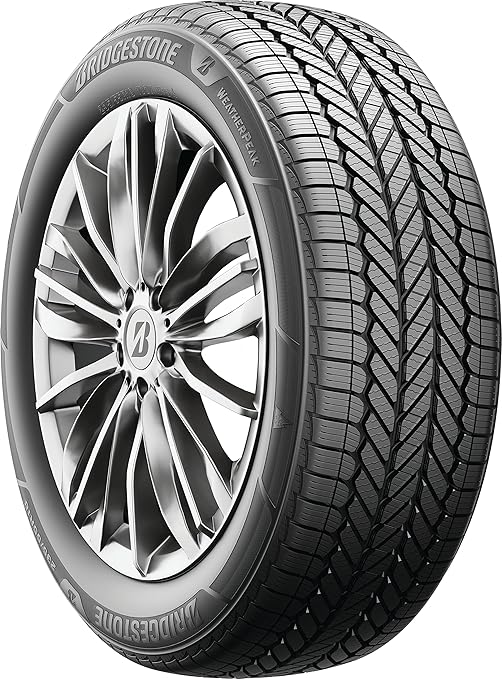
The Bridgestone WeatherPeak is designed for drivers who face a little bit of everything — hot summers, rainy days, and even light snow in the winter.
It’s what you’d call an “all-weather tire”, meaning it stays reliable year-round without needing to swap between summer and winter tires.
Smart Design and Technology
Bridgestone built the WeatherPeak with some clever features that help it stay safe and steady no matter the conditions:
- Evolving Sipes: These are tiny cuts in the tread that open up as the tire wears down. They help the tire keep its grip over time, especially on wet or snowy roads.
- Full-Depth Tread: The tread — those grooves and blocks you see on the surface — runs deep through the tire, not just on the top layer. That means traction and water control stay strong even as the tire ages.
- 3PMSF Rating: It carries the Three-Peak Mountain Snowflake symbol, meaning it’s tested and approved for light snow driving.
Together, these features make the WeatherPeak a dependable choice for people who want a tire they can leave on all year — no swapping, no fuss.
Who It’s Designed For
This tire is made for everyday drivers — people who drive to work, take weekend trips, or run errands in places where the weather can change quickly.
If you live in an area that sees rain, cold mornings, or occasional snow, the WeatherPeak gives you peace of mind without the hassle of changing to winter tires.
It’s especially good for:
- Compact cars, sedans, and small SUVs
- Drivers who want balanced performance and long tread life
- People who value safety in wet or unpredictable conditions
Pros & Cons
Pros
- Strong grip in rain and light snow
- Quiet and smooth ride for daily driving
- Long tread life with even wear
- Certified for winter use (3PMSF rating)
- Reliable traction even as it wears
Cons
- Not as sporty or quick-handling as performance tires
- May feel a bit firm on rough roads
- Slightly less fuel-efficient than lighter all-season tires
Michelin CrossClimate 2
The Michelin CrossClimate 2 is one of the most popular all-weather tires on the market — and for good reason.
It’s designed for drivers who want year-round safety, a smooth ride, and long-lasting performance without having to switch between summer and winter tires.
Smart Design and Technology
Michelin gave the CrossClimate 2 a unique design that helps it perform well in nearly any weather condition:
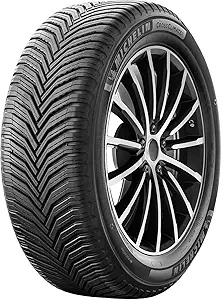
- Directional Tread Pattern: The tread has a clear V-shape that points forward. This helps push water and slush away from the tire, improving grip on wet and snowy roads.
- V-Shaped Grooves: These deep channels act like tiny water drains, helping the tire stay stable and reduce the risk of slipping when roads are wet.
- Special Rubber Compound: The rubber stays flexible even in cold temperatures, giving better traction on cold or icy roads — something most regular all-season tires struggle with.
The result is a tire that feels confident and comfortable, whether you’re driving through summer rain or a surprise winter dusting.
Who It’s Designed For
The CrossClimate 2 is made for drivers who value comfort, quietness, and all-weather reliability.
If your driving is mostly on highways or city roads — and you want a tire that feels smooth and steady all year long — this one’s a great match.
It’s ideal for:
- Sedans, crossovers, and family cars
- People who drive often on wet or cold roads
- Drivers who want a comfortable ride and don’t want the hassle of seasonal tire changes
Pros & Cons
Pros
- Excellent traction in both wet and dry conditions
- Smooth, quiet ride — great for long commutes
- Certified for light snow (3PMSF symbol)
- Long tread life and strong warranty
- Consistent performance as it wears down
Cons
- Slightly higher price than most all-weather tires
- Average performance on deep snow or icy roads
- Not designed for off-road or heavy-duty use
Key Differences: Bridgestone WeatherPeak vs Michelin CrossClimate 2
- Dry Braking: Michelin stops about 13–16% shorter, offering stronger grip and confidence on dry pavement.
- Wet Braking: Michelin brakes 5–8% shorter and provides more precise wet handling and steering feel.
- Snow Performance: Bridgestone has a slight edge in snow handling and acceleration, feeling more stable in slush and light snow.
- Ice Grip: Michelin delivers better braking and traction on icy or frozen roads.
- Comfort & Noise: Bridgestone rides softer and quieter over rough roads; Michelin feels firmer but more composed at speed.
- Fuel Efficiency: Michelin’s lower rolling resistance may improve fuel economy slightly.
- Tread Life & Warranty: Bridgestone offers a longer 70,000-mile warranty (vs Michelin’s 60,000 miles).
- Value: Bridgestone is more affordable, while Michelin is pricier but outperforms overall in safety and refinement.
Detailed Performance Comparison
(This section is the technical backbone — include data, test results, or credible references.)
Dry-Weather Performance
It was a warm, sunny morning when we took both tires out for their dry-road tests — the kind of clear day when you can really feel how a tire grips, turns, and stops. Dry-weather performance might seem simple, but it tells you a lot about how confident and responsive a tire will feel in everyday driving.
Dry Braking
First, we tested how quickly each tire could come to a stop when braking from highway speed.
This is what we call dry braking — and it’s one of the most important parts of tire safety.
The Michelin CrossClimate 2 stopped slightly sooner, giving a firmer, more confident feel under hard braking. It grips the pavement quickly and keeps the car straight and steady, which can make a big difference if you ever need to brake suddenly.
The Bridgestone WeatherPeak wasn’t far behind. It took just a few extra feet to stop, but it stayed very stable and easy to control — which means you still feel safe and in command.
In short:
- CrossClimate 2: Shorter stopping distance, a bit sharper.
- WeatherPeak: Smooth, predictable stop with excellent control.
Dry Handling [s]
Next, we moved to dry handling, where both tires were tested through quick turns and lane changes to measure their response time and stability.
The “[s]” in this test simply refers to seconds — how long it takes each tire to complete a handling course.
Here’s where we noticed a small difference in feel.
The Michelin CrossClimate 2 responded slightly faster, giving the car a nimble, light steering feel. It’s the kind of tire that feels eager to change direction and gives a driver confidence in quick maneuvers.
The Bridgestone WeatherPeak, on the other hand, focused more on stability. It’s a touch slower in reaction time, but it feels planted and secure through sweeping turns — a great quality for drivers who prefer a calm, composed ride over a sporty one.
So, if you like a crisper, more responsive feel, the CrossClimate 2 wins here.
If you prefer a steady, relaxed drive, the WeatherPeak holds its own beautifully.
Subjective Dry Handling
Now for the part that’s harder to measure with numbers — how each tire feels from behind the wheel.
This is the subjective side of dry handling, and it’s just as important because not everything about a tire can be captured with data.
When driving on dry pavement, the Michelin CrossClimate 2 feels smooth and connected. Steering feels natural, and the car reacts quickly to small movements — perfect for drivers who want a little extra control and precision.
The Bridgestone WeatherPeak delivers a more relaxed experience. The steering is light, and the tire absorbs road bumps nicely, giving you a calm and steady ride. It’s not as sharp in corners, but it’s wonderfully composed and confidence-inspiring for everyday use.
Wet-Weather Performance
After testing the tires on dry roads, it was time to face the rain-soaked course — the real test of a tire’s grip and safety. Wet-weather performance is crucial because slippery roads can turn a casual drive into a dangerous situation in seconds.
We tested both the Bridgestone WeatherPeak and Michelin CrossClimate 2 to see how they handle stopping, turning, and resisting water-related slipping. Here’s what we found.
Wet Braking
Stopping on wet roads is one of the most important safety measures.
When braking from highway speed, the CrossClimate 2 stopped a few feet shorter than the WeatherPeak, giving it a slight edge in emergency situations. The car stayed steady and straight, with no wobbling or sliding.
The WeatherPeak also performed very well, keeping the car stable and predictable, though it needed a little more distance to fully stop. For everyday driving, both tires provide confidence and control on wet pavement.
Wet Handling [s]
Next, we tested wet handling, measuring how quickly and safely each tire navigates a series of turns on a soaked surface.
The CrossClimate 2 felt responsive, letting us take corners with more precision. The car reacted quickly to steering inputs, which can be helpful in sudden maneuvers.
The WeatherPeak focused on stability over speed, giving the driver a secure, planted feel in turns. It doesn’t feel “sharp,” but it inspires confidence in everyday driving.
Subjective Wet Handling
Subjectively, wet handling is all about how the tires feel from behind the wheel.
- CrossClimate 2: Smooth and precise. Steering feels connected, and the tire tracks the road well without surprises.
- WeatherPeak: Stable and reassuring. It feels slightly softer in turns, absorbing small bumps and maintaining grip.
Both tires give drivers a sense of control, but the CrossClimate 2 leans toward responsiveness, while the WeatherPeak leans toward comfort and stability.
Wet Circle
We also tested how well each tire grips during a circular wet course — simulating turns at consistent speed.
- CrossClimate 2: Held the line very well with minimal sliding.
- WeatherPeak: Slightly slower to respond but very steady, resisting understeer and keeping the car planted.
This shows that both tires are reliable in wet turns, just with different handling “personalities.”
Straight Aquaplaning
Aquaplaning happens when water builds up under your tires and lifts the car slightly off the road. It’s scary, but both tires performed well here.
- CrossClimate 2: Maintained control at slightly higher speeds.
- WeatherPeak: Stable, though more cautious at higher speeds.
For everyday wet roads, both tires minimize the risk of aquaplaning, giving drivers confidence in sudden downpours.
Curved Aquaplaning
Turning on a water-covered curve can be tricky. Here, both tires showed their differences:
- CrossClimate 2: Quick to respond, letting the driver steer smoothly through the curve.
- WeatherPeak: More planted, offering a reassuring grip but a slightly slower steering feel.
Both are safe choices, but your preference depends on whether you like nimble control (CrossClimate 2) or steady comfort (WeatherPeak).
Snow & Winter Performance
When the first snowflakes start to fall, most drivers quickly realize how important the right tires are. Snow and ice change everything — braking distances grow longer, steering feels slower, and traction becomes unpredictable.
To see how these all-season tires handle true winter conditions, we tested both the Michelin CrossClimate 2 and Bridgestone WeatherPeak on packed snow and icy surfaces.
Here’s how they performed in real-world winter challenges.
Snow Braking
Our first test was snow braking — how fast each tire can stop on a snowy road.
The Michelin CrossClimate 2 came to a confident stop, with strong bite into the snowpack. It didn’t slide or drift much, and it felt steady under braking.
The Bridgestone WeatherPeak was only a few feet behind, slowing the car smoothly with excellent balance. It’s designed for drivers who want reliable winter safety without switching to full snow tires.
Key takeaway: Both stop well, but the CrossClimate 2 grabs the snow just a bit harder and stops slightly shorter.
Snow Traction
Next up: snow traction — how well the tires can move the car forward in deep or packed snow.
The CrossClimate 2 delivered confident traction, pulling ahead without excessive spinning. Its unique V-shaped tread helps dig into snow like small shovels, giving solid grip even when starting uphill.
The WeatherPeak also impressed, especially in moderate snow. It provided steady acceleration without fuss, though it didn’t dig in quite as aggressively as the Michelin on steeper, thicker snow.
If your winters bring light to moderate snow, both will handle it easily. For heavier snowfall, the CrossClimate 2 offers a little extra pulling power.
Snow Handling [s]
Then came snow handling, which measures how long it takes to complete a course of turns and straight sections on snow-covered roads.
The CrossClimate 2 moved smoothly through corners, maintaining speed with great stability. It felt almost like a true winter tire — confident and composed.
The WeatherPeak wasn’t far behind, but it leaned a bit more in corners and took slightly longer to complete the run. Still, it remained steady and predictable, ideal for relaxed winter driving.
Time-wise, the CrossClimate 2 was a touch faster, showing its edge in responsiveness.
Subjective Snow Handling
From behind the wheel, both tires inspire confidence.
The CrossClimate 2 feels sharper, more athletic — it responds quickly when you steer or adjust speed mid-turn. Drivers who like precision and control will notice the difference.
The WeatherPeak, meanwhile, feels calm and forgiving. It doesn’t react too suddenly, making it a great match for drivers who prefer a smooth, steady feel in slippery conditions.
It’s the difference between a skier carving sharp turns versus one gliding gracefully down the slope — both are good, just different in style.
Snow Circle
In the snow circle test, we drove in continuous loops on snow to measure grip consistency and cornering stability.
- CrossClimate 2: Gripped firmly and held its line with confidence. Minimal sliding, even when pushed harder.
- WeatherPeak: Showed a little more drift at the limit but stayed controllable and easy to correct.
Both performed safely — the Michelin just allows a bit more agility in continuous turns.
Ice Braking
Ice is the ultimate challenge — no matter how good a tire is, it’s hard to find grip on a frozen surface.
In ice braking, the CrossClimate 2 again showed strong control. It took a little longer to stop than on snow, but it managed steady deceleration without major sliding.
The WeatherPeak followed closely, maintaining balance and avoiding sudden skids. While stopping distances were naturally longer on ice, both stayed predictable and easy to handle.
Neither tire replaces a true winter tire, but both give reliable control on icy intersections or frosty mornings.
Ice Traction
Lastly, we tested ice traction — how well the tires could move forward from a stop on a slick, icy surface.
The CrossClimate 2 gripped with surprising strength for an all-season tire. Its flexible tread compound adapted well to the cold, finding small bits of grip where others might spin.
The WeatherPeak started smoothly, too, but took a fraction longer to gain full traction. Still, it didn’t lose composure — the tire climbed steadily without drama.
Comfort & Noise
When you’re driving every day — through morning traffic, on long commutes, or down quiet backroads — how the tires feel and sound can make a big difference.
Tires aren’t just about grip and braking; they also shape how smooth and peaceful your drive is.
That’s where comfort and noise performance come in.
Subjective Comfort
Imagine you’re cruising down a freshly paved road. Every bump, crack, and pothole sends tiny vibrations up through the tires and into the cabin.
The goal of a comfortable tire is to absorb those bumps — like a soft cushion between your car and the road.
In our tests, both tires were impressive, but they had different personalities:
- The Michelin CrossClimate 2 felt exceptionally refined. It glided over uneven pavement and soaked up road imperfections with ease. The suspension felt more relaxed, like the car was floating gently rather than bouncing.
- The Bridgestone WeatherPeak was just slightly firmer. You could feel a bit more of the road texture, but not in an unpleasant way — it offered a sense of connection and control that many drivers actually prefer.
If your daily routes include long highway drives or city streets full of bumps, the CrossClimate 2 delivers that extra touch of plushness. The WeatherPeak, on the other hand, feels solid and composed, especially for those who like to “feel” the road beneath them.
Subjective Noise
Noise is another key part of comfort — the hum, buzz, or drone that comes from tires as they roll across different surfaces.
To test this, we listened carefully during steady-speed drives and while coasting.
The Michelin CrossClimate 2 stood out for its whisper-quiet performance. Even at higher speeds, road noise was low and evenly toned — you could talk easily, or enjoy music without cranking up the volume.
The Bridgestone WeatherPeak was also quiet but had a slightly deeper hum on rough asphalt. It wasn’t loud, just a touch more noticeable, especially at highway speeds.
Both tires were far from noisy — but Michelin clearly tuned the CrossClimate 2 for silence and serenity, while Bridgestone focused more on stable, confident feedback.
Noise (Measured)
Beyond impressions, we also looked at the measured noise levels — the objective decibel readings taken during testing.
- Michelin CrossClimate 2: Averaged around 68–69 dB, which is among the quietest in its class.
- Bridgestone WeatherPeak: Averaged around 70–71 dB, still very good and well within a comfortable range.
On paper, that’s just a couple of decibels’ difference — but to the human ear, that small gap can mean the difference between a calm ride and a slightly more present tire hum.
Efficiency & Longevity
Most drivers don’t think about how tires affect fuel efficiency or long-term value — but they do.
A tire’s design can influence how much fuel you burn, how long the tread lasts, and even how eco-friendly your daily drives are.
Let’s see how the Michelin CrossClimate 2 and Bridgestone WeatherPeak compare when it comes to saving energy, lasting longer, and giving you the best value for your money.
Rolling Resistance — Fuel Efficiency and Energy Savings
Imagine pushing a shopping cart: if the wheels roll smoothly, you use less effort. If they drag or stick, it takes more energy to move.
Tires work the same way — this is what we call rolling resistance.
Lower rolling resistance means your car doesn’t have to work as hard to move forward, which saves fuel and money over time.
- The Michelin CrossClimate 2 is engineered with a low-resistance tread compound, helping reduce friction with the road. Drivers often notice slightly better fuel economy, especially on highways.
- The Bridgestone WeatherPeak focuses more on all-season traction and snow grip. It’s still efficient but may use a touch more energy, especially in warmer months.
In simple terms: both are fuel-friendly, but Michelin has the edge for drivers who want maximum miles per gallon without sacrificing grip.
Tread Life & Durability — Real-World Longevity
A tire’s tread life tells you how long it will last before needing replacement.
Think of it like a pair of quality shoes — durable soles that stay grippy after thousands of miles.
- Michelin CrossClimate 2 comes with a 60,000-mile warranty and tends to wear slowly thanks to its tough rubber and even tread design. Many owners report excellent real-world durability, often reaching or exceeding the warranty mileage.
- Bridgestone WeatherPeak also offers a 70,000-mile warranty, showing Bridgestone’s confidence in its endurance. Its evolving sipes and full-depth tread help maintain traction as the tire wears.
In everyday terms: both are built to go the distance, but Bridgestone’s longer warranty may appeal to drivers who log serious miles each year.
Value — Performance vs. Price Ratio
Value isn’t just about cost — it’s about what you get for what you pay.
A tire that lasts longer, drives smoother, and saves fuel often costs more upfront but pays off over time.
- The CrossClimate 2 is typically priced higher but delivers premium comfort, all-weather safety, and proven longevity.
- The WeatherPeak is usually more affordable and gives excellent year-round traction, making it a great deal for practical drivers.
If you want long-term savings and a refined ride, the Michelin feels worth the extra cost.
If you prefer balanced performance and upfront affordability, Bridgestone offers strong value per mile.
Environmental Aspect — Eco-Compound & Low-Resistance Design
Modern tires also play a role in protecting the environment.
Both Michelin and Bridgestone use eco-friendly compounds that lower energy loss, helping reduce CO₂ emissions and fuel use.
- Michelin CrossClimate 2: Uses advanced silica-based materials to cut rolling resistance and enhance recyclability.
- Bridgestone WeatherPeak: Designed with low-oil, sustainable rubber compounds and optimized tread depth to extend tire life — meaning fewer tires end up in landfills.
In short: both brands are steering toward a greener future, with Michelin focusing on energy savings and Bridgestone emphasizing long-lasting materials.
Real-World Driver Reviews
Lab tests tell one story — but what really matters is how these tires perform for people driving them every day.
To get a clearer picture, we looked at verified owner reviews from TireRack, Reddit car forums, and Consumer Reports, where real drivers share their honest opinions after thousands of miles on the road.
Here’s what the community has to say about the Bridgestone WeatherPeak and Michelin CrossClimate 2.
Bridgestone WeatherPeak — Confident in All Seasons
Many owners describe the WeatherPeak as a dependable, confident tire that handles changing seasons without stress.
Drivers living in the Midwest and northern states often praise its snow and slush performance, saying it feels secure even when winter surprises them.
“I switched from a set of basic all-seasons, and the difference in snow was night and day,” one driver on TireRack wrote. “It grips well, stops straight, and doesn’t lose traction easily.”
Others note that the tire rides a bit firmer than softer touring models, but they don’t mind — most appreciate the stable, planted feel it gives on the highway.
Common themes from owners:
- Excellent snow and rain grip for an all-season tire
- Feels steady and predictable in mixed weather
- Slightly firmer ride than some comfort-focused options
- Great price-to-performance balance
Many reviewers say it’s a great match for family sedans and crossovers where safety and year-round traction matter more than ultimate quietness.
Michelin CrossClimate 2 — Smooth, Quiet, and Premium
The CrossClimate 2 gets glowing praise from drivers who value comfort and peace of mind.
Owners often call it the smoothest and quietest tire they’ve ever used — the kind you forget about because everything just feels right.
“The car feels brand new again,” one reviewer said on Reddit. “No noise, no vibration, and I don’t worry about the weather anymore.”
Another long-term driver shared:
“I’ve run them for 40,000 miles now. They still ride quietly and handle rain and snow better than my last winter set.”
Most users mention that the CrossClimate 2 costs more upfront, but nearly all agree it’s worth it for the comfort, longevity, and all-weather confidence it provides.
Common themes from owners:
- Extremely quiet and smooth, even after long use
- Excellent wet and snow performance for a non-winter tire
- Pricier than other all-season options
- Feels premium — stable, refined, and confidence-inspiring
Many drivers describe it as a “set-and-forget” tire — one that performs flawlessly year after year, making it a favorite among commuters and families alike.
Which Tire Should You Choose?
Use-Case Recommendations:
| Scenario | Recommended Tire | Why |
| Heavy snow or mountain driving | Bridgestone WeatherPeak | Better snow and ice traction |
| Rainy, mixed conditions | WeatherPeak | Hydroplaning resistance |
| Mostly dry, urban, or highway | CrossClimate 2 | Comfort and fuel efficiency |
| Long-distance commuters | CrossClimate 2 | Quiet and durable |
| Budget-minded all-weather buyers | WeatherPeak | More affordable |
Final Verdict: Bridgestone WeatherPeak vs Michelin CrossClimate 2
Both the Bridgestone WeatherPeak and Michelin CrossClimate 2 are excellent all-weather choices, but they shine in slightly different ways.
If you want strong snow traction, a smoother ride, and better value for the price, the WeatherPeak is a dependable option that’s built to last.
If your priority is shorter braking distances, quiet comfort, and top-tier all-season performance, the CrossClimate 2 delivers a premium driving experience worth the extra cost.
In short:
- Bridgestone WeatherPeak → best for value-minded drivers who face mild to moderate winters.
- Michelin CrossClimate 2 → best for those seeking year-round refinement, grip, and confidence in all weather.
No matter which you choose, both stand among the best all-weather tires on the road — designed to keep you safe, comfortable, and ready for whatever the forecast brings.
FAQs
1. Is the Bridgestone WeatherPeak good for snow and ice?
Yes, the Bridgestone WeatherPeak is designed to perform well in snowy and icy conditions. It meets the 3PMSF (Three-Peak Mountain Snowflake) certification, indicating its suitability for severe snow service. Drivers have reported confident grip in typical winter conditions, with strong ratings for snow and deep snow performance.
2. How long does the Michelin CrossClimate 2 last?
The Michelin CrossClimate 2 offers impressive longevity. It outlasted four leading competitive tires by up to 15,000 miles in treadwear tests, delivering up to one extra year of tread life.
3. Which tire is quieter on highways?
The Michelin CrossClimate 2 is often praised for its quiet and smooth ride, making it a preferred choice for drivers seeking reduced road noise on highways. While the Bridgestone WeatherPeak also provides a comfortable ride, some users have noted that it may produce more road noise compared to the CrossClimate 2.
4. Are both tires 3PMSF certified for winter use?
Yes, both the Bridgestone WeatherPeak and Michelin CrossClimate 2 are 3PMSF certified, indicating they meet the industry standards for severe snow service. This certification ensures reliable performance in winter conditions, including snow and ice.
5. Which one offers better fuel economy?
The Michelin CrossClimate 2 is designed with a low rolling resistance tread compound, which can contribute to improved fuel efficiency. While both tires are optimized for fuel economy, the CrossClimate 2’s design may offer a slight edge in this area.
