Goodyear Assurance MaxLife Review 2026
Last updated on March 30th, 2026
If you want a tire that is built to last, the Goodyear Assurance MaxLife is worth a close look. The big question is simple: does the long warranty actually turn into real value on the road? For many everyday drivers, the answer leans yes, because this tire is designed for long tread life, comfortable all-season driving, and easier wear tracking with built-in indicators.
In this Goodyear Assurance MaxLife Review, we will look at how it performs in daily use, who it suits best, and where it falls short. That way, you can decide whether it is the right tire for your car and your budget.
Quick Verdict
The Goodyear Assurance MaxLife is a solid all‑season tire built for everyday driving and long mileage. It works especially well for commuters, family sedans, minivans, and crossovers, offering a comfortable ride and strong value over time. This tire isn’t the best choice for drivers who want maximum sport performance or need serious traction in heavy snow and ice.
Quick Ratings (out of 5):
- Overall Value: ⭐⭐⭐⭐
- Comfort: ⭐⭐⭐⭐
- Wet Grip: ⭐⭐⭐⭐
- Tread Life: ⭐⭐⭐⭐⭐
- Winter Confidence: ⭐⭐⭐☆☆
Those scores fit a tire that is built around long life, everyday comfort, and steady all-season use, while giving up some winter strength and sporty feel. Goodyear’s own description and the independent reviews both point in that direction.

Goodyear Assurance MaxLife
What the Goodyear Assurance MaxLife Is Designed to Do
The Goodyear Assurance MaxLife Tire is made for everyday driving. It’s an all-season tire, which means it’s built to handle normal road conditions throughout the year—dry roads, light rain, and even a bit of light winter use.
This is not a sporty tire. It’s not designed for fast cornering or aggressive driving. Instead, it focuses on lasting a long time and keeping your ride smooth and comfortable. Think of it as a “set it and forget it” type of tire for daily use.
Tire category and use case
This tire falls into the “commuter” or “touring” category. That simply means it’s built for regular driving—going to work, running errands, and taking long highway trips.
The main goal here is durability. It’s designed to wear down slowly so you don’t have to replace your tires as often. At the same time, it tries to keep the ride quiet and stable, so driving doesn’t feel tiring.
If you just want a reliable tire that does its job without any drama, this is exactly what it’s built for.
Who the tire is for
This tire makes the most sense for people who drive a lot. If you’re on the road every day—commuting to work or driving long distances—you’ll benefit from the longer lifespan.
It’s also a good fit for families. The ride is comfortable, and the focus on durability means fewer tire changes over time, which can save money and hassle.
If you’re someone who prefers practical choices and wants to stretch your budget over the long run, this tire fits that mindset well.
Who should look elsewhere
If you enjoy fast driving or sharp handling, this tire may feel a bit too relaxed. It’s not built for performance, so it won’t give you that tight, sporty feel.
It’s also not the best choice for areas with heavy snow or icy roads. While it can handle mild winter conditions, it’s not designed for harsh winter weather.
And if you care a lot about very precise steering or quick response when turning, you might find this tire a bit too focused on comfort instead of control.
Key Specs You Should Actually Care About
When you’re choosing a tire like the Goodyear Assurance MaxLife Tire, a few details matter more than everything else. These are the things that actually affect your money, comfort, and long-term use.
Warranty and coverage
The biggest highlight is the tread life warranty. Goodyear says this tire can last up to 85,000 miles (about 140,000 km). In simple terms, it’s designed to stay usable for a long time if you take care of it properly.
There’s also a 60-day satisfaction guarantee. This means if you buy the tire and don’t like how it feels within the first couple of months, you may be able to return or exchange it. That gives some peace of mind, especially if you’re unsure.
Another small but useful part is the limited warranty for issues like unusual noise, vibration, or rough ride. It won’t cover everything, but it shows the company stands behind basic comfort and quality.
That said, warranties are not magic. If you don’t rotate your tires or keep the pressure right, you won’t get the full lifespan.
Size range and fitment
This tire comes in a wide range of sizes, fitting wheels from 15-inch to 20-inch rims. That covers most common cars like sedans, small SUVs, and minivans.
But not every size fits every car. You still need to match your exact tire size, which you can find on your current tire or in your car manual.
Also, the price changes depending on the size. Bigger tires usually cost more, so don’t expect the same price for every vehicle.
Price positioning
The starting price is around $147 per tire, and it can go up to about $284 depending on size.
At first glance, that might feel a bit expensive compared to budget tires. But the idea here is long-term value. If the tire really lasts longer, you may not need to replace it as often.
So instead of thinking only about the upfront cost, it’s better to think about how long the tire will last. A slightly higher price can make sense if it saves you from buying another set sooner.
Technology and Design Explained
The Goodyear Assurance MaxLife is built with one main goal in mind: helping the tire last longer without making everyday driving uncomfortable. Most of its design choices support that idea. It is not trying to be flashy. It is trying to stay stable, wear slowly, and keep working well for a long time.
TredLife technology
Goodyear uses the name TredLife for the wear-focused design behind this tire. In plain language, this means the tire is made to resist wearing out too quickly while still giving you the kind of grip and comfort most drivers need every day.
That is important because a long tread life is not just about saving money. It also means fewer trips to the tire shop and less hassle over time. The tradeoff is that a tire built for long life may not feel as sharp or sporty as a tire made for aggressive driving, but that is expected here.
Built-in wear gauges
One helpful feature is the built-in wear gauge. This makes it easier to see how much tread is left without having to guess or use a special tool.
For most drivers, that is a real advantage. It helps you keep track of tire wear before the tire gets too worn down. That way, you can plan ahead instead of waiting until the tire is in poor shape or replacing it too early.
Tread pattern and durability design
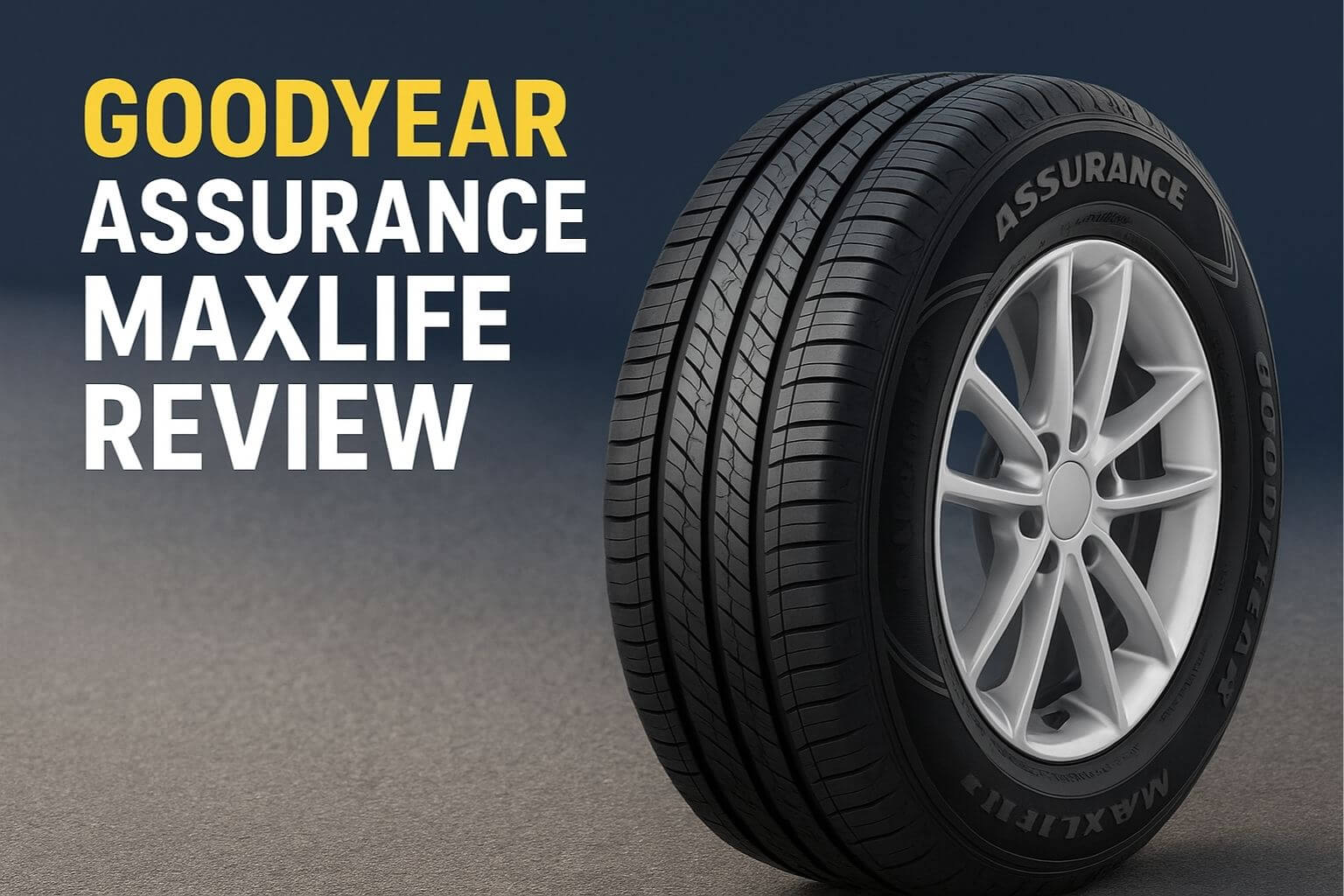
The tread pattern is designed to do a few jobs at once. It helps the tire stay stable, move water away from the road, and hold up better over time. The grooves in the tread help push water out from under the tire, which can improve control in rain.
The center rib helps the tire feel more steady when driving straight, especially on highways. The stronger shoulder areas help with balance and wear, so the tire can keep its shape better as miles add up. These are not dramatic features, but they matter in daily driving because they support a smoother and more predictable ride.
Taken together, the design is aimed at giving drivers a tire that feels calm, lasts a long time, and handles normal road conditions with less worry.
Performance Review by Real Driving Conditions
This is where the Goodyear Assurance MaxLife shows what kind of tire it really is. It is made for normal everyday driving, not for sporty handling or harsh winter roads. That matters, because the best tire is not the one with the biggest claims. It is the one that fits how you actually drive.
Dry road performance
On dry roads, this tire feels steady and easy to live with. Steering response is good enough for normal driving, so the car reacts in a way that feels predictable without being nervous or twitchy.
Cornering is also solid for an everyday tire. It holds its line well when you turn, which gives a calm, secure feeling in city driving and on curvy roads.
Braking confidence is one of the stronger parts of the experience. The tire feels controlled when you slow down, especially in regular traffic. On the highway, it stays stable and tracks straight without needing much correction.
Wet road performance
In rain, the Assurance MaxLife does a respectable job. It is designed to move water away from the road so the tire can keep contact instead of sliding over the surface.
That helps with hydroplaning resistance, which is the feeling of the tire floating on water. It is not a rain specialist, but it gives enough confidence for normal wet-weather driving.
In heavy rain or standing water, the tire remains usable and stable, but you still need to drive with care. It is built for everyday wet roads, not for pushing hard through flooded areas or deep water.
Light snow and winter use
“All-season” does not mean “best in every season.” It means the tire can handle a mix of conditions, including light winter weather, but it is not meant to replace a winter tire.
For light snow, it should be fine for cautious driving and short trips. That said, this is not the tire you want if winter is long, snowy, or icy where you live.
Severe ice and heavy snow are not its strength. If your roads often freeze or stay covered in snow, a true winter tire will give you much better control and peace of mind.
Ride comfort
One of the most appealing things about this tire is how comfortable it feels. It does a good job of softening small bumps and rough pavement, so the ride does not feel harsh.
That matters a lot for daily use. If you spend time on older roads or drive long distances often, a smoother tire can make the whole trip feel less tiring.
For commuting, the comfort level is one of the main reasons to consider this tire. It is made to keep the ride easy, calm, and predictable.
Road noise
At city speeds, the tire is generally quiet enough that it does not stand out. You notice the road more than the tire, which is usually a good sign for an everyday tire.
At highway speeds, there may be a little more sound, but it is still in a comfortable range for most drivers. It is not a whisper-quiet luxury tire, but it is not annoying either.
As the tire wears, road noise can change over time. That is normal for most tires. Even so, this one is designed to stay reasonably quiet as it ages, which is helpful if you plan to keep it for a long time.
Treadwear and long-term durability
This is the main reason many people look at the Assurance MaxLife in the first place. It is built to wear slowly and keep going for a long time, which is what you want in a tire made for value.
The warranty matters because it shows Goodyear is confident in the tire’s long-life focus. It does not mean every driver will get the exact same mileage, but it does give you a useful benchmark.
Real lifespan still depends on maintenance. Regular tire rotation, proper air pressure, and good alignment all help the tire last longer. If those things are ignored, even a long-warranty tire will wear out faster than it should.
Real-World Ownership Notes
What drivers often overlook
A long-warranty tire like the Goodyear Assurance MaxLife can look very appealing on paper, but the warranty only helps if the tire is cared for properly. Things like wheel alignment and tire rotation matter a lot. If the wheels are not lined up right, or if the tires are not rotated on time, they can wear unevenly and lose life much faster than expected.
That is the part many buyers miss. A strong warranty does not protect you from poor maintenance. It is there to support normal use, not to make up for skipped checks or bad tire care.
Real mileage can also vary quite a bit. The same tire may last longer on one car than another, or on one size than another. Driving style matters too. A person who mostly drives on highways may get very different results from someone who spends more time in stop-and-go city traffic.
Cost-per-mile analysis
One of the easiest ways to judge a tire’s value is to look at cost per mile. The idea is simple: take the price of the tire and divide it by the number of miles it is expected to last.
For example, if a tire costs more up front but lasts much longer, the total cost over time may actually be lower. That is why a pricier tire can still be the smarter buy. You may spend a little more today, but you could avoid replacing the tires as soon as possible.
This is one of the main reasons long-life tires matter. They are not always the cheapest at checkout, but they can save money over the full life of the tire. For drivers who keep their car for years, that difference can be worth a lot.
Best driving environments
This tire makes the most sense in normal everyday use. It fits city commuting well because it is built for steady, predictable driving and long wear. It also works nicely for suburban family use, where comfort and low stress matter more than sporty feel.
It is a strong match for drivers who spend a lot of time on the highway too. Long trips and regular commuting are exactly the kind of driving where a tire like this can show its value.
It also fits mixed-weather daily driving, as long as the weather stays within normal all-season limits. That means rain, dry roads, and light winter use. It is a practical choice for drivers who want one tire that can handle most everyday conditions without needing special treatment.
Goodyear Assurance MaxLife Pros and Cons
Pros
- Long tread life – designed to last many miles, reducing replacement frequency.
- Strong value for mileage-focused buyers – paying a bit more upfront can save money over time.
- Comfortable and quiet ride – smooth handling over city streets and highways.
- Good everyday all-season behavior – reliable on dry, wet, and light snow roads.
- Easy maintenance with wear indicators – helps monitor tread depth without guessing.
Cons
- Not ideal for severe snow or ice – performs only in light winter conditions.
- Not a performance tire – lacks sharp handling or sporty feel.
- High-speed noise and handling may not match premium touring rivals – can feel less refined on highways.
Comparison with Goodyear Assurance MaxLife Alternatives
Choosing the right tire isn’t just about the brand name. Sometimes it helps to see how the Assurance MaxLife stacks up against other popular options so you can decide what matters most for your driving.
Michelin Defender2 vs Goodyear Assurance MaxLife
The Michelin Defender2 is a premium touring tire. It tends to feel a bit more refined, with smoother ride quality and slightly better wet grip. If you want a tire that feels luxury-level quiet and confident in rain, the Defender2 may be appealing.
The Goodyear Assurance MaxLife shines in value and long-term mileage. Its tread is designed to last longer, which can make it cheaper over time for drivers who put a lot of miles on their car. In short, MaxLife is great for everyday reliability and stretching your tire budget, while the Defender2 is better if comfort and wet-weather confidence are your top priorities.
Yokohama AVID Ascend LX vs Goodyear Assurance MaxLife
The Yokohama AVID Ascend LX is in a similar comfort-focused tier but is generally priced a bit lower than MaxLife. It offers a smooth ride and good everyday handling, but it may not have quite the same long-life focus as Goodyear’s tire.
For drivers who prioritize daily comfort but want the assurance of a long-lasting tread, MaxLife often makes more sense despite the slightly higher price. The Ascend LX is a solid alternative if upfront cost matters more than maximum longevity.
Yokohama AVID TOURING-S vs Goodyear Assurance MaxLife
Budget tires like the Yokohama AVID TOURING-S can be tempting because they cost less at checkout. They generally provide acceptable comfort and basic all-season performance, but they wear faster and often lack the long warranty coverage of MaxLife.
If you drive a lot and plan to keep the tires for years, the extra upfront cost for the Assurance MaxLife can be worthwhile. You may end up saving money in the long run because you won’t need to replace the tires as soon. For low-mileage drivers, a budget tire may still be a reasonable choice, but it comes with trade-offs in durability and long-term value.
Overall, the key is deciding what matters most: long life and warranty confidence with the MaxLife, or lower upfront cost with some shorter-term compromises.
Read More: Michelin CrossClimate 2 review
Fitment and Buying Checklist
Before you buy
Before getting the Goodyear Assurance MaxLife, make sure you know your exact tire size. You can find this on the sidewall of your current tires or in your car’s manual. Matching the size is crucial for safety and performance.
Check the load index and speed rating too. These numbers tell you how much weight the tire can safely carry and how fast it can go. Using the wrong rating can affect handling and wear.
Some vehicles require a staggered setup, meaning the front and rear tires are different sizes. Make sure your car needs—or doesn’t need—this setup before ordering.
Also, consider installation costs. Balancing and alignment are extra steps that matter a lot, especially for a long-life tire. Skipping these can shorten the tire’s lifespan.
Read More: Forceum Hena Review
After installation
New tires have a short break-in period. For the first few hundred miles, drive gently to let the tread settle. This helps the tire perform at its best.
Keep up with a rotation schedule. Rotating tires regularly ensures even wear, which is especially important for a tire like the MaxLife that promises long mileage.
Check tire pressure often. Proper inflation keeps the ride smooth, improves fuel efficiency, and prevents uneven wear.
Finally, monitor tread depth. The MaxLife has wear indicators, but it’s good to check manually too. Staying on top of tread wear helps you replace tires safely and at the right time.
Read More: Goodyear Assurance WeatherReady 2 Review
Final Verdict
The Goodyear Assurance MaxLife is a well-designed all-season commuter tire that makes the most sense for drivers who want long tread life, steady everyday performance, and a comfortable ride. Its biggest strength is value over time, not flashy performance. The 85,000-mile warranty, built-in wear gauges, and positive comfort and durability feedback all support that position.
It is less convincing for drivers who need strong snow and ice traction or who want a more performance-oriented feel. But for the average driver who wants a tire that can handle daily commuting with less worry about replacement, the Assurance MaxLife is a sensible and trustworthy choice.
FAQs about Goodyear Assurance MaxLife Review
Is the Goodyear Assurance MaxLife a good tire?
Yes, for the right driver. It is a strong all-season commuter tire with long tread life, comfortable ride quality, and dependable everyday performance.
Is it really an 85,000-mile tire?
Goodyear advertises an 85,000-mile/140,000 km tread life warranty, but the company also says actual mileage can vary by vehicle type and tire size. Your maintenance habits will matter a lot too.
Is it good in the rain?
Independent reviews say yes, for normal wet driving. The tread design, grooves, and siping are meant to help with water evacuation and wet traction, and TireGrades gives it an 8.4/10 wet-weather score.
Is it good in snow?
It is okay for light winter use, but it is not designed for severe snow or icy roads. If you live somewhere with serious winters, a winter-focused tire is the safer choice.
Is it noisy?
Most independent reviews describe it as quiet or comfortable, which is one of its strengths. TireGrades gives road comfort strong marks, and The Tire Reviews says the tire stays quiet even as it wears.
Is it worth the price?
For high-mileage drivers, often yes. The official price range is $147 to $284, and the long warranty makes the cost more reasonable over time. For low-mileage drivers, the value case is weaker because they may not fully use the tire’s longevity.
