How to Read Tire Sizes Numbers
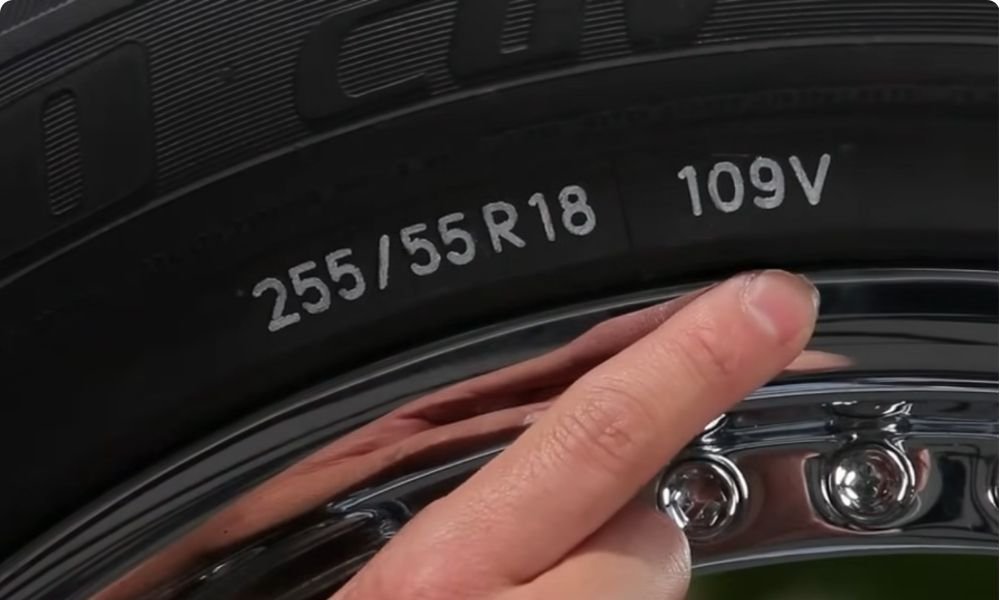
If you’ve ever looked at your tire sidewall and seen a confusing string like 225/65R17 102H, you’re not alone. Many drivers feel overwhelmed by tire size numbers and worry about buying the wrong tires, wasting money, or compromising safety.
This beginner-friendly guide will show you how to read tire sizes numbers step by step, using plain language and real-world examples. By the end, you’ll confidently understand what each number means and how to choose the right tires for your vehicle.
What Are Tire Size Numbers and Why Do They Matter?
Tire size numbers are the numbers and letters printed on the side of your tires. They tell you the tire’s exact size and how it fits your vehicle. These numbers are important because they affect how your car drives, how safe it is, and even how much fuel it uses.
Why Tire Size Numbers Matter
- Safety – The right tire size helps your car stop and turn properly. Tires that are too big or too small can make braking less effective and reduce traction.
- Handling & Braking – Tires designed for your vehicle give you better control on the road. Using the wrong size can make steering feel strange and affect how well your car handles curves or emergency stops.
- Fuel Efficiency – Tires that are too wide or heavy can make your car use more gas. The right tire size helps your vehicle drive more efficiently.
- Speedometer Accuracy – Your speedometer is calibrated for your car’s original tires. Changing tire size can make it show the wrong speed.
Why Manufacturers Specify Exact Tire Sizes
Car manufacturers recommend specific tire sizes for a reason. They test the vehicle with those sizes to make sure it drives safely, handles well, and meets fuel efficiency and safety standards. Using the recommended size keeps your car performing as intended.
What Can Go Wrong With the Wrong Size
If you use the wrong tire size, you might notice:
- Poor braking or slipping in wet conditions
- Steering that feels “off” or uneven tire wear
- Lower fuel efficiency
- Incorrect speed readings
- Possible damage to suspension or safety systems
In short, tire size numbers are more than just numbers—they help keep you safe and your car running properly.
Where to Find Tire Size Numbers on Your Vehicle
Finding the correct tire size for your vehicle is easier than you might think. The numbers are printed in a few key places, so you don’t have to guess.
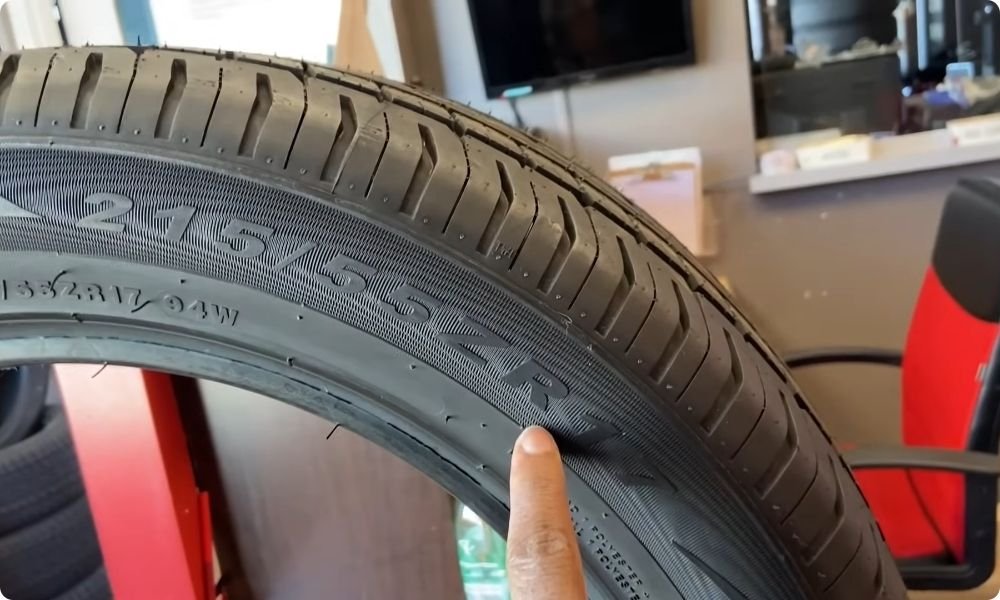
Tire Sidewall
The easiest place to look is on the tire itself. If you check the side of your tire, you’ll see a series of numbers and letters—this is the tire size. It tells you the width, height, construction, and wheel diameter of the tire.
Driver-Side Door Jamb Sticker
Another place to check is the sticker on the inside of the driver’s door. This sticker lists the exact tire sizes recommended by the manufacturer for your car. It may also include information about the correct air pressure.
Tip: The door sticker is the most reliable reference. Tires may have been replaced before, so the sidewall might not match what the manufacturer recommends. Always check the door sticker first if you want the correct size.
Owner’s Manual
Finally, your owner’s manual will have a section about tires. It will list the recommended tire sizes for your vehicle and can give extra information about load limits and speed ratings.
How to Read Tire Sizes Numbers (Step-by-Step Breakdown)
When you look at a tire, you’ll see a group of numbers and letters printed on the side. These numbers tell you the tire’s size and how it fits your vehicle. Once you understand what each part means, choosing the right tire becomes much easier.
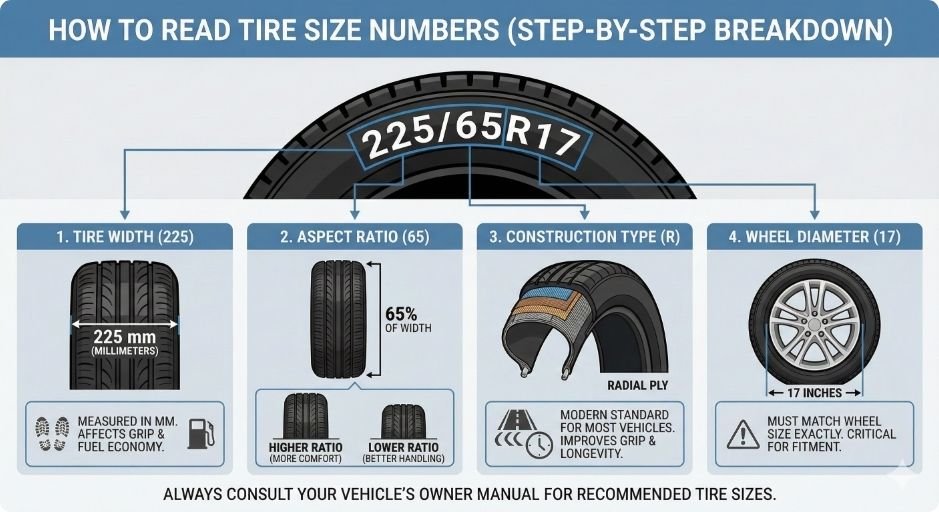
Example Tire Size: 225/65R17
Let’s use 225/65R17 as a real-world example. This is a very common tire size found on many cars and SUVs. Each part of this number gives you specific information about the tire. We’ll go through it one piece at a time.
Tire Width Explained (225)
The number 225 tells you how wide the tire is. This width is measured in millimeters from one side of the tire to the other.
A wider tire usually has better grip on the road because more rubber touches the ground. This can help with traction, especially when turning or driving on wet roads. However, wider tires can slightly reduce fuel economy because they create more resistance as you drive. They can also produce more road noise compared to narrower tires.
A common misunderstanding is thinking that wider tires are always better. In reality, the best width is the one recommended for your vehicle. Using a tire that is too wide can affect handling and fuel efficiency.
Aspect Ratio Explained (65)
The number 65 is called the aspect ratio. It shows how tall the tire’s sidewall is compared to its width. In simple terms, it tells you how much “rubber” is between the wheel and the road.
A higher aspect ratio means the tire has a taller sidewall. This usually makes the ride more comfortable because the tire absorbs bumps better. A lower aspect ratio means a shorter sidewall, which can improve handling but may feel stiffer over rough roads.
If you imagine two tires side by side, one with a tall sidewall and one with a short sidewall, the taller one will look more cushioned, while the shorter one will look sportier.
Tire Construction Type (R)
The letter R stands for radial. This describes how the tire is built on the inside.
Radial tires are used on almost all modern cars, SUVs, and trucks. They last longer, provide better grip, and improve fuel efficiency compared to older tire designs. If you’re driving a normal passenger vehicle today, radial tires are the standard choice.
Wheel Diameter Explained (17)
The number 17 tells you the size of the wheel the tire fits, measured in inches. This means the tire is made for a 17-inch wheel.
This number must match your wheel size exactly. A tire designed for a 17-inch wheel will not fit a 16-inch or 18-inch wheel.
A common mistake people make when upgrading wheels is choosing a larger wheel size without checking tire compatibility. When wheel size changes, the tire size must also be adjusted correctly to keep the overall height and performance of the vehicle the same.
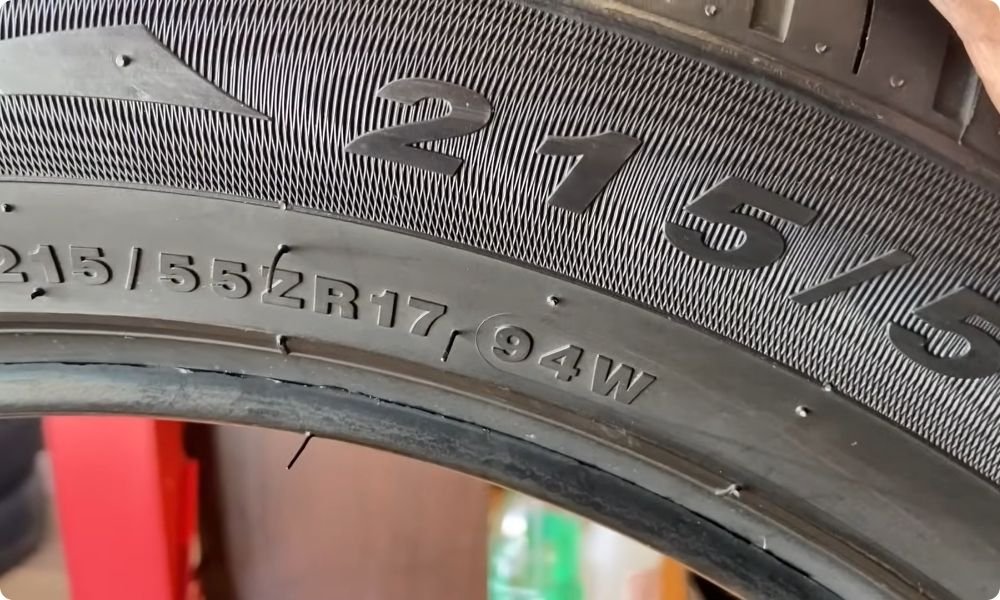
Understanding Load Index and Speed Rating
Along with the main tire size numbers, you’ll also see two important markings on a tire: the load index and the speed rating. These tell you how much weight a tire can carry and how fast it can safely go. While they may look confusing at first, they’re simple once explained.
What Is Load Index?
The load index tells you how much weight one tire can safely support. It is shown as a number, usually found near the end of the tire size markings.
Each number matches a specific weight limit. The higher the number, the more weight the tire can carry. For example, a tire with a higher load index can support more weight than one with a lower number.
This matters even more for SUVs and trucks because they are heavier than regular cars. They also often carry passengers, cargo, or tow trailers. If the load index is too low, the tire may wear out faster or fail under pressure.
As a simple example, a load index of 95 can carry less weight than a load index of 105. Always choose a tire that meets or exceeds the load index recommended by your vehicle manufacturer.
What Is Speed Rating?
The speed rating shows the maximum speed a tire can safely handle. It is represented by a letter, not a number.
Some common speed rating letters include:
- T – suitable for normal daily driving
- H – often used on sedans and small SUVs
- V – found on sportier vehicles
A higher speed rating does not mean the tire is “better” for everyday use. It simply means the tire can handle higher speeds safely. Many drivers never reach the maximum speed of their tire, so choosing an extremely high speed rating is often unnecessary.
From a safety and legal point of view, your tire’s speed rating should meet or exceed what the manufacturer recommends. Using a lower speed rating than required can affect handling and may not be allowed in some regions.
Tire Size Differences for Cars, SUVs, and Trucks
Tire sizes are not the same for every type of vehicle. Cars, SUVs, and trucks are built for different purposes, so their tires are designed differently too. Understanding these differences helps you choose tires that match your vehicle’s weight and how you drive.
Why SUVs Often Have Higher Load Ratings
SUVs are heavier than most cars. They also carry more passengers and cargo, and some are used for towing. Because of this extra weight, SUV tires are built to support more load.
A higher load rating means the tire is stronger and can safely handle more weight. Using a tire with a lower load rating on an SUV can lead to faster wear and reduced safety. That’s why SUV tires usually have higher load ratings than car tires.
Differences in Sidewall Height
Sidewall height is the amount of rubber between the wheel and the road.
Cars usually have shorter sidewalls, which help with smooth handling and better control on paved roads. SUVs and trucks often have taller sidewalls, which help absorb bumps and provide a more comfortable ride on rough surfaces.
Taller sidewalls also offer extra protection when driving over potholes, gravel, or uneven roads.
Off-Road vs Highway Tire Sizing
Highway tires are designed for smooth roads. They usually have a more balanced size that focuses on comfort, quiet driving, and fuel efficiency.
Off-road tires are built for dirt, mud, rocks, or snow. These tires are often wider and have taller sidewalls. This design helps them grip uneven surfaces and protect the wheel from damage.
If you mainly drive on city roads and highways, a highway tire size is usually the best choice. Off-road tire sizes are better for drivers who regularly travel on rough terrain.
Car vs SUV vs Truck Tire Size Examples
Here’s a simple comparison to show how tire sizes typically differ:
| Vehicle Type | Common Tire Size Example | Main Purpose |
| Car (Sedan) | 205/55R16 | Comfort and fuel efficiency |
| SUV | 225/65R17 | Load support and ride comfort |
| Truck | 265/70R17 | Heavy loads and tough conditions |
These examples show how tire sizes grow larger and stronger as the vehicle size and workload increase.
Can You Change Tire Size? (What You Should Know First)
Changing your tire size is sometimes possible, but it needs to be done carefully. The wrong choice can affect safety, comfort, and even your vehicle warranty.
When Changing Tire Size Is Usually Safe
It’s generally safe to change tire size slightly if the new tires stay close to the original size recommended by the manufacturer. Small changes are often made when upgrading wheels or switching between seasonal tires. The key is keeping the overall tire height nearly the same.
When It’s Not Recommended
Changing tire size is not a good idea if the new tires are much larger or smaller than recommended. Big changes can cause rubbing against the vehicle, poor handling, or inaccurate readings from your car’s systems.
How Changing Tire Size Can Affect Your Vehicle
- Speedometer: A different tire size can make your speedometer show the wrong speed.
- MPG: Larger or heavier tires can reduce fuel economy.
- Handling: Tires that are too big or too small can affect steering and braking.
- Warranty: Using an incorrect tire size may affect your vehicle warranty.
Acceptable Upsizing or Downsizing
Most experts suggest staying within about 3% of the original tire size. This small range usually avoids problems with performance and safety.
Why Professional Advice Matters
A tire professional can confirm whether a different size will work safely on your vehicle. This helps you avoid costly mistakes and ensures your car drives as it should.
Common Mistakes People Make When Reading Tire Size Numbers
- Confusing width with wheel size — Tire width (mm) is not the same as wheel diameter (inches); don’t pick tires by width alone.
- Ignoring load index — A tire might fit but not support your vehicle’s weight; always meet or exceed the recommended load index.
- Assuming “bigger is better” — Wider or taller tires can hurt fuel economy, ride comfort, and handling if they’re not the right fit.
- Mixing tire sizes on the same vehicle — Different sizes on the same axle or front/rear can cause poor handling and uneven wear; keep matching sizes as recommended.
Tire Size Cheat Sheet (Quick Reference)
Reading tire numbers doesn’t have to be confusing. Here’s a simple guide to what each part of a tire size means. Think of it as a quick reference you can use anytime you check your tires.
- 225 – This is the tire’s width in millimeters. It tells you how wide the tire is from side to side.
- 65 – This is the aspect ratio, or how tall the tire’s sidewall is compared to its width. A higher number means a taller sidewall.
- R – This letter shows the tire’s construction type. “R” stands for radial, which is used on most modern cars.
- 17 – This is the wheel diameter in inches. The tire must match the size of your wheel exactly.
- Load Index (e.g., 102) – This tells you how much weight the tire can safely carry. Higher numbers mean the tire can support more weight.
- Speed Rating (e.g., H) – This shows the maximum safe speed for the tire. Letters indicate different speed limits, not overall quality.
Final Thoughts
Knowing how to read tire size numbers might seem complicated at first, but it’s one of the easiest ways to protect your vehicle, your wallet, and your safety.
Understanding tire numbers helps you:
- Choose the right tires for your car, SUV, or truck
- Avoid buying tires that don’t fit, which can cause damage or require replacement sooner
- Maintain proper handling and braking, keeping you safe on the road
- Prevent unnecessary fuel costs by picking tires that match your vehicle’s design
- Keep your speedometer and safety systems accurate, avoiding surprises while driving
By checking your tire size and following the manufacturer’s recommendations, you can make smarter choices when replacing tires. Even small mistakes—like using the wrong width, aspect ratio, or load index—can lead to extra costs or unsafe driving conditions.
Frequently Asked Questions
What does a tire size like 225/65R17 actually mean?
It’s a simple code. 225 is the tire width in millimeters. 65 is the aspect ratio (the sidewall height is 65% of the width). R means radial construction. 17 is the wheel diameter in inches. Together they tell you how the tire fits and performs on your car.
How do I find the correct tire size for my vehicle?
Check the sticker on the driver-side door jamb (the door placard). If it’s missing, look in your owner’s manual or read the numbers on the tire sidewall. The door placard shows the manufacturer’s recommended size and is the most reliable source.
Can I use a different tire size than the one on the door sticker?
Small, careful changes are usually okay if the overall tire diameter stays close to the original (a common guideline is within about 3%). Bigger changes can affect speedometer accuracy, handling, and safety. Always check with a tire professional before making any changes.
What is the load index and why does it matter?
The load index is a number that tells how much weight a single tire can carry. SUVs, trucks, or vehicles that carry heavy loads need tires with a higher load index. Pick tires that meet or exceed the load index the manufacturer recommends.
What is a speed rating and should I choose a higher one?
A speed rating is a letter that shows the maximum safe speed for the tire. Higher letters mean the tire can handle higher speeds, but higher speed ratings aren’t necessary for normal driving and can be more expensive. Use the rating that meets or exceeds your vehicle maker’s recommendation.
Will changing tire size affect my speedometer or odometer?
Yes. If the new tire’s overall diameter is larger or smaller than the original, your speedometer and odometer can show the wrong speed and distance. Keeping diameter changes small (around 3% or less) keeps errors small.
What happens if I mix different tire sizes or types on the same vehicle?
Mixing sizes or using different tire types on the same axle can hurt handling, cause uneven wear, and confuse stability or traction systems. For safety and best performance, use the same size and type on all four wheels unless your vehicle’s maker allows a specific staggered setup.
Are wider tires always better?
No. Wider tires can give more grip but may reduce fuel economy, increase road noise, and cause rubbing if too wide for your wheels or wheel wells. Follow your vehicle’s recommended range rather than assuming wider is better.
How can I check the sidewall height from the tire size?
Multiply the tire width by the aspect ratio. For example, a 225/65 tire: 225 mm × 0.65 = 146.25 mm sidewall height. This tells you how tall the tire’s sidewall is.
Do tire sizes differ between cars, SUVs, and trucks?
Yes. SUVs and trucks often use tires with higher load ratings and taller sidewalls to handle extra weight, towing, and rough roads. Passenger cars usually use narrower tires with lower sidewalls for comfort and better fuel economy.
Will changing tire size affect my warranty?
It can. Some manufacturers may limit warranty coverage if non-recommended tire sizes cause damage or affect vehicle systems. Check your vehicle warranty terms and ask a professional if you’re unsure.
Where can I find the load index and speed rating on the tire?
They usually appear after the main size code. For example: 225/65R17 102H — 102 is the load index and H is the speed rating.
What should I do if I’m unsure about a tire choice?
Bring the vehicle’s make, model, year, and the door placard information to a trusted tire shop. A trained technician can confirm fit, load rating, speed rating, and any changes that are safe for your vehicle.
