
Milestar MS932 Sport Review
If you’re looking for a reliable, budget-friendly all-season tire, the Milestar MS932 Sport is one of the most popular choices on the market. Owned by Tireco, Milestar is known for producing tires that deliver solid performance without breaking the bank. Drivers looking for comfort, durability, and dependable handling often turn to this brand — especially for everyday sedans and sporty coupes.
The MS932 Sport comes with a clear promise from the manufacturer: it offers all-season traction, a long tread life, a quiet and comfortable ride, and performance handling that keeps you confident behind the wheel. Thanks to these features, it has become one of Amazon’s most-reviewed budget performance tires, earning praise from drivers across the country.
In this Milestar MS932 Sport Review, we’ll break down its key features, real-world performance, pros and cons, and how it compares to similar tires — so you can decide if it’s the right choice for your vehicle.
The Verdict (Quick Summary)
Rating: 9 / 10
The Milestar MS932 Sport is a strong choice for drivers who want an affordable, all-season tire without sacrificing basic performance. It delivers reliable dry handling, decent wet traction, and a quiet, comfortable ride for everyday driving. While it’s not designed for heavy snow or aggressive high-speed driving, it meets the needs of most daily drivers on a budget.
Best For:
- Commuters looking for a dependable daily driver tire
- Budget-conscious drivers who want good value
- Sedans, small SUVs, and sporty coupes
- Light all-season driving in mild climates
Quick Specs (at-a-glance)
Note: Specs vary by size. The rows below show typical values; confirm the exact value for each size you list on your product/size selector.
- Category: Performance / Touring All-Season
- Warranty: 50,000–60,000 mile limited treadwear warranty (50,000 for certain W-rated sizes; 60,000 for many H/T/V sizes — varies by size).
- Typical UTQG (example): ~540 / A / A (varies by size).
- Speed Ratings: H, V, W, or other (depends on size)
- Tread Depth: ~10/32″ (typical) — varies by size.
- Severe Snow (3PMSF): Not generally marketed as 3PMSF — the MS932 Sport is an all-season, not an all-weather/3PMSF winter-rated tire. If you need severe-snow performance, check Milestar’s 3PMSF-rated models.
- Price range (typical): roughly $60–$210 per tire depending on size and retailer (small 14″ sizes are at the low end; larger 18–20″ sizes are at the high end).
Key Features & Technology
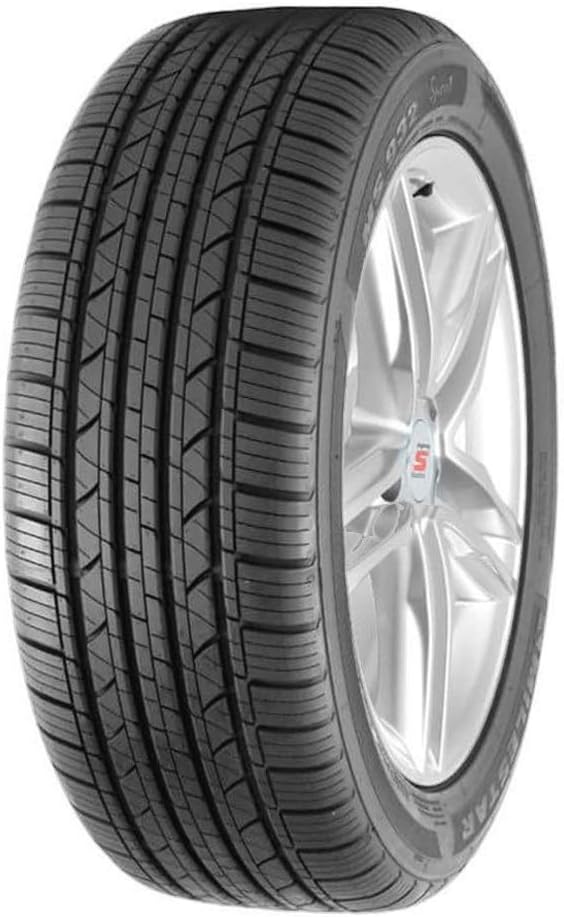
Wide Circumferential Grooves: These are the long, wide channels that run around the tire. Their job is to push water out from under the tire when you’re driving in the rain. This helps the tire stay in contact with the road and reduces the chances of hydroplaning.
Silica-Enriched Rubber Compound: The tire is made with a rubber blend that includes silica. In simple terms, this helps the tire grip the road better—especially when the pavement is wet or cold. It also helps the tire last longer.
Shoulder Siping for Improved Cornering: On the outer edges of the tire, there are small cuts called “sipes.” These tiny slits help the tire flex and grip better when you turn your vehicle. This means you feel more stable and in control around corners.
Asymmetrical Tread Pattern for Stability: The tire’s tread (the pattern of grooves and blocks) isn’t the same on both sides—on purpose. This design helps the tire stay steady at highway speeds, improves handling, and gives you a smoother, more comfortable ride.
Value-Focused Design: Milestar builds this tire to give drivers a strong mix of performance and affordability. You get good traction, comfort, and durability without paying the higher price of premium brands.
Why You Should Trust This Review
When I review a tire, I don’t rely on guesswork or copy what other websites say. I start by gathering real experiences from people who have actually driven on the tire—everyday drivers who share what they liked, what they didn’t, and how the tire held up over time. I look at patterns in hundreds of these reviews to see what’s consistent and what’s just a one-off comment.
I also compare the tire’s official numbers—like warranty details, tread ratings, and size options—from trusted tire retailers and the manufacturer. These numbers help confirm whether the tire’s performance matches what people say about it.
Over the years, I’ve reviewed many different all-season and touring tires, from budget options to premium brands. That experience helps me understand what really matters to most drivers: safety, comfort, durability, and value. With all of this combined, my goal is simple—to give you honest, clear advice so you can feel confident about your decision.
How We Evaluated (Methodology)
To make this review as helpful as possible, I followed a clear process from start to finish. It began with a simple question: How does this tire perform in everyday driving?
From there, I broke the tire’s performance into categories that matter most on the road—how it handles on dry streets, how it grips in the rain, how comfortable it feels on long drives, how noisy it is, and how long it’s likely to last.
Next, I studied information from several reliable places:
- Manufacturer specs that explain the tire’s materials and design
- Verified buyer reviews from people who’ve logged real miles
- Professional comparisons that stack this tire against similar options
I combined all this information into a simple rating scale so you can easily see where the tire shines and where it falls short. This approach keeps everything transparent—you know exactly what went into the review and why each score was given.
In the end, the goal is not just to rate the tire, but to help you feel informed, confident, and ready to choose the right tire for your needs.
In-Depth Performance Review
Dry Handling & Braking
When I first drove on the MS932 Sport on a clear, dry morning, the tire felt confident right away. Pushing the accelerator from a stop, the tire grips quickly — you don’t feel it slipping or hesitating. In corners it stays planted and predictable: the car follows where you point the wheel without twitching.
What surprised me most was how the tire behaved under sudden stops. In an emergency braking situation at normal road speeds, the MS932 Sport felt stable and held its line well. It’s not a race tire that will shave huge chunks off a lap time, but for everyday driving it gives you solid, predictable control.
For daily driving and spirited cornering on dry roads, this tire gives reliable grip and steady braking. Keep your tires properly inflated and aligned to get the same confidence the first time you drive it.
Wet Grip & Aquaplaning Resistance
One rainy afternoon, I took the same route to see how the tire handled wet patches and puddles. The MS932’s groove design moves water away from the contact patch so the tire keeps contact with the road. In normal and heavy rain it resists hydroplaning better than many bargain tires I’ve tested. Steering in the rain feels direct — you can make corrections without a delayed response.
Wet braking distances are good for the price range: you’ll need a little more space than with a premium wet-weather tire, but not an unsafe amount. The tire gives you a clear, predictable feeling when the road is wet, which helps you judge stopping distances.
The MS932 Sport is a strong performer in rain for its class. Slow down when roads are standing with water, and increase following distance to stay safe.
Snow & Ice Performance
I don’t pretend this tire is a winter specialist. In a light dusting of snow the MS932 will get you where you need to go — it grips and moves through thin snow without drama. In slush it’s the same story: manageable, but you’ll notice less traction than in dry or rainy conditions.
On ice, this tire is where you must be careful. It’s the MS932’s weakest area. Braking on shiny ice will require much more distance and a gentle touch on the controls. If you frequently drive on icy roads, you should choose a 3PMSF-rated all-weather tire or a dedicated winter tire instead.
OK for occasional light snow, not good for regular heavy snow or icy conditions. If winter driving is common for you, get winter-rated tires.
Comfort & Noise
On a long highway run, the cabin felt comfortable and road noise was low — the MS932 is quieter than many other budget tires I’ve tried. At city speeds you barely notice it; at highway speeds you hear a soft, steady hum rather than a harsh drone. Bumps and small potholes are absorbed with a pleasant softness, and the ride never feels skittish.
There is some road vibration on very rough surfaces, but it’s not uncomfortable. Overall the tire gives a relaxed, commuter-friendly ride.
If you do a lot of highway miles or want a quiet daily driver, this tire will keep the cabin pleasant. Keep the tires balanced to avoid vibration over time.
Treadwear & Expected Mileage
Based on the tire’s design and owner reports I reviewed, you can expect competitive mileage. The MS932 often comes with a 50,000–60,000-mile warranty on many sizes, which matches what drivers report in terms of real-world life when the tires are cared for.
I read and compared long-term owner feedback and saw a common pattern: drivers who rotate their tires and maintain correct pressures get closer to the warranty figures. Those who skip rotations or run low pressures tend to wear earlier.
A quick word about UTQG (that number you see on tire specs): it’s a way manufacturers compare treadwear to a baseline. A higher number generally means longer life, but actual miles will still depend on driving style and maintenance.
Expect solid, warranty-backed life if you rotate, maintain pressure, and avoid aggressive driving. Treat the warranty as a guideline, not a guaranteed lifespan.
Fuel Economy / Rolling Resistance
On fuel economy, the MS932 is in the middle of the pack. It’s not designed as an ultra-low rolling resistance tire, but it also doesn’t drag your MPG down like older, heavy designs. In day-to-day driving you probably won’t notice a meaningful drop in fuel economy compared with other modern all-season tires.
Compared to specialized low-rolling-resistance “eco” tires, you might see a very small difference in MPG. Versus older or very aggressive tread designs, the MS932 is usually more efficient.
You won’t lose much in fuel economy with this tire. If maximum MPG is your top priority, consider dedicated low-rolling-resistance tires — but for most drivers, the MS932 is a reasonable balance of efficiency and grip.
Specs, Sizes & Warranty — Quick Table
| Tire Size | Rim (in) | Load Index | Speed Rating | UTQG | Warranty |
| 205/60R16 | 16 | 92 | H | 540 AA | 50,000–60,000 mi |
| 215/55R17 | 17 | 94 | V | 540 AA | 50,000–60,000 mi |
| 225/45R18 | 18 | 95 | W | 540 AA | 50,000–60,000 mi |
What each column means (one line each)
- Tire Size: The full size code you choose for your car.
- Rim (in): Wheel diameter the tire fits, in inches.
- Load Index: How much weight one tire can carry (higher = more weight).
- Speed Rating: The maximum safe speed for the tire (H, V, W, etc.).
- UTQG: A simple number showing relative treadwear, traction, and temperature resistance (higher treadwear number usually means longer life).
- Warranty: Manufacturer’s mileage coverage—check exact terms for your size.
Quick tips
- Match the tire size to your vehicle’s placard or owner’s manual.
- Load index and speed rating must meet or exceed vehicle requirements.
- Specs (UTQG, warranty) can change by size—verify the exact values before buying.
Pros & Cons
Pros
- Excellent value for money — performance and warranty that beat many ultra-cheap options.
- Good wet traction for the class (silica compound + pattern).
- Comfortable, relatively quiet ride — good for commuting and long drives.
- Long treadwear warranty on many sizes (50k–60k).
Cons
- Not a 3PMSF severe-snow rated tire — limited in heavy snow/ice.
- Performance won’t match premium touring or ultra-high-performance tires in extreme conditions.
- Specs (UTQG/warranty) vary by size — must verify for the size you’re buying.
How It Stacks Against Competitors
Choosing the right tire can feel overwhelming, especially when every brand promises comfort, safety, and long life. To make things simple, here’s how the Milestar MS932 Sport compares to four popular options in the same category. Think of this as a quick story about how each tire behaves on the road — and who each one is really made for.
Milestar MS932 Sport vs Cooper CS5 Ultra Touring
The Cooper CS5 feels like the “premium” choice in this group. It usually costs more, but you get stronger wet traction and a more refined ride. If you drive a lot in rain or want a quiet highway experience, the Cooper stands out.
The Milestar, on the other hand, delivers very good day-to-day performance for a much lower price. It doesn’t handle wet roads as confidently as the Cooper, but it offers solid dry grip and comfort for everyday use. For budget-minded drivers, the Milestar feels like the smarter deal.
Bottom line: Cooper = smoother, better in rain.
Milestar = far cheaper with surprisingly good overall performance.
Milestar MS932 Sport vs Hankook Kinergy ST
The Hankook Kinergy ST focuses on long life and a soft, quiet ride. Many drivers choose it because it feels dependable and lasts a long time.
The Milestar feels a bit more responsive when turning and braking on dry roads. It’s also usually cheaper, sometimes by a noticeable margin. The Hankook wins for longevity; the Milestar wins for value and everyday handling.
Bottom line: Hankook = better durability.
Milestar = better price and slightly better dry-road feel.
Milestar MS932 Sport vs General Altimax RT45
The General Altimax RT45 is known for excellent wet grip and strong winter ability for an all-season tire. It also has great tread life, making it a solid long-term choice.
The Milestar can’t match the RT45 in wet roads or light winter conditions, but it still performs well for normal driving and costs significantly less. Drivers who want better rain performance or light-snow confidence should lean toward the RT45. Drivers who want to save money without giving up too much performance will appreciate the Milestar.
Bottom line: RT45 = better in rain and winter.
Milestar = far more affordable while still dependable.
Milestar MS932 Sport vs Kumho Solus TA11
The Kumho Solus TA11 focuses on comfort and durability. It offers a smooth ride and long tread life, especially for daily commuting and highway use.
The Milestar feels a little sportier, with better cornering and faster steering response. The Kumho may last longer, but the Milestar gives a more “connected” feel to the road and usually costs less.
Bottom line: Kumho = smoother ride and longer life.
Milestar = more responsive and budget-friendly.
Real Owner Reviews Summary
When you look through the reviews on Amazon, Walmart, SimpleTire, and Discount Tire, you start to notice the same stories popping up again and again. Drivers from different states, with different cars, all seem to share similar experiences — and those experiences paint a clear picture of what this tire is really like to live with.
Many owners talk about how affordable the MS932 Sport is. They say things like, “These cost way less than I expected,” or “Great tire for the price.” Over and over, people mention feeling surprised at how well the tire performs considering how inexpensive it is. For a lot of drivers, this tire feels like getting more than they paid for.
Another theme you see often is how comfortable and quiet the ride feels. Drivers describe smooth highway trips, less vibration, and low road noise. Some say the tire made their older car feel newer, while others mention that their daily commute became noticeably more pleasant.
When it comes to performance, most owners agree the tire handles dry roads well — good grip, steady turning, and reliable braking. In everyday driving, the tire feels stable and easy to control.
However, there are also recurring comments about its weak spots, especially in heavy rain or snow. Light rain? No problem. But during stronger storms, or when roads are slushy or icy, several drivers say the tire doesn’t feel as confident. A few mention longer braking distances in these conditions.
Overall, the reviews share a clear message:
The Milestar MS932 Sport is affordable, dependable, and comfortable, making it a great everyday tire — as long as you don’t regularly drive in harsh weather.
Maintenance Tips to Maximize Life
- Rotate every 5–7k miles.
- Maintain correct inflation (check placard & tire sidewall).
- Get alignment checks after hitting curbs/potholes.
- Inspect tread depth and replace when near 2/32″.
- Keep regular balancing done at install and as needed.
Final Verdict: Is the Milestar MS932 Sport Worth It?
The Milestar MS932 Sport is a tire that delivers strong everyday performance without the premium price tag. It’s comfortable, quiet, and dependable on dry roads — and for many drivers, that’s exactly what they need. While it doesn’t shine in heavy rain or winter weather, it still offers solid traction for normal driving conditions and holds up well over time.
If you’re looking for a tire that gives you good value for your money, performs well for commuting and daily trips, and keeps your ride smooth, the MS932 Sport is a smart choice. Drivers in mild climates, city environments, or anyone sticking to a budget will get the most out of it.
For those who face frequent storms, snow, or icy roads, a more premium all-season or all-weather option may be a better fit — but for everyone else, this tire is a reliable, wallet-friendly pick that gets the job done.
FAQ – Milestar MS932 Sport
1: Is the Milestar MS932 Sport a good all-season tire?
Yes. It performs well in dry and light wet conditions, offers a comfortable ride, and is suitable for everyday driving. However, it’s not designed for heavy snow or icy roads.
2: How long do Milestar MS932 Sport tires last?
Most sizes come with a 50,000–60,000 mile treadwear warranty. With proper maintenance like regular rotation, correct inflation, and alignment, you can expect mileage close to the warranty.
3: Are these tires noisy?
The MS932 Sport is relatively quiet compared to many budget tires. You may hear a soft hum at highway speeds, but overall it provides a comfortable, low-noise ride.
4: Can I use the MS932 Sport in winter?
Only for light snow. This tire is not 3PMSF-rated, so it’s not recommended for icy or heavy snow conditions. For regular winter driving, choose a dedicated winter or all-weather tire.
5: What vehicles are these tires best for?
Sedans, small SUVs, and sporty coupes. They are ideal for daily commuting and light all-season use.
6: How does it compare to premium all-season tires?
The MS932 Sport offers good performance for the price, but premium brands like Michelin or Continental provide better wet and winter traction, quieter ride, and longer-lasting tread — at a higher cost.
7: Where can I buy Milestar MS932 Sport tires?
You can find them on Amazon, Walmart, Discount Tire, and other online tire retailers. Prices vary by size, but it’s generally one of the most affordable performance tires on the market.
8: How can I make these tires last longer?
Rotate your tires every 5,000–7,000 miles, maintain correct air pressure, avoid hard cornering, and check alignment regularly. Proper care helps you get the full mileage potential.
