Tire UTQG Rating Chart: Complete Beginner’s Guide to Choosing the Right Tires
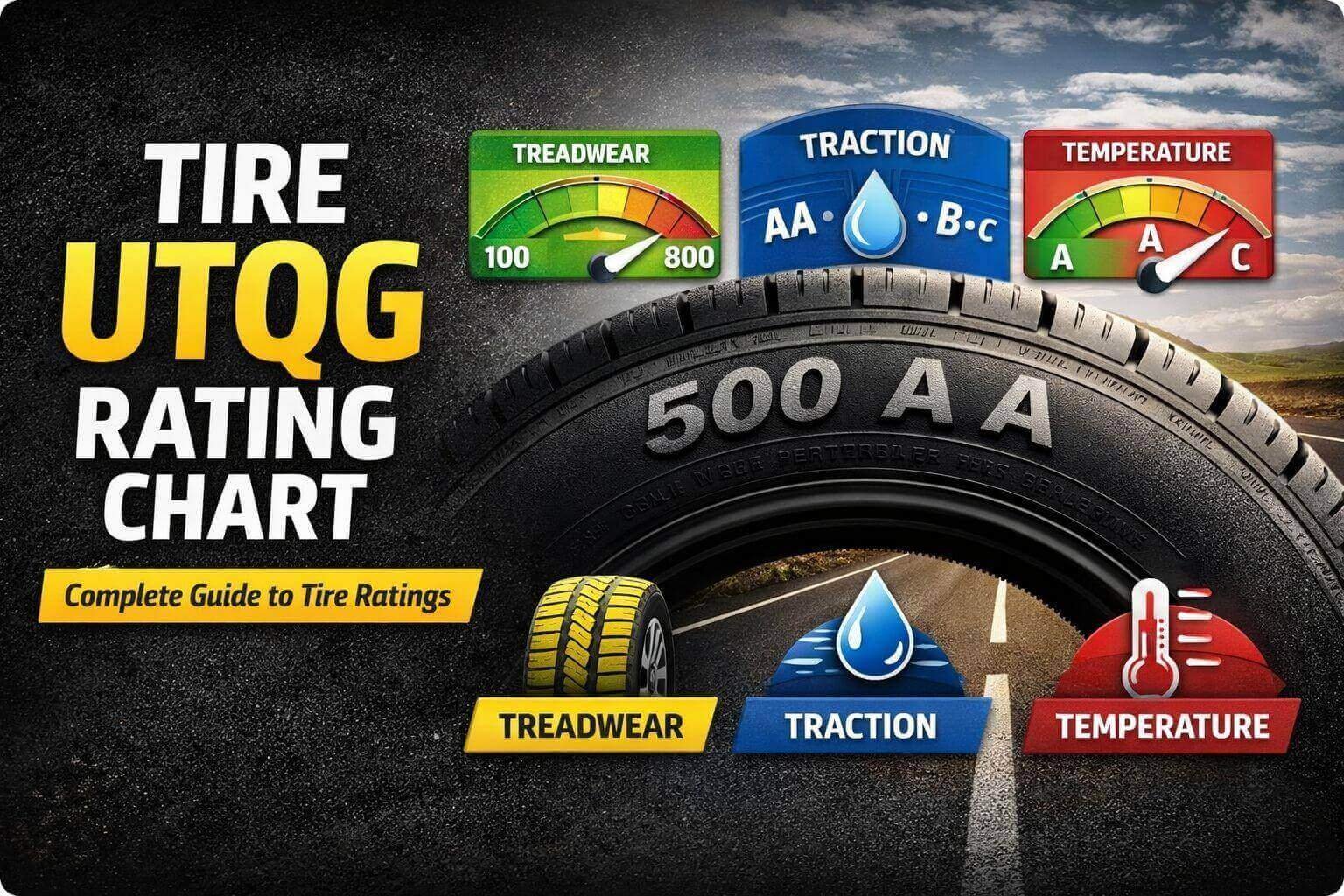
Buying new tires shouldn’t feel confusing—but for many drivers, it does. You look at a tire’s sidewall and see numbers and letters like 500 A A, and suddenly you’re wondering: Is this good? Is it bad? Does it even matter?
That’s where a Tire UTQG Rating Chart comes in.
UTQG ratings are meant to help you compare tires, but most people don’t understand what those ratings actually mean—or how to use them when buying tires. This guide breaks everything down in plain language, so you can make a smart, confident decision without guessing.
What Is a UTQG Rating? (Simple Explanation)
Imagine you’re standing in a tire shop or scrolling online, looking at two tires that seem almost the same. One costs more. One promises a longer life. But how do you know which one will actually last longer or perform better on the road? That’s where the UTQG rating comes in.
UTQG stands for Uniform Tire Quality Grading. It’s a simple rating system designed to give drivers a basic way to compare tire quality. Instead of guessing, UTQG puts clear numbers and letters on the tire to describe how it performs in key areas like wear, grip, and heat resistance.
This system was created by the U.S. Department of Transportation (DOT). The goal was straightforward: help everyday drivers make smarter tire choices by using a common standard, not marketing claims. Before UTQG, comparing tires was like comparing apples to oranges. UTQG was meant to level the playing field.
You’ll usually find the UTQG rating printed right on the sidewall of the tire. It looks like a short line of text with a number and a few letters—easy to overlook, but very useful once you know what it means. Most drivers never notice it, even though it tells an important part of the tire’s story.
Here’s the key thing to understand: UTQG ratings are best used to compare tires from the same brand. Each manufacturer tests its own tires, so a “600” rating from one brand doesn’t always match a “600” from another. Think of UTQG like a yardstick that works best within one company’s lineup—not a perfect comparison across every tire on the market.
When used the right way, UTQG ratings don’t replace real-world reviews or experience—but they do give you a solid starting point for choosing the right tire with confidence.
Tire UTQG Rating Chart
| UTQG Element | Sample Grade / Value | What it means (plain) | Typical real-world use / expected performance | Rough mileage expectation (approx.) |
| Treadwear | 200 | Relatively soft compound — wears faster | Ultra-high-performance tires, sticky summer tires — better grip, shorter life | ~20,000–35,000 mi |
| Treadwear | 300 | Moderate wear rate | Balanced performance / life — sporty touring | ~30,000–45,000 mi |
| Treadwear | 400 | Longer-wearing compound | Touring/all-season tires — good longevity, reasonable grip | ~40,000–60,000 mi |
| Treadwear | 600 | Long-life compound | Economy/touring tires focused on mileage | ~60,000–80,000 mi |
| Treadwear | 800+ | Very long-wearing | Light-truck/high-mileage touring tires — may compromise ultimate grip | ~80,000+ mi |
| Traction | AA | Best wet traction in UTQG scale | Strong wet braking and cornering among graded tires | Good for performance & safety in rain |
| Traction | A | Excellent wet traction | Most high-quality touring and many performance tires | Strong, confidence-in-wet performance |
| Traction | B | Acceptable wet traction | Budget tires or some specialized compounds | Adequate, not best-in-class |
| Traction | C | Lowest UTQG traction grade | Rare — limited wet grip | Not recommended where wet performance matters |
| Temperature | A | Highest heat resistance | Suitable for sustained high-speed driving / hot climates | Safer at highway speeds and heavy loads |
| Temperature | B | Moderate heat resistance | Most consumer tires — fine for normal driving | OK for everyday highway use |
| Temperature | C | Lowest acceptable resistance | Avoid for sustained high-speed or heavy-duty use | Use with caution under high heat/load |
How to Read the UTQG Rating Chart (And Why It Matters)
Start by looking at the treadwear number, which gives you a general idea of how long a tire may last compared to others from the same brand—higher numbers usually mean longer life.
Next, check the traction rating (AA, A, B, or C) to understand how well the tire can stop on wet roads, and the temperature rating (A, B, or C) to see how well it handles heat at highway speeds.
Together, these ratings help you compare tires more easily—but no single UTQG rating tells the whole story. A tire with a high treadwear number may last longer but offer less grip, while a tire with excellent traction may wear out faster.
Driving style, climate, vehicle type, and tire design all play a major role, so UTQG ratings work best when used as a comparison tool, not a guarantee of real-world performance.
Understanding UTQG Treadwear Ratings (Numbers Explained)
If you’ve ever looked at a tire and wondered why one says 300 and another says 700, you’re not alone. These numbers confuse a lot of drivers—and they’re often misunderstood. Let’s break them down in a simple way that actually helps you choose the right tire.
What Treadwear Numbers Mean
Think of the treadwear rating as a comparison tool, not a promise. It tells you how fast a tire wears down compared to a reference tire used in testing.
That reference tire has a rating of 100. If a tire is rated 300, it wore down about three times more slowly than the test tire under controlled conditions. A 600 tire wore down more slowly than a 300—but here’s the important part: that doesn’t mean it will last exactly twice as long in real life.
Why? Because the test happens in a lab-like setting. Your daily driving includes traffic, turns, potholes, weather, and different road surfaces. So while higher numbers usually mean longer life, the math isn’t perfectly clean.
Simple takeaway:
Higher treadwear = usually lasts longer, but it’s not an exact mileage guarantee.
Typical Treadwear Ranges & What to Expect
To make things easier, most tires fall into a few common treadwear ranges. Each range tells a different story about how the tire is meant to be used.
- 200–300: These are usually performance or summer tires. They grip the road well and feel responsive, but they wear out faster. Great for drivers who care more about handling than long life.
- 400–500: This is the sweet spot for many drivers. These tires balance grip, comfort, and durability. Most all-season tires fall into this range.
- 600–800: These are long-life touring or highway tires. They’re built to last many miles, especially for daily commuting and highway driving. The trade-off is usually less sporty feel.
If you drive every day and want fewer tire replacements, a higher number makes sense. If you want better grip and handling, a lower number might actually be the better choice.
Real-World Factors That Affect Treadwear
Even the best treadwear rating can’t control how you drive or where you drive. Real life plays a big role.
- Driving habits: Hard acceleration, fast cornering, and sudden braking wear tires faster.
- Vehicle weight: Heavier vehicles like SUVs and trucks put more stress on tires.
- Alignment & tire pressure: Poor alignment or low pressure can destroy tread quickly.
- Road conditions & climate: Hot roads, rough pavement, and bad weather all speed up wear.
Two drivers with the same tires can get very different results.
Common Treadwear Myths (And Why They’re Wrong)
Let’s clear up a few common misunderstandings:
- “Higher is always better” ❌
Not true. Higher treadwear often means longer life—but sometimes less grip. - “Treadwear equals warranty” ❌
A tire with a 700 rating doesn’t automatically come with a long warranty. - “UTQG predicts exact mileage” ❌
UTQG gives a comparison, not a mileage promise.
Understanding UTQG Traction Ratings (AA, A, B, C)
Picture this: you’re driving in the rain, the light turns red, and you press the brake. How quickly your car stops matters more than almost anything else in that moment. UTQG traction ratings are designed to give you a basic idea of how well a tire can do exactly that—stop on a wet road.
What Traction Ratings Actually Measure
UTQG traction ratings measure how well a tire can brake in a straight line on wet pavement. The test is done on wet asphalt and wet concrete, using controlled conditions so results can be compared fairly.
That’s important to remember: this rating is about wet braking, not general grip in every situation. It tells you how confidently a tire can slow down when the road is slick and you hit the brakes.
Simple takeaway:
Traction ratings show wet stopping ability—not overall grip.
Traction Rating Scale Explained
The traction rating is shown using letters. Think of it like a simple grading system:
- AA — The best wet braking performance. These tires stop the shortest distance on wet roads.
- A — Very good wet traction. Strong and reliable for everyday driving.
- B — Acceptable wet traction. Meets safety standards but isn’t standout.
- C — The minimum legal rating. Offers the least wet braking grip allowed.
Most quality passenger tires are rated A or AA, which is what most drivers should look for.
What Traction Ratings Do Not Measure
This is where many drivers get confused, so let’s be clear.
UTQG traction ratings do not tell you how a tire performs in:
- Snow
- Ice
- Sharp cornering
- Dry road grip
A tire with an AA rating can still struggle in winter weather. Traction ratings only focus on straight-line braking on wet roads—not winter or performance driving.
Who Should Care Most About Traction Ratings
While traction ratings matter to everyone, they’re especially important for:
- Drivers in rainy climates, where wet roads are common
- Highway commuters, who need strong braking at higher speeds
- City drivers, dealing with frequent stops, traffic lights, and crosswalks
If you often drive in the rain or in busy traffic, choosing a tire with a strong traction rating can make everyday driving safer and more predictable.
Understanding UTQG Temperature Ratings (A, B, C)
When most people check tires, they focus on tread or traction. But one important rating often gets overlooked: temperature resistance. This rating tells you how well a tire can handle heat while driving at sustained speeds—something that can make the difference between a safe trip and a blown tire.
What Temperature Ratings Measure
Think of your tire like an athlete running a marathon. The more it heats up, the more stress it experiences. UTQG temperature ratings measure a tire’s ability to resist heat buildup and safely dissipate it over time.
This is especially important when driving fast on highways, carrying heavy loads, or traveling in hot climates. Tires that can’t handle the heat can overheat, wear faster, or even fail.
Temperature Rating Scale Explained
The UTQG temperature scale is simple: A, B, C.
- A: The best heat resistance. Tires rated “A” are built to handle high speeds without overheating—perfect for highway driving or hot-weather conditions.
- B: Moderate heat resistance. These tires are safe for most everyday driving but aren’t optimized for long high-speed trips or extreme heat.
- C: The minimum legal requirement. Tires with a “C” rating meet safety standards but are more prone to overheating under stress, so they’re not ideal for heavy loads, towing, or extended highway speeds.
Why Temperature Ratings Matter
Temperature ratings aren’t just numbers—they translate to real-world safety:
- Long highway trips: A tire that can dissipate heat reduces the risk of blowouts on extended drives.
- Hot climates: Summer heat can increase tire temperature dramatically; higher-rated tires handle it better.
- Heavy vehicles and towing: SUVs, trucks, or trailers put extra strain on tires. High temperature resistance keeps them safe and durable under pressure.
In short, don’t ignore the temperature rating. Even if a tire looks great and grips well, poor heat resistance can lead to dangerous situations—especially when you push your vehicle hard or travel in warm conditions.
How to Use UTQG Ratings When Choosing Tires
Knowing what UTQG ratings mean is one thing—but putting that knowledge into action is what really helps you pick the right tires. Think of UTQG as a set of tools: each rating gives you insight into a tire’s strengths and weaknesses, so you can make an informed choice.
Why UTQG Should Be Used as a Comparison Tool
UTQG ratings aren’t absolute measures of performance—they’re most useful for comparing tires side by side. For example, if you’re deciding between two all-season tires from the same brand, looking at treadwear, traction, and temperature ratings will show you which tire is likely to last longer, stop better in the rain, or handle heat more safely.
How to Compare Two Tires Step-by-Step
- Check the Treadwear: Look at the numbers to see which tire is likely to last longer under normal driving.
- Look at Traction Ratings: Compare the traction letters to understand which tire grips wet roads better.
- Review Temperature Ratings: Make sure the tire can handle the heat you’ll encounter, especially on highways or in hot climates.
- Balance the Ratings: No tire is perfect in every category. Decide what matters most for your driving style.
What to Prioritize Based On Your Needs
- Longevity: If you drive a lot or want tires that last, focus on higher treadwear numbers.
- Safety: Rainy climate or frequent highway drivers should prioritize traction and temperature ratings.
- Comfort: Some tires with moderate treadwear or traction can provide a quieter, smoother ride.
- Performance: If you drive spiritedly or want sporty handling, balance treadwear with traction—but don’t ignore heat resistance.
When UTQG Matters Less
UTQG ratings are designed for standard road conditions. They matter less for specialized tires like off-road, winter, or snow tires. These tires are tested differently, so their UTQG numbers don’t fully reflect how they perform in mud, snow, or ice.
In those cases, look at manufacturer-specific tests, independent reviews, or certifications like the Three-Peak Mountain Snowflake (3PMSF) symbol.
Best UTQG Ratings by Driving Style (Decision Guide)
Choosing the right tire isn’t just about picking the highest numbers. Your driving style, climate, and vehicle type all matter. Use this quick guide to match UTQG ratings with how you actually drive.
- Daily Commuters
- Treadwear: 400–600 → balanced durability without sacrificing comfort
- Traction: A → reliable wet-road stopping
- Temperature: B or A → safe for regular city and highway speeds
- Treadwear: 400–600 → balanced durability without sacrificing comfort
- Long-Distance Highway Drivers
- Treadwear: 600+ → long-lasting for many miles
- Traction: A → strong wet braking
- Temperature: A → handles heat buildup from sustained high-speed driving
- Treadwear: 600+ → long-lasting for many miles
- Performance / Sporty Driving
- Treadwear: 200–400 → softer compound for better grip
- Traction: AA or A → maximum wet-road performance
- Temperature: A → maintains stability at higher speeds
- Treadwear: 200–400 → softer compound for better grip
- Budget-Focused Buyers
- Treadwear: 400–600 → good balance of longevity and price
- Traction: A or B → safe everyday stopping
- Temperature: B → suitable for most climates and speeds
- Treadwear: 400–600 → good balance of longevity and price
- SUVs and Light Trucks
- Treadwear: 500–700 → built for heavier vehicles
- Traction: A → dependable on wet roads
- Temperature: A → manages heat from weight and towing
- Treadwear: 500–700 → built for heavier vehicles
- Hot Climate Drivers
- Treadwear: 400–600 → durable under high temperatures
- Traction: A → handles occasional rain
- Temperature: A → prevents overheating on sunny highways
- Treadwear: 400–600 → durable under high temperatures
- Cold Climate Drivers
- Treadwear: 400–600 → moderate durability, good flexibility in cold
- Traction: A → wet-road stopping; for snow/ice also check 3PMSF symbol
- Temperature: B → sufficient for cold conditions
- Treadwear: 400–600 → moderate durability, good flexibility in cold
UTQG Ratings vs Other Tire Factors (What UTQG Doesn’t Tell You)
UTQG ratings are a useful tool, but they don’t tell the full story. Think of them like a snapshot—they give a quick idea of treadwear, traction, and temperature resistance, but other factors play a big role in how a tire actually performs. Knowing these limitations helps you make smarter choices.
Ride Comfort & Road Noise
Some tires feel stiff or produce more noise on the road. UTQG numbers won’t tell you this. A tire with great treadwear and traction could still feel harsh or be loud during everyday driving.
Winter Traction & Off-Road Capability
UTQG ratings don’t measure snow, ice, mud, or gravel performance. If you drive in winter conditions or off-road often, you’ll need tires rated specifically for those challenges, like the 3PMSF symbol for snow or mud-terrain ratings for off-road.
Brand Quality Differences
Two tires with the same UTQG numbers might feel completely different. Manufacturing quality, materials, and design all impact durability, handling, and safety—things the UTQG chart doesn’t capture.
Tire Compound and Design
The rubber mix and tread pattern determine grip, comfort, and noise levels. UTQG ratings don’t account for specialized compounds or performance-oriented tread designs.
Combining UTQG With Other Tools
To get the full picture, use UTQG alongside other sources:
- User reviews: See how tires perform in real-world conditions over time.
- Professional testing: Independent tests measure braking, cornering, and road noise.
- Manufacturer warranties: A long warranty can indicate confidence in the tire’s durability beyond UTQG numbers.
By combining UTQG ratings with these additional factors, you can make a well-informed decision and choose tires that truly match your driving needs.
Common Mistakes to Avoid When Using UTQG Ratings
Understanding UTQG ratings is helpful, but misinterpreting them can lead to the wrong tire choice. Here are the most common mistakes and how to avoid them.
Comparing UTQG Across Different Brands
One of the biggest errors is assuming that a treadwear number or traction rating means the same across all brands.
A 500-rated tire from Brand A might wear differently than a 500-rated tire from Brand B. Tip: Only use UTQG for side-by-side comparisons within the same brand or model type.
Ignoring Driving Conditions
Some drivers focus solely on numbers and forget their environment. UTQG doesn’t account for snow, ice, off-road conditions, or extreme heat. Tip: Consider climate, road type, and driving habits when interpreting ratings.
Assuming Higher Ratings Mean Better Grip
A higher treadwear number indicates longevity, not better traction. A tire that lasts longer may actually have less grip, especially in sporty or wet driving conditions. Tip: Balance treadwear with traction ratings based on your needs.
Choosing Long-Life Tires for Performance Driving
Long-life tires (high treadwear ratings) are great for commuting, but they may not provide the handling or responsiveness required for performance driving. Tip: Match treadwear with driving style rather than just looking for durability.
Overvaluing UTQG for Winter Tires
UTQG ratings aren’t designed for snow, ice, or extreme winter conditions. Relying solely on UTQG for winter tire selection can be dangerous. Tip: Look for winter-specific certifications, like the 3PMSF symbol, to ensure safe traction in cold climates.
By keeping these common mistakes in mind, you can use UTQG ratings wisely and make tire choices that truly match your driving needs.
Final verdict — how to use the Tire UTQG Rating Chart smartly
The UTQG system is a powerful, simple tool to compare tires for tread life, wet braking, and heat resistance — especially when you’re trying to decide between similar models.
Use the Tire UTQG Rating Chart as a first filter, then validate with independent testing, warranties, and your personal driving needs.
Remember: UTQG helps you compare — it doesn’t replace real-world data or good tire maintenance.
Frequently Asked Questions (FAQ)
Is a higher UTQG rating always better?
Not necessarily. A higher treadwear number usually means the tire will last longer, but it doesn’t always provide better grip or handling. The best tire depends on your driving style, vehicle, and road conditions.
Can UTQG ratings predict tire lifespan?
UTQG gives an estimate, but real-world tire life varies. Factors like driving habits, vehicle weight, road surfaces, and climate all affect how long a tire lasts. Treat UTQG as a comparison tool, not an exact mileage prediction.
Do all tire brands measure UTQG the same way?
No. While the testing method is standardized by the U.S. Department of Transportation, some brands may have slightly different results due to tire compounds or manufacturing variations. Use UTQG for relative comparison, not absolute performance across brands.
Are UTQG ratings reliable?
They are reliable for basic comparison, especially within the same brand and tire category. However, UTQG does not measure winter traction, off-road performance, ride comfort, or noise levels.
Should I choose UTQG or tread warranty?
UTQG and tread warranties serve different purposes. UTQG shows relative treadwear potential, while a tread warranty indicates how long the manufacturer guarantees the tire under normal use. It’s best to consider both when choosing tires.
Do winter tires have UTQG ratings?
Winter tires may have UTQG numbers, but they’re less meaningful because UTQG doesn’t test snow or ice traction. Look for the Three-Peak Mountain Snowflake (3PMSF) symbol for true winter performance.
