
Tires Load Range Chart: Meaning, Ratings, and How to Choose
Last updated on March 4th, 2026
Understanding your tire’s load range can make a big difference in safety and performance, especially when hauling cargo or towing a trailer. The tires load range chart helps you quickly compare how much weight different tires can safely carry at their recommended pressure.
This guide gives you a clear chart and easy steps to choose the right tire for your needs. With the right information, you’ll avoid guesswork and make a smarter tire choice.
Tires Load Range Chart
Passenger Tire Load Range Chart
| Load Type | Meaning | Typical Max PSI | Best For |
| LL | Light Load (older marking, rarely used) | 35 PSI | Standard passenger cars |
| SL | Standard Load | 35 PSI | Most sedans & compact SUVs |
| XL | Extra Load (Reinforced) | 41–42 PSI | Heavier SUVs, performance cars |
| RF | Reinforced (European marking, similar to XL) | 41–42 PSI | Euro vehicles, higher load needs |
Light Truck Tire Load Range Chart
| Load Range | Ply Rating (Equivalent) | Maximum Load Tire Pressure |
| B | 4-Ply | 35 PSI |
| C | 6-Ply | 50 PSI |
| D | 8-Ply | 65 PSI |
| E | 10-Ply | 80 PSI |
| F | 12-Ply | 95 PSI |
| G | 14-Ply | 110 PSI |
What Does Load Range Actually Mean?
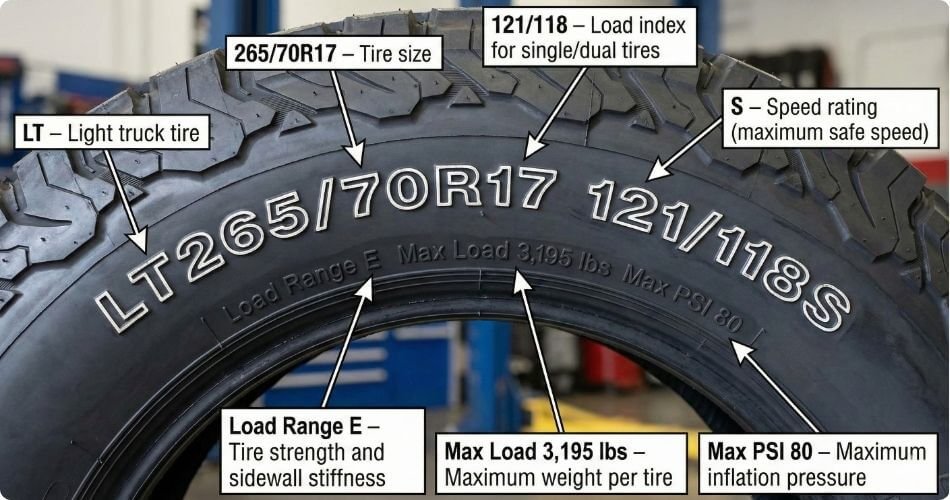
When you look at a tire, you might notice a letter like C, D, or E. This is the tire’s load range, and it tells you how strong the tire is and how much weight it can safely carry.
Load range is mostly used for light truck tires—the kind found on pickups, SUVs, and some trailers. A higher letter, like E, means the tire is built stronger and can handle heavier loads than a lower letter, like C.
It also relates to the tire’s maximum air pressure. Stronger tires usually require higher inflation to perform safely. That means you can safely carry more weight, but the ride might feel a bit firmer, which is normal.
The Tire and Rim Association sets standards for these ratings, so the chart and letters aren’t random—they’re based on real testing and safety guidelines. This helps drivers choose the right tire for their vehicle’s weight and intended use.
Understanding load range makes it easier to pick a tire that’s safe for hauling, towing, or heavy cargo without overloading your vehicle.
Load Range C vs D vs E (Practical Differences)
When choosing between Load Range C, D, or E, the difference isn’t just a letter on the tire—it affects how your vehicle feels and performs.
Ride comfort changes with load range. Tires rated C are softer and give a smoother ride, while E-rated tires are stiffer because they are built to carry heavier loads. That extra strength is great for towing, but on an empty truck or SUV, the ride can feel firmer than you might expect.
Towing and hauling is where higher load ranges really matter. If you’re pulling a trailer or carrying heavy cargo, D or E tires provide the extra support you need. For lighter loads or everyday driving, a higher load range isn’t necessary and can actually make the ride feel rougher.
There’s also a small impact on fuel economy. Heavier tires with higher load ratings can slightly reduce efficiency, especially if your vehicle isn’t carrying a full load. Choosing the right tire is about matching the load range to your actual needs, not just picking the strongest tire available.
How to Choose the Right Load Range Using the Chart
Choosing the right load range doesn’t have to be complicated. Start by checking your vehicle’s door sticker—it usually lists the recommended tire size, load range, and maximum pressure. This is the easiest way to know what your vehicle was designed to handle.
Next, look at the tires you currently have to see their load range. This gives you a starting point and helps you understand what your vehicle is already using.
Then, think about your maximum load requirements. Are you towing a trailer, carrying heavy cargo, or mostly driving empty? Knowing this will tell you whether you need a higher load range or if your current tires are sufficient.
Once you know your needs, match them to the chart. Find the load range that can safely carry your weight at the proper inflation. Don’t forget to check the PSI—tires must be inflated to the recommended pressure to safely carry the load.
For example, if your truck’s rear axle weight is 4,000 lbs, each tire must be able to support at least 2,000 lbs. Using the chart, you can see which load range meets that requirement, making it easy to choose the right tire.
Following these steps ensures your tires are safe, perform well, and last longer—without guessing or overbuying strength you don’t need.
Common Mistakes When Using a Load Range Chart
Even when you understand load range charts, people often make some avoidable mistakes. Knowing these can save you money and keep you safer on the road:
- Assuming Load Range E is always better – Higher load range tires are stronger, but if your truck isn’t carrying heavy loads or towing, they can make the ride stiffer without real benefit.
- Ignoring maximum PSI – Load range depends on the tire’s allowable air pressure. Using the wrong pressure can reduce weight capacity and cause uneven tire wear.
- Mixing load range with load index – Load range shows tire strength and max pressure, while load index shows exact weight capacity. They are related but not the same, so check both when choosing tires.
- Upgrading without adjusting pressure – Installing stronger tires without increasing inflation to match prevents full load capacity and can lead to faster wear or handling issues.
Following these points helps you use a load range chart safely and effectively.
Load Range vs Load Index (Quick Clarification)
When people look at tires, it’s easy to get confused between load range and load index, because they both relate to how much weight a tire can handle. They are connected, but they measure slightly different things.
Load index is a number that tells you the maximum weight a single tire can carry. For example, a load index of 102 means that a tire can hold about 1,874 pounds. It’s precise, but it doesn’t tell you anything about how strong the tire is or how much pressure it can handle.
Load range, on the other hand, is a letter (like C, D, or E) that describes the tire’s strength and the maximum air pressure it can safely handle. A higher load range means a tougher tire that can carry heavier loads, but it can also make the ride stiffer if your truck isn’t fully loaded.
Think of it this way: load index tells you how much weight the tire can carry, while load range tells you how the tire is built to carry that weight. Both matter, but in different ways.
If you want a full guide on how to read and use load index numbers, check out our Load Index Guide post. It goes deeper into what the numbers mean and how to pick the right tire for your vehicle.
Important Safety Reminder
Tires are rated to carry a certain amount of weight, and those limits are based on standards from trusted organizations like the National Highway Traffic Safety Administration and the Rubber Manufacturers Association. Following these guidelines helps keep your vehicle safe on the road.
Always make sure you do not exceed your vehicle’s GVWR (Gross Vehicle Weight Rating). This includes the weight of passengers, cargo, and any trailers you might be towing. Overloading tires can cause them to overheat, wear faster, or even fail while driving.
Using the right load range and keeping tires properly inflated protects both your vehicle and everyone inside. Safety comes first, and a little care goes a long way in preventing accidents or costly damage.
FAQs
Can I replace Load Range C with E?
Yes, you can, but only if your vehicle and rims can handle the higher pressure. A stronger tire carries more weight but may make the ride stiffer. It’s unnecessary if you aren’t towing or hauling heavy loads.
Does higher load range mean longer tire life?
Not always. Load range shows strength and capacity, not lifespan. Heavier tires may wear differently, and if the vehicle isn’t loaded enough, they can wear unevenly or reduce ride comfort.
Is load range the same as load index?
No. Load range uses letters (C, D, E) to show strength and max inflation. Load index is a number that shows the exact weight a tire can carry. Both matter when choosing the right tire.
What happens if I exceed load capacity?
Exceeding the tire’s capacity can cause overheating, faster wear, poor handling, or even blowouts. Always match tire load range and pressure to your vehicle’s actual weight.
Final Thoughts
The tires load range chart is a helpful guide, but it’s not a one-size-fits-all solution. Use it to match your tires to your vehicle’s actual weight and how you plan to use it.
Choosing a higher load range than you need isn’t always better. Stronger tires can make the ride stiffer and may slightly affect fuel efficiency. The goal is to find the right balance between strength and comfort.Above all, safety comes first.
By selecting the correct load range and keeping your tires properly inflated, you reduce the risk of tire failure and make every trip safer for you and your passengers.
