
Tractor Tires Size Chart: How to Choose the Right Tractor Tire Size
Choosing the right tires for your tractor can be confusing, especially with so many sizes and types available. Using a tractor tires size chart makes this process easier by showing you exactly which tire fits your tractor and what size is best for your work.
Whether you are replacing worn tires, upgrading for better traction, or matching front and rear tires on an MFWD or 4WD tractor, knowing how to read a size chart ensures you make the right choice. A proper tire not only improves performance but also protects your tractor, reduces soil damage, and keeps your equipment running safely for years.
In this guide, we’ll break down everything you need to know about tractor tire sizes, explain the difference between standard and metric systems, and provide clear, actionable advice for choosing the right tires for your tractor and your work.
Understanding Tractor Tire Size Basics
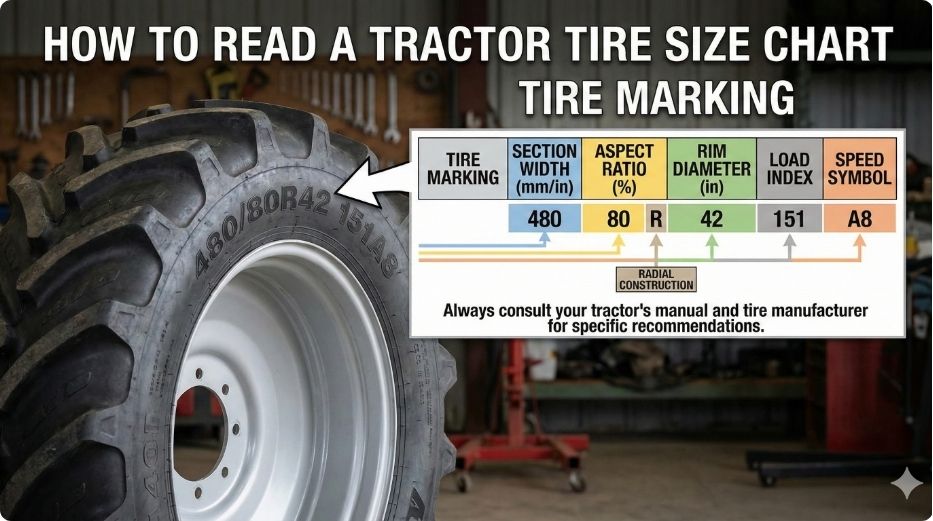
What a Tractor Tire Size Actually Means
Imagine a farmer looking at the tires on his tractor and seeing numbers like 13.6-28 or 340/85R28. At first, it looks like a secret code—but it’s really simple once you break it down.
Traditional Size Example: 13.6-28
- 13.6 – This is the tire width in inches, from one sidewall to the other.
- 28 – This is the rim diameter in inches, the size of the wheel the tire fits on.
Metric Size Example: 340/85R28
- 340 – Tire width in millimeters.
- 85 – Aspect ratio, which is the height of the sidewall compared to the width.
- R – Radial construction (more on that soon).
- 28 – Rim diameter in inches, same as the traditional system.
Tractor tires are different from car tires because tractors carry heavy loads, work on soft soil, and need to provide traction without damaging crops. That’s why these numbers matter more than just fitting the rim.
Bias-Ply vs Radial Tires (Size Implications)
Let’s say the farmer wants new tires. He sees two types: bias-ply and radial. They might have the same size on paper, but they behave differently.
Bias-Ply Tires:
- Stiffer sidewalls
- Can handle heavy loads in tough conditions
- Ride may feel rougher
Radial Tires:
- Sidewalls flex more
- Provide better traction and smoother ride
- Often last longer and use fuel more efficiently
Even with the same width and rim size, a radial and a bias tire can pull differently, sit differently on the ground, and affect comfort. That’s why it’s important to know both the size and the type of tire you’re buying.
Rear Tractor Tires Size Chart (Standard & Metric)
This rear tractor tires size chart shows common standard (inch-based) tire sizes and their metric equivalents, along with rim diameter and typical tractor applications. Use this table to quickly identify compatible rear tractor tire sizes for compact, utility, and agricultural tractors.
| Standard Size | Metric Equivalent | Rim Diameter (in) | Typical Tractor Type / Use |
| 9.5-24 | 250/85R24 | 24 | Compact tractors |
| 11.2-24 | 280/85R24 | 24 | Compact & utility |
| 12.4-24 | 320/85R24 | 24 | Utility tractors |
| 13.6-24 | 340/85R24 | 24 | Utility & small ag |
| 14.9-24 | 380/85R24 | 24 | Utility tractors |
| 16.9-24 | 420/85R24 | 24 | Utility & row-crop |
| 12.4-28 | 320/85R28 | 28 | Utility tractors |
| 13.6-28 | 340/85R28 | 28 | Utility & ag |
| 14.9-28 | 380/85R28 | 28 | Agricultural |
| 16.9-28 | 420/85R28 | 28 | Ag & loader work |
| 18.4-28 | 460/85R28 | 28 | Row-crop |
| 18.4-34 | 460/85R34 | 34 | Large ag |
| 20.8-38 | 520/85R38 | 38 | High-horsepower ag |
Tip: Use this table to find likely equivalents — but always confirm rolling circumference and load rating with the tire maker.
Front Tractor Tires Size Chart (Standard & Metric)
Use this front tractor tires size chart to compare standard and metric front tire sizes, rim diameters, and typical uses. Correct front tire sizing is essential for steering control, load balance, and proper MFWD tractor operation.
| Standard Size | Metric Equivalent | Rim Diameter (in) | Typical Use |
| 5.00-15 | 125/80R15 | 15 | Compact tractors |
| 6.00-16 | 150/80R16 | 16 | Compact & utility |
| 6.50-16 | 165/80R16 | 16 | Utility |
| 7.50-16 | 190/65R16 | 16 | Utility |
| 9.5-16 | 240/70R16 | 16 | MFWD |
| 11.2-20 | 280/70R20 | 20 | Utility & ag |
| 12.4-20 | 320/70R20 | 20 | MFWD ag |
| 13.6-24 | 340/70R24 | 24 | Large MFWD |
Compact Tractor Tire Size Chart
This compact tractor tire size chart highlights commonly used front and rear tire sizes for sub-compact and compact tractors, designed for stability, traction, and reduced turf damage.
| Position | Standard Size | Metric Equivalent | Common Application |
| Front | 23×8.50-12 | 215/60-12 | Sub-compact |
| Front | 25×8.50-14 | 215/75-14 | Compact |
| Rear | 26×12.00-12 | 305/60-12 | Sub-compact |
| Rear | 29×12.50-15 | 320/70-15 | Compact |
| Rear | 33×15.50-16.5 | 400/60-16.5 | Compact utility |
Standard vs Metric Tractor Tire Sizes – Conversion Guide
Why there are two size systems
There are two ways tire size is written because different parts of the world use different measuring systems:
Standard (inch-based) sizes use inches (for example: 13.6-28).
- The first number is the tire width in inches. The second number is the rim diameter in inches.
Metric sizes use millimeters and percentages (for example: 340/85R28).
- The first number is the tire width in millimeters. The second number is the sidewall height as a percent of that width. The R means radial construction. The last number is the rim diameter in inches.
Both describe the same basic things (width and rim diameter), just in different units.
Standard vs Metric Tractor Tire Size Quick conversion table (common examples)
This table shows common standard sizes and the metric sizes they are usually matched with. Use it as a quick reference — always double-check with the tire maker for exact fit.
| Standard Size | Common Metric Equivalent |
| 9.5-24 | 250/85R24 |
| 11.2-24 | 280/85R24 |
| 12.4-24 | 320/85R24 |
| 13.6-28 | 340/85R28 |
| 14.9-28 | 380/85R28 |
| 16.9-28 | 420/85R28 |
| 18.4-34 | 460/85R34 |
| 20.8-38 | 520/85R38 |
(These are common matches — manufacturers may list slightly different metric equivalents.)
Common misconceptions about “exact replacements”
Myth: If the numbers match, the tires are exactly the same.
Truth: Two tires with the same size label can still have different actual height, width, or load capacity depending on the brand and whether they are radial or bias-ply.
Myth: You can always swap a standard size for the metric equivalent without issues.
Truth: Swapping can be fine — but it can also change how the tractor steers, how the transmission behaves, or how the tires wear. Always check more than just the size label.
When converting is usually safe
- The rim diameter is the same (for example, both sizes end in 28).
- The tires are for a non-driven front or rear axle (not a sensitive MFWD front axle).
- You checked load ratings and the new tire can carry the same weight.
- You compared the actual measured diameter or rolling circumference and they are very close.
When conversion is risky or not safe
- You have a mechanical front-wheel-drive (MFWD) or a tractor with sensitive differentials — small size differences can strain the drivetrain.
- The new tire’s load rating is lower than the old one.
- The new tire is a different construction (radial vs bias) and you need the original type for performance or OEM recommendations.
- You plan to change size enough to affect ground clearance or row spacing.
MFWD Front-to-Rear Tire Matching Chart
This MFWD tractor tire matching chart shows correct front-to-rear tire size combinations to maintain proper rolling circumference ratios and prevent drivetrain damage.
| Rear Tire Size | Correct Front Tire Size |
| 16.9-28 | 11.2-24 |
| 18.4-30 | 12.4-24 |
| 18.4-34 | 13.6-24 |
| 20.8-38 | 14.9-28 |
How to Read a Tractor Tires Size Chart Correctly
Matching Tire Size to Rim Size
- What to check: Make sure the tire’s rim diameter and the rim’s width range match. The chart shows rim diameter; rim width is in manufacturer specs.
- Why rim width matters: If the rim is too wide or too narrow the tire won’t sit correctly. That causes fast wear, poor handling, and safety risks.
- If the rim is too wide: Sidewalls stretch, tread contact changes, and steering or traction suffer.
- If the rim is too narrow: Sidewalls get pinched, increasing the chance of tire damage.
- Manufacturer fitment: Always follow the tire and rim maker’s recommended rim-width range — small differences can be risky.
Rolling Circumference (Important for MFWD / 4WD Tractors)
- What it is: Rolling circumference = the distance a tire rolls in one full turn (like tire circumference).
- Why it matters: MFWD and 4WD tractors need front and rear tires with very similar rolling circumferences. Big differences make the drivetrain fight itself.
- What can happen if mismatched: Gear wear, binding, and expensive drivetrain repairs.
- Quick matching rule: For MFWD/4WD, match front and rear rolling circumference within the manufacturer’s allowed percent (check the manual). For 2WD tractors, small differences are less risky but still check load and fit.
Load Ratings and Inflation Pressure
- Load index vs ply rating (simple):
- Load index = how much weight a tire can carry at a given pressure.
- Ply rating / PR = older way to express strength; higher PR usually means stronger tire.
- Load index = how much weight a tire can carry at a given pressure.
- Inflation changes size and capacity: Adding or reducing air changes how tall and wide the tire sits. Proper pressure is needed for correct load support and even wear.
- Same size ≠ same capacity: Two tires with the same printed size can have different load indexes or constructions. Always check the tire’s load rating before assuming it will carry your weight.
Choosing the Right Tractor Tire Size for Your Application
Field & Tillage Work
Imagine a farmer heading into a freshly plowed field early in the morning. The soil is loose, and the tractor needs a firm grip to pull heavy equipment without slipping. This is where taller tires help. Taller tires bite deeper into the soil, giving better traction and steadier pulling power.
Now think about moving across the field all day. Narrower tires roll more easily through the soil, which means the tractor works less hard and uses fuel more efficiently.
Many farmers notice that when they switch to radial tires, the tractor feels smoother and pulls better. Radial tires flex more, so more of the tire touches the ground. This usually means better traction and less soil damage compared to older-style bias tires.
Loader & Material Handling
Picture lifting a full bucket of gravel with a front loader. Most of that weight sits on the front tires. That’s why front tires need to be strong and properly rated for heavy loads. Size alone isn’t enough—the tire must be built to handle the weight safely.
At the same time, the rear of the tractor needs balance. Adding rear ballast (extra weight) keeps the tractor steady and prevents tipping forward. Without it, even the right tire size won’t help much.
In loader work, load rating matters more than tire width. A wide tire that isn’t rated for heavy loads can fail sooner than a narrower tire designed to carry more weight.
Mowing & Landscaping
Now imagine mowing a lawn or working around landscaped areas. The goal here isn’t pulling power—it’s protecting the ground. Wider tires spread the tractor’s weight over a larger area, which helps prevent ruts and tire marks.
Many operators also lower tire pressure slightly for this type of work. Lower inflation helps the tire float on top of the grass instead of digging in.
You’ll often see turf tires (R-3) used for mowing and landscaping. These tires follow different sizing rules and are designed to be gentle on grass while still supporting the tractor’s weight.
Common Mistakes When Using a Tractor Tires Size Chart
1. Assuming Any Tire That Fits the Rim Is Fine
A tractor owner finds a tire that fits the rim perfectly and installs it, thinking the job is done. At first, everything seems okay. After a few weeks, the tractor starts to feel unstable, and the tires wear unevenly.
What went wrong? The tire fit the rim, but it wasn’t the right size for the tractor’s weight and work. A tire must match the tractor and the job, not just the rim.
2. Ignoring Rolling Size on MFWD Tractors
Another owner replaces only the rear tires on a four-wheel-drive tractor. The new tires look almost the same size as the old ones, so it seems safe. Months later, the tractor begins to bind and strain when turning.
The issue is the front and rear tires no longer roll the same distance. The tractor’s drive system starts fighting itself.
Simple lesson: On MFWD tractors, front and rear tires must match closely—not just in size, but in how far they roll.
3. Mixing Radial and Bias Tires Incorrectly
Someone replaces one worn tire with a new radial tire but leaves the older bias tire on the other side. The tractor begins to pull slightly to one side and feels uneven on the road.
Radial and bias tires flex differently, even if they look the same size.
4. Changing Tire Size Without Checking Load Limits
A wider tire looks stronger, so an owner installs it for loader work. Soon, cracks appear, and the tire wears out early.
The problem wasn’t the width—it was that the tire wasn’t rated to carry the weight of the tractor and loader.
5. Using Car Tire Logic on Tractor Tires
A new tractor owner thinks, “Bigger tires mean better performance,” just like on a car or truck. But tractors work differently. Tire height, width, and air pressure affect traction, balance, and soil impact.
How to Measure Your Existing Tractor Tires
Measuring Tire Width
A farmer looks at his tractor tires and wonders if they are the right size for replacement. He takes a tape measure and measures the widest part of the tire, from one sidewall to the other. This is the tire width.
Tip: Measure while the tire is properly inflated and on level ground. This gives the most accurate width.
Measuring Overall Diameter
Next, he wants to know the height of the tire. He measures from the ground up to the top of the tire. This is called the overall diameter.
Knowing this helps ensure that the new tire will keep the tractor at the correct height and maintain proper balance.
Checking Rim Size
The farmer also checks the rim diameter. He looks for the numbers stamped on the rim, which usually match the size printed on the tire. The rim must match the tire exactly; even a small mismatch can make the tire unsafe.
When Measurements Differ from Printed Size
Sometimes, the tape measure doesn’t match the numbers printed on the tire. That’s normal. Tires can stretch, settle, or wear differently over time.
Tip: Use your measurements as a guide, but always double-check with the manufacturer’s specs before buying.
Why Worn Tires Measure Smaller Than New Ones
Finally, the farmer notices that his old tires measure a little smaller than expected. Worn tread and compressed sidewalls reduce the tire’s size.
Takeaway: Never assume the printed size is exactly what you have now. Measuring the tire yourself ensures the new tires fit correctly and work safely.
Final Buying Checklist Before Choosing Tractor Tire Size
- Know your tractor: Check the model and whether it’s 2WD, MFWD, or 4WD.
- Check the rims: Make sure the new tires match your rim diameter and width.
- Verify rolling size: Especially for MFWD/4WD tractors, front and rear tires must roll the same distance.
- Match the job: Choose tires suited for field work, loader use, or mowing/landscaping.
- Follow manufacturer advice: Always confirm tire size and type with your tire or tractor maker.
Following these steps helps ensure safety, performance, and long tire life.
Conclusion: Using a Tractor Tires Size Chart with Confidence
Choosing the right tractor tire isn’t just about finding one that fits the rim—it’s about matching the tire to your tractor, your work, and your soil conditions. A tractor tires size chart is a powerful tool that helps you make informed decisions, avoid costly mistakes, and keep your tractor running safely and efficiently.
Remember these key points:
- Always check rim compatibility, rolling circumference, and load ratings.
- Match tire type and size to the work you do—whether it’s fieldwork, loader jobs, or landscaping.
- Pay attention to front-to-rear tire balance on MFWD or 4WD tractors.
- Use measurements and manufacturer recommendations, not assumptions, when choosing replacements.
By taking the time to measure, compare, and understand tire sizes, you can select tires that improve traction, protect your equipment, and give your tractor the performance it needs. With the right knowledge, you can use a tractor tires size chart confidently and make choices that last for years.
FAQs About Tractor Tire Sizes
1. Can I change tractor tire size without affecting performance?
Yes, but only if the new tires match your tractor’s rim, load requirements, and rolling circumference. Small changes are usually fine on 2WD tractors, but on MFWD or 4WD tractors, mismatched sizes can strain the drivetrain.
2. What happens if I use wider tractor tires?
Wider tires spread the weight over a larger area, which can reduce soil compaction and improve flotation. However, they may change steering feel, rubbing clearance, or rolling circumference, especially on MFWD tractors. Always check manufacturer recommendations.
3. Can I mix tire brands with the same size?
Sometimes, yes—but only if the tires have similar load ratings, construction (radial or bias), and rolling circumference. Mixing types or significantly different brands can cause uneven wear, traction issues, or drivetrain strain.
4. How do I know if my tractor needs radial or bias tires?
Check your tractor manual or the tires already installed. Radial tires flex more and usually give a smoother ride and better traction. Bias tires are stiffer and may be better for certain older tractors or heavy-duty pulling. Matching the type on each axle is important.
5. Do tire sizes affect tractor horsepower efficiency?
Yes. Tires that are too large or too small can make the tractor work harder, reducing fuel efficiency and putting extra strain on the engine and transmission. Correct sizing helps your tractor use power efficiently.
