Goodyear vs Hankook Tires: Which Brand Is Better in 2026?
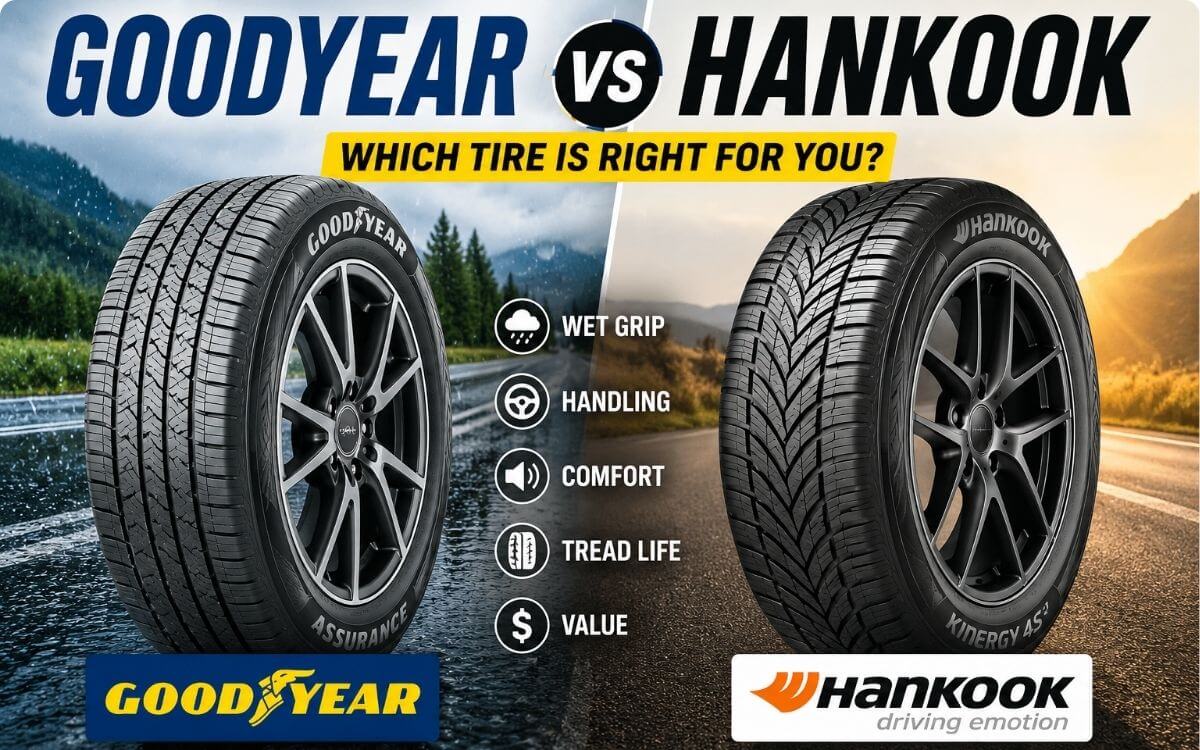
If you’re trying to decide between Goodyear vs Hankook, you’re usually not comparing specs on paper—you’re trying to avoid the wrong tire for your daily driving. One choice can mean more confidence in heavy rain on the highway, while the other can mean saving a noticeable amount of money without feeling like you downgraded too much.
The real confusion comes from the fact that both brands make solid tires, but they don’t always behave the same on the road. One might feel smoother and more stable on long trips, while the other feels sharper and more responsive in city driving.
That’s why this comparison matters in real life. The difference shows up in braking during sudden rain, comfort on rough roads, and how long the tires stay consistent after thousands of miles—not just in brochures or brand reputation.
Goodyear vs Hankook — Quick Verdict
Buy Goodyear if you want the safer premium pick. It usually feels more refined, more stable at highway speeds, and more confidence-inspiring in heavy rain, long trips, and higher-load vehicles. It is the better choice for drivers who care most about wet grip, comfort, and long-term peace of mind.
Buy Hankook if you want strong performance for less money. It is often the better value, especially for commuters and drivers who want solid everyday grip, decent comfort, and lower upfront cost without stepping down into a true budget tire.
Goodyear wins for premium performance.
Hankook wins for value.
Best choice for daily commuters: Hankook, unless you do a lot of highway miles in bad weather.
Best choice for performance drivers: Goodyear for the more planted feel, Hankook for sharper value.
Best choice for SUV/truck owners: Goodyear if you haul, tow, or drive long distances; Hankook for lighter daily use.
Best choice for long tread life: Goodyear, especially in touring and highway-focused models.
The short answer: choose Goodyear for confidence, choose Hankook for value.
Goodyear vs Hankook Brand Overview
Goodyear Tire Overview
Goodyear Tire & Rubber Company has been around since 1898, and that long history still matters because it gives the brand strong trust among drivers who prioritize safety, long-term durability, and nationwide availability. It’s widely viewed as a premium mainstream brand—usually priced above budget brands but often below ultra-premium names like Michelin in many categories.

Goodyear has a massive manufacturing footprint with plants across North America, Europe, Latin America, and Asia, which helps with product availability and replacement convenience. If you’re traveling frequently or need replacement tires quickly, that wider dealer network can be a real advantage.
Its most recognized tire lines include:
- Goodyear Assurance WeatherReady for commuters and family sedans
- Goodyear Eagle F1 Asymmetric 6 for sporty driving
- Goodyear Wrangler All-Terrain Adventure for trucks and SUVs
- Goodyear UltraGrip Performance+ for harsh winter climates
In real-world driving, Goodyear tires often feel predictable and confidence-inspiring, especially in wet weather. During highway driving in heavy rain, many Goodyear touring and all-season tires tend to maintain stable steering feel and solid braking confidence, which is one reason they remain popular with families and long-distance commuters.
That said, Goodyear isn’t perfect. Some models can be more expensive than similarly capable Hankook alternatives, and certain performance-focused tires may wear faster if you drive aggressively or spend a lot of time on rough roads.
Goodyear makes the most sense for drivers who want proven reliability, strong wet-weather confidence, and easy access to warranty support. If your top priority is stretching every dollar, though, you may find better value elsewhere.
Hankook Tire Overview
Hankook Tire has grown rapidly over the last two decades and is no longer seen as just a “budget alternative.” It now sits in that sweet spot between premium performance and affordability, which is why many value-focused buyers compare it directly with Goodyear.

One reason Hankook has gained credibility is its growing list of OEM partnerships. The brand supplies tires for automakers like BMW, Audi, Mercedes-Benz, Hyundai Motor Company, and Kia Corporation. That tells you automakers trust Hankook’s engineering enough for factory-fit applications.
Popular Hankook tire lines include:
- Hankook Kinergy PT for daily commuting
- Hankook Ventus S1 evo3 for sporty handling
- Hankook Dynapro AT2 for trucks and SUVs
- Hankook Winter i*cept evo3 for cold-weather driving
On the road, Hankook often feels slightly sportier than people expect. I’ve noticed many Ventus models deliver sharper steering response during aggressive highway lane changes, while Kinergy tires usually offer a softer ride for daily commuting. In stop-and-go city traffic, they often feel quieter than older budget tires, but road noise can increase faster as tread wears compared with top-tier premium brands.
The biggest trade-off is consistency. Hankook’s top-tier models can compete surprisingly well with premium brands, but some lower-tier options don’t feel as refined in wet braking or long-term wear.
Hankook is a smart pick for drivers who want strong performance without paying premium-brand prices. If you want maximum warranty support, premium refinement, or the most consistent lineup across every category, Goodyear still tends to feel safer.
Read More: Hankook Ventus V12 Evo2 Review
Goodyear vs Hankook Performance Comparison
Dry Road Handling
On dry pavement, Goodyear generally feels more stable and predictable at higher speeds, while Hankook often feels sharper and more responsive during aggressive driving. That difference becomes obvious when comparing performance lines like Goodyear Eagle F1 Asymmetric 6 and Hankook Ventus S1 evo3.
Goodyear usually gives you a slightly calmer steering feel on highways. At 70–80 mph, the car tends to track straight with less steering correction, which makes long road trips less tiring. It also feels more planted during emergency lane changes, especially in heavier SUVs and crossovers.
Hankook often feels quicker on turn-in. If you drive a sporty sedan and enjoy backroad driving, the steering feels more immediate and corner entry can feel more engaging. The trade-off is that some lower-tier Hankook models don’t feel as confidence-inspiring when pushed hard for long periods in hot weather.
If you mostly commute or do long highway trips, Goodyear usually feels more reassuring. If you enjoy sharper steering and a sportier feel for less money, Hankook is often the better value.
Wet Road Performance
This is where many comparison articles stay too vague—and it’s one of the biggest real-world differences between these brands.
Goodyear tends to perform better in heavy rain, especially in premium touring and all-season categories. Tires like Goodyear Assurance WeatherReady and Goodyear Eagle Exhilarate usually provide stronger hydroplaning resistance and shorter wet braking distances.
You notice it during sudden highway downpours. If traffic slows quickly and you need to brake hard on standing water, Goodyear often maintains better steering control and shorter stopping distances.
Hankook has improved a lot here, especially with newer models like Hankook Ventus Prime 4 and Hankook Kinergy PT, but wet braking consistency can vary more depending on the tire line.
For drivers in rainy climates, Goodyear is usually the safer pick. If you live in mostly dry areas with occasional rain, Hankook can still offer excellent value.
Snow and Winter Performance
Neither brand should be judged solely by their all-season tires if you regularly deal with real winter conditions.
For light snow and occasional slush, Goodyear all-season tires often deliver better traction than many comparable Hankook options. They tend to feel more predictable when pulling away from stoplights or climbing mild hills after snowfall.
In severe winter conditions, both brands offer dedicated winter tires, but Goodyear’s Goodyear UltraGrip Performance+ typically delivers stronger braking confidence on packed snow.
Hankook’s Hankook Winter i*cept evo3 performs well for drivers who want solid winter traction without paying premium-brand prices, though ice grip can feel less confidence-inspiring than top-tier winter tires from premium competitors.
If you face harsh winters regularly, Goodyear gets the edge. For occasional snow and better affordability, Hankook remains a smart option.
Off-Road Performance
Off-road, Goodyear usually has the stronger reputation, especially in all-terrain and mud-terrain categories. Tires like Goodyear Wrangler All-Terrain Adventure tend to offer better grip on loose gravel, dirt, and broken trail surfaces, with more confidence when the road turns muddy or rutted. Hankook’s Hankook Dynapro AT2 is a capable alternative, but it usually feels a little more road-biased and less aggressive in deeper dirt or sloppy trail conditions.
In a real driving scenario, that difference shows up when you leave a wet campsite or tackle a graded forest road after rain. Goodyear typically clears loose material better and feels more stable when the surface gets uneven. Hankook can still do the job, but it is usually the better choice for light trails, gravel roads, and weekend use rather than serious off-pavement work.
The trade-off is simple: Goodyear is better for drivers who actually use their SUV or truck off-road with some frequency. Hankook is the smarter pick if most of your miles are on pavement and off-road use is occasional.
Ride Comfort
Goodyear usually feels more refined over long distances.
On rough highways, expansion joints and broken pavement feel more controlled, especially in touring models like Goodyear Assurance ComfortDrive. The suspension feels less busy, which matters on long interstate drives.
Hankook often feels softer in city driving at lower speeds. In stop-and-go traffic with potholes and rough urban roads, tires like Hankook Kinergy ST can feel comfortable and compliant.
The downside is that some Hankook models can feel less composed when roads get rough at higher highway speeds.
Choose Goodyear for frequent long-distance travel. Choose Hankook if your driving is mostly city-based and you want comfort at a lower price point.
Road Noise
Goodyear usually stays quieter for longer.
When new, both brands can feel quiet on smooth pavement. The difference shows up after 20,000–30,000 miles when tread begins wearing down.
Goodyear tires often maintain lower highway drone, especially on concrete roads. During long highway drives, cabin noise tends to remain more controlled.
Hankook tires can be quiet initially, but some models develop more noticeable road hum as they age—especially on rough asphalt.
If cabin quietness matters for family vehicles, EVs, or daily commuting, Goodyear generally performs better.
Tread Life and Durability
This depends heavily on the specific model, but Goodyear tends to be more consistent across its lineup.
Many Goodyear touring tires regularly deliver strong real-world mileage when properly rotated and maintained. Their warranty support is also typically stronger and easier to access.
Hankook Kinergy PT offers excellent tread life for the price, but some performance-focused Hankook tires can wear faster under aggressive driving.
In hot climates with rough roads, Goodyear often handles heat buildup slightly better, especially for SUVs and heavier vehicles.
Drivers who keep vehicles for many years may prefer Goodyear. Budget-conscious drivers looking for strong mileage value may lean toward Hankook.
Fuel Efficiency / Rolling Resistance
This category is closer than many buyers realize.
Goodyear offers strong low rolling resistance options like Goodyear ElectricDrive GT and several fuel-focused touring tires that can slightly improve MPG over time.
Hankook has become increasingly competitive in EV efficiency with products like Hankook iON evo, which performs well for electric vehicles that need lower rolling resistance and reduced noise.
In real-world daily driving, most gas-powered drivers won’t notice huge fuel savings differences unless they drive high annual mileage.
EV owners should seriously consider Hankook’s newer EV lineup. Traditional commuters looking for long-term efficiency and durability may still prefer Goodyear.
Best Goodyear and Hankook Tire Models Compared
All-Season Tires
Goodyear Assurance WeatherReady is better if you regularly drive through heavy rain, occasional snow, or long highway trips. It feels more secure during sudden braking in bad weather.
Hankook Kinergy PT is the better value pick for daily commuters who want solid tread life and lower upfront costs.
Winner: Goodyear for weather versatility, Hankook for budget-friendly commuting.
Performance Tires
Goodyear Eagle F1 Asymmetric 6 feels more stable during aggressive highway driving and hard cornering. It delivers stronger wet grip at higher speeds.
Hankook Ventus S1 evo3 offers quicker steering response and strong grip for less money, but can wear faster under aggressive driving.
Winner: Goodyear for premium performance, Hankook for value performance.
Touring Tires
Goodyear Assurance ComfortDrive is quieter and smoother on long road trips. It handles rough highways better and stays refined as it ages.
Hankook Kinergy ST works well for city driving but feels less refined on long highway drives.
Winner: Goodyear for comfort and refinement.
SUV/Crossover Tires
Goodyear Wrangler All-Terrain Adventure feels more stable when hauling cargo, towing, or driving on gravel roads.
Hankook Dynapro AT2 is better for crossovers and light off-road use with more daily pavement driving.
Winner: Goodyear for heavier-duty use, Hankook for lighter daily driving.
Winter Tires
Goodyear UltraGrip Performance+ provides stronger braking confidence in snow and slush.
Hankook Winter i*cept evo3 offers solid winter traction at a lower price but feels less capable on ice.
Winner: Goodyear for harsh winters, Hankook for occasional snow.
Price Comparison — Is Goodyear Worth Paying More?
In most categories, Goodyear typically costs more upfront. For standard all-season passenger tires, expect Goodyear to run roughly 10–25% higher than comparable Hankook models. For example, a set of Goodyear Assurance ComfortDrive tires often costs noticeably more than Hankook Kinergy PT, while performance options like Goodyear Eagle F1 Asymmetric 6 usually carry a premium over Hankook Ventus S1 evo3.
The real question is whether that higher price actually saves money long term—and sometimes it does. Goodyear often delivers better wet-weather performance consistency, lower road noise as the tire ages, and slightly stronger tread longevity in many touring and SUV categories. If you drive 20,000+ highway miles per year, that extra upfront cost can feel justified because the tires may stay quieter and more stable for longer.
For example, paying $120 more for a full set sounds expensive until those tires last 10,000 extra miles. That lowers your real cost per mile and delays replacement costs.
Hankook usually wins on upfront affordability. It’s a smarter choice for budget-conscious drivers, shorter commutes, leased vehicles, or drivers who replace cars every few years.
Goodyear is worth paying more for drivers who prioritize long-term ownership, frequent highway driving, and wet-weather confidence. If your main goal is saving money today without sacrificing decent performance, Hankook often offers better immediate value.
Which Brand Lasts Longer?
When people ask which brand lasts longer, they usually focus too much on warranty numbers—and that can be misleading. Real-world lifespan depends far more on the specific tire model, how you drive, and where you drive.
Goodyear tends to be more consistent across its touring, SUV, and truck lineup. Tires like Goodyear Assurance MaxLife are built specifically for longevity and can realistically deliver 65,000–85,000 miles with proper rotations and alignment checks. Even many of Goodyear’s crossover tires hold up well under heavier loads and long highway use.
Hankook can also deliver strong mileage, especially with Hankook Kinergy PT, which often surprises drivers with excellent tread life for the price. Realistically, many drivers see 55,000–75,000 miles. The issue is consistency—some performance-focused Hankook models wear faster if driven aggressively.
Driving style makes a huge difference. Frequent hard acceleration, aggressive cornering, towing, and late braking will shorten lifespan on both brands. I’ve seen commuters cruising mostly on highways get years more life than drivers stuck in daily city stop-and-go traffic.
Climate matters too. Extreme heat can accelerate wear, especially on rough pavement, while cold climates with potholes and winter salt can damage tire structure over time.
Goodyear is usually better for long-term owners who drive high annual mileage. Hankook makes more sense if you want strong tread life without paying premium-brand prices.
Read More: Goodyear vs Michelin
Goodyear vs Hankook for Different Drivers
Best for Daily Commuters
Hankook is often the better fit for commuters who spend most of their time in city traffic and want solid comfort without overspending. Tires like Hankook Kinergy PT handle stop-and-go driving well and usually offer strong value for shorter daily trips.
Best for Performance Enthusiasts
If you enjoy spirited driving, Goodyear and Hankook both compete well, but Goodyear often feels more stable at higher speeds. Goodyear Eagle F1 Asymmetric 6 feels more confidence-inspiring during hard highway cornering, while Hankook Ventus S1 evo3 offers sharper steering for less money.
Best for Families
Goodyear wins here. During heavy rain braking with kids in the back seat, stronger wet traction and quieter highway comfort matter more than saving a few dollars.
Best for SUV Owners
Goodyear usually feels more stable when carrying passengers and cargo on long highway trips. Hankook works well for lighter crossovers used mostly in urban driving.
Best for Truck Owners
For towing, rough job sites, and occasional trail use, Goodyear Wrangler All-Terrain Adventure typically feels tougher. Hankook is better for light-duty truck owners.
Best for Budget Buyers
Hankook is the clear winner if upfront price matters most.
Best for EV Owners
Hankook iON evo gives EV owners excellent efficiency and lower replacement costs, while Goodyear suits drivers who prioritize long-term refinement.
Read More: Goodyear vs Firestone
Pros and Cons of Goodyear Tires
Pros
- Excellent wet-road grip and braking confidence
- Stable and comfortable on long highway drives
- Strong SUV, truck, winter, and performance lineup
- Often delivers better long-term durability
- Wide dealer and warranty support network
Cons
- Usually more expensive than Hankook
- Some performance models wear faster
- Certain tire sizes/models can be harder to find in some markets
Best for: Drivers who want premium performance, better rain safety, and long-term reliability.
Skip Goodyear if: Your biggest priority is saving money upfront.
Pros and Cons of Hankook Tires
Pros
- Strong value for the price
- Good comfort for daily commuting
- Sharp steering feel on many performance models
- Solid OEM fitment on many new vehicles
- Good option for drivers who want decent performance without premium pricing
Cons
- Some lower-tier models feel less refined
- Wet traction can vary more by model
- Tread life is good on many tires, but not always class-leading
- Warranty support and coverage can be less competitive than premium brands in some cases
Best for: Drivers who want a smart balance of price, comfort, and everyday performance.
Skip Hankook if: You want the most polished wet-weather performance and the strongest premium-brand feel.
Common Mistakes Buyers Make When Comparing Tire Brands
Most buyers compare Goodyear vs Hankook as brands, but that’s the first mistake. Tire performance depends far more on the exact model than the logo on the sidewall. A premium Goodyear touring tire can behave completely differently from a Goodyear performance model, just like Hankook’s lineup ranges from budget comfort to near-premium sport options.
Another common mistake is ignoring tire size and load rating. I’ve seen drivers fit the “right brand” but wrong spec, leading to soft handling on highway speeds or uneven wear within months.
Climate is often overlooked too. A tire that feels fine in dry commuting can become stressful during heavy rain braking or light snow slush, especially if it wasn’t designed for those conditions.
Price-only decisions are also risky. Cheap upfront tires can wear faster or get noisier on rough pavement after just a few thousand miles.
Best approach: match tire model to your driving—city, highway, rain, or load—before comparing brands.
FAQ: Goodyear vs Hankook
Which is better, Goodyear or Hankook?
Goodyear is usually better for premium performance, wet safety, and long-distance driving comfort. Hankook is better for value, offering solid everyday performance at a lower price.
Are Hankook tires as good as Goodyear?
In many cases, yes for daily driving. Hankook can match Goodyear in dry comfort and normal commuting, but Goodyear often feels more stable in heavy rain and high-speed highway driving.
Which tire brand lasts longer, Goodyear or Hankook?
Goodyear often lasts longer in real-world touring use, especially on highways. Hankook can still deliver strong mileage, but lifespan varies more depending on the model and driving style.
Are Goodyear tires worth the extra money?
Yes, if you drive frequently on highways, in rain, or keep your vehicle long-term. The extra cost usually goes into better refinement, wet grip, and consistency over time.
Which is better for wet roads, Goodyear or Hankook?
Goodyear generally performs better in heavy rain, with stronger hydroplaning resistance and more confident braking on wet highways.
Which is quieter, Goodyear or Hankook?
Goodyear tends to stay quieter for longer, especially as the tire wears. Hankook can be quiet when new but may become noisier sooner depending on the model.
Final Verdict — Should You Buy Goodyear or Hankook?
If you want the best premium option, Goodyear is the safer choice for comfort, wet-road confidence, and long-distance stability. For the best value option, Hankook gives you strong everyday performance at a lower price without feeling basic.
For longevity, Goodyear generally performs more consistently over time, especially in touring and highway-focused driving. For performance driving, both brands compete well, but Goodyear feels more stable at speed while Hankook feels sharper and more affordable.
For most drivers overall, Goodyear is the better all-round choice if you prioritize confidence, refinement, and safety in changing conditions. Hankook is ideal if you want solid performance and comfort while saving money upfront.
Final takeaway: Goodyear = confidence, Hankook = value.
