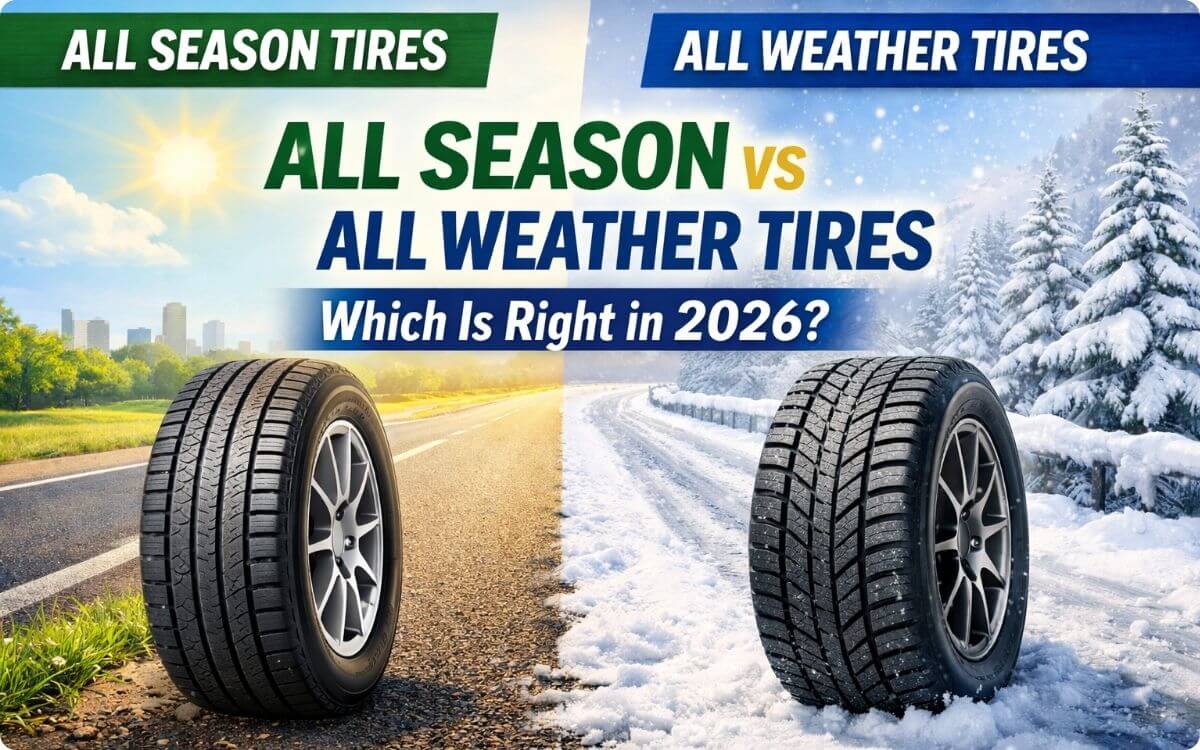
All Season vs All Weather Tires
Picking the right tire can feel overwhelming, especially when terms like all-season and all-weather sound almost the same. Many drivers aren’t sure which option will give them the best performance, safety, and value for their driving conditions.
Here’s the quick answer: all-season tires are best if you drive mostly in mild climates, offering comfort, long tread life, and reliable everyday performance. All-weather tires are a smarter choice if you want extra snow traction and year-round flexibility without changing tires each season.
By the end of this guide on All Season vs All Weather Tires, you’ll know exactly which tire fits your climate, driving habits, and safety needs—making your decision simple and stress-free.
Quick Comparison Table Between All Season and All Weather Tires
Here’s a clear, easy-to-read comparison table for all-season vs all-weather tires:
| Feature | All-Season Tires | All-Weather Tires |
| Best For | Mild climates, city and highway driving | Mixed climates, occasional snow, year-round use |
| Snow Performance | Moderate – handles light snow, not ideal for icy roads | Strong – tested for snow and slush, carries 3PMSF rating |
| 3PMSF Certified | ❌ No | ✅ Yes |
| Year-Round Use | ✅ Yes, except heavy winter conditions | ✅ Yes, handles changing seasons safely |
| Tread Design | Balanced, smoother pattern for quiet ride | Aggressive with deeper grooves and sipes for better grip |
| Rubber Compound | Firm in cold weather; works best in moderate/warm temperatures | Softer in cold weather for improved traction; may wear slightly faster in heat |
| Wet Handling | Good for everyday rain | Very good, handles heavy rain and slush better |
| Comfort & Noise | Comfortable, quiet ride | Slightly firmer, may be noisier on smooth roads |
| Cost | Lower upfront cost | Slightly higher upfront cost |
| Durability | Long-lasting, especially in warm climates | Durable, but may wear faster in hot weather |
| Best Use Case | Urban driving, mild weather regions | Mixed climates, occasional snow, drivers wanting one tire year-round |
This table gives readers a quick visual summary to compare performance, safety, and cost for their needs.
What Are All-Season Tires?
All-season tires are made for everyday driving in mild weather. They are designed to give you a good balance of comfort, traction, and durability through most of the year. For many drivers, they are the “set it and forget it” option because they work well in dry roads, rain, and light temperature changes.
They are not built for serious winter conditions, though. If you live somewhere with heavy snow or icy roads, all-season tires may not give you the grip you need. But for drivers in warmer places, or areas with only light winter weather, they can be a practical and affordable choice.
Key features
- Balanced tread pattern that works well on dry and wet roads
- Rubber that stays firm enough for warm weather driving
- Designed for everyday use in changing conditions
- Comfortable ride for city and highway driving
- Good road noise control
- Solid tread life for regular use
- Easy choice for drivers who do not want to switch tires by season
Pros and Cons
Pros
- Usually cost less than all-weather tires
- Often last a long time
- Comfortable and quiet for daily driving
- Good for dry roads and rain
Cons
- Weak in snow and ice
- Not winter-certified
- Less dependable if temperatures drop often
Best for
- Urban drivers
- Warm or moderate climates
- Drivers who do not face heavy snow
What Are All-Weather Tires?
All-weather tires are built to handle both summer and winter driving. Think of them as a middle ground between all-season and winter tires. They are made to stay reliable when the weather changes, especially when temperatures drop or light snow shows up.
What makes them different is that they are winter-approved. You’ll see a small mountain-and-snowflake symbol on the sidewall (often called 3PMSF). That means they have been tested to perform better in snow than regular all-season tires.
In everyday use, they feel similar to normal tires. But when the road gets cold, wet, or slightly snowy, they hold their grip better and give you more confidence.
Key features
- Winter-certified (3PMSF symbol for snow performance)
- Rubber stays flexible in cold weather
- Deeper grooves for better grip
- Designed to handle both summer heat and winter chill
- Better traction on slushy or wet roads
- Strong braking performance in colder conditions
- Can be used all year without changing tires
- More stable in sudden weather changes
- Good balance between comfort and safety
Pros and Cons
Pros
- Better traction in snow compared to all-season tires
- Works year-round, no need to swap tires
- Safer choice for areas with changing weather
- Gives more confidence in cold and wet conditions
Cons
- Usually costs a bit more upfront
- Can wear faster in very hot climates
- Not as strong as full winter tires in deep snow
Best for
- Drivers in mixed climates
- Areas with occasional snow
- People who want one tire for the whole year without hassle
Key Differences: All Season vs All Weather Tires
When you look at all-season and all-weather tires side by side, they can seem very similar at first. Both are made for year-round use, and both handle everyday driving well. The real differences show up when conditions change—especially in cold, wet, or snowy weather.
Understanding these differences will help you avoid choosing the wrong tire for your situation.
Tread Pattern
The tread pattern is the part of the tire that touches the road. It plays a big role in how the tire grips, handles water, and performs in different conditions.
All-season tires usually have a simpler, more balanced tread design. The grooves are not too deep, and the pattern is made to handle dry roads and light rain. This helps them stay quiet and smooth, which is great for daily driving.
All-weather tires, on the other hand, have a more aggressive tread pattern. The grooves are deeper, and there are more small cuts in the rubber (called sipes). These extra details help the tire grab onto slippery surfaces like slush or light snow.
In real driving, the difference becomes clear when roads get messy. All-season tires feel stable on clean roads, but they can struggle when the surface gets uneven or slippery. All-weather tires dig in better and give you more control in those moments.
That said, the more aggressive design of all-weather tires can sometimes create a bit more road noise. It’s not a huge difference, but it’s something you may notice compared to the smoother feel of all-season tires.
Rubber Compound
The rubber used in a tire affects how it behaves in different temperatures. This is one of the biggest differences between these two types.
All-season tires use a rubber compound that works best in moderate temperatures. It stays firm enough in warm weather to last longer and handle heat well. But when the temperature drops, the rubber can become harder. This reduces grip, especially on cold roads.
All-weather tires use a more flexible rubber compound. It stays softer when temperatures drop, which helps the tire keep its grip. This is why they perform better in cold weather, even if there is no snow on the road.
In everyday terms, this means all-weather tires feel more “planted” when it’s cold outside. All-season tires can feel a bit stiff in those same conditions.
The trade-off is that softer rubber can wear down faster in hot weather. So while all-weather tires are better in the cold, they may not last as long if you drive a lot in high temperatures.
Snow & Ice Performance
This is where the biggest difference shows up.
All-season tires can handle light snow, but only to a point. If the snow gets deeper or the road becomes icy, they lose grip quickly. Braking distances get longer, and turning can feel less controlled.
All-weather tires are designed to do better in these conditions. They are tested and approved for snow performance, which is why they carry the winter certification symbol. Their tread pattern and flexible rubber help them grip snow and slush more effectively.
In real-world driving, this means:
- All-season tires may feel fine at first snowfall, but struggle as conditions get worse
- All-weather tires give you more confidence when roads are cold, wet, or lightly covered in snow
It’s important to be honest here. All-weather tires are better than all-season tires in winter, but they are not as strong as full winter tires on heavy snow or icy roads. If you live in a place with harsh winters, they are a middle-ground solution, not the best possible one.
Wet Handling
Both tire types perform well in the rain, but there are small differences worth knowing.
All-season tires are designed to handle wet roads efficiently. Their tread helps push water away, reducing the risk of slipping. For everyday rain, they do the job well and feel stable.
All-weather tires often have deeper grooves and more channels. This helps them move water out even faster, especially during heavy rain or standing water. Because of this, they can feel more secure when driving through puddles or during strong downpours.
The difference is not huge in light rain. Most drivers won’t notice much. But in heavier conditions, all-weather tires tend to offer a bit more control.
One thing to keep in mind is that performance depends on the specific tire model too. A high-quality all-season tire can still perform very well in wet conditions.
Summer Durability
This is where all-season tires usually have the advantage.
All-season tires are built to handle warm and hot weather without wearing down quickly. Their rubber compound is more resistant to heat, which helps them last longer over time. If you drive a lot in hot conditions, this becomes a big benefit.
All-weather tires, because of their softer rubber, can wear faster when exposed to high temperatures for long periods. This doesn’t mean they wear out quickly, but compared to all-season tires, their lifespan may be slightly shorter in hot climates.
In daily driving, you might not notice this right away. But over several years, it can make a difference in how often you need to replace your tires.
There is also a small difference in feel. All-season tires tend to feel more stable and firm on hot roads, especially at higher speeds. All-weather tires may feel a bit softer, which some drivers like and others don’t.
Mini Summary
All-weather tires give you better grip and confidence in cold, wet, and snowy conditions. That extra performance comes from a softer rubber and more aggressive tread.
The trade-off is simple:
👉 All-weather sacrifices a bit of summer durability for better winter grip.
If you mostly drive in warm weather, that trade-off may not be worth it. But if you deal with changing seasons or occasional snow, it can make a noticeable difference in safety and peace of mind.
What Is the 3PMSF Rating?
You may notice a small symbol on some tires that looks like a mountain with a snowflake inside it. This is called the 3PMSF (Three-Peak Mountain Snowflake) rating. It’s not just a design—it means the tire has been tested and approved for use in snow.
This symbol is important because it shows the tire meets a specific standard for winter performance. In simple terms, the tire has proven it can grip better on snowy roads compared to regular tires.
Why does this matter? Because not all tires handle cold weather the same way. When temperatures drop, some tires become hard and lose grip. A tire with the 3PMSF rating is designed to stay more flexible and keep traction, which helps with braking, turning, and overall control.
In real driving, this can make a noticeable difference. On a cold morning or a road with light snow, a 3PMSF-rated tire will feel more stable. You’re less likely to slip when starting, stopping, or taking turns.
It’s also worth knowing what the symbol doesn’t mean. It doesn’t turn your tire into a full winter tire. In heavy snow or icy conditions, dedicated winter tires still perform better. The 3PMSF rating simply means the tire is strong enough to handle moderate winter conditions safely.
You’ll usually find this symbol on:
- All-weather tires
- Winter tires
You won’t see it on most all-season tires, which is one of the key differences between them.
If you live in a place where temperatures drop or snow shows up even a few times a year, checking for this symbol is a smart move. It’s a quick way to know the tire is built to handle those conditions better than a standard option.
Climate-Based Recommendation
Choosing the right tire often depends more on your local weather than anything else. Matching a tire to your climate can keep you safe and save money in the long run.
If you live in a warm climate with little rain or snow, all-season tires are usually enough. They handle dry and wet roads well and last a long time in higher temperatures. There’s little reason to spend extra on all-weather or winter tires in these conditions.
In areas with frequent rain, either all-season or all-weather tires can work. All-weather tires offer slightly better grip in colder or slushy conditions, but all-season tires handle everyday rain just fine. Your choice depends on whether you occasionally see snow or freezing temperatures.
For places that see occasional snow, all-weather tires are the safer option. They give better traction on snowy or icy roads and reduce the risk of slipping. You won’t need to switch to winter tires unless the snow gets heavy or lasts for months.
If you live in a region with harsh winters and regular deep snow or ice, nothing beats dedicated winter tires. Both all-season and all-weather tires will be limited in extreme conditions, so winter tires are the safest choice for serious winter driving.
By matching your tire type to your climate, you can get the right balance of safety, comfort, and cost without overpaying for features you won’t use.
Driver Type Matching Guide
The kind of driving you do most often can help you pick the right tire. Your daily routes, speed, and traffic conditions all matter when choosing between all-season and all-weather tires.
If you are a daily commuter, mostly driving in the city with stop-and-go traffic, all-season tires are usually enough. They are comfortable, quiet, and last a long time, which makes them a practical choice for everyday use.
For highway drivers who spend long hours on fast roads, all-weather tires can be a better option. Their improved grip in rain and cold conditions gives extra stability at higher speeds, helping you feel safer on long trips.
Family drivers often prioritize safety and reliability. All-weather tires are a smart choice if you live in an area with changing seasons. They provide more consistent traction for carrying passengers and cargo, reducing the risk of slipping in wet or snowy conditions.
If you live in a snow-region, where roads can be icy or covered in snow for part of the year, all-weather tires are the minimum you should consider. They handle snow better than all-season tires, giving you more control and confidence. In severe winter areas, you may still want dedicated winter tires for the coldest months.
By matching your tire choice to your driving style and routes, you can improve safety, comfort, and performance without spending on features you don’t need.
Cost Comparison
When choosing between all-season and all-weather tires, cost is an important factor to consider. The price you pay upfront is only part of the story.
All-season tires are usually cheaper to buy initially. They offer solid performance in most conditions and tend to last a long time, which makes them a budget-friendly choice for drivers in mild climates.
All-weather tires cost a bit more upfront. The extra price reflects the improved winter traction and year-round reliability. Even though they are more expensive at purchase, they can save you money in the long run if you avoid buying a separate set of winter tires.
Tire lifespan also matters. All-season tires may last longer in hot weather, while all-weather tires can wear a little faster in warm climates because of their softer rubber. If you live in an area with mixed seasons, the convenience of not swapping tires can outweigh the slightly higher wear.
In the end, the right choice depends on your climate, driving habits, and willingness to pay more for year-round safety versus sticking with a lower upfront cost.
Best All-Season Tires (Top Expert Picks)
If you live in a mild climate, these all-season tires offer a good mix of durability, comfort, and value. Each one is designed for everyday driving, but they differ in ride feel, tread life, wet-road control, and winter grip.
Michelin Defender 2
The Michelin Defender2 is built for drivers who want a long-lasting tire that feels calm and comfortable in everyday use. Michelin describes it as an all-season tire for sedans, SUVs, and trucks, with a quiet ride, secure handling, and an 80,000-mile limited warranty. Michelin also says it is designed for strong tread life and dependable wet and winter performance for an all-season tire.

Key features
- All-season tire for sedans, CUVs, and SUVs.
- Built for long tread life.
- Designed to feel quiet and comfortable on the road.
- Michelin says it offers secure handling in all weather conditions.
- Michelin lists it as “Mud & Snow” rated on the product page.
- Backed by an 80,000-mile standard limited warranty.
- Part of Michelin’s Promise Plan, which includes a 60-day satisfaction guarantee and roadside assistance.
- Michelin says it was redesigned for better tread life on modern vehicles.
Pros and Cons
Pros
- Very strong choice if you care most about tire life.
- Comfortable and quiet for daily driving.
- Good all-around fit for families and commuters.
Cons
- It is focused more on comfort and durability than sporty handling. This is an inference from Michelin’s product positioning.
- Drivers in more severe winter areas may still want something with stronger cold-weather focus. This is an inference based on the tire being an all-season model.
Continental TrueContact Tour 54
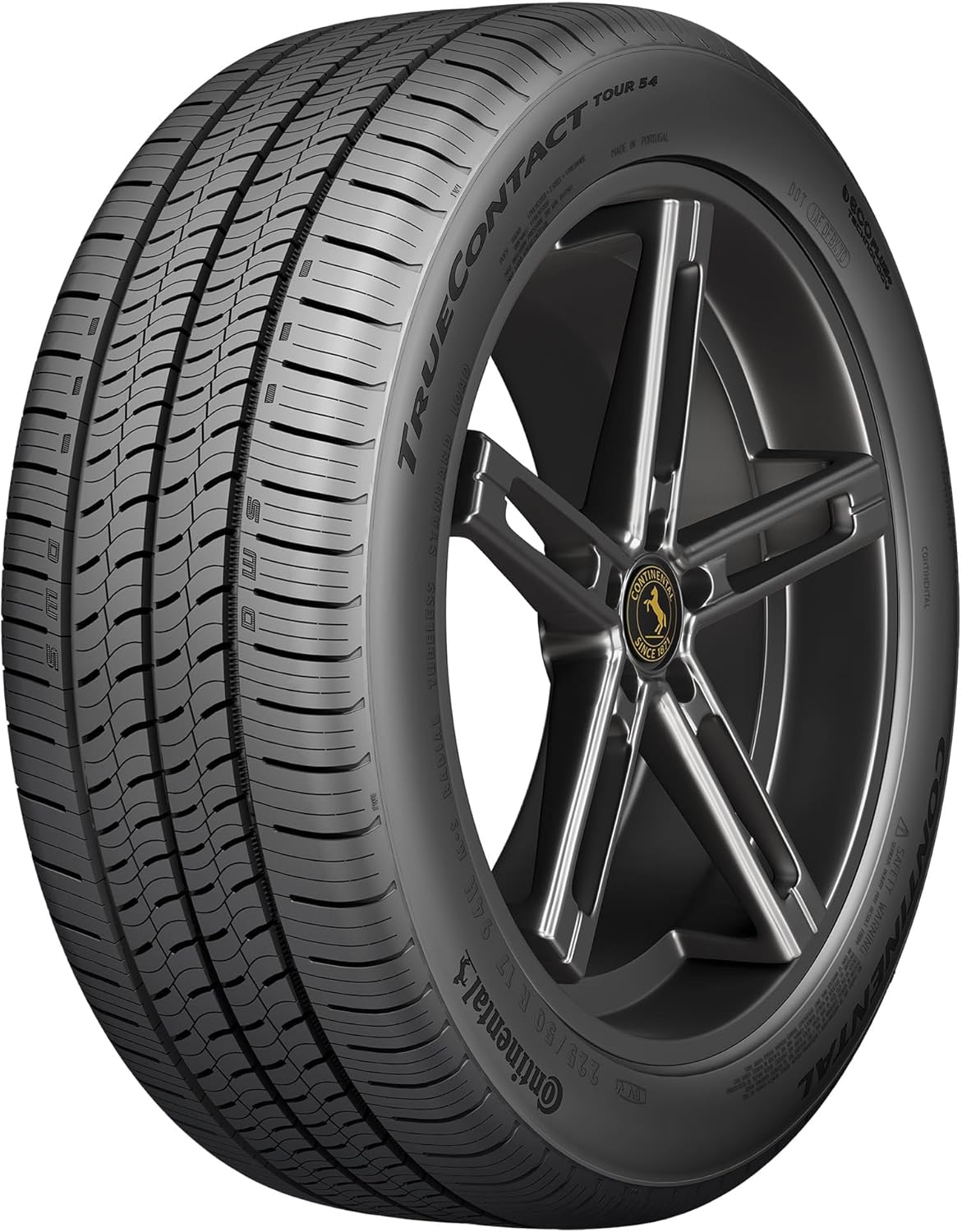
Continental describes the TrueContact Tour 54 as a long-lasting all-season touring tire for passenger cars and crossovers. It is meant for dry, wet, and light snow conditions, and Continental says its EcoPlus Technology helps with fuel savings, shorter wet stopping distances, and longer tread life. It is also backed by Continental’s Total Confidence Plan warranty package.
Key features
- All-season touring tire for passenger cars and crossovers.
- Designed for dry, wet, and light snow use.
- EcoPlus Technology is meant to save fuel and optimize range.
- EcoPlus Technology also helps shorten wet stopping distances.
- Built for extended tread life.
- Offers improved wet braking.
- Provides enhanced dry and wet handling.
- Includes proven traction in light snow.
- Backed by Continental’s Total Confidence Plan warranty.
Pros and Cons
Pros
- A balanced pick for drivers who want everyday comfort and good wet-road control.
- Strong for light snow without moving into winter-tire territory.
- Helpful warranty support adds peace of mind.
Cons
- The tire is aimed more at balance than at a standout specialty. That is an inference from Continental’s feature set.
- Drivers who want a very sporty feel may prefer a more performance-focused tire. This is an inference based on the touring-tire positioning.
Yokohama AVID Ascend GT
Yokohama presents the AVID Ascend GT as a premium grand touring all-season tire with year-round performance. The brand says it performs in wet and snowy weather, stays quiet, and offers long tread life. Yokohama also lists a 65,000-mile limited treadwear warranty, plus a 30-day trial satisfaction guarantee.

Key features
- Premium grand touring all-season tire.
- Made for passenger cars, crossovers, SUVs, and minivans.
- All-season grip designed for snow and wintry weather.
- Shorter wet and snow braking.
- Quiet ride from a multi-pitch tread design and adaptive shoulder.
- Long tread life with triple 3D sipes and an ultra-square contact patch.
- Asymmetric tread design for wet-road handling.
- TriBlend compound for better wet grip.
- Up to a 65,000-mile limited treadwear warranty.
Pros and Cons
Pros
- Nice blend of comfort, quietness, and year-round use.
- Good option if you want a more premium feel without moving to a dedicated snow tire.
- Warranty coverage is solid for the category.
Cons
- It is not the cheapest choice in the group. This is an inference from its premium positioning.
- Drivers in harsh winter areas may still want more winter-focused tires. This is an inference from it being an all-season model.
Pirelli P7 All Season Plus 3
Pirelli says the P7 AS Plus 3 is built for all-season confidence with strong wet braking, a smooth ride, and long mileage. Its design uses 3D sipe technology, full-depth tread sipes, and an innovative compound meant to deliver better traction, handling, and braking over time.

Key features
- Car performance all-season touring tire.
- Built for winter performance and excellent wet braking.
- Smooth and comfortable ride.
- 3D sipe technology for confident handling on dry or wet roads.
- Full-depth tread sipes help traction, handling, and braking mile after mile.
- Innovative tread compound designed for more mileage.
- Built to provide all-season confidence rather than just warm-weather comfort.
- Pirelli highlights quiet comfort as part of the tire’s design.
Pros and Cons
Pros
- Strong wet-road performance.
- Good for drivers who want a calm, comfortable daily tire.
- Mileage-focused design is useful for everyday commuting.
Cons
- It is more comfort-and-balance focused than aggressive or sporty. This is an inference from Pirelli’s product description.
- Drivers in heavy winter regions may still need more snow-focused tires. This is an inference based on its all-season design.
Goodyear Assurance MaxLife 2
Goodyear says the Assurance MaxLife 2 is its longest-lasting tire, with TredLife Technology, an 85,000-mile limited tread life warranty, and a tread pattern designed for all-season control. Goodyear also says the tire has a built-in wear gauge, strong wet traction, and a quiet, comfortable ride.

Key features
- Goodyear’s longest-lasting tire.
- Uses TredLife Technology.
- Designed to help reduce how often you replace tires.
- Four deep channels help move water away.
- Enhanced wet traction in rain and light snow.
- Shoulder blocks help keep steady contact with the road.
- Built-in Wear Gauge makes tread checking easier.
- Quiet, comfortable ride.
- Backed by an 85,000-mile tread life limited warranty.
Pros and Cons
Pros
- Best fit for buyers who care most about long tread life.
- Good wet-road control for everyday driving.
- Comfortable and easy to live with.
Cons
- It is built more for long life than for sporty handling. This is an inference from Goodyear’s positioning.
- Drivers who want stronger winter performance than “light snow” may need something more specialized. This is an inference from Goodyear’s feature description.
Best All-Weather Tires (Top Expert Picks)
If you have decided that an all-weather-style tire is the right fit, these are the options that stand out most. One quick note: Michelin CrossClimate2 and Goodyear Assurance WeatherReady 2 are labeled as all-season tires by their brands, but both carry winter-certified features that make them strong choices in this comparison.
Michelin CrossClimate2
Michelin describes the CrossClimate2 as an all-season tire made for year-round safety on dry, wet, and snowy roads. It also carries the 3PMSF snow rating, and Michelin says it is especially strong for snow braking and traction. Michelin adds that if you regularly drive on icy, snow-covered roads, a winter tire may still be the better choice.

Key features
- All-season tire with 3PMSF winter certification.
- Built for use in dry, wet, and snowy conditions all year.
- Michelin says it leads in snow braking and traction.
- Michelin says it also performs well in wet conditions.
- Performance stays strong even at the legal tread wear limit, according to Michelin.
- Directional tread design.
- Michelin says the newer design improves safety, rolling resistance, and overall performance compared with the previous version.
- Backed by a 60,000-mile warranty and Michelin Promise Plan benefits.
Pros and Cons
Pros
- Strong snow and wet-road performance for a tire in this category.
- Good choice if you want one tire for the whole year.
- Long warranty adds peace of mind.
Cons
- Michelin itself says frequent icy, snow-covered roads may call for a winter tire instead.
- It may be more tires than you need if you never see winter weather. This is an inference based on Michelin’s year-round, snow-ready positioning.
Goodyear Assurance WeatherReady 2
Goodyear says the WeatherReady 2 is built to handle changing weather with confidence in rain, snow, or shine. It uses all-weather technology, carries the 3PMSF severe-snow designation, and comes with a 60,000-mile tread-life warranty.

Key features
- All-season tire with 3PMSF severe-snow designation.
- Goodyear says it is made for changing weather all year round.
- Specialized tread compound helps the tire stay adaptable in different seasons.
- AquaTred technology helps move water and slush away from the tire.
- Evolving Traction grooves are designed to keep grip as the tire wears.
- Comfort inserts are designed to cut bumps and vibrations.
- Built-in Wear Gauge helps you check tread depth over time.
- Backed by a 60,000-mile / 95,000 km tread-life warranty.
Pros and Cons
Pros
- Very strong rain and slush handling.
- Good winter certification for a tire you can keep on all year.
- Comfortable ride and easy wear tracking.
Cons
- It is still a do-it-all tire, so drivers in deep winter may prefer a dedicated winter tire. This is an inference from Goodyear’s all-year positioning and snow-focused design.
- If your climate is very mild, some of its winter-ready features may go unused. This is also an inference from the product’s feature set.
Kumho Solus 4S HA32
Kumho describes the Solus 4S HA32 as a directional tire with balanced, year-round performance. The brand says it improves wet grip, wet/dry handling, braking, and snow performance. Official Kumho regional pages also identify the tire as all-weather and show the Alpine/3PMSF marking.

Key features
- Directional tread classification.
- Designed for balanced, constant performance all year.
- Kumho says it has 15% better wet grip.
- Kumho says it has 10% better wet/dry handling and braking.
- Kumho says snow performance has improved.
- Official Kumho pages in other regions list it as all-weather.
- Official regional pages also show the Alpine / 3PMSF marking.
- Kumho backs passenger and light truck tires with a manufacturer warranty of up to 72 months.
Pros and Cons
Pros
- Strong value-focused option with clear year-round balance.
- Good wet-road improvement for everyday driving.
- Snow-ready enough for mixed weather, with 3PMSF support on official regional pages.
Cons
- The official English page focuses more on balance than on one standout specialty, so it may not feel as premium as Michelin or Pirelli. This is an inference from the way Kumho presents the tire.
- Directional tread design may matter more for rotation planning. That is a practical consideration based on the tire’s directional layout.
Pirelli Cinturato WeatherActive
Pirelli says the Cinturato WeatherActive goes beyond regular all-season performance and is built to outperform all-season tires, especially in snowy conditions. It carries the 3PMSF rating and comes with a 60,000-mile treadwear warranty.

Key features
- 3PMSF-rated for winter use.
- Pirelli says it is designed to outperform all-season tires in snow.
- Zig-zag central groove helps with wet handling, traction, and braking on snow.
- New polymer and resin compound is built to handle a wide range of temperatures.
- The compound is meant to balance snow and wet performance without giving up mileage.
- Trumpet-shaped lateral grooves help push water out in rain.
- Balanced footprint helps with snow performance and even tread wear.
- Deep, continuous siping helps the tire keep working well as it wears.
- Backed by a 60,000-mile treadwear warranty.
Pros and Cons
Pros
- Strong snow and wet performance.
- Good balance between grip and tread life.
- Useful for drivers who want confidence through changing seasons.
Cons
- For warm-climate drivers who never see snow, some of the winter-focused design may be more than they need. This is an inference from Pirelli’s positioning of the tire around snow and wet performance.
- Its focus on year-round grip means it is not just a simple comfort tire. This is also an inference based on its feature set.
Bridgestone WeatherPeak
Bridgestone says WeatherPeak is the next step in the all-season category. The brand highlights wet and dry control, a smooth and quiet ride, 3PMSF certification, and improved winter braking. It also comes with a 70,000-mile limited warranty and a 90-day Buy & Try guarantee.

Key features
- Designed for grip and control in wet and dry conditions.
- Built for a smooth, quiet ride.
- 3PMSF certified for winter performance.
- Bridgestone says it offers improved winter braking power.
- Full-depth 3D sipes help with snowy-road grip.
- Groove-channel evolving sipes and snow vices help manage snow and water flow.
- Open shoulder slots help evacuate water from the tread.
- Bridgestone says evolving sipes improve wet and snow performance.
- Backed by a 70,000-mile limited warranty and a 90-day Buy & Try guarantee.
Pros and Cons
Pros
- Quiet, comfortable ride for daily driving.
- Strong warranty coverage.
- Good for drivers who see rain, light snow, and regular commuting.
Cons
- Its features point more to balanced all-year use than to deep-winter specialization. This is an inference from Bridgestone’s wet, dry, and light-snow positioning.
- Drivers in harsh winter areas may still want a dedicated winter tire. This is a practical inference from the tire’s light-snow focus.
Common Mistakes to Avoid
- Thinking all-season tires are good enough for winter
All-season tires handle mild weather well, but they are not made for serious snow or ice. If winter driving is part of your routine, this mistake can hurt safety and control. - Ignoring your climate
A tire that works well in a warm area may not be a good match for a colder one. Your local weather should guide your choice more than the tire label on the box. - Choosing only by price
The cheapest tire is not always the best deal. A lower-priced tire may wear out faster or perform poorly in rain or cold, which can cost more later. - Skipping the 3PMSF check
If snow matters where you live, look for the mountain-and-snowflake symbol. It is a quick way to tell whether the tire is approved for better winter performance.
A good tire choice is not just about buying something that fits your car. It is about picking the tire that fits your weather, your roads, and how you actually drive.
Real-World Scenarios
City Driver (No Snow): If you mostly drive in urban areas with mild weather, an all-season tire is usually enough. You’ll get a smooth, quiet ride and long tread life without paying extra for winter features you won’t use.
Occasional Winter Trips: For drivers who live in mild climates but occasionally travel to snowy regions, an all-weather tire is a smart choice. It handles light snow better than a standard all-season tire and saves the hassle of swapping tires for short trips.
Cold Rural Areas: In areas where winter brings cold temperatures, ice, and deep snow, all-weather or dedicated winter tires are safer. They maintain flexibility in the cold and provide the grip needed for rural roads that may not be plowed regularly.
Choosing the right tire depends on where you drive most and how often you face challenging weather. Matching tires to your real-world conditions keeps you safer and extends tire life.
FAQs
Are all-weather tires better than all-season?
All-weather tires are better if you need reliable performance in snow and ice while still driving comfortably year-round. All-season tires are fine for mild climates but struggle in winter conditions.
Can all-weather tires replace winter tires?
All-weather tires can handle light to moderate snow, but in harsh winters with heavy snow or ice, dedicated winter tires are still safer. They provide better grip and braking in extreme cold.
Are all-season tires safe in snow?
All-season tires can manage light snow, but they are not designed for serious winter driving. Without the 3PMSF rating, traction in icy or deep snowy conditions can be limited.
Which lasts longer?
All-season tires generally have a longer tread life than all-weather tires because their rubber is optimized for moderate temperatures rather than year-round flexibility.
Which is better for highway driving?
All-season tires are typically better for long highway trips. They offer a quiet, comfortable ride and lower rolling resistance, while all-weather tires may trade a little comfort for extra winter grip.
Conclusion
Choosing the right tire comes down to understanding your driving needs and the weather you face most often. All-season tires work well for mild climates, offering comfort, long tread life, and reliable everyday performance. All-weather tires add extra winter capability, making them a better fit for mixed climates or occasional snow.
Think about your typical routes, how often you encounter snow or ice, and how much you value convenience versus peak winter performance. By matching your tires to your real-world conditions, you can drive safely, get the most life from your tires, and avoid unnecessary replacements.
Ultimately, the best tire is the one that balances safety, comfort, and durability for your specific situation.
