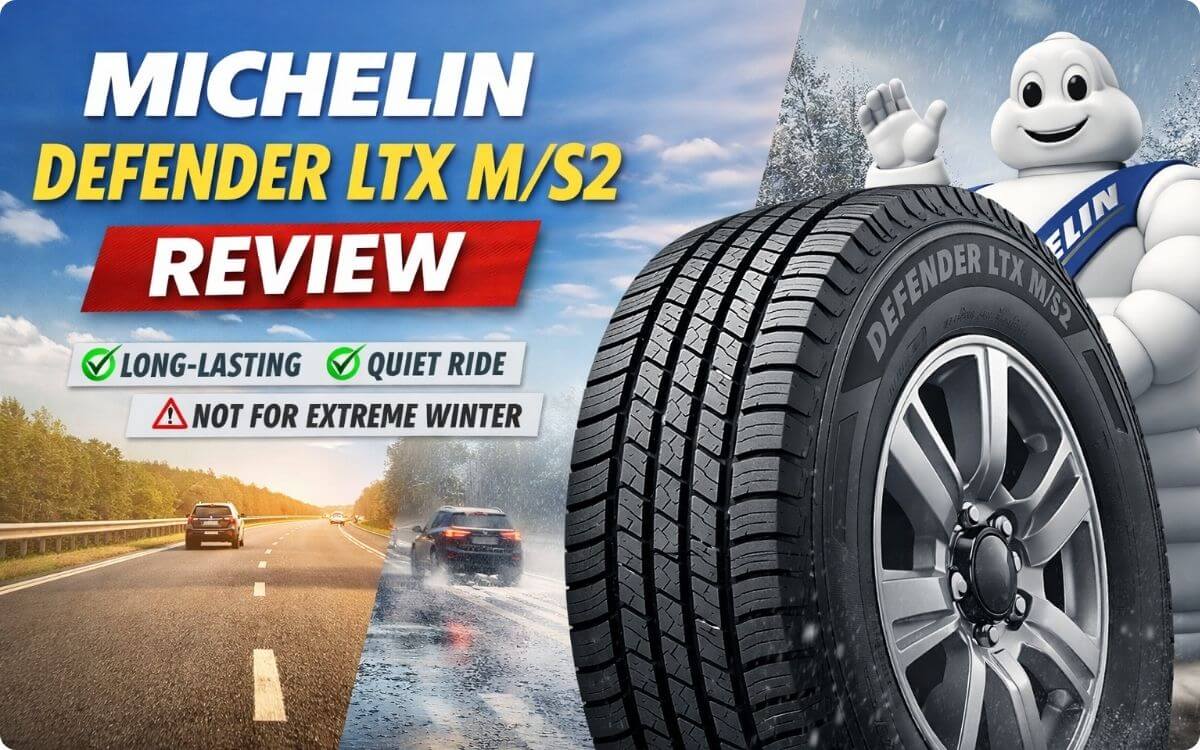
Michelin Defender LTX M/S2 Review (2026)
If you’re shopping for a reliable highway tire, this Michelin Defender LTX M/S2 review will give you the answers you need. This tire is ideal for SUV, pickup, and light truck drivers who spend most of their time on paved roads and want something that lasts a long time without sacrificing comfort.
The main strength of the LTX M/S2 is its combination of quiet, smooth driving and long tread life, often reaching 60,000 to 80,000 miles. On the flip side, it’s not designed for extreme winter conditions or serious off-road adventures, so drivers in icy regions will need dedicated winter tires for those months.
This review will help you understand whether this tire fits your driving style, climate, and vehicle needs, so you can make a confident decision before buying.
Quick Summary Box
Here’s a clear, scannable Quick Summary Box for the Michelin Defender LTX M/S2. It’s designed for readers to get all the essential info at a glance and targets featured snippets:
| Feature | Details |
| Overall Rating | 9.3 / 10 – Excellent for highway driving, comfort, and tread life |
| Best For | SUV, pickup, and light truck drivers who mostly drive on paved roads and value quiet, long-lasting tires |
| Not Ideal For | Heavy off-road use, icy roads, or extreme winter conditions |
| Price Range | Premium – typically $200–$250 per tire depending on size |
| Expected Lifespan | 60,000–80,000 miles with proper maintenance |
| Snow Rating | Good in light snow (~8.8/10), limited on ice |
| Noise Level | Quiet – one of the tire’s strongest points (~9.3/10) |
This layout gives readers a quick decision-making snapshot without scrolling through the full review. It also immediately addresses what people really want to know: performance, suitability, and lifespan.
If you want, I can also create a visual version with icons and color coding for even easier readability, which tends to perform better for SEO and engagement.

Key Specs at a Glance Michelin Defender LTX M/S2
Here’s a clear Table of Key Specs at a Glance for the Michelin Defender LTX M/S2 based on the official Michelin product information:
| Specification | Details |
| Tire Type | All‑Season Highway Terrain |
| Vehicle Fit | SUVs, pickup trucks, vans, crossovers |
| All‑Season Capability | Yes |
| Mud & Snow Rating | Yes – light snow traction |
| Durability Focus | Long tread life designed for extended use |
| Quiet & Comfortable Ride | Yes – designed for smooth daily driving |
| Mileage Warranty | Up to 70,000 miles (varies by size) |
| Tread Life Compared to Competitors | Up to ~2 years more treadwear than some leading competitors |
| Typical Performance Highlights | Strong wet and dry traction, dependable all‑season grip |
This table gives you a quick look at what makes the Defender LTX M/S2 stand out: long wear life, all‑season reliability, and a focus on comfort and quiet performance.
What Is the Michelin Defender LTX M/S2?
The Michelin Defender LTX M/S2 is a highway terrain (H/T) tire. That simply means it’s made for smooth, everyday driving on paved roads like highways and city streets—not rough off-road trails.
It’s designed for vehicles like SUVs, pickup trucks, and even some light commercial vehicles. If you mostly drive to work, run errands, or take long road trips, this type of tire is built for that kind of use.
The main goal behind this tire is simple:
make it last a long time while still performing well in different weather conditions.
That’s why it’s called an “all-season” tire. It’s made to handle dry roads, rain, and even light snow without needing to switch tires every season. However, it’s important to know it’s not built for extreme winter conditions like icy roads.
This model is an updated version of the older Defender LTX M/S. Michelin made changes to improve how long the tire lasts and how it performs in wet conditions. The newer version focuses more on even wear, so the tire doesn’t lose performance quickly as it ages.
One thing you’ll notice is that Michelin puts a lot of focus on durability instead of aggressive grip. That’s a deliberate choice. Tires with very strong grip—especially for off-road or sporty driving—tend to wear out faster. Michelin goes the other way here. They aim to give you a tire that stays reliable for many miles, even if that means it’s not the best option for sharp turns or rough terrain.
So in simple terms, this tire is built for people who want something dependable, comfortable, and long-lasting for everyday driving—not something aggressive or specialized.
Key Features of Michelin Defender LTX M/S2
Here’s a clear, simple list of the important features you’ll find on the Michelin Defender LTX M/S2. I’ve kept the language easy to understand so anyone can see what this tire offers before buying it.
- Designed to last a long time, often longer than many competing tires.
- Works in all seasons, meaning it grips well in dry, wet, and light snow conditions.
- Helps stop shorter in wet weather, which can make braking safer in rain.
- Provides a smooth, quiet ride so road noise doesn’t bother you as much.
- Built for SUVs, pickup trucks, and similar vehicles, not just small cars.
- Strong traction that feels reliable whether you’re in rain or light snow.
- Backed by Michelin’s support plan, including things like a satisfaction period and mileage warranty up to around 70,000 miles.
- Designed to balance comfort and durability so you get both a relaxed ride and long life.
Even though this tire costs more up front than some others, these key features show why many drivers choose it: long life, quiet performance, and confident all‑season grip.
Real-World Performance of Michelin Defender LTX M/S2
This section digs into how the Defender LTX M/S2 actually behaves on the road — not marketing wording, but what you’ll feel, hear, and notice day to day. I’ll cover dry roads, wet roads, winter, comfort, wear, and light off-road use. Short, practical points and real advice are mixed in so you can use the tire the right way.
Dry road performance
On dry pavement the tire feels steady and confident. Steering doesn’t snap or feel twitchy; instead the car tracks smoothly through curves and lane changes. That gentle response is intentional — Michelin tuned the tire so it won’t surprise you at speed and so it wears evenly over time.
Stability at highway speeds is one of the LTX M/S2’s strengths. When you’re doing long stretches at 65–75 mph, the tire resists wobble and keeps the ride composed. You’ll notice less tendency to wander on rough patches of interstate compared with cheaper highway tires.
Braking performance on dry roads is solid. The tire bites well and brings the vehicle down predictably without a grabby feel. In independent and user-reported ratings the tire scores very high for dry performance (around 9.5+), which matches the everyday feeling: confident stops and stable braking under normal loads.
If you drive spiritedly — late apexes and hard cornering — a sportier tire will feel more alive. But for most drivers who value calm handling and stable braking on long trips, this tire is ideal.
Wet performance
Wet performance is a key reason people pick this tire. The tread design moves water away from the contact patch efficiently, which reduces hydroplaning risk. In tests and owner reports the tire earns high hydroplaning resistance scores (around 9.3), so in heavy rain you’ll have more control than with many rivals.
Wet braking distances are consistently shorter than many competing highway-terrain tires. That translates to a smaller stopping gap when the pavement is slick — not magic, but meaningful in real driving. Cornering in the rain feels predictable; you won’t get sudden slips if you keep reasonable speed through a wet turn.
There’s a trade-off built into the LTX M/S2’s design: Michelin balanced grip and compound hardness so the tire lasts longer. Softer compounds give even more initial wet grip, but they wear faster. The Defender chooses a middle ground — very good wet safety for a long-life tire, rather than the short life you’d get chasing maximum grip.
Practical tip: under heavy rain, reduce speed and avoid standing water. Proper tire pressure and tread depth make a big difference; even an excellent tire loses hydroplaning resistance when it’s worn or underinflated.
Snow & winter performance
In light, fresh snow the tire performs well. The pattern and siping help it dig in and move through slush. Many owners find it perfectly usable for mild winter weather.
However, this is not a dedicated winter tire. On packed snow or hard ice the LTX M/S2 weakens compared to winter-rated tires. Ice, especially, is where it shows limits. Ratings around 8.8 for light snow are good, but the tyre’s compound and tread don’t match the stickiness and biting edges of winter rubber.
A practical rule: if temperatures regularly fall below about 7°C (45°F) and your roads see ice or packed snow, switch to winter tires. That temperature threshold is commonly used because summer and all-season compounds harden and lose traction below it. If you only hit a few light snow days a year and roads are cleared quickly, the Defender can be a reasonable year-round choice.
Ride comfort & noise
If quiet, comfortable driving matters to you, this tire will make you happy. Road vibrations are muted; the construction smooths out rough pavement rather than transmitting every bump to the cabin. Inside the car, road noise is low compared to many truck/SUV tires, and drivers often say the cabin feels calmer on long trips.
Comfort ratings (around 9.6) reflect how the tire prioritizes a smooth feel. Compared with all-terrain tires, which are louder and transmit more vibration, the difference is big. All-terrain designs sacrifice quiet and softness for grip and toughness; the LTX M/S2 deliberately does the opposite.
A simple tip for the best ride: keep the tires balanced and your alignment in spec. Small imbalances or misalignment magnify noise and vibration, even on a quiet tire.
Tread life & durability
Tread life is where this tire shines. It’s built with a compound and internal construction meant to resist wear and maintain even contact across the tread as miles add up. Many drivers report reaching 60,000 miles or more; in multiple tests the tire scores very high for tread life (around 9.7).
Durability also means the tire resists irregular wear if you rotate it regularly and maintain proper inflation. The structure tolerates heavier loads without flattening so quickly, which helps commercial and towing applications see longer life than they might with cheaper tires.
Here’s a practical way to think about cost: a longer-lasting tire often means fewer replacements and less downtime. That can offset the higher purchase price. If you drive 15,000–20,000 miles per year on mainly highway roads, the Defender’s extra life shows up fast in your budget.
Maintenance actions that protect tread life: rotate tires every 6,000–8,000 miles, check pressure monthly, and keep alignment within specs. Skipping these steps speeds wear dramatically, even on premium tires.
Off-road capability (honest assessment)
The LTX M/S2 will handle light dirt roads and packed gravel without complaint. It’s fine for a farm lane or a well-maintained fire road. But it’s not designed for mud, deep sand, or rocky trails. You won’t get the bite and chunk-resistance of an all-terrain or mud-terrain tire.
If your driving includes real off-road work — rock scrambling, frequent mud, or deep ruts — choose a tire built for that. The LTX M/S2 sacrifices aggressive tread blocks and sidewall features that help off-road grip in favor of a quiet on-road character and long tread life.
Final word here: buy this tire for roads, not rocks. Use it for light dirt only, and you’ll be happy. If your adventures go beyond that, pick a purpose-built off-road tire.
Fuel Efficiency
The Michelin Defender LTX M/S2 is designed primarily for comfort and long life, but it also performs reasonably well in terms of fuel efficiency. Its tread pattern and compound are optimized to reduce rolling resistance, which means the engine doesn’t have to work as hard to move the vehicle. In practical terms, most drivers won’t notice a big drop in gas mileage compared to other highway tires.
That said, it’s not a specialized low-resistance tire made solely for fuel savings. Vehicles carrying heavy loads or towing regularly may see slightly higher fuel consumption than with lighter, more fuel-focused tires. Proper tire pressure is key—underinflated tires can reduce fuel efficiency noticeably.
Overall, if your priority is a quiet, long-lasting tire that performs well in daily driving, the Defender LTX M/S2 offers good fuel efficiency without compromising comfort or safety. It’s a balanced choice rather than a tire that maximizes miles per gallon.
Sizing and Fitments of the Michelin Defender LTX M/S2
The Michelin Defender LTX M/S2 comes in many tire sizes, so it can fit a wide range of SUVs, pickup trucks, vans, and crossovers. You pick the size that matches your vehicle’s wheels and load needs.
Most versions are made to fit wheels from about 16 inches up to 22 inches in diameter, with different widths and shapes to match what your vehicle needs. Sizes include common options like 265/70R17, 275/65R18, 245/70R17, 255/70R18, and larger sizes for bigger trucks. These numbers might look confusing at first, but they simply tell you how wide the tire is, how tall the sidewall is compared to the width, and what wheel size it fits.
Not every size is available everywhere, so it’s important to check your owner’s manual or the tire label on your vehicle’s door frame before you buy. That ensures the tire size you choose matches what the car maker recommends.
Some sizes also have a higher load or speed rating, meaning they can carry heavier weight or handle higher top speeds. If you carry heavy loads or use a trailer, pick a size with a suitable load rating — your tire shop can help you match this to your vehicle.
Because of how many sizes are offered, this tire can work for daily drivers up through bigger trucks, but always double-check compatibility before you buy. If a certain size isn’t listed as a Defender LTX M/S2 option, a tire dealer can help you find the correct size or a suitable alternative.
Pros and cons of Michelin Defender LTX M/S2
Pros
- Long tread life when maintained properly.
- Quiet, comfortable ride for highway driving.
- Strong wet traction and hydroplaning resistance.
- Predictable handling and stable braking on dry pavement.
Cons
- Higher upfront cost than many rivals.
- Not ideal on ice or heavy winter conditions.
- Not intended for aggressive off-roading.
Michelin Defender LTX M/S2 vs Competitors
Choosing a tire gets easier when you see how it compares to others in the same category. Instead of looking at specs alone, it helps to understand how each one feels on the road and what kind of driver it suits best.
Let’s go through a few popular alternatives and see where the differences really matter.
Bridgestone Dueler LX vs Michelin Defender LTX M/S2
When comparing the Defender LTX M/S2 with the Dueler LX from Bridgestone, the overall performance is quite close. Both are made for comfort and everyday driving.
The main difference is in the ride feel. The Dueler LX is slightly softer and can feel a bit more cushioned over bumps. Some drivers prefer that “floating” feeling.
The Michelin, on the other hand, feels a bit more stable at higher speeds and often lasts longer. So if comfort is your top priority, Bridgestone has a small edge. If you want better long-term value, Michelin usually wins.
Continental TerrainContact H/T vs Michelin Defender LTX M/S2
Now looking at the TerrainContact H/T from Continental, this is a strong competitor, especially in wet conditions.
It tends to have slightly shorter braking distances in the rain. That can give you a bit more confidence during sudden stops on wet roads.
However, the difference is not huge for everyday driving. The Michelin still performs very well and often lasts longer, which makes it a better choice if durability matters more to you.
Goodyear Assurance MaxLife vs Michelin Defender LTX M/S2
The Assurance MaxLife from Goodyear is usually the budget-friendly option in this group.
It costs less upfront, which makes it attractive if you’re trying to save money right now. It also offers decent performance for daily driving.
But when you compare it side by side, it doesn’t feel as refined. The ride can be a bit noisier, and overall comfort is slightly lower. It’s a good value option, but it doesn’t give the same premium feel as the Michelin.
Here’s a simple table to make things clearer:
| Tire | Best For | Weakness |
| Michelin Defender LTX M/S2 | Long life, quiet ride, balanced performance | Higher upfront cost |
| Bridgestone Dueler LX | Soft, comfortable ride | Slightly shorter lifespan |
| Continental TerrainContact H/T | Strong wet braking | May not last as long |
| Goodyear Assurance MaxLife | Budget-friendly option | Less comfort and refinement |
Read More: General Tires Review
Who should buy the Defender LTX M/S2?
Buy this tire if:
- You drive mostly on highways or city streets and want a quiet, comfortable ride.
- You prioritize long tread life and predictable wet performance.
- You’re willing to pay a premium up front for lower replacement frequency and a more refined ride.
Avoid this tire if:
- You live in an area with prolonged ice and deep snow every winter (use dedicated winter tires instead).
- You regularly go on heavy off-road trails or need aggressive mud/rock traction.
- Your primary concern is the cheapest upfront cost.
Is It Worth the Price? (Cost vs Value Analysis)
Think of this the same way you’d compare two appliances: one costs more now but might save money over time. With tires, the simple math to check value is cost per mile — how many dollars you pay for each mile the tires give you.
Here’s the basic formula you can use: cost per mile = total cost of four tires ÷ expected miles. That tells you the true price of driving on those tires.
Let’s look at three realistic examples so the math is clear.
Example A — a premium set (like Michelin): four tires at $220 each = $880. If they last 70,000 miles:
880 ÷ 70,000 = 0.01257 dollars per mile → about 1.26 cents per mile (≈ $125.71 per 10,000 miles).
Example B — a cheaper set: four tires at $140 each = $560. If they last 50,000 miles:
560 ÷ 50,000 = 0.0112 dollars per mile → about 1.12 cents per mile (≈ $112 per 10,000 miles).
Example C — a midrange set: four tires at $180 each = $720. If they last 60,000 miles:
720 ÷ 60,000 = 0.012 dollars per mile → 1.20 cents per mile (≈ $120 per 10,000 miles).
Those numbers show something important: a premium tire that costs more up front can sometimes cost about the same per mile as a cheaper tire because it lasts longer. In these examples the cheaper set looks slightly cheaper per mile, but the midrange and premium options are very close once you factor in longer life and comfort.
Common Problems of the Michelin Defender LTX M/S2
This tire does a lot well, but there are some real drawbacks buyers should know about.
On hard ice, grip can be weak. The tread and rubber aren’t made to bite into slick, icy surfaces, so stopping distances can be longer and steering feel less sure. If you face icy roads often, plan to use winter tires in cold months — they’re designed specifically for that danger.
Deep mud and rough off-road trails are also not its strong suit. The tread pattern is made for paved roads, so it won’t dig through thick mud or grip jagged rocks the way an all-terrain tire would. If you drive on muddy backroads frequently, consider an all-terrain model instead of this one.
Price is another common concern. It usually costs more up front than many alternatives. That can feel like a big hit at purchase time, especially if you’re replacing four tires at once. Look for seasonal sales, rebates, or shop around for installation deals to lower the initial cost, or run the simple cost-per-mile math to see if the higher price makes sense for you.
A few owners also report problems when basic care is skipped — like uneven wear if rotations and checks aren’t done. The easy fix is simple: follow a regular service schedule and fix alignment or balance issues early to avoid bigger problems later.
Knowing these limits helps you decide if the tire fits your driving. If your roads are mostly paved and winters are mild, these issues are manageable. If not, it’s worth comparing other tire types that match your conditions better.
Read More: Michelin Defender 2 Review
FAQs about Michelin Defender LTX M/S2 Review
How long do these tires last?
Many owners report 60,000–80,000 miles depending on size and care. Your mileage may vary with load, alignment, and driving style.
Can I use them in winter?
They work well in mild snow but are not a substitute for winter tires on ice and packed snow.
Are they noisy?
No. A quiet ride is one of the tire’s strengths.
Should I buy all-season tires or winter tires for cold climates?
If your region has long periods below freezing and icy roads, use winter tires in cold months. The Defender is fine for year-round use in milder climates.
Final Verdict: Are Michelin Defender LTX M/S2 Good?
The Michelin Defender LTX M/S2 is a solid choice if you drive mostly on highways, city streets, or light gravel. It’s quiet, comfortable, and built to last, often reaching 60,000 to 80,000 miles with proper care.
Its biggest strengths are long tread life, smooth ride, and reliable performance in wet and dry conditions. On the downside, it’s not made for heavy ice, deep snow, or serious off-road use.
Overall, if you want a dependable, long-lasting tire for everyday driving and occasional light off-road, the Defender LTX M/S2 delivers excellent value and peace of mind.
