Tires Load Range Chart

Tires Load Range Chart: Meaning, Ratings, and How to Choose

Choosing the right tires isn’t just about size, brand, or tread pattern. One of the most misunderstood—but critically important—specifications is tire load range. Many drivers see letters like C, D, or E on a tire sidewall and assume a higher letter automatically means a better or safer tire. In reality, choosing the wrong load range can lead to a rough ride, poor handling, premature tire wear, or even dangerous blowouts.

A tires load range chart exists to help drivers understand how much weight a tire can safely carry and under what air pressure. Whether you drive an SUV, pickup truck, or tow a trailer, understanding load range ratings ensures your tires match your real-world driving needs.

What Is Tire Load Range?

Tire load range is a standardized system that indicates how much weight a tire can safely carry at a specified maximum inflation pressure. Tires are designed to handle a certain load, and exceeding that limit can be dangerous, causing blowouts, poor handling, or excessive tire wear.

Load ranges are usually represented by letters such as B, C, D, E, or F. Each letter corresponds to a specific maximum load capacity and recommended inflation pressure. For example:

  • Load Range C: Common on light trucks, moderate load capacity
  • Load Range D: Heavier trucks or towing applications
  • Load Range E: Often used on SUVs, full-size trucks, and trailers
  • Load Range F: Less common, used for heavy-duty commercial vehicles

Many drivers mistakenly believe that a higher load range always means a better tire, but that’s not true. A higher load range can improve load-carrying capacity, but it can also result in a harsher ride, less traction when unloaded, and higher cost.

Tire Load Range vs Ply Rating: What’s the Difference?

Historically, tires were rated by ply count, which indicated the number of layers of fabric in a tire’s sidewall. A higher ply count meant the tire could carry more weight. However, modern tire engineering has advanced, and most tires now use fewer plies with stronger materials.

To replace the old system, manufacturers introduced load ranges:

Ply Rating (Old)Load Range (Modern)Max Load Capacity Example
4-plyB~1,520 lbs per tire
6-plyC~1,820 lbs per tire
8-plyD~2,100 lbs per tire
10-plyE~2,300 lbs per tire

This change helps drivers easily compare tires across manufacturers while accounting for modern materials and design.

How to Read Load Range Information on a Tire Sidewall

Reading a tire’s sidewall may look confusing at first, but it’s actually pretty simple. The sidewall shows all the important information about what your tire can safely handle, including load capacity, inflation pressure, and strength.

Where Load Range Appears on the Tire

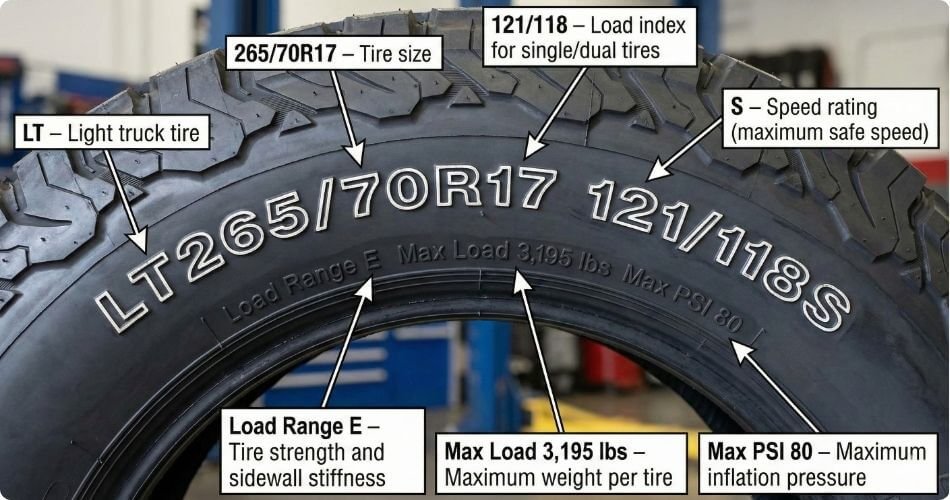
The load range letter is usually printed on the tire sidewall, often after the tire size. For example, you might see something like:

LT265/70R17 Load Range E

  • “LT” means it’s a light truck tire.
  • “265/70R17” is the tire size.
  • “Load Range E” is the strength rating.

This letter tells you how much weight the tire can carry and how stiff the tire is. The higher the letter, the stronger the tire.

Understanding Other Key Markings

Besides the load range, there are a few other important numbers:

1. Load Index

  • A number that corresponds to the tire’s maximum weight capacity.
  • Higher numbers mean the tire can carry more weight.

2. Maximum Load

  • Usually listed in pounds or kilograms.
  • This is the heaviest weight the tire can safely carry at the maximum air pressure.

3. Maximum Inflation Pressure (PSI)

  • The highest air pressure the tire is rated for.
  • A tire only reaches its maximum load at this pressure.
  • Everyday driving usually doesn’t require running tires at the maximum PSI.

Example Breakdown of a Tire Sidewall

Here’s a real example:

LT265/70R17 121/118S Load Range E Max Load 3,195 lbs Max PSI 80

  • LT – Light truck tire
  • 265/70R17 – Tire size
  • 121/118 – Load index for single/dual tires
  • SSpeed rating (maximum safe speed)
  • Load Range E – Tire strength and sidewall stiffness
  • Max Load 3,195 lbs – Maximum weight per tire
  • Max PSI 80 – Maximum inflation pressure

By reading this, you can see exactly how much weight the tire can carry and the pressure needed to support that weight.

Tires Load Range Chart

The table below gives a clear, general picture. These are typical, approximate values — exact numbers depend on tire size and brand.

Load RangePly (old-style)Typical max PSITypical max load per tire (approx.)Common vehicle types
B4-ply~35–40 PSI≈ 1,100–1,800 lb per tireSmall cars, many crossovers
C6-ply~50 PSI≈ 1,500–2,400 lb per tireLight trucks, midsize SUVs
D8-ply~65 PSI≈ 1,900–2,800 lb per tireHeavy SUVs, work trucks
E10-ply~80 PSI≈ 2,500–3,700 lb per tirePickup trucks, heavy towing
F12-ply~95 PSI≈ 3,000–4,400 lb per tireCommercial / industrial vehicles

Notes about the chart: These are typical or example numbers to help you compare load ranges quickly. The actual pounds a specific tire can carry depend on the tire’s size and its load index — so use this as a guide, not the final word. 

What Do Load Range Letters (B, C, D, E, F) Mean in Real Life?

If tire load range letters feel confusing, think of them like backpack strength. A small backpack works for a laptop and lunch. A heavy-duty hiking pack is built for long trips and heavy gear. Tires work the same way. The load range letter tells you how much weight a tire is built to carry and how stiff it feels on the road.

Let’s walk through what each load range actually feels like in everyday driving.

Load Range B: Built for Comfort, Not Heavy Work

Load Range B tires are made for light, everyday driving. If your vehicle mostly carries people, groceries, and the occasional suitcase, this load range is often enough.

Picture driving to work, running errands, or taking a weekend road trip. The ride feels smooth and quiet. The tires absorb bumps well, and the steering feels easy and relaxed.

However, these tires are not designed for heavy towing or hauling. If you hook up a trailer or load the vehicle with heavy gear, they can feel unstable and wear out faster.

Best for: Daily driving with light loads and comfort as the top priority.

Load Range C: A Balanced, Do-It-All Option

Load Range C tires are like a stronger backpack that still feels comfortable. They are built to handle more weight without losing the smooth feel most drivers want.

In real life, this load range works well if you drive daily but also:

  • Carry tools or gear occasionally
  • Tow a small trailer once in a while
  • Load up for family trips

The ride is slightly firmer than Load Range B, but most people won’t notice much difference. It still feels comfortable, just more confident when the vehicle is loaded.

Best for: Daily driving with occasional towing or extra cargo.

Load Range D: Noticeably Stronger and More Firm

Load Range D tires are where strength starts to become more noticeable. These tires are built for vehicles that carry weight more often, not just once in a while.

When driving unloaded, the ride feels firmer. You may feel bumps more clearly, especially on rough roads. But when the vehicle is loaded with tools, equipment, or supplies, the tires feel more stable and controlled.

This load range is often chosen by people who:

  • Use their vehicle for work
  • Carry heavy gear regularly
  • Want better stability under load

Best for: Frequent hauling with less focus on ride comfort.

Load Range E: Tough and Built for Heavy Work

Load Range E tires are designed for serious work. They are made to carry heavy weight and handle high pressure without flexing too much.

In everyday driving with no load, these tires feel stiff. The ride is rougher, and small bumps are more noticeable. Many people are surprised by this after upgrading to Load Range E thinking it would feel “safer.”

But when towing a trailer or hauling heavy cargo, these tires shine. The vehicle feels steady, controlled, and less affected by weight shifts.

Best for:  Frequent towing, heavy hauling, and work use—not comfort driving.

Load Range F: Commercial-Level Strength

Load Range F tires are built for vehicles that carry heavy loads every day. Think service trucks, delivery vehicles, and commercial use.

For normal driving, these tires are too stiff and unnecessary. They are not designed for comfort and usually aren’t recommended for personal vehicles.

Best for:  Commercial and industrial vehicles only.

Daily Driving vs Towing vs Hauling: What Changes?

Imagine driving the same vehicle in three different ways.

On a normal day, with no cargo, softer tires feel better. The ride is smoother, steering is easier, and the vehicle feels more relaxed.

When towing a trailer, the weight pushes down on the tires. Stronger load ranges help the vehicle stay balanced and reduce swaying.

When hauling heavy cargo, stiffer tires prevent sagging and help keep the vehicle stable, especially during turns or sudden stops.

The key is matching the tire to how you use your vehicle most of the time.

Ride Comfort vs Durability: The Trade-Off

There is always a trade-off between comfort and strength.

  • Softer tires bend more and absorb bumps
  • Stiffer tires resist bending and carry weight better

If you choose a tire that is stronger than you need, you give up comfort without gaining real benefits. If you choose a tire that is too soft, you risk safety and durability when carrying weight.

How Stiffer Tires Affect Real-World Driving

Handling

Stiffer tires feel more solid when carrying weight, but when unloaded, they can feel less responsive and harder to steer smoothly.

Braking

With heavy loads, stronger tires help braking feel more controlled. Without weight, stiff tires can reduce grip, especially on wet roads.

Fuel Economy

Heavier, stiffer tires often weigh more. This can slightly reduce fuel efficiency, especially in daily driving situations.

How to Choose the Right Load Range for Your Vehicle

Choosing the right tire load range doesn’t have to be complicated. The most important thing is to match your tires to how you actually use your vehicle. Think about whether you mostly drive empty, carry heavy cargo, tow trailers, or use your vehicle for work. The right load range keeps your ride safe, comfortable, and smooth.

For SUVs and Crossovers

Most SUVs and crossovers are designed for comfort and everyday use. They usually carry passengers, groceries, and luggage—not heavy loads all the time.

  • Factory tires: Most come with Load Range B or C. These tires handle normal driving and occasional light cargo very well.
  • When to upgrade: Consider a stronger load range if you tow a trailer, carry heavy gear, or use your SUV for off-road trips with lots of equipment. Moving up one load range (for example, from B to C) can help the tires stay stable when carrying extra weight.
  • When it’s unnecessary: Many SUV owners choose Load Range E thinking it’s safer. In reality, for daily driving, this often makes the ride rougher without adding any real benefit. Only choose E if you regularly carry heavy loads or tow frequently.

Key tip: For most SUV drivers, sticking with the factory load range is the easiest and most comfortable choice.

For Pickup Trucks

Pickup trucks are made to handle heavier loads, but the right load range still depends on truck size and how you use it.

  • Half-ton trucks (1500 models): Great for daily driving and light work. Load Range C or D is usually enough.
  • ¾-ton trucks (2500 models): Built for heavier loads and frequent towing. Load Range D or E is better.
  • 1-ton trucks (3500 models): Made for serious hauling. Load Range E is usually required.

How you use your truck matters:

  • Daily driving: Load Range C or D keeps the ride comfortable and stable.
  • Regular work or heavy cargo: Load Range D or E provides more strength and stability.
  • Towing trailers: Load Range E is helpful for heavier trailers. It reduces sagging and keeps the truck feeling steady.

Tip: Don’t just upgrade for looks—choose a load range that matches your truck’s actual workload.

For Towing and Trailers

Trailer tires are a little different because the trailer doesn’t help with steering or braking. The tires carry all the weight, so choosing the right load range is very important.

  • Why stronger tires are needed: Trailers put constant pressure on tires. Softer tires can overheat or wear out quickly.
  • Understanding weight: Every trailer has a maximum weight rating (GVWR). The tire’s load range must meet or exceed this weight. This includes tongue weight (the weight on the hitch) and axle load (the weight on each wheel).
  • Practical tip: Check the trailer manufacturer’s recommendations and choose a tire load range that can handle the full load safely.

Key takeaway: Trailer tires should be strong enough to carry the maximum weight of the trailer, even if you don’t use the trailer fully loaded every time.

What Happens If You Choose the Wrong Load Range?

Choosing the wrong load range can affect your safety, comfort, and tire life. Tires are designed to carry a certain amount of weight safely. If the load range doesn’t match how you use your vehicle, problems can happen. Let’s look at what can go wrong.

Load Range Too Low

If your tires are weaker than your vehicle needs, several issues can occur:

  • Higher risk of blowouts: Tires can fail if they are carrying more weight than they were designed for. A blowout at high speed can be dangerous.
  • Excessive heat buildup: Overloaded tires get hotter, which wears them out faster and can also cause failure.
  • Poor handling under load: The vehicle may feel unstable, especially when turning or braking, making it harder to control.

Example: If you tow a heavy trailer with tires rated for light loads, the tires may sag and overheat, creating a safety risk.

Load Range Too High

Using tires that are stronger than you need can also create problems:

  • Harsher ride quality: Stiffer tires don’t absorb bumps as well, making the ride feel rougher.
  • Reduced traction when unloaded: Harder tires have less surface contact with the road when your vehicle is empty, which can affect grip in wet or slippery conditions.
  • Uneven tire wear: Tires that are too stiff may wear faster in certain areas, shortening their lifespan.
  • Unnecessary cost: Higher load range tires are more expensive and often unnecessary for everyday driving.

Example: Installing heavy-duty Load Range E tires on a small SUV that rarely carries heavy loads will make the ride stiff without improving safety.

Common Tire Load Range Mistakes to Avoid

Choosing the wrong load range is a common mistake, but many problems can be prevented by knowing what to watch for. Here are the most frequent errors drivers make and how to avoid them.

1. Thinking Higher Load Range Is Always Better

Some drivers assume that stronger tires are automatically safer. That’s not true. Tires that are too stiff can make the ride rough, reduce traction when the vehicle is empty, and wear unevenly. 

Always choose a load range that matches your vehicle’s weight and how you use it, not just the highest letter you can find.

2. Ignoring Manufacturer Recommendations

Every vehicle comes with recommended tire specifications in the owner’s manual or on a sticker inside the driver’s door

Ignoring these recommendations can lead to safety issues or poor performance. Always check what the manufacturer advises before buying new tires.

3. Overinflating Tires to Maximum Pressure

Some people think inflating tires to the maximum PSI makes them safer. The max PSI listed on the tire is the maximum allowed, not the recommended everyday pressure. 

Overinflating can make the ride harsh and reduce traction. Use the pressure suggested by your vehicle, not just the tire’s maximum.

4. Mixing Tires With Different Load Ranges

All tires on the same axle should have the same load range. Mixing different load ranges can affect handling, braking, and stability, especially in wet or slippery conditions. 

Always replace tires in pairs or sets, keeping the load range consistent.

5. Choosing Tires Based on Appearance Instead of Function

Some drivers pick tires because they look tough or heavy-duty, without considering whether the load range is right. A tire that looks strong but doesn’t match your vehicle’s needs can compromise safety and comfort. Focus on function first, appearance second.

Load Range, Air Pressure, and Safety (Expert Insight)

Air pressure directly impacts load-carrying capacity:

  • Each load range has a maximum PSI
  • Vehicle manufacturer provides recommended tire pressure based on weight, not max PSI
  • Overinflation may improve load capacity but can reduce grip and comfort
  • Underinflation can lead to excessive heat buildup and blowouts

Always check your owner’s manual or vehicle door placard for the correct pressure.

Checklist before you buy or change tires

  • Read the vehicle placard and owner’s manual.
  • Calculate actual loads (passengers + cargo + trailer tongue weight).
  • Check the tire’s sidewall: load index, maximum load (lbs/kg), and max PSI.
  • Decide if a higher load range is needed based on real load and frequency — not just “just in case.”
  • Consider the trade-offs: ride comfort, handling, cost.
  • If towing: check trailer tire type (ST) and ensure axle/tire match the trailer GVWR.

Final Thoughts

A tires load range chart is not just a technical reference—it’s a safety tool. Choosing the correct load range protects your vehicle, improves handling, extends tire life, and ensures peace of mind on the road.

Rather than defaulting to the highest rating available, choose the load range that matches how you actually drive. When in doubt, consult manufacturer guidelines or a trusted tire professional.

The right load range doesn’t just carry weight—it carries responsibility.

FAQs

Is Load Range E too stiff for daily driving?

Not necessarily — many trucks run Load Range E as original equipment. It can make the ride firmer, but for many owners that tradeoff is acceptable for towing capacity.

Can I downgrade from E to D to get a softer ride?

Only if the tires still meet or exceed the per-tire load requirement for your vehicle and expected loads. Never downgrade if you risk overloading.

Are load range ratings consistent across brands?

The letter means a general class, but exact capacity and PSI differ by tire size and manufacturer. Always verify the specific tire’s maximum load and pressure.

If my tires have a higher load rating than the vehicle’s placard, is that a problem?

Generally fine—tires rated higher simply give more capacity. But be aware of ride and handling differences. Always use tires appropriate for vehicle size and wheel fitment.

Leave a Reply

Your email address will not be published. Required fields are marked *